Federal transportation funding policies significantly impact urban mobility, with current federal allocations heavily favoring highway infrastructure over public transit and active transportation. New York City, which accounts for over 40% of all public transit trips in the United States, faces challenges in securing adequate federal funding for its transit system. The current federal administration prioritizes car transport over other modes, threatening the funding essential for maintaining and expanding urban transit networks. This creates a critical need for elected officials who will advocate for transportation policies that prioritize public transit, biking, and walking infrastructure over highway expansion, recognizing that these investments serve millions of daily commuters and support broader goals of environmental sustainability, public health, and social equity.
Taking the Transportation Fight to Congress from NY-7Added:
[music] This episode of the war on cars is sponsored in part by UPW. Sarah and I have been all over the country and we have seen it all. From cities that are compact and bikable to places that are sprawled out. But the one thing that's been consistent has been the presence of ebikes. They really are the great equalizer, making cycling accessible to more people and making it possible to replace car trips. [music] No matter where you live, if you've been thinking of getting an ebike, you'll want to check out UPW. UPW is the world's biggest [music] and best place to get new and certified refurbished ebikes from name brands at big discounts. The team at Upway can help you find the perfect bike, no matter your experience or what you plan to use yours for. Not only that, but the qualified mechanics at Upway tune and inspect each bike so it's as good as new [music] before it's delivered right to your door. Plus, Upway offers a one-year warranty on every ebike it sells, including its pre-owned [music] models. Now, through the end of May, listeners of the War on Cars can save $100 off your order of $800 or more at Upwway with code TWWC00.
Use the link in the show notes or visit upwway.co and enter the code at checkout. No matter where you live, get rolling on a certified refurbished ebike with Upway.
Again, that's upway.co discount code TWWC [music] 100.
I try to find a way to really, you know, connect with people and not not look at them as like, oh, you're car crazy.
You're you're terrible people. It's like, no, I get you have a perspective.
You grew up with this car culture. I get it. To break that down, I need to I need to connect in a certain way. And that's the strategy that I used. People are really looking for real community in their lives. They're looking for places to be in community with their neighbors.
And so I think public opinion in this is is changing a little bit. Um I think there's much more interest in advancing a vision of New York City where more space is available to the public and taken away from private vehicle traffic.
Um so people can get out and experience our beautiful city. What we simply mean by a lifetime of care, our main platform, is that from the moment you're born until the day that you die, that the government has a responsibility to take care of you, especially when you're most vulnerable. So, when you're too young to work, too sick to work, or too old to work. And that includes transportation. Because I don't think the oligarchs or those the powers that be right now really understand what fast, reliable transportation means to all of us.
This is the war on cars. [music] I'm Sarah Goodyear. With me here in the studio is my co-host Doug Gordon.
>> Hello.
>> This is going to be a fun episode. It's something that we have never done before.
>> The war on cars becomes Meet the Press.
>> Exactly. And I mean, this kind of fits with what we've experienced out on the road on the tour, which is that pretty much every stop there has been an elected official who was on the stage with us and talking about how bad cars are for their communities.
>> Yeah, we've had city council people, we've had state senators and other state reps. It's pretty remarkable when you consider that not that long ago, anytime we would try to reach out to an elected official, with some exceptions, they didn't want to touch something called the war on cars. So, this is a really neat evolution in the podcast.
>> So, for this episode, we are going to be talking to three candidates for Congress for the United States House of Representatives.
>> I've heard of it.
>> Yes. And they're going to be talking about their transportation policies. But first, a little business.
>> That's right. You can find us on Patreon at patreon.com/thewar on cars pod. You can also order our new book, Life After Cars, Freeing Ourselves from the Tyranny of the Automobile, wherever books are sold. You can find out more and learn all about the book tour at life aftercars.com.
Okay, so let's get to it. We interviewed Antonio Reynoso, Claire Valdez, and Julie Juan. All of whom are running in the June 23rd Democratic primary for New York 7. That's the congressional seat that opened up when veteran Democratic politician Nidia Velasquez announced she was retiring. It's a traditionally progressive district covering neighborhoods of Brooklyn and Queens that are part of the so-called Kami corridor that elected Zoron Mandani mayor. everyone in this primary identifies as progressive.
Why are we doing this at the war on cars?
>> Well, that's a great question because obviously this is going to be a little New York centric, but sort of like we were saying earlier, the fact that we have elected officials who are willing to come on the show and you know, people who are running for office especially to make the case directly to our listeners, some of whom live in this district, others of course who live nowhere near this district. You know, I think it shows how much these issues and the people who support them, cyclists, transit advocates, safe streets advocates are a constituency now. Like we have some amount of political power that these candidates want to talk directly to them and not just have their transportation policies be one of many listed in an interview on some other political podcast or in the New York Times or something like that.
>> Yeah. And this is of national importance because federal funding is incredibly vital for transit and active transportation projects. And it is under a really terrible assault right now under this administration which is made it very clear that they prioritize car transport over everything. And so who we send to Congress and whether or not they're willing to take a stand on these issues and to fight for this funding is really important.
>> Yeah. I mean, think about I have my issues of course with Chuck Schumer, but think about all he's done for New York in terms of transit funding and active transportation or Amtrak Joe Biden and the fact that he rode the train was part of why he was such a big supporter of train funding. So, you know, it's great that we have this new generation of people who get around by bike or by transit or by walking, are not so car focused, and they're going to bring that perspective to Congress.
>> And potentially the midterms might see a new generation of politicians coming into power that does get it on a very visceral level that transit, walking, and biking are important. But will these people have the political will to stick to their principles once they're in Washington?
We will hear from Antonio, Claire, and Julie about why they are running and what they believe they can accomplish in DC if they are elected. This episode is going to run a little longer than most to give them all three time to outline their positions.
>> Yeah, this is the director's cut of Lord of the Rings. So, um, we we're going to start with the Fellowship, The Twin Towers, and then Return of the King.
That's how it's going to work.
>> Sounds good. We'll start with Brooklyn Burough President Antonio Reynoso.
Antonio Reynoso was born and raised in Williamsburg, Brooklyn. He was elected to the New York City Council in 2013 representing Williamsburg and Bushwick in Brooklyn and Rididgewood in Queens.
In 2021, he won the election to become Brooklyn Burough President. And now he is running for Congress.
Antonio Reynoso, welcome to the War on Cars.
>> Yes. Thank you so much for having me.
Happy to be here.
>> Great to have you. So, we're going to just jump right in. One of the top things in your transportation platform, you talk about how New York runs on its transit system. And there are 3 million workers who are relying on the system to get to their jobs every day. and that New York City alone, this I didn't know this exact figure, it's amazing, accounts for more than 40% of all public transit trips in the United States. So, it's super important. We all know. So, what would you do specifically to get New York City more federal funds for transit and for biking and pedestrian infrastructure? Yeah, it's a great question. Right now, the Department of Transportation at the federal level in the United States is very highway heavy. We talk about car culture here in New York City, but outside of New York City, it is madness.
And naturally, the Department of Transportation is set up to help and grow the highway and car culture that exists in this country. But in our city, the highway culture is not king. uh we move on public transportation whether that's buses, subways, we walk now city bike or we have our own bikes but there are so many alternatives to uh vehicle transportation that right right now we're using we need to invest in that so we need a DOT that has a perspective of what I want to call like large dense cities that is different from thinking that we just need money for new highways and bridges that what we actually need is not only infrastructure for public transportation is operational dollars.
It's talking about that the operational portion of running a public transit system in itself is something that should be very centered and primary to the goals of the Department of Transportation. So that's something I want to fight for. I want to change the way we think about transportation nationwide, but specifically in large cities like New York, so they can help us also pay for the operations of how we move people, >> right? because not only do 80% of transportation dollars automatically go to highways, >> right, >> only 20% going to transit and other things. But not only that, but as you said, maybe you could explain a little bit more about that operations budget point.
>> Yeah. So, we we got to keep the trains moving. And while infrastructure is deeply important, our largest cost for our public transportation system is actually uh the workers. It's uh the people that are running the show every single day. You know, I want to be as respectful as we possibly can to the fact that they are humans, but it's human capital that runs this city and we need to make sure that they're a part of the conversation in what we're talking about. You you go to another state where they are heavy on highways. Once you build the infrastructure, they kind of leave it at that and there's very little maintenance. Uh you know, cars are driving over it. But not here. Once it's there, once the Second Avenue subway gets built, once you know we see what happened in Moahan Train Station, once Penn Station wants to get built, there's a whole operation of a bunch of people that are making all that run and it gets more and more expensive as time goes on for us as also as we expand our network and we do more and we need to be able to pay for that. So we want to change the mindset today just not being concrete mortar just capital costs that are are are about building but also about maintaining and operating being a part of the budget that we get from the department of transportation.
>> Speaking of transportation costs there's a lot of talk in the US about how expensive our transportation construction costs are compared to peer nations. Like if you think about Spain or France and the types of things that they're building, you know, I think it's something like for every mile of train we're building, they're building 10 or 20 or something like that. Um they have unions, they have environmental laws, they have all those kinds of things that we have here. The factors are very complex as to why things cost more here.
What role do you see Congress having in like figuring out those cost problems?
Not to dismiss how much it costs to build a highway, but transportation, transit does really have this problem in this country.
>> Yeah. I was a city council member and we tried to deal with procurement and just understanding the cost of things, especially for parks and libraries and schools that were so expensive and that includes transportation. And we had a hard time really trying to nail down exactly how we're going to solve for this. And I believe that the infrastructure that we're seeing and I'm use let me use another word instead of infrastructure but like the foundational principles of how we pay for things in New York from a different time. It's like Tamonn Hall proof times. The corruption is more difficult now.
Everything is on paper. Everything is in computers. There's like 20 layers of I think we could lessen that a little bit.
Pull back. Have a different conversation. have faith in government in a way that we didn't have before. Uh we've grown a ton. We have a department of investigations now. We have so many things that protect us from corruption and losing money. We should have a different conversation and not think that because we're trying to pull back on these things that we're trying to steal money, that we're trying to be corrupt, but instead trying to make things less expensive. Because when they were stealing money, people felt that nothing was getting done, but now nothing is getting done because it costs so much to make sure people don't steal money. and it just kind of it's just kind of a wash. Let's find a balance.
Let's find something in between where we can make it a lot easier for people to do things. Cut some of these layers away uh and have faith in our government not being corrupt in New York. And I know that's saying a lot, but I believe in government. I, you know, I believe in our ability to oversee. I think we got some great people that are smart and know how to get things around. So, I would say that that's something that we should think about. And I don't know if they've had Tamonn Hall style corruption in these other countries, but I think that's what it is. The other thing is competition. We don't do a good job at building competition. It's like one company in the entire world that builds our train cars. And like who we are, you put out an RFP, they're the only ones bidding. So they know that they're the only ones bidding. And we're going to give you a million-doll car even though it cost us $150,000 to make it. Take it or leave it. But if we would have been building in-house talking about some smaller companies, some MWBEs and teaching them or or building them up so that uh they eventually could compete for these RFPs, then we would be able to lower cost. But we don't do that in this city. We do things easy instead of thinking long term because this mayor doesn't care that the next mayor is going to get a discount on it, right?
They want to get they want to we are shortsighted and narrow-minded in how we think about what we invest in right now.
And we very rarely think about the future. I don't think that there's been any mayor that's really cared about what their, you know, their successor is going to how they're going to do on on budget. So those are two ideas that I have.
>> Okay. Well, I guess we'll have to see if this mayor that we our fresh new mayor if he ends up being somebody who who is willing to leave a legacy, a positive legacy to his successor.
>> Good luck.
>> We'll have to see this. So when you talk about making these changes at the national level and the way that our transportation dollars are allocated and the way they're thought about, not just like making a change saying you can use federal money for operations, not just for capital investment. Are there other serving members of Congress that you look to and say, "Okay, these people are doing the kind of thing that I want to be doing when I get there." And when I get there, you know, if you are the one who's elected by the people, are there seated members of Congress that you feel like, okay, I'm going to make common cause with them because they too have this problem with urban centers that are being shortchanged in this national transportation funding system.
the leaders that I see like Pet is somebody that helped build out the reconnecting communities grant that I thought was deeply important in making it so that highways that split neighborhoods into two especially important black black and brown neighborhoods throughout this country that we would do right and try to solve like fix those problems that we've c that we caused in the past and I think that's a worthy initiative to take on but I don't know if anybody's thinking about what I'm thinking about with transportation and maybe they are. I don't know them yet. I haven't heard it.
I'll do more research to see if they exist. But I'm really trying to I feel like when I got into the city council, I was put there to make people uncomfortable, to change the conversation, not just to sit there, make a lot of noise, and keep it moving.
I wanted to actually affect meaningful change in people's lives. So, I wanted to be smart on how I brought people along, how I built coalitions, how I passed legislation that was meaningful, you know, and I wanted to get the person that doesn't bike ride, you know, enthusiastic about, you know, cycling legislation or somebody that doesn't use the public transportation system be excited about public transportation legislation. That's what I wanted to do then. When I go to Congress, I really want this to be normalized. And it's going to be hard because all the large cities are democratic and it's hard not to make it a political thing cuz they're just going to say, "Oh, you guys are wasting money and now you want to figure out a way to, you know, move money around to pay for your overpaid workers that are union." I could already see the fight. I want to bring that fight to Congress. I want to have a real conversation with them about it. I I hate seeing it. Uh but I feel like I'm really good at bringing people together.
That's my that's one of my things that I like to do. I feel proud of. I want Joe Blli to sign on to a bill that I wrote when I was in the city council. Like that would make me really happy.
>> Republican from Staten Island for the folks who don't know.
>> Yeah. You know, and if I could get that done, man, that's like that's big time and that that's my goal. Did I ever get him to sign on to something? No. But he listened every time and I want to do that in Congress. I think that right now Congress is very polarized and it's just like so political and he's like, "God forbid you even try to work with a Republican if you're a Democrat." And I get it. I want to fight. I think that the Republicans are causing a lot of trouble. I think the Democrats are not strong enough. So, I'm gonna help be a part of that movement to make Democrats better and push back against Republicans. But I also think that we have to find common themes that we can show this country is working for them because I think people gave up on government across the board, whether you're Republican or Democrat. And I want to reinspire them. Read like, "Oh, the government can work for you.
Government does help us. They make our lives easier. They invest in us." I want people to say that out loud and believe it. Uh so I got a lot of work to do, but when it comes to the transportation stuff, I know I'm going to be one of a very very handful of, you know, people, but I'm excited to take that challenge on.
>> I wonder I have so many questions just out of that that I want to get to a little bit about like larger oversight issues, possible impeachment, investigating all the fraud and corruption that we've seen from this administration and Republicans in general. But maybe maybe we could roll it back because I was on the founding board of Streets Pack. We endorsed you in 2013 for your first go at city council. You were part of that sort of like young freshman class of new and exciting leaders who really were vocal about making New York City better for cycling, better for public transit users. We were talking right before we started recording. I would see you on the Manhattan Bridge like biking in your suit and that was a weird and new thing to see at that time. It was like you one other city council member Carlos Manaka and that was about it. So I'm wondering at the time that you got interested in these issues that was not a normal thing for a New York City Council member to be interested in like what's your origin story? How did you kind of see the light on these issues? Enrique Pñaloa, the mayor of Bogotaa, Colombia. So, I just want to say my story. I before I got elected, I I drove a Infiniti G35 coupe, 300 horsepower. Love my car. My goodness, it was awesome. It was a beautiful car. I I spent way too much on it. I was way too young. It was one of the dumbest purchases I've ever made.
But I was, you know, I'm in New York City. That's what you do. Then I went to Kids Ride Club is something that we used to do with uh Woodhole Hospital. used to take poor black and brown kids, get them on a bike ride, and take them all over the city to see things we've never seen before, including me. Um, you know, I've never been to the Statue of Liberty. I never went to Ellis Island Closters.
Never knew what those were. Didn't go to the Empire State Building. I was uh riding with these kids as a chaperon, but learning with them. So, it was awesome. And that that was something that uh was being done by Wood Hospital.
So, I did that. And then they had a a youth summit uh for cycling and heaposa was the guest speaker and I sat down there with the kids and he just went over the transformation of Bogotaa Colombia and what they did with their buses, what they did in towing vehicles off sidewalks and really changing car culture in a transportation culture, changing transportation culture in Bogotaa, Colombia. And he said that he mandated and I don't it's not 100%. I just I'm trying to recall, you know, this 19 years ago. And he said he wanted the buses to go 90 miles an hour. And that was the minimum speed that they can go. They need to go 90 m hour or we failed. And he had them bus protected, and I mean protected lanes, I mean with concrete on either side. So you can't get in if you're a car. And he said, "What I wanted to do is have these cars sitting in traffic, not even see the buses, let them be a blur." So the next day they're like, "Wait, what am I doing wasting an hour and a half of my time in this terrible traffic when I can't even see these buses on how fast they're going?" And then very quickly he changed the culture of transportation in Bogotaa Colombia. He also talked about class and that vehicles are instruments of the class struggle um and determinants of class and that bicycles weren't. You got have a $1 million bike and a $40 bike and they both use two wheels and you got to pedal to get through. Not with a car.
you have distinct there's a distinct features that make it so that you know if somebody has a lot of money or doesn't or somebody pretends to have a lot of money or not. And that class argument really hit home to me cuz I was very poor and I was paying too much for that car and it was just a status symbol that didn't have any practical application in a large city like New York City for a 22year-old. So all those things kind of turned me into a crazy person. Um, I ended up selling my car maybe 6 months later, using some of that money to pay for my campaign for city council. So, I ran and some of the money I got for selling my car came from running. I bought a bike and I only traveled on bike during my first 2013 race. That's how I got around everywhere. My front wheel got stolen and I borrowed my sister's powder blue wheel for the front and it became like a signature. People were like, you know, it's Antonio if you got that powder blue wheel in the front. Go find him. And that that's kind of how I started it. I started learning a lot more. Then I got involved with uh Families for Safe Streets. Streets Pack got a hold of me and just started learning so much more about transportation. But that's how I became it it was biking but it was a a transportation advocate. That's my origin story is Pyosa was my inspiration for that.
>> And then you said that you know you you like to bring people along. So, how did you in those early days start to bring people along to this issue that at the time was it's not that way anymore, but it was very controversial.
>> I said it out loud. I think that's the most important thing is I wasn't scared.
Everybody saw me cycling. So, the first thing is council members always used to make fun of me like in a high school way. They're like, "Okay, Anton, what are you doing? Get a car. What are you doing? Antony, what are you doing? Go put a helmet on." And they just saw me as a young as a younger, you know, next generation. But I would tell them, hey, I was riding down, you know, this street and there's just like no bike lanes.
Like, you shouldn't be riding on that street. It's very dangerous. And I was like, why can't we make it like there's no way for me to get to city hall unless I go down the streets, okay? Like, let's let's work on it. And and just having like a relativity. No, no council member knew an avid cyclist while they were in the city council. And I always say that if you're not in the room, no one cares about you. Like that's why it's important to have like, you know, minority representation rooms, women, queer community. And I want to just say like those are really important people to have in the room, but you also need people that have different modes of transportation. Then I started also finding like families for safe streets really helps because those are terrible stories um that really hit home. Those are those are realities. We're not making this stuff up. People have lost loved ones because of this. And then the disabled community and talking about their inability to get around the city they love and every things you do every single day they can't do. moms with strollers. And those are all strong constituencies in this city. Moms with strollers, the disabled community, you know, now cycling folks, folks that lost people through car crashes. So, I built a constituency that could really move people. And then I brought them. I never talked for them. I just said, "Hey, would you mind having a meet with some folks related to transportation?" And they were like, "Yeah, I'll meet with your crazy people, Antonio." And then when they got in the room, they weren't crazy people. It was a mom who lost a son. It was a disabled person that hasn't been hasn't been able to go to, you know, a waterfront view ever because there's no access to it. You know, those things really change people's perspective. So, I try to find the common denominators. I try to find a way to really, you know, connect with people and not not look at them as like, oh, you're car crazy. You're you're terrible people. It's like, no, I get you have a perspective. You grew up with this car culture. I get it. To break that down, I need to I need to connect in a certain way. And that's that's the strategy that I used.
So, I am also a native New Yorker and I've seen a lot on these streets. But one thing I didn't see until, you know, really the last 10, 15 years was transportation being taken seriously as a standalone issue by mayoral candidates, city council candidates, anybody who was running for office. It was just sort of it just wasn't spoken. It wasn't something that politicians really felt like they had to have many positions on any of that. So, you've been a part of that change.
Maybe you could talk about some of the way you framed it. I used a particular phrase that that was a little bit challenging and confronting, but then also if you could tell me how you feel that your constituents and the people of this city at large, how they have come along as well because I've certainly seen that as a New Yorker.
>> Yeah. So uh first Carlos Maka and I on the transportation committee. That was we were one of the first five people that supported Melissa Margarito to become speaker and she gave us access to pick three committees that we either wanted to be on or chair and she would make it so that we could be on one of those three committees and chair all three of them. Sanitation, transportation were two of mine. I I put land use and she had me on land use.
Carlos and I were the only two people on the transportation committee that had any outside like car culture mentality and we were saying things like lives over parking, safety over parking, and it was just hard to like beat that back.
And no one was saying that out loud in these committees. And I don't want to say we we were the ones that that pioneered this conversation on transportation, but I really feel like we were part of the like the OGs, the first ones of the groups of people that started making it so that you had to pay attention to us. Also, we were very effective organizers and leaders. We were great communicators. We were young.
And I remember I did this tweet where I wrote break car culture, thousands of likes. And people see that. They're like, "What the heck? Antonio is getting all this attention. Uh, you know, they're showing up for him and it it started working. But also both people before us, Janette Sadi Kong and Mike Bloomberg, which is crazy that I would bring Mike Bloomberg's name up.
>> I I feel you.
>> Yeah. But Janette Sadi Khan was like, I'm going to build this plaza on 42nd Street like on Time Square and like deal with it 10% popularity. Like everybody hated her. And now she's like worldrenowned for the work that she did in New York City. And that was something big for me too is that it's not popular now, but it's okay. Like just do what's in your heart where you think is right.
And Janet Si now everybody loves that plaza. And like we can't even think about Time Square without that plaza.
And uh the bike lane and park slope.
Like these folks were ready to go to war, literal war for this. And they were hitting there was physical altercations, glass thrown in the in the bike lane.
And now I don't I can't remember a time when there was like there's no bike lane in Park Slope. I can't remember a time when they were well the cars in Prospect Park. I remember I can still remember those. But now people can't even fathom the idea of putting a car in in those places. So what ended up happening is people made bold decisions. They stuck with their guns and then were absolved later on. So I thought in my time it's like I'm just going to be bold. I'm just going to do what I think works and I will be a one-term council member. But in 20 years, somebody's gonna give me an award for like my ridiculous idea. Uh, and it's like I want to go down like Janette Sadikhan. I want to go and she still wasn't popular when I was a council member. I want to be clear that it took more time than that. So that's one. So then I made Williamsburg and Bushwick the center of DOT experiments. I told them any ideas you have, you throw them at us first. So when we talk about parking for you know car share happened in in Williamsburg first electric vehicle charging Williamsburg first. Uh you know anything you just think about it it happened in Williamsburg first and Winsburg became like the central node of like the large the largest population of people that cycle. Uh cycling like became second nature. We have it's a young community but we also have public transportation.
Like you don't need a car if you live in Winnersburg. And we built that environment out that the vehicle is the worst way to move around in Williamsburg. And now people in Williamsburg are doing it too. We have hidic folks in a bike club. Hidetic Jewish folks in a bike club, which is something I never thought I'd see. I talked to a rabbi that said, "We need more time. It takes time to build this culture, but we have a bike club, Anton." I'm like, "More power to you. I see it. Latinos uh that are using it and are riding it. the bike lanes being supported because they're delivering food and the deliveristas look like me and that our people are like we got to protect them too. I'm like you can't protect them without bike lanes. And it's just things started happening and now and now I feel like we've we've mainstreamed transportation support or policy but not all the way through. We got a lot of work to do but we've made a lot of progress.
>> I do want to ask specifically about the parking around Burough Hall.
>> Yes. and how you came into the office and maybe explained to people first the the previous resident of that office had a different attitude but also then if we could after that maybe you could tell us I know that there's still some parking up there in Cadman Plaza that's contested uh with the with the judges >> and and if we're ever going to get any Don't get me started on that but don't get me emotion on that I'd love to hear your perspective but for our listeners who are not New Yorkers maybe you could explain when you arrived at Burough Hall that New York City has a burough president for each burrow along with the mayor and that is an office that has some real power. And in Brooklyn, the beautiful Burough Hall is a historic building. It's very much like city hall in Manhattan and it has this beautiful plaza around it. So maybe you could tell us what it was like when you got there.
So, Burough Hall, the building sits inside a park. For all intents and purposes, that's what it is. We are inside a park. And I get to Burough Hall and there is parking all throughout the plaza. Columbus Park in which Burough Hall sits is one big like plaza. It's a glorified sidewalk more than anything else. It's not It doesn't feel like a park, but it's a It is a park. And it feels less like a park because the previous burough presence parked all of their vehicles on the plaza including staff. So we had maybe five parking spots to the left of Burough Hall. We had about nine to the right of Burough Hall. We have parking in front of Burough Hall. It was just a lot of parking. I knew that if I became Burough President that was going to be a day one thing that I was going to do. It took me like 3 weeks. It wasn't a day one. It wasn't as easy as I thought it was going to be cuz it was a lot of push back from staff. There were previous staff. Eric Adams didn't take everybody on day one.
He took he took them in time. So, there were people that were like, "We're not going to listen to you. We're just going to keep parking here until we leave to to city hall. This is stupid what you're doing." So, they fought. They protested a bit, but eventually we got them all out. Now, there are no cars parked in the plaza. I got a lot of accolades and support and praise for that, which is crazy that removing parking from a park would give me praise. But that's how that's how bad it is here in New York with car culture. Uh like they see that car is king and parking it in a park is a perfectly legitimate thing to do and that we shouldn't even us questioning it makes no sense to them. But we got rid of them and it was a great victory and no cars have been back. There was a a security guard that started parking there for a week. I was away in Dominican Republic and I want to answer this because it was out on the story and I'm very upset with Streets Blog. Uh but but [laughter] my father had just passed away. So I was in the Dominican Republic. It was during the coldest time in the city and there was like snow. It was just brutal. But I was away and one of our folks that works for Dcast, a security agent, decided they were going to park their their car, only their cart on the plaza. Again, I wasn't there to see it. Uh, but it seems like somebody came and told our staff that that was happening and we hadn't moved on it. The story came out and I was in the Dominican Republic and I called my staff. I'm like, "What's happening?" They explained it. the guy is no longer on the plaza obviously, but they know how crazy I am about that plaza. I personally, you know, walk around and make sure I don't like that the news parks there right now. The New York press and they just and I tell them get off and they don't listen. They never listen. They park on it and they don't care. Uh those are the folks I really want to eventually got to deal with. But nobody parks in the plaza.
Nobody parks in the park. That is a rule. Now, we have another issue that there's an actual parking lot in that park that is owned by judges that is run by judges. It's owned by the city and it's only aou memorandum of understanding under I think the Bloomberg years that they're allowed to park there. Whatever. We have a law in New York State that says if you alienate parkland that you have to give it back to that community one to one. If they want to keep that park land, then the state of New York is going to have to find us land in that community board one to one somewhere else. And if they can't, they got to give us that back.
And we are ready to go to court for it.
And that's what we're going to do. We're going to go to court. The problem is this is a judge's parking lot. So the presiding judge over this case will be somebody that parks on that parking lot.
And they are livid. They are very upset.
And I think this is less about the parking and it's their pride and their power being tested.
>> And it kind of hearkens back to the bike last year because they're using all sorts of absurd arguments to defend the practice. So one of the things that these judges are saying and our listeners should know that Burough Hall also sits many of the federal and local and state courouses are right there next to Burough Hall around this plaza. They are saying it's a security concern and they have to be able to park there in order to like be safe. To which I would say, why would you have a space that basically has a big neon sign that says judges park here if you're concerned about judges safety? Wouldn't you want them scattered at a lot of anonymous parking garages? Not too many people actually know who the judges are. Like, but if you want to find them, now you know where to find you. You know where to find them.
>> But I think you're right. It's it's like don't tell us what to do. Who are you?
Some elected official who's going to be out of here? We are the law.
>> They also have plates that say New York judge on them. So the plates tell them who they are. Like if you're trying to if you're trying to be safe, maybe you shouldn't tell people that you're a judge with your plates. So that's one. And two, I told them we would help them get valet so that they would go to the court in the front and the fastest route to the door. they would be able to have that and that somebody would valet and bring their park their car so they would have a a a shorter traffic uh movement and they said no to that. So we gave them ideas to secure their safety and none of it matters cuz it's not about safety for them. This is about power. And if you know anything about my history, I love going after people who want to break the law, want to to to circumvent policy because they think they can. Uh, and they're going to have to they're going to have to figure it out. So, what we want is to go out and this might have to be like a New Jersey case or something.
We might need to take it to the federal government.
>> Yeah, that judge should recuse themselves.
>> Well, they're all going to they're all going to have to What do you do? The Bronx, you know, the Bronx is getting a call from the from the head judge and he's going to say, "Hey, you know what's up. Don't rule for them." So, we're going to have to figure something out.
But, it doesn't matter. We're taking the fight to them. They're going to have to try to win. The court of public opinion is stronger than the court system of the state of the state of New York. And we we're going to prove that >> it needs to go to kids court. We need kids to preside over this.
>> It's ridiculous we're having this conversation. It it absolutely is.
Speaking of taking the fight to the power, you know, I think a lot of people, average voters, activists like ourselves are looking to our next Congress to really take it to the Republicans and say, not just move on, not just say, "Let's restore stability," but to really regain and retain oversight powers as granted to Congress in the Constitution. Um, you know, your former colleague and former guest of the show, Brad Lander, has said, you know, people want fighters, not folders. What do you see your role specifically, but obviously Congress's role more broadly in looking back over the last, let's say, 10 years of corruption of this administration and doing something about it so people are held accountable?
>> Yeah. So, I believe that after Trump lost the first time and Biden won that the Democrats thought that he was like a flash in the pan, that he was a moment and that the United States is healing now and didn't do a good job at holding to account his administration.
Uh they were scared about the optics of being partisan or being, you know, the Republicans versus Democrats.
and they didn't do anything. They they did the bare minimum. It wasn't it wasn't strong. It wasn't tough. It was half half stepped. So, I thought it was not good. And I and I and now they're back and they're they're stronger.
They're more emboldened. They know that the Democrats are not strong. So, they're undoing work that we spent 50 years building overnight. They're undoing it in one year. And I I don't care what the Democrats say. I if the general public is like, "Oh, don't do that. Don't prosecute Republicans. That that looks bad. Don't impeach President Trump. That's not going to look I'm not the one. The nation should send me to Congress because I'm going to go all in in making sure that anyone that broke the law, anyone that did things that are illegal, uh anyone that uh broke policies that they're going to be held to account. They're going to go to oversight hearings and they're going to be held to account. I think we have to go all the way in. There's no way people are not arrested for what we're seeing happen right now in the United States.
And we have a war in Iran that they've not done a good job at articulating what an eminent threat was. And we're spending billions of dollars and soldiers that have died for this war that I think is illegal and and nonsensical. You know, the implicitness in the genocide in Gaza is something that is real that we need to be held accountable for as well. the Epstein files are not out or if they are out uh there's this big uh terrible issue and not one person has been arrested. Not one person, not even like charged for what's happened in the United States. Uh we have we is every step of the way we're seeing airplanes with with three-bedroom apartments inside them.
You know, like these people are corrupt.
They're breaking laws. They're doing very terrible things. I'm [snorts] gonna I want to find all of them and I want to hold them all to account. And then the next time people think about this, they're gonna talk about the era of postTrump 2027 was an era of accountability. Everyone was held to account and maybe the next ones don't think about trying to destroy democracy anymore. So that's where I I am in my head. And and I don't want what I think is just like democratic decorum to stop us from being able to do that.
So, we did just face down the federal government, and we're still in the process of facing down the federal government over congestion pricing, which obviously took decades to even get there. And we've seen, you know, our governor go back and forth. She ended up thinking it was politically advantageous to be on the side of congestion pricing.
So, that was good. But, it's been a tough battle. And it is a battle directly with the Trump administration at this point. It seems to me like it's a great example of the type of battle that needs to be joined in every forum and community in this country right now to kind of hold back the forces that want to dismantle all this hard work that we've done. So what lessons have we learned in the fight for congestion pricing and have we learned the lessons that we need to have done?
>> Yeah. So on a federal level, we need to figure out a way to make it so that if and when we get approvals from the federal government and they're locked in that in order for them to be undone, you need like a court order and a decision by a judge to be able to pull back on anything that we contractually are obligated to do. And that makes it so that the president can't can't unilaterally remove funding or permission from a state over something that was already agreed agreed to that was invested in and so forth. It allows for us to continue to make the case that it's the right thing to do and that and so forth.
But right now what happens is that he takes the money and then we have to go to court to put it back in. I rather him have to go to court to take it in the first place. So is there something we could do legislatively that makes it so that that happens? uh so that we could start protecting ourselves long term from the politization of these contracts and these initiatives. So that's the first thing I want to do. The second thing is that Governor Kathy Hok's best week was when she supported congestion pricing. Her favorability ratings went up. Everything went up and and I you know I talk to her and tell her you keep doing bold progressive things you will see your continue to spike. And there's just this this reality that they live in, their world view where being progressive is a negative thing in Long Island and in other parts. And it's just like, no, I think what is not progressivism. What it is is a lack of ideas. Uh people don't want the same. People want different.
People want to see ideas come. All the ideas that we think about all come from progressives. Every single advancement we've made in this city have come from progressives because we're always trying to better things. Establishment Democrats want everything to say the same. I remember a council member told me they were from the Bronx and they said, Antonio, my my slogan when I ran for office was I will keep everything the same. That was his that's what he says. That was my that was on my palm card. Uh everything will stay the same.
And it's it's remark. It's crazy. It's it's it's big to me that that's a very selfish way of looking at the world. But yeah, so I think that we should be fighting it. I think Kathy Hoku, it's popular for her, but I also think that she needs to go all the way. Uh I think we have we have stepped congestion pricing and I don't think it's working as good as it can work. I think it's working because it was always going to work because there's data and information that supports us. But the $9 toll has made it so that we've just found we just found out that people are willing to pay $9 for a toll to get into Manhattan, which is insane to me and I think to a lot of working-class families. The $15 was the number. And that number wasn't random. That number was the one where it was like it hits the pocket just enough for somebody to rethink whether or not they're going to drive in and might take public transportation instead. 15 was the number. Not 12, not 9. nine was still not enough to convince somebody to to leave their car at home and take uh take the train. Uh so I think we got to get to $15 an hour. So that's how I see it.
And it'll generate a lot of money to continue to advance and support our public transportation system.
>> And then if you make it to Congress, like how do you make that case to other cities? Because right now we cannot get, let's say, Boston, Chicago, San Francisco, any other city to get it because Shawn Duffy's in charge, Trump is in charge. They're never going to approve it. But if we're lucky enough, we work hard enough and get a trifecta, let's say, in the you know, in the government or, you know, at least at least both houses of Congress, let's say, [laughter] how do we make the case?
How do you as a New Yorker make the case to your colleagues from those other cities and states that this is worth doing at the maximalist level that you can do it?
>> Yeah, we got to be successful one and show that through success we can make it happen because those are Democratic cities uh that should be pushing for congestion pricing because it's working here. Um, but I also want to say that, you know, people want to see it work for a significant amount of time. And I think we're going to hurt ourselves because we didn't regulate the taxis enough. So, they're coming in at a high rate. Uh, and it doesn't look like congestion is down, you know, visually if you're just walking in. Um, the $9 is not enough to k people out. So, I do think that we're, you know, we're not going to be able to show a great model long term because the model was watered down, uh, and is not working as effectively as it can or efficiently as it can. But also there's some things that I want to work and nationally bring attention to and there's some things I want to really be New York and I'm going to be focused on New York and it's just maintaining it in New York, protecting it in New York, making it a better version in New York and you know the advocacy won't have to happen. It'll the model itself is the advocacy. It's success. It's its advocacy. So I just want to make ours as successful as possible and through that hopefully generate more support for it nationwide.
>> Okay. I'm going to just ask one last question and that is what is one example from your own career that you think that voters who care about these issues that you think shows best why voters who care about these issues active transportation issues why they should vote for you. I'm the only candidate in this race that has receipts. I have a long history of being an elected official. And you could look or try to find where on transportation issues. I wasn't bold. I wasn't the first. I wasn't innovative. I wasn't strong. I didn't hold the line. You're just not going to find it. No other council member or assembly member or anyone in this race has those that track record. Uh they talk a good game, but I talked it and did it when it wasn't popular. To talk about bike lanes in 2014 was absurd to elected officials. It was uh uh political suicide. And I did it when it wasn't popular. So now I'm seeing other things uh you know happening right now like daylighting for example being watered down. And I think it's outrageous. I think it's outrageous and I don't even think it's bold and it's what we're fighting for now. And I think that the the city council took a step back in the last four years from what the projections and the trajectory that we had when I left. And I think that's because of leadership. And I exhibited a level of leadership on transportation in this city that I'm very proud of. And I would love anybody to look at my record and tell me it's not it's not the case. But now I want to go to Congress and do that nationally. I want to take the work that I did here, the risks I took. I want to take that to Congress and do that work. And people could always confide in me because I never did it because it was politically expedient. I did it because I actually believe this stuff. I don't need to read it in a book. I don't need to see it on TV. I live it every single day. I take the train to work every single day. I'm biking less cuz I'm getting older. But I bike um my vehicle, which I do have, is the last way I get around in this city.
I've had it for eight years and put like 20,000 miles on it. And it's because it is an inconvenient way to move about in this city. So I ask everyone that's out there, just look at the candidates, look who talks about it, and look who walks the walk. And I've been able to do that.
And I want to say thank you to them for entrusting me to not only be a council member and then electing me to be a burough president, but I hope when the time comes, I could also be that congressperson.
>> Thank you so much.
>> Thank you. Thank you guys. Appreciate you all.
>> After a break, we'll hear from Assembly Member Claire Valdez.
>> [music] >> I was standing on a street corner recently and I noticed that the guy next to me was [music] wearing a Cleverhood Zipster jacket and I immediately felt a bond with him. That's not just [music] because Clever Hood's gear is my own choice for effective, convenient rain coverage when I'm biking and walking.
It's also because [music] I can be pretty sure that we both appreciate other things about Cleverhood, like the fact that they use PASF free water repellent and [music] fabric made from recycled fiber, and that they support local and national street equity organizations. [music] You can join the Cleverhood team by going to cleverhood.com/waroncars and entering code showerpower to get 15% [music] off everything in the Cleverhood store through the end of May.
cleverhood.com/waroncars code [music] showerpower. Stand together with cleverhood.
Assembly member Claire Valdez is a union organizer, artist, and member of the Democratic Socialists of America or DSA.
She is a dual citizen of the Isla delsur Pueblo Nation and the United States. She currently serves in the New York State Assembly representing parts of Western and Central Queens. Claire Valdez, welcome to the War on Cars.
>> Thank you so much for having me.
>> We're happy to have you here.
>> I want to start out by reading the first paragraph of the transportation section of your platform because it's it's a little bit of an opening salvo and a a kind of manifesto in the war on cars.
For more than half a century, federal transportation policy has been written by and for auto industry CEOs.
Workingclass New Yorkers got the bill.
Poisoned air, gutted neighborhoods, and a mass transit system starved of funding. The highway system was a political choice that channeled public dollars toward private gain.
>> So, yeah, that's a pretty powerful opening statement for your transportation platform. How did this become such an important issue for you personally and as an elected official?
>> Absolutely. So, I'll say I'm I'm not from New York City. I grew up in in Texas where there is almost no public transit system to speak of. And I hated driving a car. Uh I gave up my license and was dead set on living in a city where I didn't have to rely on, you know, a private vehicle to get around and landed in New York City over a decade ago. And I just love public transit. I think it's incredible. It is the great equalizer in New York City, or it should be, at least. I think it should be. It gives people the freedom and possibility to move around the city, to get where they need to go, um to not be limited by private vehicle ownership, and obviously it's it's great for the environment, but I do think it it's about freedom. It's about freedom to be able to live your life the way you you want to and be able to navigate our incredible city through a public transit system that that should be very robust.
And so I think it was very important to me that we our first platform policy was the transportation policy um and that we were uh talking about this as much as we can. Um New York 7 is serviced by by trains and buses but very unequally.
There are certainly parts of the district that have unreliable bus service or no train service to speak of.
Um and we want to fix that.
>> And then personally, how do you get around New York? Obviously, you're extolling the virtues of public transit, but talk about your transportation experience on a typical day.
>> On a typical day, we're taking a bus or a train primarily. Um, I live in Ridgewood. Um, so getting back and forth from my my office in Sunnyside. It's the Q39. It's our our Grand Chariot of the of the 37th Assembly District, but I take the M very frequently, the L. Um, and when I can, I like to bike. We'll probably talk more about bike lanes throughout this podcast, but Bridgewood is is very well connected to parts of Bushwick, but getting up into Mazpath and and further up into Sunnyside or down into Glendale is a real challenge and we want to try and address those challenges.
>> I think for people who aren't in the city, they should probably get a picture of the district because it is probably what they picture parts of it when they think about Brooklyn and Queens. But Rididgewood, for example, is very much kind of like a suburban single family.
It's changing a lot of course, but the built form of that neighborhood is a bit different than, for example, where we're sitting recording this podcast right now.
>> Sure. So, Rididgewood has a lot of um it's a lot of three flat apartments.
It's a beautiful neighborhood, but it is less dense than other parts of the district. It kind of depends on where you're looking. Um certainly Maspath has a lot of single family homes, but is also very industrial. It's a very diverse district racially, economically, in terms of industry. Um, so it's kind of hard to map out exactly what the whole district looks like, but Ridgewood itself is, yeah, I think uh is very quiet and less dense than other parts.
In your transportation platform, you take note of how poorly federal transportation spending priorities address the real needs of New York City residents. About 79% of the people in New York 7 commute by transit, walking or biking.
And most of those on transit, a big majority of those on transit. 80% of federal transportation dollars go to roads. That's a long-standing federal formula. What would you do specifically to get New York more federal money for transit, biking, pedestrian infrastructure, the things that our residents really use?
>> Yeah, I think we need to change the formula and we need to change how much is allocated to our public transit system and to our our our bike networks.
There's so much investment in highway infrastructure and understandably so. We want to make sure that those are are kept up. But if we're only investing in highways, we miss the opportunity to be investing in public transit and really all over the country, too. We know that this is um the need for public transit exists far beyond New York City. Um but considering our public transit system moves what 8 million people every day or more, we need it to be functioning well, to be accessible, there are real dire accessibility needs. There are real upgrades that need to happen. And we need to be expanding it, too. Um, the IBX has a lot of promise. Very excited about that project. Queens, Link, other things. But so many working-class people rely on this infrastructure. So many of the residents of New York 7 rely on it.
And we have to shift the way that these um funds are being allocated so that we can keep building this this system out um and make it as accessible and affordable as possible for people to get around.
>> In your platform, you talk about formulabased funding that's going to be based on ridership for transit systems.
explain how that would work.
>> New York City transit writership is a huge proportion of the public transit writership throughout the country. Um, but we don't get a fair share of the federal funds that should be going to us and to support a transit system that as was just said, you know, services millions of New Yorkers every day. We just need a we need a a bigger share of of that pie. And again, that money could go toward elevators, um, signal maintenance and upgrades, so many things that will help improve transit time. so we can actually get where we need to go reliably and quickly. Um, and I think it it just makes sense. It's a matter of equity really. The transit system that has an, you know, a huge share of public transit writership throughout this country has uh an equitable amount of money going into it.
>> How would you get the rest of Congress to get on board with that idea?
Certainly you can get the New York City congressional delegation and perhaps the greater New York area on board with that, but like some congressperson in Texas, a Republican or even some Democrats might not be on board with this idea of changing the formula. What would your approach be to, you know, bridging that gap between different legislators?
>> It'll be a challenge for sure. Things in Congress are always a challenge, but you know, I come out of out of organizing.
And it's about finding where our commonalities are, where we can agree on things, where we can build together. And like I said, I want to help support public transit infrastructure all over the country. It's required for us to really tackle climate change and inequality all over the country. And so, I'm really committed to building that fund to make sure that we have the public transit we need, not just in New York City, but everywhere. Um, and I think we might be able to find some common ground there. Um, and in other infrastructure projects, too. So, hoping to find some places where we can build together and bring some more resources in for our transit system here.
>> Are there any serving members of Congress that you would try to make common cause with to fight for more urban transit funding generally? And is there that kind of a coalition or is that something we could build?
>> I think it's something we can build.
There are so many Congress members who represent urban districts around the country that in theory should have really robust public transit systems. We mentioned Texas earlier. You know, Austin's public transit system could certainly be built up and and Greg Casar is an incredible congress member who I think I'd be really interested in in working with on on something like this.
Um, so that's one idea, but I think considering New York City really has the best public transit system in the country, we can lead the way and and really advance a vision for what this could look like anywhere else. You briefly mentioned the Queens Link which would be in your district and for folks who don't know it's an abandoned right ofway for rail and there's a kind of debate right now over should it be an active transportation corridor, bike path, mixeduse path or should it be reactivated as some sort of train line.
There's been money that's been granted to study this. Um there's a very active constituency that's fighting for it to be a railway. Again, that's where the real retail politics comes into it because you have to convince folks who might not want a train running through their backyard that this is the good thing to do. I personally am in favor of it being a train again and not just a active corridor for biking and running and walking. How do you bring those people on board who are saying, you know, I moved into this house. There was no train when I moved into this house 40 years ago or whatever it is. and now you want to have a train running right through my backyard even though the tracks are there essentially.
>> This will be an active conversation. Um I am also very excited about the idea of Queens Link and activating that that rail line and we're going to have to work really hard to bring people on board who might be skeptics. You know, from my perspective, trains bring economic development. They bring, like I said, better access to different parts of the city. Um less reliance on private vehicles. Um and those are benefits that the residents could absolutely enjoy.
maybe even easier access to the to the beach, which is my one of my favorite parts of the city. Um, so I think there are things there are ways that we can go about talking to people about what a Queens Link rail could bring. And I think it's a really exciting investment in a moment when the IBX being the exception. there aren't as many big investments in rail lines and this would just be I think really exciting and a real opportunity for us to to build in in Queens and parts of the city that have not had the rail service that they should have. Um so I think it'll take some bringing people on board, but I think there's so many benefits here. Um and we want to move this project forward. So, another thing that caught my eye in your platform was about electrification of vehicles. And one of the things I always say is, you know, EVs, the V doesn't stand for car, it stands for vehicle. And there's a real diversity of vehicles that we can electrify. And you can get a lot more out of those batteries if they're moving smaller vehicles. Right. So I'm interested in particular, you talked about subsidizing commercial electric cargo bike fleets as a possibility. So maybe you could talk about that and and other aspects of electrification that you think the federal government could play a role in.
>> Yes. So Mass Beth we we mentioned earlier is um both a residential uh neighborhood but also one of a lot of industry. There's a UPS facility there, an Amazon uh distribution facility there, many um other warehouses. Um it's actually New York SE this district has the biggest number of uh mega warehouses anywhere in the state. Um so and they're mostly located right there in Maspath.
There is a ton of heavy truck traffic that travels through there. Um asthma rates are very high. I think we can look at last mile vehicle delivery um alternatives to address those issues to address traffic violence and asthma and electrifying a a cargo bike fleet could be one way to kind of go about that. So I think that we're very interested in that. Our city will require vehicles um it will require trash trucks um delivery vehicles all kinds of vehicles to be on the road. those should be electric um and in my opinion unionade as well. But I think we can look at how we federally subsidize the transition to an electric vehicle system for municipalities as a way to again tackle climate change um make sure that our air is clean um and and make these vehicles smaller and safer to be on on the road.
>> Moving away from transportation for a bit, you know, right now democracy is under attack. As we record this, the Virginia Supreme Court just overrode the redistricting initiative that passed by a majority of voters there. The Democratic base want they want fighters in Congress. And so what would you do to go to the Congress and say, you know, we need to investigate Trump officials. We need to impeach Trump. What would you bring to that fight to protect democracy and then futurep proof it against this kind of attack that we've seen?
>> It's really despicable what's happening and it's the Supreme Court case around the Voting Rights Act that just came down. Our democracy is under attack from a lot of different sides. We need people in Congress who will use every single tool available to us, including hearings to bring oversight and accountability, real accountability, to call for Trump's impeachment, to call for the the investigation of ICE agents who have broken the law and infringed on so many of our rights. We need to be bringing every single tool and resource we have through Congress. And we need to be using our bully pulpits as congressional members to speak out against this, too.
It's unbelievable what is happening in this country. But we also have to acknowledge that our democracy has been under attack for well beyond the Trump administration. Well before the Trump administration was in office. Although under this presidency, I can't believe how far we've regressed.
I I come out of the labor movement. I'm a former union organizer. I really believe in unions as a pillar of democracy in the United States. And when unions were at their strongest, you know, a generation or so ago, we saw much higher democratic participation. We saw much more economic equality. CEO pay was much lower. Our incomes as working people were were much higher. And I think so much of the reason why I wanted to run for office to begin with was around building the labor movement, getting as many people as possible into unions and making sure that um people feel capable of and and powerful enough to fight for their democratic rights, not just in the workplace, but in every single part of their lives. So, I really believe in the capacity for the the labor movement to help advance this and and fight um and fight, you know, this fascist administration and to build it to build a democracy for what comes after Trump, too. We know that this term will end. And we have to have a real plan for what we the rights that we are going to reenshrine, the rights we're going to advance, and what we're going to do after this Trump administration is out. and you know the Democrats have control of someday the presidency, the Senate and the Congress again because we can't let that moment pass um without us advancing a real vision for what our democracy should be and what working-class people deserve in the United States. So, we here at the War on Cars really do think that automobile dependency and automobile infrastructure as it's been built in this country is a big part of how we've eroded our democracy and our civil life and that that's all connected. And one of the things that the Biden administration did to try to repair some of the harms that have been done by auto infrastructure was the reconnecting America project um and pilots to look at tearing down freeways, reconnecting neighborhoods and doing that in a way that was equitable and not destructive further destructive to the communities. Many of them really disadvantaged. that were gutted by these roads to begin with and now are trying to recover. So you talk in your platform about trying to extend that program and and do more of that work, which you know we certainly would love to see. But in this incredibly hostile federal atmosphere where we have a secretary of transportation who is saying that anything that's hostile to cars needs to be just thrown on the garbage heap. How would you work for those goals in this environment?
>> I really appreciate you saying that the highway structure the the way that our infrastructure has been built in the United States has also been attacking our democracy and undermining it. I totally agree. Um, actually Eric Blancc wrote a little bit about this in his book about the Starbucks worker organizing. When workers were living much closer to each other, organizing was much easier. As companies started to spread out or move to rural parts of the country where cars were more um required to get around, organizing became much harder. Um, obviously a lot of that happened in the south where organizing is just hard now to, you know, to begin with because of right to work laws. But the the way that private vehicles uh separate us and keep us alienated from each other and take us out of kind of social life is a real has been a real problem for organizing and for building, you know, a real social democracy. Um so I really appreciate you laying that out cuz I absolutely agree. under this administration, we're still seeing um organizers on the ground advance open streets, reclaiming public space, and I I hope to continue to support that work.
Um I really look to the organizers in Greenpoint and Williamsburg who've been doing so much around the, you know, the K Street Bridge and um Berry Street as as places where even under difficult organizing circumstances, there are wins that are possible. Um, and I hope to help with, you know, community block grants, other ways to bring some funding in to support that work. But these communities, so many of the communities in New York 7 are really hungry for safe streets, for better bike infrastructure, for reclaiming space that has for so long been only available to private vehicles. And that organizing will continue under any administration. Um, and I have a lot of faith in the power of of just everyday people who recognize a problem in their neighborhood coming together and advancing a vision that is much more community-minded, democratic, and available to everyone to enjoy. Um, so my role will be to support that with with money and using the bully pulpit and advancing that vision. Um, but that organizing happens in every single administration, even under really dire circumstances, and it will continue.
>> Let's get a little wonky for a second.
So you have a little bit in your platform about the manual on uniform traffic control devices, MUTCD, which basically is the guideline by which all traffic engineers, no matter where they live, what state, what city, have to follow. And it has prevented us for many years of getting the safer streets we want. It sort of leaves us only with a highwaybased toolkit for local streets essentially. I'm oversimplifying it, but you talk about in your platform introducing legislation to end the requirement that state and local governments follow MUTCD in all of their street designs because they have to if they want to get federal funding. How would you go about that? Cuz that I feel like just changing it to the level that's been changed rather recently to update bike lane symbols and other pro people street designs was very difficult. How would you leaprog the whole process, you know, and get that funding to just go directly to cities so they can design the kinds of things that work for their communities?
>> Again, it's going to take organizing and identifying people and other members who have had similar frustrations with this.
You know, it takes so long to get basic signage and, you know, in place to prevent crashes. And basically what you know we've heard before is that you know we can't really do anything here until there is a crash. I think that's unacceptable. Um we need to be proactive in street safety and making sure that the bare minimum signage is there to help people wayfind to make sure that vehicle drivers know that their bike lanes all of that. It needs to be much easier to make that possible. Um and we can't be the only district that has felt that um frustration. So we'll we'll have to organize with our with our colleagues to see where we can find common ground and and really push it forward.
>> Would you call for then like an entire a wholesale recalculation of things like you know for example right now you typically cannot get a crosswalk installed if there aren't a minimum number of people crossing the street. And that of course is a ridiculous metric because you can't always calculate how many people would be crossing the street if there was a crosswalk there. So, you know, what would you do in that circumstance? How do you see your role?
>> We have to kind of like challenge the premise of exactly what you just said.
You know, people don't cross the street there because there's no crosswalk. So, how can we know how many people would cross the street if there was a crosswalk? And really just push back on on those ideas that have limited publica, you know, street safety from advancing. Um and again we cannot be the only district that has struggled with this. Um we are not the only urban uh district in this country. We can build a little coalition to to make this possible.
>> So how have you seen public opinion and or political opinion political atmosphere evolve on these issues over the course of your time in public service?
>> It's a good question. I think there is as we were saying earlier such a hunger for community. I think especially coming out of the pandemic and I should say too, you know, during the pandemic there were so many open street projects that kind of came about and a real demonstration of what is possible when we take vehicles off the road and open these spaces back up for pedestrians and dog people walking their dogs and kids playing and and really seeking um space outside of our homes that is in the public realm that's safe. And I think following you the the pandemic and the closure of of some of the some of these streets um the closure of like sidewalk sheds and other kind of new new space that have been available to us. I think there's such hunger to bring it back and to keep it in place. Um people are really looking for real community in their lives. They're looking for places to be in community with their neighbors.
And so I think public opinion in this is is changing a little bit. Um, I think there's much more interest in advancing a vision of New York City where more space is available to the public and taken away from private vehicle traffic.
Um, so people can get out and experience experience our beautiful city. Um, I think people are coming around to this idea and I just think that there's such desire to build community to get away from our screens to get away from our phones to touch grass as they say. Um, so I think things are moving in in our direction. And then how is your understanding of these issues? You said you arrived in New York because you wanted to live car-free and you know taking transit was just this sort of miracle of great equalization as we've talked about on the show before and you mentioned but a lot has changed just in your time in the assembly. Uh certainly the election of Mayor Mamdani here in New York. How has your understanding of these issues changed over time? Right now, we're in this really exciting moment of possibility. We're, you know, we have a new uh a new mayor, Mayor Ramdani, who is very invested in street safety and in cycling infrastructure. He himself is an avid uh city biker. And so, I think we have a real opportunity to advance more projects around the city, which is really, really great. I I came to New York City and as you said, public transit was this incredible miracle, but it's also it doesn't always work. It can still be incredibly hard to get around New York City. I was coming back from the rent guidelines board vote last night. Was going to catch my beloved Q39 and I waited 25 minutes for this for this bus at like 7:00 in the evening. It's really frustrating and unacceptable and of course they were all bunched. The Q39 famously is very a bunchy bus. So there are three right in a row as soon as I I got on mine. But there are things that I think we should be doing to make our buses more reliable. And for people who have disabilities or mobility issues, our buses are are often are the only route they have that's actually accessible and available to them to get around. And it's not fair to make people wait 25 minutes if this is their only if this is their only avenue for getting home. So, there's a lot we need to do to make our transit system more accessible, to make it reliable, and to make it affordable.
Because now we're paying $3 a trip, and I'm paying $3 to wait 25 minutes on a sidewalk in Long Island City. Uh, it's not an equitable system. Recently here in New York, we were sort of a laboratory for resistance to the Trump administration on transportation issues with the fight over congestion pricing. And obviously there's 20 plus years of history in this, but it did become a really sort of frontline political issue where Governor Hokll made a stand. I think that was a politically calculated thing to do to stand up to Trump on congestion pricing and we prevailed and we continue to prevail there. What do you think we have learned from the battle over congestion pricing and what have we maybe not learned or is there a risk that similar things might happen and we might not have learned the lessons from that? I think what we learned or what we should have learned is that these programs are at their most unpopular right before they're enacted and then they're enacted and it becomes part of life. You know, congestion pricing we all know has been enormously successful. It has brought in so much revenue for the MTA. Um it has reduced congestion. It has reduced noise. It has made air cleaner in lower Manhattan. on every metric it has been a success. Um, and what we should learn is that these ambitious programs are ones that we should be pursuing and that this, you know, I'm I'm glad that the governor ultimately stood up to to Trump on this. It took a little bit of time for that to happen, unfortunately. Um, and I was very, you know, my constituents in in the assembly district were very upset, you know, that she had backpedalled on this back in um, what was it, 2024. So, I'm glad that she made the right choice, that she stood up against Trump, and that we're we won.
Um, and so I think we should take to heart that these ambitious programs are an opportunity for New York State to lead, for our leaders, to be real political leaders, to stand up against the Trump administration, and that we can bring real um revenue to our public transit system and do, you know, succeed on every single metric that congestion pricing advocates had said for years that it would succeed on. Um, so we should move forward. Um, we should try these things out. we should, you know, once they're in play, they become incredibly popular and really beneficial to the city. So, I hope that's the lesson that we learn is that we can be ambitious and that New York State can and should lead on all manner of fronts, but certainly in in advancing uh our public transit system, fighting for climate justice, all all of those things um I think should be leading in those fights.
>> Is there a way you can bring that rhetoric? I mean, I I feel like this is a problem that Democrats always have, which is we do something good and then memory fades of all the freak out before it happened and the acceptance afterwards and then we propose the next big thing and then the freakout happens.
And it feels like there's rarely a Democrat who stands up and says, you know, folks, we did this before. All you people were wrong. You know, you you can't exactly say it like that, of course, but basically like we understand that people are nervous about this, but we have so many examples where we tried something big, people were nervous, there was a lot of fighting and then we did it and it worked out. I feel like Democrats almost they're always just reading the polls. That's what was the problem with Kathy Hokll, pausing it in the first place and not just saying this is what I know is right. It will work out in the long run. Like are there other areas beyond transportation where you feel like we need to be doing that?
>> Oh, almost every single area of public life. I mean, we can look at Medicare and Social Security and big universal programs that were risky at the time and now are just part of American life. I think we should be really ambitious in all on all these fronts. You know, we had a a federal jobs guarantee during the Workers Progress Administration back in the the 40s and 50s. There was an incredible program that built so many of the great works that we have in our country that provided living wages to artists who made incredible work during that time. We should be really ambitious and we can point to we can point back to those successes. You know, I talk a lot about social housing on this campaign.
um housing that's you know affordable and democratically managed and you know subsidized in some way by the state. We have a long history of building that that housing too in Nicha and Mitchell Lama. There are a lot of different models we can always point back to and say look at these grand investments that we made that now are just part of the the fabric of New York City. Congestion pricing is good. I'm glad it is it is here and it exists. We should not have a short memory about these fights. We should remember them and should they should make us braver in advancing our vision for our society in the future.
>> Okay. So, we're going to wrap up with a final question which is can you give us an example from your career that you think really illustrates best why it is that people who care about active transportation, why voters who care about these issues should vote for you.
>> Such a good question. In 2024, I think this was even before I was elected to the assembly when Kathy Hokll was backtracking on congestion pricing, I was out saying absolutely not. We need to move forward with this program. We can't let the political winds blow us off track here. You know, we know that this program will work. We know that it will be a huge benefit to our city. Um, and Democrats shouldn't be afraid of their own shadows in a lot of these these issues. Um, so I stood really strong for congestion pricing and I've been working with advocates on the ground um to advance, you know, bike lane safety um and to to really rethink the way that our roads are are being used specifically in Ridgewood and and Naz. And I I hope to continue that work.
But again, I think we need really we need to be ambitious in this moment. Um, the Democratic Party will lose voters if we are not if we are continuing to to just read polls and see where the winds blow. This is exactly what gave rise to the Trump administration. We need to be listening to our base and and advancing a real vision for what for what working people need in in New York City and and beyond.
>> I think that's a great place to end it.
Thank you so much.
>> Thank you so much for having me. Great to be here.
>> Thanks for being here. After this break, we'll hear from New York City Council member Julie Juan.
[music] We've been wearing the Lumos Ultra Smart Bike Helmet on our rides around the city lately, and I got to [music] say, this thing is pretty nifty. The Lumos Ultra Smart Bike Helmet features integrated [music] lights that can be seen from nearly 1500 ft away with 360° visibility for maximum safety in any environment or conditions.
>> [music] >> It also features turn signals activated by a handlebar mounted remote. Plus, the Lumos Ultra syncs with the Lumos Firefly Lights, the all-in-one smart bike light that acts [music] as both front and rear light with turn signals, brake lights, synchronized flashing, and convenient magnetic mounting, [music] which makes them easy to put on and take off your bike. Oh, and the other cool thing about these lights, with Lumos [music] Team Sync, cyclists can synchronize light patterns when they're out on a group ride. These things are so bright and functional. [music] And back in 2022, the Firefly became the most funded bicycle light project in Kickstarter history. To learn more about the Lumos Ultra Smart Bike helmet and Firefly Lights, go to ride lumos.com. [music] Stay safe and be seen with Lumos.
Julie Juan is a member of the New York City Council representing District 26 in western Queens. She is the first Korean-American to be elected to the council. Before that, she worked for IBM advising the federal government on tech modernization. She is running on a platform that calls for us to move from a profit economy to a care economy. We will talk about what that means in the context of transportation.
Julie Juan, welcome to the war on cars.
>> Thank you so much. It's so good to be here.
>> Glad you're here.
>> So, let's just start with that. How does your concept of an economy of care, which is an idea that I find really, really powerful and necessary? How does that relate to transportation?
>> I'm currently the only mom in the race and the only immigrant. And what we simply mean by a lifetime of care, our main platform, is that from the moment you're born until the day that you die, that the government has a responsibility to take care of you, especially when you're most vulnerable. So when you're too young to work, too sick to work, or too old to work. And that includes transportation. Because I don't think the oligarchs or those the powers that be right now really understand what fast, reliable transportation means to all of us. So for me to get here from Queens on the poor G train, every single one of them all throughout the city are delayed today and yesterday and now they're going to be down on weekends all summer. Horrible. But for me, I could give you a call and say I'm going to be 15 minutes late or 5 minutes late and you're not going to hold it against me, thankfully. But when it comes to child care, for example, if I'm at city hall and I'm trying to get home to pick up my child from daycare, for every 15 minutes that I'm late, I'm going to be charged $10 or $15 or $20 depending on the daycare center. That means that for working-class people, you're actually squeezing them to deciding between, am I going to be able to leave work early and get penalized at work to get to my childare center on time or am I going to pay the $15 because the subway is just simply not running and it's not reliable and I'm not going to be able to get there. And not only is there a financial burden for these working families to have reliable public transit, but there's also an emotional burden. Can you imagine being a four-year-old, 7-year-old, 12-year-old, and your damn mom is always late [laughter] >> and you see them crying in the stoop being like, "My mom's always late. She doesn't love me." [laughter] >> So, there's a lot of impacts that I don't think people truly understand if that's not your daily life and if you're not working class, but also when you really care for the women, cuz for us it's a feminist message for the backbone of the economy. Structurally, we've put the onus on care on women, especially women of color to be our homeare workers for the sick and the elderly, to be our childare providers for our children, and also to be taking care of your sick husband or your partner or your child if anybody in your family is ill. So, that means that every single part of this journey for a homeare worker to get to work, they need a reliable bus transit cuz that's where most seniors live.
They're not living off of a subway line.
for most of them who qualify for Medicare or Medicaid to have um home care. And in addition to that, you're also pushing them thinking about how am I going to get this senior who is on a wheelchair to get on a train that is inaccessible that does not have an elevator. How will I get this person to their doctor's appointment as a care provider? Because I am being paid to be a care provider, but I am not a weightlifting machine that can lift this 300 lb person plus the weight of the wheelchair down the subway. And I'm going to have to beg and beg. Especially as a mom now because I have two toddlers, a 2-year-old and a four-year-old. I have to look to the kindness of other young men who are going up or down the subway. I have to time myself. By the time I'm like a block away from the subway, I start to look around, be like, which one is going to be my victim today where I'm going to beg them to take this stroller up with me so I could make it onto the subway.
And that's what we're talking about when we talk about a lifetime of care, including transportation. I have been that mom scoping out who is going to help me up the stairs. And I do try to help other women when I can, but I think you're right that that's something that is not often seen. So, a lot of the problems that you just referenced have to do with the fact that our transit system has been systematically starved of funding over generations. and federal funding is vital to making improvements in our system, but at the moment, we're facing a federal administration that is actively hostile toward active transportation. So, what would you do specifically, if elected to Congress, to get New York more federal money to improve transit, biking, and walking in our city? Right now, we've been hearing about a $73 million cut to Department of Transportation for New York State. And if that's not enough, we had this huge war where we had to take a lawsuit for protecting congestion pricing. And we already lost in congestion pricing cuz the governor decided she woke up one day and she said, "You know what? I'm going to cut it in half." So, we're already losing revenue to begin with that we need very badly for over a 100red-year transit system that needs to be upgraded to be able to serve our people the right way, on time, and be reliable. So, I think there's multiple layers of what we're currently seeing in this scenario, which is first and foremost, we have to expand funding for the safe streets and roads for all program so that more communities can redesign dangerous streets now without waiting for the federal guidelines to catch up. Which also means that we have to rewrite the federal highway design guidelines to begin with. So, that safety for pedestrians, cyclists, and bus riders is the default, not an exception that requires extra approval. Because unlike the rest of the country, especially um that are more rural, for an urban city like ours, we have special needs and we have a lot more density and we have to be able to redesign our streets without having to wait so long. Because I am so sick and tired as a council member, the amount of complaints that I get for just a stoplight outside of a school, a speed bump outside of a senior center, a traffic light for intersections that children and parents and adults alike have been injured or have died. Yet, we get feedback all the time from the Department of Transportation which say, "Oh, well, you know, the federal guidelines tell us that we can't do this because of that." And it does not apply and it should not be a one-sizefits-all for the same way that you would have for Cleveland. No, no knock to Cleveland, but it is not New York City. And we have to be able to move at the speed that we need to so that people are not getting injured and people are not dying and we're not putting people's lives at risk. Which means that overall we have to give cities and local governments the flexibility to build streets that fit their communities without fighting Washington for permission constantly.
But we do very much badly need the revenue. And we also need to have the grants to make it happen. And we should not be fighting Donald Trump from Washington DC saying no no I don't support this bike lane going in. It is not your business. You don't ride a bike. You don't live here. [laughter] Go away. So, council member, in 2020, you were running for office and you got hit while riding a bicycle injured and you posted about it and said, you know, there was no protected bicycle lane on the street. I want to talk a little bit or ask you about your own personal experience just getting around the city and how, you know, you talked about it as a mom. How has that experience affected the way you approach transportation in your district and the stuff that you lobby for as a council member? Well, it's actually about love.
I lived in Lan City and my boyfriend at the time, who is now my husband, was living in Bay Ridge.
>> So, a long distance relationship.
>> Exactly. I might as well have flown there.
>> Cuz if I took the train, it would take me over an hour and a half. But if I rode my bike, it would take me about 45 minutes cuz I'm a young, healthy person and I could bike straight through from Queens to Brooklyn. Yet, the further I go into deep Brooklyn, it is a free-for-all. people are running you over with a car. And unfortunately, on one of my rides back home, I was hit by a car who was trying to parallel park and didn't see me coming. Even though you had the painted bike lane on the ground, it is not very visible and it is not safe. It is not an intentional design for our protection. And unfortunately, they did hit me. And I got to say, the only people that helped me up when I was unconscious were delivery workers. And I was bleeding.
And luckily the delivery workers help me onto the street so that I'm not lying in the road where cars can run me over cuz I'm not visible at all at that point cuz I'm just unconscious on the ground. I'm incredibly grateful for them. And also it's deeply personal to me cuz my mom in Queens was run over by a car, a vehicle, a young woman who was probably 18 or 19.
She was on her phone while driving and talking to her passenger. And even though it was my mom's right away at a crosswalk, she ran my mom over. If my mom was not wearing a backpack when she fell backwards, she probably would have had a concussion and could have died.
She had to go through two surgeries on her shoulders because it completely tore her shoulder and dislocated it. And as someone who works on a nail salon, which is what my mom has done her whole life, it left her pretty destitute because she couldn't do the work that she needed to do. In addition to that, um unfortunately, again, it's about love.
My mother-in-law was also in a very bad car crash. She was in a coma for over 3 weeks and doctors told my father-in-law that there is no hope that we should probably pull the plug. But true love stays and they had faith and luckily she survived but she is not the same. You could tell that she's had a tube. Um so her voice and the way that she talks is a little different. And then you could tell that neurologically she has been without oxygen and also physically she was in a wheelchair for a very long time and now she's finally capable of walking on her own but she can't do certain exercises and you can tell that she physically has been in a very bad car crash.
>> So you have this deep personal experience with traffic violence in your family and and expanding circles outward, but a lot of people don't and sometimes it takes that unfortunately for them to understand why this is important. Um, and we've certainly seen that in Republican circles, like unless an issue affects them directly, they don't think it affects anyone or is or is worthy of government intervention in any way. Are there serving members of Congress, let's say, even on the Republican side who you think you could make common cause with in this fight for more transit funding to change design manuals and standards so that cities can move a lot faster? Are there people that you really see as models that you would want to work with?
anybody at the end of the day. I think once it affects them personally, they will come around. So I think about Bob Holden for example. He's kind of like a quasi neither Republican or Democrat.
He's common sense caucus or whatever he used to be.
>> You're a fellow city council member.
>> Yes. He was my neighbor and he was vehemently against daylighting, but he was the one who led the charge on decreasing speed limits for motor vehicles. Uh especially the scooters. I forget what classification they are, but they're over 100 pounds and they are not supposed to >> that are not really pedal assist bicycles or things like that.
>> I call them mopeds. I'm not sure if that's the correct terminology technically, [gasps] >> but he's actually the one who led the cause in city hall and he started to bring in ballerinas who were completely fractured after getting hit by one of those motor vehicles and was left destitute because she could no longer dance at Jiuliard. He also brought other people who had ADA accessibility needs who were trying to cross the street on their rightway and was hit by one of those vehicles and it also led them very badly injured. So I think you know you never really know what people care about and what their background story is until you get to personally know them. And as a council member, I've always been very independent and I've worked across the aisle from Republicans to socialists to moderates as a progressive council member myself. And I've always been very intentional to spend time with folks to really get to know them to figure out what makes them tick, what do they really love, and what's their life story and how can I convince them that this bike lane that goes through from my district all the way to Masp, his district, why it's worth fighting for and why it's worth approving. even city bikes. He was very upset about city bike stations being placed all over our district. And he's like, "Why are they so close to each other?" I'm like, "Well, Bob, here's why. Because it has to be within a certain mile radius of each other so that you can go and park.
Otherwise, people will be charged more.
Yes, you may lose parking. But here's how it's going to help you. Because it's going to have better visibility for your seniors. And we can also think about how it's going to make it safer for anybody who's driving because nobody wakes up each morning saying, "I'm gonna go and commit homicide or I'm gonna go and mle somebody on the road." I genuinely don't believe most people are waking up doing that as a driver. You talked about City Bike, which is something that I think has really transformed this streetscape here in New York over the years that we've had it, and public attitudes toward all of these modes of transportation have changed a lot. I was wondering what shifts in public opinion you've observed during your time here and in public service.
I'm extremely lucky and fortunate that I live and have grown up in Western Queens because Western Queens is one of the most transit rich in all of the outer burrows because we have access to so many subway stops in Queensboro Plaza and many ways to transfer. I'm the last line on the G connecting you to me in Brooklyn. So, I'm extremely grateful, but that's not the story for everybody.
I often have these conversations, especially with the former transportation chair, for example, Selena Brooks Powers, who's in Southeast Queens, and now the current deputy speaker Natasha Williams, where they say, "It is not okay for my lowincome black and brown New Yorkers and residents to be told, bike to New York City." That is quite the trek. At least I'm right next to Manhattan. So, yeah, I could make it over the Queensboro Bridge on the North outer roadway within 15 minutes and I'll be in Midtown. But for them, that's an extra hour to just get to Western Queens plus Manhattan to downtown. That's a two-hour bike ride.
So, I really do sympathize for racist decisions that have been made in history where black and brown neighborhoods that are lowincome have either been eminent domain turned into highways or it was intentional to leave them out of the public transit accessibility so that they can't get into certain wealthy neighborhoods and that was intentional redlinining. So, I think we have a long way to go when we have these conversations. And I tell them all the time, we have to be thoughtful to make sure that we're not penalizing people who are just trying to get to work and they have no other mode of getting to work. But it's a matter of making sure that we're prioritizing them for public funding so that they are getting an extension for the subway, for the IBX or Intero Expressway Ray or whatever they want to do. Queens Link, I don't even care. There's so many train projects that we've been talking about in the state. Fund them all. Let's do everything so that we have as much connectivity as possible. And I'm grateful now finally we have a ferry from Southeast Queens to connect them to Brooklyn and Manhattan because that's just one other avenue. But we have so much work to do for the outer buroughs especially in low-income neighborhoods that aren't as lucky as me.
>> How do you separate good faith arguments against some of this stuff or for the bad? Because I think some of our listeners who are familiar with some of the players that you're talking about, you know, Bob Holden for example, he's really against ebikes. like he he as much as I agree that like the emoto problem, you know, these unlicensed heavy otherwise they're essentially motorcycles have no place on our streets if they don't have license plates, if their users aren't licensed to use them.
There's a little bit as I'm hearing you talk about this from my experience that it's kind of a Trojan horse for some of these people that like, okay, let's do the reasonable thing, you know, regulate these things that have no business being on our streets and then we can maybe, if we're lucky, fold in the pedal assist bikes. Cuz he was also proposing a bill that would have like made it impossible for like a mom who wants to put kids in a cargo bike on a pedal assist bike. He would have lumped all of those things into that. I think Sana Brooks Powers, the former transportation chair, or someone like Adrien Adams, the former speaker, they would sometimes say, "Yeah, I'm in favor of the better bus service in my neighborhood or the better bike lanes in my neighborhood, but you can't put them in because we're a transit desert." And so you'd get stuck in this like catch 22 of like, "We can't get better transit improvements because people in my neighborhood don't have better transit." So, how do you separate because you're going to get a lot of that in Washington from Republicans for sure. How do you separate that out?
>> So, first and foremost, I was not on Bob Holden's bill, but I did sympathize with the people that he brought who have become completely inept of doing what they were pursuing a passion and dreams because of their injuries from vehicle violence. For me, I think that there are always pragmatic solutions that can be done because nothing happens overnight.
So, for example, my daylighting bill for intro 511, I already know, and unfortunately the mayor no longer supports universal daylighting, but even if I were able to pass it because of funding restraints, that I would at best get like a few thousand a year. We have 40,000 across the city.
>> And speaking of bad faith arguments, like it goes both ways because I to be very honest, I'm not going to make any friends at DOT here. I thought a lot of their arguments against your bill were kind of bad faith. Like, oh, it doesn't always work. And they were citing studies that were mixing different types that wouldn't be apply here. It comes from both sides.
>> Oh yeah. We have a whole entire white paper on why their study was trash because it was not a study. If you actually want to do a study of successive daylighting, then you would actually study the other cities that have successfully done it, not yourself who doesn't have it at all. So it was it was just trash to begin with. But going back to your initial question is that you have to understand that unfortunately bureaucracy takes time and that means that there's a compromise that you can make where I have made it very clear because by the end of last year we were able to get almost a supermajority sign on to the bill and that was because it was a clear understanding of saying hey here are the clear council districts because we have the data of my council district which I had 257 injuries and 24 deaths that's one of the highest in the whole city to other council districts like 18, 38, 44, 47. So I already had the number of injuries and deaths where we say, "Hey, these are the top priority." Clearly, that's where people are dying. We go in there first. Those are going to be the first ones to receive universal daylighting and we're going to build it out from there. And that means that simultaneously because it does not have to be a neither nor. It can be yes and we will do daylighting and we will get to your district. But in the meantime, let's also make sure that we are building some sort of public transit infrastructure for you and having better bus service for you and having bike connectivity for you so that way you can get in between neighborhoods in Queens safely without getting injured. And that was something that was very digestible for people. And also making sure that it's clear, hey, as we start in your neighborhood, even if you don't have that full public transit that you dream of because you are a transit desert, you can, you can both agree that senior centers, daycare centers, schools, hospitals, and places of faith, they deserve daylighting cuz you want them to be safe. Am I right? And they say, "Yeah, of course." So, let's start there. And that's how you start to build out in phases in getting to a universal system in the city of New York the way that we have across the nation and across the globe. So talking about ebikes, a technological change that's happened on the street.
Another technological change that people are thinking about and concerned about is the potential for autonomous vehicles uh to come to this city. Right now, the pilot has been paused, but this is something that we've seen in cities around the country as we've been going around and autonomous vehicles are going to come knocking on New York's door again, I'm sure. And your platform calls for what you say call a human centered framework for autonomous vehicles and support workers who drive for a living.
Could you explain what that means to you? So right now I think first and foremost it's important to realize or acknowledge that autonomous vehicles don't exist. There was an expose on Whimo how there was somebody offshore behind a screen driving on your behalf or at least having to interact with Whimo to make sure it's driving safely.
I think all technologies like you said some can be good and some can be harmful. So when I think about autonomous vehicles I think about the truck drivers. truck drivers that are driving, taking some sort of medication or drug to stay awake for their long hauls where which are extremely dangerous. And I don't know about you, but I have seen my fair share of those large delivery vehicles getting into crashes, rolling off of mountains, and harming other smaller vehicles because the driver was too tired and too exhausted. If we get to a place technologically where we can have safety that is guaranteed that we know that it would be much better for us to have an autonomous driver to at least aid the current driver because we don't want people to lose jobs and become obsolete then it is something that I think we should consider for the safety of the nation but we currently are not there yet at all and I think that New York City is also a very special city and a very different city we are not currently safe even with humans we are not safe with a autonomous robot that isn't autonomous with someone offshore who doesn't know our streets driving on our behalf. It is already dangerous enough and until our streets are redesigned to have the fair share of cyclists and alternative transit and pedestrians safe to be in our streets, I don't think we can afford to have any autonomous vehicles at this time. So, it'll take a long time for us. And I think the governor's decision was right.
>> Getting off transportation for just a bit, but it all relates. You know, the people who are going to Washington hopefully in the next term. There's a great hunger among the base for people who are going to hold the Trump administration and their their Republican enablers to account through investigations, auditing finances, looking at sweetheart corrupt deals that this administration has enacted, using state secrets to enrich themselves, whatever it is. And so there's a real demand among the base for, as Brad Lander said, you know, fighters, not folders. You're going to have to make common cause with people across the aisle, but at the same time, we're going to be talking about impeachment and all of these investigations. What do you think you're going to bring to that fight in Washington? I was the chair of contracts for four years because my personal training or my professional training was being a federal contractor for the government and that meant that I had the understanding of procurement rules. I had the understanding of the technicalities of terms and conditions.
I had the understanding of what we're negotiating when we close in on a vendor. And that's how I served as the contracts chair for the last four years for the city before switching to now I'm the workforce development chair for the very first time. We've never had that in the city of New York. It's the first time we have a committee to have that oversight because of exactly what we were just talking about, job stagnation and the fear of becoming obsolete as autonomous um robotics and AI takes over our industry the same way that we did during the industrial revolution where all of our industry jobs for manufacturing left and went offshore to China and other countries. So we are now in a much more condensed saturated time period where it's moving faster than we can breathe and we have to prepare as a government of how we're going to prepare our workforce for upskilling and also universal basic income to really understanding what does this mean for human flourishing for human goodness if we are going to have less administrative tasks for us to do because it's been automated. Does that mean that we're going to have 4-day work weeks? And how do we keep companies accountable when they're having mass layoffs every single week and hundreds and thousands of people? What have they done to ensure that our workforce is not going to become jobless overnight? But what have they done to make sure that we were upskilled and there was access to free trainings and education to make them prepared for this workforce. So when it comes to holding the government accountable, especially Donald Trump, that is exactly what I've done under Eric Adams. As a chair of contracts, I passed seven bills for accountability, for um anti-corruption and transparency to make sure that we don't have embezzlement and the lining of pockets of the people who are corrupt like Eric Adams and all his crony friends. And I have experience in doing that. I have understanding of oversight and investigations. I have I know exactly how the appropriations work for the city of New York. And I'm going to take that to Washington to ensure that every single dollar that we are spending is for human good, for social democracy, for social programming, social benefits like I grew up on, public benefits like public school, free lunch, SNAP, and FAFSA so that I can go to college for low-inccome New Yorkers and um everyone across the country. And that's the same expertise that I would bring to make sure not only are we having a bully pulpit of screaming because everyone is very good at screaming these days on the internet going viral, being controversial, but I'm going to be the one that actually holds the record account by saying here are the documents, here are the receipts, here's the evidence, and this is how we're going to go into an investigation. And if that means that we have to go to the courts, we'll go to the courts. If we have to have an oversight hearing, then we will have those oversight hearings. I had a lot of joint oversight hearings with Department of Investigation as the contracts because of all the contract fraud and corruption that we had seen in the last four years under Eric Adams.
So, congestion pricing, let's just go back to that for a second because I think it's been an important test case for standing up to the Trump administration and fighting for what New Yorkers need and want and that we had fought to get congestion pricing for so long, even as watered down as it was by the governor.
What have we learned from the congestion pricing battle? And what have we maybe not learned?
>> Well, what we learned is that executives, whether you're the mayor or the governor, can fall asleep one day and wake up a different person. Someone who was committed, who stood by all of the advocates and said, "We are moving forward." I don't know. I don't know what happened. One morning she just woke up and I was shocked. I was like, "What the heck just happened? We have this you're talking about."
>> Yeah. We fought for years. So, I was pretty shocked to see that. and she was lieutenant governor even before um she took over as governor. So she probably has I believe was on board for over a decade. So to see that drastic change uh shows us a few things. One, it's really important to be organized enough to hold people especially executives in power accountable. And I was extremely disappointed to say oh we're not going to do this at all to come back to say okay well we'll do a middle of the road um let's go into half price. And then there was all this conversation about exemptions. So I think that it's kind of how I feel right now about universal daylighting. You know, we took a gamble saying, "Okay, let's hold off on passing this bill until we have a mayor who's going to be 100% supportive, who isn't going to sue us to make sure that we remove this." and within a under a 100 days of being elected to see him back away from his promise of supporting universal daylighting when he had supported us through and through on record at protests at rallies on paper on record. So I guess what I'm trying to say is people change their mind very often in this business. So the ways that we keep them accountable, we continue to have to record them, get them on your podcast, get them to speak up. Because for me, my faith, I have I still have faith that I hope that if we apply enough pressure that Ramadani will come back to himself, that he will still stand with us, you know, if we push him enough, if we publicly shame him enough, that he will come back to a census and say, you know what, you're right. This is the right thing to do. We know that this is a proven thing. no matter how many of these old school Department of Transportation workers tell me that this is wrong. It's not going to help anybody and you're not going to give us any flexibility that he will wake up and say actually we were all aligned. I agree with the advocates. We have to move forward with universal daylighting.
But that only happens if we organize. So we're going to have a public hearing on Department of Transportation end of this month and we're also going to have a rally in support of universal daylighting which means it's funding.
You know, I think there's two things.
There's Department of Transportation employees who have been there for a very long time who are against it. And also the funding of having at least $15 million a year to get us to the finish line of having adequate hardened daylighting of over a,000 structures every single year to be put in for 40,000 intersections. That's going this is going to take us a long time. But at least if we can get the funding then I know that we can move forward. So I think we have to always be multiaceted.
It's not just enough for us to say, "Hey, Zora Mamani or Kathy Hokll, support us on this." But getting an exact dollar amount. And I guess we got to cross our eyes and dot our tees. Um, the other way around, we have to cross our tees and dot our eyes and say, "Zani, will you will you support universal daylighting by giving us at least $15 million a year so that we have at least 1,000 hardened infrastructure? and will you promise us to give us 20 ft of every single intersection for visibility? You know, instead of just having him say universal daylighting, we have to be more detailed. And I don't know what else it would take. Maybe we have to get him to like cut his hand and become blood brothers with us. [laughter] >> Share blood.
>> Two things I think. One, we'll put a link into uh the show notes to describe daylighting because there might be some people who don't know what that is. But I personally think that the push back from DOT on daylighting, and there's a broader lesson here for listeners who aren't in New York City, is not that it wouldn't work, although they're doing all these kind of studies to show that it would work, but that they believe it's an unfunded mandate. That basically like they don't want to have to do it because they lack the resources, the people power, etc. to do it. And rather than say flat out, hey, we'd like to do it, but we don't have the money, we don't have the people power, they're just coming up with these. So, it kind of goes back to like the calling out the bad faith stuff and figuring out how to bring people along.
It sounds like what you're saying is if you call it out and get a firm commitment for funding for this, that, and the other thing, it gets a little harder for them to fall back on sort of the excuses.
>> Yes. And for the listeners who aren't familiar, daylighting is just it's very literal. daylighting every intersection by prohibiting parking within 20 feet of a crosswalk citywide and mandate a thousand hardened intersections per year. So, we want to make sure that people can't park because at those intersections where people are crossing and drivers are turning that so many children and so many seniors, so many people with accessibility needs and just regular everyday people are getting hit by cars, getting injured or at worst case scenario completely dying, especially our children. So, we have to make sure that we push them and one of the ways that we're trying to do it no matter what is obviously passing this legislation to hold them accountable and also getting the funding because we don't support unfunded mandates. And I think the biggest caveat about this bill that I want everyone to know is that daylighting is already a law in the state of New York and New York City should not be exempt. This is not a new idea. We know in New York state that it works and even in upstate New York, we have it. Why should we not get it in New York City where we have much higher deaths and injuries than anywhere else in the state?
>> We could talk for hours, I can I can tell. But we do need to wrap this up.
So, I'm going to just ask you for one example from your own career that you think shows best why voters who care about active transportation should vote for you in this race. 100%.
So, not only am I the prime sponsor for universal daylighting to make sure that we have clear areas for crosswalks for drivers, pedestrians, and cyclists to all benefit because you can see each other and it's a proven life-saving approach across the New York State and other countries as well and other major cities. But I've also fought the Adams administration to double the pedestrian and cyclist space on the Queensboro Bridge and we won. We were able to open up the south outer roadway. So now pedestrians can have one side and cyclists can have the other to freely commute in and out of Manhattan to Queens. And that connectivity is extremely important. We've also made sure that we allocated capital funds to make sure that we have Queens Boulevard, Queens Boulevard and Northern Boulevard in Queens. They were known as boulevards of death because of the amount of deaths that we've had. But within uh within the first few years of getting elected, we made sure that there were hardened barriers across those two because it's not enough for us to just have a few bike lanes. But I care a lot about connectivity. Just the way that you would figure out your walking path from here to the subway station, every cyclist should know how they're going to get from point A to point B without worrying about at what part am I playing this dangerous game of I might get hit by a car. It is extremely extremely dangerous. And we also negotiated uh bike lane expansions in the waterfront connectivity through our largest neighborhood resoning in one LIC. So everything that I do whether it's about policies uh or it's about resonings for housing physical infrastructure especially for bike lane connectivity as well as pedestrian safety is going to be a top priority over parking. I was the first one to raise my hand during city of yes when everybody was fighting about parking minimums. I said take it please.
Let's get rid of this now. And instead what some people did was they started to get get exemptions for themselves in their own neighborhoods um if they were against it in their council district which is a shame. And I think that's the kind of compromise we should never be making. I think there are some things where we have to say okay here's a phased approach but we should never allow anybody to get away with not participating because what good is it if I have connected bike lanes all over western Queens but for me to get to Eastern Queens I have to risk my life to get there. In addition to what I've already accomplished, which is put in connected bike lanes, and fight my community boards, fight my community no matter what anybody said, and install as many city bikes as possible all throughout my district as a cyclist myself. But I'll also make sure that once elected, I'll reverse the Trump cuts to safe streets on roads for all program and fight expanded funding for complete street projects like the ones that we're talking about right now because there's so much more work to do, especially daylighting, and stand up to federal interference and local street design. I do not want to hear ever again that Donald Trump woke up one morning and said, "I'm gonna sue the city of New York or I'm gonna cut this funding because I care more about what's going on in Brooklyn." What do you care about?
What's in Brooklyn? You're not even from Brooklyn. Get out.
>> That was a great Trump impersonation, by the way. [laughter] That's one of the best I've heard.
>> And we want to also protect the existing funding for pedestrian and cyclist safety improvements. And we also want to support our local governments because it is a partnership. when the federal funding when the federal grants come into the state and the state also divises it up with the city, we have to figure out a way because what I see first and foremost from this experience of my very sad disappointment in universal daylighting support from the mayor is that at the end of the day because Department of Transportation doesn't directly report to the city because they also get their largest chunk of funding from the federal government and the state that they don't really feel like they answer to anybody.
And unless you have an alignment of executives and the legislators from every level of government standing in firm lines saying how dare you all of us state assembly, state senate, the council member, the senator and the congress member and the mayor and the governor are going to hold you accountable department of transportation to do this project. We are not going to budge. That's when we actually corner them to do the work because they're very very squirrely. They are little weasels.
I try to get them to do certain projects and they're like, "Oh, well, you know, like the the state said this and we're not going to get this funding from the state until that and then the federal government and the federal regulations say blah blah blah." No, we will not allow that ever. So, we really need to have an alliance and a strong stance across the board. And I think that's when electoral politics come in. I think a streets pack and um Eric and the whole team has been really good and I got to really give it to all of the advocates.
The advocates are extremely active. I would like to see more advocates cuz I do get feedback from my colleagues a lot where they say Julie one you came to the Bronx with advocates who look nothing like us. I say fair point but we also have to understand like a workingass person who is too busy and there's no bike connectivity. It's kind of like chicken of the egg, right? If I'm a woman living in the Bronx, am I really taking my bike to work? Probably not.
So we have to make sure especially because women are one out of three to like even less likely to bike because it is unsafe that we are doing it simultaneously that it cannot wait that we have to put in the protected bike lane so that it becomes an option for all people of New York City and allowing them to have a choice so that they can choose to bike to work if it is faster for them or easier for them as long as it's safe because safety should not be the biggest hurdle for women in this city to and even And cuz I know many who say, "I don't want to bike. I I I have kids. I have a reason to live. I love my life. And it should not feel like a suicide mission for me to get to work."
And I agree with that. So that's what we'll be fighting for and we're going to keep on going. I think that's a great place to end it. Thank you so much for being with us, Julie.
>> Thank you so much for having me.
[music] >> That's it for this episode. A huge thanks to Antonio, Claire, and Julie for coming on to talk about politics and transportation with us. We'll put links to each of their campaigns in the show notes.
>> And remember, no matter where you live, make sure you are registered to vote.
This year, of course, it's more important than ever. Remember, you can support us and get exclusive bonus content, pre-sale access to live show tickets, free stickers, and more by signing up on Patreon at patreon.com/the war on cars pod. A big thanks to everyone who supports the war [music] on cars, including our top contributors, Charlie G of Humanpowered Law in Portland, Oregon, Mark Hedland, Virginia Baker, and Brandon Doster. And thanks to our newest top Patreon supporter, Dave Shelnut, founder of The Biking Lawyer LLP in Toronto, Canada. And please pick up a copy of our book, Life After Cars, Freeing Ourselves from the Tyranny of the Automobile, wherever you get your books. You can also find us on tour.
Learn more at life aftercars.com.
Thanks to our friends at Cleverhood, listeners of the War on Cars can save 15% on the best gear for cycling and walking now through the end of May with code shower power. Just go to cleverhood.com/war [music] oncars. Thanks also to UPW. For the best prices on a brand new or refurbished ebike, go to upwway.co co and save $100 off of any order of $800 or more with code TWWC100.
We'll put a link in the show notes.
>> And don't forget to check out the full lineup of smart bike helmets and lights from Lumos. Just go to ride lumos.com.
[music] >> The War on Cars is produced with support from the Helen and William Maser Foundation. This episode was recorded at the Brooklyn Podcasting Studio by Josh Wilcox and Walter Nordquist. [music] It was edited by Samantha Gatsk. Our theme music is by Nathaniel Goodyear.
Transcripts are by Russell Gra. Our logo is by Danny Finkele. I'm Doug Gordon.
>> I'm Sarah Goodyear. And this [music] is the War on Cars.
Related Videos

US-Iran War LIVE: US Launches New Strikes On Iranian Military Site Near Bandar Abbas | WION Live
WION
6K views•2026-05-28

Guess Which Country Trump Is Threatening To Bomb Next! w/ Chris Hedges
thejimmydoreshow
5K views•2026-05-30
TRUMP LIVE | POTUS makes massive announcement on Iran nuke deal in high-stakes cabinet meeting
TheEconomicTimes
536 views•2026-05-28
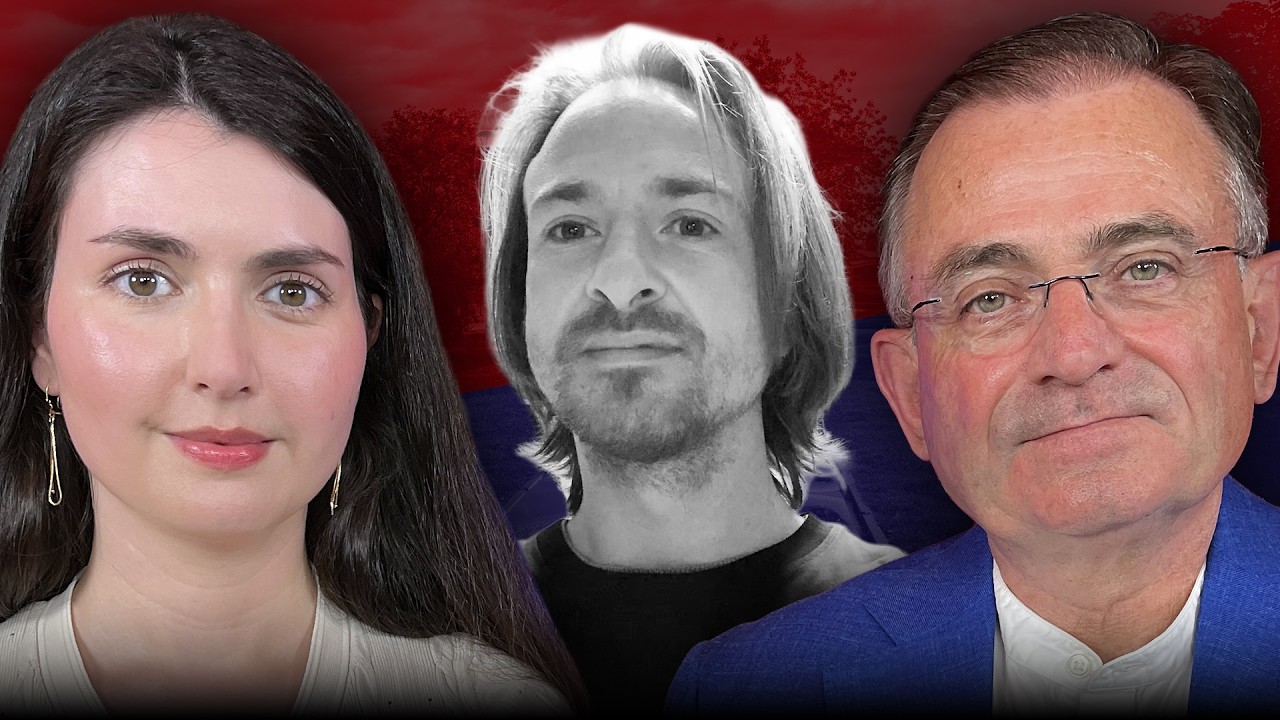
The Silence Around Alex Coughlan | #80
RealEddieHobbs
2K views•2026-05-28
Did China Get to Marco Rubio?
ChinaUnscripted
1K views•2026-05-28

Sonko Is Now Speaker. But Who Are the Two Men Who Made His Return Possible?
djbwakali
11K views•2026-05-28

Why Was There No Mention of Israel or Gaza in The DNC's Autopsy Report
wearefindout
227 views•2026-05-29

Trump Just Got HUMILIATED... And It's Going VIRAL
harryjsisson
46K views•2026-05-29



