This video offers a necessary re-evaluation of art history by restoring agency to the women who were long treated as mere objects. It successfully shifts the narrative from the myth of the solitary male genius to the reality of collaborative creation.
Install our extension to search inside any video instantly.
The Women Behind Famous Nude Paintings #artist #artwork #artstagram #artlover #creativepassionAdded:
The women behind famous nude paintings.
Behind many of the world's most famous nude paintings are women whose names history almost forgot. We remember the artists. We remember the masterpieces hanging in museums. But the women who posed, inspired, endured long hours in studios and became the physical presence behind these iconic images often disappeared into silence. For centuries, the nude female body stood at the center of western art. Painters called it beauty, mythology, allegory, or ideal form. But behind every Venus, every goddess, every reclining figure, there was usually a real woman, a model, a lover, a muse, a worker, sometimes even someone struggling simply to survive. In Renaissance Europe, artists rarely painted directly from imagination alone.
Real women posed in workshops and private studios, while painters studied anatomy, posture, and light across the body. Yet these women were almost never credited publicly. The artist became immortal. The model became invisible.
Some women, however, left traces strong enough to survive history. One of the most famous examples is the mysterious woman believed to have inspired Mona Lisa by Leonardo da Vinci. Although not a nude portrait, it reflects the broader pattern of women becoming symbols through male artistic interpretation.
Their real personalities often disappeared beneath the image itself. In later centuries, the connection between artist and model became even more emotionally complicated. Many models were also lovers, companions, or muses.
Amadeo Modiglani painted elongated nude figures inspired by women close to his life, creating images filled with intimacy and melancholy. Pablo Picasso repeatedly transformed the women around him into shifting visual experiments, blending affection, obsession, and artistic control. But the reality for many models was far less romantic than art history sometimes suggests. Posing nude often carried social stigma, especially in conservative societies.
Many women who modeled for artists came from poor backgrounds and had limited economic opportunities. Sitting for painters could provide income, but it also risked judgment and exclusion.
Society admired the finished painting while often criticizing the woman who made it possible. In academic studios of the 19th century, nude models became essential to artistic training. Artists spent years learning anatomy through life drawing sessions. Yet, even in these educational settings, the model remained anonymous. She was treated as part of the process rather than part of the artwork's authorship. At the same time, some women used modeling as a form of agency and entry into artistic circles. Certain muses became influential figures within creative communities, shaping artistic movements in ways rarely acknowledged publicly.
Their presence changed compositions, emotional tone, and even entire styles of painting. The relationship between artist and model also raises deeper questions about power. Who controls the image? Who decides how the body is seen?
Throughout art history, women were often represented through the male gaze, idealized, romanticized, fragmented, or transformed into symbols rather than individuals. Modern scholarship has begun revisiting these histories, asking not only who painted the artwork, but who lived inside it. Today, viewers increasingly look beyond the canvas itself. They want to know the stories behind the pose, the emotional reality behind the beauty, and the identity of the person whose body became immortalized in paint. Because these women were never just passive subjects.
They were collaborators in the creation of art history itself. Present in every brush stroke.
Related Videos

Futurism: The Radical Art Revolution That Predicted the Modern World
HENITalks
154 views•2026-05-29

Jack Levine, Witches' Sabbath
smarthistory-art-history
471 views•2026-05-29

고가 중국도자기 경매
고가古家고도자기경매
203 views•2026-05-29

क्या भगवान शिव हारिती की नकल हैं? झूठे दावे का पर्दाफाश | हारिती बौद्ध देवी बनाम भगवान शिव
sanatansamiksha
1K views•2026-05-30

This is one of the biggest street art exhibitions in London but there’s a twist 👀 Danish
ExploringLondonCity
1K views•2026-05-30
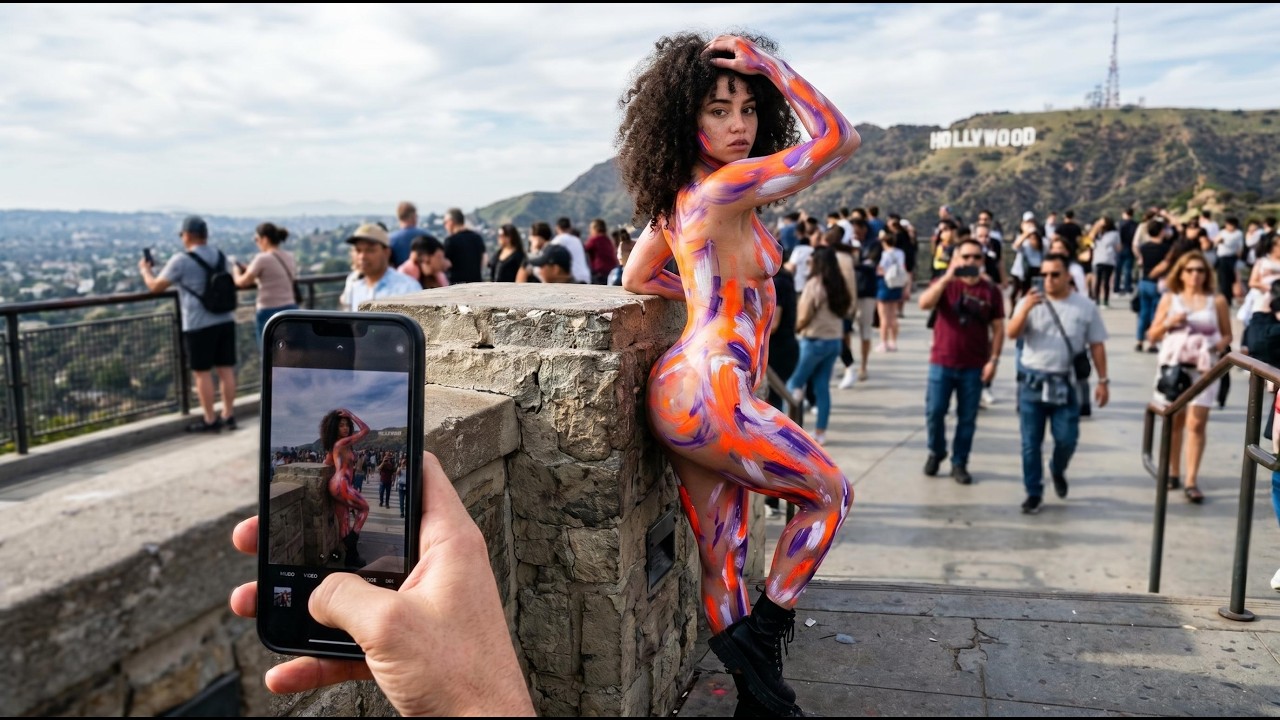
How Hollywood Body Art Changed the Way America Sees the Human Body Forever
Ink_and_Instinct
213 views•2026-06-02

Gudok Bull #4 #gudok #instruments #russia #russian #ancient #ancienthistory #sunoai #suno
aimechanicalbull
289 views•2026-05-29

Michelangelo Knew the Right Answer. They Ignored Him for 400 Years. | VERSO
VersoArt
123 views•2026-05-29



