Afro-Panamanian communities in Panama have a rich historical heritage spanning colonial-era enslaved people, Canal construction workers, and Caribbean migrants, yet their history has been systematically neglected in education; the arts serve as essential tools for preserving cultural identity, healing intergenerational trauma, and fostering community pride, making education and artistic expression key to liberation and social inclusion.
Installieren Sie unsere Erweiterung an, um sofort in jedem Video zu suchen
Celebrating our Afro descendants in PanamaHinzugefügt:
Hello everyone and thank you for joining us once again for another episode of our time. Today I have the honor to be in the presence of one of the most important figures in my Panama. I am here in Panama right now and this is someone who has dedicated her life to celebrating our African heritage and engaging our communities in learning more about it. Her name is Krishna Camarena Surgeon. Thank you so much for being here. Thank you so much for all that you have been doing. Let's reflect on it. Let's jump into the water. Thank you, Misa. Thank you for inviting me for this uh gorgeous time to be here and talk about our uh heritage, our black heritage and uh most of all to uh put in the table our agenda about our black community, our black population in Panama and what has been done until this time. Yeah.
prior to becoming someone who uh was in in the role of heading the national secretariat of politics and development for Afroanameanians which you have done with such commitment and dedication.
How did you become inspired to do this kind of work long before you were you know so immersed in in these programs?
Well, I have to say first of all that I'm proud to be from Cologne.
So being um and grow there being the school had my friends have all all this um community living. Um my grandmother was from the Methodist church. So I also have this influences of u um um of this um sol solidarity and the way they the work uh this the part of spiritual part >> I am Catholic but also have this u become in my family >> because my my mother's side was from bokeen to so we have this all afroentian culture in my house >> so I I I think that it all of these make make this, you know, growing things inside of me um that um will bring me through a nice and beautiful road >> of knowledge of experiences and uh that today we can say is part of my growing >> as a black person. What a journey.
>> What a journey. And you know, all the different things that you've been doing, not only in your family experience, but in your community. It sounds like one thing led to the other. And it was an organic experience of learning that brought you to this moment. in, you know, as an educator, as an artist, both a visual artist because of graphic design and also a dancer.
How would you describe that these things have come together to inform your work?
>> Yes, indeed. Well, after I have my studies and my degrees, um I was sent to work at the fine arts school in Col, my birthplace.
>> And um that experience make me, you know, work between all the arts um experiences, the the the visual, the dances, the theater, and the music. M and we start working our identity.
Indeed, you have you know you have to uh accomplish the program of music and you have to know about back you have to know about the foring and you have to know in in in fine arts you know have you know but um my idea of working with the teachers and the student was to work our identity our black identity our cologne identity. Yes. and I was there for 10 years. So we accomplished that and working in the school and out of the school with the community in the culture part >> I think that I learned a lot and that make me u have a sense of need of the need that our our people our community >> right >> they need to be you know out of the frontiers of the the colon and work outside so we can change the image >> that people used to have about people of Kan, >> right?
>> That is the most blackish community in Panama.
>> Yes.
>> And that's because we have a have history that make it that way. We receive for a colonial part. We receive all these people enslaved in Cologne in the part of Portoello and all that care set. And after that we have the construction of the train and the canal and the canal.
>> And then we have all our brothers and sisters that came from the uh different islands of the Caribbean side.
>> Yes. And we leave also the part the partner Montal part of our history when Panama was part of Colombia and also receive from Colombia all this part of black peoples that came from a shoo. So we have we have a lot and think what is the basement of our panameanian side >> and the highly experienced and the highly culture and the highly that you can see is black.
>> It's black.
>> It's black.
>> It's black. So many sources of our black history.
>> Exactly. Exactly. So this this uh different experiences this different view point of view of our panameia. What are the panameia? What are we what we as Afro descendants make me you know go forward experiencing learning and after that I became like a instrument in >> re uh teaching. Yes.
>> To anyone, my students.
>> Yes.
>> The community, a group and women, a Jews, we work with everyone. And we always uh stand on the point that we have to be proud to be Afro descendant.
We have to be proud that we came we come from an race that have been the major company of our nation.
>> Yes.
>> Through what they have done through what they have of that history and uh the way that we as Panamania are. So that make me go through deep deep seas, >> deep watersh >> and um every day until today I still you know looking, searching, learning and pondering that black history. Yeah.
>> That uh is part of panamian.
>> Yeah. a panameanian history in in Latin America.
>> So all of these experiences uh it sounds like they have really um motivated you to not only keep teaching but also keep learning.
>> Exactly.
>> Keep learning. I was really um interested in something that you said about the power of the arts. I tend to think I'm learning. There's nothing about our humanness that we can learn without the arts. The arts are like like water for soup.
>> Exactly. I feel and because I have the opportunity to work with artists every day at a university of the arts, I frequently hear them talk about how the arts help them understand what they're going through, uh, express it, learn about their history. And a lot of them have told me that they see their art as an an instrument of activivism, you know, where art and activism come together and I'm curious to know if you see yourself as an artist.
Indeed, I see myself that way because art is what human do since uh human is human.
>> Mhm.
>> And is the way that you express any emotion that you have inside of you.
Even though if you dance, if you paint, if you do theater, whatever you do is the man the mankind way of expression.
We saw it in the caves.
>> Mhm. when they painted their life in the caves >> and we see it in all the parts of history with the dancing with the rituals with the spirituals movement and then it's the way man has uh the instrument to express the feelings.
>> Yes.
>> To express the proud to express their history. Yes.
>> So through art you can uh make changes >> in every way in every direction you can make changes >> because you touch the inside of of mankind. Touch >> that that little thing inside that connect with your mind and then connect with your body. Mhm.
>> So, uh it's very important >> and our ancestors exactly made it that way.
>> That's what we receive.
>> Yes.
>> And that's what we are doing now. We are transmitting what we learn from generation to generation through generation until today is our ancestors feelings emotions.
>> Yes.
>> History.
>> Yes.
>> Is to that.
>> When we moves, >> when we dance, >> pain.
>> Yeah.
>> When we talk.
>> Yes. But we express when we seeing when we singing your soul is out there.
>> Mhm.
>> So yes.
>> So so the arts have been a healing agent.
>> Yeah.
>> For generations.
>> For generations. And for those of us who belong to communities that have been oppressed for centuries where the the wounds, the pain, the trauma has been unattended >> and we have been expected to function as if nothing happened.
>> Exactly.
>> The arts have been there, there there. It shows up in like you I I I saw when you did that the way we move even when we walk >> the food the the things that we say the the phrases that we inherited the arts the arts there >> when we have spiritual se was the pain >> was the slavers >> when we yeah hear the hymns and uh Methodist church or whatever baptism.
>> Yeah.
>> Is it's our ancestor.
>> Yeah.
>> Seeing the pain, asking for um have um energy, ask help, asking for changes, looking for better days, >> right?
>> And we still do still we still do it today.
>> Yes. we still dance for that today.
And um a very important thing that I would like to say if that is is that uh if you go to the academia of course you have to you know learn about if you um going to ballet you will learn about >> but before then we were there first >> first >> and we're still Here >> we were there.
>> Yes.
>> If you go to music, you were nervous about back in the song. But before then, >> we were there.
>> Yes.
>> And we have to be insure that it was that way. We can you know fool around and get fool around that they are the master. The master learn from we.
>> Mhm. The masters learn from we >> our ancestors. So >> we have to be proud >> and we have to express our art as is a beast.
>> Exactly.
>> Yes. We can learn about all of them.
Yes. But first of them we have to remember that we were there.
>> Exactly. And I'm so thankful about the role you you played in in in your birthplace, Cologne, teaching everybody in the community, not only our Afro descendant community, but everyone about our history because yes, it's been neglected.
And um I feel that there's a growing movement.
It's been going on for years and years and years, but something right now >> feels like it's picking up momentum.
>> Yeah.
>> And there are more young people involved in this experience of, you know, desire to learn more about our history and that gives me a sense of hope. What gives you a sense of hope?
>> Well, um that generation that is coming up that is raising up very very near of us.
>> Uh they're coming with this uh uh session with this um um knowledges about what is to be what what should be when you said you are afraid descendant.
They're coming up very strongly and they're walking with with heart seat.
>> And I hope that with them we can also get into that part of sanation that we need >> that we still receive from our ancestor.
We still having those pains. We still have it.
>> Yes. And we hope that with the new generation we can heal >> and we can pass page about that pain and we can walk forward with an ambush mind vision >> and uh most of all most of all inclusion of our population our communities.
>> Yeah. in all the the levels of our uh development and our social development as panaminian here in this country.
>> Absolutely. Absolutely. And I'm glad to see that the youth is really invested >> and also that it's working with the the elders. the youth working with the elders who've been busy in this this movement to teach to to retach, >> right?
>> Uh and and it brings generations together and healing can happen in that way because some people are more involved in it than others. And so they can serve as a support >> Exactly. to those that are just beginning to wonder and just beginning to research um about our history that can help our our our liberation.
I don't know that it's the only thing but it's a really significant part of our liberation to really know who we are, >> our value, >> where we come from.
>> Yes. Because something that um we never take in consideration is like you don't know your name. You know your Melissa.
>> Mhm.
>> But what's your African name?
>> We don't know it.
>> We don't know because they took us.
They took out this from us. We don't know our African name.
We don't know from what ethnicity we come from. We came from where we came from and we have the name of our colonizers.
>> Yes, we don't have original names and that's something that I think is we still have that to repair.
We have to repair that. Hopefully we could, you know, make our ADN test so we can know from what part of what ethnicity of what part of Africa um I have blood of I know >> I know mine.
>> I've done a little bit >> but but it's not you know the general for the general of a descendant to know it.
>> Exactly. So there's there are things that we still have to um heal about it because >> we don't know our African name, >> right?
>> And that's is like you don't know who's your father or your mother.
>> We know it. I know your mother is here, but we don't know from the original where where we come from >> exactly >> where we come from. And I think that we have to know because we have in Panama especially talking about Panama >> our the diversity or African diversity because we don't come from what ethnicity we we are the mixture of a lot of them and also we are the mixture of other human beings >> cultural >> and other agencies.
>> Exactly.
>> Panel.
>> Exactly.
>> So it's important you have to know who you are.
>> So you can stand up and you can know where you going to. If you don't know who you are, you will know where are you going to. And I think um that's been part of our problem because that's the way we have been educated.
>> Yeah.
>> We have been educated not to be black.
Exactly.
>> We have been educated to be anyone but black.
>> Right.
>> That's sad to say, but it's a reality in our country. And hopefully this generation can help and be an instrument to change all these little things that they seems were a huge >> Yes.
>> issue.
>> Huge. in our um history as Afro setting.
Hopefully that will happen. I have faith that it will just because of how involved they are in this investigation about our history because yes, we will uh be liberated by the the knowledge, the understanding of our value that we can stand firmly in it.
uh and and no longer feel like the stories the oppressor told us >> are the stories we should believe that one is better than the other >> and it's looking hopeful in that way.
Sadly, there's still a lot of discrimination uh not only um here in Panama but worldwide.
So, I'm curious about the way you see multiple organizations, entities, institutions collaborating.
>> Yes.
>> To spread knowledge. There may be things that we may not see in our lifetime, >> but what are the collaborations that you imagine can help the legacy that that we're trying to to create?
>> Well, the main one I have to say is education.
We have to part from there. Of course, we need the support of all the institutions, all all the uh civil organizations, all the international uh organizations, the community, the the the leaders and communities. But education is the key.
It is >> that we can have changes that really can spread on a multi multiface can be spread if we do the correct things in education.
We have to work looking for definitely um erase discrimination in schools. If you if you can guarantee that we can be sure that outside we don't we will not have this this uh uh kind of um misattending situation for black people and other ethnices.
>> Correct.
>> It's not only with the blanks.
>> Yeah. with this the different religions >> and rest of fireings for example.
>> But education if we can guarantee that we can guarantee that our real history is teach >> where we come from and what we have given to the construction of nations in America in the Caribbean. I think we can uh close our eyes and see that the job has been done.
>> Has been done >> because um the officer is still in the system.
>> Yes. This we still have this discrimination of classes, discrimination of uh colors in our skin, discrimination in the in the hair, >> discrimination now you you are you are vaginalist and I'm Catholic. Mhm.
>> When we can erase all this in the system in the education system, we have gain.
>> Agreed.
>> So, education is key.
>> Is key.
>> It's key. And because intentionally, not only here in Panama, but worldwide, systems were created in academic settings where the full story was not told.
So that everything that the oppressor needs is preserved.
Great resistance from the oppressor is happening right now because we are learning more about ourselves.
>> Exactly.
>> And so it's going to be difficult to get to the other side uh because we have to expect resistance.
The more we work together and and do the reteing like you were saying, we will make it.
We've made it this long.
>> Yes, >> we will make it.
>> We will make it.
>> And uh it's important to say that what we can go against evolution >> and um as mankind we have been in constantly evolution >> that we call progress in sometimes.
But we also have to be very smart to also make our evolution to get what we want.
>> Yeah.
>> About visibilizing >> the afro descendants histories and what we still do today.
>> Yeah.
21st century and still give give and still give still.
>> It's important to recognize it also.
>> Absolutely. As I was hearing you say that we still give, give, give. It reminds me of how we have been for so long in survival mode going going. So, a a topic that's near and dear to me is burnout.
>> Well, what we have experienced through the years, all the trauma we've experienced without any opportunity for healing, just surviving sets the tone for burnout because all we know is to go go.
And so my hope is that all this education, all this reteing that's happening helps us to honor our ancestors vision of prosperity >> uh with practices that are centered in wellness. We have the tools.
>> Our roots are filled with wellness tools.
>> We can build on them. That's right.
>> We can build on them.
>> I agree with you as and it is important to stand up in that platform so we can go forward.
>> Yes.
>> To a better life with no discrimination, with no profiling and uh our kids can grow just like they are, not trying to be someone else.
>> Exactly.
Just appreciating the >> the beauty >> the beauty the deliciousness that we are.
>> Exactly.
>> Yes.
>> Exactly.
>> Yes.
>> Exactly.
>> Oh Krishna, we could talk about this for hours.
>> Oh yeah.
>> I'm so glad that we had this opportunity.
Thank you so much for sharing your reflections, sharing your journey uh to this moment as an educator, an artist, an activist, an artist, inviting us all to keep learning for healing.
>> Yes. Any little thing that each one can do is like the sand when they're to give.
>> Yeah.
>> A little praying of sand makes the fish.
>> Yes. Yes. What every one of them can do will bring us better days for actually >> a >> Yes. Thank you so much. Thank you so much for joining us today.
Thank you so much for taking time to listen and hopefully reflecting because this is our time.
Ähnliche Videos

They Said Flight Was Impossible—Then Two Bicycle Mechanics Changed Everything#wrightbrothers
umars997
526 views•2026-05-30

#SeamansAct1915 #MaritimeHistory #LifeAtSea #BoatShitCrazyX #SaferWorkEnvironment
BoatShitCrazyX
859 views•2026-06-01

The British Crown Was a Death Sentence
BritanniaAftermath
699 views•2026-05-31

The Aztecs Paid Taxes With CHOCOLATE 🍫👑
historical_club
899 views•2026-05-30

Black Women Were Banned From White Suffrage Groups
Peoplediduknow
782 views•2026-05-31

A Volcano Created Frankenstein — And Killed Summer for a Year
TheDarkSideOfSmth
389 views•2026-05-29

Born into slavery in Beaufort
RoadsanRoots
613 views•2026-05-31

50.32 Judah And Israel Split / Jeroboam's False Religion - 2 Chronicles ch. 10-11
smyrnachristianchurchkokomo
107 views•2026-05-29
Trends

Why Batman Lets The Joker Live 🤨
zackdfilms
9222K views•2026-05-30

They're Complete Trash
penguinz0
558K views•2026-06-04

The Murder of Deputy Caleb Conley
MidwestSafety
810K views•2026-06-04
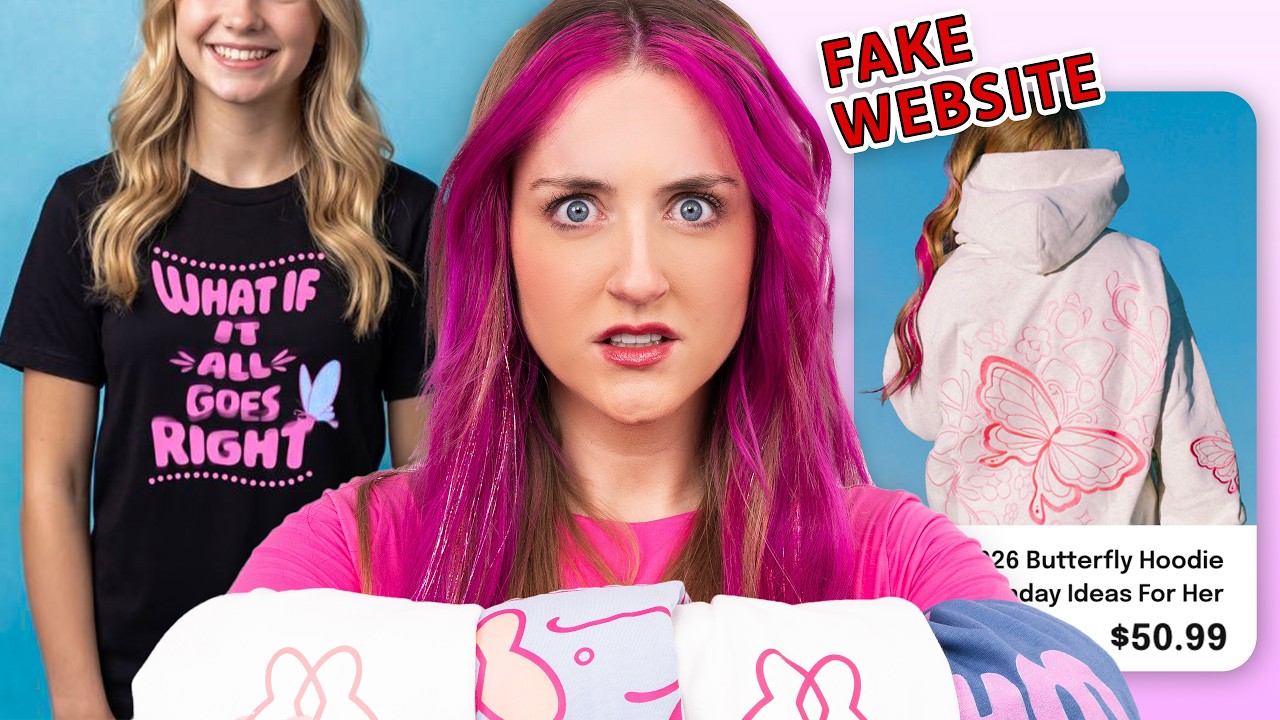
I Bought FAKE HopeScope Merch (and paid a subscriber to give it a makeover) | Hopeful Hauls
HangWithHopescope
158K views•2026-06-04