Haiku OS is a rare triumph of architectural purity, proving that a system designed for responsiveness can still challenge the bloated legacies of mainstream kernels. It remains a defiant masterpiece of engineering that prioritizes technical elegance over the compromises of modern corporate computing.
Install our extension to search inside any video instantly.
SHOCKING UPDATE: This Alternative OS Is Unlike Windows, BSD or Linux
Added:somewhere on a hard drive. Right now, there is an operating system running that was never supposed to survive. It has no relationship to Linux. It shares no code with any BSD. It does not borrow its architecture from Windows. And it does not want to. It was built by a small, mostly unpaid team who watched the company that invented it collapse in 2001. And instead of walking away, they spent the next two decades rebuilding it from nothing, line by line, for no guaranteed reward. What most people are not seeing is that this project just quietly hit its most dangerous moment yet. In the same month, a critical bug was found that could silently corrupt your files. And the strange part is that the people running it told everyone about the bug themselves in public before anyone found out the hard way.
That single decision tells you almost everything about why this operating system refuses to die. To understand why this matters, you have to go back to a company most people have never heard of and a decision most people have never questioned. In the mid 1990s, a former Apple executive named Jean Louie Gassay founded a company called B Inc. and built an operating system called BOS that did something almost nobody else was doing at the time. It treated multimedia, multiple processor cores, and real-time responsiveness as the default, not the exception. While Windows was still fighting with cooperative multitasking, and Mac OS was years from its Unix rebuild, BOS could play multiple video streams, run several applications simultaneously, and stay fluid doing it on hardware that would be considered a toy today. Read that again.
This was happening before most consumer machines even had more than one processor core to take advantage of. But here's where it gets worse for not better. Despite building something technically ahead of its time, the company could never find a business model that worked. Apple flirted with buying BOS to replace the aging classic Mac OS, walked away and chose Next instead. A decision that eventually gave the world Mac OS X. tried to pivot into internet appliances. It tried licensing deals. Nothing stuck. And in 2001, the company that had built one of the most technically respected operating systems of its era sold its assets to Palm for a fraction of what it once hoped to be worth. BOS as a commercial product was dead. Think about what that means for the developers, the enthusiasts, and the small but fiercely loyal user base who had built their workflows around a system that no longer had a company behind it. This is where most stories like this one end. A product dies, its user base scatters, and within a few years, nobody remembers it existed outside of retro computing forms. But that is not what happened here. And this is exactly where the real story begins. Within weeks of Bink's assets being sold off, a group calling itself Open BOS, formed with a single almost reckless goal, rebuild BOS from scratch, without access to the original source code, without corporate backing, and without any guarantee that it would ever be finished. According to project archives and later retrospectives, this was not a fork. It was not a Linux distribution wearing a BOS skin. It was a completely independent operating system written from zero that simply aimed to recreate the feeling and the architecture of what had been lost. This is not nostalgia. This is strategy and it becomes clear the moment you understand what the alternative would have looked like. Every other path available to that community in 2001 involved surrender. They could have moved to Linux and tried to replicate BOS behavior through a desktop environment. The way countless abandoned platforms have been kept alive as skins over someone else's kernel. They could have picked a BSD, added a compatibility layer, and called it close enough.
Instead, they chose the hardest possible root. Build a new kernel, build a new file system, build a new set of native APIs in C++, and build an entire desktop environment on top of it, all while holding on to backward compatibility with a dead company's software. In 2004, the project renamed itself Haiku after a program that had been designed to replace one of BOS's more obscure system components. And the name stuck as the identity of the entire operating system going forward. And here is where the stakes escalate again because building an OS from scratch is not a weekend project.
It is closer to building a small civilization's worth of infrastructure with a handful of volunteers. You need a kernel that manages memory, processes, and hardware. You need a file system and haikus called BFS was designed from the beginning to support live queries.
Meaning the operating system can treat file metadata almost like a searchable database rather than a static folder structure. You need a native windowing system, a font renderer, a browser, a package manager, drivers for a constantly shifting landscape of consumer hardware, and thousands of smaller pieces that most users never think about until they are missing.
Haiku's developers built almost all of it themselves. And what most people are not seeing is how few people that actually was at any given moment. For most of Haiku's history, this was not a company. It was not even a well-funded nonprofit. It was a rotating cast of volunteer contributors, university students, and a handful of extremely dedicated engineers working nights and weekends on a system that had no product, no customers, and no revenue.
The project's first alpha release did not appear until 2009, eight years after Bink's collapse. Alpha 2 arrived in 2010, Alpha 3 in 2011, Alpha 4 in 2012.
Then something even more telling happened after Alpha 4. There was a six-year silence before beta 1 finally shipped in 2018. 6 years. Think about what that gap represents. It is not evidence of a dying project. It is evidence of a project quietly rebuilding its entire foundation, adding real package management through Haikuo and PKGman, and refusing to ship something half finishedish just to generate headlines. This is where the tension shifts because a project in that moves this slowly should by every normal rule of software development have died in that silence. Open source projects without corporate sponsorship and without a visible release cadence almost never survive a gap that long.
Contributors drift away. Interest evaporates. But Haiku did not just survive. It kept building. And the reason why is where the story stops being about nostalgia and starts being about something closer to obsession. The people maintaining Haiku were not trying to recreate a museum piece. They were trying to prove that an entirely independent non-Unix non-winds architecture could still be relevant, still be fast, and still be worth using on modern hardware decades after the operating system landscape had supposedly already been decided by three or four dominant players. Beta 2 followed in 2020, beta 3 in 2021, beta 4 at the end of 2022, and then according to informed project records, beta 5 shipped on September 13th, 2024, roughly a year and a half after its predecessor under the internal build revision HRF57937.
That release brought Haiku's native architecture, its own kernel, its own file system, its own windowing toolkit, closer to something that ordinary users could actually install and depend on for daily tasks, not just admire from a distance in a virtual machine. And this is where everything changes because 2024 was not the end of a long climb. It was the beginning of a much steeper one because the project was about to enter its most active and most exposed period yet. Here is what most coverage of alternative operating systems completely misses. It treats Haiku as a curiosity, a screenshot in a listical sandwiched between FreeBSD and Serenity OS, worth a paragraph and nothing more. What the real story shows is a project that going into 2025 and 2026 finally started resembling something closer to a functioning, if extremely small, software company. The nonprofit behind the project, Haiku, Inc., began publishing detailed monthly activity and financial reports. And what those reports reveal is both encouraging and precarious at the same time. According to the organization's own 24 financial disclosure, 2024 was a record- setting year for donations driven in part by one individual who alone contributed a total of $7,500 through GitHub sponsors. Read that again. A single donor's generosity was significant enough to be called out by name in the dis project's annual financial summary. That is not the funding profile of a stable software platform. That is the funding profile of something surviving on the edge, sustained almost entirely by people who simply refuse to let it disappear. That donation money matters more than it might seem because it directly funds the one person who currently works on Haiku as something close to a full-time job, a contractor known in the community by the handle Waddlesplash. According to the project's own activity reports, this contractor worked the entirety of 2024 on Haiku. And that continued work is what made Beta 5 possible. Think about what that means for a project that some people still dismiss as a dead end from the early 2000s. In 2026, Haiku's forward momentum is not being carried by a large corporate engineering team. It is being carried by a handful of volunteers and essentially one paid engineer funded by donations that fluctuate year-to-year working on an operating system that competes at least philosophically with platforms backed by trillion dollar companies. And this is exactly where the pressure starts to build because 2026 turned out to be the year Haiku finally had to prove it could scale beyond a hobbyist curiosity. The project was accepted once again into Google Summer of Code. And according to the organization's own announcements, three new developers were selected for 2026, including a project focused on modernizing Haiku's Bluetooth stack, implementing support for the HFP profile used in hands-free audio devices. On the surface, that sounds like a minor technical footnote. But consider what it actually represents. An operating system built from an architecture nearly 30 years old is being extended right now to support the exact kind of wireless audio hardware people expect any modern platform to handle without a second thought. This is not a museum exhibit.
This is active ongoing engineering happening in public, funded by a nonprofit that most casual computer users have never heard of. But here's where it gets worse, and this is the part almost nobody outside the Haiku community has been talking about. In July 2026, the project published its activity report covering June. And buried inside a document signed personally by its lead engineer was a warning that should have been a much bigger story than it became. According to that report, Haiku now has a definite release timeline for its next version with a branch expected by the end of that week and a target release date in mid- August. That should be good news.
And on its own, it is. A project moving from beta 5 toward beta 6 after roughly two years of silent groundwork is exactly the kind of momentum a struggling platform needs. But the same report, according to independent technical coverage of it, also disclosed something far more uncomfortable sitting underneath that good news. The real story is this. While the developers were finalizing the timeline for beta 6, they were simultaneously uncovering serious, previously undetected bugs in some of the most sensitive parts of the operating system. According to detailed reporting on the June 2026 activity report, the release reveals serious bugs in Haiku's newly merged virtualization support, its EFI bootloadader, and its IOER defects serious enough that they could corrupt data. Think about what that phrase actually means for a modern operating system in 2026. This is not a rendering glitch in a background app.
This is the possibility that files written to disk under certain conditions could come out damaged silently without warning the user until it is too late.
And this is where everything changes because the story stops being about an underdog operating system charming its way toward relevance and starts being about whether that underdog can survive contact with its own ambition. The virtualization piece of the story deserves its own moment because it captures exactly how fragile cutting edge development can be inside a project this small. Back in 2824, as part of that same Google Summer of Code program, a student developer began porting a tool called NVMM, originally built for NetBSD to give Haiku hardware accelerated virtualization, the kind of feature that would let Haiku run guest operating systems, including Linux and even Haiku itself, at near native speed inside something like QMU. According to Foronx's coverage of the June 2026 status report, that NVMM port has finally been merged into upstream Haiku after nearly two years of work, arriving with AMD support and a round of cleanup and optimization. That sounds like a breakthrough, and in some ways it is, but the same coverage delivers the twist immediately afterward. According to the report, it is already known that the port does not fully work, so it remains disabled by default. Think about that sequencing. A feature two years in the making finally lands in the codebase and the very same announcement that celebrates it has to immediately warn people not to turn it on. According to the deeper technical breakdown of that same report, the failure is not cosmetic. Guest systems of any real complexity, including both Haiku and Linux crash late in the boot process when they attempt to touch memory that was never properly mapped. In plain terms, the virtual machine starts booting, gets most of the way through, and then collapses because the underlying memory management was not wired up correctly. This is the kind of bug that does not just annoy a developer testing a feature branch. It is the kind of bug that left undiscovered could have shipped inside a stable release and silently damaged data or destabilized systems for ordinary users who had no idea they were running unfinished virtualization code. And this is exactly why the timing of Haiku's disclosure matters so much more than it first appears. Here is what most people are not seeing about how this was handled.
Instead of quietly patching the issue and staying silent or delaying the disclosure until after Beta 6 shipped to avoid bad press, the project put the bug in writing in its own public monthly report with the person responsible for much of the current engineering signing his name to it. According to commentary on that report, this cander is unusual and it reflects a contributor base that is more alive and more engaged than its critics tend to give it credit for. But Cander does not eliminate risk. It just changes who gets to see it coming.
Somewhere between that mid- August target release date and the discovery of bugs capable of corrupting data, Haiku's development team is now racing against its own optimism, trying to fix problems in the EFI loader and IOuler before the door opens to a much wider group of testers who will not be as forgiving as the people who found the bugs in the first place. And this is where the story widens out into something bigger than one operating systems bug tracker.
Because Haiku is not fighting this battle alone in the broader landscape of alternatives to Windows, Mac OS, and Linux. According to recent analysis of that landscape, other independent systems occupy strange and often surprising positions of influence.
FreeBSD, for instance, rarely appears on a consumer desktop. And yet, according to reporting on its real world footprint, it is quietly powered infrastructure behind Netflix's streaming systems, Sony's PlayStation 4 and PlayStation 5 consoles, and enterprise networking equipment. All while most of the people benefiting from it never see its installer or learn its name. That is what real influence without visibility looks like.
Meanwhile, projects like Serenity OS have taken an even more radical approach than Haiku. Building not just a kernel and desktop, but an entire independent web browser from scratch. And according to coverage of that project, it stands as one of the most ambitious non- Linux nonBSD operating system efforts currently active built entirely from an independent codebase. Haiku sits in the middle of this constellation of alternatives, older than Serenity OS, more consumer-facing than FreeBSD's server deployments, and arguably more architecturally stubborn than either because it refuses to derive its identity from Unix at all. That architectural stubbornness is the part that deserves the most attention, because it is the entire reason Haiku still matters as a story instead of as a museum exhibit. Linux is a kernel that can be dressed up in a thousand different distributions, but underneath it inherits decades of Unix philosophy.
Every BSD, whether it is FreeBSD, OpenBSD, or something more obscure, is a direct continuation of the original Berkeley Unix lineage. Windows carries its own multi-deade legacy stretching back through NT architecture decisions made in the early 1990s. Haiku owes none of them anything. its kernel, its native B API written in C++, its file system and its desktop environment called Open Tracker were all designed around a single obsession that BOS had in the 1990s and that Haiku has stubbornly preserved. The operating system itself should never feel sluggish no matter how many things are happening on screen at once because responsiveness was treated as a foundational requirement, not an optimization added later. Think about what that philosophy means when applied to modern hardware instead of 1990s hardware. On a contemporary machine, Haiku does not need aggressive resource, management tricks to feel fast because its entire architecture was built around low overhead from day one. This is why hobbyists who install Haiku on old laptops, machines that would struggle badly under a modern Windows install or even a heavier Linux desktop environment, routinely describe the experience as startlingly responsive.
But here is the darker side of that same story, the side that rarely makes it into glowing hobbyist reviews. That responsiveness comes at a direct cost because every single driver, every piece of hardware support and every application compatibility layer has to be built or maintained by that same small team. There is no massive vendor ecosystem writing Haiku drivers the way there is for Windows or Linux. Every laptop's Wi-Fi chipset, every graphics card's acceleration support, every printer's driver, all of it depends on the sustained attention of people working largely for free. This is where the story's power shift becomes visible because Haiku is now attempting something that goes far beyond simply staying alive on x86 hardware. According to the project's own 2026 activity reporting, development has actively pushed towards supporting entirely new processor architectures with an ARM 64 port featured prominently in the organization's March 2026 activity and contract report and the operating systems official technical documentation now lists support extending to IIA32, x86,664 and ricev platforms. Think about what that expansion actually requires.
Porting an entire independent operating system, kernel, file system, and all to a fundamentally different processor architecture is not a weekend patch. It is a multi-year undertaking that most well-unded companies approach with dedicated silicon teams and enormous budgets. Haiku is attempting it with volunteers and one contractor. At the same time, it is trying to stabilize virtualization support and fix bugs that could corrupt user data. And this is exactly the moment where the consequences of all of this start to stack on top of each other. A project that spent six silent years rebuilding its foundation between alpha 4 and beta 1 is now in 2026 simultaneously racing toward a beta 6 release. Stabilizing brand new virtualization support that does not yet work, patching data corruption capable bugs in its bootloader and IOuler, extending Bluetooth support for modern hardware through student contributors and pushing into entirely new processor architectures. all funded by a donation pool that in its best recorded year was boyed significantly by a single generous supporter. Every one of those threads depends on the same small handful of people having enough time, enough funding, and enough continued motivation to keep pulling them forward simultaneously. If any one of those threads snaps, the others do not necessarily continue moving at the same pace. What makes this genuinely uncertain rather than simply a feel-good underdog story is that Haiku has already demonstrated it is capable of going quiet for years at a time without warning. It did it once between 2012 in 2018 and the world assumed the project might be finished. It came back stronger with real package management and a functioning beta track, but there is no contractual guarantee that the pattern repeats favorably a second time.
Software funded primarily by voluntary donations and a single part-time contractor exists in a permanently fragile state. One bad year of funding, one burned out lead. Developer, one unresolved data corruption bug shipped into a stable release away from a very different kind of story than the one being told about it right now. So the real question is not whether Haiku is technically impressive because by any honest measure an independently built non- Unix non Windows operating system surviving and still shipping new betas 25 years after its founding company collapsed is already an extraordinary technical achievement. The real question is what happens next when beta 6 either lands cleanly in mid- August carrying fixes for those data corruption risks or slips further while a wider testing population starts hitting bugs the small team has not caught yet. The real question is whether RM64 support arrives fast enough to matter in a hardware landscape that is shifting away from x86 dominance faster than almost anyone predicted a decade ago. The real question is whether donationdriven funding can keep pace with an ambition list that keeps growing every single month according to the project's own public reporting. Nobody currently has a confirmed answer to any of that. Not the developers writing the code, not the donors funding the one paid contractor, and not the growing audience of technology observers who are only now starting to notice that this dead operating system from 2001 never actually stopped moving. What is certain is that sometime around mid August 2026, a small, stubborn, chronically underfunded project is going to ship something into the world that either quietly proves an entire alternative philosophy of computing can still hold its ground in 2026 or exposes exactly how thin the margin has always been underneath it. Which version of that story you end up watching unfold has not been decided yet. And that more than any single feature or bug report is why this is not
Related Videos

6:13
Computer Science
TOP 15 Data compression Interview Questions and Answers 2019 Part-2 | Data compression | Wisdom jobs
wisdomjobs
281 views•2019-06-28

27:51
Computer Science
CTS 158: 802.11w Management Frame Protection
ClearToSend
4K views•2019-02-04
23:21
Computer Science
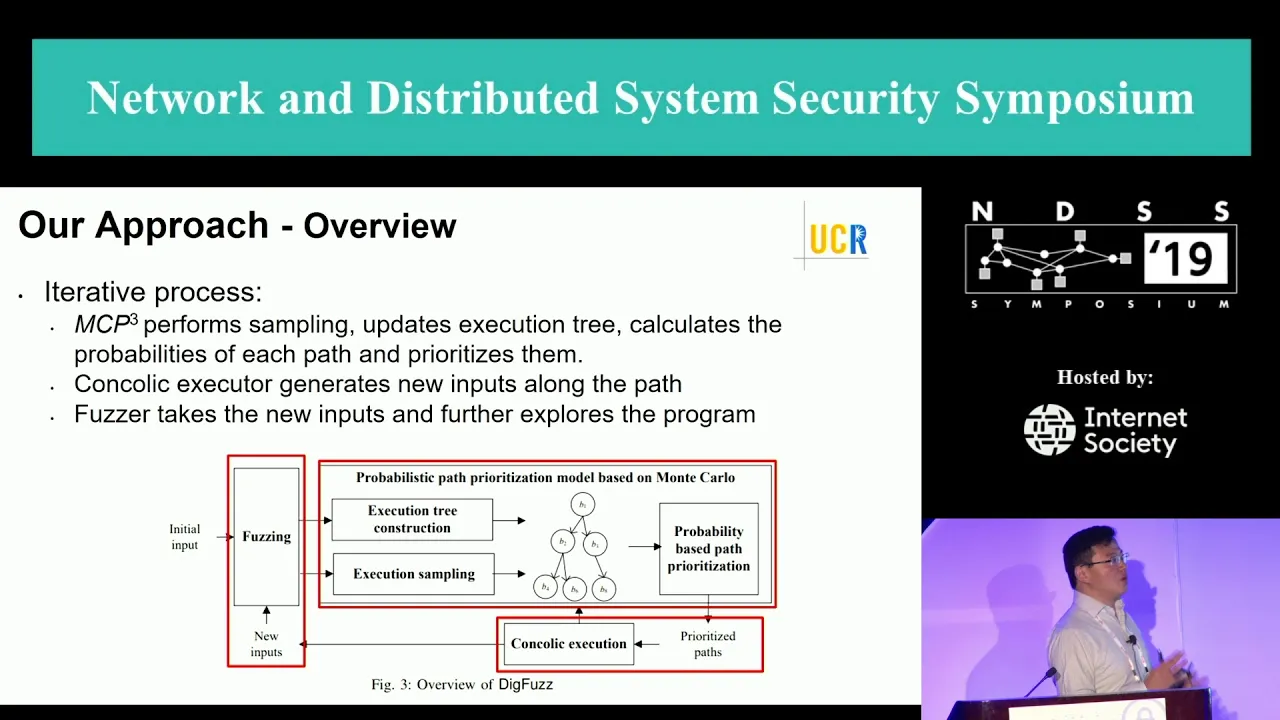
NDSS 2019 Send Hardest Problems My Way: Probabilistic Path Prioritization for Hybrid Fuzzing
NDSSSymposium
496 views•2019-04-02

12:48
Computer Science
How realistic is Cities: Skylines?
CityBeautiful
159K views•2019-02-14

46:39
Computer Science
GUIs & TUIs: Choosing a User Interface for Your Python Project | Real Python Podcast
realpython
2K views•2025-04-04

25:15
Computer Science
The OSI Model - Explained by Example
hnasr
225K views•2019-05-12

1:10:47
Computer Science
Cloud Computing - Introduction
elithecomputerguy
98K views•2019-10-07

2:24
Computer Science
From Traveler's Dilemma to Dynamic Routing | Demystifying Networking
IITBombayJuly
5K views•2019-08-04
Trending

13:25
Business
Playstation NO DISC/NO BUY Fight Is Over...
DavidJaffeGames
4K views•2026-07-23

16:52
Anthropology
Americans Confused in Australia for 17 Minutes Straight
IWrocker
17K views•2026-07-23

7:38
Blockchain & Crypto
Bitcoin Social Interest: Dozens of us Left
benjaminjcowen
12K views•2026-07-23

1:19:25
Biology
LIVE NOW! Cellular Structure and Functions | Complete Cell Biology Lecture | Anatomy & Physiology
MukhtarAliyu-t7m
387 views•2026-07-23