Ada exemplifies a rare era of software engineering where safety was treated with the same physical gravity as hardware, prioritizing absolute reliability over modern development speed. Its enduring legacy in aviation proves that in high-stakes environments, the discipline of the language remains the last line of defense against human fallibility.
Install our extension to search inside any video instantly.
ADA: THE LANGUAGE THE PENTAGON FORCES ONTO EVERY FIGHTER JET
Added:On June 4th, 1996, an unmanned Ariani 5 rocket lifted off from a launchpad in French Guana, carrying four European scientific satellites worth roughly $500 million, built to study how the solar wind interacts with Earth's magnetic field.
37 seconds later, it veered off course and tore itself apart in the sky above the launch site. The cause traced back to a single line of flight software that converted a large number into a smaller data type without checking whether it would fit. The rocket's own guidance computer crashed from the error and its backup computer running identical code crashed the same way half a second later, leaving the rocket with no valid flight data at all.
Total loss, roughly $370 million on a program that had cost $7 billion to develop over the previous decade. The software was written in ADA, the programming language the Pentagon spent over a decade building specifically to prevent disasters like this one. ADA still runs the flight controls on the F-22 Raptor today. It still flies the primary flight computers on the Boeing 777.
The Department of Defense once forced its use across nearly every weapons program in the country. This is the story of why and of how the language built to stop catastrophic failures ended up at the center of one of the most famous ones.
By the mid 1970s, the Department of Defense had a problem nobody had planned for. Its weapons programs were running on more than 450 different programming languages and dialects. Each one written for a specific missile, radar, or aircraft, none of them compatible with each other. Military software was expected to stay in service for 30 years or more, decades longer than the commercial industry planned for, and every one of those languages needed its own compilers, its own trained programmers, and its own maintenance budget for the life of the weapon system.
Code written for one aircraft couldn't be reused on another. The Pentagon was paying to reinvent the same wheel hundreds of times over.
In 1975, the Department of Defense formed a working group to fix this by building one language to replace all the others rather than picking an existing one off the shelf. The requirements went through several rounds of public review.
Each one tightened based on feedback from academics and industry engineers and published under a sequence of internal code names ending in man, a running joke inside the working group.
By 1977, four contractors were hired to submit competing full language designs codenamed red, green, blue, and yellow so no one could lobby based on the company behind them. In May 1979, the green proposal won designed by a French engineer named Jun Ichbaya at a company called CII Honeywell Bull. A committee named the new language Ada after Augusta Ada King, Countess of Love Lace, the mathematician credited with writing the first published computer algorithm more than a century before an electronic computer existed to run one. Ichbaya designed ADA around a single unusual priority, readability over cleverness.
Most programming languages of the era rewarded short, dense code that only its original author could easily follow.
Ada's syntax was deliberately verbose, spelling out full words like procedure and end if instead of the symbols other languages used because a 30-year-old weapons program would be maintained by programmers who had never met the person who originally wrote it, sometimes decades after that person had retired or died. The language enforced strict data typing, catching entire categories of errors, like mixing up a measurement in feet with one in meters at compile time before the code ever ran rather than letting them slip through into a working missile or aircraft. It also built in native support for concurrent realtime processing, letting a single program safely manage multiple sensors and systems running at once, a feature few commercial languages of 1980 handled cleanly.
In 1983, the American National Standards Institute made it official, publishing ADA 83 as a national standard.
That same year, the Department of Defense issued its first formal policy requiring ADA for new missionritical embedded software across the armed forces with waiverss granted only case by case. The early years were rough. ADA was a large complicated language and the first compiler struggled to implement all of it correctly. The first validated ADA compiler wasn't certified until April 1983, 4 years after the language design was chosen. Compile times were slow. generated code often ran slower than handwritten assembly. And the government's own mandatory certification suite for compilers, an enormous validation test called the ACVC became its own multi-year bottleneck for vendors trying to sell ADA tools.
Programmers used to turser languages found ADA's verbosity bureaucratic, spelling out if X then Y and if where other languages used a few symbols.
Ichbaya himself once predicted that within a decade only Ada and Lisp would remain in serious use among programmers.
Neither happened the way he expected.
Then came Ariani 5.
The rocket's guidance software included a routine that measured the vehicle's horizontal velocity and converted that measurement from a 64-bit floating point number into a 16- bit integer. On the older, slower Ariani 4 rocket, that number never grew large enough to cause a problem. Ariani 5 flew a different trajectory and accelerated faster. And 37 seconds after liftoff, the real velocity value exceeded what a 16bit integer could hold. ADA's strict type system did exactly what it was designed to do. It detected the overflow and raised an exception rather than silently producing garbage data. The catastrophe wasn't that Ada failed to catch the error. It was that the engineers who wrote the flight software had left that particular conversion unprotected with no code telling the computer what to do once the exception fired. So the whole guidance system simply shut itself down mid-flight, making it worse. That entire routine only mattered before liftoff for aligning the rocket's platform on the ground.
It served no purpose once the rocket was airborne and nobody had removed it because it had flown safely on every Ariani 4 mission for a decade. The Ariani 5 inquiry board published its findings within 6 weeks and the conclusion mattered more than the headline. The failure wasn't a flaw in the ADA language. It was a systems engineering decision. Reused code carried over from an earlier rocket without revalidating it against a faster flight profile. If anything, Ada's strictness was the reason the failure was detectable and traceable within weeks instead of remaining a mystery.
By the mid 1990s, the Pentagon's own priorities were shifting. Anyway, Defense Secretary William Perry pushed a broad policy toward using commercial off-the-shelf software wherever possible to cut costs and move faster than custom militarygrade development allowed.
industry read it as permission to abandon ADA programs that had never been enforced consistently to begin with. By 1997, the formal legal mandate requiring ADA across new defense software had been lifted entirely.
Waivers, once a special exception, effectively became the default. And yet, ADA didn't disappear from the platforms that mattered most. The F-22 Raptor, which first flew that same year, carries roughly 1.7 million lines of avionics code, and about 90% of it is written in ADA with exceptions granted only for specialized processing needs. Boeing 777, still one of the most flown widebody jets in the world, runs its primary flight control computers on software written almost entirely in ADA.
A triple redundant flyby-wire system managing the plane's ailerons, elevators, rudder, and spoilers on every single flight with each of the three flight computer channels running dissimilar ADA compilers so that an identical bug in two different compilers couldn't crash all three at once. a direct engineering lesson learned from disasters like Arion 5. European fighter programs including the tornado standardized on ADA as well.
None of these programs switched languages after the mandate ended because rewriting flight critical software that has already been validated, tested, and flown for years is a far bigger risk than simply continuing to maintain what already works.
Ada was named after a mathematician who died more than a century before the first electronic computer existed, who never once got to run code on a working machine. The language built in her name ended up doing something she never could have imagined, keeping stealth fighters in the air and airliners flying level, one strictly typed line at a time, long after the government that mandated it stopped requiring anyone to use it.
Thanks for watching and I'll see you in the next
Related Videos

6:13
Computer Science
TOP 15 Data compression Interview Questions and Answers 2019 Part-2 | Data compression | Wisdom jobs
wisdomjobs
281 views•2019-06-28

27:51
Computer Science
CTS 158: 802.11w Management Frame Protection
ClearToSend
4K views•2019-02-04
23:21
Computer Science
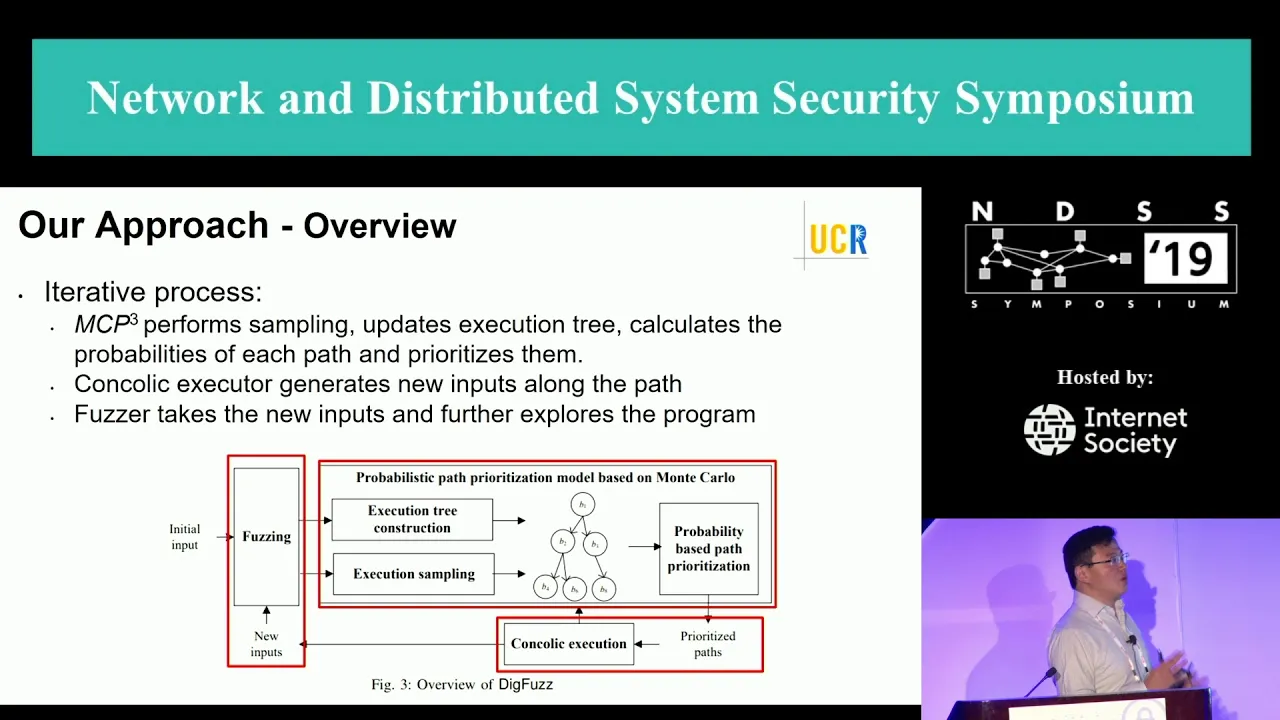
NDSS 2019 Send Hardest Problems My Way: Probabilistic Path Prioritization for Hybrid Fuzzing
NDSSSymposium
496 views•2019-04-02

12:48
Computer Science
How realistic is Cities: Skylines?
CityBeautiful
159K views•2019-02-14

46:39
Computer Science
GUIs & TUIs: Choosing a User Interface for Your Python Project | Real Python Podcast
realpython
2K views•2025-04-04

25:15
Computer Science
The OSI Model - Explained by Example
hnasr
225K views•2019-05-12

1:10:47
Computer Science
Cloud Computing - Introduction
elithecomputerguy
98K views•2019-10-07

2:24
Computer Science
From Traveler's Dilemma to Dynamic Routing | Demystifying Networking
IITBombayJuly
5K views•2019-08-04
Trending

13:25
Business
Playstation NO DISC/NO BUY Fight Is Over...
DavidJaffeGames
4K views•2026-07-23

22:40
Business
Steam and Xbox Just Dropped The Hammer On PlayStation
OhNoItsAlexx
9K views•2026-07-23

16:52
Anthropology
Americans Confused in Australia for 17 Minutes Straight
IWrocker
17K views•2026-07-23

1:19:25
Biology
LIVE NOW! Cellular Structure and Functions | Complete Cell Biology Lecture | Anatomy & Physiology
MukhtarAliyu-t7m
387 views•2026-07-23