Neuroplasticity is the brain's ability to physically restructure itself based on repeated behaviors, meaning that consistent daily habits can strengthen beneficial neural pathways while weakening unhelpful ones. The seven key habits that promote positive neuroplasticity include: morning light exposure to regulate circadian rhythms, brain dumping to reduce cognitive load, movement snacks to release BDNF for neural growth, learning new things before noon to stimulate plasticity, 60-second pauses to calm the amygdala, digital sunset to support sleep and default mode network processing, and evening wins to counteract negativity bias. These habits work because neurons that fire together wire together, and with consistent practice over 30 days, the brain physically rewires to support better focus, emotional regulation, memory, and creativity.
Neuroplasticity Is Working For You (If You Do This)
Added:What if I told you that in 30 days you could physically change the structure of your brain?
Not through medication. Not through some expensive program.
Just seven small habits repeated every day.
Scientists call this neuroplasticity.
Your brain's ability to rewire itself based on what you repeatedly do.
Think of it like a forest. Every thought you think walks a path.
The more you walk it, the wider and stronger that path becomes.
And the paths you stop using, they grow over and disappear.
The problem is most people are accidentally strengthening the wrong paths. Anxiety, overthinking, distraction.
But in the next 10 minutes, I'm going to show you the seven habits that build the right ones.
Let's rewire.
Here's what most self-improvement advice gets wrong. It tells you to think positive or just be more disciplined.
But your brain doesn't change through thoughts alone. It changes through repetition.
Every time you repeat a behavior, good or bad, your neurons fire together.
And neurons that fire together wire together.
That's the actual neuroscience behind habit formation.
So the question isn't how do I get motivated?
The question is, which seven habits repeated for 30 days will physically reshape your brain?
Here they are.
Habit number one.
Get natural light in your eyes within 10 minutes of waking up.
I know. It sounds too simple.
But here's the science. Your brain has a master clock called the suprachiasmatic nucleus.
Morning sunlight hitting your retinas triggers cortisol release, the wake-up hormone, and sets a timer for melatonin release 14 to 16 hours later.
Translation, morning light doesn't just wake you up, it helps you sleep better at night. And better sleep means better brain repair, better memory consolidation, and better emotional regulation.
2 minutes on a sunny day, 10 minutes if it's overcast.
Don't look directly at the sun.
Just get outside.
Pattern interrupt.
You might be thinking, I'll just open my curtains. It's not the same. Glass filters out the specific wavelengths your brain needs.
You need direct or indirect outdoor light.
Habit two.
Every morning before you check your phone, spend 5 minutes writing down everything in your head.
Not a journal, not gratitude, just a raw brain dump.
Worries, tasks, random thoughts.
Get them out of your head and onto paper.
Here's why this rewires your brain. Your prefrontal cortex, the part responsible for focus and decision-making, has limited capacity.
When you hold thoughts in your working memory, you're using up that capacity.
This is called cognitive load.
Writing things down externalizes them.
It tells your brain, "This is captured. You don't need to keep reminding yourself."
The result, more mental bandwidth for what actually matters.
5 minutes.
Messy handwriting. No one will read it.
Just dump.
Habit three. Movement snacks.
Three times a day, move your body for 90 seconds. Not a workout, not a run, just 90 seconds of anything.
Squats, push-ups, jumping jacks, walking upstairs.
When you move, your brain releases BDNF, brain-derived neurotrophic factor.
Scientists call it miracle grow for the brain.
It strengthens existing neural connections and helps grow new ones.
The key is frequency, not intensity.
Three short bursts throughout the day signal to your brain.
We're active. We need to stay sharp.
One long workout is great for your body, but for brain re-wiring frequent movement snacks win.
Set a timer. Every 3 hours, 90 seconds.
That's less time than scrolling one TikTok.
Habit four, learn one new thing before noon.
Every single day.
Here's the uncomfortable truth.
Your brain stops growing new connections the moment you stop challenging it.
It's called cognitive pruning.
Your brain removes pathways it thinks you don't need anymore.
Use it or lose it, literally.
But the opposite is also true.
When you learn something new, a word in another language, a fact about history, a new skill, your brain creates new dendritic spines.
Physical structures, new hardware. One new thing before noon.
A 5-minute video, a page of a book, a podcast clip.
Doesn't matter what.
Matters that it's new.
The timing matters, too.
Your brain is most plastic, most changeable, in the first few hours after waking.
That's your re-wiring window.
Habit five, before reacting to anything stressful, pause for 60 seconds.
This habit targets your amygdala, your brain's alarm system.
When something triggers you, an annoying email, a rude comment, bad news, your amygdala hijacks your prefrontal cortex in milliseconds.
You react emotionally before you can think rationally.
The 60-second pause breaks this circuit.
60 seconds of deep breathing inhale for four, exhale for six activates your parasympathetic nervous system.
It tells your amygdala, "False alarm, we're safe."
After 30 days of this, your brain literally builds a new pathway. Trigger to pause to response instead of trigger to reaction.
That's emotional intelligence at the neural level.
Habit six, no screens 90 minutes before bed.
I call this the digital sunset.
Blue light from screens suppresses melatonin, your sleep hormone, by up to 50%.
But it's not just the light, it's what's on the screen.
Social media, news, emails, these activate your brain's threat detection and social comparison circuits exactly when you should be winding down.
When you cut screens 90 minutes before bed, two things happen.
First, your melatonin production normalizes, so you fall asleep faster and sleep deeper.
Second, and this is the rewiring part, you give your brain's default mode network time to process the day.
That's when memory consolidation and creative problem-solving happen.
Replace screens with reading a physical book, talking to someone you live with, stretching, or just sitting in dim light doing nothing. Yes, nothing.
Your brain needs boredom to rewire.
Habit seven, before you sleep, write down one win from the day.
Just one sentence.
Your brain has a built-in negativity bias.
It's an evolutionary survival mechanism.
Threats are more important to remember than good things.
But in modern life, this bias doesn't protect you.
It exhausts you.
The evening win counteracts this.
By deliberately directing your attention to one positive thing, no matter how small, you strengthen the neural pathways for gratitude and self-efficacy.
Finish the report.
Went for a walk.
Didn't check my phone for 2 hours.
Doesn't matter how big.
What matters is the repetition of noticing.
After 30 days, your brain starts scanning for wins automatically, instead of scanning for threats.
That is rewiring.
Now, if you're thinking seven habits sounds like a lot, here's how you actually do this. Don't add all seven tomorrow.
That's how you burn out. Start with three. Morning light, brain dump, evening win.
Do those for a week. Then add movement snacks. Then the pause. Then learning before noon.
Then digital sunset.
The goal is not perfection. The goal is most days.
If you do each habit 25 out of 30 days, that's enough repetition for your brain to start rewiring.
And if this is making sense so far, hit subscribe.
I make videos about how your brain works and how to make it work for you.
New videos every Tuesday and Friday.
Now, let me show you what happens at the end of 30 days.
After 30 days of these seven habits, here's what changes in your brain.
Your prefrontal cortex is stronger.
Better focus, better decisions.
Your amygdala is calmer. Less reactive, less anxious.
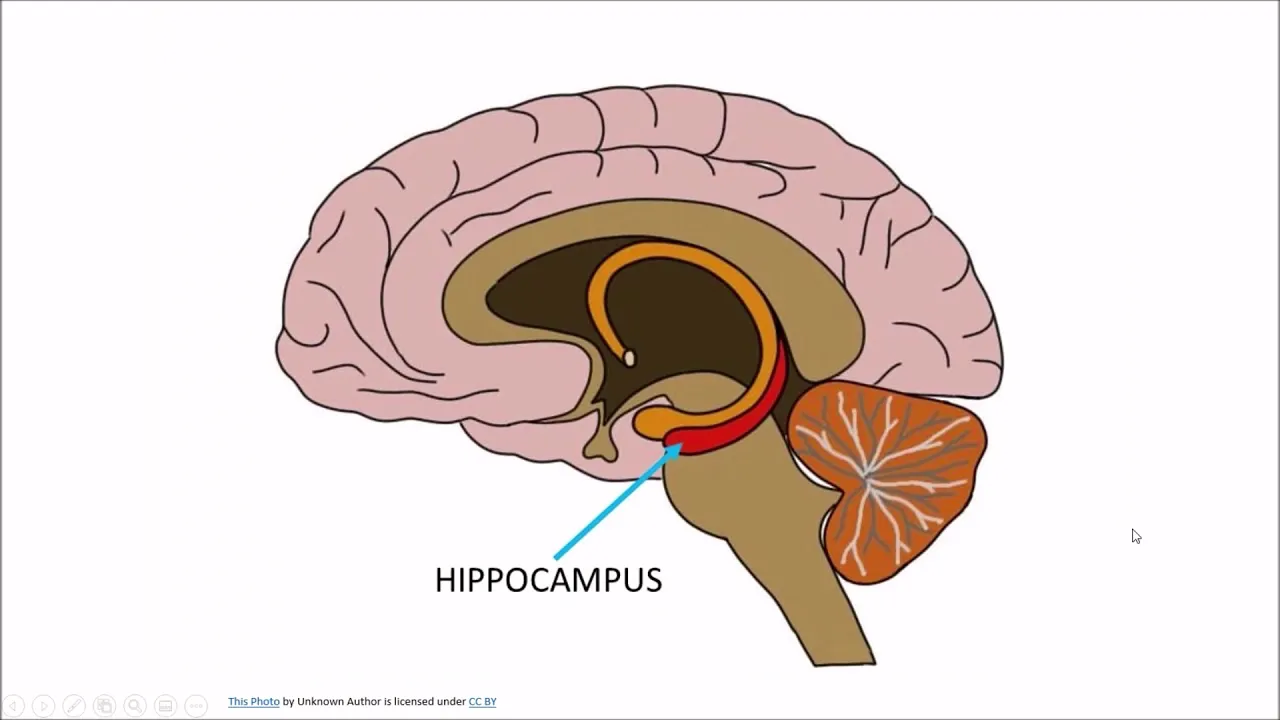
Your hippocampus, the memory center, is more active.
And your default mode network isn't running anxious loops anymore. It's solving problems and being creative.
But here's the real transformation.
You stop feeling like your brain is working against you and start feeling like it's working for you. The habits become automatic. The paths become highways.
And one morning you'll wake up and realize you're not forcing yourself to do them anymore. They're just you.
That ancient saying, neurons that fire together, wire together, it's not just a catchy phrase.
It is the literal physical truth of how your brain works.
Every day you're either strengthening the brain you want or strengthening the brain you don't. There is no standing still.
So pick three habits.
Start tomorrow morning.
And in 30 days come back to this video and tell me what changed in the comments.
I promise you something will.
Subscribe. Hit the bell and I'll see you in the next one.
Related Videos
What is neurodegeneration?
TheSheekeyScienceShow
3K views•2019-08-19
IPL - Ruth Empson "Mind the Gap"
otagouniversity
251 views•2019-07-08

How our body shapes our mind | Pancho Tolchinsky | TEDxNapoli
TEDx
2K views•2019-12-05

Impact of Early Life Deprivation Danielle Stolzenberg Marcus Pembrey Bruce McEwen
uctv
4K views•2019-12-01
β-Caryophyllene for Parkinson’s: Protecting Dopamine & Easing Symptoms
parkinsonsdiseaseeducation
6K views•2025-08-09

New Insights from Inside the Brain with Rodrigo Braga, PhD
NUFeinbergMed
421 views•2025-04-14
Highlights for dystonia • 2025 MDS Congress
movedisorder
145 views•2025-10-27

Animal Welfare Synergy Series: Dr Tom Smulders on hippocampal neurogenesis
costactionlift
135 views•2025-07-14
Trending

WOW! Judge TURNS THE TABLES on Trump in His OWN $10B LAWSUIT!!!
MeidasTouch
197K views•2026-07-23

Playstation NO DISC/NO BUY Fight Is Over...
DavidJaffeGames
4K views•2026-07-23

Steam and Xbox Just Dropped The Hammer On PlayStation
OhNoItsAlexx
9K views•2026-07-23

Americans Confused in Australia for 17 Minutes Straight
IWrocker
17K views•2026-07-23