Hieronymus Bosch's early 1480s painting 'Crucifixion with a Donor' exemplifies late Gothic devotional art through its structured intercessory hierarchy (St. John gesturing to Mary, St. Peter presenting the donor), sartorial details indicating the donor's social status (late 15th century Netherlandish fashion with hidden sword), and atmospheric perspective using green gradients to create spatial depth, while the background dichotomy of serene paths contrasting with a macabre execution site creates cognitive dissonance that disguises localized mortality within the framework of cosmic redemption.
Install our extension to search inside any video instantly.
🖼️ Analysis of the CRUCIFIXION of Christ | Bosch Explained ✝️🎨Added:
This is the brief on Hieronymus Bosch's Crucifixion [music] with a Donor. You know, this early 1480s painting showcases a surprisingly conventional, yet structurally fascinating side of a famously surreal artist, serving as an absolute master class in late Gothic devotional composition.
First, let's unpack the compositional access and intercessory hierarchy.
The spatial arrangement anchors right on Christ's Gothic verticality, emphasizing his sheer power and emaciation as a symbol of redemption.
Watch this chain of intercession. St. John gestures to Mary to intercede, while St. Peter, holding his identifying key, >> [music] >> presents our kneeling, sickly, anonymous donor. It's basically like a highly structured legal defense team desperately [music] appealing for the donor's soul.
Second, transitioning straight from his spiritual state down to physical reality, we've got to look at the sartorial diagnostics. The donor wears pure late 15th century Netherlandish fashion, a black hat, short cape, brown doublet, white shirt, and vertical red and black striped hose.
But catch the sword hidden under his cape. These specific accoutrements [music] technically indicate he was a man in service to a lord. So, who was this pale, emaciated [music] man, and why did he need to be depicted fully armed in a scene of absolute surrender?
Third, dragging our eyes from the foreground into the atmospheric perspective, [music] Bosch uses this killer gradient of greens to create deep spatial depth.
[music] But notice the background dichotomy. Serene paths leading to a windmill and a castle >> [music] >> completely clash with the macabre reality. A contemporary Brabant execution site, complete with scattered bones, a patibulum, and a perched crow.
Talk about cognitive dissonance. Why situate the ultimate scene of cosmic redemption in a literal grimy local execution yard?
>> [snorts] >> The painting brilliantly disguises localized macabre mortality within the framework of standard Gothic redemption.
Related Videos

Futurism: The Radical Art Revolution That Predicted the Modern World
HENITalks
154 views•2026-05-29

Jack Levine, Witches' Sabbath
smarthistory-art-history
471 views•2026-05-29

고가 중국도자기 경매
고가古家고도자기경매
203 views•2026-05-29

क्या भगवान शिव हारिती की नकल हैं? झूठे दावे का पर्दाफाश | हारिती बौद्ध देवी बनाम भगवान शिव
sanatansamiksha
1K views•2026-05-30

This is one of the biggest street art exhibitions in London but there’s a twist 👀 Danish
ExploringLondonCity
1K views•2026-05-30
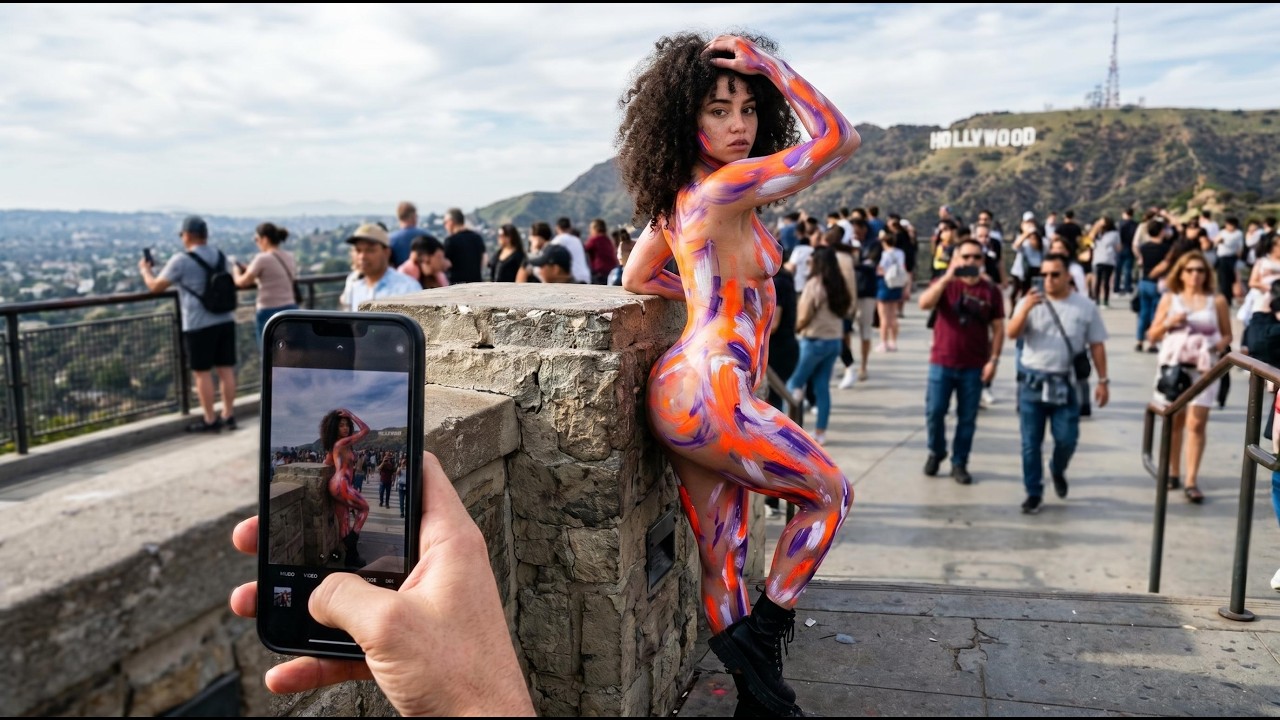
How Hollywood Body Art Changed the Way America Sees the Human Body Forever
Ink_and_Instinct
213 views•2026-06-02

Gudok Bull #4 #gudok #instruments #russia #russian #ancient #ancienthistory #sunoai #suno
aimechanicalbull
289 views•2026-05-29

Michelangelo Knew the Right Answer. They Ignored Him for 400 Years. | VERSO
VersoArt
123 views•2026-05-29



