This video provides a lucid bridge between neuroscience and theoretical physics, effectively exposing the biological machinery behind our most persistent illusion. It masterfully deconstructs our temporal intuition, reminding us that what we perceive as reality is often just a sophisticated trick of neural prediction.
Install our extension to search inside any video instantly.
Why Your Brain Is Wrong About The Passing Of Time
Added:In 1972, a French geologist lowered himself into a cave in Texas and asked the world to leave him there. No clock, no sunlight, no way to tell noon from midnight. He stayed for 179 days. And when they finally told him it was over, he was stunned because by his own careful count, only about 151 days had passed.
He had lost 28 days of his own life and never once felt them go. But here is what that experiment quietly exposed.
The same brain that misplaced a month in the dark is the one telling you right now that time is flowing, that this moment is real, that the past is gone and the future has not yet come. And when you set what your brain insists against what physics actually says, the two do not merely disagree. They cannot both be true. So tonight, one quiet question follows us everywhere. What if the feeling that time passes is not a perception of the world at all, but something closer to a hallucination pointing at nothing? Get comfortable and hit subscribe if you are new here because by the end of this, the slow, steady current you feel carrying you forward may never feel quite the same again. Now, let's slowly ease into this.
Part one, the man who lost 28 days.
In 1972, a French geologist lowered himself into a cave near Del Rio, Texas, and asked the world to leave him there.
His name was Michelle Seaffra and the experiment he was about to run on himself was funded in part because a space agency wanted an answer to a very practical question. If we ever send human beings to Mars, we will be cutting them off from every rhythm that has ever told a person what time it is. No sunrise, no sunset, no commute, no lunch bell, no glowing clock on a bedside table. And so someone had to find out what happens to a mind when you strip all of that away. Cphro volunteered to be the one it happened to. The rules were simple and they were merciless. He would live underground with no clocks and no sunlight. He would eat when he felt hungry and sleep when he felt tired. He would keep a careful log of his days, marking each one as it seemed to arrive, and he would try, using nothing but the quiet arithmetic of his own attention, to keep track of how long he had been down there. There were no calendars to check that arithmetic against. There was only him, a lamp, the cold rock, and the slow drip of a place that had never once cared what hour it was. He stayed for 6 months. And when the surface team finally radioed down to tell him the experiment was over, that this was day 179, Cifra was stunned.
Because by his own patient reckoning, by the count he had kept so faithfully in the dark, only about 151 days had passed. Somewhere in that cave, 28 days of his life had simply failed to register. Almost a full month gone, not misplaced. The way you lose an afternoon to a good book, erased from the ledger of his own experience, without his ever noticing the theft. Understand that this was not a pleasant drift, the kind you feel on a long vacation when the days blur together and you lose track of whether it is Tuesday or Thursday.
Caffra was miserable. He grew depressed in the darkness. At certain points, he was suicidal. He tried to befriend a mouse that shared the cave with him. And when the mouse died, he wept over it because it was the only other living thing in his world. And yet, through all of that suffering, through every long and difficult hour, his internal clock kept running slow. His brain, cut off from the sun, was quietly convinced that less time was passing than actually was.
The pain did not speed the clock up. If anything, the clock had wandered off entirely and taken almost a month with it. There is a further detail buried in Cifra's records that makes the drift stranger still. His body did not just lose count of the days. It began keeping a different kind of day altogether.
Freed from the pull of sunrise and sunset, his cycles of sleeping and waking slowly came unmed from the 24-hour rhythm that had governed every previous day of his life. Some of his cycles stretched out to nearly 48 hours, a full day and night of waking, followed by a long sleep. And he lived through them, believing they were ordinary days.
He would wake, feel rested, and mark it down as one more day, when in truth, two of the surface world's days had gone by.
Multiply that quiet error across 6 months, and you begin to see where 28 days could vanish without a sound. His body clock had not stopped. It had simply started ticking to a rhythm of its own, one that no longer matched the world above, and it never once told him it had changed. Let me put you down there with him for a moment. You wake in absolute dark. There is no gray light at the edge of a curtain because there is no curtain and no light. You do not know if the surface above you is holding noon or midnight. You reach for your lamp and the small circle of it shows you the same rock it showed you last time and the time before that. You decide that this is a new day because you feel rested and you write it down. You speak a few words to the mouse just to hear a voice. You try to reason about how long you have been here and the number you arrive at feels solid, feels earned, feels true. It is not true. It is off by weeks and there is nothing, absolutely nothing in your experience that could tell you so. Your own certainty is the problem. The instrument you would use to check the instrument is the very thing that is broken. Now, why begin here in a cave in Texas with a grieving man and a dead mouse? Because cifra is not a story about one unusual person having one unusual reaction. He is a controlled demonstration of something that is true of you right now listening to this. Take away the external cues that anchor a human being in time. And the brain does not simply admit that it has lost track.
It invents a confident answer and hands it to you as if it were a fact. And that same brain, the one that misplaced 28 days without a flicker of doubt, is the one telling you at this very moment that time is flowing, that the present is real, that the past is gone and the future has not yet come. The question that is going to follow us through everything that comes next is a quiet one. And it is this, what if it is wrong about that too? Because Cifra, as strange as his six months were, was not even the strangest case. Not by a long way.
Part two. They all came back wrong.
17 years later, in 1989, a French woman named Veronique Luen went into a cave in the south of France to do more or less the same thing. She stayed underground alone for 111 days. That is the fact the surface knew. That is what the calendars up in the sunlight recorded day after day while she lived below them in a world without any sunlight at all. And when they finally brought her back up and told her the date, she broke down because by her own count only 42 days had passed. Sit with those two numbers for a moment because the gap between them is not a rounding error. She experienced 42 days. reality delivered 111. Her brain had taken nearly three months of lived life and folded it down into something closer to 6 weeks, not blurred it, compressed it the way you might compress a long song into a short one and never hear the parts that went missing. Every hour she spent down there was real. Every one of them happened to her, and yet more than half of them left no mark on her sense of how long she had been alive in that cave. What happened to Leguin afterward is the part of this story I want to handle gently because it is not a curiosity, it is a cost. She came back into the light carrying a wound that did not heal. She fell into a severe depression. She could not reconcile the life she remembered living with the life she had by every external measure actually lived. There was a version of her that had spent 42 days in the dark, and there was a calendar that said 111, and she could not make the two of them fit inside one person. She took her own life the following year. I tell you this not for shock, but because it is the truest possible illustration of the stakes. When your brain and the world fall out of step about something as basic as how much time has passed, it is not a fun fact. It can be the ground giving way beneath a life. She was not alone in the drift either. That same year, an Italian woman named Stefania Fellini spent roughly 4 months, about 130 days, by herself in a cave in New Mexico as part of another study into what isolation does to the human clock.
And she came out having made the same mistake as the others in the same direction. She believed that far less time had passed than actually had. Her days had quietly stretched. Cut off from the sun. Her sleep and waking had drifted loose from the 24-hour rhythm that had governed every previous day of her life until she was living on a schedule the surface would not have recognized, and she had no idea it had happened. From the inside, it all felt normal. It felt like ordinary time passing at an ordinary pace. It was neither. To understand why the error always ran in the same direction, it helps to know two things about how the brain keeps time. The first is that your body runs on an internal clock tucked far inside the brain that governs the daily rise and fall of alertness, temperature, and hormones. Left to itself without sunlight to reset it each morning. That clock does not keep perfect 24-hour time. It runs a little long and it drifts, which is exactly why the cave dwellers slid onto longer and longer days without noticing. The second thing is subtler and stranger. Your sense of how much time has passed looking back is built largely from how many distinct memories you laid down along the way. A day packed with new places and new faces feels long in the living and even longer in the remembering because it left so many marks. A day of pure sameness leaves almost nothing behind and in memory it shrinks to almost nothing. Now put a person alone in a cave where every hour looks like every other hour, where there is nothing new to see and no one new to meet. The brain lays down very few fresh memories because there is almost nothing to remember. And when that person looks back and asks how long it has been, the brain counts the sparse handful of marks it managed to make and concludes wrongly but confidently that very little time could have passed. The monotony does not just make the time drag. It quietly erases the record that time was ever there. Three people, three caves, three different years, and three different countries. And the same result each time. When you remove the sun, the clock, and the schedule, the human brain does not lose track of time in the way you lose your keys. aware that something is missing. It experiences a genuinely different rate of time and it reports that altered rate to you with complete confidence because it has no way of knowing anything is wrong. This is the phrase I want you to carry with you because we are going to come back to it more than once before the night is over.
The only clock you have is the brain that is generating the illusion. When that clock drifts, it does not ring an alarm. It just quietly tells you a different time and you believe it because you have never had anything else to believe. So here is where the ground starts to tilt. If a healthy brain can be this wrong about how much time has passed simply by being placed in the dark, then the feeling of time we all walk around with in the daylight starts to look less like a measurement and more like a construction, something the brain builds. And anything the brain builds, it can build differently or wrongly or perhaps not build at all. Which raises a question we are nowhere near ready to answer yet, but that we are now obligated to ask. If time is something the brain assembles, then what exactly is it assembling it out of?
Part three. Your brain is a time machine.
The book that pulled me down into this particular dark is called Your brain is a time machine written by a neuroscientist named Dean Buano. He is a professor at the University of California, Los Angeles. And he runs a laboratory that studies of all things how networks of neurons keep track of time. So he is not a tourist in this subject. He has spent his career on the specific question of how a few pounds of electrified tissue manages to represent the passage of seconds and minutes at all. And what makes his book unusual is that he did something most neuroscientists never do. He walked out of his own field and took physics seriously. Not the loose headline version of physics where you nod along to a documentary. Seriously. He sat with the equations and the philosophy and asked what relativity and quantum mechanics actually say about time and what he found unsettled him. Because what physics says about time and what his own brain, the organ he had spent decades studying insists about time are not just different. They may not be able to both be true. But before we get to that collision, Bonamano wants you to understand something about the machine inside your skull. And he wants to start with something so ordinary you have never once thought about it. You can tap your foot to music. You can clap along with a beat. It feels like nothing. It is in fact a small miracle of prediction. And it quietly proves that your brain does not live in the present at all. Think about what has to happen for you to clap on a beat. A sound leaves a speaker and travels through the air to your ear. It strikes your eardrum, becomes a nerve signal, travels up into your brain, gets processed by the parts that handle hearing, and then your brain has to send a command back down your arm to bring your hands together. All of that takes time, hundreds of milliseconds of it. If your brain was simply reacting to each beat as it arrived, you would always be late.
You would clap after the beat every single time because by the time the sound had finished its journey through your nervous system, the moment would already be gone. But you do not clap late. You clap on the beat. Sometimes if you are really feeling the music, you clap a hair before it. And there is only one way that is possible. Your brain is not responding to the beat that just happened. It is predicting the beat that is about to happen. This Worammano argues is not a cute trick your sense of rhythm happen to learn. This is what brains are for. A brain at its core is a prediction engine. It is a machine that takes the patterns of the past and uses them to guess what is coming next.
Because guessing what is coming next is the single most useful thing a nervous system can do for a creature trying to stay alive. A hummingbird returns to a flower at just the right interval because its brain has modeled how quickly the nectar refills. A dog does not chase where a Frisbee is. It runs to where the Frisbee is going to be, computing the arc in the air before the disc gets there. An outfielder starts running the instant the bat connects.
sometimes before because the pictures wind up already contained enough information for the brain to begin sketching the ball's future. Every one of these animals is living slightly ahead of the present moment because the present moment by the time you have actually processed it is already the past. There is an old idea in psychology that sharpens this into something almost uncomfortable. More than a century ago, the philosopher and psychologist William James pointed out that what we call the present moment is not actually a razor thin instant, a knife edge where the future becomes the past. It has width.
It has a small but real duration, a little window a few seconds long that the brain holds open and treats as now.
He called it the specious present. And the word he chose is telling because specious means something that looks true but is not quite. The now you feel yourself living in is not a point at all. It is a short stretch of time that your brain gathers up and presents to you as a single unified moment blending a little of what just happened with a prediction of what is about to. When you hear a spoken sentence and understand it as a whole, you are not experiencing each sound in a vanishing instant. Your brain is holding several seconds of speech open at once. The beginning still present as the end arrives so that the meaning can assemble. The present, in other words, is not something you find.
It is something your brain builds a few seconds wide and then hands to you smoothed into the illusion of a single point. You can feel this for yourself right now. And I would encourage you to try it quietly wherever you are. Tap along to a rhythm in your head. Easy.
Now try to tap exactly between the beats on the offbeat in the gaps. It is dramatically harder. It takes real effort and it feels almost physically wrong because your brain is so committed to predicting the next beat that fighting that prediction is like walking against a current. Your nervous system wants to be early. It is built to be early. It cannot help but reach forward into a moment that has not happened yet.
Once you start looking for this, you find that prediction is not just something your brain does occasionally at the edges of perception. It may be the main event. A growing view in neuroscience holds that the brain is at bottom a prediction machine that is constantly generating its best guess of what the world is about to present and then checking that guess against what actually arrives and paying attention mostly to the difference. On this view, you do not really see the world and then respond to it. You predict the world moment by moment and your senses serve mainly to correct the prediction when it goes wrong. It is why a sentence with a missing word feels complete. Your brain having supplied the word before your eyes reached it. It is why a familiar song lets you hear the next note before it sounds. And why a wrong note jars so violently because it collides with a prediction already in flight. It is why you can walk down a staircase in the dark and your foot expects the step that is not there and the whole body lurches at the betrayal of a forecast. Your experience of the present, in other words, is stitched together in large part from predictions your brain made a fraction of a second ago about what this instant would contain. The now you feel is not raw arrival. It is a forecast continuously revised and mostly it is right which is exactly why you never notice that it is a forecast at all.
This is what Buamano means when he calls your brain a time machine. Not in the sense of the movies where you step into a box and step out in another century.
He means it in a stranger and more literal way. The entire architecture of your brain is built to simulate the near future. To run a model of the world a few steps ahead of where the world actually is so that you are never quite standing where you think you are standing in time. You feel located in the present. You are in fact always leaning into a future your brain has invented. Correcting the invention against reality as it arrives. The present you think you inhabit is a kind of educated guess. And if the brain is willing to guess about where the next beat falls, if it is willing to construct a future and hand it to you as the present, then a suspicion starts to form. What else is it constructing? How much of the seamless continuous world you are experiencing right now is actually arriving from outside you? And how much of it is your brain filling in the gaps, smoothing the edges, and presenting you with a finished product you mistake for raw reality? To answer that, we have to look at the one sense you trust more than any other. We have to look at what you see.
Part four, the footage your brain deletes.
Let me ask you something that sounds simple and is not. How much of today did you actually see? Not how much did you look at. How much of the visual information that fell onto the back of your eyes was truly captured, processed, and assembled into the continuous movie you call your experience of the day. The honest answer is going to be a good deal less than you think. And the reason why is going to matter for everything that follows. Start with your eyes, which are moving right now constantly, whether you notice or not. Several times every second, three to five times, your eyes make a rapid jump from one point to another. These jumps are called sicards, and they are among the fastest movements your body ever makes. Here is the problem they create. During that fast sweep, the image landing on your retina is a smeared, useless blur. The way a photograph taken while whipping the camera sideways is just a streak of color. Your brain has no use for that blur. So, it does something remarkable.
It simply switches the visual feed off during the movement. It goes blind briefly dozens of times a minute and then it stitches together the clear stable images from before and after the jump so cleanly that you never perceive the darkness in between. This is called sacchadic suppression. and you have been living inside it your entire life without once catching it in the act.
Then there is blinking. You blink something like 15 to 20 times every minute and each blink drops a curtain over your eyes for roughly 150 to 400 milliseconds. That does not sound like much, but add it up across a full day of waking hours and you are looking at something on the order of an hour of pure visual blackness. an hour in which your eyes sent your brain nothing at all. You did not experience that hour as darkness. You did not experience it as anything. And the consequences of these little blackouts are not always trivial.
If you are driving at 100 km an hour, roughly 60 mph, then every single blink means you travel about 5 m completely blind. Formula 1 drivers who race at speeds near 300 km an hour actually train themselves to blink only on specific parts of the track. The long straight sections where nothing surprising should happen because at those speeds a single blink is 25 m of blindness. 25 m in which the car is screaming forward and the driver's eyes are sending nothing to the brain. There is a small ordinary experience that lets you catch this editing in the act. And once you know about it, you will notice it for the rest of your life. It is called the stopped clock illusion.
Glance quickly at a clock with a ticking second hand, a real one. And for a moment, the first tick you see will seem to last too long, as though the second hand had frozen, as though that one second was stretched out longer than the seconds that follow it. It is not the clock, it is you. When your eyes jump to the clock, your brain switch the visual feed off for the duration of that fast movement exactly as we described. But it cannot leave a hole in your experience.
So it fills the blind moment by reaching forward and pasting in the image that arrives after the jump, the image of the clock, and then it backdates that image to cover the whole gap. So the first second you consciously see is not really 1 second long. It is 1 second plus the length of the eye movement that came before it. All stitched together and handed to you as a single slightly too long moment. Your brain quite literally invented a stretch of time that you never saw and inserted it into your experience so seamlessly that the only trace left behind is a clock that seems briefly to have paused. If your brain will fabricate time by the fraction of a second to cover its own blind spots and do it so smoothly that you would swear the clock itself had hesitated, then the seamless flow of your experience is not something to be trusted. It is something to be examined. And through all of this, the deleting and the blinking and the blackouts, you notice nothing. You do not see gaps. You do not feel the cuts.
Your experience of the visual world is smooth, seamless, whole, like watching a film that never stutters. But it is not a film in the sense of a continuous recording. It is a film in the sense of something that has been edited. Your brain is running a kind of editing suite behind your eyes, taking in footage that is broken, gappy, and interrupted, cutting out the unusable parts, smoothing the seams, and handing you a finished cut so polished that you have mistaken it for live reality your whole life. What you call seeing is really a story your brain tells you about seeing assembled from far less raw material than you would ever guess. Notice what has just happened to the ground under your feet. We started with the idea that your brain predicts the future rather than reacting to the present. Now we have learned that your brain edits the past, the visual past of the last few seconds, cutting and splicing it into a continuous hole. So the seamless present you feel yourself living in is being built from both ends. Predicted forward, edited backward. And here is the uncomfortable thing about an editing suite. Once you know it is running, you cannot unknow it. If your brain is willing to delete an hour of darkness a day and never mention it, if it is willing to hide dozens of tiny blindnesses a minute so smoothly that you would have sworn your vision was continuous, then what else is being smoothed over? What other seams are being hidden? This is the first faint appearance of an idea that is going to grow into the center of everything. The idea of an illusion without a counterpart, a thing your brain shows you that corresponds to nothing actually out there. For now, it is only a whisper. Your vision is edited, but at least it is edited from something real, from actual light, actual objects, actual photons falling on actual cells.
Hold on to that small comfort. We are going to take it away because there is a man I need to tell you about now. and his story is one of the most disturbing in all of neuroscience. Not because it is violent, because it is existential.
He is going to show us what happens to a human being when the thread that stitches one moment to the next is cut.
And what he reveals about the present moment is something most of us will spend our whole lives never having to learn.
Part five, the man trapped in 7 seconds.
His name is Clive Wearing. And before I tell you what happened to him, I want you to know who he was because the loss only makes sense against the fullness of what was lost. Clive Wearing was a British musicologist, one of the country's leading experts on Renaissance music. He was a conductor. He was a singer. He was, by every account of the people who knew him, a brilliant and deeply cultured mind. The sort of man who could hear a piece of early coral music and tell you its century, its region, its secrets. In 1985, a virus walked into that mind and began tearing it apart. The virus was herpes simplex encphilitis, an infection that in rare cases crosses into the brain. In Clive's case, it attacked with terrible precision. It destroyed his hippocampus, the small curled structure that does one of the most important jobs in the entire nervous system. The hippocampus is what takes the fleeting contents of your short-term memory and files them into long-term storage. It is the bridge between the moment you are living and the record you will keep of it. When the virus finished, that bridge was gone.
And what it left behind is one of the most severe cases of amnesia ever documented in medical history. Here is what that means in practice, and I want you to hold it carefully because it is difficult to hold. Clive wearing lives to this day in a present that lasts somewhere between 7 and 30 seconds. That is the entire width of his conscious world. Every half minute or so, he effectively wakes up. He has no memory of anything that happened moments before. He does not know where he is or how he got there or what he was just doing. And each time he arrives at the exact same conclusion with total conviction. He believes that he has in this very instant woken up for the first time. That he has just now, right now become conscious after a long stretch of nothing at all. His diary is one of the most haunting documents in all of medical literature. And it is haunting precisely because of how repetitive it is. page after page in his own hand the same discovery made over and over as if for the first time 8:31 in the morning now I am really completely awake and then that line is crossed out 9:06 in the morning now I am perfectly overwhelmingly awake crossed out 9:34 in the morning now I am superlatively actually awake crossed out as you read down the page The handwriting grows larger. It grows more frantic, more forceful. The pen pressed harder into the paper, as though if he could only write it emphatically enough. This time the moment might finally stick. He would write in enormous, desperate letters, that he was alive, that he was awake, that this was the first real instant of his consciousness, and the moment the pen left the page, it was already gone.
He would look at the words he had just written in his own handwriting and not believe he had written them because for him there was no earlier moment in which the writing could have happened. Let me take you into one of those moments as gently as I can because a fact this large has to be felt and not just stated. You surface that is the only word for it. One instant there was nothing and now there is a room and a table and a pen in your hand and the overwhelming certainty that you have just this second come awake after a long darkness. You feel it with your whole body. The relief and the strangeness of it. The sense of a mind switching on.
You look down. There is a notebook and it is covered in your own handwriting.
Line after line. Each one crossed out.
each one saying almost exactly what you are feeling right now. You do not understand it. You could not have written these because there was no before this. And then a woman comes into the room and your heart lifts because you know her, you love her and it feels as though you have not seen her in years. You reach for her with the joy of a man ending a long separation. You have no idea that she stepped out 2 minutes ago. That woman was his wife Deborah Wearing and she wrote a memoir about their life together after the illness.
She described exactly this scene played out again and again. Every time she entered the room, Clive would greet her with overwhelming tearful joy as if they had been apart for years. Embraces, declarations of love. And if she left just for a moment to step down the hall and come back, the entire scene would reset and replay from the beginning. The same shock of reunion, the same tears, the same desperate firsttime joy.
Because for Clive, she had been gone forever. Every reunion was the only reunion. Every moment was the first moment. And yet in the middle of this ruin, one thing survived intact, and it is almost unbearable in what it reveals.
Clive could still make music. Sit him at a piano and he could play. Put a score in front of him and place him before a choir, and he could lift his hands and begin to conduct, carrying the piece through from one bar to the next, his body moving with the sure knowledge of a lifetime. He could do this because the memory of how to perform music does not live in the hippocampus the virus destroyed. It lives in a separate system. The kind of memory that stores skills, the same kind that lets you ride a bicycle years after you last touched one and the virus left it untouched. So here was a man who could not remember from one half minute to the next that his own children existed and who could nonetheless sit down and play a piece of music that unfolds across many minutes holding its shape from beginning to end.
But watch what happens the instant the music stops. The moment the last note fades, the thread snaps and he surfaces again into the same bewildered first awakening with no memory that he has just played at all. The music can flow through him, his life cannot. He is a vessel that a piece of Renaissance polifany can move through unbroken, while his own existence arrives only in disconnected drops. He could hold two minutes of bark together in his hands and could not hold two minutes of his own life. When they asked him what his experience was actually like in the long stretches between these surfacings, he said something I have never been able to put down. He said it was exactly like being dead, not asleep, not unconscious, dead. He said he had not heard anything, not seen anything, not touched anything, not smelled anything. He said, "For all these years, the whole of my life has been spent dead. Sit with that." A man of extraordinary intelligence, fully awake, fully able to speak, describing his own continuous existence as a kind of death. Because without the thread that ties one moment to the next, there is no life being lived. There is only a series of disconnected instance, each one convinced it is the first. Now here is why Clivewearing matters for the question we are chasing and it is the most important turn we have made yet.
His case reveals something almost nobody ever has to think about. Consider the feeling you have right now of existing in a continuous present. The feeling that this moment is connected to the one before it. That your life is a single flowing stream and not a pile of unrelated snapshots. that there is a you persisting moving through time. Where does that feeling come from? We tend to assume it is just given just a basic feature of being conscious as automatic as breathing. Clivewearing proves that it is not. That feeling depends on memory. Specifically, it depends on short-term memory, on your brain's quiet ability to hold the very recent past in a kind of buffer while the present unfolds on top of it. The sense of flow is the overlap between the moment that just was and the moment that is. Take away the buffer and consciousness does not switch off. Clive is proof of that.
He is awake. He can reason. He can hold a conversation. He can sit at a piano and play with startling skill. Because musical performance lives in a different memory system, procedural memory, the kind that stores how to do things, and the virus never touched it. He can begin conducting a choir and carry it through.
But his consciousness has no depth. It has no continuity. It has no flow. The river that the rest of us feel ourselves moving down, he does not feel at all.
For him there is no current. There are only separate drops. And this is the thought I want to leave sitting in the dark with you before we go any further.
The flow of time, the river you feel yourself being carried along right now, is not a feature of the universe pouring in through your senses. It is the output of a specific mechanism inside a specific organ. A mechanism made of tissue and electricity. A mechanism that a virus can find and destroy in a matter of weeks. It can be damaged. It can be broken. Clivewearing is the living proof that it can be broken. And here is the part that should quietly turn your stomach. If the flow of time is something that can be broken, then it was something that was being built in the first place. You do not break what was never assembled. The seamless present you are experiencing at this very second is not being handed to you by reality. It is being manufactured moment by moment by a machine that is running for now in you. And so far we have only been talking about what goes on inside the skull. We have only been talking about neuroscience about the brain fooling itself. That is strange but it is a strangeness you can file away and live with. Now I have to take you somewhere far less comfortable because it turns out the neuroscience is only half the problem. The other half comes from physics and physics does not merely suggest that the flow of time is something the brain builds. Physics seems to say that the flow of time is not out there in reality at all.
Part six, the present that isn't there.
You have almost certainly heard that time is relative. It is one of those phrases that has soaked so far into the culture that people say it without ever meaning anything by it. But there is a specific consequence buried inside Einstein's relativity that almost no one talks about. And it is, I think, one of the most quietly devastating ideas in all of science. It is called the relativity of simultaneity. And once you understand it, the idea of a single universal present, one shared now stretching across the whole universe, falls apart in your hands. Let me give you the picture Einstein himself used because it is simpler than it sounds.
Imagine you are standing on a train platform and a very long train is rushing past you at high speed. In the exact middle of one of the cars, someone sets off a flash of light. The light expands outward in every direction at once and in particular it races toward the front wall of the car and toward the back wall of the car at the same time.
Now ask a simple question. Does the light hit the front and the back at the same moment? For a passenger sitting inside that car, the answer is obviously yes. The flash went off right in the middle. The car is symmetrical. The front and back walls are the same distance away and light travels at the same speed in both directions. So the light reaches both walls simultaneously.
This is not a trick. From inside the train, it is simply cleanly true. But now ask you standing on the platform watching the whole thing fly past. From where you stand while the light is traveling the train is moving. The back wall of the car is rushing forward to meet the light, closing the distance.
The front wall is racing away from it, opening the distance. So from your point of view, the light reaches the back wall first because the back wall came to meet it and reaches the front wall a moment later because the front wall ran away.
From the platform, the two events are not simultaneous at all. One clearly happens before the other. Here is the part that should make the floor feel less solid. Both of you are right. Not right in some soft agree to disagree.
Everyone has their own truth sense.
Right in the hard sense, physically, objectively, completely right. There is no hidden fact of the matter about whether the light really hit both walls at the same time. The universe does not have a preferred answer. It is keeping in its back pocket. For the passenger, the events are simultaneous. For you, they are not. And nothing, no measurement, no clever experiment, no god's eye view can settle which of you saw it correctly because you both did.
Simultaneity. The question of whether two things happen at the same time does not have a single answer. It depends on how you are moving. You might want to object here and it is worth voicing the objection because answering it is what makes the whole thing inescapable.
Surely, you might say, one of them is simply mistaken. Surely the light really did hit both walls at one true instant, and the platform observer only appears to see it otherwise because of some trick of the motion. That is the natural thought, and for a moment in history, it was the sensible one. What closed that door was a single stubborn fact about light. A fact that experiment forced upon physics whether it wanted it or not. The speed of light is the same for everyone. It does not matter how fast you are moving toward the light or away from it. It does not matter whether you are the passenger or the platform.
Everyone who measures the speed of that flash gets the exact same number. This sounds harmless and is in fact one of the most disruptive facts ever discovered because it means you cannot escape the disagreement by finding out who was really standing still. In everyday life, if two people disagree about how fast something is moving, you can settle it by asking who was moving and how fast and doing the arithmetic.
With light you cannot because the arithmetic that would settle it always returns the same speed no matter what.
And once the speed of light is fixed for everyone the timing has to give.
Something has to bend to keep that speed constant for both the passenger and the platform. And what bends is simultaneity itself. The question of what counts as at the same time. The disagreement is not a mistake sitting on top of a true answer. The disagreement is the true answer. There is no deeper fact underneath it in which the light really hit both walls together because there is no shared clock in which really together could even be defined. The universe did not keep a master timing sheet and hand out slightly wrong copies. It never wrote one at all. Most people who explain relativity stop right here. say something like, "Well, that is just how it works." And move on to black holes, but I want you to stay in this exact spot because the implication is enormous and it is almost never spelled out. If two events can be simultaneous for one observer and not simultaneous for another, and both are equally correct, then there is no universal now. There is no single slice of time, no cosmic present moment stretching across the universe and quietly synchronizing everything that exists. The reason your now and my now feel like the same now is only that you and I are sitting more or less still relative to each other, sharing the same motion through the world. The instant we start moving differently, our nows begin to come apart. They tilt away from each other.
And this is not philosophy. It is not interpretation. It is a direct tested unavoidable consequence of the theory of special relativity, which is among the most precisely confirmed theories humanity has ever produced. The satellites that tell your phone where you are would drift into uselessness within a day if this were not exactly true. If this still feels like a philosopher<unk>'s puzzle, something too subtle to touch the real world, consider the small machine in your pocket that would fall apart without it. The satellites that let your phone tell you where you are do their job by carrying atomic clocks and broadcasting the time with extraordinary precision. But those satellites are moving fast, high above you. And relativity says that motion and altitude both bend the rate at which their clocks tick relative to yours on the ground. The differences are tiny fractions of a second stacked up over a day. And yet, if the engineers did not correct for exactly these effects, the errors would pile up so quickly that within a single day, the whole system would place you not on your street, but kilome away. Useless. Every time your phone finds you, it is quietly proving Einstein right. Proving that time really does run at different rates for things moving differently. Proving that there is no single universal clock ticking away behind the world. This is not a theory waiting for evidence. It is a theory so thoroughly confirmed that we have built our daily lives on top of it.
The strangeness is not a maybe. It is the ground you are already standing on.
Feel what this does to the picture we have been building inside your skull.
The neuroscience told us that the present moment is a construction.
Something the brain assembles from prediction and memory. Now outside your skull, physics is telling us something that rhymes with it in the most disquing way. There is no objective present out there for the brain to be tracking in the first place. The universal now, the shared moment you have always assumed you live inside, the thing you thought was the one solid floor beneath all this is not a feature of reality. It is a local convenience, true only for people moving together, and it dissolves the moment anyone walks away. But a train is a small thing, and the platform is only a few meters long. So perhaps you are thinking that these differences are too tiny to matter. some fraction of a fraction of a second. A technicality for physicists and their satellites. That is a reasonable thought and it is about to be taken apart completely because there was a physicist who asked what happens to this tilting of nows when you stop looking at a train and start looking across the actual distances of the universe. What he found is called the Andromeda paradox, and it may be the moment tonight where the ground finally gives out.
Part seven, two people on a sidewalk.
The physicist was Roger Penrose, one of the great minds of the last century. And the thought experiment he built is beautiful precisely because it begins with something so absurdly ordinary. Two people are walking past each other on a sidewalk. That is all. An ordinary street, an ordinary evening. They are moving in opposite directions at a completely normal walking pace. Four or 5 km an hour, the speed of any two strangers passing on their way to somewhere. Nothing about the scene could look less like a revelation in physics.
And that is the whole point. Because right where they pass in their immediate surroundings, their two realities are essentially identical. The same street, the same air, the same street lights coming on, the same moment. If you asked each of them what was happening around them, they would give you the same answer. There is no detectable difference between their worlds at the scale of the sidewalk. But relativity tells us that each of them carries with them a plane of simultaneity, a definition of now, a set of all the events across the entire universe that each person would say are happening at this instant. And because the two of them are moving in opposite directions, those two planes are tilted with respect to each other. On the sidewalk, the tilt amounts to nothing you could ever measure. But a tilt is a tilt, and the further out from the sidewalk you follow it, the wider the two planes spread apart. Reach far enough, and a tilt too small to see becomes a gap large enough to swallow days. So Penrose asked, "How far do we have to go for this to become something a human could care about?" And he picked a real destination, the Andromeda galaxy, our large galactic neighbor, sitting about 2 1/2 million lighty years away. and he did the arithmetic. The person walking toward Andromeda has a now that is tilted slightly forward in Andromeda's history.
The person walking away from Andromeda has a now tilted slightly backward. And the difference between what these two people passing each other at a stroll would call this very instant in the Andromeda galaxy comes out to roughly 2 days. Let me say that again slowly because it is the kind of sentence the mind tries to slide off of. Two human beings close enough to brush shoulders walking at ordinary speed in opposite directions disagree about what is happening right now in the Andromeda galaxy by about 48 hours. Not because either of them is wrong. Not because of any delay in the light reaching them.
Their present moments, their genuine, physically valid definitions of now, simply point to different days, two and a half million light years away. Let me put you on that street. It is an ordinary evening, and you are one of the two walkers. The pavement is a little damp. A stranger is coming toward you on the same stretch of sidewalk. An unremarkable person with somewhere to be. And in a second or two, you will pass each other and never think of it again. You are close enough now to see the color of their coat. And here is what neither of you can feel. Out there across an ocean of empty space so wide that light itself needs 2 and 1/2 million years to cross it. There is a galaxy. And in the now that you carry as you step forward, something is happening in that galaxy that has. In the now the stranger carries as they step toward you, not happened yet. Two days of that distant galaxy's history sit in the gap between you and a person you are about to walk past. You feel nothing. There is nothing to feel. And yet it is as real as the pavement. Notice that none of this depends on any signal, any light, any information traveling between the walkers and the galaxy. This is the part people most often get wrong. The two disagree about Andromeda, not because the light from Andromeda takes time to reach them, though it does. They disagree about what is happening there now in their own present definitions of now before any question of seeing it arises. The tilt is in the structure of time itself, not in the delay of the messenger. Two people can stand in the same spot breathing the same air and carry with them genuinely different slices of the universe that each has equal right to call the present. The disagreement is not about what they can see. It is about what is real right now for each of them. Penrose liked to sharpen the point with a darker version.
So let me give it to you. Suppose that in Andromeda there is a civilization and suppose its leaders are at this moment debating whether to launch a fleet across the stars. In the now belonging to the person walking toward Andromeda, the decision has already been made. The vote is finished. The order is given.
The fleet has launched. It is done. In the now belonging to the person walking the other way, the council is still arguing. Nothing has been decided. The future is open. And both of these are equally valid, equally true descriptions of reality held by two people passing on the same square of sidewalk. For one of them, the dye is cast. For the other, it is still in the air. And if you scale the distance up past Andromeda out to galaxies billions of light years away, the kind we photograph with our largest telescopes, then the disagreement between two strolling humans, is no longer 2 days. It is centuries. A civilization at the edge of the observable universe looking back at Earth in its own valid now might see us in one century or a wholly different one depending on nothing more than which way it happens to be drifting. There is a consequence hidden in that dramatized version and it is worth dragging into the light because it is the part that unsettles physicists most. If for the person walking toward Andromeda, the fleet has genuinely already launched, then that future event, the launching, is fixed. It is settled. It is as real and as done as anything in the past. And yet for the other walker, that same event has not been decided. Now, both cannot be adding something new to the universe at the moment of decision because for one of them, the decision is already made. The only way both walkers can be right is if the launching of the fleet simply exists out there in the structure of reality, neither waiting to be created nor freshly gone, just there at its own location, the way a distant city is there, whether you have reached it or not. What the Andromeda paradox is quietly telling us is that events do not come into being as some cosmic presence sweeps over them. They are already present, all of them. And the sweeping is something we bring, not something the universe does. The future in this picture is not open and waiting to be written. It is already written and we are simply reading our way toward it, mistaking our reading for the writing.
This is where the idea stops being a curiosity about clocks and becomes something that reaches down and pulls at the foundations. If your now and the strangers now can disagree about whether a distant event has happened or not, then there is no fact of the matter about whether it has happened. And if there is no fact of the matter about that, then the neat division we all carry around, the past that is fixed and gone, the future that is open and not yet real, cannot be a feature of the universe. It has to be something else, something local, something we bring to reality rather than find in it, which points inescapably at one of the strangest ideas physics has ever been forced to take seriously. If there is no universal now, and no real line between past and future, then perhaps every moment that has ever been or will ever be is simply there all at once, and nothing is passing at all.
Part eight, the frozen river.
The idea is called the block universe.
And to understand it, you have to first let go of a picture you have carried since childhood, probably without ever choosing it. The picture is this. The universe is a three-dimensional stage, a great room full of stuff. And time is something that happens to that room. The present is real. It is lit. It is where everything is occurring. Behind it lies the past which used to be lit and has gone dark and vanished. Ahead of it lies the future which is not yet lit, not yet real, waiting to be brought into being as the present rolls forward. Time in this picture flows. It carries the lit moment forward through the room like a spotlight sweeping across a stage. And you ride along on that spotlight, always in the now, always watching the future turn into the present, turn into the past. It is the most natural picture in the world. And relativity says it is wrong. Here is what relativity says instead. Because there is no universal now, there is no single agreed upon way to slice the universe into past, present, and future. Different observers moving differently slice it at different angles and none of their slices is the correct one. But if no slice is privileged, if no now is the real now, then the whole idea of a moving present loses its meaning, there is nothing for the spotlight to be. Because every moment has an equal claim to being lit.
And so physicists were led not by taste but by the mathematics to a different picture entirely. The universe is not a three-dimensional room with time flowing through it. It is a four-dimensional block, a single solid structure with three dimensions of space and one of time. And every event that has ever happened or will ever happen sits inside that block at its own fixed location, equally real, equally present, equally there. Your birth is in the block. Your death is in the block. The formation of the Earth, the death of the sun, the last star burning out 10 trillion years from now. All of it sits inside the block, permanent and unmoving, like frames of a film that has already been shot from beginning to end. In this picture, the past has not vanished. It is still there. The way Paris is still there when you are standing in New York, you cannot see it. You cannot reach out and touch it. You would have to travel to get to it. And there is no road that runs in that direction. But it exists.
It is real. Your childhood is not gone.
It is simply elsewhere at other coordinates in the block. As solid and present as this moment. And the future is not waiting to be created. It is already there too. Already written into the structure. Every moment of it fixed.
Nothing is being decided because from the block's point of view, there is no unfolding. There is only the whole thing all at once frozen. The mathematician Herman Minkovsky, who had actually been one of Einstein's teachers, saw this coming with startling clarity. In 1908, more than a hundred years ago, he stood up and gave a lecture in which he said that henceforth space by itself and time by itself are doomed to fade away into mere shadows and only a kind of union of the two will preserve an independent reality. Space and time, he was saying, are not the two separate things they appear to be. They are aspects of one deeper thing. Spacetime, a single block.
And the way we carve it into a flowing present and a vanished past and a waiting future is a shadow cast by our particular motion, not a truth about the block itself. That was over a century ago. Every experiment since has only pushed the picture deeper. Einstein himself carried this to its most human conclusion and he wrote it down near the end of his own life in a way that has never stopped moving me. When his oldest friend Mikuel Besso died in the spring of 1955, Einstein wrote a letter of condolence to Besso's family and in it he did not offer the usual comforts. He offered them relativity. He wrote that people like them who believe in physics know that the distinction between the past, the present, and the future is only a stubbornly persistent illusion. Read that again and feel the weight of who was saying it and when. a man who had just lost the friend of his life and who would himself be dead within weeks, telling a grieving family that their loss was not quite what it seemed because in the deeper structure of things, Besso had not vanished into a past that was gone. He was still there at his own coordinates in the block as real as ever. And the sense that he had been swept away by time was the persistent illusion, not the truth.
Einstein was not being cold. He was being consistent. He had followed his own equations all the way to their end.
And this was where they led, even into the hardest moment a person can face.
And so in the block universe, time does not flow. Let that land because it undoes the metaphor we have leaned on all night. We have been calling time a river, a current that carries you from the past toward the future. In the block, the river is frozen. It was always frozen. Every drop of it is fixed in place. Every moment sitting at its own coordinate and nothing is moving through anything. The sense you have of being carried downstream is not you traveling along the river. The river is not going anywhere. Nothing is. Let me try to stand you inside it. Though I will warn you that the mind rebelss at this and that rebellion is exactly the thing we are trying to understand.
Picture your entire life laid out at once, not as a memory, but as a structure. There, at one end, is the first breath you ever took. A real event sitting at fixed coordinates, as present as anything. There at the other end is your last breath whenever and wherever it falls. Equally real, equally there, already part of the block and strung between them. Every moment you have ever lived and will ever live, all of it existing together, none of it passing, none of it gone, none of it yet to come.
And somewhere in that still four-dimensional structure at one particular set of coordinates, there is a pattern, a small arrangement of matter, a flicker of electrical activity in a few pounds of tissue. And that pattern is absolutely convinced right now, that it is alive, that this frozen moment is special, that it is happening, that the past is lost and the future is coming. That arrangement of neurons is you at this instant listening to this.
And according to the physics, it is one frozen frame among countless others, no more moving than any of the rest, sitting perfectly still in a block that does not flow, feeling with total conviction a current that is not there.
There is a strange comfort hidden inside this picture and it is worth resting on for a moment because the block universe is usually delivered as something cold and it does not have to be. If every moment sits permanently at its own coordinates, then nothing that has ever truly happened is lost. The people you have loved and lost are not erased. The best afternoon of your life is not gone.
A childhood morning, a first snow, a face you will never see again. None of it has been swept into nothing by the passage of time. Because in this picture, nothing is swept anywhere.
Those moments are still there at their own places in the structure. As real and as solid as this one, simply not here.
The way a room you loved in a house you left is still a real room. Even though you are no longer standing in it, the block does not destroy the past. It preserves it perfectly forever, exactly as it was. The only thing that has changed is your position. And even that change may be one your brain is inventing. Whether that thought lands as a comfort or as something stranger, it is the gentlest way into the largest idea we have touched all night. That the flowing away of things, the losing of them to time, might be the one part of the story that was never true. We have now built the collision in full. On one side, the brain constructing the feeling of a flowing present out of prediction and memory. On the other, physics describing a frozen block in which nothing flows at all. For most of the last hour, these have been two separate stranges. One about the mind and one about the universe. It is time to put them in the same room because when you set them side by side and look carefully at what the brain is doing and what the physics is saying, a single question rises up out of the wreckage, sharper and stranger than anything we have asked yet. And it is the question that turns this from a collection of curiosities into the genuine mystery at the heart of everything.
Part nine. Let us put the pieces together.
Before we take the final step, let us stop for a moment and stand still in the middle of all this and gather what we have found because we have covered a great deal of dark ground. And it is worth seeing it all laid out in one place before we go deeper. We began in a cave with a man who lost 28 days without noticing. And we found that a healthy human brain stripped of the sun and the clock does not merely lose track of time. It experiences a different rate of time and reports it to you as fact. We watched the same thing happen to two more people, one of whom could not survive the gap between the life she remembered and the life she had lived.
And the lesson was that the feeling of time passing is not a measurement your brain takes of the world. It is something your brain constructs.
Then we looked closer at the machine doing the constructing. We found that your brain does not react to the present at all. It predicts running a model of the world a few steps ahead. So that even when you clap to a simple beat, you are reaching into a future that has not arrived. We found that your brain edits, deleting the blur of every eye movement and the blackness of every blink, stitching a broken stream of images into a seamless film you mistake for live reality. And then we met Clive Wearing, who showed us the most important thing of all, the feeling of a continuous present. The sense that this moment connects to the last is not a given of consciousness. It is the output of a memory mechanism, a thing made of tissue that a virus can destroy in weeks. Break it and the flow of time simply stops even though the person keeps living, which means the flow was being built.
And then we left the skull entirely and turned to physics. And physics coming at the problem from the completely opposite direction told us something that rhymes with all of it in the most unsettling way. There is no universal now. Two people passing on a sidewalk carry different presents. Presents that disagree about distant events by days or by centuries. And neither is wrong. And if there is no shared now and no real line between a fixed past and an open future, then reality is not a stage with time flowing across it. It is a block four-dimensional and frozen in which every moment already sits at its own coordinate and nothing passes. So here are the two halves finally side by side.
The brain builds the powerful unshakable feeling that time is flowing and the physics contains no flow anywhere at all. Hold both of those in your mind at once because in the next breath we are going to ask the one question that makes this more than a pair of interesting facts. It is a question that once you have seen it is very hard to stop seeing and it starts with something surprisingly simple. It starts with the color of an apple.
Part 10. The one illusion that points at nothing.
Look at a red apple and you experience redness. It seems like the most obvious thing in the world that the redness is out there sitting on the surface of the apple, a property the apple has. It is not. The redness is not in the apple and it is not in the light. The redness is something your brain makes. Out in the world, there is only an apple reflecting electromagnetic radiation at a particular wavelength around 700 nanome, a pure number with no color to it whatsoever. Your eyes catch that radiation. Your visual cortex goes to work and it conjures from a colorless wavelength the vivid experience you call red. In the strictest sense, color is an illusion. It is a construction. There is no red anywhere in the physics. But and this is the point I need you to hold on to with both hands. That illusion corresponds to something real. It is an illusion that points at a fact. There is a genuine physical quantity out there.
The wavelength of the light and your experience of red is tracking it faithfully. Change the wavelength and the color changes. The illusion is a translation and like a good translation it is tied at every point to the thing it is translating. Redness is invented but it is invented about something. It has a counterpart in the physical world.
Now run the same analysis on everything else your brain gives you and watch the pattern hold. The warm rounded tone of a cello does not exist in the air. The air holds only pressure waves, patterns of molecules crowding together and thinning out. Your audiary cortex builds the experience of a rich musical note out of those bare waves. An illusion, yes, but an illusion with a counterpart tied to something real and measurable. The scent of coffee is not in the molecules drifting off the cup. The molecules are just shapes. Your brain builds the smell. illusion counterpart. Warmth is not in the object. It is your brain's reading of molecular motion. Texture, the smoothness of glass, the roughness of stone, is your brain's story about how densely matter is packed. Even pain, the most undeniable thing there is, is a construction, a signal your brain assembles and then projects out onto your body. Illusion after illusion after illusion. The whole of your experience conjured up by the machine inside your head. But every single one of them without exception corresponds to something out there, something physical, something you could measure with an instrument that has no experiences at all. Every illusion is invented about something real. Pause on how total this pattern is because its completeness is what makes the exception so shocking.
Everything, and I do mean everything, in your conscious experience is a construction of the brain, and every piece of it is anchored to something measurable in the outside world. The brightness of the sky is your reading of how many photons are arriving. The pitch of a voice is your reading of how fast the air is vibrating. The bitterness of coffee, the cold of metal, the ache in a tired muscle, the softness of cloth against skin. All of it built inside your head and all of it tethered at every instant to a physical quantity that an instrument with no inner life could measure and agree upon. Two different people and even a machine can be pointed at the same wavelength, the same pressure wave, the same molecule and made to agree that it is there. The inner experience is private and invented, but the thing it points at is public and real. This is what makes your experiences trustworthy in the end. They are translations and the originals exist. You are not making the world up.
You are rendering it faithfully in the private language of sensation and the world is really out there being rendered. Everyone that is except one.
The flow of time, the feeling that the present is sliding forward, that this moment is happening, that the past has slipped away and the future is rushing toward you. That is the one experience your brain gives you that appears to have no physical counterpart anywhere.
And I do not mean that we have not found it yet. I mean something far stronger.
When you go looking in the equations of physics, the deepest and most successful descriptions of reality humanity has ever written. There is no now in them.
There is no term, no symbol, no variable that marks which moment is the present.
There is no law that distinguishes the past from the future. The fundamental equations are, as physicists say, time symmetric. They run exactly the same forwards and backwards. Nothing in them cares which way time is supposedly flowing because nothing in them is flowing. When a physicist sits down and writes out the complete state of a physical system, there is nothing anywhere in the mathematics that says this moment, this one is happening right now. The now is simply absent. It was never in the physics to begin with. So look at what that does to the pattern we just built. Color is an illusion, but it points at wavelength. Sound is an illusion, but it points at pressure.
Smell points at molecules, warmth at motion, pain at damage, and the flow of time. The single most immediate and undeniable feature of your entire conscious life, the thing you are more certain of than any fact you have ever learned, points at nothing. It is the one construction of the brain that corresponds to no physical quantity at all. Every other illusion is a translation of something real. This one appears to be a translation of nothing.
Boramomano puts it in the sharpest possible way and once you hear it, you cannot unhehere it. The flow of time, he says, is an illusion without an external counterpart. And then he goes one step further and it is a step worth taking slowly because he chooses his word with care. An illusion that corresponds to nothing outside the mind. He points out is not really an illusion in the ordinary sense. It is closer to a hallucination. And he does not mean that as a loose insult or a figure of speech.
He means it clinically. A perception is your brain's reading of a real external stimulus. A hallucination is an experience your brain generates when there is no external stimulus there at all. When the thing you are experiencing exists only inside the machine. By that exact definition, the feeling that time is flowing looks less like a perception of the world and more like a hallucination the brain is having about the world. Not a misreading of something real, an experience of something that is not there. It is worth being careful here because this is the kind of claim that can be misheard and the misheard version is everywhere. To say the flow of time is a hallucination is not to say that time is not real or that nothing matters or that the past and future are somehow up for grabs. Duration is real.
The gap between two heartbeats is real.
Cause still precedes effect. The egg still breaks and does not unbreak. And the order of events is not something you can wish away. What is being questioned is much more specific and much stranger than nihilism. It is the feeling of movement. The sense that there is a special lit moment called now that is sliding along the timeline. Turning the not yet real into the real and then into the gone. That sliding that motion of the present is the part with no counterpart in the physics. The timeline can be perfectly real. Every event fixed in its order and still contain no moving spotlight, no traveling. Now think of the frames of a film. They exist in a definite order, each one real, and nothing about that order is an illusion.
What is added by the projector is the sense of motion, the flowing. Remove the projector and the frames are all still there, all still real, simply not moving. The claim is not that the film is fake. The claim is that there may be no projector and that your brain has been supplying the sense of motion all along. The philosopher Craig Calendar found a different way to say the same thing and I find his version just as hard to shake. The equations of physics, he said, are like a map with no you are here marker on it. Think about what that means. A map can be complete. It can show you every street, every river, every mountain, the whole of the territory in perfect detail and still contain nothing whatsoever that tells you where on it you are standing. The mathematics of physics is like that. It describes the entire block, every event at every coordinate, the whole four-dimensional structure in full. And nowhere on that complete description is there a dot that says you are here and a second dot that says the time is now.
The where and the when of your own experience, the two things you feel most certainly are exactly the two things the map does not contain. And this is the crack at the center of everything. The one all the others were leading to. We can live with color being invented because it is invented about light. We can live with sound and smell and warmth being built because they are built about something real. We even learned to live uneasily with the seamless film of vision being an edit because at least it is an edit of actual footage. But the flow of time is different in kind, not just degree. It is the one thing your mind insists on with total force and the one thing the universe, as far as our best physics can tell, does not contain.
You are sitting inside a hallucination so complete, so seamless, so lifelong that you have never once suspected it. A felt current in a universe where nothing is moving. And the moment you truly see that, a new question opens beneath your feet. And it is somehow larger than the one we started with. Not what is time, but something stranger. Why would a brain ever build a feeling like this at all? A feeling that points at nothing. a hallucination with no survival value that anyone can name because everything else the brain invents it invents for a reason. So what on earth is this one for?
Part 11. Why would evolution build this?
Here is a principle that runs quietly underneath all of biology. Brains are expensive. The one inside your head burns roughly a fifth of all the energy your body uses. Even though it weighs almost nothing compared to the rest of you, evolution is relentless about that kind of cost. It does not build elaborate energy hungry machinery for no reason. Every major feature of the brain, every sense, every instinct, every trick of perception tends to earn its keep by helping the creature survive long enough to pass on its genes. So when we find some deep universal feature of the human mind, the reasonable first question is always what is this for?
What did it buy our ancestors? And almost always there is an answer.
Consider the illusions we have already walked through. Color perception exists because being able to tell ripe fruit from unripe fruit or a poisonous berry from a safe one was a matter of life and death on the plains where we evolved.
The illusion of color earns its keep.
Sound perception exists because hearing a predator move in the grass behind you and knowing roughly how far away it was kept your ancestors alive to become your ancestors. Pain exists because a creature that does not feel the damage being done to its body, does not pull its hand from the fire, and does not live long. Every one of these constructions, however invented, however far from the raw physics, is tracking something real precisely because tracking that real thing was useful. The illusion survives because the truth underneath it mattered. That is the pattern. That is how you explain a feature of the mind. Now bring that question to the flow of time and watch it fail to find an answer. What survival value does the feeling of time flowing actually have? At first, the answer seems obvious. Of course, you need to know time is passing, you might say. You need it to plan, to anticipate, to remember dangers, and seize opportunities before they slip away. And that is all true. A creature that could not deal with time at all would be helpless. But look closely at what that argument actually requires because it does not require what you think it does.
It requires that the brain process time, that it track intervals, order events, predict what comes next. It does not require that any of this be accompanied by the felt sensation of a present moment sliding forward. And you can prove that to yourself by looking at the machines all around you. A thermostat anticipates the future. It reads the temperature, models where it is heading, and acts before the room gets too cold.
It deals with time perfectly well. It does not experience a flowing present. A computer running a weather forecast handles time in extraordinary detail.
Ordering events, projecting them forward, and there is no reason to think a single flicker of felt now accompanies any of it. Every computer on earth processes time constantly, sorts before from after, predicts and schedules and counts. And not one of them, as far as anyone can tell, feels the current of a moving present the way you do right now.
The computational work of dealing with time, all of it, the planning and the anticipating and the ordering can be done is done everywhere, all the time with no accompanying experience of flow.
whatsoever. So the feeling is not the function. The function does not need the feeling which leaves the feeling standing there unexplained. A lavish and universal feature of the human mind that does not seem to earn its keep. Why do we have it? Let me sharpen the strangeness of it with a comparison.
Because it is easy to let this slide past as just another odd fact. Imagine a factory that builds machines. And imagine that this factory is ruthless about waste. So ruthless that it has never once in millions of years of operation added a part that did no work.
Every gear turns something. Every wire carries a signal. Now imagine you open up one of its machines and find humming away in the center an elaborate energy hungry component that produces a vivid inner light. And you cannot for the life of you find anything that light is connected to. It drives no gear. It sends no signal. The machine would run exactly the same with the light switched off. That is the position we are in with the felt flow of time. Your brain is that ruthless factory shaped by an evolutionary process that culls waste without mercy. And yet here is this rich constant utterly convincing sensation of a moving present burning energy filling your entire conscious life and pointing at nothing doing no work that a simpler timekeeping could not do without it.
Machines process time with no inner light at all. So why is the light on in you? Either it is doing some job we have not yet understood, some job so subtle it has escaped us, or it is not a component at all, but a glow thrown off by the machinery doing something else. A glow the factory never selected for and simply could not prevent. Both answers are unsettling in their own way. The first says there is a purpose to the feeling that we are too close to it to see. The second says, "The most vivid feature of your existence is an accident, a side effect, a warmth off the engine that no one ever meant to make." This is a genuinely hard question. And I want to be honest that nobody has a confident answer, least of all me. But Bonamano offers a possibility, and it is the kind of idea that once it is in your head, quietly rearranges the furniture. Maybe the feeling of flowing time is not a feature that was selected for at all. Maybe it is a byproduct, a side effect of something else the brain was built to do. Riding along for free, the way the warmth thrown off by a working engine is not the point of the engine, but comes with it anyway. And what might that something else be? Borono's suggestion is that our brains evolved first and most urgently to navigate space.
three-dimensional space, the space of the plains and the forests and the caves, full of predators to avoid and prey to catch and territory to cross. An enormous share of the brain's machinery is spatial. It builds maps. It tracks where objects are and where they are going. It keeps a constant model of your body's position in the world. We are at the root creatures built to solve the problem of moving through space. And here is the twist. When a brain like that, a fundamentally spatial brain, is handed the problem of time, it may have no choice but to solve it with the only tools it has. It represents time as if it were another kind of space. You can feel this in the way you think about time without ever having been taught to.
You lay it out on a line. The past on one side, the future on the other. You put memories behind you and plans ahead of you. You speak of a long afternoon and a short week, borrowing the language of distance for the language of duration. Your spatial brain, unable to grasp time on its own terms, quietly turns it into a landscape and walks through it. And the felt sense of walking through it, of moving along that imagined line from the part called past toward the part called future, may simply be what it feels like from the inside when a spatial machine is forced to represent time, not a perception of a real current, a side effect of borrowed hardware. If that is right, then the feeling of time flowing is a construction with no counterpart, built for no reason, thrown off as a byproduct of a brain that was really just trying to find its way home across the grass.
It is a hallucination the mind cannot help but have because the mind is shaped in a way that makes this particular hallucination almost inevitable. And notice what that does. It ties the whole night together. The cave volunteers drifted because the only clock they had was the brain generating the feeling.
And now we can see that the feeling itself, even in broad daylight, with every clock in the world available, may be pointing at nothing real, maybe a shadow cast by the shape of the machine rather than a signal from the world. The drift in the cave was just the extreme case of something that is quietly true all the time. The clock was always unreliable. It was always generating rather than reading. We just could not see it because we had nothing else to see with. And yet, standing here, you might reasonably push back. This feeling is so strong, so constant, so obviously just the way things are that calling it a byproduct or a hallucination seems almost perverse. Surely something this powerful is fixed, is solid, is simply the true rate of time being handed to me. But it is not fixed. And the proof that it is not fixed is that it can be turned, sped up, and slowed down like a dial. We are about to take hold of that dial. And once you feel it turn, the last solid thing left standing, the idea that at least your own present flows at the true and proper speed is going to come apart in your hands. And then Buano is going to ask a question so strange that it turns the whole investigation back on itself.
Part 12, the dial and a stranger possibility.
There is a detail Borneano mentions almost in passing and it stuck in me like a splinter because of where it leads. Certain substances and certain extreme states do not just distort your sense of time. They reveal that your sense of time has a setting, a rate, a dial that can be turned. And if it can be turned, then the rate you normally live at is not a fact about the world.
It is one position on that dial and nothing more. Take cannabis. Its active compound is well known across cultures and across decades of report to stretch time. Under its influence, minutes can feel like hours. Music seems to slow down. the individual notes pulling apart from one another, becoming more distinct, more separated, as though the brain's temporal resolution had been turned up, and it was suddenly sampling the world more finely. Nothing about the outside world has changed. The clock on the wall ticks at exactly the same rate it always did. But the inner rate, the felt pace of the present has shifted and the person feels it shift. And there is no way from the inside to say which rate is the real one because there is no real one. There is only the setting. Then take fear. Real fear. The kind that arrives in a car accident or a fall. The kind that floods the body in the instant before impact. People who have been through these moments report again and again the same strange thing. Time seemed to slow down. The car spun in a kind of dreamlike slowness. The ground came up unhurried. Fractions of a second stretched out into long clear stretches in which whole thoughts had room to unfold. The dial in that moment of terror turned hard in the opposite direction from the cannabis. And yet it is the same dial. Time can be made to feel faster. Time can be made to feel slower. The brain holds a knob that sets the pace of the present. And chemistry can turn it one way and circumstance can turn it the other. People who have come very close to death describe the most extreme version of this. In the seconds of a fall or a crash, some report not only that time slowed, but that whole stretches of their life seem to unfold before them. Years of memory arriving in an instant that the clock would measure as a heartbeat. Whatever is happening in those moments, and there are competing explanations, it tells us the same thing the cannabis and the fear told us, only louder. The amount of experience the brain can pack into a given slice of clock time is not fixed. It can be stretched enormously or compressed to almost nothing. And the person living through it has no independent way to know how far it has been stretched. The dial has that much range. And that means the comfortable ordinary rate you are feeling right now, the pace at which this very moment seems to be arriving and passing is not the true and only speed of time. It is your setting tonight in this state and it could have been otherwise. And that is the quiet demolition of the last comfortable idea.
Because it means your normal everyday experience of time, the ordinary rate at which the present seems to slide forward, the familiar speed of the river is not fixed and is not true. It is one calibration, one tuning of a neural parameter that evolution happened to land on presumably because that particular setting was useful enough on the planes where we were shaped. You could in principle experience time running at twice the pace or half or in some way that has no relation to anything you have ever felt. And here is the part that closes the loop with the cave. From the inside, you would have no way of knowing your setting had changed.
You would not feel wrong. You would just feel like time passing at the speed of time, which is exactly what the cave volunteers felt. This is why their stories are so unsettling. And now we can finally see all the way to the bottom of them. Cifra and Luan and Fellini did not merely lose count. Their dials drifted down there in the dark with no sunlight to hold them in place, and they experienced a genuinely different rate of time, and nothing in their conscious experience so much as whispered that anything had moved. The illusion felt precisely the same. It was just wrong. And the only clock any of them had, the only clock any of us has ever had is the brain that is generating the illusion in the first place. That phrase has been waiting all night to close. Now it has. And you do not need cannabis or a car crash to feel the dial turn. You have been feeling it turn your whole life slowly in one direction. And you have probably even remarked on it without realizing what it revealed.
Think about how long a single summer felt when you were a child. How one afternoon could stretch out into something close to forever. How the years between one birthday and the next seem to take an age to cross. And think about how the years move now. How they seem to slip by faster with each one that passes. How a decade can vanish almost before you have noticed it beginning. This is one of the most common observations human beings make about their own lives. And there is a quiet explanation for it that ties directly to everything we have said.
Part of it is proportion. When you are 5 years old, a single year is a fifth of your entire existence, an enormous fraction. And so it feels enormous. When you are 50, that same year is 150th of your life, a thin sliver, and it feels thin. But part of it is the same memory effect that emptied out the caves.
Childhood is crowded with firsts, first days, first places, first faces. Each one laying down a dense record that makes those years feel long in the remembering. Adulthood settles into routine, into sameness, into days that resemble the days before them. And the brain, laying down fewer distinct memories, looks back and finds little there, and concludes that the time was short. Your life is not actually speeding up. Your recording of it is thinning out. And here is the point that should stop you. If the felt pace of your entire life can drift this far, this steadily over the years without your ever choosing it or noticing it happen, then the speed of your present was never a fixed and honest reading of the world. It has been sliding the whole time, turned by nothing more than how new or how familiar each stretch of living happened to be. So here we are on the far shore of everything. And you might think we have reached the end. The feeling of flowing time is a construction with no physical counterpart. A hallucination thrown off as a byproduct of a spatial brain. Its rate a mere setting on a dial. And the physics meanwhile describes a frozen block in which nothing flows and every moment simply is. The brain hallucinates a current. The universe is a still block. Case closed. But Bonamano does not let you rest there. And the move he makes next is the most radical of the whole book. And I have to be honest and tell you that I am not certain he is right. and that I am not certain I am even smart enough to fully judge whether he is but it is worth everything to sit with. He turns the suspicion back on the physics itself. Remember what we said about the spatial brain. The brain that can only handle time by turning it into a kind of space laying it out as a line and walking along it. Now ask a dangerous question. Who built the block universe? who looked at the equations of relativity and saw in them a four-dimensional structure, a frozen block, time laid out as a dimension, just like the dimensions of space.
Physicists did, human beings did using human brains, the very same spatial brains that we just argued cannot help but represent time as if it were space.
And so, Buomano asks the question that turns the whole investigation inside out. What if the reason we look at the equations and see a block universe is not that the universe truly is a block, but that our brains are literally incapable of picturing time any other way. What if the block is not a discovery about reality, but a projection of our own architecture? The same spatializing reflex that lays time out on a mental line, now laying the whole of time out as a physical dimension, because that is the only shape our minds can force time into.
follow where that leads because it is vitigenous. It would mean we are caught between two illusions, not one. On the inside, the brain generates the powerful hallucination that time flows, a feeling that corresponds to nothing in the physics. And on the outside, when we try to correct that hallucination by turning to the equations, we may only be generating a second illusion, the block, the frozen structure, which corresponds not to the universe as it truly is, but to the shape of the instrument we are using to look. Two illusions stacked, the felt flow, which physics denies, and the frozen block, which might be nothing more than what time looks like after it has been squeezed through a mind built for space. And if both of those are the mind's inventions, then what is actually left? What is time really underneath both the flowing hallucination and the frozen projection? And the answer that Borneano is brave enough to face and that I can barely hold in my head is that we may have no way of knowing that the true nature of time might be something our brains are simply not built to conceive. The way a creature that could only ever think in two dimensions could never truly picture a sphere. We would be reaching for time with the one tool guaranteed to reshape it in the reaching. And that possibility that we are sealed off from the thing itself by the very mind we would use to grasp it brings us at last to the people who have spent their whole lives closest to these equations. because it turns out that even they the ones who know the mathematics best cannot make themselves believe what it says.
Part 13. What even the physicists can't shake.
Brian Green is one of the finest living explainers of physics. A man who has spent decades standing in front of audiences and patiently unfolding string theory and cosmology and the structure of spacetime for people who never studied any of it. He understands the block universe as well as almost anyone alive. He has done the mathematics. He has followed relativity all the way to its conclusion. The same conclusion we have been circling all night. That there is no universal now. that the flow of time is not a feature of physical reality. And he once said something about all of this that I think about more often than I would like to admit because it is the most honest confession a physicist has ever made about the limits of his own belief. He said more or less that if you ask him during working hours at the blackboard in the middle of doing the physics, he will tell you plainly that the flow of time is an illusion. But in the evening, he said, when critical thought gives way to the routine of ordinary life, it becomes very hard not to feel that the opposite is true. That time really does flow.
After all, think carefully about what that admission contains. One of the smartest people on the planet, a man who has looked straight into the equations and understood exactly what they say, can only hold on to that understanding during office hours. The moment he stands up from the desk, the moment he goes home and has dinner and watches the light change in the sky, his brain wins.
The illusion reasserts itself. The river starts flowing again right there in front of a man who knows, who genuinely knows that it is frozen and he cannot stop it. He cannot feel the truth. He can prove his own mind will not let him.
That is not a failure of intelligence.
It is the whole point. It is the deepest evidence we have that the flow of time is built into the machine and not read off the world. Because if the flowing present was simply a mistake, a confusion, a bad idea, then a sufficiently brilliant person could think their way out of it. The way you can talk yourself out of an optical illusion once you understand the trick.
But you cannot think your way out of this one. Green cannot. Borono who wrote the entire book on it cannot. You will not walk away from tonight and stop feeling time pass. You will feel it as strongly tomorrow as you did before you ever heard any of this because the feeling is not a belief that evidence can dislodge. It is a hallucination the brain produces whether you believe in it or not. The way an optical illusion keeps fooling your eye even after someone has shown you the ruler that proves the two lines are the same length. Knowing does not release you.
You are built to feel the current and you will feel it to the end. And so Dean Bonamano, the neuroscientist who took physics seriously and came away shaken ends near a question that I genuinely cannot stop turning over. He asks whether the reason we look at the equations and see a block universe might be in the end nothing more than the way our brains are wired. Whether our spatial mapmaking minds force us to lay time out as a dimension, as an axis, as a frozen line simply because that is the only shape we can bend time into. and whether time itself, the real thing underneath both the flowing hallucination and the frozen block, might be something else entirely, something our brains are not built to conceive, the way a mind that could only think in flat surfaces could never truly hold the idea of a sphere. If that is so, then we are trapped and trapped in a very particular way. Trapped between an illusion we cannot shake and an equation we cannot fully trust. The brain says without pause that time flows. The physics says without exception that it does not. And neither of them in the end can tell us what time actually is. Let me bring you all the way back to where we started to the cave and to the 28 days a man lost in the dark without ever feeling them go. We began there thinking it was a story about the edges of human experience, about what happens to unusual people in unusual conditions. It was never that. It was a story about you, about the ordinary daylight machine behind your eyes. The one that predicts the beat before it lands. That deletes an hour of blackness a day and hides the seams. That builds the felt present out of a memory buffer a virus can erase and that generates tirelessly a sensation of flowing time that corresponds to nothing anywhere in the equations of physics.
The cave did not create the illusion. It only turned up the volume until it could not be ignored. The illusion was always there. It is here right now. Because you are experiencing this moment. You feel it. The present, the here, the now. It is the most immediate, the most undeniable, the most intimate thing you have ever known. More real to you than any equation could ever be, more certain than any fact you were ever taught. And yet, according to the best physics human beings have ever produced, there is no present. There is no flow. There is no river. There is a frozen block of everything that has ever happened and everything that ever will. All of it sitting still, none of it passing. And somewhere inside that block, at one set of coordinates, there is a particular arrangement of atoms, a brief pattern of electrical signals in a little warm knot of tissue. And that pattern is absolutely convinced right now in this moment that it is alive that this moment matters that something is happening that the river is moving. Maybe it is. The physics cannot quite tell us and the brain cannot help but insist. And between those two the truth about time slips away into the dark like the days a man lost underground and never felt leave. So tonight, as you lie there feeling this moment arrive and pass and arrive again, as you feel the gentle, unstoppable current carrying you forward the way it has carried you every day of your life. Hold this one strange thought as you drift. The river you feel moving may have been frozen all along. And you, the pattern in the block, convinced that it is flowing, may be the most beautiful mistake the universe has ever made about itself. Rest now. The moment you are so sure is passing will still be here exactly where it always was long after you have stopped counting
Related Videos
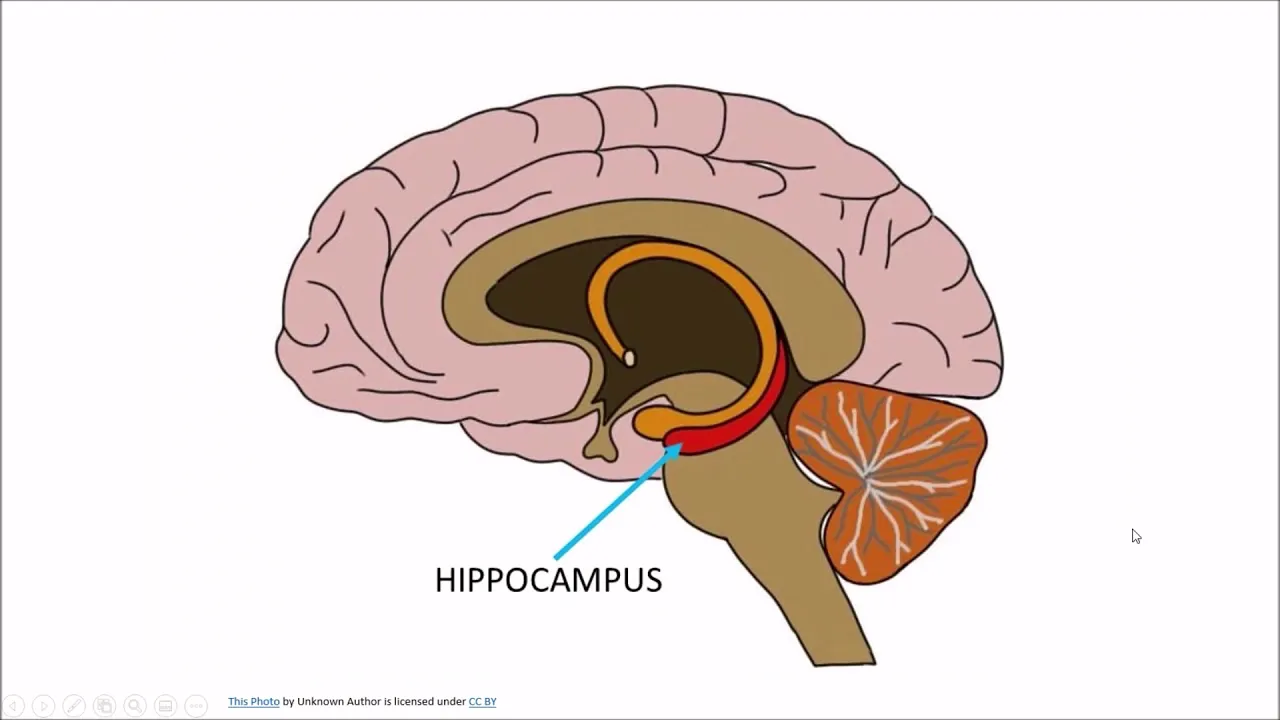
8:08
Neuroscience
What is neurodegeneration?
TheSheekeyScienceShow
3K views•2019-08-19
57:35
Neuroscience
IPL - Ruth Empson "Mind the Gap"
otagouniversity
251 views•2019-07-08
14:01
Neuroscience
How our body shapes our mind | Pancho Tolchinsky | TEDxNapoli
TEDx
2K views•2019-12-05

1:00:02
Neuroscience
Impact of Early Life Deprivation Danielle Stolzenberg Marcus Pembrey Bruce McEwen
uctv
4K views•2019-12-01

10:32
Neuroscience
β-Caryophyllene for Parkinson’s: Protecting Dopamine & Easing Symptoms
parkinsonsdiseaseeducation
6K views•2025-08-09

20:44
Neuroscience
New Insights from Inside the Brain with Rodrigo Braga, PhD
NUFeinbergMed
421 views•2025-04-14

9:57
Neuroscience
Highlights for dystonia • 2025 MDS Congress
movedisorder
145 views•2025-10-27

58:17
Neuroscience
Animal Welfare Synergy Series: Dr Tom Smulders on hippocampal neurogenesis
costactionlift
135 views•2025-07-14
Trending

13:25
Business
Playstation NO DISC/NO BUY Fight Is Over...
DavidJaffeGames
4K views•2026-07-23

22:40
Business
Steam and Xbox Just Dropped The Hammer On PlayStation
OhNoItsAlexx
9K views•2026-07-23

16:52
Anthropology
Americans Confused in Australia for 17 Minutes Straight
IWrocker
17K views•2026-07-23

20:36
Business
SuperBike Factory Has Gone... What's Next for the Motorcycle Industry?
thatbikersimon
11K views•2026-07-22