The time we experience as 'the present' is not real time but a brain fabrication: consciousness runs approximately 80 milliseconds behind reality, decisions are made up to 7 seconds before we become aware of them, and our perception of time duration is manipulated by memory density, emotional state, and novelty rather than actual duration. The brain constructs a coherent temporal experience from asynchronous sensory signals, creating an illusion of continuous present that serves survival rather than truth.
Install our extension to search inside any video instantly.
Time Doesn't Exist !! - And Nobel Physicists Have Known for Decades
Added:You have never lived in the present. Not once. Not for a single instant of your entire life. What you call now, what you perceive as the present moment, this [music] precise instant where your eyes scan these words and your brain transforms them into thought. This moment doesn't exist. It never has.
What you're experiencing right now is a ghost, a reconstruction, a montage fabricated by your brain from information that is already outdated by the time it reaches your consciousness.
The light from your screen takes a few nanconds to reach your retinas.
Your retinas take a few milliseconds to convert that light into electrical signals.
Your optic nerves take more milliseconds to transport those signals to your visual cortex. Your brain takes still more milliseconds to assemble, interpret, and make sense of those signals. The total time between when an event occurs in the real world and when you become conscious of it is roughly 80 milliseconds.
1/10enth of a second. That's nothing on a human scale, but it's everything on the scale of what it means to live in the present. Because it means your consciousness is always running one beat behind reality.
What you perceive as now is actually a tenth of a second ago. You have never, literally never lived a single instant of your life in real time. If this exploration captivates you, a thumbs up and a subscription would help us enormously and it would mean a lot to us because what we're going to discover tonight goes far beyond a simple delay of a few milliseconds. This lag behind reality is only the surface of a far deeper abyss. Beneath it lies a brain that cheats, rearranges, reconstructs time at will. A brain that makes decisions long before you become aware of them. A brain that stretches seconds when you're afraid and compresses years when you're stuck in routine. A brain that rewrites the past, inverts cause and effect, artificially synchronizes senses that operate at different speeds, and presents the result to you as though it were reality.
Tonight, we're going to dive into the mechanics of this illusion. And what we discover is going to change the way you think about time, consciousness, free will, and yourself.
Let's start with the simplest part, the delay of light.
Right now, the light from your screen is traveling to your eyes at roughly 186,000 m. That's the fastest speed the universe allows. Nothing can go faster.
But that speed, as staggering as it is, is not infinite. Light takes time to travel. An infinite decimal time at your scale a few nanose, but a real time nonetheless.
Which means the light hitting your retinas right now left your screen [music] an instant ago. An infinite decimal instant. What you're seeing is not your screen as it is now. It's your screen as it was a few billionths of a second ago.
You're looking at the past. At our scale, the difference is imperceptible.
But at the scale of the universe, it transforms everything. When you look up at the moon, you see it as it was a second and a half ago. When you look at the sun, you see it as it was 8 minutes and 20 seconds ago. If the sun went dark this instant, you would continue to feel its warmth and see its light for over 8 minutes before knowing anything had happened. The nearest star after the sun, Proxima Centauri, shows itself to us as it was 4 years and 2 months ago.
The Andromeda galaxy, that faint smudge visible to the naked eye on clear nights, as it was 2.5 million years ago before our species even existed. And the most distant galaxies our telescopes can capture send us light that has traveled for over 13 billion years. When astronomers using the James Web Space Telescope observe those galaxies, they are literally looking into the past. Not metaphorically, not poetically.
Physically, they see those galaxies as they were a few hundred million years after the Big Bang, at a time when Earth, the Sun, and our solar system didn't even exist yet. Albert Einstein, whose theory of special relativity in 1905 and then general relativity in 1915, redefined our understanding of time, grasped early on that the present, as we intuitively conceive it, has no physical meaning. In relativity, there is no universal. Now, two observers moving relative to each other don't agree on what is simultaneous. An event you perceive is happening now on the other side of the galaxy could be occurring in the past or the future depending on the speed and direction of the observer.
The present is not a plane that cuts the universe in two neatly separating past from future. It's a local personal notion dependent on your state of motion.
Einstein knew this and it troubled him deeply. When his friend Michelle Besso died in 1955, just weeks before Einstein's own death, Einstein wrote in a letter to Besso's family a phrase that has become famous for us believing physicists. The distinction between past, present, and future is only a stubbornly persistent illusion. That sentence was not a vague consolation. It was a physical assertion grounded in the mathematics of relativity. For Einstein, time does not flow.
Past, present, and future coexist in a four-dimensional structure physicists call spaceime. We don't travel through time. We are in time the way a point is in space. And the illusion of temporal flow is exactly that, an illusion.
This vision of time, often called the block universe or eternalist spacetime, is taken very seriously by theoretical physicists. It implies that your birth and your death exist simultaneously in the structure of spaceime. The dinosaur that walked across that plane 70 million years ago and the spacecraft that will cross that same region of space in a billion years are both equally real, equally present in the fabric of spaceime.
What changes is not reality. It's our consciousness of reality. Our viewpoint moves along the temporal dimension like the beam of a flashlight illuminating successive portions of a hallway that is already entirely built.
But this idea, as mathematically elegant as it is, runs into a brutal question.
If time doesn't flow, why do we so powerfully feel that it does? Why does the past seem fixed and the future open?
Why does time seem to advance in only one direction? This is where fundamental physics crosses paths with neuroscience.
And this is where our story truly begins. The 1977 Nobel Prize in Chemistry was awarded to the Belgian physicist [music] and chemist Ilia Prigoini for his work on dissipative structures and the thermodynamics of systems far from equilibrium. Priagene devoted much of his career to understanding why seems to have a direction. Why are natural processes irreversible? Why does a broken egg never reassemble? Why does heat always flow from hot to cold? Why does entropy, the disorder of the universe, relentlessly increase?
According to the fundamental laws of physics, the ones governing individual particles, time is perfectly reversible.
If you film two particles colliding and play the film backward, the laws of physics are obeyed in both directions.
Nothing in the collision tells you which way time is running. And yet at our scale, time has an obvious and irreversible direction.
Priagene argued that this arrow of time is not an illusion. It is real, emergent, and it arises from complexity.
When systems become sufficiently complex, when the number of particles is sufficiently large, when the interactions are sufficiently numerous, microscopic reversibility vanishes and macroscopic irreversibility emerges.
Time acquires a direction because the fundamental laws impose it, but because the complexity of the world makes it inevitable.
Priagene disliked Einstein's block universe. He considered it a denial of becoming, a static image of a universe that he believed was fundamentally dynamic, creative, in perpetual evolution.
For Priagene, time was real. The flow of time was not an illusion of consciousness. It was a fundamental property of the universe, inseparable from its complexity and irreversibility.
The debate between Einstein's vision for whom time is an illusion and prio jeans for whom time is the most fundamental reality remains open in theoretical physics. No experiment has decided between the two. But what is certain is that our perception of time the way we live seconds and minutes and hours corresponds to neither.
Because our brain doesn't measure time, it manufactures it. And the manufacturing follows rules that have nothing to do with physics and everything to do with biological survival. To understand just how deceptive our perception of time is, we need to go back to the 1980s and to an experiment that shook the world of neuroscience with the force of an intellectual earthquake. An experiment conducted by an American researcher named Benjamin Leette at the University of California, San Francisco.
Leette's setup was disarmingly simple.
He seated volunteers comfortably in a chair, attached a sensor to their finger, and gave them a very simple instruction. Move your finger whenever you want. There's no right moment. You decide. At the same time, he displayed in front of them a kind of clock with a fast moving hand on a circular dial.
Volunteers simply had to note the position of the hand at the precise moment they made the conscious decision to move their finger.
With this setup, Leette could measure two things. When the person reported deciding to move and when the finger actually moved.
The first result was unremarkable. The conscious decision preceded the movement by about 200 milliseconds. You decide.
And 2/10 of a second later, the finger moves. Time for the signal to travel down the nerves, for the muscles to contract.
logical. But Leette was also running an electroinc measuring the brain's electrical activity in real time. He was watching in particular a signal well known to neuroscientists.
The readiness potential, an electrical signal the brain produces when it's preparing to execute a movement. And what Leette discovered sent a chill through the scientific community. The readiness potential began roughly 500 milliseconds before the movement. Not 200, 500. In other words, the brain started preparing the movement 300 milliseconds before the person was conscious of having decided to move.
3/10 of a second. The brain had already pressed the button, and consciousness was only informed after the fact, like a CEO learning about his company's decisions by reading the morning paper.
The implications were staggering. If the brain launches the process before the conscious decision, then who really decides? Is consciousness at the controls? Or is it simply a spectator who arrives after the battle and takes credit for a decision already made?
Is free will, that deep conviction that we are the authors of our choices, merely a retroactive illusion constructed by a brain that is already chosen for us?
Leette himself nuanced his results. He suggested that even if the brain launches the process, [music] consciousness might retain a right of veto, a power of cancellation in the final milliseconds. The brain proposes, but consciousness disposes. It was a reassuring position, an elegant compromise between neural determinism and our intuition of free choice.
But in 2008, a team led by John Dylan Haynes at the Bernstein Center for Computational Neuroscience in Berlin ran a far more powerful version of Leette's experiment. And the results were devastating for free will. Haynes used functional Emory, a machine capable of scanning the brain and visualizing which regions activate in real time. He gave his volunteers a slightly more complex choice than Leettes. Move the right hand or the left hand. still whenever they wanted, but with a decision to make. The results were staggering.
Not only did brain activity precede the conscious decision, it preceded it by several seconds, not 300 milliseconds, up to 7 seconds. And by analyzing the activation patterns in certain regions of the prefrontal cortex, the researchers could predict before the person was aware of their own decision whether they would choose the right hand or the left. with a success rate of 60%.
That's not perfect, but it's well above chance. And with more precise imaging tools, faster scanners, more sophisticated analysis algorithms, that prediction rate could climb considerably.
7 seconds.
For 7 seconds, your brain was preparing a decision you had no awareness of.
During those 7 seconds, you may have been thinking about something else entirely.
But somewhere in your prefrontal cortex, the decision was forming silently below the threshold of consciousness, like an underwater current that only breaks the surface at the last moment. Your consciousness wasn't the captain of the ship. It was the passenger who discovers the destination by looking out the window.
Sockch Frerieded, a neuroscientist at UCLA, pushed the investigation even further. Frerieded worked with epilepsy patients who had electrodes implanted directly in the brain to locate the source of their seizures. With their consent, Frerieded used those electrodes to record the activity of individual neurons while the patients performed voluntary decision tasks.
The results confirmed and amplified Hannes's findings. Individual neurons in the medial prefrontal cortex and the supplementary motor area began firing up to a second and a half before the patient reported deciding to act. And the signal from these individual neurons allowed the prediction of the imminent decision with even better accuracy than functional MRI achieved. The decision was inscribed in the activity of specific neurons well before it reached consciousness. These results don't necessarily mean free will doesn't exist. The question is far more subtle than that. What they show is that consciousness [music] is not in command in real time. It's running behind behind the outside world and behind its own brain. [music] And this lag, your brain does everything it can to make sure you never notice it.
And if your brain cheats with the timing of your decisions, it also cheats with time itself. It stretches it, compresses it, reorders it, even reverses it sometimes. [music] All without your having the slightest awareness.
To understand how, we need to talk about fear. Nearly every person who has survived a serious accident reports the same thing. [music] Time seemed to slow down.
During the few seconds of the impact, every fraction of a second seemed to stretch indefinitely.
Every detail was sharp, precise, as if someone had pressed the slow motion button on reality. For a long time, the dominant explanation was that the brain literally speeds up its information processing in the face of danger, like a computer switching to turbo mode. The brain would genuinely perceive more frames per second during moments of terror, providing a survival advantage by enabling faster reactions to a predator or threat. David Eagleman, a neuroscientist at Stanford, decided to test this hypothesis with a remarkably bold experiment.
He recruited volunteers and took them to an amusement park to one of those freef fall towers where you're dropped into the void from a height of about 150 ft.
During the fall, the volunteers wore small electronic devices on their wrists that displayed rapidly flashing numbers, too fast to read under normal conditions. The reasoning was clear. If the brain really accelerates its visual perception during fear, then the volunteers should be able to read those numbers during the fall since their brain would be processing information faster.
Result: Nobody could.
Visual perception didn't speed up during fear. The brain didn't switch to turbo mode. The volunteers didn't see more frames per second than normal. And yet, when asked to estimate the duration of their fall, they systematically overestimated it, judging it had lasted much longer than it actually had.
Eagleman's explanation is fascinating, and it transformed our understanding of time perception. It's not that time [music] slows down during the event.
It's that memory speeds up. Faced with danger, the amygdala, that small almond shaped structure nestled deep in the brain, sounds the alarm. And when the amygdala sounds the alarm, the brain switches [music] to intensive recording mode. In normal circumstances, the brain filters out enormous amounts of information. It retains only the essentials. The rest is discarded, compressed, ignored. But during a moment of terror, the filters drop. Everything gets recorded. Every visual detail, every bodily sensation, every sound is captured and archived with a fidelity that ordinary memory never bothers to achieve.
And it's after the fact when you recall the event that the brain interprets this abnormal density of memories as a longer duration. The more memory stored in a time interval, the longer that interval retrospectively seems to have lasted.
Time didn't slow down. Memory captured more data, and the brain rereading that data spreads it across a perceived duration that feels larger. Eric Kandell, an Austrian-born American neuroscientist, received the Nobel Prize in Physiology or Medicine in 2000 for his discoveries on the molecular basis of memory.
Candle's work conducted primarily on a marine snail called allesia revealed the biochemical mechanisms by which neurons strengthen or weaken their connections in response to experience.
Candle showed that memory is not a passive recording of what happens. It's an active process of synaptic construction in which certain connections are strengthened, others weakened, and the whole system is perpetually reconfigured.
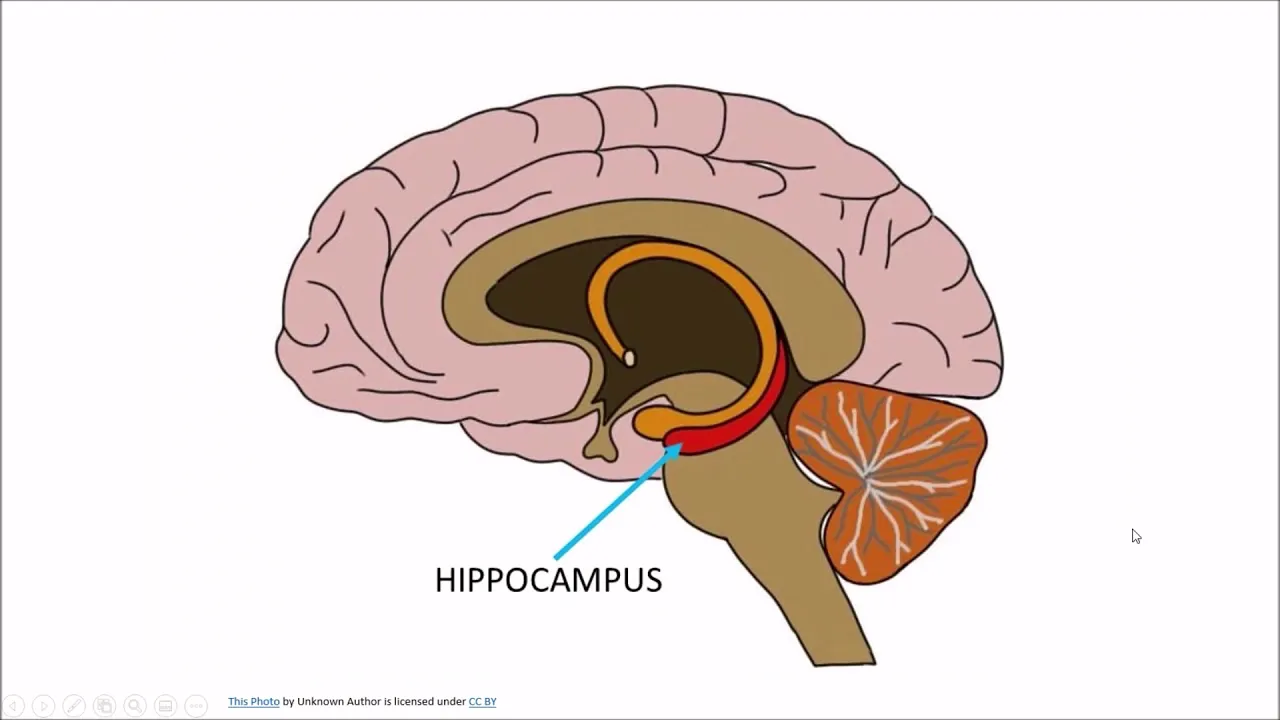
Memory doesn't store reality. It stores a reconstructed version of reality shaped by emotion, attention, repetition, and context. Candle's work directly illuminates the phenomenon Eagleman described. When the amygdala sounds the alarm, it triggers the release of noradrenaline and cortisol, two molecules that massively strengthen the consolidation of memories in the hippocampus, the brain structure responsible for forming new memories.
The result is an abnormally dense, abnormally vivid, abnormally detailed memory. And when the brain replays that memory later, it interprets it, for lack of a better frame, as an event that lasted a long time.
Subjective duration is proportional to memory density. The more data the brain stored, the longer the interval seems.
This mechanism explains one of the most universal phenomena of human experience.
Why childhood seem to last in eternity.
While the years fly faster and faster as you age, when you're a child, everything is [music] new. Your first day of school, your first bike, your first swim in the ocean, your first snowfall.
Every day is saturated with discoveries, first times, things your brain has never seen. And since everything is new, your brain records everything, every detail, every sensation, every emotion. Your hippocampus works at full throttle, consolidating memories at a frantic pace. Result: When you think back on your childhood, there's a colossal quantity of stored memories. And your brain interprets that density as a long duration.
Childhood seems endless. But as you age, routine sets in. You take the same route to work. You eat more or less the same meals. Your days resemble one another.
And since fewer things are new, your brain records less and less. It filters, compresses, files under already seen, no need to store.
Result, when you think back on the past year, there are far fewer distinctive memories. And your brain interprets that relative emptiness as a short duration.
The year flew by in a flash. Time didn't speed up. Your brain just stopped taking notes. And that's why, in a way, the best advice you can give someone who feels time is passing too fast isn't live in the present moment. That [music] well-intentioned but neurologically meaningless mantra. The best advice is do new things.
Because novelty forces your brain to record, which creates distinctive memories. And it's the density of those memories that retrospectively gives thickness to the passing of time.
That's why a vacation in a new place seems to last longer than an ordinary week. Not while you're living it, but retrospectively when you think back on it.
The vacation week contains [music] so many more distinctive memories than a routine work week that the brain assigns it a greater subjective duration.
Another factor, less well-known but equally important, involves dopamine.
Studies conducted at Duke University and the Wiseman Institute of Science in Israel have shown that dopamine, the neurotransmitter associated with reward, pleasure, and motivation, plays a central role in time perception.
Dopamuric neurons in the midbrain function as a kind of internal clock and the amount of dopamine available in the brain directly affects how fast that clock runs.
When dopamine levels are high, as in youth, the clock runs fast. The brain logs many events per unit of time. Time seems to pass slowly because every second is full. When dopamine levels drop, as with age, the clock slows. The brain logs fewer events per unit of time. Time seems to speed up because every second is emptier. This dopamineergic mechanism could partly explain why time seems to accelerate with age independent of novelty and why certain substances that increase dopamine levels like amphetamines create the subjective impression that time is slowing down.
Body temperature also affects time perception. Experiments have shown that when body temperature rises, even by a degree or two, from fever, exercise, or a hot environment, the brain's internal clock speeds up. People overestimate the duration of time intervals. When temperature drops, the reverse occurs, the clock slows. People underestimate durations.
Even emotional state alters the perception of time. Boredom stretches time because the brain, lacking interesting stimuli to process, turns to the internal clock itself and obsessively monitors it like a passenger constantly checking their watch in a waiting room.
Pleasure compresses time [music] because the brain is so absorbed by the current activity that it forgets to check its clock. Anxiety stretches time, too, but for a different reason than boredom. It increases amygdala activation which intensifies memory recording and creates the impression of longer duration. But these variations in time perception are only the tip of the iceberg. Beneath them, the brain performs far more radical acts of temporal manipulation.
operations that touch the very structure of our experience and reveal that time as we live. It is not a faithful recording of reality, but a montage, a reconstruction, a film in which your brain is simultaneously the director, the editor, and the audience.
Take chronostasis, a phenomenon nearly everyone has experienced without knowing its name. You glance at a clock with a ticking second hand. At the exact moment your eyes land on it, the second hand seems to freeze as if stuck.
Then it resumes its normal movement.
It's not a defect in the clock. It's your brain rewriting the past.
When your eyes move from one point to another, a rapid movement called a secade, there's a brief instant during which you see nothing. Your eyes are in motion. The image is blurry, unusable.
This gap lasts a few tens of milliseconds. And your brain hates gaps.
So, it does something extraordinary.
It takes the first clear image it receives after the secade, the image of the second hand in its new position, and stretches it retroactively backward in time to fill the gap. It fills the blank with an image that didn't even exist at the time of the blank. result. The second hand seems to have been frozen longer than it actually was. Your brain has literally rewritten your perceptual past to maintain the illusion of continuous perception. And it does this [music] constantly, not just when you look at a clock, but with every secade, which is roughly 3 to four times per second during every waking minute of your life. Eagleman demonstrated another spectacular example of cerebral time manipulation. If you expose someone to a consistent delay between an action and its effect, [music] say a button that produces a flash with a 100 millisecond lag, your brain adapts. It recalibrates its temporal expectations, integrates the delay into its model of the world, and adjusts its perception of causality accordingly. And if you then remove the delay, if the flash occurs immediately after the button press, the person perceives the flash as having occurred before they press the button. The effect seems to precede the cause. The chronology is perceived as reversed. The brain had so thoroughly integrated the delay into its expectations that the delay's absence creates a subjective inversion of time. Your brain doesn't just lag behind reality. It actively modifies the temporal order of your perceptions to maintain the coherence of its world model. And there's something even more disturbing. Your different senses don't operate at the same speed.
Sound travels slower than light in the outside world, but your brain processes auditory signals faster than visual ones. Touch has yet another processing speed, and that speed even varies depending on which part of the body is stimulated.
A touch on the face is processed faster than a touch on the foot because the nerve signal has less distance to travel. Which means that when someone claps their hands in front of you, the light reaches your eyes before the sound. But your brain processes the sound faster than the image. And yet you perceive the two as simultaneous.
The visual clap and the auditory clap happen at the same instant in your experience.
How? Because your brain waits for all the sensory signals to arrive, then synchronizes them artificially, retroactively to create the illusion of a coherent instant. It manufactures simultaneity. It creates [music] now by assembling signals that are physically asynchronous.
The present, as you experience it, is a fabrication, a temporal collage made from pieces that don't arrive at the same moment.
Recent work in neuroscience, notably by the team of David Meltchure at the University of Trento in [music] Italy, has revealed that the brain processes reality not as a continuous stream, but as a series of discrete snapshots, packets of information assembled in cycles of roughly 100 to 400 milliseconds. Each cycle collects sensory information, [music] integrates it, processes it, then presents it to consciousness as a unified instant.
Consciousness is not a movie. It's a slideshow playing fast enough to create the illusion of motion, like the frames of a cinema projector that displayed at 24 frames per second creates the impression of a continuous stream while actually being photographs.
Your now is not an instant. It's a packet, an assembly, a composite fabricated by the brain from heterogeneous, desynchronized, partial information stitched together in a montage that your consciousness experiences as reality.
There's an aspect of time perception we haven't yet addressed, and it pushes the paradox even further. It's the question of what happens when the brain is split in two. In 1981, Roger Sperry received the Nobel Prize in Physiology or Medicine for his work on the functional specializations of the cerebral hemispheres.
Sperry had studied patients whose corpus colosum, the bundle of nerve fibers connecting the two hemispheres, had been surgically severed to treat severe epilepsy.
These split brain patients allowed. For the first time, the study of how each hemisphere functions when isolated from the other. What Sperry discovered was profoundly disturbing for our understanding of consciousness and time.
The two hemispheres, once separated, seemed to function as two distinct consciousnesses, each with its own perceptions, judgments, and preferences.
The left hemisphere could name objects it saw, but the right couldn't. The right hemisphere could recognize faces and emotions that the left missed. And when the left hemisphere, the one that controls language, observed the right hemisphere performing an action whose reason it didn't know, it instantly invented a plausible explanation.
It confabulated. It told a story to explain something it hadn't decided and [music] didn't understand. Michael Gazaniga, Sperry's student and one of the founders of cognitive neuroscience, deepened this work and connected it directly to [music] the question of time and free will. Gazaniga proposed that the left hemisphere contains what he called an interpreter, a neural module dedicated to constructing coherent explanations for our actions and experiences.
The interpreter doesn't decide what we do. It explains what we've done. It takes decisions already made by other brain regions, actions already launched, choices already made, and retroactively constructs a narrative in which those actions appear to be the result of conscious, rational, free decisions.
The interpreter is the storyteller of our lives and like every storyteller, it takes considerable liberties with the truth. Gazaniga's work confirms and extends Leet and Haynes's findings. The brain acts first. Consciousness explains afterward. And the explanation is always convincing, always coherent, always presented as though it preceded the action when in fact it followed it.
We don't live in the present. We live in a narrative, our interpreter constructs from the immediate past, rearranging events into an order that produces the illusion of conscious causation.
This narrative dimension of live time brings us back to a fundamental point that neuroscience increasingly confirms.
The brain is above all a prediction machine. It doesn't merely react to events, it anticipates them. It constantly builds models of the immediate future and adjusts its behavior based on its predictions.
The neuroscientist Carl Fristen of University College London whose work on the predictive brain has been among the most influential in recent decades proposed a theoretical framework in which the brain functions essentially as a surprise minimization machine.
According to Fristen, the brain continuously generates predictions about what will happen in the coming milliseconds, seconds, and minutes. When reality matches the prediction, all is well.
When reality diverges from the prediction, the brain produces an error signal, surprise, and updates its model.
This predictive framework has profound implications for the perception of time.
The brain [music] doesn't perceive the present as it is. It perceives the present as it should be according to its own predictions and only corrects that perception when it diverges too far from reality. In a sense, you live in the future your brain has predicted, not in the present actually unfolding. And when the prediction is good enough, which it is in a routine, predictable environment, the difference between the prediction and reality is so small you never notice it.
Your brain projects a film of the immediate future and reality confirms it frame by frame.
The illusion is perfect. This is why unexpected events seem to slow time down. When the prediction fails, when reality diverges sharply from what the brain anticipated, the predictive system is caught off guard. It must build a new model on the fly, massively record sensory data it can't predict, update its expectations.
This intensive learning through surprise process produces the memory density we retrospectively interpret as a slowing of time. Time slows when predictions fail. Time speeds up when predictions succeed. Time nearly vanishes when predictions are so good there's nothing new to record. And this also illuminates why meditation, the practice of attention to the present moment, seems to alter the perception of time.
Studies by neuroscientists like Richard Davidson at the University of Wisconsin in collaboration with long-term Buddhist meditators have shown that meditation profoundly modifies the activity of the default mode network. the brain network that activates when the brain isn't engaged in a specific task and is associated with mind wandering, future planning, and rumination about the past.
In experienced meditators, the default mode network is less active and activity is more concentrated [music] on the sensory networks of the present.
The predictive brain, the one constantly projecting a film of the future to replace the perception of the present, is partially paused. And when the predictive brain quiets down, something interesting happens. Time seems to slow.
Moments become more distinct. Sensory experience becomes more vivid. The experiencing self usually drowned beneath the noise of the narrating self rises to the surface.
Meditation doesn't allow you to live in the present in the physical sense. The 80 millisecond delay is incompressible.
The brain's fabrication of time is constitutive of consciousness itself.
But meditation may allow you to live closer to the present to reduce the predictive filter to give more space to the experiencing self and therefore to create a richer, denser, more authentic experience of time.
The physicist Carlo Ralli, one of the founders of loop quantum gravity and author of the order of time has explored this question with remarkable depth.
Ralli whose theoretical work aims to unify quantum mechanics and general relativity has argued that time as fundamental physics describes it is radically different from time as we live it. At the most fundamental level of physics, time might not exist at all.
The fundamental equation of quantum gravity, the Wheeler Dwit equation, contains no time variable. The universe described by this equation is a static object without flow, without before or after. Time as we know it would emerge not from the fundamental laws of physics, but from our limited perspective on a system too complex to be grasped in its totality.
Time would be the product of our ignorance. The way a brain with limited processing resources makes [music] sense of a universe of which it can grasp only a tiny fraction.
For Rolli, time is tied to entropy, to disorder. What gives time its direction, what creates the difference between past and future is not a fundamental property of the universe. It's the fact that we interact with the world macroscopically, averaging over billions upon billions of particles. And that averaging reveals a preferred direction, the direction of increasing disorder.
At the microscopic scale, there is no direction of time. A collision between two particles is equally valid in fast forward and in rewind. But at our scale, disorder always increases. Cups shatter and never reassemble. Living beings age and never grow younger. And this asymmetry creates the illusion of a time that flows.
Prigo and Ralli arrive at similar conclusions by different paths. Prigo sees time as real but emergent from complexity. Ralli sees time as fundamentally absent but emergent from our ignorance and from entropy. In both cases, time as we live it is not time as it is. It is a construction neurological according to the neuroscientists, physical according to the physicists, psychological according to conaman, but a construction in every case. But let us turn to a discovery that all by itself has transformed our understanding of the relationship between live time and remembered time. A discovery made by one of the most important thinkers of the 20th century.
A psychologist who received extraordinarily the Nobel Prize in Economics, Daniel Conorman, an Israeli American psychologist born in Tel Aviv in 1934 and who passed away in New York in 2024, received the Nobel Prize in economics in 2002 for integrating psychological discoveries into economic science, showing that human beings don't behave as rational agents in their economic decisions, but are systematically biased. biased by cognitive huristics. But among all of Conaman's discoveries, the one most directly relevant to our subject may be the most profound of all. It concerns the distinction between two radically different entities that inhabit each of us and that experience time in completely opposite ways.
Conaman called them the experiencing self and the remembering self. And the silent war [music] between these two entities is the central drama of the human condition.
To illustrate this distinction, Conaman used an example from medicine. In the 1990s, colonoscopies were a considerably more unpleasant procedure than they are today.
Conaman asked patients to rate their pain level every minute during the exam on a scale from bearable to horrible.
This allowed him to plot precise pain curves for each patient minute by minute. Then sometime after the procedure, he asked them what overall memory they retained of the experience, how painful it was in their recollection.
The results were paradoxical.
Take two patients.
Patient A underos a short exam, say 10 minutes, but one that ends with an intense spike of pain in the final minutes. Patient B underos a much longer exam, 25 minutes, with more total accumulated pain overall, but whose final minutes are relatively mild.
Logically, objectively, patient B suffered more. He endured more minutes of pain. The area under his pain curve, the total sum of suffering experienced is larger. And yet, when asked afterward what memory they retained, it was patient A who reported the worst memory.
Patient A said it was horrible. Patient B said it was unpleasant but bearable.
How is this possible?
Because the memory of an experience doesn't depend on the total sum of what was lived. It depends on two things and two things only. The most intense moment and the ending.
This is what Conaman called the peak end rule. The brain doesn't average everything you experienced. It takes the most striking moment, [music] takes the final moment, and builds its memory from those two points. Everything else, all those intermediate minutes it discards, forgets, doesn't count.
The implications of this discovery are staggering. They mean there are two entities [music] inside you radically different that live time in incompatible ways. The experiencing self is you right now in the moment. It's the one that feels pain, pleasure, boredom, joy second by second. For the experiencing self, every second counts. 10 minutes of pain is worse than 5 minutes of pain.
It's mathematical. It's logical, but the remembering self is the one that tells the story afterward. It's the one that decides whether the experience was good or bad. And for it, duration barely counts. What counts is the intensity of the key moments and above all the ending.
The remembering self is a storyteller.
And like every good storyteller, it doesn't bother with details. It keeps the highlights and the ending. The rest it erases. And here's the problem. It's the remembering self that makes the decisions, not the experiencing self.
When you choose a restaurant, you don't choose based on the total sum of pleasures you experienced during your last visit. You choose based on the memory you have of it. And that memory is dominated by the best dish and by the end of the meal.
Conorman told an anecdote that illustrates this duality with devastating clarity. A man once told him he had listened to a magnificent symphony. 20 minutes of absolutely sublime music, but at the very end, a scratch, a defect on the record had produced an atrocious sound for a few seconds. And the man said, "It ruined the whole experience."
Conoran replied, "No, it didn't ruin the experience. The experience was magnificent. 20 minutes of musical bliss took place. They were genuinely lived. What was ruined was the memory of the experience. But the experience itself happened in all its splendor. The distinction is staggering.
The experience and the memory of the experience are two different things.
[music] And most of the time we sacrifice the experiencing self for the remembering self. We choose experiences not to live them, but for the memory they'll produce. We photograph a sunset instead of watching it. We organize vacations based on the photos we can post rather than the moments we can live. We live to remember rather than living to live.
Conaman calculated that the psychological present lasts roughly 3 seconds. Meaning that in an 80year life, we live approximately 600 million 3-second moments. [music] And the vast majority of those moments leave no trace. They are lived and then forgotten, as if they'd never existed.
Your life, as you tell it to yourself, as you remember it, is only an extremely condensed summary of what you actually lived. a summary written by a narrator with its own biases, its own rules, who couldn't care less about the actual duration of events.
So, if we recap what we've learned tonight, the picture is both fascinating and profoundly unsettling.
Your consciousness runs 80 milliseconds behind reality. Your brain makes decisions before you're aware of them, sometimes up to 7 seconds before.
Time slows in your memory when you're afraid and speeds up when you're stuck in routine. Your brain rewrites the past to fill gaps in your perception. It artificially synchronizes senses that operate at different speeds. It inverts perceived chronology when its expectations are disrupted. And your memory of an experience has almost nothing to do with the experience itself, dominated by the emotional peak in the final moments, indifferent to actual duration. All of this pushes us toward a conclusion as disturbing as it is inescapable. The time you live is not real time. It is a construction, a montage, a film manufactured by your brain.
David Eagleman summarizes this reality in a sentence worth letting resonate.
The days of thinking that time is a river that flows steadily, always forward, are over. The perception of time, like vision, is a construction of the brain. But this construction is not arbitrary. It's not a flaw. It's not a design error. It's a biological adaptation of extraordinary sophistication forged by millions of years of evolution for a single objective.
Survival.
Your brain doesn't try to show you reality as it is. It tries to show you a version of reality that lets you function, react, make decisions, stay alive. And for that, it needs a time that makes sense, not a time that is true.
Carlo Ralli in his theoretical work has argued that at the most fundamental level of physics, the universe described by the Wheeler Dit equation is a static object without temporal flow. Time as we know it would emerge not from fundamental laws but from our limited macroscopic perspective and from entropy.
We are creatures of time. We are born in time. We age in time. We die in time.
And yet the time in which we live is not real time.
It is a narrative, a story our brain tells us second by second so that we can function in a world whose deep laws are too strange, too counterintuitive, too incompatible with our biology to be perceived directly.
In 2014, the Nobel Prize in Physiology or Medicine was jointly awarded to three scientists. John O'Keefe, May Britt Moser, and Edvard Moser.
O'Keefe, an American British neuroscientist at University College London, had discovered place cells in the hippocampus in 1971. Neurons that fire specifically when an animal is in a particular location in its environment.
The Mosers, a husband and wife team of Norwegian neuroscientists at the Norwegian University of Science and Technology in Tronheim, had discovered grid cells in the Entorheal cortex in 2005.
Neurons that form a hexagonal coordinate system, allowing the brain to [music] map space and calculate distances and directions.
These discoveries were fundamental for understanding how the brain navigates space. But they also revealed something unexpected about how the brain navigates [music] time. Subsequent work notably by Howard Iikinbomb at Boston University, Albert Sao and the Mosers themselves identified time cells in the hippocampus and entohal cortex.
These are neurons that fire not in response to a place but in response to a moment in a temporal sequence. Some neurons fire at the beginning of an experience, others in the middle, others at the end. Some fire at regular intervals, like the tick-tock of an internal clock. Others fire more irregularly, marking significant moments rather than fixed intervals.
Together, these times constitute what neuroscientists call a temporal representation, a map of time constructed by the brain in the same way it constructs a map of space. The brain doesn't measure time with a single regular clock ticking steadily like a wristwatch. It maps time with a network of neurons whose combined activity encodes the temporal position of each moment in a sequence.
And this temporal map is flexible. It expands and contracts depending on attention, emotion, novelty, and context.
When an event is new or emotionally charged, the temporal map stretches, allocating more neurons and more precision to representing that event.
When an event is routine or predictable, the map compresses, allocating fewer neural resources and [music] less temporal resolution. This discovery has profound implications. It means the time the brain represents is not linear. It's not uniform. It's not regular. It's elastic, deformable, [music] dependent on the content of experience.
A moment of terror occupies a vast territory on the brain's temporal map. A moment of routine occupies almost none.
And when we remember a period of our lives, what we're actually doing is rereading that temporal map. If the map is dense, [music] the period feels long. If the map is sparse, the period feels short.
Live time is the time mapped by the brain, not the time measured by a clock.
Einstein was right. The distinction between past, present, and future is an illusion. But it is an illusion that 600 million 3-second moments compose over the course of a life. An illusion woven by a 100 billion neurons and 100 trillion synapses. An illusion confirmed by every heartbeat, every memory, every decision, every instant you live believing you're living it now when now already no longer exists by the time you become aware of it.
Prigo was right too in his way.
Time is real because we live it because aging is real. Because change is real.
Because irreversibility is real. Even if time is a construction, constructions are real for those who inhabit them.
And we inhabit time. We are born in it.
We age in it. We die in it. Whatever its fundamental nature, it is the substance of our existence. And Conaman was right to warn us. We don't live time, we narrate it. And the story we tell ourselves is only a condensed, biased, incomplete summary of what we actually lived.
600 million moments reduced to a few striking scenes and a handful of endings. The experiencing self lives in a rich continuous time moment by moment.
The remembering self lives in a compressed edited time dominated by peaks and endings. And the silent tragedy of the human condition is that the second writes the history of the first.
So maybe the advice to live in the present moment isn't so bad after all.
Not because it's scientifically accurate. It isn't. The present in the strict [music] sense doesn't exist, but because it points towards something true despite everything. It points toward the importance of the experiencing self.
that silent self that genuinely lives every second of your life, but whose moments are systematically erased by the remembering self.
To live in the moment is perhaps simply to give voice to the one who lives rather than to the one who narrates.
To assign value to moments that will never be memorized, to ordinary minutes, to quiet hours, to days without remarkable events.
Because those [music] moments, even if they vanish from memory, were lived.
They were real in the deepest sense of the word. And their reality doesn't depend on their trace and recollection.
The time you're living right now, this precise second with the light from your screen reaching your retinas a few nanconds late, the electrical signals climbing toward your cortex with a few tens of milliseconds of lag. Your consciousness assembling it all into a now that is already the past. This moment is real. It is lived. It exists.
Even if your brain fabricated it, even if your memory will erase it, even if the now in which you believe you're living never physically existed, this moment is yours, and it is the only one you will ever have.
Time is not what you think it is, but what you live in this time that doesn't exist, that is real.
Related Videos
8:08
Neuroscience
What is neurodegeneration?
TheSheekeyScienceShow
3K views•2019-08-19
57:35
Neuroscience
IPL - Ruth Empson "Mind the Gap"
otagouniversity
251 views•2019-07-08
14:01
Neuroscience
How our body shapes our mind | Pancho Tolchinsky | TEDxNapoli
TEDx
2K views•2019-12-05
1:00:02
Neuroscience
Impact of Early Life Deprivation Danielle Stolzenberg Marcus Pembrey Bruce McEwen
uctv
4K views•2019-12-01
10:32
Neuroscience
β-Caryophyllene for Parkinson’s: Protecting Dopamine & Easing Symptoms
parkinsonsdiseaseeducation
6K views•2025-08-09

20:44
Neuroscience
New Insights from Inside the Brain with Rodrigo Braga, PhD
NUFeinbergMed
421 views•2025-04-14
9:57
Neuroscience
Highlights for dystonia • 2025 MDS Congress
movedisorder
145 views•2025-10-27
58:17
Neuroscience
Animal Welfare Synergy Series: Dr Tom Smulders on hippocampal neurogenesis
costactionlift
135 views•2025-07-14
Trending

13:38
Law
WOW! Judge TURNS THE TABLES on Trump in His OWN $10B LAWSUIT!!!
MeidasTouch
197K views•2026-07-23

13:25
Business
Playstation NO DISC/NO BUY Fight Is Over...
DavidJaffeGames
4K views•2026-07-23

22:40
Business
Steam and Xbox Just Dropped The Hammer On PlayStation
OhNoItsAlexx
9K views•2026-07-23

16:52
Anthropology
Americans Confused in Australia for 17 Minutes Straight
IWrocker
17K views•2026-07-23