Rippon successfully replaces the outdated "fixed brain" narrative with a dynamic model of adaptation that empowers the neurodivergent community. It is a sharp reminder that our biological limits are far more flexible than traditional science once claimed.
Install our extension to search inside any video instantly.
A Neurodivergent Brain Is More Adaptable Than You Think
Added:What other myths are there about the brain? What annoys you?
>> Well, if you don't want to get me going.
There is a myth that there is a female brain and a male brain.
>> Yeah.
>> That is a myth that needs examining and discussing. It links to thinking and learning. I mean, there are books like the right-brained way of drawing, for example, so that people are harnessing that idea and saying to unleash your creativity, you should use your right hand. And there's a very weird set of explanations about the brain buried in education, which I think has been put right now, called neurogym. And the idea was that you could stimulate children's brain in the classroom by getting them to stand on one leg or rub, you know, the left knee or or something like that. And there were councils spending quite a lot of money sending teachers off to be trained to use neurogym.
>> Really?
>> So, there are some really weird ideas out there.
>> And is that sort of proven and I guess neuroscience-wise possible to rub your leg and stimulate your brain?
I know it sounds a stupid question, you're laughing, but >> No, no, it isn't because in a way it's as ever with these things, there's a kind of kernel of truth. If you're using your right hand to rub your left leg, then, you know, the motor cortex will be activated, but it's at that level. It's not going to affect your cognition.
>> Yes, you're not going to be able to remember a poem.
>> No, no, no, that's right. Or learn the poem by keeping rubbing your left >> [laughter] >> knee while you're doing it, sadly. Yes, so I I think there is a fascination out there with how we might do something with our brains and stimulate our brains. So, there is a kind of, you know, a good side and a bad side to our understanding about the brain. Sometimes it's people just trying to explain to non-experts, this is how the brain appears to do what it's doing. And I think this is where the right and left brain >> Mhm.
>> came from.
>> What have you found to be the best analogy to explain someone how a brain works?
>> Well, very often the analogies are very much tied to the technology at the time. So, it used to be like the telephone exchange model of the brain. And of course, now I'd come to software and hardware, you know, >> Yes.
>> the brain is hardware in the computer and the the key thing is it's not necessarily the hardware, it's the software and the connections between it.
And I'm sure if I was a physicist, I'd you know, go on to quantum mechanics or something like that.
>> Quantum computing probably as well.
>> That's right. Yes, so the thing that I think is important that people realize that we get these amazing images of the brain which are all about the different structures, but we don't really learn a lot from that if we're interested in why people are different or >> why there are gender gaps in society for example. You know, there's not much point looking at the amygdala and saying, "Oh, that person's got a big amygdala. That means they're very emotional." It doesn't work that way.
>> Do London cabbies who've done the knowledge have a different brain?
>> That's a great question.
And almost an exception to what I've just said. Yes, they do.
>> Okay.
>> Uh they do. I mean, bearing in mind this takes about three or four years to do.
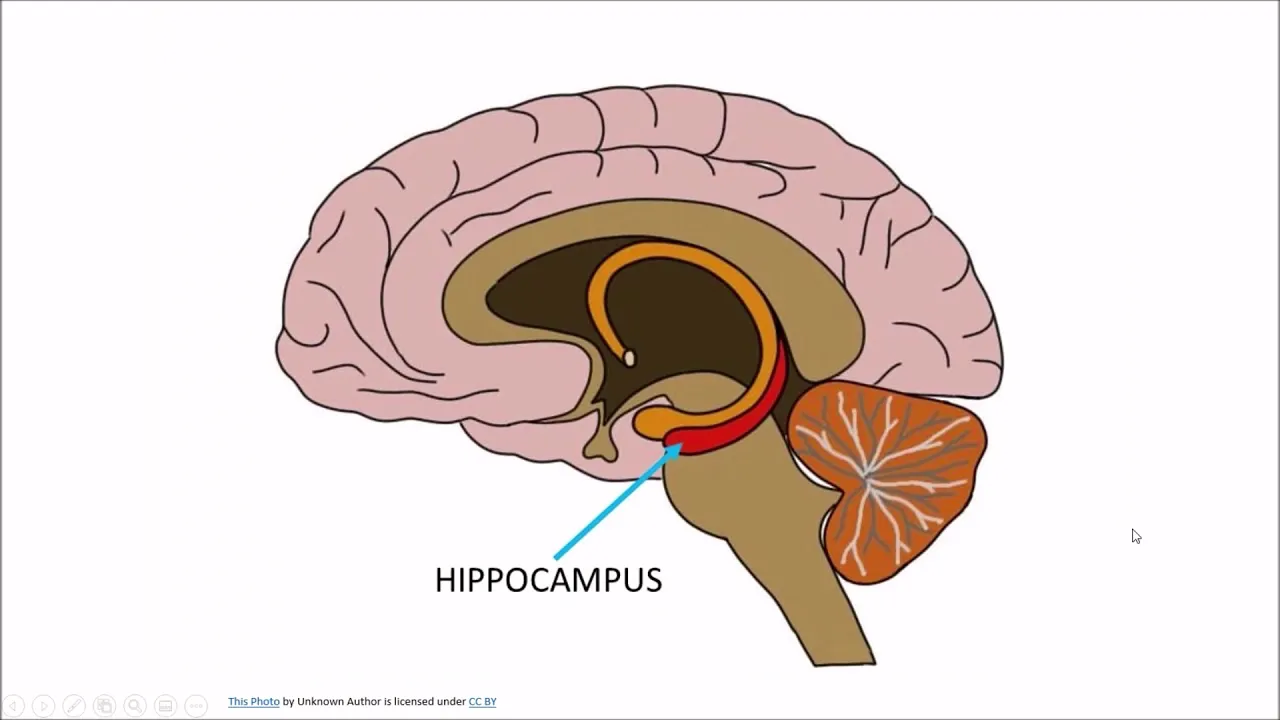
If you look at the brain of a London cabbie, the part of the hippocampus which deals with visuospatial, you know, remembering the 10,000 routes within 6 mi of Charing Cross, that does become enlarged.
>> And therefore, the idea around the plasticity of the brain and its ability to be {quote} unquote trained or developed is totally real.
>> Oh, yes. And what's interesting also, coming back to the taxi cab drivers, is when they retire, that difference disappears, which demonstrates just how flexible and plastic the brain is.
Related Videos
8:08
Neuroscience
What is neurodegeneration?
TheSheekeyScienceShow
3K views•2019-08-19
57:35
Neuroscience
IPL - Ruth Empson "Mind the Gap"
otagouniversity
251 views•2019-07-08
14:01
Neuroscience
How our body shapes our mind | Pancho Tolchinsky | TEDxNapoli
TEDx
2K views•2019-12-05
1:00:02
Neuroscience
Impact of Early Life Deprivation Danielle Stolzenberg Marcus Pembrey Bruce McEwen
uctv
4K views•2019-12-01
10:32
Neuroscience
β-Caryophyllene for Parkinson’s: Protecting Dopamine & Easing Symptoms
parkinsonsdiseaseeducation
6K views•2025-08-09
20:44
Neuroscience
New Insights from Inside the Brain with Rodrigo Braga, PhD
NUFeinbergMed
421 views•2025-04-14
9:57
Neuroscience
Highlights for dystonia • 2025 MDS Congress
movedisorder
145 views•2025-10-27
58:17
Neuroscience
Animal Welfare Synergy Series: Dr Tom Smulders on hippocampal neurogenesis
costactionlift
135 views•2025-07-14
Trending

13:38
Law
WOW! Judge TURNS THE TABLES on Trump in His OWN $10B LAWSUIT!!!
MeidasTouch
197K views•2026-07-23

13:25
Business
Playstation NO DISC/NO BUY Fight Is Over...
DavidJaffeGames
4K views•2026-07-23

22:40
Business
Steam and Xbox Just Dropped The Hammer On PlayStation
OhNoItsAlexx
9K views•2026-07-23

16:52
Anthropology
Americans Confused in Australia for 17 Minutes Straight
IWrocker
17K views•2026-07-23