Tesla Optimus Gen 3 represents a significant advancement in humanoid robotics, featuring 22-degree-of-freedom hands with 50 actuators (a 4.5x increase from Gen 2's 11 degrees of freedom), paired with the AI5 chip for real-time neural network control. Tesla's strategy involves deploying robots in their own factories to gather real-world operational data, creating a 'data flywheel' that enables continuous improvement. The company aims to produce 1 million units annually at Fremont and 10 million at Giga Texas, targeting a $20,000 price point to make robotics accessible beyond enterprise customers. This approach addresses the fundamental challenge in humanoid robotics: achieving precise adaptive dexterity that enables robots to handle fragile components, perform complex manipulation tasks, and adapt to unstructured environments.
Tesla Optimus Gen 3 Is Coming | The Humanoid Robot Race Is Getting Very Serious
Added:In August 2021, Elon Musk walked out on stage at Tesla AI Day and announced he was building a humanoid robot. He said it would be friendly, that it couldn't run away from you. The crowd laughed. A dancer in a robot costume came out to [music] demonstrate. Most people wrote it off as peak Elon trolling. Five years later, that joke is now walking the factory floor at Tesla's Fremont plant, [music] sorting battery cells, handling parts, learning new tasks by watching humans do them first. And here's the number that should make every other robotics company nervous.
>> [music] >> Tesla is converting an entire car factory, a factory that used to build the Model S and Model X, >> [music] >> to produce 1 million Optimus robots per year. 1 million per year [music] at a target price of $20,000.
That's not a robot. That's a platform.
And today we're going to talk about what Tesla actually built, what's real versus what's still Elon math, and why, hype aside, Optimus might be the most consequential product in the company's history.
>> [music] >> From dancer to factory worker, the origin story.
To appreciate where Optimus is in 2026, you have to remember how rough the start was. The first Optimus prototype revealed in September 2022 could barely walk. It shuffled across a stage while engineers stood nervously nearby. It was slow. It was stiff. [music] The press was brutal. Compared to what Boston Dynamics had been doing for years, it looked like a college project.
But Tesla did something important with that awkward debut. They shipped early and iterated fast. The same playbook as the original Roadster. The same playbook as Autopilot. Show [music] it before it's ready, get real-world feedback, and build the data flywheel. By late 2023, Gen 2 Optimus was walking 30% faster, with better balance and 11 degree of freedom hands with tactile sensing. It was folding laundry in demo videos, which, yes, everyone dunked on as a party trick. But, underneath the laundry fold was something serious. Proof that the manipulation hardware was getting genuinely capable. Then, in mid-2024, something shifted. Tesla quietly deployed Gen 2 units inside [music] Fremont and Giga Texas. Not for demos, not for press, to actually work. Sorting 4680 battery cells, moving parts between stations, handling kitting tasks. The factory became the lab. And that decision to turn the factory floor into a training environment is the move that separates Tesla's approach from everyone else.
What Gen 3 actually means.
Here's something the headlines keep getting wrong, and it matters. Gen 3 doesn't refer to a completely new robot.
It refers specifically to the hands. The body, the torso, the legs, that's still the Gen 2 platform. What changed in Gen 3 are the hands, and the [music] change is dramatic. Gen 2 hands had 11 degrees of freedom. Gen 3 hands have 22, with 50 actuators total.
>> [music] >> 25 per forearm and hand. That's a 4 and 1/2 X increase in the complexity of just the hands alone. In February 2026, Musk posted on X, >> [music] >> "This bot got hands." Which, for Musk, is practically a technical white paper.
Why does this matter? Because hands are the bottleneck in humanoid robotics. You can solve walking. You can solve [music] balance. What you cannot easily solve is the kind of precise adaptive dexterity that lets a robot pick up a fragile component without crushing it, thread a bolt onto a hole it can't see directly, >> [music] >> or adjust grip in real time when an object shifts. The Gen 3 hand upgrade is Tesla's answer to that problem.
And paired with the new AI 5 chip, Tesla's custom inference processor, the system can run real-time neural network control at low latency. The AI 5 is actually deploying to Optimus before it goes into Tesla vehicles. That tells you everything about where the company's priorities are right now. The full production version, body and hands together, is set to begin rolling off the Fremont line in July or August 2026.
The factory strategy, Tesla's secret weapon.
Here is where Tesla's strategy gets genuinely interesting and genuinely different. Every other humanoid robotics company has to find customers, negotiate deployments, and slowly gather real-world operational data. Tesla doesn't have that problem. Tesla is the customer. They have multiple massive factories running 24/7 full of repetitive industrial tasks, and they can deploy hundreds of robots into those environments immediately. As of early 2026, somewhere between several hundred to roughly a thousand Optimus units are operating across Fremont and Giga Texas.
They're doing narrow structured tasks, sorting, [music] kitting, inspection, under close supervision. Tesla has been transparent about this. At the January 2026 earnings call, Musk acknowledged the robots are not yet doing useful [music] work at meaningful scale. They are right now primarily a data collection machine. Every shift they work generates training data that makes the next generation smarter. This is the data flywheel, and it's the same engine that made Tesla's autopilot the world's most capable consumer driving system.
Billions of real-world miles driven by Tesla vehicles feeding training data back to the model. [music] The robots in the factory today aren't meant to replace workers. They're meant to train the robots that will.
Meanwhile, the manufacturing ambition is staggering. Tesla confirmed in its Q1 2026 report that the Fremont factory, where the Model S and Model X were built for years, is being converted into an Optimus production line targeting 1 million units per year. And at Giga Texas, they're already breaking ground on a second facility targeting 10 million robots per year long-term. 10 million. For context, the entire humanoid robot market had roughly 16,000 installations globally in 2025. Tesla is planning a factory that could produce 625 times that in a single year.
The $20,000 question.
Let's talk about the number everyone cares about, $20,000. That's Tesla's stated long-term target price for Optimus. And if you want to understand why that number is electric to the robotics industry, consider Boston Dynamics Atlas costs around $420,000.
Figure 03 hasn't published pricing, but is expected to be in a similar premium tier. Agility's Digit is aimed at enterprise logistics budgets. $20,000 is less than a new mid-range car. It's within reach of small businesses. It starts to make the economics of robotic labor genuinely competitive with human labor at scale, not in some theoretical future, but in a math you can actually do right now. Here's the critical caveat, though. That price doesn't exist yet.
>> [music] >> Current manufacturing costs are significantly higher. There's no pre-order, no waitlist, no announced sales price. The 20K figure is a target for when production volume is at car scale, [music] which won't happen until the Giga Texas facility is fully operational, probably 2027 or 2028.
External customer sales are currently targeted for late 2027, starting with manufacturing enterprises. Consumer availability is even further out. Musk has been consistent that home tasks, truly unstructured environments, are a 2028 and beyond story. The honest read?
The price target is real. The path there is plausible, and the timeline has already slipped once. Tesla originally targeted 10,000 units in 2025 and missed, badly. The robots that were supposed to be working autonomously were still in learning mode. That's the tension at the heart of the Optimus story. The vision is credible. The execution has been messier than advertised, which to be fair is also the story of every ambitious Tesla product ever made.
Why the people's robot might actually stick.
So, why does any of this matter beyond the factory floor? Musk has said repeatedly that Optimus could eventually be more valuable than Tesla's entire car business. That sounds insane until you think about what a $20,000 general-purpose humanoid robot actually unlocks. Labor shortages in manufacturing, logistics, health care, and agriculture are not a short-term problem. They're structural. The populations of every major developed economy are aging. The jobs that need doing in warehouses, in care homes, on construction sites, in fields, are getting harder to fill with humans. A robot that can be trained by watching a human, deployed in existing human-scale environments, maintained by a fleet management software layer, and updated over the air to learn new skills, that's not a luxury product for billion-dollar factories. That's eventually a general-purpose labor tool. And the name The People's Robot isn't just a marketing phrase. It's a strategic bet.
Every other serious humanoid robot in 2026 is aimed exclusively at enterprise customers with seven-figure budgets.
Tesla is the only company explicitly targeting a price point where a mid-size logistics company, a regional hospital network, or eventually a household might actually be able to afford one. Whether that vision lands in 2027, 2030, or 2035 is genuinely unknown. What's no longer unknown is whether Tesla is serious. You don't shut down Model S and Model X productions and rip out a factory floor because you're not serious. Here's where we are in 2026. Tesla Optimus is no longer a concept. It's [music] not a demo. It's a production program with a dedicated factory, a hardware roadmap, a scaling plan that makes the entire robotics industry look small, >> [music] >> and most importantly, real robots doing real work in real factories. Is it overhyped? Absolutely. Elon Musk over hypes everything. The 2025 targets were missed. [music] The robots aren't yet replacing workers. The $20,000 price is still years away. But the history of Tesla products is a history of things that seemed ridiculous, then [music] late, then impossible to ignore. The Model 3 was supposed to be affordable and on time. It wasn't. [music] Then 2 million of them were on the road.
Optimus is currently in the late phase.
Whether it reaches impossible to ignore depends on what comes off the Fremont line in the second half of 2026. We'll be watching closely. If you want to follow the humanoid robot race, because [music] that's exactly what 2026 and 2027 are shaping up to be, hit subscribe. We've got deep dives coming on Figure AI, Agility Robotics, and the Chinese companies that almost nobody in the West is paying enough attention to.
And drop in the comments, what's the first task [music] you'd give a $20,000 home robot? I'm genuinely curious. See you in the next one.
Related Videos
Setting up a curved screen with Immersive Calibration Pro 4 and multiple cameras (P3D v4)
FlyerOneZero
23K views•2019-07-21

Robot Learning with Sparsity and Scarcity
allenai
379 views•2025-10-14

Jorge Mendez-Mendez: Unlocking Lifelong Robot Learning With Modularity (2023-10-05)
umassmlfl
237 views•2024-01-06

Northwestern’s MS in Robotics: Student Robotics Projects, 2023
NorthwesternEngineering
1K views•2024-05-31

"Perfect" Turns: Turning by the Gyro - FIRST LEGO League (FLL) SPIKE Prime + EV3 RePlay Programming
ZacharyTrautwein
94K views•2020-10-02
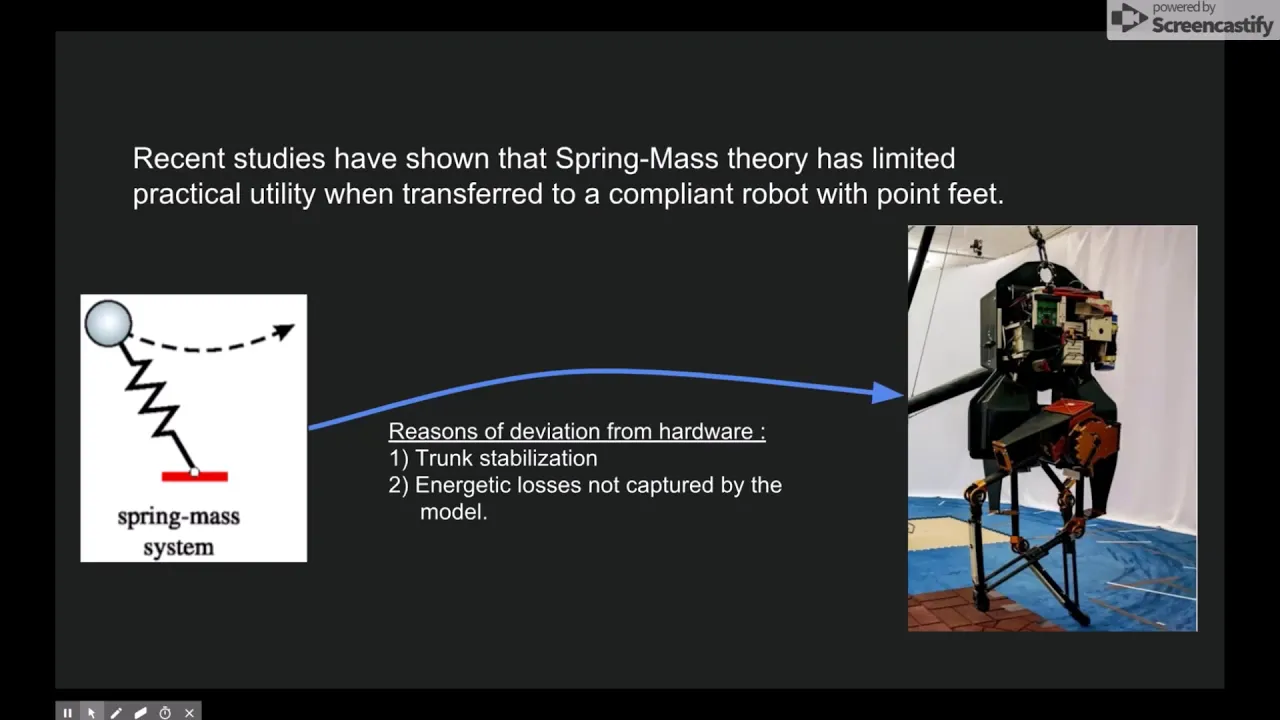
Gorkem Secer: TSLIP-based Deadbeat Running Control of Bipedal Robot ATRIAS
DynamicWalking-wv6qm
298 views•2018-06-22
Self-Driving Cars Need Lessons On Human Drivers | Maddie About Science
skunkbear
26K views•2018-08-21

Milrem Robotics’ THeMIS UGVs used in a live-fire manned-unmanned teaming exercise
MilremRobotics
99K views•2021-05-20
Trending

Playstation NO DISC/NO BUY Fight Is Over...
DavidJaffeGames
4K views•2026-07-23

Steam and Xbox Just Dropped The Hammer On PlayStation
OhNoItsAlexx
9K views•2026-07-23

Americans Confused in Australia for 17 Minutes Straight
IWrocker
17K views•2026-07-23

LIVE NOW! Cellular Structure and Functions | Complete Cell Biology Lecture | Anatomy & Physiology
MukhtarAliyu-t7m
387 views•2026-07-23