Every gravitating body has an escape velocity—the minimum speed needed to break free from its gravitational pull. For Earth, this is 7 miles per second, which astronauts achieve to reach the Moon. However, for a black hole, the escape velocity equals the speed of light. Since nothing can travel faster than light, once an object crosses the event horizon (the point of no return), it can never escape, making black holes inescapable.
Install our extension to search inside any video instantly.
What happens if you cross a black hole's event horizon?Added:
It's a point of no return.
>> we know that?
>> Well, we've never seen it happen, but we can calculate the escape velocity.
In other words, if you want to leave the Earth, how fast do you have to move to leave the Earth? 7 mi/s.
Our astronauts travel 7 mi/s to reach the moon. Okay? That's called escape velocity.
So, every gravitating piece of matter has an escape velocity. For the Earth, it's 7 mi/s. What about the escape velocity of a black hole? It's the speed of light.
That's why if you fall through the event horizon of a black hole, you never come out.
Related Videos

NOAA Warning! Massive Double Cannibal CME Impacting Earth: G4 Storm Watch!
worldnewsreporttoday
1K views•2026-06-04
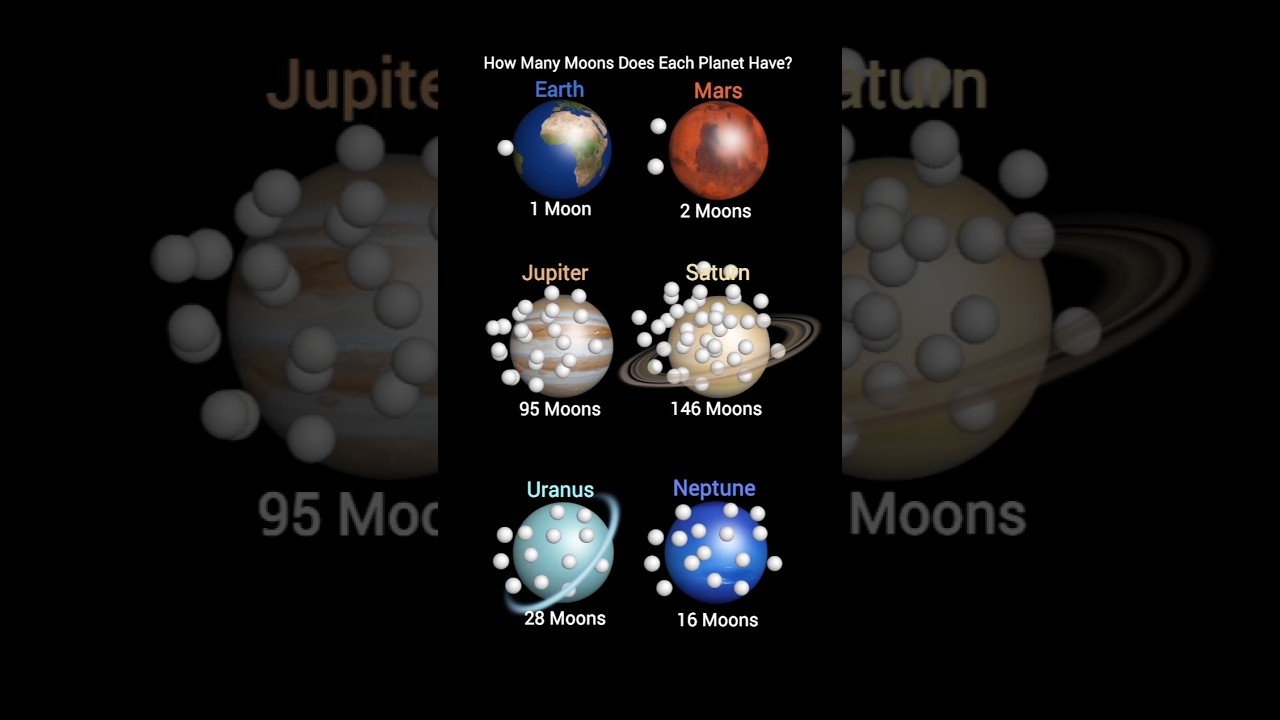
How Many Moons Does Each Planet Have?
ངངངངངང
88K views•2026-06-04

Nova Eruption — Stellar Astrophysics in 60 Seconds #Shorts
UnseelAstronomy
1K views•2026-06-07

How the Sun Pushes Space Weather Toward Earth
heavybrainspace
1K views•2026-06-04
NASA's bizarre discovery on an object from another star system #space #astronomy
InfiniteScienceLab
473 views•2026-06-05

The Scariest Thing NASA Has Ever Seen | The Cosmic Void Explained #Shorts #NASA #CosmicVoid
UnknownUniverseHub
104 views•2026-06-08

The Closest Planet To The Sun Has Ice #Shorts
FactReactor-d2q
2K views•2026-06-06

NASA Finds Salt Water Volcano in the Asteroid Belt. Nobody Talk Is Talking About It
guess_what_i_found_out
1K views•2026-06-04