The feeling that a brief dream lasting only minutes can feel like hours is not a malfunction but a fundamental feature of human time perception. The brain does not have a dedicated 'time organ' but constructs the sense of duration from attention, memory, and emotional density. During REM sleep, external sensory cues are muted and the prefrontal cortex (which normally monitors duration) quiets down, allowing the mind to build a rich, story-like experience from scattered fragments of waking memories. This 'memory density' effect means that vivid, event-filled dreams feel longer because they contain more distinct moments to remember, while boring or repetitive experiences feel shorter. The same mechanism explains why frightening moments in waking life seem to slow down—the brain records more detail, which later reads as extra time. This is a universal human experience shared by all sleepers, not a personal quirk.
The Dream Time-Warp: Why 5 Minutes in Sleep Feels Like 5 Hours in Reality - No Ads
Added:There is a strange tiredness in waking from a dream that felt like a whole life only to find the clock has barely moved.
You lie there for a moment unsure which was real.
The minutes on the nightstand or the hours your mind swears it just lived through.
Behind your eyes right now, a quiet machinery is warming up.
The part of you that builds time out of story and memory rather than reading it off a clock.
In sleep, that machinery loosens from the outside world and starts telling [music] time its own way, thick and slow, rich with detail.
So here is the question. Waiting in the dark.
Why can a brief moment of sleep feel like it held hours of a whole other life?
Settle into that not knowing.
Your mind is not bending clocks tonight.
It is only writing time the way it always has.
densely from the inside, saving each moment as if it lasted.
Welcome to sleepy science facts.
Let this question drift with us into the hours ahead and begin to answer itself.
Because to understand why five dreaming minutes can stretch into felt hours, we start close with the ordinary way your waking mind already measures time.
That is where the first fact begins.
There is no [music] single clock ticking somewhere inside your brain.
When you feel a minute pass, you are not reading a dial. You are building an estimate from what happened during it.
Your brain stitches together the beat of your attention, the rhythm of your breath, and how many separate moments it noticed, then [music] quietly turns all of that into a sense of duration.
This is the quiet question waiting underneath tonight.
Why can a brief slip of sleep feel like it held hours of a whole other life?
When the hands of a real clock barely moved, you feel time.
You do not measure it.
And the feeling can be gently, honestly wrong. [music] The sense of now is not an instant, but a small window your brain holds open.
Researchers studying perception find that the present you experience is stitched from roughly the last two to three seconds of incoming signals blended into one smooth stretch.
Your mind gathers a little handful of moments and presents them to you as a single seamless present.
This is why a conversation flows instead of arriving as separate frozen frames.
The strange part is how ordinary it feels.
You never notice the stitching.
Every mind in the dark tonight is doing this same quiet weaving, holding a few seconds together and calling it the moment you are living right now.
When you are absorbed in something, time seems to shrink. When you are bored or watchful, it stretches.
This is not a flaw in you. It is how attention shapes duration.
Your brain seems to gauge how long something lasted, partly by how many changes it registered along the way.
A rich eventful [music] stretch can feel long in memory yet fly by while it happens.
And an empty waiting stretch feels endless in the moment.
The same 60 seconds can wear two completely different lengths.
You have felt both.
Everyone listening has it is one of the most common human experiences there is and one of the least examined.
There is no one place in the brain where time is kept.
Instead, timing appears [music] to be spread across many regions, working together, areas tied to movement, to attention, to memory, all contributing pieces.
Scientists [music] describe timing as something the brain constructs rather than something it simply reads off.
Because it is assembled from parts, it can be assembled differently under different conditions.
That is the small crack this whole night leans against.
If the sense of duration is built, then something that changes the building like sleep. I could change how long a stretch [music] feels without a single second of real time behaving strangely at all.
Your body does keep a slower kind of time.
Deep in the brain sits a cluster of cells [music] that tracks the roughly 24-hour cycle of day and night, nudging you towards sleep and waking.
But this circadian rhythm is a calendar, not a stopwatch.
It tells you it is late. It does not tell you how many minutes a dream just took.
The fine grained feeling of duration, the sense that a moment was short or long, comes from somewhere else entirely, from perception rather than from this steady [music] biological drum.
Two different kinds of time live in you at once, and only one of them can be fooled by a dream.
Emotion bends your sense of time more than you might guess.
In frightening moments, people often report that everything slowed down, as if seconds stretched thin.
Careful studies suggest the [music] events did not actually unfold in slow motion.
Instead, fear made the brain record far more detail than usual.
l that dense pile of detail feels like it must have taken longer because so much is packed inside it.
The slowing is remembered, not lived.
This is a gentle clue we will carry into sleep.
How long a stretch feels [music] can depend less on the clock and more on how much your mind laid down while it passed.
Memory is quietly in charge of how long the past feels.
When you look back on a stretch of time, you judge its length partly by how much you can recall from it. How many distinct moments are stored there.
A vivid vacation feels long in memory, even if it was only a few days, because it left so many separate impressions.
A blank routine week can vanish to almost nothing.
Your past is not measured in hours. It is measured in moments kept.
Hold that thought softly because it is the hinge. Everything tonight turns on.
And every mind resting here works exactly the same way.
Sleep is not a single flat state but a rising and falling cycle.
Across the night you move through lighter and deeper stages and into a phase called REM, then loop back roughly every 90 minutes or so.
Dreams can appear in more than one stage, but the most [music] vivid storylike dreams tend to gather in rem.
Your night is shaped like slow waves, not a straight line.
And it is inside these waves, especially the dreaming ones, that the ordinary rules of felt time seem to loosen, letting a few real minutes wrap themselves around what feels like a far longer experience.
In REM sleep, your brain is remarkably active.
in some ways nearly as busy as waking while your body lies still and your muscles are gently switched off.
The eyes dart, the mind spins vivid scenes, yet you barely move.
This is the stage where dreams most often take the shape of [music] stories with places, people, and a sense of things unfolding.
Your thinking mind is awake in the dark while your body waits unmoving.
It is a strange and intimate state.
One, every human being enters [music] again and again quietly most nights without ever needing to be taught how.
Here is the crack the whole night leans toward.
The feeling of a long dream may not mean long real time at all.
Because [music] duration is something your brain builds from attention and memory. A dream can hand you a dense, event-filled [music] experience, a stretch of a whole other life.
While only minutes tick [music] past outside, nothing about the dream runs faster than real neurons can fire. What changes [music] is how much felt experience gets packed into a short span and how you remember it. After the question we opened is beginning to turn.
Maybe the warp was never in time itself.
But in the story your mind was telling a dream builds its own little world and you rarely question it while [music] inside.
Faces you have never met. Rooms that do not exist.
whole situations arrive fully formed and your dreaming mind simply accepts them.
Scientists link [music] this easy acceptance to quieter activity in the brain regions that normally check whether things make sense.
With the inner critic dimmed, the dream feels utterly real from the inside.
This is not a failure of your mind. It is one of its most human features.
Everyone sleeping tonight will step into a world that isn't there and for a [music] while believe in it completely without deciding to.
Dreams often feel like they have a plot, a beginning, a middle, one thing leading to another.
Your sleeping brain seems to weave loose fragments into a rough story. The same way your waking mind is always turning events into narrative.
This story making is likely part of why a dream can feel like it covered so much ground.
A tale with many turns feels long.
Whether you read it, live it, or dream it.
The mind measures a journey by its scenes, not by a clock on the wall.
And in sleep, with no real clock to check against, that inner storyteller is left almost entirely on its own.
You can wake from what felt like an hour's long dream and find only minutes have passed.
Almost everyone [music] has met this small ordinary astonishment.
It feels like a glitch in reality.
But it is really a glitch in nothing. It is your memory and attention working exactly as they always do, just without the usual outside anchors of daylight, clocks, and movement.
Stripped of those reference points, your mind builds duration from the dream alone.
The gap you feel between dream length and clock length is not timebreaking.
It is the quiet [music] distance between what you lived inside and what a watch would have recorded outside.
There is a special kind of dream that arrives in the doorway of sleep.
As you first drift off in a state researchers [music] call sleep onset, brief flickers of dreamlike imagery can appear, a falling sensation, au fragment of a scene lasting only seconds.
These micro dreams show how quickly the mind can spin a small experience from almost nothing.
You are barely asleep and already [music] an image blooms and fades.
It is a gentle preview of the larger truth of the night.
Your brain can generate a whole vivid moment in the space of a breath and hand it to you as something lived.
Time in dreams does not always match the clock, but it is not wildly faster either.
Careful sleep researchers have tried to measure this directly, and what they find is more subtle than the myth suggest.
Dreams are not tiny time machines cramming hours into seconds.
Instead, many dream events seem to unfold at a pace not far from real life. A slow walk feels slow. A long look feels long.
The sense of a huge span usually comes from how the dream is remembered afterward, not from the mind sprinting.
The warp again and again turns out to live in memory and feeling not in racing neurons.
One reason dreams feel timeless is that they float free of your usual anchors.
awake.
You constantly check the time without meaning to. The light in the window, the ash of hunger, the clock on the wall, the length of a task.
Asleep, nearly all of these vanish.
There is no daylight to read, no watch to glance at, no steady sense of your still body.
With every external reference gone, your mind has nothing to correct its estimates against.
Duration drifts free.
What [music] is left is only the inner story, measuring itself [music] by its own scenes, believing whatever length it happens [music] to feel.
Your dreaming brain can invent a whole setting in an instant.
Wake someone gently and ask and they may describe a house, a road, a crowd, a mood, a small world that seemed to have existed long before the dream reached it.
Yet none of it was built ahead of time.
The mind generates the scene and the sense of its history together in [music] the same stroke.
This is part of why so little real time can feel like so much.
The dream does not have to construct its world minute by minute.
It simply presents a place as already there, already lived in, already yours.
Falling asleep.
Some people feel a sudden jolt or the sensation of dropping, often paired with a flash of dream.
This common experience, sometimes called a [music] hypnic jerk, shows how tightly imagery and bodily feeling are woven together at sleep's edge.
In a single second, your mind can produce a picture, a story, and a physical sensation all at once.
It is a small demonstration of the whole night's theme.
folded into a heartbeat.
Your brain does not need long stretches of time to make an experience feel complete.
A moment is enough.
Everyone drifting off tonight knows this small falling whether they remember it or not.
Dreams tend to be built from pieces of your waking life quietly rearranged.
A face from years ago, a hallway from childhood, a worry from today.
The sleeping mind gathers these fragments and stitches them into something new.
This is likely part of how the brain sorts and files experience, tucking the day away.
Because the pieces are already familiar, the dream world feels instantly real.
You are not visiting a stranger's life, but a remixed version of your own.
And a world made of your own memories can feel deeply lived in from the first, second, no matter how briefly it actually lasted.
The line between a moment and a lifetime is thinner in [music] dreams than anywhere else.
Because your dreaming mind can hand you a rich scene, a felt history, and a sense [music] of things unfolding all at once.
A short dream can carry the emotional weight of a long experience.
You can wake having felt joy, loss, or fear that seemed to stretch across a whole span of living. and it may have lasted the length of a song.
This is not the mind cheating time.
It is the mind doing what it always does, [music] building experience from attention and memory only now with nothing [music] outside to keep it honest.
Not everyone remembers their dreams and that too is ordinary.
Whether a dream is recalled seems to depend partly on when you wake within the sleep cycle.
Waking during or just after. REM makes recall far more likely.
Dreams that go unremembered still happened. They simply left no lasting trace.
Like a story told and immediately forgotten.
This is a quiet reminder [music] that memory, not time, decides what feels real to you afterward.
The same few minutes of sleep might leave one person with a vivid hours long tail and another with nothing at all. Not because their nights were different lengths, but because their remembering was.
Children and adults may not experience dream time the same way, and dreaming itself changes across a life.
Young children's dreams tend to be simpler and more still, growing richer and more story-shaped as they grow.
This slow development hints that the felt world of dreams is something the brain learns to build, not a fixed feature stamped in from birth.
The sense of a long lived dream is in part a skill your mind grew into.
It is humbling and warming at once.
The private landscape you enter each night was shaped over years and it is still quietly yours to wonder.
Even our sense of how long we slept is often [music] wrong.
People routinely misjudge the length of their own night and feeling they lay awake for hours when they slept or that they barely slept when they rested for a long stretch.
Sleep from the inside and has almost no reliable clock at all.
This is not carelessness. It is the deep truth we [music] keep meeting from a new angle.
Time to the sleeping mind is not a measurement but an impression painted after the fact from whatever moments were kept.
The night does not report its length to you.
It only leaves behind a feeling of it that searching for the length you just met. The way sleep refuses to tell you how long it was is happening softly in you right now in the dark with no clock reaching you.
The question we opened is [music] quietly turning.
Maybe the hours a dream seems to hold were never ours at all. Only richness your mind mistook for length.
You do not have to solve this.
Just let [music] it settle.
Feel how little the passing minutes are asking of you here.
Let one slow breath go and we will keep drifting inward together toward what all of this is quietly pointing at.
The feeling of time then is less a reading and more a story.
One your brain is always composing awake or asleep.
Every fact we have [music] touched circles the same quiet idea.
Duration is something the mind builds from attention and from what it manages to remember.
In waking life, the world keeps correcting the story with clocks and daylight.
In dreams, the story runs unchecked, and so it can swell far past the minutes that hold it.
This is not a trick played on you, and nothing about your mind is broken.
It is simply how every human brain resting in the dark tonight has always turned moments into the feeling of time.
So when you wake believing you lived a lifetime and find that only minutes passed.
You have not lost your grip on anything real.
You have simply met up close the way your own mind makes time.
Not by counting, but by caring, by attending, by remembering.
The dream did not steal hours or race your neurons.
It gave you a dense, I hope, lived experience. and let your memory measure it in its own way afterward.
Time to the mind was always a story the brain tells.
Tonight you [music] got to feel that story from the inside.
And there is nothing in that to fear, only something quiet to wonder at.
If this slow way of looking at your own sleeping mind is settling something in you tonight, you might let [music] it become a habit, a place to return to whenever the hours feel too heavy or too [music] strange.
There is no need to reach for your phone or do anything at all.
Just stay here in the dark a little longer and let the rest of the night carry you gently on.
Timekeeping in your brain is scattered, not centralized, spread across many regions that each handle a different scale from fractions of a second to hours.
Researchers describe [music] this as distributed timing.
The cerebellum helps [music] with quick split-second intervals, while slower networks track longer spans.
There is no central dial you can point to.
Time as your mind knows it is stitched together from the coordinated firing of scattered circuits.
That is part of why the felt length of a moment can drift [music] so easily.
With no fixed clock to check against, your brain is always [music] estimating, never simply reading.
Two structures deep in your brain. The basil ganglia and the prefrontal cortex appear to work together like a rough stopwatch for seconds and minutes.
The basil ganglia seem to gather patterns of neural activity while the prefrontal cortex holds the count in mind and compares it to what you expect.
Studies of people with Parkinson's disease which affects the basil ganglia show their sense of duration can shift.
This suggests timing is not magic.
It rests on real circuitry.
And circuitry, unlike a clock, can be nudged, slowed, or stretched by the state you are in.
Dopamine, the chemical often tied to reward [music] and motivation, also seems to set the speed of your inner clock.
When dopamine activity rises, many people judge time as passing faster than it truly is. When it drops, moments can feel dragged out.
Scientists [music] have tested this by giving drugs that raise or lower dopamine and watching how people estimate seconds.
The effect is measurable, though it varies from person to person.
So the tempo of your experience is not fixed.
It rides on the same chemistry that colors how eager or dull a moment feels.
Attention quietly shapes how long a moment seems to last.
When you focus closely on the passing of time, waiting for a kettle, watching [music] a clock, seconds stretch and crawl.
When your attention is pulled elsewhere, absorbed in [music] something, time seems to vanish.
This happens because part of your mind is acting like a gatekeeper deciding how many ticks of internal timing get counted. Fewer ticks noticed, shorter the felt span.
It is a gentle reminder that the length of an hour is partly a matter of where your attention rests, not only what the clock does.
Strong emotion can warp [music] your sense of time in the moment.
In frightening situations, many people report that events seem to unfold in slow motion.
Careful [music] experiments suggest this is largely a trick of memory, not truly slowed perception, under threat. Your brain lays down denser, more detailed records, and later you read that richness as extra time.
The fear did not stretch the clock, it stretched the memory.
This distinction matters tonight because it hints that the warp you feel is often written after the fact in how thickly a moment is stored.
Novelty makes time feel longer in hindsight.
A trip full of new places and first experiences seems in memory to have lasted far longer than an ordinary week at home. Even when both covered the same [music] days, the reason is thought to be memory density.
New experiences leave more detailed traces and your mind uses that detail as a rough measure of elapsed time.
Familiar routines blur together and shrink.
So the felt length of a stretch of life depends less on the clock and more on how much your brain bothered to record along the way.
The chemistry of your brain changes marketkedly as you fall asleep and with it your sense of time.
Levels of neurotransmitters [music] like norepinephrine and serotonin drop. And the usual balance that keeps you oriented to the outside world loosens.
Without the steady stream of external cues, light, sound, the pull of [music] tasks, your inner timing has little to anchor it.
Researchers are still mapping exactly how this reshapes duration.
So [music] some of this remains uncertain, but the direction is clear enough.
As waking chemistry [music] fades, the mind's grip on ordinary clock time gently lets go.
During REM sleep, when most vivid dreams occur, your brain is remarkably active.
in some regions nearly as active as when awake.
Yet the preffrontal cortex, the region that helps you track duration [music] and judge what is real, quiets down.
With that monitor turned low, the dreaming mind rarely notices gaps or leaps in time.
A dream can jump from a childhood home to a distant city with no seam.
That loosened oversight may be part of why dreamed time feels so free. There is no inner accountant checking the clock.
In dreams, your mind builds a world without any input from the outside.
Awake.
Your sense of time leans on a constant flow of sensory cues, the fade of daylight, the rhythm of sounds.
In sleep, those cues fall away and timing has to be generated entirely from within, out of memory and story.
Some studies of dream reports and lab awakenings suggest dreamed events often run at roughly lifelike pace. Though this is hard to measure precisely, what seems clear is that cut off from the world. Your mind writes its own timeline from the inside.
There may be no such thing as pure time perception.
Your brain seems to have no dedicated sense organ [music] for time at all.
You have receptors for light, sound, pressure, and temperature, but nothing that detects seconds the way your eye detects color.
Instead, the feeling of duration is assembled [music] indirectly from changes. You notice a thought completing, a scene shifting, a memory forming.
Time is inferred, not sensed.
This is a quiet but important idea because anything inferred can be misread.
And in sleep, [music] the usual sources of that inference change completely.
The cerebellum tucked at the back of your skull is thought to be central to timing on the scale of milliseconds.
The split-second intervals behind speech, music, and smooth movement.
It works far below awareness.
Coordinating events too fast [music] for you to consciously count.
Damage to it can disrupt this fine timing without touching your sense of longer spans.
This layered design means your sense [music] of time is really many senses each tuned to a different rhythm.
When we feel time warp, it may be only some of those layers drifting, not all at once.
Body temperature quietly influences your internal clock.
When you are warmer, many people count intervals faster, as if the inner pacemaker speeds up.
When cooler, it slows.
Since your core temperature naturally dips as you sleep, this may be one more thread loosening your grip on ordinary duration through the night.
The effect is subtle and easy to overlook in daily life, but it [music] points to something worth holding on to.
Your sense of time is a bodily thing tied to chemistry and warmth, not a detached clock floating somewhere above the flesh.
How much detail your brain packs into a stretch of experience seems to shape how long it later feels.
More eventful passages leave denser memory traces.
And in hindsight, the mind reads [music] the density as greater length.
Spars repetitive time collapses into almost nothing when remembered.
This memory density idea is one of the leading ways scientists [music] explain why some hours vanish and others seem to swell.
It is a hint, not a proven law. But it moves the question.
Perhaps felt time is less about how long a thing lasted and more about how much of it your mind kept.
Even wide awake, your sense [music] of time can be bent by simple illusions.
A flashing image that repeats seems to last longer than a single steady one of the same duration. An unexpected sound can stretch the moment around it.
Psychologists [music] use these small distortions to study the machinery of timing because they reveal the seams.
If time can be nudged this easily in a quiet lab while you are alert, it becomes far less surprising that a sleeping mind cut off from clocks and cues can feel it warp so freely.
Step back and a pattern gathers across everything so far.
There is no clock inside you [music] to read, only an estimate. Your brain builds from attention, chemistry, emotion, and memory.
The question we opened, why a brief moment of sleep can feel like hours begins to [music] look less like broken physics and more like a different way of writing time.
Not the second stretching, but the record [music] thickening.
What still waits is why the sleeping mind of all states writes so richly.
Nothing here bends real time. It only shows how much of time was memory all along.
The count has loosened in you by now.
Thought spaced a little farther apart.
The outside clock gone [music] quiet.
Let time do here what it does in dreams.
Keep itself without you having to hold it.
There is no clock inside a dream. And researchers think that absence is exactly why dream time can feel so stretched.
When you are awake, your brain constantly checks external cues.
light, sound, the pull of a schedule to keep a rough sense of passing minutes.
In sleep, most [music] of those checks go quiet.
Studies of dreaming [music] suggest the mind then estimates duration from how much seems to happen, not from any measured interval.
A scene crowded with events can register as long even inside a short window of sleep.
The stretched feeling may not be timebending at all. But a mind judging length the only way it can when the clock is gone.
A brief nap can carry a dream that feels like a long stretch of another life. And this appears to be partly a matter of how sleep is built.
Even a short doze can slip into lighter dreaming stages, and vivid dream imagery can arrive well before deep [music] REM. The dreamlike state does not always wait for a full sleep cycle.
Sleep researchers note that dream reports after [music] naps sometimes describe whole journeys packed into 10 or 15 minutes of rest.
The likely explanation is not real hours passing, but a scene assembled so densely that on waking it reads [music] as far longer.
What returns with you is the feeling of duration, gently [music] overstated by a mind with no ruler to check.
As you drift towards sleep, brief flickering images can appear.
And this in between state may be one route of dream time strangeness.
Scientists call this the hypnogogic state. The doorway between waking and sleep.
In it short bursts [music] of imagery. A fat a falling sensation.
A fragment of a place. I can surface and vanish in seconds.
These micro dreams are thought to be the mind loosening its grip on ordered clockbound [music] thinking because they arrive without a timeline.
Even a handful of seconds can feel oddly full or oddly long.
The doorway itself seems to bend how time is felt well before a full dream begins.
Dreams rarely play out in real time, and researchers suspect [music] this is why a dream moment can feel so much larger than the sleep that held it.
Waking life moves second by second.
But dream scenes appear to skip and jump, cutting from one situation to another without the dull stretches between.
Studies of dream reports describe them as more like edited highlights than continuous footage.
When the boring gaps are removed, what remains is dense with incident.
On waking, the mind may read that density as a long span when really it experienced a compressed reel with the empty minutes quietly trimmed away.
Part of why dream time feels stretched may trace back to what dreaming is thought to be for.
Many sleep scientists propose that dreaming helps the brain sort through memory and emotion.
Replaying and reshaping fragments of experience.
That work does not need to unfold at the pace of real life. [music] It can leap between moments and settings freely.
This tolerance for compressed [music] jumpy time is likely a feature, not a flaw.
If dreaming is a workspace for the mind rather than a recording of the world, then loose elastic time may simply be the natural shape such a workspace takes.
Much of a dream's sense of [music] length is probably built after you wake, not during the dream itself.
Memory researchers [music] point out that we cannot store a dream moment by moment. Instead, the mind reconstructs it [music] from scattered impressions once we are conscious again.
In that rebuilding, the brain fills gaps and imposes an order that may never have existed.
A dream with a few vivid pieces can be stitched into what feels like a long connected story.
So the hours you seem to remember can be in part a reconstruction assembled in the first seconds of waking.
Honestly built yet not quite [music] literal.
Dream scenes often carry a strange flashforward quality as if you already know what is about to happen. And this too may shape how time is felt.
In many dreams, people report arriving midstory with a sense of history they never actually witnessed.
Researchers think the brain supplies this backstory [music] instantly, handing you a feeling of the past rather than a played out sequence.
That instant sense of before can make a brief dream feel as though it holds long stretches you seem to remember but never truly lived.
The past inside a dream can be given not lived through and still feel completely real.
You cannot reliably judge how long you have been asleep.
And this is not a personal failing but a shared limit of the sleeping mind.
When people are woken and asked to estimate elapsed time, their guesses are often far off in either direction.
Without external cues and steady attention, the brain has little to anchor its sense of duration.
Sleep studies show that the same stretch of rest can feel brief to one person and long to another, or brief one night and long the next.
The inability to time your own sleep is simply how the sleeping mind is built.
And every sleeper carries it.
Vivid dreamlike experiences [music] can even arrive in the moments just before sleep fully takes hold. And researchers see them as a normal part of the mind letting go.
In this threshold, thoughts can turn into imagery and a single drifting second can feel weighted with a small scene.
Scientists studying these onset dreams suggest the brain briefly runs both waking logic and dreaming imagination at once.
The overlap can make time feel unusually pliable, slow, then suddenly deep.
It is not a sign that something is wrong. It is the ordinary way a mind hands itself over to rest.
When you wake from a short sleep, certain that you lived far longer inside a dream, you are meeting one of the most human quirks of the mind.
Everything gathered here points the same way.
The dream did not truly hold hours and time did not literally slow.
What happened is that a mind without a clock working from density, reconstruction, and a given sense of the past built a feeling of length that outran the minutes.
This is not a glitch unique to you.
It is how dreaming minds work. And understanding why it feels this [music] way is the quiet turn of tonight.
The moment the stranges starts to make sense, the question we opened has quietly shifted.
We began by asking why a brief moment of sleep [music] can feel like it held hours of another life.
Now it looks less like time bending and more like a mind doing its honest best to measure something it was never built to measure.
The strangeness is not a flaw in you.
It is the ordinary shape of a dreaming mind. And that shared shape is where the rest of the night is heading.
You just heard that the long feeling dream never truly held those hours. That a mind without a clock simply built the sense of length as best it could.
If some part of you has ever felt that your inner world was too strange to name, notice that softening. Now, this is not yours alone to carry. Every sleeping mind does exactly this.
Feel your breath slow and let that quiet recognition settle into your shoulders.
The second half of the night leans further into this into how much of what feels most [music] private is in truth deeply shared.
Let yourself drift and we go on together.
Every dreaming brain builds a whole world from the inside and it does this for almost everyone.
When you dream, you are not watching a recording of the day.
Your mind assemblers a body and a passage of time out of its own materials and it feels seamless while you are inside it.
Sleep researchers find this world building in nearly all sleepers who report [music] dreams.
The private theater you thought was yours alone runs the same way in the sleeper beside you and in strangers across the world tonight.
One reason a dream can feel like its own reality is that the brain quiets the doors to the outside.
During REM sleep, signals from your eyes, ears, and [music] skin are turned down before they reach the thinking parts of the brain.
With the outside muffled, there is nothing to correct the story your mind is telling, no clock to [music] glance at, no window light to check.
Every mind that dreams does this same shutting of the doors, which is why the dream can stand on its [music] own, complete and convincing from within.
When the senses go quiet, the brain does not fall silent.
It fills the space with its own images.
Researchers describe dreaming as the mind running mostly on internal signals.
Imagining rather than perceiving.
A network sometimes called the default mode network becomes active.
The same web that lights up when you daydream or picture a [music] memory.
So a dream is imagination without a break.
This inward turning machinery belongs to every human head.
Which means the vividness you feel is not a private gift but a shared design.
Because the dream is built from imagination.
Time inside it is built too, not measured.
Your mind does not count seconds while you sleep.
Instead, it stitches one imagined moment to the next. And the felt length of the dream comes from how many moments it strings together.
A dream packed with scenes, faces, and changes will feel long. Even if the sleep was short, this [music] is a gentle correction to what we assumed at the start.
The dream [music] does not stretch a clock.
It simply writes more story into the same small window of night.
The brain seems to keep a rough sense of passing time even in sleep, though a loose one.
Studies [music] where sleepers are asked to wake at a set hour show. Many can come close, suggesting an inner timekeeper that ticks on quietly.
But this timekeeper is not what the dream reads.
The dream runs on story. [music] While the body's clock runs underneath, unseen.
Two kinds of time in one sleeping [music] person. One felt, one kept.
Every sleeper carries both, which is why waking can feel like stepping out of one clock and back into another.
Memory replay during sleep may be part of why dreamed time feels dense.
As you sleep, the brain replays fragments of the day, sometimes at speeds [music] faster than they first happened.
Recordings in animals show sequences of activity firing in compressed bursts like a memory fastforwarded.
Researchers suspect [music] the dreaming mind may lean on this kind of compressed replay so that a short burst of activity could in feeling unfold as a longer stretch.
Though how directly this shapes dream length is still an open question, this compressing and stretching of remembered moments is thought to happen in every sleeping mammal brain we have studied.
The same replay that may stretch dream time is also thought to help memories settle.
Scientists believe that when the brain revisits the day during sleep, it strengthens the connections worth keeping and loosens the ones it can let go.
This is called consolidation.
So the density you feel in a dream may be a side effect [music] of housekeeping.
The mind sorting the day by living pieces of it again.
Every human brain does this [music] sorting nightly whether or not you remember the dream that carried it.
Emotionally charged dreams tend to feel the longest.
And there may be a reason for that.
The brain regions tied to emotion, including a small almond shaped structure called the amygdala are especially active in REM sleep.
When feeling runs high, the mind lays down richer, more detailed moments.
And richer moments read as more time.
A dream soaked in fear or love or grief can feel like ours because it is packed with felt detail.
This link between emotion and felt length appears across sleepers.
the part of the shared machinery we all carry into the night.
This is not only a sleeping trick.
Waking minds warp time the same way.
When you are frightened, moments seem to slow and stretch.
Researchers who studied people during frightening freef falls found the same underlying cause we met earlier.
Fear does not truly slow the world. It lays down unusually dense memories that later read as extra time.
The dream and the scare share a mechanism.
More detail recorded means more time felt, which is [music] why this fact sits where waking and dreaming meet.
what your dreaming mind does each night.
Your waking mind does in a crisis using the very same wiring.
Deep focus can bend time too. In the opposite direction in what psychologists call flow, those absorbed hours of work or play that vanish in what feels like minutes.
The mind stops tracking time closely and hours compress.
Here the same principle runs backward.
When little attention is spent noticing time, less felt time accumulates.
Dreams can do this as well. Skipping over stretches without a seam.
The lesson is quiet but steady.
Felt time follows attention and detail.
Not the clock in sleep and in waking alike.
Meditation offers another window onto the same truth.
People deep in meditation often lose their sense of how long they have been sitting.
sometimes by a wide margin.
Studies of experienced meditators find their time estimates drift, loosening from real minutes.
It is the mind turned inward and away from outside markers, building its own sense of duration, much like a dream does.
This drift is not a flaw in a few unusual people.
It is what any mind does when it stops reading time off the world and starts writing it from within.
Anesthesia shows the starkkest version of this. Time can simply vanish.
People who go under for surgery often describe closing their eyes and opening them what feels like a heartbeat later.
Though hours have passed with the brain's normal activity suspended, no story [music] is written, so no time is felt.
It is the clearest proof that felt time is something the brain makes, not something it receives.
When the mind stops building moments, the hours leave no trace at all in anyone.
Put these together and a pattern appears.
Felt time is always a construction, never a reading.
Fear stretches it. Flow shrinks [music] it. Meditation loosens it. Anesthesia erases it. And dreams thicken [music] it.
In each case, the outside clock keeps its steady pace while the inner sense of time [music] swells or shrinks with how much the mind is building.
Scientists increasingly describe [music] our sense of duration as something the brain assembles moment to moment.
This assembling is not rare or personal.
It is the common way every human mind holds time.
Your brain has no single organ for sensing time.
It builds the feeling from many parts working together.
There is no clock cell you could point to.
Instead, networks that handle attention, memory, and prediction each add a piece. And from their teamwork, a sense of duration emerges.
Because so many systems contribute, time can be pulled long or short depending on which parts are busiest.
This scattered [music] the builtup way of sensing time is shared by all of us which is why a dream can rewrite duration so easily. There was never a fixed clock to override.
So the question we opened is quietly turning.
We began by asking why a brief moment of sleep can feel like hours of another life.
Now the shape of an answer is forming not because sleep bends time but because the mind was always building time rather than reading it and in dreams it builds [music] densely with the outside world shut out.
The felt hours are real as experience even though the clock barely moved.
What we are circling is not a trick of sleep, but the ordinary hidden way. Every mind makes time.
This building of time is not a nightly exception.
It runs all day, mostly unnoticed.
Right now, [music] as you rest, your sense of how long this hour has lasted is being assembled by the same machinery, just more gently than in a vivid [music] dream.
A boring weight feels long, an absorbing evening feels short, and the clock is indifferent to both.
The dream only makes obvious what is always true.
Every mind, awake or asleep, is quietly writing the length of its own moments and has been all along.
Even children's minds do this, and they do it differently as they grow.
Young children often feel time move more slowly than adults do, and [music] researchers link this partly to how much is new to them.
New moments [music] are dense moments.
As the world grows familiar, days can seem to pass faster, packed with fewer novel details to record.
This is the same detail makes duration rule seen in dreams playing out across a whole life.
The mind that thickens a dream is the mind that once made childhood summers feel endless.
The mind can also lose track of order in a dream, not just length.
Dreams often jump between places and times without any sense of contradiction, stitching unrelated moments into what feels like one continuous flow.
The brain's usual sense of sequence.
this happened then that loosens in sleep and yet inside the [music] dream it all feels ordered and whole.
This shows that even the arrow of time the feeling of before and after is something the mind supplies.
When it relaxes that supply, we do not notice the seams.
Every dreamer meets this seamlessness.
Lucid dreamers have let scientists measure dream time from the inside.
In careful studies, dreamers trained to signal with their eyes counted [music] out a task inside a dream, and the time they took closely matched real seconds.
This suggests [music] dream time is not wildly faster than waking time moment to moment.
The stretched feeling seems to come less from each second racing and more from how much story the whole dream contains.
The mind that can time itself while dreaming is doing what every mind does.
building duration just where we can finally watch it.
Why would a brain build time this way at all? One idea is that a sense of duration helps us predict to know how long food lasts, how far a threat is, when night will come.
Time sense may have grown up as a tool for survival, not a mirror of the world.
A tool can be flexible, tuned to what matters.
So the mind bends time toward meaning, dense where life is vivid, thin where it is dull.
This useful bending is part of [music] our shared inheritance carried in every human head.
Because [music] time sense is a tool, it can be fooled and gently so.
A room with no clock and no window can leave people badly wrong about how long they have stayed.
Cave explorers [music] cut off from daylight have drifted far from real time, their inner sense sliding loose.
The dream is simply the most complete version of this. Every outside marker removed, the mind free to write duration.
However, the story runs.
What happens in a cave over days happens in a dream over minutes. In any mind that sleeps, even the pace of your own thoughts can shape how long a moment feels.
When the mind races, packing in many thoughts, a short span can feel long afterward because it [music] left more to remember.
When the mind is still and empty, time can slip by unmarked.
Dreams often run thick with imagery and shifting thought which may be part of why they feel so full.
The rule holds once more.
It is the [music] count of inner moments, not the ticking clock that the mind reads as time and it holds for all of us.
Notice that in all of this, the mind is not straining to make [music] time. It simply does.
You do not decide how long this hour feels. The feeling arrives on its own, assembled beneath awareness.
The same is true in dreams where hours of felt life are written without any effort from you.
There is something restful [music] in that.
The part of you that measures your nights and days works quietly, [music] asking nothing. The way a heartbeat keeps its rhythm unbidden.
This effortless timekeeping belongs to every mind running [music] gently even now.
The images in your dreams are drawn by the same hand that is loosening its grip on the clock right now. As you lie here, that quiet building of moments is already happening behind your eyes, needing no push from you.
What we have been slowly gathering is close.
That time was never a thing you had to keep.
Let the effort of measuring go and let one more breath carry us the last short [music] way.
Across all these threads, dreams, fear, flow, meditation, memory, one picture holds steady.
The brain does not receive time. [music] It composes it from attention and memory and story [music] moment by moment.
This is not a rare talent or a private quirk.
It is the common architecture of the human mind running in you and in everyone who will sleep tonight.
The strangeness you feel on waking from a long dream in a short night is not a malfunction.
It is a clear glimpse of how your mind has been making time all along.
Here then is what the night has been showing piece by piece.
Time to the mind is not a [music] fixed clock ticking somewhere inside you.
It is a story the brain builds and in dreams with the outside world shut away and memory feeding it richly.
It builds that story densely so a few minutes of sleep can hold the weight of hours.
The felt hours were never false.
They were time made the only way the mind has ever made it from the inside out of experience.
Saved as if each moment truly lasted.
If all of that was how the mind builds time, here is what it means for you tonight.
Nearly everyone in every [music] culture that has been studied describes at least one dream that felt longer than the sleep it happened in.
Sleep researchers hear the same report in labs around the world.
The night's rest of a few hours can leave behind the sense of days lived.
You are not odd for feeling this.
The mind that stretches your night is the same kind of mind carried by the [music] sleeper in the next room.
This is simply how human minds keep time in the dark.
When people are woken from long REM periods, they tend to report longer, more eventful dreams than when woken from short ones.
The felt length of the dream roughly tracks how long the dreaming brain actually ran.
Your sense [music] of a sprawling night is not pure illusion. It is your mind honestly reporting how much [music] inner activity it moved through.
The hours you felt were made of real minutes of story.
You lived them in the only place a dream can be lived.
Time in dreams is built from events, not from ticking.
A dream that hands you a dozen scenes, faces, and turns will feel long. The way a full day feels long, even if little clock time passed, your waking mind does the same. when a busy afternoon seems to stretch.
So the richness you wake up carrying is not wasted or wrong.
It is the ordinary way that a mind measures a stretch of experience by how much happened inside it.
The dreaming brain quiets the regions that while you are awake keep pinging you with the time and the schedule. [music] With that watchful part turned low, there is no inner clock nagging that you are running late.
This is part of why dream time feels free and unhurried even when it is dense.
For a while each night, your mind sets down the burden of keeping track.
It lets you live inside time instead [music] of counting it.
Studies of lucid dreamers who signal with their eyes suggest that counting to 10 inside a dream takes roughly as long as counting to 10 awake.
The dreaming mind is not simply speeding everything up like a fast-forwarded tape.
Instead, it fills the hours it does have with unusual density.
So, a modest span of sleep can hold a great deal of felt life.
Your night is [music] not a trick of speed.
It is a gift of fullness packed into the quiet.
The story weaving networks of your brain stay busy in sleep, stitching scattered images into scenes that seem to flow through time.
This is the same machinery that lets a good book carry you through years in an afternoon. [clears throat] You are not being deceived by it.
You are being carried the way a listener is carried by a long gentle story told in the dark.
The night narrates and you are allowed to simply follow where it goes.
Memory, not a clock, is what makes a dream feel like it took time.
A stretch of experience feels long when it leaves many distinct moments behind.
And dreams leave a scatter of vivid, unlin ones.
So when you wake feeling you lived hours, your mind is reading the trail of moments it just laid down.
Those moments are yours to keep or to let fade.
Either way, you were richly [music] somewhere while your body rested.
Because dream scenes rarely connect with clean cause and effect, your mind cannot easily line them up in order.
Without a firm sequence to lean on, a handful of scenes can feel like a long wandering passage of time.
This is not a flaw in you.
It is the loose generous way. The sleeping mind lays experience out. Less a straight road than an open field. You were free to roam while the night held you.
People jolted awake from deep sleep.
Often have no idea how long they were gone. 10 minutes and 2 hours feel much the same from the inside.
Sleep loosens your grip on duration completely.
And that loosening is a kind of rest in itself.
The part of you that measures and worries about time gets to go fully offline.
You are not losing those minutes.
You are being spared for a while. The weight of having to know where they went.
The strange stretched quality of dream time is closely tied to REM. The same stage that helps sort emotion and knit [music] memory.
The fullness you feel is not idle.
Your mind is doing quiet [music] useful work and the sense of long inner hours is a sign of how much it is moving through.
So the tiredness of waking from a vast dream is not the tiredness of wasted time.
It is the ordinary ache of a mind that has been busy caring for you.
Time perception grows blurry near sleep because the brain networks that track duration begin to power down before you are fully out.
In that drifting in between minutes already [music] start to lose their edges.
You may know this feeling right now. The sense that time is softening at the boundaries.
That softening is not something going wrong.
It is the doorway your mind opens every night. The first loosening of the clock's grip before the deeper hours begin.
The mind that stretches a few minutes into a felt lifetime is the same mind running the same way in the sleeping body of everyone [music] you have ever loved.
The generous night you are given is not yours alone. It is a shared human inheritance.
Somewhere right now, another person is living long dream hours in a short slice [music] of sleep exactly as you have.
In this at least, no one is alone.
Every mind is quietly given more time in the dark.
When a dream feels like it held an entire other life, that fullness is real experience. Your brain generated, not empty, static.
You were genuinely somewhere feeling things, moving through scenes.
Waking does not erase that you lived it.
It only returns you to the room.
So the richness is not a loss to grieve when the clock disagrees.
It is extra life your mind handed you quietly on top of the ordinary hours of the day.
The heaviness people feel after an especially long vivid dream is not usually a sign of poor sleep.
It is more often the natural after feeling of a mind that traveled far while the body lay still.
Think of it less as exhaustion and more as the settling weight of having been fully somewhere.
You do not have to fix that feeling.
You can let it be what it is.
the honest [music] residue of a night that gave you more than the clock could show.
Here is what these hours [music] in the dark have been quietly showing. Piece by piece, you are not losing time when you dream.
You are being given more of it.
The mind's night is generous, thick with felt life, offering hours the clock never charged you for.
What looked like tiredness from a stolen life is really the fullness of a gift.
The question we opened is turning.
The stretch of dream time was never a theft.
It was abundance across a whole life. The felt hours spent inside dreams may add up to what can feel like years of [music] extra inner experience.
In felt terms, you may have lived more than your waking clock ever counted.
Those years are not missing or wasted.
They are folded quietly into you. part of the [music] private richness of being a mind.
Every night adds a little more.
You are not running out of time in sleep.
You are being handed more of it gently again and again.
The same mind that can stretch a moment into felt hours is the one you carry to bed tonight, ready to do it once more.
You do not have to earn this or make it happen.
Your brain will loosen from the clock, thicken time, and give you long, soft hours on its own, the way it always has.
All that is asked of you is to let go and let it.
The night's generosity does not depend on your effort.
Anxiety about time tends to melt as sleep approaches because the very networks that count minutes are the first to quiet.
The more you soften towards sleep, the less the clock can reach you.
You may feel that beginning now, the day's urgency loosening its hold.
That easing is your mind preparing its gift.
There is nothing left to hurry toward in the dark.
The hours ahead are yours to sink into, unmeasured and unhurried.
In sleep, your brain stops asking what time it is and simply lives in whatever time it makes.
That release from clock watching is one of the deepest rests it ever gets.
You spend your waking day tracking, planning, and counting. The night lets all of that fall away.
You are allowed to set it down. Now there is no schedule inside a dream, nor lateness, no deadline.
only the long gentle self-made hours holding you until morning.
Surrendering to sleep is not losing time. It is trading the thin ticking time of the clock for the thick generous time of the mind.
One is measured out in careful [music] drops.
the other is poured.
As you let yourself drift, you are not giving anything up.
You are stepping into the richer of the two kinds of time, the one your mind has been waiting all day to offer you.
Let the clock keep its minutes.
The night [music] has better hours.
The tiredness of a long dream and the peace of deep sleep come from the same source.
A mind fully given over to its own inner time.
When you stop resisting and let that happen, the heaviness turns soft and welcome.
You are not fighting your night. You are being carried by it.
There is nothing to hold on to, nothing to keep track of.
Your mind knows how to stretch these [music] hours.
All you have to do is rest inside them.
The clock by your bed will keep its steady count no matter what you do. So there is nothing you need to guard or measure tonight.
You can hand the whole task of timekeeping over to the machine and let your own mind go free.
That handing over is a quiet relief.
Somewhere in the dark, the ticking continues without you and you are released from it.
Let the clock [music] carry the minutes.
You are free to drift into the hours it cannot touch.
As you settle deeper, the edges of time are already beginning to soften, exactly the way they do every night before a dream.
This is the familiar gentle loosening that always comes first.
You do not have to make it happen or hurry it along.
It arrives on its own. A slow blurring of before and after. A quieting of the count.
Let it come.
You are moving unhurried toward the generous hours your mind is preparing to give.
Whatever felt undone when you lay down can be set aside now because the time your mind is about to make has room for all of it and asks nothing back.
Sleep does not demand that you finish or earn your rest.
It simply opens its long soft hours and lets you in.
You are welcome there exactly as you are tired [music] and unfinished and enough.
The night is generous with everyone and tonight it is generous with you.
You are not losing time in your dreams.
You are being given more of it. Long gentle hours the clock will never see.
Made just for you.
Deep in the quiet of the night, there is nothing [music] to hold, nothing to count, nothing to earn.
Your mind knows how to stretch these hours wide and soft around you.
So let go now and rest [music] inside them.
The night is generous and it has always had more than enough time to keep you.
The night has drawn all the way down now. From the ordinary way you tell time awake to the strange generous hours your mind makes in the dark.
Somewhere back there we saw how a dream's length is measured not by a clock but by how much happens inside it.
And how a mind woken from deep sleep cannot say whether 10 minutes or 2 hours have passed.
What began as a puzzle about stolen time has quietly turned into something kinder.
The mind was never taking your hours.
It was giving them.
You carry one small thing out of this hour that you may not have had before.
The understanding that the fullness of a dream is not a loss to grieve, but extra [music] life quietly handed to you in the dark.
If these slow hours help you loosen your grip on the clock and drift a little easier into sleep, you might let this video stay with you on the nights when time feels heavy.
It is here for anyone lying awake, counting minutes they wish they weren't.
Rest well and let the night keep offering its gentle science to you, hour after quiet hour.
Picture your mind as a wide dark room [music] where time pools slowly thick and unhurried filling with soft hours. No clock is watching.
That same pooling is beginning in you now. The count of minutes going quiet at the edges.
Let your entire being dissolve into that slow, generous dark, into the long inner hours your mind has always known how to make.
There is nothing to measure here.
You are simply being given more of the night.
The room of time goes on widening around you. Soft and dark with no edge and no clock left to reach you.
Let your [music] breath lengthen and slow. Each one a little farther from the last.
Drift now unhurried into ours that ask nothing and hold everything. Ours made just for you and poured out gently in the dark.
The sleepy science facts playlist has been sitting with the quiet workings of your mind night after night.
The next video carries this further into another small mystery waiting in the dark.
That video is waiting whenever you are ready.
Rest now, tired one.
You are never losing time. You are only being given more of it. Long and gentle and yours.
Sleep softly under the science of the night.
Good night.
Related Videos
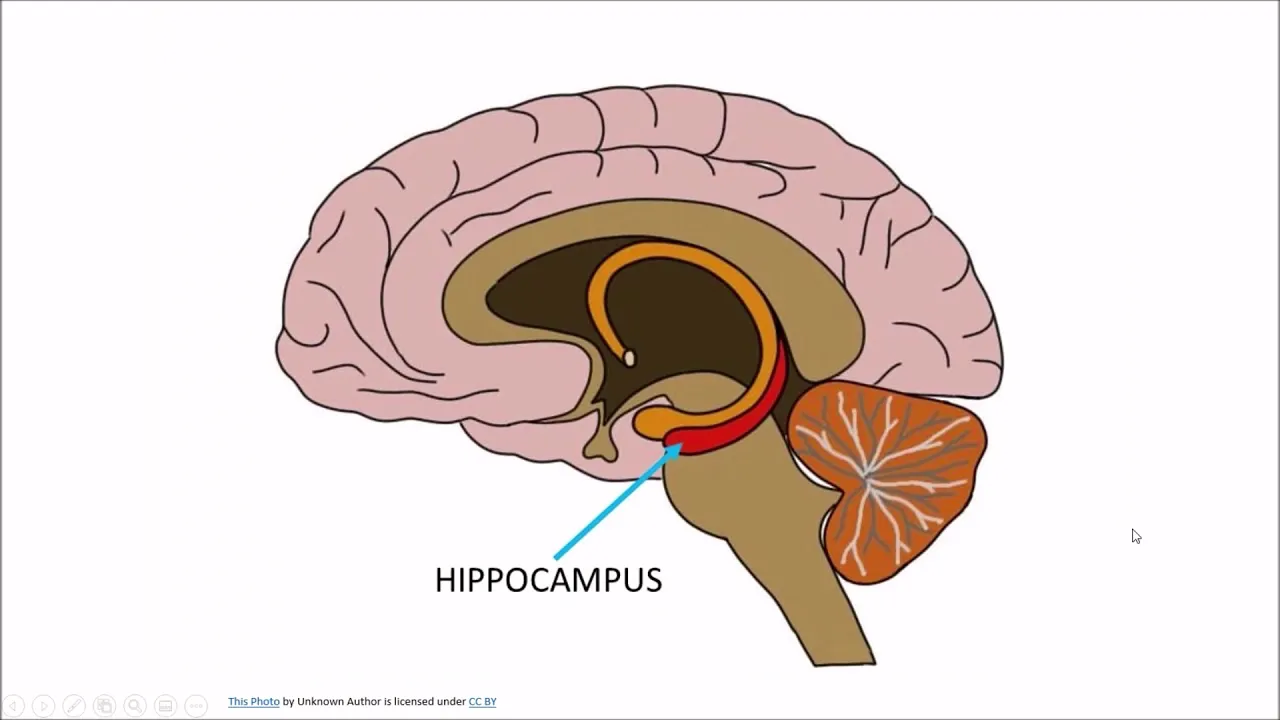
What is neurodegeneration?
TheSheekeyScienceShow
3K views•2019-08-19
IPL - Ruth Empson "Mind the Gap"
otagouniversity
251 views•2019-07-08

How our body shapes our mind | Pancho Tolchinsky | TEDxNapoli
TEDx
2K views•2019-12-05

Impact of Early Life Deprivation Danielle Stolzenberg Marcus Pembrey Bruce McEwen
uctv
4K views•2019-12-01

β-Caryophyllene for Parkinson’s: Protecting Dopamine & Easing Symptoms
parkinsonsdiseaseeducation
6K views•2025-08-09

New Insights from Inside the Brain with Rodrigo Braga, PhD
NUFeinbergMed
421 views•2025-04-14
Highlights for dystonia • 2025 MDS Congress
movedisorder
145 views•2025-10-27

Animal Welfare Synergy Series: Dr Tom Smulders on hippocampal neurogenesis
costactionlift
135 views•2025-07-14
Trending

Playstation NO DISC/NO BUY Fight Is Over...
DavidJaffeGames
4K views•2026-07-23

Steam and Xbox Just Dropped The Hammer On PlayStation
OhNoItsAlexx
9K views•2026-07-23

Americans Confused in Australia for 17 Minutes Straight
IWrocker
17K views•2026-07-23

SuperBike Factory Has Gone... What's Next for the Motorcycle Industry?
thatbikersimon
11K views•2026-07-22