This visual history brilliantly frames the shift from rigid cages to fluid gowns as a profound ideological revolution rather than a mere change in style. It successfully demonstrates how the liberation of the female silhouette mirrored the broader Enlightenment struggle for personal freedom.
Install our extension to search inside any video instantly.
Crushing the Cage: How 18th-Century British Women Stripped Down to the "Naked Dress" (1750 - 1800)
Added:Would you believe that in just 50 years, British women transformed from this to this?
This wasn't just clothing. It was a battlefield. A single gown could stretch over 2 m wide, imprisoning the body in a rigid architectural [music] fortress.
But as the world outside fractured with the Industrial Revolution, national mourning, and the fiery eruption of the French Revolution, the grand fortresses of fashion completely collapsed, granting [music] absolute freedom to the female form in fluid translucent silks.
Let's rewind the clock to 1750 and unlock the secret diary of British fashion year by year.
1751. [music] The mourning gown for Frederick, Prince of [music] Wales. 1751 was a year of mandatory national grief >> [music] >> following the death of Prince Frederick.
This black bombazine gown represents strict compliance with court mourning decrees, turning the wide side hoop [music] silhouette into a somber silent statement of dynastic respect.
1753. [music] The Brunswick traveling gown.
In 1753, [music] the arrival of German style influences via the Hanoverian court [music] popularized the Brunswick gown in England.
This silver-gray traveling suit [music] features a built-in hood and tight long sleeves, providing warmth and protection during long carriage journeys while maintaining a highly aristocratic line.
1754.
>> [music] >> The open gown with apron trim. In 1754, >> [music] >> even informal mourning dress inside wealthy estates was a vehicle for display.
This primrose yellow [music] taffeta close-bodied gown pairs a sharply tailored torso with a highly decorative lace apron, proving that high [music] status could be maintained even behind closed doors during domestic mornings.
1755, the zenith British [music] rococo sack-back gown.
By 1755, the rigid [music] architecture of the early Georgian era gave way to fluid rococo asymmetry. [music] This rose pink taffeta sack-back gown covers every inch of its surface in serpentine [music] S-curved fabric flounces, transforming the woman into a moving canvas of light and shadow.
[music] 1756, the merchant class urban gown.
By 1756, [music] London's wealthy merchant class abandoned the heavy fabrics of the past to embrace light, vibrant rococo aesthetics. [music] This striped Spitalfields taffeta close-bodied gown copies the elite's floral obsession, but structures it over flexible, highly [music] functional pocket hoops, seamlessly blending high status civic pride with the practical demands of urban architecture.
1758, [music] the slashed sleeve robe à la Francaise revival.
By 1758, [music] English dressmaking achieved a harmonious balance between sharp structure and rich, fluid surface ornamentation.
This emerald [music] satin close-bodied gown rejects experimental historicism, utilizing narrow, smooth [music] sleeves and massive triple-tiered lace engageantes to frame a narrow torso that rises beautifully above the functional pocket hoop silhouette.
1759, the late [music] George II court assembly gown. 1759 marks the The twilight of the early and mid-Georgian eras.
This deep [music] violet satin sack-back gown rejects static linear weight, covering the expansive side hoop silhouette with continuous serpentine rows of gold stitched furbelows to create a dynamic undulating surface [music] that epitomized the height of British Rococo luxury.
1760, [music] the early neoclassical English nightgown.
1760 [music] marks the ascension of George III and a profound architectural cleansing in British fashion. [music] This celadon green robe à la Anglaise replaces the heavy pinned court stomachers [music] of the past with a streamlined closed front bodice, signaling a new era of lighter textiles and tailored vertical elegance that would dominate the late 18th century.
[music] 1761, >> [music] >> the George III coronation state mantua, the formal British court dress.
>> [music] >> In 1761, the coronation of George III demanded absolute adherence to the rigid architectural [music] traditions of the British state.
This gold tissue court dress completely [music] locks the female body into an unyielding frame using vast side hoops and a legendary 60,000 pound diamond stomacher [music] to transform the queen and her ladies into living monuments of dynastic [music] power.
1764, the high Georgian sack-back gown.
By 1764, the extreme [music] rectangular frames of the past softened into fluid Rococo asymmetry. [music] This primrose yellow sack-back gown covers its surface in pinked serpentine self-fabric ruffles using flexible pocket hoops to allow for an elegant [music] swaying movement during London assemblies.
1767, the stitched back town promenade dress.
In 1767, [music] the English gentry favored tailored practicalities over imported French court [music] loosely draped styles.
This mulberry damask robe a l'anglaise features [music] back pleats stitched entirely flat along the spine, creating a sleek narrow torso that relied on a soft horsehair bump pad rather than rigid wire cages for structure. [music] 1770, the early ribbon looped polonaise.
>> [music] >> 1770 marks the birth of the iconic robe a la polonaise in British fashion plates.
By systematically looping the long outer skirts [music] into three dramatic swags using exterior silk cords and decorative buttons, [music] women kept their expensive silks clear of the muddy London streets [music] while creating a dynamic heavily textured rococo silhouette.
1772, [music] the lower class domestic jacket and petticoat.
Away from the aristocracy's competitive luxury, [music] lower class English women relied on pure textile durability.
This striped wool calimanco jacket and petticoat utilize a glossy weatherproof [music] glaze and functional pinned front mechanics, allowing market women to endure the damp London winters while maintaining a neat respectable appearance. [music] 1774, the high style macaroni era [music] gown.
By 1774, English high fashion entered its most [music] satirical phase driven by the macaroni trend.
This sky blue satin gown is topped by an 18-in tower of powdered [music] hair built over a vertical wire cage, transforming women into architectural landmarks that challenged the ceilings of London ballrooms.
1776, [music] the Revolutionary War era promenade gown.
In 1776, tailoring prioritized convenience without sacrificing elite luxury.
>> [music] >> This crimson taffeta polonaise replaces the traditional pinned stomacher with buttoned compere's front panels, allowing for rapid dressing [music] while keeping the outer skirts draped into three dramatic billowy swags.
1778, the country estate milkmaid gown. By 1778, [music] British high society sought an escape from court rigidity by embracing a romanticized pastoral [music] countryside aesthetic.
This printed chintz gown pairs light cotton copper plate prints with a [music] broad-brimmed straw bergère hat, introducing an image of rustic country [music] house elegance to aristocratic estates.
1780, the early redingote riding habit.
1780 marks a major tailoring revolution as women adopted masculine riding cuts for daily street promenade [music] wear.
This navy blue wool redingote utilizes overlapping shoulder lapels and a wide leather belt, discarding heavy silk draperies for a sleek structured [music] coat line that redefined female independence.
1781, the revolutionary lightweight cotton [music] gown, the robe en chemise.
In 1781, >> [music] >> popularized by the Duchess of Devonshire in London, the lightweight cotton muslin chemise caused an absolute [music] sensation.
By casting aside heavy silk brocades and adapting a soft [music] silhouette over streamlined understays, this gown introduced a fluid, [music] translucent, and radically relaxed natural waistline that laid the structural groundwork for the upcoming Regency era.
1783, >> [music] >> the early redingote promenade habit.
1783 marks a major tailoring revolution as women adopted masculine riding cuts for daily [music] street promenade wear.
This navy blue wool redingote utilizes overlapping shoulder lapels >> [music] >> and a wide leather belt, discarding heavy silk draperies for a sleek structured coat line that redefined female independence. [music] 1785. [music] The late Hanoverian silhouette. 1785 [music] represents a unique phase of localized volume exaggeration.
This yellow taffeta pierrot gown pairs a short >> [music] >> tight jacket with an immense white silk bouffant neckerchief that balloons outward from the chest, [music] balancing slim tailored sleeves with a dramatic highly textured [music] presentation of the upper torso.
1786. [music] The revolutionary lightweight muslin gown. In 1786, [music] popularized by the Duchess of Devonshire in London, the lightweight cotton muslin chemise caused an absolute sensation. By casting aside [music] heavy silk brocades and adapting a soft silhouette over streamlined understays, [music] this gown introduced a fluid, translucent, and radically relaxed natural waistline that laid [music] the structural groundwork for the upcoming Regency era.
1788.
The [music] anti-import patriotic wool gown.
1788 was a year of intense domestic [music] textile patriotism in England.
This navy blue silk wool gown represents the careful compliance of a country gentlewoman, >> [music] >> discarding imported French luxury silks to proudly wear domestic worsted [music] weaves, transforming fashion into a physical act of national economic defense.
>> [music] >> 1789, the revolutionary Bastille tricolor striped [music] gown.
1789 marks a profound ideological and stylistic pivot [music] as the French Revolution erupted.
This bold tricolor [music] striped satin gown reintroduces vibrant political color palettes, abandoning heavy white hair powders for wild natural curls [music] that signaled solidarity with a rapidly changing European social order.
1792, the high-status continental Anglomania dress.
By 1792, even [music] despite geopolitical rivalries, English tailoring dominated European high [music] society through Anglomania.
This charcoal wool redingote combines a mid-high relaxed waistline structured over short understays [music] with masculine jacket lapels, trading the severe court lines of the past for a fluid late Georgian vertical elegance.
1794, the high-style Directoire [music] tunic dress.
In 1794, layering was used to display multiple expensive fabrics [music] while maintaining classical statuary lines.
This Directoire tunic dress pairs deep violet silk satin with a pristine white [music] cotton muslin underskirt, utilizing a split-front overgown to introduce a highly sophisticated multi-layered elegance to London promenades.
1795, >> [music] >> the true neoclassical empire debut.
In 1795, the complete [music] collapse of old regime structures birthed the true neoclassical empire silhouette.
This white cotton muslin gown replaces the heavy baroque cages of the past [music] with a streamlined silhouette expertly supported by lightweight transitional under stays using an ultra short torso [music] and a narrow drawstring ribbon to turn the female form into a fluid [music] pristine Greek column.
1797, the high-waisted open promenade robe.
In 1797, >> [music] >> British tailors preserved the traditional concept of the open robe but adapted it to neoclassical parameters.
>> [music] >> This mustard yellow taffeta gown layers an open silk robe over a white cotton underdress, [music] combining traditional rich silk fabrics with the new high-waisted [music] columnar silhouette.
1798, the late Georgian [music] Grecian draped gown.
By 1798, the art of classical draping dominated London high society.
>> [music] >> This white cotton lawn gown pairs an ultra short high waist with a massive scarlet cashmere shawl, [music] utilizing the natural folds of the imported wool to transform the wearer into a walking piece of ancient [music] Greek statuary.
1800, the turn [music] of the century regal muslin.
Closing the year 1800, English women completely eradicated the heavy structural cages of the previous generations. [music] This exquisite white Indian muslin gown utilizes an ultra short high waist and [music] a Greek key gold embroidery border, bringing a flawless statuesque [music] finale to the 18th century to launch the true golden age of 19th century neoclassical style. [music]
Related Videos

7:01
Art History
Solo Exhibition "Light in the City" | Virtual Art Tour
christinakentart
12K views•2025-03-09
27:36
Art History
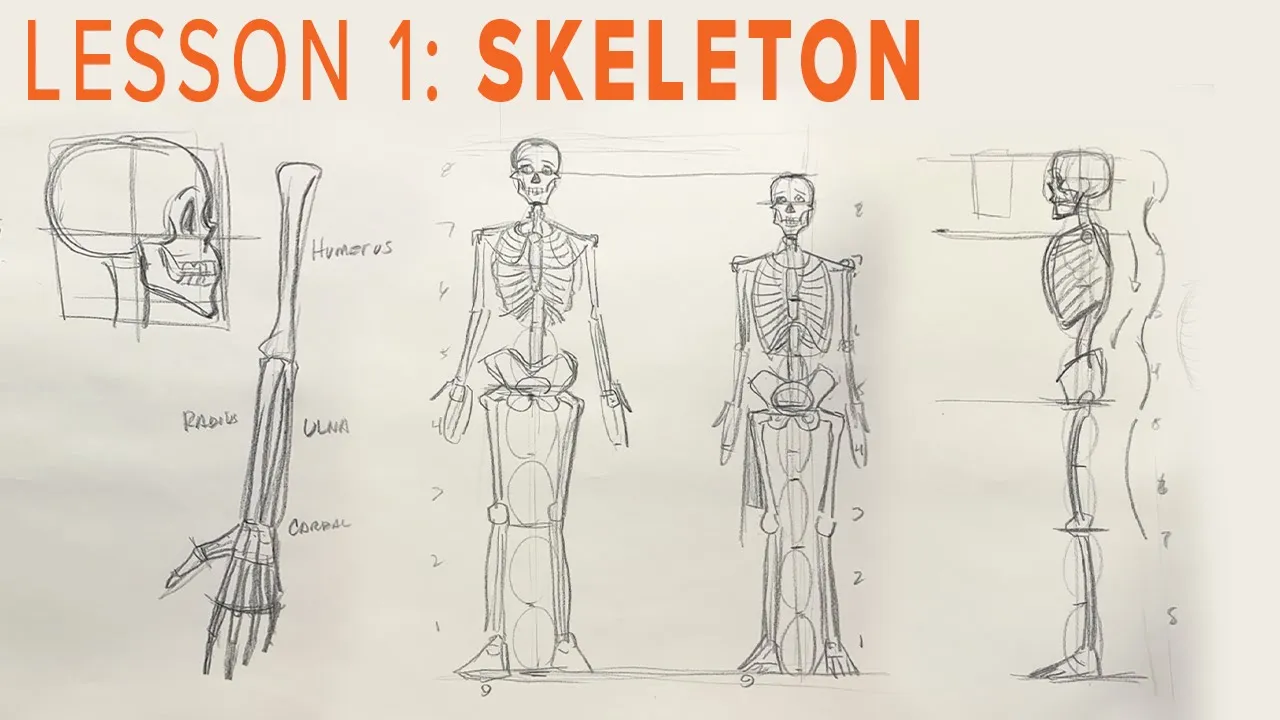
Learn to Draw Anatomy - Skeleton Structure
pomeroyartacademy
22K views•2025-04-15

3:31
Art History
Episode 4: Erin Manning
ABERnetwork
285 views•2024-11-01

0:45
Art History
JAMES VAN DER ZEE: The Photographer Who Captured Harlem’s Soul
UncommonSense59
941 views•2026-01-31

0:55
Art History
Signature X Mithila Art
SignatureNepal
1417K views•2026-02-04

2:23
Art History
Chancel Wall Paintings at St Mary's Church, Chalgrove
ATSHeritageTV
532 views•2020-05-18

2:21
Art History
Henry Siddons Mowbray Painting, ca. 1895 | Vintage Austin | Preview
RoadshowPBS
176K views•2017-06-30

12:02
Art History
The Moonhouse - Sweden's Red Cottage on the Moon
ThreeStarVagabond
2K views•2025-06-01
Trending

9:05
Artificial Intelligence
2.4 BILLION Records Got Leaked...
DeepHumor
15K views•2026-07-22

13:25
Business
Playstation NO DISC/NO BUY Fight Is Over...
DavidJaffeGames
4K views•2026-07-23

19:32
Business
Should I buy a Sawmill?
essentialcraftsman
29K views•2026-07-22

16:52
Anthropology
Americans Confused in Australia for 17 Minutes Straight
IWrocker
17K views•2026-07-23