This video explores the diverse wildlife behaviors and ecological relationships in African ecosystems, showcasing how different species adapt to their environments through specialized physical traits (such as zebras' dusting behavior for parasite removal, giraffes' sure-footed hooves for navigating rocky terrain, and leopards' climbing abilities for safety), social structures (lion pride dynamics with male cubs establishing territories and females protecting cubs), and survival strategies (predator hunting techniques, territorial marking, and group hunting coordination). The documentary also highlights the importance of ecosystem engineers like beavers and the interconnectedness of wildlife with their habitats.
Install our extension to search inside any video instantly.
Lion intruders in the sabi sand - SafariPlus
Added:Today on Safari Plus, the predators keep us on the edges of our seats. We've made it. We can see them. Wow, what a time [music] to be alive. The cheetah cubs continue to steal our hearts. Look at that little chubby fluffy thing there. Wow, look at this. We've got a leopard. Goodness gracious. And we step away from the safari vehicle for a rare cultural experience in the villages of Madagascar. Let's head into the bush.
Good evening. Did you hear that?
>> [music] >> A little vitamin D.
Very majestic. Look at this guy.
>> [music] >> We begin in the Eastern Cape where a peaceful afternoon delivers some classic African scenery. [music] Stallion is the name given to the male >> [music] >> zebra, same with any of the equine families. When we talk about the the genus equus, we talk about horse horses essentially.
This is a wild horse and part of the equus family as well or genus rather. The stallion herd.
These are young stallions. They haven't quite found [music] their place in the in the bush.
Still quite young. Still [music] got lots to learn and they need to build strength and they are doing so as each day goes by. These zebras are getting stronger and stronger and stronger and then eventually will break away from each other and will seek items and be interested in breeding.
Right now their full role is to protect each other, [music] look out for predators together and to to play fight, to to spar.
It's the only way they can build up strength, build up strong shoulders, [music] etc. Yeah, these are typical species found within these grasslands {slash} fynbos uh transition zones.
And another animal that likes transition zones are in fact giraffe, and that's probably why they've come to this environment over here.
That giraffe just coming down the slope there.
They've really got to be so sure-hoofed because if they fall into a hole, it's usually catastrophic for their bones.
>> Some of the best conversations happen in between the sightings while an observation of smaller things off the vehicle.
>> Okay, we found something quite cool here. Now, we're going to begin with this frame. Now, let your mind think what it is. We're not going to have time for guesses, but we will reveal to it to you what it is periodically.
So, obviously it's got toes with webbed feet, so it's a swimmer.
Okay.
That is a reptile.
Well, it's part of the rep- rep- reptile family.
All right, and it's one of the amphibians.
Okay.
It's quite a nice uh nice view that we've got here. Take a look at what we found here, everybody.
This is quite crazy. I've never really found these guys on our Makalali Game Reserve before because of the dryness.
But, this is a a platanna, a common platanna.
All right, a highly protected species of amphibian because people used to catch them and use them as bait. This is a very effective bait for catfish, so a lot of the population was just desecrated.
Look at this. Totally streamlined, hey?
So, you can tell that this is most of the time this is going to be an aquatic animal just by the streamline nature of its skin.
Look at that. This is a ginormous one.
Look at Look at the size of my hand.
I've got medium-sized hands, but this is massive. So, look at my finger and look at its [music] leg.
You see that? It's almost as fat as my finger.
Just wonderful. A really good swimming amphibian.
So, let's just look at these back legs.
Look how well developed these back legs are. So, everybody, this guy is still alive.
Um we found him on the road and he hopped off onto the side here. So, he's doing fine. He's just feeling a little bit shy by our presence over here.
Okay, just the difference between frogs and toads.
So, frogs are streamlined, lack of warts on the body, and you're going to find them more towards the water environments, whereas toads are very much both. Okay, they come out on land, they go into the water, um but mainly on land.
Terrestrial would be toads. They've also got warty skins.
Now, look at their bodies. They've just freshly been in the water and it's not not warm at the moment. What's the temperature now? Let me check.
14° C right now.
And they want to warm up.
Oh, such a wonderful environment to view these very awesome, powerful animals.
How cool is this? This is spectacular.
Beautiful view. Oh, there's a scrub hare there. Do you see it, Morgan?
Uh that's sort of all sort of in the middle of the herd there.
There's a scrub hare that the elephants have just flushed out.
Haha, look.
Oh, this is cool. Not every day you get a scrub hare with a herd of elephants.
Look at that guy go.
The Mara delivers beautiful birds, familiar lions, and plenty of those quieter moments that really make safari rewarding.
>> [music] >> We are with a sleepy lioness. She wasn't far from the crocodile bells to look at.
And I'm just curious why she's here alone.
I don't ever ever met this female before.
It is definitely not Shorty, but you can see her ear.
Seems like it's a bit cut off. Can see that on top.
Yeah.
It's another way of maybe helping to identify her.
Hello. But she's very sleepy, very beautiful.
And also again with the coat color. This is sometimes the genetics with the lions. You can have some genes where you'll even see like male lions, they can have like really blonde, golden hair. And you'll see that the males maybe even having shorter manes. It's not due to the environment, again, the genetic. And some having very dark manes. So [music] with this young lady here, I don't know if you're too too young, but I'm going to call you a young young lady.
She seems to have a dark coat color, and it's a dark coat color I've seen with lions from Samburu.
And Samburu is going towards northern Kenya.
So the whole terrain there is very different. The soil is like super super red. Ah, I hear [music] this is earless.
Makes sense.
Paradise, this is my first time seeing you, sweetheart.
So that's why I'm wondering where the other Paradise females are, because this is This is their area.
They like to be around here.
Our zebras are dusting.
You guys can go in the water and cool off, but right now it's also good for them to get rid [music] of any parasites on their skin. This is their form of showering. Look at that.
That looks pretty cool.
Even the lighting, how it's just catching the dust, looks very [music] nice.
So, zebras, zebras, what's the plan? You guys are now walking downwards. You were walking upwards a few moments ago, and now you've changed your mind and started walking >> [music] >> down. So, this is where you always have kind of take the time. No rush or anything.
You just got to see how they will kind of go about it.
But, the zebra is still there.
Oh, look at that. I just love that whole frame with the dust. Nice one, James.
[music] So, this is where it's again very unpredictable.
They we watched them go close. They walked back up.
Now they're coming down, and it's like more and more keep on adding. Two more of kind of joined the others.
>> [music] >> We have replaced our stripes for white feathers and some yellow bills. And this are the yellow bill storks with some sacred ibis. I think I saw a hammerkop, also.
So, all different birds here enjoying this shallow pool of water. And right now this large flock is actually taking advantage of being together. So, with the yellow bill storks, this is not uncommon to see them coming together [music] and doing what they're doing. So, it's kind of similar to how when elephants are walking through grass, you have your cattle egrets. They follow behind because insects jump out of the grass and an easy catch. So, the same thing is happening here.
When they move all like this, they're disturbing all that lives in this shallow pool of water and it's going to be easier to catch. So, I think even the sacred ibis ibis ibis, sorry.
Are taking advantage of this Oh, hello hammerkop.
I enjoy these birds a lot actually. Very funny. They all have their own personality and I'm sure trust me, if I look long enough, we're going to spot something. Look at all their beaks just in the water open and this is a very interesting and smart way of them to hunt.
There's also a young one right there on the left side of the screen. You can see the plumage is still coming in.
So, that young one is also learning a lot from the older storks. With one of the two boys, he's walking away right in front of us this direction, which is going [music] towards the marsh below Shaka laga. This is the area and then behind us going this way now that goes towards main [music] crossing, a place called Nyoka Paradise. Like to stick on this side. So, two boys have gone this way and one of them has gone this way.
Zuri seems to be choosing the Paradise females. That's up to him, but one of the other males is going this way. So, we're answering the question [music] was yes, they could actually be kind of deciding who's going to stay with this female and going to go with this female cuz that's what I'm seeing so far. But the best thing [music] about the males right now is they'll be able to diversify their whole bloodline.
>> [music] >> Not only having cubs with the specific females from the marsh, but now also with the Paradise if they [music] do and I think again it's a pretty smart move. Lion, the male, they [music] they don't have really loyalty territory wise of course, but even with the females, they are very loyal to them saying that they will protect them and be there for the [music] pride, but the males also take advantage if there's no main male to some females, then they will definitely take advantage of that and mate with few of them and hope for their cubs to also be raised and [music] then you have a whole lineage instead of just having one side.
>> [music] >> Oh, the cubs.
Tiny animals, cute babies, always cute.
Our big cats, how we have the lionesses I'm [music] assuming to be from the paradise side.
She was looking at some warthogs, and you can always tell when they're taking [music] it a bit serious when they get lower and kind of in a crouching position. I don't know if you guys have any domestic cats at home or ever seen any domestic cat kind of get low and looks like it wants to pounce or [music] try catch even a bird.
So, usually they do the same thing here with the lionesses, which is usually one of my favorite things to see because I love their [music] teamwork. They're so smart, and they have such good strategies. The only thing that let the females down [music] is the big boys have joined the party, and the big boys have big manes that just let [music] everyone know, "Hey, we are here." You can see right there there's a female and one of the boys.
So, once those boys started walking up, the warthogs ran away, and this is the lioness. She was on that termite mound where [music] the boy is, and she was blending in so well.
And then, yep, again, the big mane showing up, and the warthogs are like, "Huh, lion." And whoop, bye-bye.
So, usually this is a good example to give you guys when lionesses are hunting, >> [music] >> why sometimes they're a bit more successful for them, especially the element of surprise, is they can blend in [music] so well with the environment. This boy right now, he sticks out like a sore thumb.
Looking healthy, though.
And guys, here we are. Oof, we tried to get here as quick as possible because we did hear some news, drove through a lot of different terrain, but we are here.
By the looks of this, I am guessing this to be Kaleya, and you can see the younger ones in the back. That those are two sons.
Beautiful moment. [music] And guys, it again is just amazing watching them grow up. I saw them the first time being introduced to the males.
And now coming back and seeing them this [music] big.
Still not as big as mom, but look at that tummy. Look at his belly. It's [music] so big.
And she's definitely enjoying that.
Because again, with the organs, it's nutrient density. You have a lot of copper, [music] iron.
It's very beneficial.
A lot of vitamins.
And [music] she's trying to cover up.
Looks like you see that?
She's even [music] throwing it onto the buffalo's dung. I don't know if she's trying to cover up some scent, maybe.
I know with lions, they do have sweat glands [music] around their paws, also.
Look at that.
This is so good. I'm glad we just got here. Look at the lighting.
Look at our little boy going in.
>> Wild places are not only shaped by the animals that live there, but by the people who call it home. James invites [music] us beyond the rainforest, offering us a rare glimpse into a way of life few of us will ever experience.
>> We have come to [music] the village near Masoala Forest Lodge, where all our staff live.
It's a another beautiful rural village.
And I'm sure there are many struggles with life here.
And our industry based on fishing, and not much else. Subsistence farming.
>> [music] >> Now we will watch some dancing, I think.
>> [music] [music] [music] [music] >> And so we finish our village visit.
Remarkable people living a probably quite difficult life in a stunning part of the world.
>> From the rhythms of Madagascar, we return to the African bush where familiar faces and dramatic predator encounters await us in the Sabi Sand.
>> So we are starting off with a beautiful double-banded [music] sandgrouse. I think everyone for being patient with us.
But I mean this is just This is just incredible.
>> He is His presence is so demanding, isn't it?
And he is huge.
He's absolutely huge.
>> You can see how his head's up. He's looking ahead. The females continue down the road.
And um I think that's definitely what he's sort of peering, I think, would be the right word to use.
And if you're lucky, you can see the tips of his paws in the front and the back are a little bit almost dirty.
And that's also from the the soot that's left after the burning on this firebreak. There's a question about where the Ndzengenga males come from.
And I believe the answer to that is the Noyce Twaqa pride from the Kruger National Park. Hello boy.
Oh, you are beautiful. Well, I feel like he just looks looking into my soul.
We are here.
We have a leopard in a tree just ahead of us and um wow, what a time to be alive.
It's been quite the morning for you, girl.
Goodness.
Wow, there we go.
Ah.
>> [sighs] >> I believe it all happened quite quickly.
She had a kill and the male lion came and took it and she came up the tree.
I'm just glad she's safe.
I don't know if it was this particular tree or a different one.
But um wow, how awesome.
But who knows, maybe it Relwani and Kutlwa were here.
>> [laughter] >> You never know. There were no reports of that, but um anything's possible.
Ah, let's see. Let's see.
It does look more like Relwani to me personally.
>> [sighs] >> You must have had a stressful morning, girl. [music] My goodness me.
There she comes.
Oh, there we go.
Some marking.
Oh wow, look at that. Look at that.
And she's marking now.
She's marking now. So, Kutlwa was actually well, from what I heard, it was said that Kutlwa was here last night after we finished game drive in this area near the Mluwati. So, they would be very aware of each other and their presence.
But, she's showing all the signs of being a female now that is Hey, girl.
Um wanting to [music] you know, mark us out as a territory of her own.
Ooh, golden-tailed woodpecker calling there.
He took a little bit of a detour, but yeah, he's coming out. Oh, man, that's awesome.
Just look at that.
Absolutely awesome.
Wow. Wow. Wow. He's going to come right past us.
Oh, perfect.
Oh, man. Oh, man.
So, we're not going to be able to follow him anymore, everyone. But, just perfect. I mean, just our timing there to catch up with him before he crossed over.
And off he goes. He's probably heading, I believe, the female that he was with from early this morning headed in that direction.
Um towards the Mluwati. We have made it back to spend some time with Machaton who is now up a tree and looking a lot more relaxed than uh what we had earlier. You can hear there's some elephants around as well. Also probably part of the reason she went up the tree.
Feeling a lot sort of [music] safer there.
Um also time for us to just digest everything that's [laughter] happened.
And it seemed like she was spooked and that had nothing to do with the vehicles, uh if anyone was [music] wondering. I think maybe that male leopard um was somewhere around where she came from.
And she wasn't too comfortable with that potentially. So, I don't know. [music] I'm just speculating.
Um but it's a possibility.
And now she's feeling comfortable enough found this spot where she's resting.
Has been exciting.
This lion Well, this lion has been on the move. My goodness me. Um but not for for no good reason. Apparently, there are four um other male lions, younger ones that he's been following the trail of.
And um which makes sense, you know, being a dominant male in the area. This is one of the N'Zenga males.
Um he's been sort of interested in why you guys here.
And I think you should move.
Um I don't know where the other one is at the moment, but yeah, wow, they've moved all the way from the west. They've come up and now they're moving a little bit further north and east.
>> Life for a dominant coalition is never straightforward. And when unfamiliar males enter the picture, the balance of power can change in an instant.
>> There we go. There we go. Some young boys, you can see, much younger than the lion that we had earlier. [music] Much smaller manes, um but huge in size, absolutely huge.
>> They're still Zenga >> boys have their work cut out for them at least in this part.
Smelling is nothing.
Here comes the next one.
Apparently the then Zenga male that we showed you earlier is moving in this direction.
It looks like that. Looks like they're coming out and moving straight north in the Mowatis. Oh.
Okay. Hello.
Nope.
They are thirsty boys.
I love how the light catches their eyes.
So gorgeous.
Can hear some very soft calling.
That's what's piqued their interest.
Here comes one. Here comes one.
Well, this one has a left eye that is not um It's got a bit of an injury there.
Oh, wow.
It's his turn to drink now. Oh, little bit of dominance being displayed there between them.
That guy on the left is looking like, "What the hang is going on?"
I made a fool of.
Yeah, but it is in all seriousness, it is how they show dominance over one another.
He's shocked. He's moving away. He's like, "I can't be in the presence."
>> [laughter] >> So, we've just We left the four young boys there.
They are resting in the shade. Uh gone basically flat, one or two heads up, but we thought let's go see how far away this in Zenga male actually is. And I would say [music] in a straight line from them to him is maybe 250, 300 m.
At most.
So, not very far at all.
But right now, he looks quite content to just sit here.
My goodness.
How's your morning, Paul?
>> Uh fabulous, huh?
>> Fabulous.
>> Uh fabulous, fantastic, yeah.
>> Yeah, it's been a pretty epic day, everyone. In fact, the whole week. And uh yeah, cats galore here in the Sabi Sands.
But um it's awesome to be back and I'm looking forward to the week ahead.
>> Mambula delivered a wonderful mix of iconic wildlife, fascinating behavior, [music] and a little behind-the-scenes humor.
>> They're still here with our family. The cubs have Okay, well, now not so much, but there was a little bit of playing around, lying on top of each other.
They basically they've I mean, this is This has been what the afternoon has offered us. It was back and forth movement to and from the carcass. Mom has probably She's been sleeping. Well, not sleeping, she's been a kind of [music] watching, taking, watching guard, and then going to the carcass, and then watching guard, and then going to the carcass, whereas the cubs have been sleeping, playing around, going to the carcass, sleeping, playing around, going to the carcass, and now it's tug-of-war time.
Cuz that sinew's definitely not going to get bitten.
But the cubs are going to have good fun trying to get it off.
Eric is uh more of a man's man, if you will.
This is what he does between drives.
He's washing his bike, riding his bike. It's He's uh keeping it nice and clean. Real men don't just ride motorcycles. They polish them, too.
>> Very long legs.
Very very very long legs that he's got on him.
That's very special.
Very very special to see them as calm >> [music] >> as this.
He'll look up at us eventually and then kind of continue walking on and look up with us and continue walking on.
Another thing about the scent marking is it's a lot quicker. [music] It's a quicker process than that of the brown hyena. You know, whereas this guy, he literally just bends down, pinch, gone. And that's it.
Like a drive-by.
Quick and efficient.
Not wasting any time.
>> We'll finish this week's journey in Sandringham, where patience is rewarded with a sighting that doesn't come around >> [music] >> very often.
>> Being an ecosystem engineer, he relies on the system.
He's feeding on the nutrient-rich reeds that are slowing the water, extracting the nutrients, and helping them to grow.
So, he's he's benefiting from that.
We've got a leopard.
We've got a leopard. Goodness gracious.
This is the second time >> [music] >> a leopard has done this to us, hey Bibo?
Did she make a noise, or why did you You heard the grass.
>> [laughter] [laughter] >> Yep.
>> [music] >> She is pretty. Let's see if you can >> [music] >> get some facial recognition, everybody.
She's coming back.
Very relaxed.
Now, if a leopard wasn't relaxed, she would have taken off by now.
This might even be an adult female.
I can't see her memory gland. She's not a big girl, but um female leopards aren't notoriously large.
My first thoughts was she was the same female I saw, but it might be that female's mom. I don't know, everyone.
>> Whether through remarkable wildlife encounters, unforgettable moments with the people who share these wild places, the last few days have showed us that every journey has a story. [music] Thank you for watching Safari Plus with us, and we'll see you next time.
>> [music]
Related Videos
19:51
Biology
Salivary glands (anatomy)
SamWebster
139K views•2019-01-08
12:52
Biology
DNA Replication l Replication initiation in Prokaryotes
microbioscope18
4K views•2019-03-05
5:47
Biology
Identification of bacteria using biochemical tests (1 of 2)
microbiologyteachingvideos6490
24K views•2019-05-28
1:11
Biology
How PTSD Impacts Our Genes, with Dan Siegel
nicabm
31K views•2019-07-18

51:49
Biology
Influence of Footwear Longitudinal Bending Stiffness on Metatarsal Strains during Running
uofckinesiologyseminarseri2218
107 views•2025-12-02

6:57
Biology
Obscure Bird Grasshopper: It's One of the Big Ones!
RandysNaturalWorld
2K views•2025-08-26

5:36
Biology
B-Cell Receptors vs T-Cell Receptors - Overview
Sqadiacom
1K views•2025-01-31
1:27
Biology
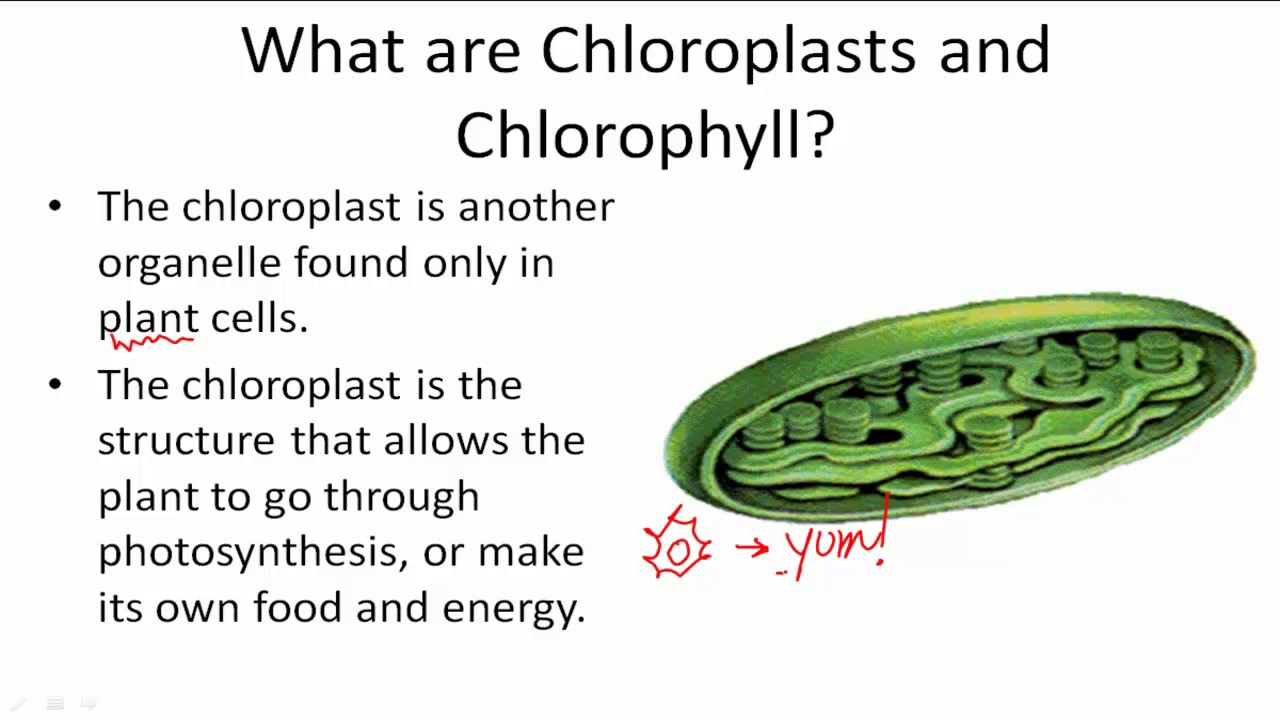
Functions of Chloroplasts and Chlorophyll
CK12
28K views•2017-05-24
Trending

5:07
Philosophy
One Must Imagine Sisyphus Happy
vlogbrothers
61K views•2026-07-21
25:15
Business
Future of Taylor Farms
maighstirtarot5385
11K views•2026-07-21

12:30
Business
The Downfall of OnePlus!
techwiser
65K views•2026-07-21

23:12
Engineering
My Friend Locked Up The Engine On His K-Swapped Bug...
boostedboiz
128K views•2026-07-21