In African savanna ecosystems, large herbivores like Cape Buffaloes and White Rhinoceroses, despite their immense physical strength and protective features, remain vulnerable to parasites such as ticks that hide in areas they cannot reach. The Red-billed Oxpecker has evolved a mutualistic relationship with these giants, using its specialized bill to search through skin folds and remove ticks, providing relief to the mammals while gaining food. This partnership demonstrates that survival in nature often depends on cooperation between species of vastly different sizes, where the smallest creatures can significantly impact the fate of the largest, and no species survives completely alone.
Install our extension to search inside any video instantly.
Oxpecker: Thousands of Parasites Cover These Giants | An Incredible Survival Story
Added:The giant that cannot see what hurts.
kit on the African savannah. Strength has limits. Even a creature wrapped in armor cannot protect every part of its own body. The white rhinoceros carries nearly two tons of muscle. Its horn can scatter lions. Its skin is thicker than many predators can bite through. Yet, the smallest enemies ask for none of that strength.
Hard ticks hide where the horn cannot reach. Behind the ears, inside the deep folds of the neck, beneath the shoulders, a giant can defeat another giant, but it cannot remove what it cannot see. And that is where another life begins. Small, light, easy to overlook.
The reduild oxecker. It lands without permission. Its claws grip the rough folds of ancient skin. Its scarlet bill searches patiently through every wrinkle. One parasite, then another. A quick twist, a sharp pull. The tick disappears. The rhinoceros barely reacts. Not because it enjoys the visitor, but because relief has value.
Here, cooperation is rarely gentle. It is simply useful. The bird gains food.
The rhinoceros loses parasites.
Neither owes the other gratitude, only necessity.
Sometimes survival begins with accepting help from something far smaller than yourself.
Survival never belongs to one alone.
The rhinoceros, the buffalo, two giants, different lives, different temperaments.
Yet both depend, at least for a while, on the same tiny bird. Nature rarely separates strength from vulnerability.
The strongest body still has a weakness.
The smallest creature can still change the fate of something far larger.
The oxecker is not a hero. It is not a villain. It simply follows food, opportunity, and danger.
That is enough. Perhaps there is a lesson here beyond the African savannah.
Many people spend their lives searching for relationships built only on kindness.
But nature offers a quieter truth. Not every valuable relationship feels comfortable.
Some people challenge us. Some remove burdens we cannot remove ourselves. Some ask for something in return. Mutual benefit is not always perfect. Yet, it can still sustain life, like the ox pecker and the giants beneath its feet.
No one survives completely alone.
Sometimes, the smallest companion carries the greatest purpose. And in the wild, survival is rarely about power. It is about knowing when to give, when to receive.
is here.
[groaning] Holy man.
The African Cape Buffalo. is one of Africa's most formidable herbivores.
Weighing up to 900 kg, it carries a deep muscular chest, powerful shoulders, and a massive shield of fused horns built for combat. [music] Its greatest strength is the herd, where hundreds stand together against predators.
But the buffalo is not invincible. Its eyesight is only moderate. Long droughts weaken even the strongest bulls and exhaustion can become as deadly as any lion.
On the African savannah, survival [music] belongs not only to power but to endurance.
[music] Heat. Heat.
Heat.
[music] [music] Heat.
Heat. Heat. N.
Heat. Heat.
[music] Heat. Heat.
[music] >> [music] [music] >> Heat. Heat.
The white rhinoceros is one of the largest land mammals on Earth, weighing up to 2,300 [music] kg.
Its massive body, thick armor-like skin, [music] and powerful horn make it one of Africa's most formidable giants.
Yet beneath that strength [music] lies a weakness.
Its eyesight is poor, forcing it to depend on its exceptional sense of smell and hearing to detect danger.
Heat. Heat.
[music] Heat. Heat. [music] Heat. Heat.
[music] [music] [music] Every species plays a role in [music] the delicate balance of the child.
When one disappears, the entire ecosystem begins to change.
Protecting wildlife means protecting the forests, rivers, and grasslands they call home.
And ultimately, protecting the future we all share.
Nature's greatest [music] stories can continue only if we choose to protect them.
Related Videos
19:51
Biology
Salivary glands (anatomy)
SamWebster
139K views•2019-01-08
12:52
Biology
DNA Replication l Replication initiation in Prokaryotes
microbioscope18
4K views•2019-03-05
5:47
Biology
Identification of bacteria using biochemical tests (1 of 2)
microbiologyteachingvideos6490
24K views•2019-05-28
1:11
Biology
How PTSD Impacts Our Genes, with Dan Siegel
nicabm
31K views•2019-07-18

51:49
Biology
Influence of Footwear Longitudinal Bending Stiffness on Metatarsal Strains during Running
uofckinesiologyseminarseri2218
107 views•2025-12-02

6:57
Biology
Obscure Bird Grasshopper: It's One of the Big Ones!
RandysNaturalWorld
2K views•2025-08-26

5:36
Biology
B-Cell Receptors vs T-Cell Receptors - Overview
Sqadiacom
1K views•2025-01-31
1:27
Biology
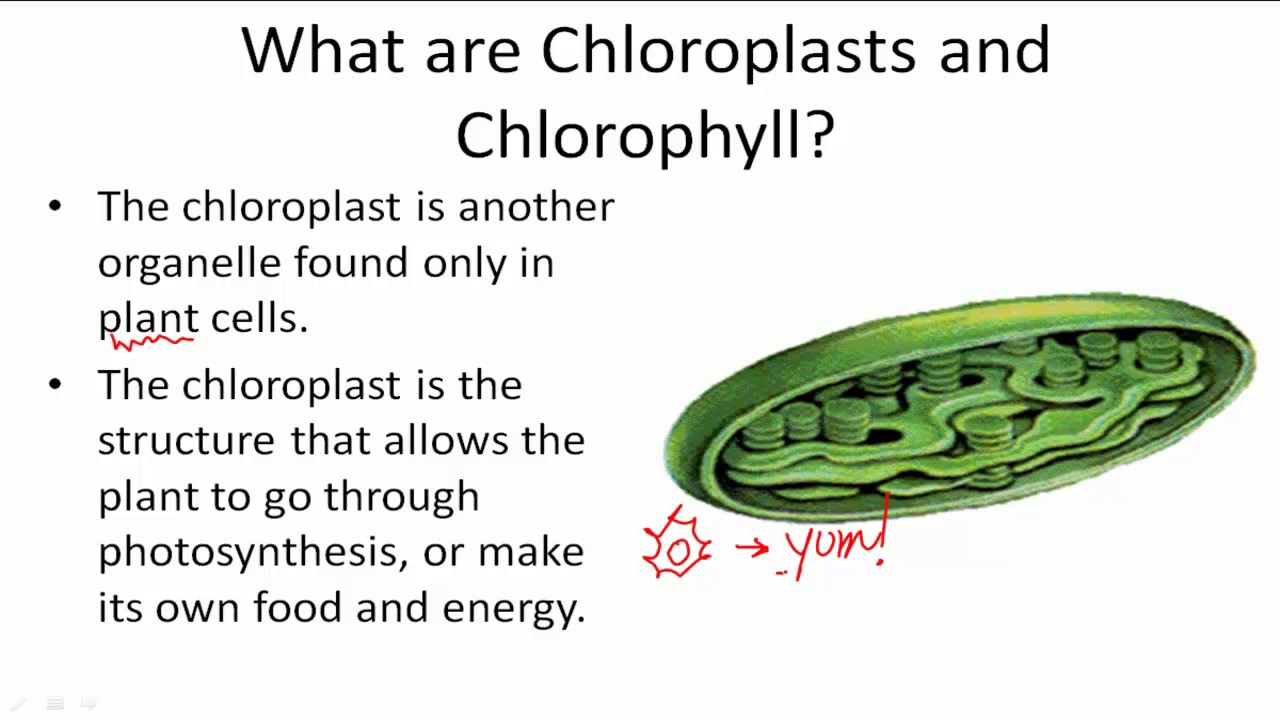
Functions of Chloroplasts and Chlorophyll
CK12
28K views•2017-05-24
Trending

13:25
Business
Playstation NO DISC/NO BUY Fight Is Over...
DavidJaffeGames
4K views•2026-07-23

22:40
Business
Steam and Xbox Just Dropped The Hammer On PlayStation
OhNoItsAlexx
9K views•2026-07-23

16:52
Anthropology
Americans Confused in Australia for 17 Minutes Straight
IWrocker
17K views•2026-07-23

20:36
Business
SuperBike Factory Has Gone... What's Next for the Motorcycle Industry?
thatbikersimon
11K views•2026-07-22