This study of botanical resilience underscores the superiority of evolutionary adaptation over human-led cultivation in an era of climate volatility. It is a timely call to shift our horticultural focus from aesthetic fragility toward ecological endurance.
Install our extension to search inside any video instantly.
Lessons from the heatwave: Who is coping best - wildflowers or cultivated plants?
Added:Shimai pow. Hello everybody. Croissa.
Welcome to my wild Welsh garden. My name's Isabelle and this is my garden at the top of the Swansea Valley in South Wales in the UK.
And in this video, I'll be showing you the effects on the garden of the heat that we've had over the past few weeks.
And then a little bit about one of my favorite jobs in the garden, which is collecting seeds.
It's several weeks now since we've had any rainfall. We had a record-breaking heatwave and then we had several days of the most punishing wind. I think I I can remember during a summer. Yes. Really high winds and of course with the high temperatures, very very drying.
Well, I know some of you guys live in hot, dry places and so you're quite used to these sorts of conditions, but the trouble is that in Wales we're not. And neither is the local flora and fauna, which is worrying.
The climate here is what they call oceanic and it's an area of temperate rainforest or was originally. And so that the weather we're used to is cool wet summers and mild wet winters. And we're still getting the mild wet winters, but we're certainly not getting cool summers anymore.
Well, you know that my garden is a mixture of natives and non-native plants, cultivated plants, and so I'm just really interested to see who is fairing better, who's coping better with uh these really challenging conditions.
Well, I've been watering the plants in pots because they don't have any other source of water. So, I think it's a bit mean to put a plant in a pot and then not give it any water. But the rest of the garden, I haven't watered at all.
Look who just came to visit these flowers in these pots.
The hummingbird hawk moth.
Well, these beds still look pretty colorful. Lots of flowers and very very busy with insects, but everything is looking very dry.
But the Mediterranean plants are doing well. This is a wool germ under very popular with the bees and the lavender. I'll show you the lavender up in the secret garden which is a a sight to behold at the moment.
This bedding is looking very brown and crispy.
This little plant that there is some green on it but most of it is just turned brown and crispy. This is a jugger or bugle.
Those are the flowers just completely dried.
And then on this side, this Japanese anemy is not looking very happy.
But higher up the beds, the wild flowers look like they're doing okay. I mean, they look a little bit challenged. They look dry, but they're flowering beautifully. But this nettle bell flower which is a native plant not so much.
This lovely field scabius has sort of collapsed in the middle and it has grown very tall. So I think next year I might give it a Chelsea chop.
But the flowers are busy with bees.
the aers that aren't in flower yet. They seem quite happy.
Quite green.
There's an aster in flower there. And that pink is actually a perennial sweet pea which is supposed to be growing up a support, but it's obviously decided it's much happier crawling through the other plants. And I'm quite happy to let it do that. There was a small copper butterfly on this aster earlier.
The poor blue flocks looks really unhappy.
And in the corner is a helenium which is drooping.
There's a pink geranium here which is looking very dry, although still flowering. Well, in the olden days, I would have cut this back and hoped for new leaves and probably some more flowers. But if I do that, I'm going to expose bare earth and lose more water.
And also, I look at it and I think, well, there's lots of little places under there for creatures to hide away from the heat, which is why I've left it.
And the bud looks fine. There's been some uh butterflies on there this morning.
The lavender in the secret garden is just alive with bees.
How many are there? There's one, two, three, four, five, six, seven. There's about 12 bumblebees and a day flying moth.
In fact, two day flying moths.
So, 12 bumblebees and two dayflying moths on one lavender.
And the level of water in the pond has dropped so far.
I don't think I've ever seen it so low.
All this area here is just dry.
And this should all be underwater.
So, I'm going to top up this pond. I don't have enough water for both ponds, so the other one will just have to cope.
But this water butt is full of rain water that I've been saving to top the pond up. So there you go. I'm siphoning the water out of the water butt and into the pond.
So, it's just trickling gently down through the rocks and the deadwood into the pond and uh hopefully not creating too much of a shock for any creatures that are still in there.
So, that's looking a little better. It's nowhere near full. I haven't used all the water in the water, but because I'm also using that water because it's rain water to top up these moss bowls, which I have to do every day and which I still actually haven't seen any bees drinking out of.
And there's no rain forecast. So, I'm just going to have to cross my fingers and hope that it lasts through the this hot weather and that things then recover.
Around Ivy the wood sprite is marsh wound which has just shriveled.
So, that's escaped from the pond and obviously isn't going to survive, but there's still some in the pond. though it still has well damp feet if not wet feet. So that should be okay.
And you know, I was complaining that there were no leaf cutter bees using my bee box. Well, I think I've discovered why at least one isn't using the tubes in there.
And that's because she's decided to make a nest between the breeze blocks there in the mortar.
I saw her flying in with a huge bit of leaf. And I've seen her going in and out a few times, I guess, with pollen. And then she'll lay her egg in there and then put some more leaves in.
And then I got to thinking, I wonder if I could make some more holes between the breeze blocks, you know, sort of drill a few holes in the mortar or maybe even into the breeze blocks and see if the bees would like to use those. I don't know. I've never seen anything about it.
What do you think?
Because it's a lovely little southacing wall. Gets the sun all day.
Just the sort of place that a little bee would like to make a nest.
Well, both the meadows are looking pretty dry. This is the one in the back garden, but then meadows wood at this time of year anyway. The farmers are out with their tractors making hay.
I mean, if I wanted to make hay from this, I could probably cut this now, but I don't. I want the all the flowers to finish flowering and set seed and then I can collect seed and some of it can drop to the ground and hopefully uh germinate and I'll have more wild flowers next year. Out at the front, the original is just loving life at the base of the walls around the front of my cottage.
And this one just on the edge of the meadow with lots of these teeny tiny flies on the flowers in the meadow itself. The wild carrot has taken over from the oxide daisies, but it does seem quite happy.
Everything is very dry down at the base.
This bird's foot traffic foil looks like it's died to death, doesn't it? Well, hopefully it's uh set a lot of seed and seeded itself around.
And it will be interesting to see whether it comes back next year.
That's just the fire engine going out every time it goes out during the day.
In this sort of weather, I worry that there's going to be a wildfire.
The wheelbarrow uplands planter is still looking just as beautiful and very busy with insects.
Yes, there's um there's a dayflying moth there. Not sure you can see it.
They all seem to hang upside down on the flowers, so it's really difficult to film them. I think you can see it fluttering around.
and a wasp.
But there's bumblebees and little bees and flies and goodness knows what else.
And some of the seed heads on these small scabas have actually started to drop their seeds.
See there's a little sort of bald patch on that one and on that one and on that one. And this is the ideal time to be collecting them because if I just go like that just very gently.
I've got a little handful of seeds to sew.
If you're interested in knowing more about seed collecting, I did do a couple of videos last year and I'll put those in the description if you're interested to watch them.
I think the secret is to catch the seed heads just as they're about to release their seeds. Because if you think about it, they're releasing their seeds to then germinate wherever they sort of fall or or end up. And so collecting the seeds at that point seems to me gives the best chance of survival and germination.
And do you remember I said I was keeping my eye on this bird's foot tfoil to collect the seeds.
If we look at this one, I don't know whether you can see they're so tiny that they've actually uh split. You know, they're explosive seed capsules like peas. And those have split and twisted, so the seeds have gone. But there's one left there.
And these other ones are looking pretty dry. So, I think I'm going to harvest some of those and uh yeah, see what I've got.
Well, down here in the shade is the pink kidney veetch that I also bought a few weeks ago. And that's dropped its seeds actually onto the ground. So, they're obviously ready.
And there's a seed head looking like it's dropped most of its seeds and they just come away so easily.
So I would say those are ready to harvest as is probably that one.
Yes. Look how easily they come away.
So that's kind of what you're looking for really.
So, this is what the [laughter] breakfast bar in my kitchen looks like at this time of year. These are all seeds that I've collected recently, waiting to be sewn, actually, apart from this lot, which is still in its little flower husks. So, that's waiting to be processed.
These are the seeds that I've been collecting over the last few weeks. And they're in an airtight container with these little silica beads that turn green if they get damp. So, they indicate how dry it is. Because if seeds are kept dry and cool and in the dark, then they should last for several years.
Although, I only want these to last until next year when I'm going to give them away. I hope I'm going to make some more envelopes like these like I did in a previous video and put the seeds in there to give away.
And I've just ordered some more wrapping paper, all different designs. So, I'll have a lovely selection of really attractive little seed packets. And I just hope people, you know, sort of catch the vision really take them away, sew them, and plant them in their gardens.
Well, I think the jury is still out on who's doing best, the wild flowers or the cultivated ones. Some wild flowers are doing okay and some cultivated plants are doing okay. And I should really say so far because there's no rain in the forecast. And I don't know, maybe if things carry on as they are, my garden will be a desert and there'll be tumble weed blowing across it.
and from your comments. I think we're all suffering from these challenging weather conditions in some way or another. But I think all we can do is our best learning or trying to learn each year about which things are coping and which things are coping better and seeing what we can do to make things better the following year. And then the main thing is to try and stay positive. So, I've decided I'm going to take things a little bit easy for a short while and I'm just going to have one video a week.
So, if you want to know how my garden is fairing because I don't think there's going to be any rain over the next week, then tune in next Monday and I'll see you then. Bye. Oil found out.
Related Videos

19:51
Biology
Salivary glands (anatomy)
SamWebster
139K views•2019-01-08

12:52
Biology
DNA Replication l Replication initiation in Prokaryotes
microbioscope18
4K views•2019-03-05
5:47
Biology
Identification of bacteria using biochemical tests (1 of 2)
microbiologyteachingvideos6490
24K views•2019-05-28
1:11
Biology
How PTSD Impacts Our Genes, with Dan Siegel
nicabm
31K views•2019-07-18

51:49
Biology
Influence of Footwear Longitudinal Bending Stiffness on Metatarsal Strains during Running
uofckinesiologyseminarseri2218
107 views•2025-12-02

6:57
Biology
Obscure Bird Grasshopper: It's One of the Big Ones!
RandysNaturalWorld
2K views•2025-08-26

5:36
Biology
B-Cell Receptors vs T-Cell Receptors - Overview
Sqadiacom
1K views•2025-01-31
1:27
Biology
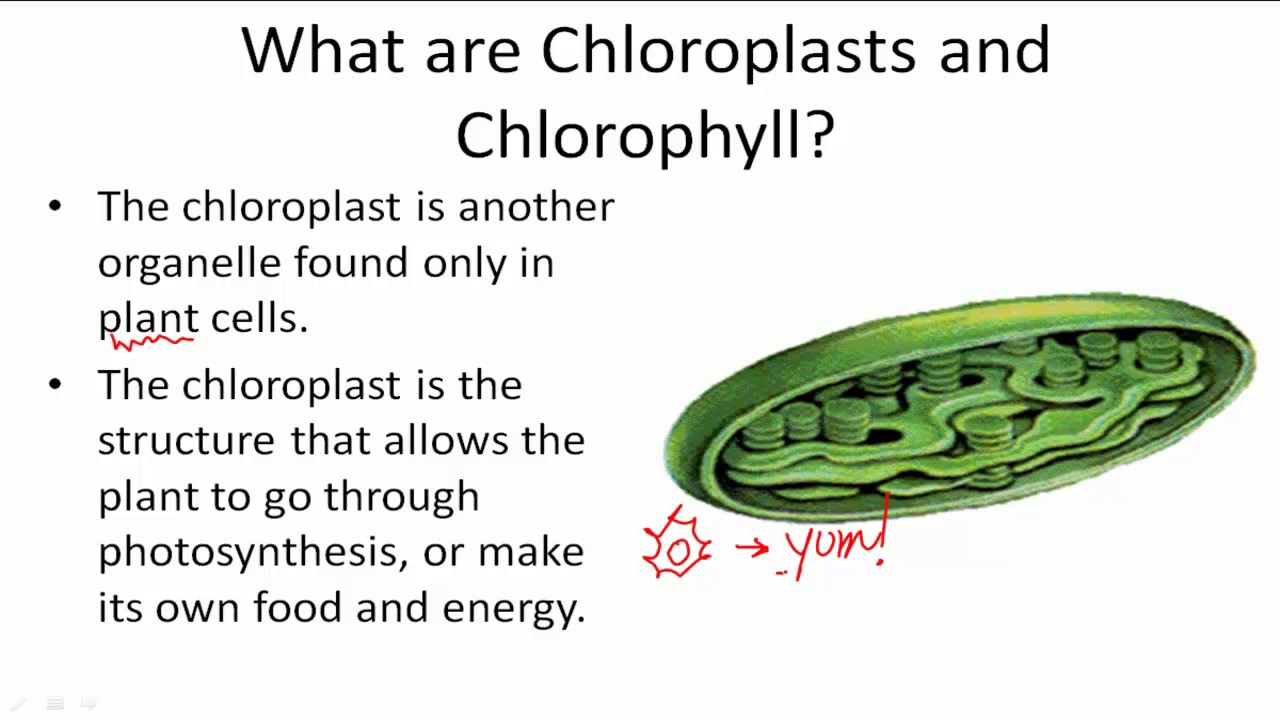
Functions of Chloroplasts and Chlorophyll
CK12
28K views•2017-05-24
Trending

5:07
Philosophy
One Must Imagine Sisyphus Happy
vlogbrothers
61K views•2026-07-21

25:15
Business
Future of Taylor Farms
maighstirtarot5385
11K views•2026-07-21

12:30
Business
The Downfall of OnePlus!
techwiser
65K views•2026-07-21

23:12
Engineering
My Friend Locked Up The Engine On His K-Swapped Bug...
boostedboiz
128K views•2026-07-21