The video effectively deconstructs the dangerous myth of alligator docility, explaining how their stillness is a lethal evolutionary strategy rather than a sign of tameness. It delivers a necessary warning that human interference inevitably turns these apex predators into tragic casualties of our own ignorance.
Install our extension to search inside any video instantly.
When Karen Try Feeding An Everglades Alligator - Rangers Told Her To Back Away
Added:It had not moved in 10 minutes. That was the whole argument. That was the entire case for her doing what she did laid out in one sentence. It will not bite. She was right about the first part. The alligator had not moved in 10 minutes.
It had not moved in 10 minutes because that is what alligators do. Not moving is not the opposite of dangerous for that animal. Not moving is the danger.
It is the entire hunting strategy of a creature that has been perfecting exactly this for longer than there have been primates to underestimate it. The stillness was not safety. The stillness was the loaded part. Welcome back to Doomed Departures. What you are about to hear is a composite story. It is built from real animal behavior, real geography, and the real and specific way this wetland corrects the people who mistake [music] patience for tameness.
But the woman at the center of it is an invention assembled from every visitor I have watched walk toward the water holding food. Certain that the thing on the bank was as calm as it looked. No real person is named here. She is a dramatization. The alligator was a dramatization.
The two facts that killed her are not, and I'm going to give them to you now at the start plainly, the same two facts I gave her because she is gone and you are not. And the whole difference between those two states is whether a person believes these two things before or [music] after they matter.
Fact one. An American alligator from a dead stop can cover the first few yards faster than any human being alive can react to [music] it. Not faster than you can run, faster than you can decide to.
The lunge is a short burst explosive built from a body that spends almost all of its life motionless precisely so that it can spend two seconds being one of the fastest things in the swamp.
By the time the signal that says danger has traveled from your eyes to the part of you that moves your feet, the distance is already closed. You do not get to react. [music] That is not a figure of speech. The animal is engineered specifically to beat your reaction time, and it has been getting better at it since before your species existed. I want to sit on that a moment because people picture an alligator as a slow, cold, prehistoric log. And that picture is exactly what gets them. It is slow mostly. It is cold. [music] It is prehistoric. But those are not weaknesses. They are the design. An ambush predator does not need endurance and it does not need to chase.
It needs to be invisible and then for a single instant to be faster than anything nearby can respond to and then it needs to be done. That is the whole animal. It banks energy for days, weeks, lying still, and then spends all of it in one two-cond burst that ends the encounter before the other creature has understood there was one. There is no second act. It [music] does not need one. On land, it is not built to run you down, and it does not try. [music] It is built to make sure you are already close enough. And the terrible genius of it is that it lets you do that part yourself.
It waits looking harmless until you walk into range. And almost every time you do because it looks like a log and a log has never hurt anyone.
Fact two, and this is the one she really did not want to hear because it turned her nice gesture into the murder weapon.
Feeding an alligator does not make friends with it. It erases its fear of you. And an alligator that has lost its fear of humans is a dead alligator every single time without exception because we cannot allow a 400 lb predator to associate people with food and keep living near people. So we destroy it.
Which means that the woman holding out a snack to that gator out of what she would have called kindness was in the same motion signing its death [music] warrant and her own. and she had no idea because nobody ever does because the whole thing looks like love.
This is the Everglades in the deep wet heart of southern Florida. And I need you to understand the place because the place is built to fool you. It does not look dangerous. It looks like a nature documentary you are allowed to walk [music] into. Sawrass to the horizon.
dark still water herand that enormous flat quiet that people drive hours to feel. It is genuinely one of the most peaceful landscapes in [music] the country. And it is also one of the largest concentrations of apex predators in North America, sitting completely motionless in plain sight. And the peace and the predators are the same water.
There is no fence between them. The calm is not separate from the danger here.
The calm is the danger wearing its daytime face.
She was there with a phone and a bag of something, chips or bread, it does not matter. And she saw the gator on the bank, a big one, easily longer than she was tall, resting at the edge of the water where the land goes soft and dark.
And she had the idea that has ended more people than almost any other idea in this park. She wanted the photo, not of the gator, which she could have had from [music] the boardwalk, but with the gator. Close, interactive, the two of them. The one that says, "Look how brave I am. Look how wild my vacation is. Look what I did." And I was right there. I want that on the record because people assume these things happen in some empty corner of the park with nobody around.
And this one happened 40 ft from a ranger, which is me doing exactly the job I am out there to do, which is to stand between visitors and the specific mistake they are about to make. And I need you to understand that this is not a rare mistake. It is the most common one we have. Not getting lost, not the heat, not falling.
This a person deciding that the still animal at the water is safe to approach, safe to feed, safe to pose with because it has been sitting there so calmly for so long. I have given the exact warning I am about to describe hundreds of times.
Most people listen. That is the part the videos never show. The hundreds of people who hear a ranger say back away and back away and go home with a nice photo from a safe distance and no story at all. But it only takes one who does not. And every single season there is at least one and you can feel it coming.
You can read it in the way somebody starts moving toward the bank. And there is a specific dread in watching a person walk slowly, cheerfully toward a thing you know and they do not while you close the distance shouting, knowing the whole time that the animal between you is faster than any sentence you can finish.
I saw her start toward the water and I did what we do. I told her to back away.
Here is the refusal ladder because it is the spine of this and I remember every rung. I told her first [music] plainly and not unkindly to back away from the water's edge. Just that, back away. She glanced at me the way people do, a little annoyed, a little amused, and she did not back away because in her mind I was being overcautious about an animal that was visibly doing nothing. So, I told her the second thing, the specific thing, the thing I need everyone listening to carry out of this. I told her that the water's edge is the strike zone. [music] That the few feet of soft ground, right where the land meets the water, is the single most dangerous place a human being can stand in the entire Everglades. Because it is exactly the range from which an alligator hunts, the range its whole body is built [music] for. and that being near that water was not slightly risky. It was the risk, the whole risk, concentrated into a strip of mud. I told her the animal did not need to come [music] to her. She had come to it. She had walked into the one place it was designed to win.
Because here is what the water's edge actually is to that [music] animal. It is the whole battlefield. And it is a battlefield the alligator drew.
Everything about the gator is built for the seam between land and water. Its eyes and nostrils ride on top of its head, so it can float with almost nothing showing, watching a bank while [music] looking like driftwood. Its power is all in the launch out of the water and the pull back into it. On dry land, well back from the edge, an alligator is genuinely far less of a threat, slower, more reluctant, easier to get away from. In the water, it is untouchable. And the strip of soft ground where the two meet, that mud where a person naturally stands to get closer, to get the photo, to hold out the food, is the exact place where the animals every advantage is stacked and yours is gone.
She was not near the danger at the water's edge. She was standing in the center of the animals strength. at the one address in the entire Everglades. It never loses. And she laughed, not cruy.
She laughed the way people laugh when they think you are worried about nothing. [music] And she gestured at the gator and she said the sentence, "It has not moved in 10 minutes. It will not bite." And she crouched down at the edge of the water and held out her hand.
>> [music] >> Let me stop there because I have to ask you something and it is the real question under this whole channel. When has stillness ever fooled you? When did you decide something was safe because it was quiet? Because it had not done anything yet because it was just sitting there. The dog that had not barked. The person who had not raised their voice?
The situation that had not gone wrong yet so you assumed it would not. Tell me in the comments because that is the exact instrument that failed her. She read 10 minutes of stillness as proof [music] of safety. And for that particular animal, stillness is not the absence of an attack. It is the wind up.
Now, I need to tell you what the 10 [music] minutes actually were from the alligator's side because she had the story exactly backward. She thought the gator was ignoring her. It was not ignoring her. An alligator that has decided you are not worth its attention leaves. Or at least it does not track you. This one was not leaving. This one had a warm upright moving object approach its space and then get closer.
And it did the thing its entire evolutionary history has taught it to do, which is nothing visibly while everything happens invisibly. It was watching. [music] It was ranging her.
Those 10 minutes of perfect stillness that she read as tameness were from the animal side 10 minutes of a predator holding position while a prey-shaped thing walked step by step into the exact distance at which stillness ends. She thought the clock was running down, the clock was running up. And then she fed it, or tried to, which meant she extended her arm and her hand and the food out over the strike zone [music] and closed the last of the distance herself.
The lunge was the thing I had described to her 90 seconds earlier and it happened exactly the way I said it would and I still was not fast enough to stop it because nobody is because that is the entire point of fact one. There was no charge across the bank, no warning, no slow rise. There was stillness and then there was not stillness. And the two states were separated by less time than it takes to say the word weight. The animal covered the ground it was built to cover in the burst it was built to burst. And it did what it does, which is seize and pull. Because an alligator does not fight on land. It takes what it catches back into the water where it has every advantage and you have none. I am not going to describe the water. I am not going to describe any of it. She was a person with people who loved her. And there is a hard line on this channel that I will not cross, which is that I do not narrate a human being's last moments for an audience. What I will tell you is that it was fast and that it happened in the one place I had told her in specific words 90 [music] seconds before was the place it would happen.
The strike zone is the strike zone. She stood in it and held out her hand. And the Everglades did the only thing the Everglades has ever [music] done to anyone who does that. And now I have to tell you about the gator because there is a second death in this story and it is the one that carries the [music] lesson. The same way it did with the bear on the road and the elk on the lawn. [music] We destroyed it. Of course we did. We had to. Once an alligator has done this, once it has taken a person, it cannot be allowed to remain. And beyond that specific animal, there is the deeper problem which is the one she created with the food. Because here is the thing about feeding, and it is the whole moral, and I have said a version of it before, and I will keep saying [music] it until it stops being necessary, which will be never. A fed animal is a dead animal.
Let me make sure that lands because people hear it as a slogan and it is not a slogan. It is [music] a mechanism. A wild alligator is believe it or not mostly afraid of you. That fear is the only thing keeping the peace. It is why you can stand on a boardwalk and watch a dozen of them and go home fine because they want nothing to do with you.
Because you are big and strange and upright and they have learned to keep their distance. Feed one, even once, even a single handful, and you break that.
You teach it that the big upright thing is not a threat. It is a vending machine. and a gator that has learned that people mean food does not politely wait to be fed. It approaches. It loses the fear that was protecting everyone and it starts treating every human at the water's edge as a possible meal. And at that point, it is not a wild animal anymore. It is a loaded gun that we put [music] there and we cannot leave it in a place full of families. So, we end it.
She did not just feed an alligator. She converted a wild animal into a dead one in a single afternoon with a bag of chips and a smile. And the animal had no vote in any of it. It did not choose to lose its fear. We were going to make it lose its fear. It was simply a predator in its own water doing precisely what a predator does when a person walks into its range holding food. And it was correct biologically completely right up until the moment being correct. Got it killed.
And I want to name who actually pays for a choice like hers because it is more than the two of them. It is every alligator that gets a little boulder [music] in that stretch of water because one of them got fed and rewarded.
It is the next family on that boardwalk whose margin of safety just got quietly smaller because the animals nearby learned that people are worth approaching. It is the officers who have to do the destroying, who did not sign up to kill healthy wildlife and have to anyway every time somebody decides the rule was for other people. One handful of food does not stay one handful of food. It ripples out into a place and it makes the whole place more dangerous for the animals and the people both. And it does all of that under the cover of looking like the nicest thing a person did all day. That is the part that should frighten you, not the lunge. The lunge is honest. It is the kindness that lies. If this one taught you something, then do the small thing that carries it to the next person about to hold out their hand. Like this video so it reaches somebody at a boardwalk railing instead of a comment section. Subscribe so you are here for the next one. Not for me and not for a number on a screen.
Do it so that one more person somewhere sees a still alligator at the water's edge and understands that the stillness is not an invitation [music] and keeps their food and keeps their distance and keeps that animal alive by leaving it.
exactly as afraid of us as it needs to be. That is the strange truth of it. The kindest thing you will ever do for a wild alligator is to make sure it stays a little bit scared of you. Here is the whole of it.
two facts killed her and she had time to learn both of them and she chose not to believe either one because both of them contradicted the thing her own eyes were telling her which was that a calm animal is a safe animal. The alligator covered a distance no human can react to. And she stood inside that distance because the animal had been still. And the food she offered out of kindness was the one thing guaranteed to get the animal destroyed. And she offered it because she thought she was being nice.
Every instinct she trusted was pointed exactly backward. The stillness that felt safe was the hunt. The kindness that felt harmless was a death sentence.
And she is gone. And the gator is gone.
And the only thing left of the whole encounter is a stretch of dark water that looks right now, today, exactly as peaceful as it did before any of it.
Because that water does not keep score and does not change its face. And the next person is going to walk up to the next still alligator and think the very same thing she thought. It has not moved in 10 minutes. It will not bite. She was half right. It had not moved. And the not moving was never the good news. The not moving was the animal being patient.
And patience in the Everglades is not a mood. It is a weapon. And it is the oldest one there is. And it does not miss.
Next time we leave the predators behind for the cold water, where nothing is hunting you at all, where there is no fear to erase and no animal to blame, and the river takes the strongest person on the boat anyway [music] for no reason but physics. Until then, when you find yourself somewhere wild and beautiful and quiet with something powerful sitting perfectly still at the edge of the water, do not read the stillness [music] as safety. Read it as the thing it is. Something that has learned over millions of years that the [music] best way to catch what comes to the water is to look exactly like it will never move again. This has been Doomed Departures.
Stay safe and we will see you on the next one.
Related Videos
19:51
Biology
Salivary glands (anatomy)
SamWebster
139K views•2019-01-08
12:52
Biology
DNA Replication l Replication initiation in Prokaryotes
microbioscope18
4K views•2019-03-05
5:47
Biology
Identification of bacteria using biochemical tests (1 of 2)
microbiologyteachingvideos6490
24K views•2019-05-28
1:11
Biology
How PTSD Impacts Our Genes, with Dan Siegel
nicabm
31K views•2019-07-18

51:49
Biology
Influence of Footwear Longitudinal Bending Stiffness on Metatarsal Strains during Running
uofckinesiologyseminarseri2218
107 views•2025-12-02

6:57
Biology
Obscure Bird Grasshopper: It's One of the Big Ones!
RandysNaturalWorld
2K views•2025-08-26

5:36
Biology
B-Cell Receptors vs T-Cell Receptors - Overview
Sqadiacom
1K views•2025-01-31
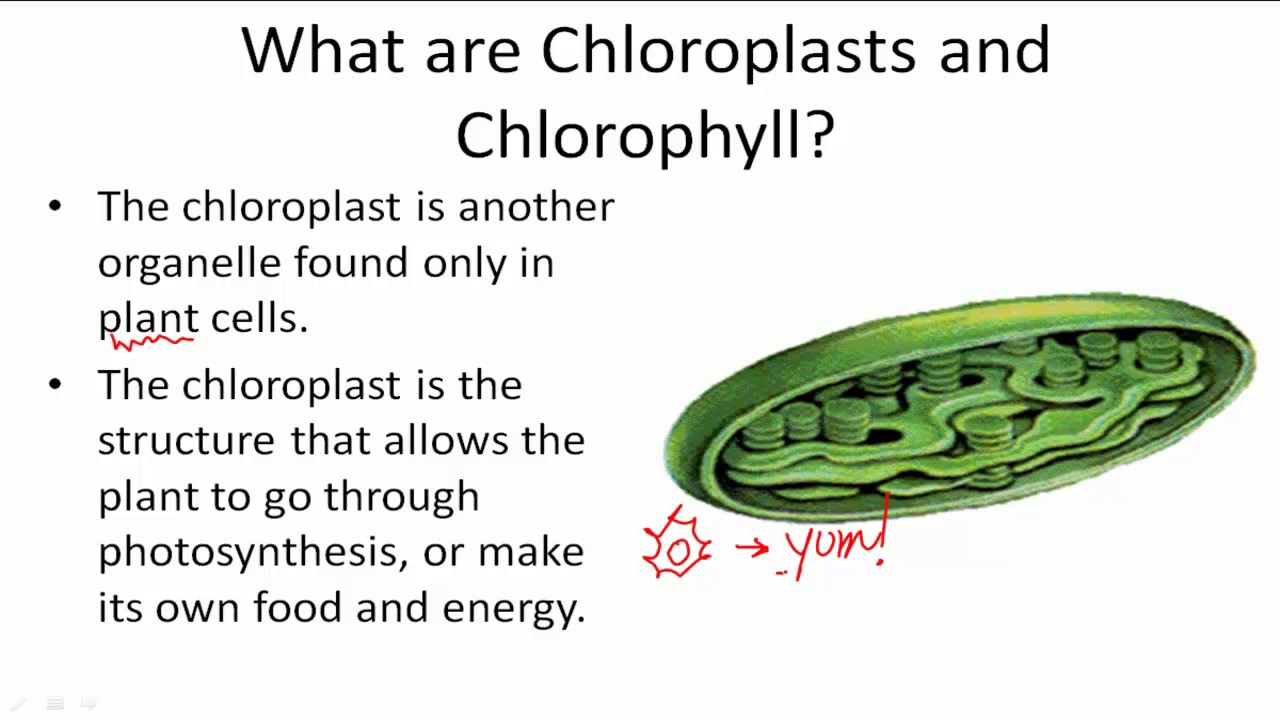
1:27
Biology
Functions of Chloroplasts and Chlorophyll
CK12
28K views•2017-05-24
Trending

5:41
Business
YouTube Disabled Our Comments Again (Are Any Humans Left at YouTube?)
SpecialBooksbySpecialKids
39K views•2026-07-21

5:07
Philosophy
One Must Imagine Sisyphus Happy
vlogbrothers
61K views•2026-07-21

12:30
Business
The Downfall of OnePlus!
techwiser
65K views•2026-07-21

30:21
History
The REAL History Behind The Odyssey Will BLOW Your Mind! It's NOT a Myth!
metatronyt
20K views•2026-07-21