Bus fare caps represent a significant policy intervention that can dramatically improve daily life for millions of people, particularly those living outside major cities where public transportation is often the only affordable option. Research from the Joseph Rowntree Foundation reveals that 7.4 million UK households have been unable to afford at least one essential item in the past six months, highlighting the widespread nature of financial precariousness. A £45 reduction in electricity bills may seem negligible to the wealthy but represents 150 meals for those on tight budgets. Similarly, affordable bus travel enables people to access employment opportunities, medical appointments, and essential services that would otherwise be inaccessible, creating a multiplier effect on economic opportunity and social mobility.
Why is the PM so obsessed with bus fares? | James O’Brien - The Whole Show
Added:[music] It's 3 minutes after 10. A very good morning to you. I How much of this show do you think how much of the time we spend together? How much of your enjoyment depends on my mood? I I'm I'm not being like self-referential. I'm just wondering because I I want to talk about buses today. I really want to talk about buses and I don't know what question to ask but I'm in the right mood to just start talking about it anyway. If I was in the wrong mood, then the fact that I haven't got a question to ask you and I am before 10:15 today going to end up begging you to phone me and say something about buses, but as yet I don't know what. That would put me off. That would if I was in the wrong mood, if I was feeling a bit tired or a bit belleaguered perhaps or maybe even a little bit kind of um embarrassed that we were not going in on the big news story, but we are. This is the big news story of the day. This is one of the first things Andy Burnham has done. So, I'm just giving you a heads up on two fronts. The first is that we are talking about buses, something that the producer has, I think, very unprofessionally prevented me from doing on several occasions in the past. I don't think that I can avail myself of this opportunity to ask what your favorite bus route is. I I the one occasion where I was allowed to do that, it was done in co in partnership with something else. I had to agree that we wouldn't just do a phone in about what's your favorite bus route. We would pretend that it was part of a more complicated and grownup context. So, it was something about buses with a side order of what's your favorite bus route or something about holidays or days out with a side order of what's your favorite bus route. I have been prevented um I at times violently I cannot lie at times I have been violently prevented from discussing buses on this program and although I tease there are quite good reasons for this. There are quite good reasons for this. I I I I there is a graph of engagement with the call that we took some years ago from a man who was familiar with a bus route that only ran on the third Wednesday of every month. Now the graph that I refer to is I'm quite near the top of it. I I was beside myself with excitement at news of that bus route. a bus route that a bus that only runs on I forget the precise details but he gave us the number he gave us the details we checked them online and it was true something like a bus that only runs on the third Wednesday of the month now I'm near the top of that graph for engagement and even I kid you not excitement about a story like that you might be near the bottom my job for the next 10 minutes is to get you up a bit to get you up that graph a bit so that by the time we've decide how we're going to have our conversation about buses. You are finding buses engaging and exciting.
They are described this morning in a government press release and I think possibly in the article that Andy Bernham has written for the LBC website as the most popular form of public transport.
That's not an opinion, that's counting.
Something that I can't say to you with certainty is that Margaret Thatcher once said, "If you're over 30 and you're traveling by bus, you have failed at life." [snorts] Uh they fact checked this. biographer Hugo Vickers um attests that he told it she told him this um but she also told him that she nicked the line from somebody else and although the Daily Telegraph put it in Baroness Thatcher's obituary there is no recorded evidence of her actually saying it in public from a podium or in a speech that that at least is the they are the fruits of my cursory research this morning but I think Jeremy Corbyn when he was leader of the Labour party said um confidently that Margaret Thatcher once said, if you're still traveling by bus when you're over 30, he may have gone for over 25, then you have failed at life.
And and it speaks to something, I think, largely outside.
Oh, we're doing something new. Has anyone told you, Keith? Are you are you across this? So, we're going to introduce a new feature on the program, but I wonder whether you'll actually I wonder whether you'll actually notice it. So, listen. This is right. Okay, everybody get ready for this. I'm not going to explain it. If you get it, you get it. If you don't, you don't. That means you've missed a few shows recently. And frankly, that's not good enough. So, when it comes to the idea that if if you travel by bus, you have somehow failed at life. I wonder whether that actually only holds true if you live outside London.
>> London.
>> Because for those of us who live in London, >> London, >> the bus is much more quotidian. It's a much greater part of of the daily experience to get around London >> London >> without using buses uh is is almost impossible to be honest with you. And it's got harder over the years that I've lived here when I had an expense account and I was going everywhere by taxis. Uh I didn't catch buses that often but it's it's harder to do that now. And and so I I catch a bus in London >> London >> every day. In fact, some days in London, >> London, >> I catch several buses. And I wonder whether this conversation needs to be directed in a sense at people outside the capital >> London. [laughter] >> Got you. It's 9 minutes after 10. You're listening to James O'Brien on LBC.
And we still haven't got a question.
I kind of hope by about 10 past that one would have started percolating that's a great word isn't it sort of percolating to the top of of our time together that a question would have appeared by now so there is the question about inside and outside the capital there is the question about Margaret Thatcher's line about having failed at life if you're still traveling by bus over the age of 30 and there's also I think an insight into where Andy Burnham is coming from the other feature I was thinking of instituting on the program today was the optimism meter. So I I was as you know very optimistic about karma's premiership. I was even optimistic about Rishi Sunnak because you know if you look and recall the two prime ministers that came before Rishi Sunnak simple patriotic enthusiasm wanting what's best for your country should have left you hoping that Rishi Sununak would very simply not be anywhere near as bad as his two predecessors. and and to be fair to the fellow, he wasn't anywhere near as bad as his two predecessors, but the optimism dissipated fairly quickly. Um, and that that sort of idea that optimism is a nice thing registered yesterday when I was talking to you about Andy Bernham and thinking about what he represents. And I wondered whether we should come on air every day and at some point in the course of the program simply say, "I'm still optimistic. I'm I'm quite optim I'm about eight out of 10 optimistic at the moment. And one of the reasons for this is because you know that old figure of speech, you know that old phrase.
Um if you look after the pennies, the pounds will look after themselves. And that was really brought home to me a few times this week. It's only Wednesday, but earlier this week when a caller pointed out that if you are saving, for example, 45 quid a year on your electricity bill, if indeed you are going to save 45 quid a year on your electricity bill, then if you're comfortably off, you will feel that a 45 quid is negligible and b you'll be thinking about what you have spent 45 quid on. But a but a texter I think it was pointed out that actually for a lot of people this is just 45 quid that you no longer have to find. We may talk in the next hour about this suten trust research which speaks to the millions of people in this country who can't afford the basics. It's weird. Some people are driven to deny poverty. They have to either pretend or insist that it doesn't exist when it so obviously does. It's so easy to understand having um running out of money, having no money left on the 28th of the month and when you're not getting any more money until the first of next month. I mean, literally no money. I I don't find that hard to understand, even though I live a million miles away from that experience.
But if you look upon a 45 quid reduction in your electricity bill, not as, oh, good, I'll buy a, you know, I'll buy this, I'll buy that.
You look upon it as, well, that's 45 quid I don't have to find. And it's the same with a bus fair cap. You know, I I I what what it's going to save you pennies on a dayto-day basis, but it is going to they're going to be pennies that you no longer have to find. And and if you look after the pennies, then the pounds will look after themselves. And I I I I think it's fair. I think it's important actually at the moment before we all collapse in a in a fit of regret and uh disappointment. It's important to try to articulate or or work out what Bernimism actually is. And and remember £45 is 150 meals if you're 30p.
50 meals is what um Andy Burnham saves the average British family by uh cutting VAT on on electricity bills. But this line, which I didn't really notice properly at the time when I interviewed Andy Burnham um a few years ago and and you may have heard clips from this interview on Nick's show, it was me interviewing him on Full Disclosure a few years ago. You can find the full interview um on on Global Play or or on the LBC app. It's really interesting. I never really go back to my interviews, but that's probably because the people that I've interviewed rarely become prime minister four years later, but this is actually a much bigger deal than I realized at the time.
Now, we we'll just get that clip of Andy Burnham talking on the on the show four years ago. This is a much bigger deal than I really Well, at least you didn't press the London button, eh? So, you know, almost >> everyone always thinks I'm about to jump and return to Westminster.
[clears throat] The reason why I'm still doing what I'm doing in Greater Manchester is because we've just put a cap on bus fairs. That that makes me happier than anyone here would would understand because that is helping people today in Greater Manchester. I've given the kids a free bus pass. That makes me happy. And that that's because that's about aspiration.
Again, I'm I've kind of said to the 16 to 18 year olds, we are going to back you because we believe in you. So, we're giving you that free bus pass for you to go wherever life will take you. And that is why I do it.
>> Why? I He's He's put some flesh on the bones there. He's articulated some of the reason why putting a c a cap on bus fairs in Manchester makes him happier than anyone in Westminster, anyone else in Westminster can understand. I think he's right. And and I'd include in Westminster this dread phrase that has popped up in recent years, the media class. I'm haunted now by something I pointed out to you yesterday, which is a sort of what what you might call a an ignorance of precariousness.
A widespread professional ignorance of precariousness. I don't mean pig ignorant like, oh, how can people not afford a toothbrush? I mean a sort of deeper ignorance of what it is like to run out of money, what it is like to struggle to find the bus fair towards the end of the month, what it is like to be one of the 7.4 4 million families who can't afford a basics, can't afford at least one essential item in the last 6 months as a precariousness, an ignorance of precariousness. You don't have to turn it into performative obnoxiousness and deny the existence of these people.
But I acknowledge an ignorance of precariousness, an ignorance of looking after the penny so that the pounds look after themselves. I I kind of I can point to times in my life when I when I did run out of cash, but I always had a phone call away from being rescued. I had always phone mom or dad and and and and they would always bail me out. I was never going to be hungry.
I was never going to be um stuck in a town without being able to get a hotel room or something. Do you you see what I mean? I was never going to be able I was never going to be unable to get to work because my current account was empty and I hadn't got the bus fair or I hadn't got the tube fair. So somehow Andy Burnham is casting himself, I think, quite boldly as as the opposite of that. He is casting himself despite obviously now being comfortably off and coming from what I'd sort of loosely describe as an upper workingclass family. Uh his father was a BT engineer. His mom was a GP receptionist. He went to state school.
He was the first member of his family to go to university. He's middle class now, but his working-class credentials, I think, are fairly uh fairly solid. Um, and and he casts himself successfully as knowing what precariousness is like, knowing what it's like to be 16 and not being able to go to that thing because you haven't got the bus fair. And and those are the people he seems to be most interested in. I want you to tell me two things. I'd like you to tell me something about buses that I still at 1017 haven't yet worked out. But I want you to tell me why Andy Burnham is so happy about putting a cap fair a fair a cap on bus fairs. There you go.
I'll put my teeth in and try again. Do you see what I mean? Because when he said this, play it again, Keith, will you? because I think this is absolute genuinely and I need to communicate to you why I think this is both fascinating and really important to getting into the weeds of Andy Bernham's early the early understanding of what motivates Andy Bernham.
>> Everyone always thinks I'm about to jump and return to Westminster.
>> The reason why I'm still doing what I'm doing in Grace Man is because we've just put a cap on bus fairs. I I that makes me happier than anyone here would would understand because that is helping people today in Greater Manchester. I've given the kids a free bus pass. That makes me happy. And that that's cuz that's about aspiration. Again, I'm I've kind of said to the 16 to 18 year olds, we are going to back you because we believe in you. So, we're giving you that free bus pass for you to go wherever life will take you. And that is why I do it.
>> It makes me happier than anyone here would understand. And when when he says here, he means people like me. Actually, not necessarily people like you. He means people who get paid to comment on politics and think that a cap on buses is yeah, whatever. Why is it important?
034560973.
Why does it make Andy Burnham so happy?
034560973.
And I can't literally end this bit, can I, by saying a question about buses that I haven't worked out yet.
What is it? Come on, help me out, will you? What is it? How important are buses?
How bad outside London?
>> London.
>> How I mean, what what and and I guess Manchester and big cities like that, but or or ring me and tell me what what the question is. There's a question here, right? This is what I mean about my mood. If I'm in the wrong mood, I'd never do this. I'd never come on air and and hit the end of my introduction still not articulating what one of the central questions for the whole hour is. But buses, it's big. They're a huge part of of almost all our lives. And yet the story of buses is told by people for whom they're not a huge part. So fairs aside, so that's question one. Why does this particular thing that will sound ridiculous and trivial to many but not to you? Why does it make Andy Burnham so happy? And what what is the state of the bus service outside major cities? I I told you some time ago, you see, you think I'm exaggerating when I tell you I'm obsessed with buses. How many people, I wonder, listening to this now could could come out of the top of their heads with one of my bus-based anecdotes. Could you come out with one of one of my bus-based anecdotes? I don't think it's true anymore, but at the end of the lane, I lived on as a child. Um, so it's it's a farm that I lived in, an old farm. Um, obviously we didn't farm it, but it was still a a working farm. And the the country lane I lived on had a bus stop at the end of it. And the bus stopped once a week and go to Bridge North once a week on that bus. So if you didn't have a car and there were other buses that would take you into town, but they weren't going from that bus stop. The bus stop at the bottom of my lane. It stopped once a week. Let's just if you can help paint a picture of the um of of of the bus service outside the big cities or indeed the importance of the buses the the the in in in the big cities. And look, while we're at it, I know I'm late for the break. Give me a second. Why why so why does it make Andy Burnham so happy? And why did Margaret Thatcher say what she apparently reportedly said? There's two beautiful questions there about two very different politicians, two very different prime ministers. Why does it make Andy Burnham so h so happy to put a cap on bus fairs?
You put it into words 034560973.
And why did Margaret Thatcher purportedly say that if you were still traveling by bus when you were over 30, you'd failed at life. I may need even more help with the second question than I do with the first. Um, it's 10:21.
James O'Brien on LBC.
>> Only 3 minutes after 10, you are listening to James O'Brien on LBC. And he puts it um very powerfully. It just shows that Andy Burnham is in touch with the poor and and and the buses. But why why why are the buses such a big part?
Why why does he say literally um that putting a cap fair a fair a cap I can't get the words out in the right order.
Putting a cap on bus fairs makes him happier than anyone in Westminster could understand. What does he mean by that?
And what did Margaret Thatcher mean when she said, "If you're traveling by bus over the age of 30, you've failed at life." 034560973.
Maria is in Greenford. Maria, what would you like to say?
>> Oh, I just wanted to I was having the same discussion about the bus stairs with my daughter. Oh, yeah.
>> And I said, "Oh, you know, he's cutting it to two pounds, you know, big deal." M >> and my daughter lives in Birmingham and she said that is a big deal because a single fair >> in Birmingham just a single fair is £368 I believe and to get it cheaper you have to buy like um a saver and that's £550.
So you were being sort of really big bananas from from London London.
>> Whereas your daughter in Birmingham could immediately see the >> see the point. And and also don't forget they don't have the luxury of the alternative of a tube. If you want to get to other places, you got to travel by the the train.
>> Oh, that's a huge part of this conversation. How did I miss that?
>> There's a metro in Newcastle, isn't there? But generally speaking, it's it's it's the bus or nothing.
>> It's the bus or nothing or the train.
And the train quite expensive. I have to get from Birmingham New Street to Chester Road. I'm lucky I got a senior citizens rail pass, but it's £6.90 one way. I've get Forgive me if I've got the prices wrong, but I know it's 6 something.
>> I'm not going to forgive you if you've got the prices wrong. What do you think this is? Some sort of talking shop. You do your research before you ring in next time, please.
>> I try to honestly. So um and also in London we our thing is capped at 1.9 something already >> and and in Scotland it's free for under 22s. I mean he's not pretending that that that's not true. He's he's and that's brilliant for for Scottish people. But it it you know I'm getting fascinated by this and I've never focused on it before Andy Burden became prime minister. But this this ignorance of precariousness. Can I just add Can I just add >> in Birmingham certain routes if you miss that bus >> there's not another one coming in 10 minutes or 5 minutes time it's half an hour or 40 minutes >> well in kamster mate it's it's 6 and a half days what um what why do you think Margaret Thatcher said that if you're still traveling by bus over the age of 30 then you've somehow failed at life >> well that was a different time that was a different time more people travel by >> private car I suppose Well, no, but more people travel by bus. We've got electric cars now. So, that's saving, you know, the environment. It's a different time.
You can't compare the two together.
>> Yes, I can. I'm doing a whole show on it.
>> You can't.
>> But what did she mean? I can ask you what she meant, even if it was in a different time. What did she mean?
>> She meant that you you're more prosperous because you owned a car and you didn't have to travel by the bus, which was for common people. But that's not the case now. That is it's completely different. In London, it's expensive to travel by the tube, isn't it? Like £11. Um, >> Keith was eating a penguin then. We should have pressed the London. Do that again. Say that again.
[laughter] >> Say that again.
>> London.
>> Thank you.
>> I don't know how long.
>> You're [snorts] right. Of course, you're right. I Well, you're sort of half right. How long can we keep this up for?
I don't know. I used to do a thing I used to have a thing called the basically alarm. Do you know about this?
And I used to I just I don't know why I just the line between mischief and and and absurdity is perilously thin, isn't it? And I just really early doors in this job. It wasn't in this building. So it's like 20 years ago if someone said the word basically on the program then um we played an alarm. I banned the word basically. I also banned people called Colin from ringing it. But I banned the word basically from the program and if anyone said it, we'd play the alarm and cut them off. And we had a new Keith one day. someone doing Keith's job came in on the first shift that they' done and it was drilled into them by I think Jones the Engineer was in Keith role at the time. It was drilled into them that you had to really stay alert for the whole show cuz normally they just have a little snooze, do a cross word, you know, put their feet up, eat a penguin.
Um but because there it is, that was it.
That was the basically alarm. So if someone said basically in the course of a normal conversation, that noise would play and great hilarity would ensue. I think uh and and this new lad had been schooled in the importance of paying attention and but nobody had said to him use your judgment as well. So I this bit's not well it's funny and not funny at the same time. We were having a conversation with somebody about something really traumatic and and and deep. I can't remember exactly what it was but it was right up there. It was you know it was in the I'll give out the number for the Samaritans at the end of this conversation kind of territory. And the person we were talking to used the word basically. And this lad on his first shift having been had it drilled into him that the basically alarm that James really cares about the basically alarm. It's really important. So this poor soul who's on the radio that that came out in the middle of this harrowing heartbreaking story. So what what do I do in those circumstances?
What the odds on you listening? We only had about 50,000 listeners back then. We got one and a half million now. um just ignore it. Just pretend it never happened. I don't even think they noticed because they were so caught up in the story that they were telling. So, I'm mentioning this partly because it's a it's a story and partly as a warning to Keith that there might be occasions in the course of the next show and however long this feature sustains for.
There might be occasions where it would be inappropriate for you to lean on the button in front of you when I say the word London.
>> London.
>> But that was not one of them. It's coming up to half past 10 and you are listening to James O'Brien on LBC. We're talking about buses. Maria gets it or rather Maria didn't get it but her daughter does. And and that's getting there, isn't it? Why would Andy Bunner, why would the prime minister of an entire country talk about the quality of happiness he feels about the introduction of a cap on bus fairs? This is a billion miles away from uh the David Cameron or Boris Johnson or or Richissy Sunnak school of politics, isn't it? I think Burnham gets it.
Optimism meet us still at 8 or 9. It will probably diminish in the coming weeks, but I I think he gets it and that I is part of the answer to the question of why he finds it so invigorating and so so um pleasing to bring in a cap on bus fairs. I want you to tell me why.
And I also want you to tell me why or what Margaret Thatcher meant when she said that you um you failed at life if you traveled by bus in this country after the age of 30. Here's Dominic Ellis with your headlines.
>> James O'Brien on LBC.
>> 33 is the time I've just realized the sort of the the the mythical phoning that we're not having. I've just realized during the bulletin what it was. One day I will come on air and I will ask you why I love buses.
We will we will stop it now. Seriously, Nick Abbott will get cross. Um we we we use me as a lens through which to examine the broader question. Some people are left completely cold by buses. Some people look down their noses at buses like Baroness Thatcher, the late late Margaret Thatcher. And and then some people are much more enthusiastic than I am. Um the enthusiasm I don't really know any bus spotters, but I encountered a bunch of train spotters a few months ago and their enthusiasm is infectious. It's lovely spending time in that kind of joyous environment. But why do I love buses of all the buses? Such a weird thing to love. It's up there with bridges and cranes for me. Why do I love buses? I know why I love bridges and cranes. Why do I love buses? But anyway, that's not the phoning. The phone in is a far more grownup and serious than that. Uh Tony's in Green. Tony, what would you like to say?
>> Yeah. Hi. Hi, James. As someone who is now eligible for a bus pass, I feel vested in this conversation. So, um, yeah, I I think it's all about an affordable mobility is what I'm going to call it.
>> Um, basically, I think buses are the arteries of the country. They can go to places trains can't go. They're more affordable. They are, um, more convenient for people who are out of the way and it's a cheaper way for them to get around the country and get to places where they need to get to. So to have a capped bus fair I think allows people that mobility at a much more affordable.
>> It's I mean the more we talk about it the the more relevant it becomes. I worried it might be the other way round.
I worried that my sense of that this is important would slip out of my grasp.
But that line that he used in that interview about people here will not understand why it makes me so happy.
That's getting bigger and bigger, isn't it? because it's hard to think of a of a of a of a demographic less likely.
Certainly ministers who get chauffeered everywhere and and while while some MPs will travel by bus, of course they will, but it will be part of their, you know, the their their experience of the capital. I'm starting saying the capital now, Tony, so that we don't have too many um bursts of correlation street dialogue in the program. But the do do you see what I mean? It's like the normal daily grind >> of getting a bus to and from work or to and from the shops is a million miles away from the world of the commentators, the columnists and the and the and and most parliamentarians. And and that's the world Andy Burnham is talking to and currently already legislating for.
>> And I think it's more, you know, there more of an urban feel to it as a less urban feel to it. Um and it's it's more remote people in from remote locations where where trains don't go um and who perhaps can't afford a car.
>> Yes.
>> You know, for them a bus is a lifeline and and I was saying to your researcher producer on the phone there and I worked for Calmac who were a a lifeline service and I I I see buses as being >> calm not I thought you said Caramac then for a minute I was getting really excited. Calmac as in as in >> the ferry company. Yeah. Okay.
>> Uh so yeah, they were a lifeblood ferry uh lifeline ferry service and and and I see buses as being a similar sort of landbased lifeline service for a lot of people who live in areas where trains and and perhaps cars can't can't cut it to have to pay for a taxi. So a a bus is is a great option for them to be able to do the things that they want to do and and get to places. So um I can see why he's enthusiastic about it. I think it will it if you if you've got people who are mobile and can afford to to jump on a bus to get to a job interview or get to their to their work, it it creates um a more um a workforce that's that can, you know, bit more money in their pocket and that it's easier to get to work. And and >> so so here's here's a line in in one of the columns today from from someone who does seem to get it.
meaningful change to the lives of normal people is the metric by which Andy Bernham version 2.0 judges success. It's why he's already announced the abolition of VAT on electricity bills. It's why he's prioritized the end of rough sleeping.
And it's why introducing a a cap on bus fairs in Manchester makes him happier than anyone here in Westminster would understand. It's who he wants to govern for. Oh, we're getting a bit dewy eyed, aren't we? And rose tinted, mate. We need to watch that. [laughter] But I think you've nailed it. Uh, and obviously the the columnist I'm quoting there is me. Uh, Jackie's in Birmingham.
Jackie, what would you like to say?
>> Hi, James. I was never going to phone LBC, but the topic you've got me now calling. Why not?
>> Because, >> well, hang on. I maybe don't answer that.
>> But it's been a while since I spoke to you and I've just decided I didn't really want to get involved with the whole toxic nature of politics. But >> oh, here you are talking about buses.
What have you got?
>> Buses. I think people underestimate how bus um accessibility is a great reason why so many people feel that they've been left behind. And if you do something that is tangible that people can actually feel, it's a no-brainer.
Now, James, I moved, me and my family, we moved from London December 22 to Birmingham.
>> Okay. So I've got the whole experience bus being my husband. We went from owning cars, cycling, using bus transport.
>> My son's especially my eldest son, he loved the fact that he could travel on an Oyster card. He loves public transport.
>> So it's not for us being trans. Public transport is not a bad thing. It's a good thing. When you come outside London, the only exception that I can see is Manchester. Manchester doesn't have the underground, but it's got a really good metro and literally you could go around the whole of um Greater Manchester and the city center and it's like being in London. Now that I've come to Birmingham, your last caller, she was she was slightly incorrect. They've got a um a single fair of £3 and they've got a price cap of £560. It means then if I I would get on the bus just to avoid the traffic, use the bus lane, this one bus route, one bus journey is costing me £3 just to go 5 minutes just for convenience if I'm not using my bike.
>> Whereas in London before I left London, I think it was the price cap was £3 for the bus and literally you could just jump on and off and you didn't get charged if you jumped on and off within half an hour.
>> I think that's getting even better as Well, I know Sadi Khan announced something yesterday, but I'm I'm not across the detail. Here's the thing, Jackie, and I want I mean, I know that you've broken your own promise to yourself by ringing into the program, so I'm very I'm very wary of offending you, but here's here is a really important observation is that I think not that long ago, cuz I just felt it a tiny little echo of it.
And there's a little bit of me when you start going into the detail of the bus fairs. There's a tiny little bit of me, privileged middle class idiot. There's a tiny little bit of me that's going, "Yeah, yeah, yada, yada, yada." I don't know how much my bus fair costs every day. I just click my card on and um and if I happen to notice it when I'm sitting down looking cuz it's flashed up on my phone screen, then it doesn't really register with me at all. I'm not boasting. I'm just being completely honest with you. Andy Burnham is not speaking to me when he puts a cap on bus fairs. He's talking to people who know exactly how much it costs to travel 500 yards or 5 miles by bus. And that's most people.
>> And it to be honest with you, James, because I've come from London.
>> Yeah. Where?
>> And I've come to Birmingham.
>> Hang on. You you you've come from where?
>> London.
[laughter] >> I've moved from London.
>> London.
>> We've chose We chose to move from London to Birmingham for many reasons. Yeah.
Yeah. Yeah.
>> And all I'm going to say to you, Birmingham is a great city, but the biggest problem I see and I'm a nurse.
>> Okay.
>> So when I'm so when I'm encouraging patients to go for screening, they might want to go to the local mobile hub, which is they can see is local, but they might get offered appointment over in somewhere else. I went for my screening in Southern Colefield because it was quicker to get the appointment. Yes.
Now, the number one reason why a lot of people won't go to certain appointments that are that they've been referred to, they haven't got money for the bus.
>> Wow.
>> They haven't got Uber. They haven't got a car. If you haven't got money for the bus, you haven't got money for drop them. Wow.
>> There's no one to give them a lift. This is real. This is real life. So, I can say I'm I'm privileged.
>> I can say to people, why don't you get a bike? Well, cycling has become when we was growing up, having a bike was just an activity that children did. When you're in a city like London, cycling's become like kind of like sort of like the neuvo rich who Yeah. I'm cycle I'm going to go on my Brmpton or [laughter] I've got my, you know, >> I thought you didn't like the toxicity.
>> You're having a crack at all. People are it.
>> Well, it's both. It's both. It's become Yes, I taken things for granted. So Margaret Thatcher, the reason why she said what she said at the time, >> yes, >> it's ultimate capitalism. You're not nobody unless you go buy a car. You're not going to buy it cash. You're then going to get it on finance. That's that's how the cycle was. We've come full circle now. I'm James. Last car we bought, I had it on a lease and then I made the final payment and I said to myself, how can I justify now the same car that I would have paid 15,000 and they gave you a contribution? That same car is now 25,000.
Why am I now thinking about my budget?
Why am I going to put myself in unnecessary debt to get a new car when I can say right service the car? I've got my bike. I cycle most of my my my jobs.
I cycle to or I can walk to. And then when I want to get on the on the bus, I walk I can get the bus. I can get the train. I we don't drive to London no more. We use the we use the train. But we've changed our >> Yeah, you're right. It's a changing world and and it's options. Everything's about options. Money is options. They say money can't buy you love or it can't buy you happiness, which is technically true, but it can buy you options. And of course, the less money it costs, the more people have those options. And and Jackie has just done a absolutely brilliant job of of of running through that simple um equation, that that simple relationship between the cost of things and the amount of options that you feel you have in your life. And that should resonate actually, shouldn't it?
the idea that you can't afford the bus fair to a medical appointment, so you'll have to wait longer for it nearer to home.
All so many areas to this beginning to become crystal clear why Andy Burnham would say something as initially to my ears uh strange or or absurd as as um I'm made more happy by uh this policy than anyone here in Westminster would understand. Jackie, that was brilliant.
Thank you. I hope Will you ring again, do you think or is that it now? Yeah, but um can I just say no? No, you can't.
You've just had hours. You've done more talking than me on the show today. This was this is the icing on the cake. I said to your researcher, me and you of similar age group. I'm I'm 1971. I say no more. Now, >> I remember before they gave free bus pass bus in London, you had to pay to get on the bus.
>> Yeah. There was crimes, James. My mom would run out of money and I did not have money to go to school because I never lived and I never lived and went to school in a local area.
>> Wow.
>> I was fortunate enough when I had moved back to London, I was in a catchment area for a high performing state school and then I moved to North London Tottenham. So I used to get the W3 bus from Tottenham to Muzw Hill >> and if you and if mom didn't have the money you did you couldn't go to school.
And James, this this is the icing on the cake. I look back at my report cards and my report card said Jackie very enthusiastic loves school but if her school attendance had improved and it made me go back and I remembered so James all I'm saying to you because they can't offer universal free bus passes because you got the 32 London borrows that's what's been paying for it >> to me as long as you don't have to worry about getting to school get into college, you can take a sandwich, you can take a flask, but if you your parents can't give you the necessary bus fair, this is why so many children miss things and they're not going to be upfront and say to teacher, "Oh, my mom didn't have any money." Because of your pride and that's what I'm going to say, James, it's so important.
>> I think you're brilliant. I I'm so glad you did ring in today and break your own little promise to yourself. Do you think you'll do it again?
>> Well, it depends.
>> Well, depends. It depends whether I'm any good or not. Right. It depends whether I'm any good or not.
>> Well, I I've got a good one in mind. I all I would say all I could say to you, James, the main reason why we moved is the the whole toxic politics and how first generation people like myself, >> you've got access to you might have an Irish passport. Some people may because of their descendancy, but some of my generation are now looking back to where our parents come from purely because of how things have become.
>> Well, we do talk we talk about that quite a lot actually.
>> Well, I tell you what, let's make a date. Next time we're talking about that, I want to hear your voice again.
All right.
>> Yeah, we will. Thank you, J.
>> Oh, thank you, Jackie. It's 10:47.
>> James O'Brien on LBC.
>> 10 minutes to 11. How long now will I have to wait before I can have another crack at doing what's what's your favorite bus route? I said this is what you might call gent gentle radio, slow radio. Honestly, you wait ages for one phone and about buses to come along and then two come along in quick succession.
Boom. Um I don't know. One day we'll do it one day. But we're not doing it today. Today we're looking at this and I I don't know about you, but this has been one of those conversations where the clouds have cleared with every passing minute, every caller making it a clearer uh picture. and and uh you know Jackie knocking it out of the park a moment ago as well on the importance of this cuz who can resist that? I have two stories there. one about people not being able to afford to get to hospital appointments, so they have to wait longer, and two, a child back when bus travel wasn't free for school children, um, not being able to go to school because mom ran out of money before the end of the month, which is such an easy to understand concept for me that I really puzzle over people who insist that you can't possibly be poor. You can't be that poor. You can't be so poor that you can't afford a meal or or or a toothbrush or and that's a story published by the Sutton Trust today that we are likely to move on to next. But first, more buses please. David's in Highgate. David, what would you like to say?
>> Uh morning James. Um I can only speak for 5 minutes unlike the other callers.
Um >> what I would like to say is that it's first impressions with this prime minister Andy.
>> Yeah.
>> Uh Margaret Thatcher came in as milk snatcher. Well, she was she was education secretary when she did that, but the but the label had still stuck.
>> Yes. And and probably amplified, so people knew what they were getting. And with Margaret Fetcher, unless you got a free council house, uh you weren't getting much. [laughter] >> And and with Kharma, it was the winter fuel sadly was the first sort of thing.
Most people >> Yes. But um my wife went up to Karma at Red Cross shopping center to ask him about something or other probably to do with Israel and he says, "Oh, we're not talking about that today." And that sort of gave me >> I know how he feels, David, to be honest with you. [laughter] >> Yes, I know. But he she said he's very very charming, but he's on point. Yes.
>> So that's So basically he's not a people's person.
Andy Burnham wants to be and is with good impressions from day one. So that even a conservative voter will have a inner respect for what he's done for a cousin or >> strong stuff. This is strong stuff. I think I I mean I do actually agree with you because you can't really knock this, can you? Regardless of what party you're in, we're making bus fair because you you you I mean it's a it's an absolute minefield for anybody to criticize. You could say, you know, well, where are they going to get the money from? But equally, you you you can't say that they shouldn't do this or I disapprove of this or I disagree with this because they all pretend to care about precisely the people that are set to most benefit from a cap on bus fat.
>> Yeah. I mean, also just to finish off because I've got to my main points. Yes.
>> I'm off to I'm off to the Arsenal training ground at the moment. So, >> really? You I mean what you were you playing on the left wing, are you or the right wing?
>> No, I'm just playing the steering wheel.
I'm a driver. [laughter] But going back to buses, >> yes, >> next door to where I live, exactly within 50 ft are five or more root masters which are used for wedding weddings, uh, te's and events and they're stored in pristine condition.
>> Yeah, we've got some around the corner from us in Brenford as well. There's a few businesses around London that do that in London.
>> Oh, well done, Keith. That deal with the old root masters. You took me by surprise there. Um, you brought it in on time. So, what you you're you're driving a car to the Arsenal training ground, not a bus.
>> Uh, a car. Yeah. I take the younger players and um they're nice lads.
>> That's exciting. That's nice. You get to you know them before they're like mega famous and and super rich.
>> I already know, you know, in a very casual manner, of course.
>> Um, two or three who have played in the first team by now.
>> Oh, lovely stuff. Oh, there you go. I bet you that's nice. Thank you, David.
What a lovely call. Um, have a lovely day as well. It's coming up to 10:55.
Steve's in Stafford. Steve, what made you pick up the phone?
>> Um, first time caller, James.
>> Welcome, Steve.
>> So, go gentle with me.
>> Well, I can't promise that, but I'll try.
[laughter] >> Um, I'm a regular bus user, uh, having had a car since I was 17. Yeah. And, uh, now I'm in my 50s. Um, so when I first got on a bus, probably earlier sometime last year, and asked for a a return, I got a very quizzical look from the driver, not realizing return tickets hadn't existed for many a year.
[laughter] >> You should try try paying a fair with a 50 note, mate. You'll get an even more quizzical look.
>> Um, but the point I wanted to make is, um, I was getting the train from the town to one of the local housing estates in quite a deprived area, right? And it three it's £3 to do about a mile mile and a quarter. Um but if you live on that estate >> Yeah.
>> then the shops that are open to you and available to you are the spa and the Morrison's local which is now down for being shut down. So everything you go to is a brand name. So you know I I think I nip to the shop for a bottle of washing up liquid and it's like 2 pound50 for a bottle of washing up liquid.
>> You can't if you're in al Well, yeah.
However, if you're in Audi, it's 80p.
>> Yeah.
>> But it's going to cost you6 return bus fair to nip to the shop to So for me, I just I don't plan what I'm going to buy from one day to another and to the shop in me car, >> you know.
>> But if you rely on the bus, then I mean this is a bit like Vimes's boots, isn't it? That lovely >> um Terry Pratchett thing about how the rich actually by spending money they save money. And and here it is as well.
By spending the bus fair on on on your weekly shop or your monthly outgoings, you're going to save money if >> if the bus fair is is is lower, you're going to save money on loads and loads of other things because you're going to be able to go to other shops and do other things. It's a really good point.
>> And if you're going to have to if you're going to have to make that call every time you want to the shop, you know, do you want to, you know, thing of tea bags or do you want do first of all, do you go and do a big shop and you know, but have you got the money to do a big shop?
>> No. Well, exactly that. And if the bus isn't going to be as as expensive as it is now, then it's I I keep coming back to this word options. And I think that is a huge part of what Andy Burnham is about. It's it's giving people opt.
There's nothing worse than having no options. It goes against our very nature to feel you have no options, to feel imprisoned, to feel, you know, stagnant, to feel to feel stuck. Options, options, options. Uh money buys you options. So many options. And of course the opposite is true as well is that if you know if they bring prices down of of essentials then your options increase. Uh Steve thank you. What a brilliant debut.
Couple of great debuts today. Mark's in Ipsri. Mark what would you like to say?
[laughter] >> Hello James. Um >> I'd like to say just that I think that um Andy Burnham gets it. Um, you know, I think he's he's trying to open up uh social skills sort of learning for for youngsters by giving them a bus pass.
>> Um, no matter how long the journey or short um they're going to get to see life, different different things. Um, and I think Margaret Thatcher, you know, she she grew up from a reasonably middle sort of class background, but she she married a rich businessman. And I think and I think >> that sort of then changed her um and she become quite sort of stuck up um looking down her nose at regular people. It >> it was that simple really, the comment about buses, which may be apocryphal.
Well, as I said at the outset, there's some dispute over whether she actually said it, but when her biographer put it to her, she certainly didn't deny it.
But the idea that you failed at life if you're still on a bus when you're 30 is because you measure success entirely by wealth and its accutramont.
>> Yeah. I I just think, you know, the common sort of person uh we saw how she was with the coal coal miners and that I I just think um that sort of speaks volumes. This is a fascinating point that you make, Mark, because you know I think on paper K Starmmer's background was at least as quotes workingass end quotes as Andy Bernham's, but he never managed to convey that. It didn't matter how often he mentioned that his father was a toolmaker or or or detailed. And I say this from a place of sympathy. It wasn't fair on Starmmer that the the cogs never meshed. But Andy Bernham, when you say he gets it, you simply mean he knows what it's like.
>> Yeah.
>> He really knows what it's like. and the importance in day and age where social media and all that and kids vegetating on their mobile phones um and not getting out and about. I think this just opens up opportunities for them kids to go out and see a bit of bit of the country and uh speak to different people. So yeah, >> I like it. No, I like it. You like it.
We all like it. It'll never last. But for now, the opt the optimism meter remains at about 8 eight and a half on the program. I could come on air every day and say still optimistic. When did we stop being optimistic about K star?
And don't text me to say you never stop being optimistic. He's a victim of a terrible media push and all this kind of thing because sadly it's not [music] true what you say even if you will go to your grave insisting that it is. Um [music] when did we stop being optim because it we teetered for such a long time and then wobbled. A wobble comes after a teeter I [music] think doesn't it? So then we wobbled and and I think even in the space of a week or two weeks I'd go from thinking that the game was up to thinking he was going to fight on and wanting him [music] to fight on. He always sounded best when his back was right up against the wall. But I wonder if anyone can put a date on when we stopped feeling [music] optimistic about K Star Dmer. Um and I mean we know when we started feeling optimistic about Andy Burnham. It was yesterday.
[music] >> James O'Brien on LBC.
>> 4 minutes after 11. I got some particularly good messages during the last hour during that conversation about Andy Burnham and the buses but I didn't read any well I read out hardly any of them. I'll try and rectify that in the course of this hour even though it will you know involve a slight change of subject but I won't do it now because I want to set up the next conversation and there is a thematic link here. Um in fact there is one very very huge thematic link that also takes us back to elements of yesterday's program if you were kind enough to listen to that. And and I appreciate that sometimes when I get very engaged with something, it doesn't necessarily mean that you will.
I think the ignorance of precariousness, and I may come up with a slightly pissier way of putting it, is is going to be my new jam. I I just think it's so important to understanding the disconnect in in British politics. And it's actually the gap that the populists um who are simultaneously trousering 5 million quid from Thai based billionaires while pretending to care about people who can't afford their bus fair. They they've of course exploited this gap, this ignorance of precariousness. They just don't get it.
So you get someone like Farage standing up and say, "Well, I get it." When he clearly doesn't. When do you think the last time he caught a buses? I don't know what he's done more often actually.
Vote in parliament. He missed 77 uh on the trot this year or catch an actual bus. But um and I mean a real bus, not one that's being paid for by a billionaire donor to f him around the country from helicopter port to helicopter port. But it it it I mean, you know, credit where it's due. You you spot a grievance if you're a populist and you pretend to care about it. And there is a real grievance there in the ignorance of precariousness.
And part of the problem of course is that precariousness is not always a constant.
Precariousness is something that stalks you but doesn't always come through your back door. You know it's there. That's where the precariousness comes from. But the thing that you fear most doesn't necessarily arrive or doesn't arrive on a daily basis. I touched towards the end of yesterday's program on one of those moments in literature that has really stayed with me now for decades, I think.
And there's a reason for that. It's because I am conscious of of not feeling the precariousness, not really ever having felt it. Cuz like the girl in the in the pulp song, you could call your dad and he'd make everything all right.
Even when you thought you were skinn, you weren't. if if if you come from a a more comfortable or an even slightly comfortable background. But of course that that that you don't want to phone your dad if your boiler goes and you're 40 years old. You you're a grown-up.
It's your responsibility. It's your job, but you know how much it's going to cost and you know you haven't got it. So the the ignorance of precariousness, you know, um it's why David Blunkett talking on Nick's show yesterday was so powerful. simply saying, "Well, 45 quid might not affect me, but I know that it affects others. That's that's a simple point. Of course, it does." Um, I don't fully understand the effort of will that it takes to pretend that this doesn't exist. That the kind of willful ignorance involved, willful ignorance as opposed to accidental ignorance. I'm describing an accidental ignorance of precariousness. How many people who comment for example on today's story from the Sutton Trust that estimates 7.4 million households in this country what are we at the moment the fifth the sixth richest nation in the world 7.4 million households over the last six months were on at least one occasion unable to afford one essential item.
It's important to um unpack this. That's why I talk about precariousness being something that stalks you but doesn't always come through the back door. So here here is a lowincome family and they are just as likely to be in work as not and here is one moment in 6 months when they couldn't afford an essential. Uh and and an essential would include of course um turning on the oven um or or or or a toothbrush or soap or well you know what essentials are you you're talking about the very basics the most basic building blocks food basic toiletries heating suitable clothing and shoes and and it doesn't mean that they are spending six months unable to buy soap it means that for at least one moment in those six months they couldn't afford to buy an essential, something that they needed.
You know, this is why a kid would go to school in clothes that don't fit or a child would go to school in um odd shoes. That's a slightly silly example, but do you see what I mean? And then the clock ticks, the calendar flicks, and you can afford it again. So, it's not about a life of grinding poverty. It's about a life of sapping precariousness.
I think if we were to be generous to people who claim that they don't believe that this exists or claim not to understand that this exists, that might be one of the points that they're missing. They don't read into the story.
7.4 million low-income households can't afford essentials, but that's ridiculous. How can you go for 6 months without any soap? But they're not.
They're going for five and a half months with soap and then for one week or one fortnite without because they can't afford it. And I think when you think of it in numerical terms, this is really easy to understand.
It's really easy to understand. It It's a bit like looking for coins down the back of the sofa because you've got nothing coming in until until payday or until your universal credit next arrives.
that these are not families that are receiving means um uh uh benefits. More than half of households not receiving means-ested benefits are now struggling. That's up from 47% to 53% in the last year. So, you know, it it as I say, it affects people in work and people out of work.
It affects pensioners as well.
And the way to get your head around it if you struggle is is very very simply to count.
So there are 30 well 30 days in September, right? What what what month are we in now? July. 30 days have September. April, June, and November.
All the rest have 31. So there are 31 days in July. What happens if you run out of money on the 28th? So maybe your meter is is is paid up. So you you've got a card and your meter. Uh you're going to be fine. that's not going to run out even though you've actually run out of what I suppose we would have to call ready cash. You've run out of cash.
You've got no money to spend. Your current account is either on zero or it's overdrawn or you don't have a current account. You just got no money, right?
And you've got enough food in your cupboards to get by probably, but oh my lord, we've run out of shampoo. Well, we're going to have to wait until Wednesday before we can buy shampoo, right? It's not that you're not washing your hair for six months. It's just that we literally can't buy shampoo until Wednesday. So, we're going to wait until Wednesday. It's Wednesday today. This is unhelpful. We're going to have to wait until Saturday before we can buy shampoo. And then, of course, it could be something else that's run out. So, you're all right for shampoo, but you can't eat it and you've run out of rice or or or you've run out of protein and you can't get to the shops until Saturday and today is Wednesday or even Thursday. It's just tonight you've got to get through. So, there's no soap tonight, no shampoo tonight or no dinner or or or or like just a bowl of potatoes because that's all we've got in the fridge. That's all we've got in the cupboard.
This is not hard to grasp, is it?
7.4 million low-income households. So, I I'm interested in the psychology of people who who reject these kind of reports. I'm interested in why they do it, but that's a bit of a pet interest, I think. I don't know how interested.
Are you interested in that? What motivates people to pretend that this problem doesn't exist? Is it fear? Is it insecurity?
or is it cruelty? Is it all of the above? You simply reach Wednesday and realize that you've run out of money.
So, tomorrow you haven't got the bus fair. Tomorrow you you're not going to be able to wash your hair. Tomorrow you're going to have to go out wearing a shoe from which the sole keeps falling off because you can't afford to buy glue. You're on zero until Friday or Saturday. That's it, right?
I'm not going mad. It's that simple, isn't it? It's not that no one's got any money ever. You're not living your life on zero. God forbid that you'd want to live in a society like that despite the best efforts of Cammy Baden and her mates. Everybody deserves something.
Don't want to live in a country where some people truly have nothing. But 7.4 million people don't have quite enough.
I just want you to tell me what it's like. 034560973.
Um I I I mean why Listen, I I'm not having a go, but why would you tell me that you can wash your hair with washing up liquid? Why would you tell me that? Cuz I'm just pointing out that you've run out of one thing. Two people have messaged me to say you can wash your hair with washing up liquid. Number one, I wouldn't advise it. It's much more resting than um normal shampoo. But but but it doesn't disprove the fact that you can't afford to buy. Okay, you've also run out of washing up liquid. Oh, well, James, I think you find you can wash your hair with vinegar. No, it's not. It's not. Why do we do that? I'm not having a go at you. You maybe you're just providing me with helpful information, but why do you do that?
Why do we do that? Is it Is it fear of precariousness? Do we not want to admit We touched on this yesterday, didn't we?
the two paychecks away from oblivion, the two paychecks away from chaos. We talked about it in the context of homelessness actually. But this is not about being homeless or indeed about sleeping rough. This is about running out of money when you need something new. When you need something new and I I if million households have found themselves in this situation in the last 6 months and there's got to be quite a few people listening to this program right now. So that's it. That's all I want really from you to start with is is what did you run out of? That's all.
Just just tell me the story that explains the statistic. Turn these turn these data points into people. I know it might be a little bit embarrassing for you, but I'm not going to judge you. It could happen to absolutely anybody.
That's a basic human trait, isn't it?
You either believe it could happen to anybody or or or or you have empathy for the people to whom it has happened or you don't. Simple. Same with homelessness. Why um why do people want to believe that it's not? So that's my personal question.
That's like the the subjective the thing I am really fascinated by 034560973.
What why are some people so keen to simply deny the reality of these situations? Why is it a right-wing thing? because you have to deny it otherwise your entire political project falls apart because you think everything is hunky dory and that you know everyone's got this and everyone therefore anybody who's failing is lying or or or or or only have themselves to blame. What did you run out of in the last 6 months if you like? What did you actually run out of? How can you explain to somebody who thinks you don't exist that this is not actually either rare or shocking? It's the 28th of the month. I don't get paid until the 1st.
And I've run out of food money. Can't turn the heating. I can't turn the oven on. 0345 cuz it's on a cart cuz it's on a meter and I've run out of money to pay for a new for a top up. 034560973 is the number you need. It's really important this. It's really important and it's going up.
It's going up. the cost of living crisis. The um Joseph Roundtree Foundation, forgive me, not the Sutton Trust, who work in a similar space. The Joseph Roundtree Foundation reports today that the cost of living crisis has never been more widely felt. And it's that word crisis, isn't it?
So, I am living in a cost of living crisis, but I'm not living in a cost of living crisis. I'm living in a country where many other people are facing a cost of living crisis. I am not facing a cost of living crisis. Why the hell would I want to pretend that you're not 034560973 and and what is it?
Just tell me what it is. Cuz that that's the problem, isn't it? A record number of UK households are unable to afford basic necessities such as food and heating, new research reveals. It's a bit like the what I'm increasingly thinking of as the post office scandal paradigm.
These are statistics and data points.
They might find a case study. I think there was a lady in the news who said she couldn't afford to turn her oven on.
But I want lots of people I don't want um I don't want data points and statistics.
I want people to tell me what it's like to have moments in your life where you've run out of money before you've run out of month and what it was you couldn't afford because that's what you'll be able to remember. You'll just be able to say actually no we did. I I there were two days when I couldn't afford soap.
My toothbrush broke and I couldn't buy a new toothbrush until Friday. That's all.
Hit the numbers now. You will get through. It's 11:18.
>> James O'Brien on LBC.
>> It is 20 minutes after 11 and you are listening to James O'Brien on LBC. I I didn't spot the themes. I didn't realize the links between a conversation about homelessness, a conversation about buses, and now a conversation about um households not being able to afford at least one essential item in a six-month period. But they are all linked. And my obsession now with this thing that I have chosen to call the the ignorance of precariousness is growing with every every hour this week, every call in, every day this week because I'm just really struck on Monday morning for the first time. Really really struck by the realization and forgive me for being so late to the party that all the people who talk about these issues have no idea what it's like to live them. All of the people who are paid to pontificate upon bus fair caps, every single one of them has no clue about what it's like not not to be able to afford a bus journey. If you're getting paid to pontificate on these issues, you have no vaguely recent knowledge of or understanding of these issues. The trick, of course, is is is to remember or to imagine. That's what Andy Burnham is doing. He obviously hasn't in recent years or possibly ever run out of money before the family has run out a month. But the importance of understanding what it's like and the appreciating the scale of the problem seems to me to be absolutely intrinsic to civilized society. And if you are committed to pretending that it's not happening or uh insisting that these people do not exist, you are at the very least univilized.
So, what's it like? Allison is in Sutton. Allison, what would you like to say?
>> Hi, James. First time caller to you.
>> Welcome.
>> Um, this conversation, it's actually put me in mind as something that happened.
It was a a good few years ago.
>> Okay.
>> I had been out of work. Um, and I was I was waiting for my I don't know, job seekers allowance.
>> I needed tampons and I needed toilet roll. I didn't have the money on me for both. But when you say on you, you mean well the money. Yeah. No, I just I just I just I just want to I just want to head off the the idiots [laughter] at the pass. Allison, oh well, she just needed to go home and get it. You literally could not have accessed the cash for both. It's one or the other.
>> Couple of days. Yeah. And I'm thinking, my god, what am I going to do? I seriously contemplated shoplifting and I've never shoplifted before in my life.
>> I And I thought I I can't do it. I I couldn't do it. And so in the end, I just bought the tampons and I went into the supermarket toilet and I took as much toilet roll and put it in a carrier bag as I could and went.
>> Wow.
>> I've never ever forgotten that. And that is that to me was my rock bottom.
>> Yeah.
>> Now I know one of the things that's left with I regularly put, you know, buy a couple of extra bits and put them in, you know, the the boxes in the supermarket. I think they're But to the grace of God go I >> they do the bags for us.
>> They almost did.
>> Yes. They do the bags for us. You don't even know what's in it. You just put put a sealed bag on.
>> Okay. Yeah.
>> On the thing. And that and and how long was it before the money? Because this is why I mean this is a >> it was it was probably something. It was only a couple of days but it doesn't matter. Toilet rolls toilet rolls and tramples. What on earth am I going to do?
>> I got a message saying depends what an essential is. I don't think they'd be disputing the essent the essentialness of [laughter] what you of what you describe. And I was going to say I mean slightly light-heartedly I I was going to say was it a supermarket with a lavatory because um you know cuz they you do have that opportunity to and that'll be people in work who who maybe have slipped a toilet roll into their bag in at work to take home because they're waiting for payday to come around. And and I mean 7.4 million households have found themselves in this situation in the last 6 months. I'm not shocked by that. I'm I'm outraged or upset by that figure, but I'm not remotely shocked by it because of the ordinariness of what you described, the sheer simple plausibility. I've run out of money and I need these two essentials. I can only afford one of them. Why do you think some people struggle to understand that?
>> I don't know cuz they've never been in that position. Maybe >> I've never been in that position. I have absolutely no trouble whatsoever understanding it.
>> Anyway, >> it's a funny one. No, I I mean it's I leave the question hanging, Alison. You don't have to answer it. I can't. Um 25 after 11. Have a listen to David Blunket. Here is the sound of a man who um gets it despite being a member of the House of Lords. He gets 20 and something quid just for rolling out of bed in the morning and turning up. But he gets it.
>> You've you've got calls in, you've got texts. £45 might it 45 wouldn't change my life. No.
>> In the next six months at all, but there are people out there listening whose lives will be beneficially affected.
they might be able to actually uh put the cooker on or put the heating on um in November and December who might not have been able to do so. I think it's it's sanguin. I always nip myself when I'm talking about, you know, my early days when I was genuinely poor and I have to put myself back there now because I'm not. And I have to think, what was it like when my mother couldn't put food on the table and she couldn't?
>> I always nip myself. I have to put myself back there. It ties in with with Addison's point, doesn't it? Maybe they've just never experienced it. Um, I haven't experienced it. I have absolute I'm not boasting. I think this is normal, right? I'm normal. It's absolutely simple to understand what it's like for your mom not to have enough money to put food on the table.
He also did the what was it like? I didn't notice that yesterday. The most important question that human beings can ever ask each other. What was it like?
Um, David Blunkett going all in on it without realizing, of course. And that's what I'm asking you. What not what was it like, what is it like? That's a lovely line there. Um, from a lovely man. I always nip myself. I have to put myself back there. And that was him talking to Nick yesterday and Nick, um, been getting lots of messages saying 45 quid. Oh, it doesn't mean anything. It's ridiculous. It doesn't mean anything.
They're the same kind of people who would not just not understand. Is is what's the word I'm looking for?
Understand or believe? I can't afford.
and essential. Not every day, not indefinitely, but right now until a little bit more money comes my way, until my wages arrive or until my universal credit is paid or whatever it is or until mom comes home, I can't afford it. Um, when did it happen to you? 034560973.
And the psychology why of of poverty denial, what what is the reason for poverty denial? Is it is it cuz the politics falls apart? Can we be bait or not? The problem is welfare. We need to get people back to work. Um unemployment in this country at the moment is pretty low. Not quite historically low, but it's pretty low. The Trussell Trust tells us that people are being forced to turn to food banks because their income isn't enough to cover the essentials like food bills and toiletries.
Universal credit isn't set at a level that covers life's essentials. 7.4 4 million households can't afford essentials.
But a certain brand of politics on the right wing in this country insists that all of these people have got more than they could ever possibly need. So you have to deny the reality of their existence, which is why I'm asking you to describe the reality of your existence. Not every day for 6 months, but just one day. Uh Mary is in Glasgow.
Mary, what would you like to say? Um, I personally think it's just a case of these people have never experienced p poverty properly.
>> I've never experienced scoring a goal at Wembley, but I can imagine what it feels. Do you I mean, I'm using an old example, but we have the power of imagination. Empathy involves feeling things knowing what it would feel like to be in a situation that we're not actually in. That's what imagination is.
That's what empathy is. Maybe because I'm on the other side of the table where I have experienced it. My mother was left a widow with four children, seven, six, three, and two. I was the 2-year-old and basically found a job. Uh had to work every hour. Um didn't get any benefits other than a very very small widow's pension, >> right?
>> Topped up. She was a civil servant for 30 odd years before she had to retire.
Uh, the first time she actually had money in her purse was when my oldest brother left school at 15, went to work in the sea. Um, and every time he came home from the merchant navy, he bought her something, either a new carpet or something. She got her purse stolen once when I was about 9 or 10. For two weeks, she did not have a penny in her purse.
And I mean, not one single penny. to to borrow from my grand to just to feed us basically. So, um yeah, I think if you've been on the other side of the table, you have a a clearer view on how it would be and I definitely think you feel more empathy towards people. So, >> yeah, I I mean obviously that that there's going to be some truth in that.
You you can't deny the existence of something that you have personally experienced, can you? That that that's a kind of >> that that's a given. But you know, here is a bloke from the Joseph Rantry Foundation. Here is a woman in Glasgow describing her own childhood. Here is somebody ringing up a radio station to reflect upon the time that she had to choose between buying toilet paper or buying tampons. H how can you listen to these people and conclude that the stories are not real or that the people don't exist?
>> I'm not I'm not saying they're they're not real.
>> They're not you. I'm I'm I'm saying how can anybody do that? You you know how do these people how do these politicians and these >> these colonists how do they do it?
>> Well, I'm going to correct you on that one. The majority of politicians, how many of them grew up in poverty? I don't think there was that many.
>> No, but again, I I don't think you had to grow up in poverty to get this cuz I didn't. And and I'm not I don't think it's a boast. In fact, I think it's a bit like saying I know how to breathe. I I can imagine what it's like to to to run out of money. I don't know. Maybe it's just me that's fascinated by the psychology of the people who can't, but seems to me to be quite a big part of our political picture and our media picture. Here is a massive problem that our country has that is caused by inequality, unfair distribution of wealth, exploitation. Um, how are you going to address that as someone who upholds the system that has created the problem? Well, that's easy, James. We're going to deny that the problem exists.
These people are all sherkers and liars.
It's a shame they're not immigrants cuz then we could just dehumanize them completely. But we can half dehumanize them anyway because they're poor.
Dominic Ellis has your headlines.
>> James O'Brien on LBC. It >> is 11:34 and um I I suppose I've been so excited about the new feature. Um if you've missed it, then stay tuned. Uh that I have forgotten about one of my favorite old features uh which is of course the missing word round. I'm not pretending for a moment we invented this. Everyone's been doing it. Probably have I got news for you doing it most effectively and most funnily, but I'd like to think that we come a close fourth. Um, and I've got an absolute peach of a of a missing word round for you. Uh, that I have currently managed to mislay. So, um, stay tuned for that.
Excitement. Um, uh, because excitement it is. Our conversation is anything but exciting actually at the moment. I at least in a in a positive sense because it is about the report today from the Joseph Rantry Foundation about the cost of living crisis and and what that means. I hate the glibess sometimes of phrases, you know, the throwaway phrase.
or there's a cost of living crisis. say people who don't really seem to understand or care about the cost of living crisis or if they do I mean there are people in this world who get much much much more exercised by the abolition of VAT relief on school fees for privately educated children approx 7 8% of the population by definition the wealthiest you know give or take um the wealthiest parents in the country the ven diagram of people who are the wealthiest parents in the country and the people who send their children to private schools. That ven diagram is going to be very close to a circle. Not not completely. There'll be some super super wealthy people who don't send their children to private school. And there will be some people who are not in the top 10% of wealthy people in the country, but who go without other things in order to send their children to private school. But we live in a country now where some people who get paid to comment on current affairs, to talk about humanity, to write about um politics find it infinitely easier to play a violin for and sympathize with people who are having the VAT relief on their children's school fees removed than they do people who can't afford to buy tampons.
So, here's a a menstruating woman who can't afford to buy tampons. Yeah, whatever. She should have I don't know got up earlier or I don't know what I mean. What do you even say if you're one of those people? She should have sort of uh I don't know. I don't know. I don't know. Defined biology.
But anyway, oh, and here's a parent who is going to have to pay VAT on the school fees for Oh my god. What are these communists going to do next? This is outrage. This is cruelty. This is like Paul Pot and the Cam Rouge in Cambodia. There's some people here who are getting tax relief on their school fees and they're not going to have it anymore. The These are my people and I will fight their cause with my trusty sword and my doubty shield of empathy and imagin. Here's someone who can't afford to feed their kids. Liar.
Liar. Big fat liar. In fact, you are fat, so you must be lying. How can you not [clears throat] can't afford to feed your kids? Absolut have to pay a little bit more school fees. Oh, you poor thing. This is I mean, I'm not even joking, am I? I'm not even exaggerating. It's practically a cottage industry in both politics and media. And I don't get it. Maybe I never will. Rosemary's in Bedford. Rosemary, what would you like to say?
>> I would like to say, and I'm quite old.
>> So am I. How old are you?
>> No, I'm much older than you. I'm 83.
>> Oh, flipping heck. All right, you win.
>> I know. I'm [snorts] breathing my laugh, but I'm not going to do it on the radio.
Is that okay?
>> Say that. [laughter] >> Well, it would go viral if you did.
>> I listen to you. You [snorts] make me so cross. And when I agree with you, I think you're marvelous.
>> It would go viral if you did pop your clogs live on the radio, Rosemary.
>> It's my daughter's birthday today, and she was born when we last won the World Cup.
>> Good lord. Well, there we are. Anyway, enough enough about you.
>> [laughter] >> All I wanted to say was I think we forget at our peril how difficult it is when you start out.
>> Yes.
>> Either being married or whatever. And nowadays there is so much that are considered essentials that when I got married in 1964, you didn't have to worry about. There were no mobile phones. In fact, you were lucky to have a phone. You used to have to share. I I I I I I suppose I'm going to cautiously correct you that the essentials that we're talking about in this >> No, no. All I'm going to say is don't get angry with me.
>> No, we could afford what is considered the essentials because there was so little else demanding our money.
>> No, this isn't true.
>> I say no. I say >> you're going to argue with an 83y old woman. This is terrible.
>> We [laughter] we never had any any spare money.
>> No, but there was proper poverty in 1964. Mary Berry to make my vegetables go further.
>> I know.
>> Now that is not funny.
>> But if you haven't got enough money to buy any vegetables, there was proper poverty in 1964. You can't, you know, this is the things that people can't afford are food, basic toiletries, heating, suitable clothing, and shoes.
>> Now heating, you see, we didn't have central heating, so you gathered a few logs. This sounds so ancient, and you could put those on the fire. You can't do that now.
>> It doesn't work.
>> No.
>> So, I think it's very very hard for people now. If you've got no money, I don't know how you manufacture anything out of thin air. You have to wait until the next payday.
>> Well, exactly.
>> And that is not funny. We had to wait for a payday to get a prescription.
>> There you go. So, you see that is poverty.
>> It Well, yes, but >> temporary poverty was a teacher. How could we be poor?
>> Because you weren't getting paid enough.
>> I know. I know. I know that. And you you appreciate that. And I know that you are gone.
>> Well, I don't know that they are gone.
>> No, for me, but I still remember I was embarrassed sometimes that I didn't have any money left. Really embarrassed.
>> Well, I think everybody is. May maybe I mean I don't know that I want people to be embarrassed, but they are. I mean, you know, food banks.
>> I know >> people hide their faces in food banks.
You certainly wouldn't want the neighbors to know you were going to a food bank. There's a story in the news at the moment a woman I used to know quite well actually writing about being out of work for 16 months and going from being quite a high-flying fashion >> person to being completely skinn and the stigma and the shame attached is enormous. Why do you think and and I disagree with you about a couple of things but we're on the same page Rosie?
Thank goodness.
>> Um why do some people why do they need to deny that it exists? Do you think >> I think it's because it's a sort of a guilt in a way that they can't either can't remember or won't remember and they have no understanding of how desperate you can feel. Especially if you've got a family when you really really can't stretch the money far enough. It may only be for one week. It may be for two weeks. It may be every day.
>> It may be for a day and a half. But it's just mathematics. This is what I mean.
It's not empathy. It's mathematics. It's like, you know, here is 10p and here is a day of your life that will cost you 12p >> and you haven't got it >> and you haven't got the last 2 p.
>> I know you cannot stretch a loaf of bread to to to feed a family.
>> No, >> but I mean I'm not all I'm saying is I think at our peril we forget how difficult it can be from time to time and a little bit of kindness goes a long way. Yeah, I mean you're 100% right.
>> Sad because I've got a huge family cuz I've been sadly widowed twice. No, we're not going into that today.
>> Okay. Well, join if you want.
>> But no, but granny does treats and that's me now.
>> And no, it's it's what I can do. I can't do much, but I can do that.
>> And I I know when my children and grandchildren are struggling, nothing is ever said, but if we go out for a meal, granny pays. I don't mind, but I'm lucky that I can afford to do that. There are lots and lots of people who have got no one to rely on for a treat.
>> And of course, the conversation that we've been having up to now would would be that the the essentials rather than the treats. They're lucky to have you in their lives.
>> No, I think if I buy them a treat, they've got a little bit more money left for maybe an essential.
>> I um I mean I I think we're in more or less full. I don't know why I thought we were disagreeing with each other five minutes. It's cuz you made me nervous, Rosemary, by talking about breathing your last on the program. I was on I was on >> I don't do that. I've got a meal to pay for tonight. Another granny's treat.
[laughter] >> Where are you going? Somewhere nice. I hope >> I can't tell you cuz my daughter might be listening and it's all a big surprise.
>> Well, well, there you go. I wouldn't dream. I wouldn't dream of Super Nam.
There we are. Here you are.
>> I know. But do you know, please carry on as you are because I say sometimes you rile me and I get so angry with you.
>> Surely not. You must have misheard me, Rosemary. But I do because you're younger than my son and daughter.
>> Well, I can't help that.
>> I [laughter] know. You were born late.
>> We waited too long for you, James.
>> What [laughter] a lovely thing to say. I shall look forward to >> made you laugh. I make everybody laugh.
People think I'm mad. I don't care.
>> No. Nor do I. Um, have a lovely dinner tonight, won't you?
>> Yes. and and and please please please try and impress upon people as they ring in to say until you've trod in someone else's shoes, you have no idea how painful it can be.
>> You're so right. Thank you. Thank you for being so lovely.
>> And and and stay well >> and you as well. I mean it more importantly for you than me given what you said at the beginning of this.
[laughter] >> So there you go. I made you laugh. So we're quit. Until the next time, Rosemary, >> take care.
>> You too. Take care. Bye-bye. It is 11:45 very nearly. And you are listening to James O'Brien on LBC. I I mean sometimes Yeah, I know you're always having a go at me for jumping in and interrupting people and talking over them. I can't help it. I do my best. I promise it would be much worse if I didn't try not to do it. What was I jumping on her for?
I thought we were going down that road where people of of Rosemary's generation say, "Well, it was easy to buy a house when I was their age, so it's easy to buy." And we just weren't going down that road at all. If I just shut up for a couple of minutes, we could have reached that lovely harmony. Harmony.
We could have reached that lovely harmony a little bit quicker. Keith, if you nod any more vigorously, mate, you're going to give yourself you're going to do yourself a mischief.
>> James O'Brien on LBC.
>> Is 11:48. Goodness me, so much love for Rosemary coming into the studio to which I can only add my own. Um, well, I I guess Steve is someone that Rosemary was talking about when when she pointed out the uh the unpleasantness of being unable to empathize. Here he is. I I mean, I Corner feels too mild. What's the What's the um I didn't do the missing world round because I lost it. I I haven't I'm looking for it between the um Thank you, Keith. Yeah, it's all live. You know, this London there. You see, you're not concentrating either, are you? Hey, so it's all very well you having a go at me. You get get your finger off that button and press London and press the other one. Um, but anyway, I if you're in a nice mood and you're happy, spare a thought for Steve, will you? He makes Mr. Angry look calm. Check this out.
O'Brien just doesn't get it, does he?
VAT on school fees is totally different argument to cost of living. I put four children through private school. The reason was that in my area, Harrow, the public schools were inundated with immigrants. I think you mean the state schools, Steve. I there's a lot of um overseas pupils at Harrow School, but that that's the most obvious public school in your area, but when you say public schools, I think you mean state schools. We're inundated with immigrants, uh hardly speaking English, open classrooms, no discipline. My wife and I worked extremely hard. I had many jobs. We went without many things. Our four children are now grown with children of their own. We have put four great citizens in the community and they in turn have put eight further great children into the community. Hardworking in all they do to remove the VAT was a snob. Whilst I was paying for private education, I continue to pay all my taxes which paid for state schooling.
And yes, O'Brien is a commie can't say that word on the radio, Steve, and is applauded by LBC. Steve, you do me a grave disservice. I'm more right-wing than you are. I sent my children to private school. I could afford to pay the VAT cuz I get paid more than you do.
So, you need to get a better job and you need to work harder. That's how it works, right? That's that's how the rightwing work. You see, how dare you call me a communist. You just don't work hard enough. And if your grandchildren can't afford to go to private school, if your kids can't afford to send your grandchildren to private school, it's cuz they don't work hard enough. You probably didn't buy a big enough education for them like my dad bought for me. My dad bought me a better education than you bought for your children so I could afford to send my children to private school and pay the VAT. Erggo, I'm more right-wing than you are, you clown. Honestly. And you didn't send them, you wombat. There weren't public schools in your area that were full of immigrants. They were the state schools. And of course, they weren't full of immigrants, but that's what racists say. Thanks for getting in touch, mate. I look forward to your next one. 11:51 is the time. Dave's in Birmingham. Dave, what made you pick up the phone?
>> Um, well, just the idea that what about going with with nothing and why people don't really understand? I think it's cuz when I had nothing, we didn't really talk about it to anyone. There was a >> we kept it secret. My family had no idea that we hadn't. So, >> what happened? What happened?
>> So, on April the 4th, 2009, I went to check my bank account and I had £9 left.
>> Um, I didn't get paid until the 28th of the month cuz me and my wife were both nurses.
>> Um, >> what had happened? What what had >> a com So, it was a combination of having two two young kids that both need things. My wife hadn't really been back to work from maternity leave. Yeah.
>> Uh she was part-time. Um I am largely inept with with pennies. [laughter] That's my contribution to it.
>> It was a combination of things of which I cannot lie my ineptness was was it was a my own ineptitude.
>> Yeah. But then you might have had a week without money or a fortnight as opposed to three weeks. It isn't enough is it?
The ineptness doesn't explain the moment.
No. And and yeah, I think I mean my family had no idea that we had nothing cuz it would Yeah, we paid everything out. It wasn't like people were necessarily knocking on the door saying, "Why haven't you paid your council tax?"
Everything had gone out and we were just left with nine quid with three weeks left to go.
>> Um I am an expert at making powdered mashed potato taste spectacular.
Um but yeah, we we would walk the streets looking down at the pavement to see if anyone had dropped the tener. You we check the bank to see if there was some money and I know there wasn't >> the cash points the ATM.
>> Yeah. Go to the ATM and and see oh what can I get anything out?
>> Well, I mean there's a question to to people listening who who have not been where you've been. What would you do? So you had three weeks and you So there was food in the cupboards albeit not a lot.
Nothing fresh.
>> No, not really.
>> The the bills the bills were paid. They weren't going to cut your water off or cut your electricity off or anything like that or or the rent or the mortgage had been paid. You weren't going to have actual bayifts at the door, but that you were on I mean that £9 would have lasted what a couple of days and then you were on zero.
>> Yeah. Yeah. And >> it's not complicated this. I mean I I I fully appreciate all of the people saying the ones that don't get it have just never experienced it. They're being far too kind and generous, but as Rosemary proved, that's because they're nice people. And then I fully appreciate you saying it's because the people in this boat don't want to describe the boat. They don't want to admit that they're in this boat. They don't even want to acknowledge the existence of the boat. But when the Joseph Roundtree Foundation tells us that 7.4 million people are going through a variation of what you went through starting on the 4th of April, 2009, why would anybody respond by saying, "No, they're not."
I I I I think it's because the things I was missing out on were mundane. They're just things that previously I'd taken for granted would be in the cupboard. If I went to the cupboard, there'd be a bottle of pop. Well, there wasn't.
>> Yeah.
>> And I think it's quite hard to imagine a lack of mundane. If I told people I didn't have a Jaguar, people would go, "Yeah, I ain't got one either."
>> What if you told them you didn't have any toothpaste?
Uh well, they'd smell it before I told them about it, [laughter] but but I think it would be it would just be it's difficult to imagine missing out on on that type of thing. I mean, aside from like the the the stuff like toothpaste and bread and whatever else. I mean, my wife missed out more on the social interaction because you need money to see friends.
>> They do. No, no one goes to the pub when out. You know, I'm I'm autistic. I'm spectacular at going without social interaction. She isn't and she isn't.
[laughter] And and she would find it really difficult. That would cause arguments.
>> And we're back to the bus fair as well from the first hour of the program, aren't we?
>> Oh, I walked I walked to work.
>> Of course you did. Yeah.
>> I got I got I got rid of the car and I walked to work. So, I'm a nurse. I I start shifts at 7:00. Um, I was working 8 miles away. That means starting walking at 5:00, so I could be there and look reasonable for a start of a shift that then finished at 8:00 to walk back to be home for half past 10.
>> Flipping heck. [clears throat] >> And this was not the case every month.
This is the point I think that I needed a little bit of help fully understanding this the the this research today describes one moment in a six-month period when a family when a household was unable to afford an essential and and your moment went on for 3 weeks but it was not your constant experience. It wasn't your I mean, everybody has these things that come along that that just drain the bank account more this month than last month or next month. And and you found yourself in the horns of that very specific dilemma, didn't you?
>> Yeah. And I think the other thing that I nothing seems to be relative to who you ask, you know, some people go, I've got an out. Well, have you? Cuz I've had an out and it's got a zero in it.
>> What?
>> You're down. You know, you're down to your last thousand pounds. Oh, no.
>> Yeah.
>> Yeah.
>> You're going to have to find VAT for your school fees.
>> Yeah. Yeah. You'll have to [laughter] give up. Oh, no.
>> I'm not making light. Well, I am making light of that.
>> Give up a coffee and Netflix. You know, >> Netflix and avocado on toast. Why do you remember the date, do you think?
>> Um, because it was I think it was because it was the start >> Yeah.
>> of a much longer process. So you're already counting.
>> Yeah. Yeah. It was it was it was going to a bank and thinking a heck >> what am I going to do?
>> Yes.
>> Cuz I [clears throat] thought I'm a nurse. I can't realistically go around stealing from shops cuz >> that's not what nurses do. I mean quite aside from it's not what you're meant to do anyway. But I thought I meant and things would go from bad to worse.
What am I actually that moment there?
You've just articulated it quite powerfully, quite beautifully that you're looking at your statement out the ATM and it says £9. It's got the date on it. It says 4th of April 2009. When was payday? The 28th.
>> 28th. Yeah.
>> 24 days. Three and a half weeks. What we going to do? What we going to do? Tell me your mashed potato before you go.
>> Oh, mashed potato. um the cheapest of all pair of mash from the cheapest of all the supermarkets and then uh combination tomatoes cuz it's good for your cholesterol which was important for me wife.
>> Um so yeah, >> that's it. That's the secret. That's the flipping secret recipe. Put tomatoes in your powdered mashed potatoes.
>> No, James, you have to add love to it, James. That's the secret ingredient. You can't just knock this stuff up in a microwave and think that'll do for tonight. You've got to act like you're interested in it. You've got to caress it. [laughter] You have to believe that it's going to be beautiful. You have to imagine that it's going to be beautiful.
>> Yeah. If you're just tuning in, >> Dave's talking about instant mashed potato.
>> I'm on national radio talking about instant mashed potato.
>> Yeah. But with >> Oh, how the mighty fall.
>> But with love, Dave. With love.
>> And that's what counts.
>> It is. My wife knew that I'd, >> you know, soldiered over that dinner for maybe two, three minutes.
You old romantic you. She doesn't know how lucky she is, does she?
>> He has not got a clue.
>> You might. There you go. Thank you. And and I mean, who would you rather be friends with?
>> Babe or Chammo over there with the public schools full of immigrants? Uh, it's coming up to 12:00 noon. You are listening to James O'Brien on LBC. I I'm kind of intrigued and Theo Rickard, our our ace reporter, has been with the prime minister this morning um talking to him about the early release scheme that [music] is probably going to be the first big thing they tried to hang on in. They did it with Starmmer, remember, and and Stalmer, [music] of course, could point out that the reasons why the prisons were full to bursting point was because of 14 years of Tory rule. It's still the reason why the prisons [music] are full to bursting point that and over sentencing. But I suppose the uh the explanation loses weight the longer it goes on. I'm not sure it's a phone in though for reasons I'll explain to you after this. [music] >> James O'Brien on LBC.
>> And it is 3 minutes after 12 and you are listening to James O'Brien on LBC. I I I'm pretty sure I've heard other presenters do really good phonins on the early release scheme. Um that the the and I know we did at the beginning, but do you ever get this? They got like a mental block on it now because I just think it's a question to which the answer is yes. And do they have to release prisoners early because there are new prisoners arriving and there isn't any room for all of them. You can't fill a bucket twice, right? And you just say, "Yeah, that's right, James. Where's the phone in? What should we do instead?" Rehabilitation.
Well, [clears throat] how where's the money going to come from for that? Might as well build more prisons. Yeah, we should do that, too. Yeah, but we can't build them overnight.
So, I don't know that there's a phone in here, is there? I I'm sorry, let me rephrase. I don't know that there's a good phone in here. Of course, there's a phone in here. We could have 10 Steves in a row insisting it's all the fault of immigrants. But what what what would be the interesting phone in who who should we release early? Obviously, the answer to that for most of us is going to be not the murderers or the rapists, the other ones.
Do do you see what I mean? I I mean I can see why it's a very exciting story or it speaks to the excitable and it is going to be an early test for Andy Bham how he deals with it. And the Daily Telegraph today has a story that that makes your heart bleed and your blood boil. It's the perfect combination in a way because it involves that um that police officer who was killed after being dragged behind a a car driven by thieves. Um the the driver himself is not eligible for early release, but two of his accompllices uh two of his killers, technically speaking, are set to be released early under Labour's plans to tackle prison overcrowding. But it's I mean, is it is it what we loosely call a no-brainer this in that what do you do? You can't fill a bucket twice.
The bucket is full and you need to put some more water in the bucket. What are you going to do? Andrew Harper was the police officer's name, of course. Um, I was a little bit reluctant to name the perpetrators of crimes on on the show. I don't know why. It's becoming a bit of a thing for me this, but but it's important to commemorate the victims.
Um, Andrew Harper. Actually speaking of victims, some of the detail coming out of there's very little you can say when trials are live and when charges have been brought and things like that, but um some of the detail coming out of the trial of the man accused of killing Anne Whitikham is is is utterly heartbreaking and horrendous as well. um just mentioning that because um it's all over the media today and I know sometimes you wonder why we're not talking about things that are in the uh newspapers and and the answer usually is because we can't but we can talk about this um because the the the case is over, the sentences have been handed down and the um culprits face early release. It's a very emotive case. But I don't think there's a phone in here because the prisons are full. The bucket is full and here's a mug of water that needs to go in the bucket. So what are you going to do? Well, you're going to remove a mug full of water from the bucket before you pour the next mug in. I think that's it.
I think that's the beginning, the middle, and the end of the conversation.
But of course, politics and particularly political journalism doesn't really work like that. So we'll do something different, something a little lighter.
Um, I've got the missing word round for you. You will be enormously relieved too. Here blank. This is the headline.
Blank found abandoned in laundry bag on London bus.
Keith blank found abandoned in laundry bag on London bus.
All right, last time. Flipping it, Keith. Third time l third time lucky.
Monk blank. Nearly gave it away then.
Blank >> London.
Keith blank found abandoned in laundry bag on London >> London >> bus just tuning in it would make more sense if you listen to the top of the show.
Thank you very much and indeed yesterday's show. So there's your missing word round blank found abandoned in laundry bag on London bus. The conversation I want to have there's two things that I've got filed. What do we file them under? We file them under Hardy perennials or something like that.
It's not a topic. It it's it's I want to just check back in on a story. I've got two on that list at the moment. Maybe we've got more and I've forgotten about the other ones. One is AI and one is weight loss drugs. So, we started talking about AI what, two years ago.
And when we started talking about it, you know, we took a call, I think, from a photographer who said, "I'm already toast." And we took a funny call from a bloke who said, "I'm about to be toast, but at the moment, I've still got clients who are ringing me up to do jobs, and I use AI to do the job." and then I charge them and give it back to them. He goes, "It's just a matter of weeks, days, months until they realize they can get AI to do it for themselves." But until they do, I'm I'm I'm laughing. And so, you know, that that idea of the is the right word encroachment, do you think? The encroachment of AI into our lives is something I'm trying to track. We track it together. So, we don't even need to wait for a national news story to come around if it's a, you know, there's not a lot of news around. And I'm intrigued and I think a lot of time has passed since the last time we took the temperature of the situation. Then AI will be the focus of a conversation. And do you know what the other thing is?
What else would you put on that list? So AI things we just like to circle back to and check upon how the story is developing. A bit like putting a loaf in the oven. Mo most of our conversations are self-contained, but these are two very open-ended conversations. You could probably put neats on the list as well, but that's not the one that I'm thinking of. ADHD maybe talking about the change in society as diagnoses increase the change in your life as your diagnosis is not really there's one really obvious thing that we keep circling back to here are the criteria for inclusion in this category right it has to be a relatively recent phenomenon. It has to be moving at extraordinary pace and it has to be changing our lives.
So it is a relatively modern phenomenon.
It's new. It's either new technology or new new science or technology. It's moving really quickly. So quickly in fact that it's worth checking in every couple of months on what's changed since the last time we checked in on it. And it's genuinely changing lives. Lots and lots of lives. So you've got AI and you've got weight loss drugs.
You've got weight loss drugs. And what's the anatomy of this conversation? It started off with a with a sort of I think I was did I I was skeptical. Were you skeptical? I sort of well this is all a bit too good to be true and then I had a sort of moral panic. So I started off skeptical and you rang me up and said no James it's incredible. It's changed my life. So then I had a moral panic and I thought well hang on a minute. My inner Puritan I'm I'm Catholic by by um training if that's the right word to use. I'm a very good like Andy Burnham actually. You know, Andy Burnham, I think, is our first Catholic prime minister. There's one office, this might be one for Mistria, unless I can pluck it from my cobwebed memory banks.
Now, there's one office I think that you can't hold in this country if you're if you're a Catholic. Might be Lord Chancellor. Is it Lord Chancellor?
Obviously, the Archbishop of Canterbury.
I mean, one there's one political office. There's one constitutional office that you I mean you can't be the chief rabbi either if you're [laughter] not what I'm talking about. That's not what I'm talking about. Is it Lord Chancellor? There's one job you can't do if you're a Catholic. Is Is that going to invol anyway? I'm a Catholic. Why was I mentioning that? Oh yes, because then I had the moral panic. Then I started thinking, well, hang on a minute. You need to you need to suffer to improve.
you need to to to serve penance. A big part of the Catholic faith. When you sin, you serve penance. So if you have committed the sin of gluttony and you are overweight, then this this magic bullet is immoral. It's uncchristian.
You should suffer to shed weight. And I kind of half meant that. Well, I meant it. I felt it, but I knew it was idiotic even as I felt it and as I articulated it to you. It had a what would you call it? a veneer of of of pertinence because actually the weight loss drugs are not going to provide you with the um future that you deserve unless you do some of the other stuff as well. This is the second big discovery. Big discovery number one, they actually work. Big discovery number two, but they really work if you do the other stuff as well.
If you change the way you eat and you do a little bit more exercise. The thing is, of course, if the drugs help you shed a significant amount of weight quite quickly, then the prospect of doing exercise becomes infinitely more attractive. And and and I remember a paladine telling me who was on them that he'd been really surprised by his relationship with exercise. So, he started he wasn't particularly overweight to be honest with you, but he he wanted to lose a little bit of lumber from around the sort of middle-aged midriff. Um, but he said the first thing I get home now and and I get on the exercise bike and he said, "I don't really know why. I' i've had it for years. It's in the spare room. Never really been on it. Bought it during lockdown when everyone was buying them.
One of the fancy ones, but we never really used it. And then he started taking the GLP ones, I think they're called, aren't they?" Um, and he started losing weight and he wanted to get on the bike. I don't know how common place that is. Do you? but he wanted to get on on the bike and um and and therefore not only has he lost the weight with the help of the weight loss drugs, he's also become much much healthier on top of the weight loss. So that the slimmer version of him is much much healthier than it would have been if he'd just done the weight loss drugs. So I'm looking at a story today about heavy drinkers and the statistics here are really quite arresting. This is something else.
another power. I've got quite a few friends and these are just the ones I know about who've said to me I'm on the weight loss drugs. It's a little bit what's the right word to use? It's a little bit indelicate, isn't it, to speculate? You see someone you haven't seen for a while and they've lost a ton of weight and you think, I bet they're on the drugs and and I don't know, it depends who they are, whether you ask them or not. Would you ask me if you saw me? Have you been on the weight loss drugs? And I haven't lost a ton of weight anytime recently, so you're unlikely to ask me that question anyway.
But if you did, what kind of relation?
You'd ask your mom, right? Or your sister. If your sister turned up and she was two stone lighter than she was 3 months ago, you'd say, "Have you been on those drugs? Have you been on the Mjaro?" But you wouldn't ask your boss, would you? If your boss turned up two stone lighter than the last time you saw him, you wouldn't say, "Have you been on Have you been on We Goi?" Hey, hey, have you? E. But you might ask. You see what I mean? So you just Sometimes you have a suspicion.
Sometimes you have close to certainty and other times you have absolute certainty because they've actually told you. And another friend told me that the the the desire to drink like the wine a clock thing that she very much enjoyed had just sort of gone. The appeal of a drink of an alcoholic drink at 6:00 in the evening had diminished enormously to the point where she could take it or leave it. And this was someone who really enjoyed her wine. So I've got one mate who's sort of on his exercise bike all the time. I've got another mate who has pretty much knocked the uh the 6:00 wine on the head. Uh I've got a couple of mates who just look sensational as a consequence of doing this. But what I'm interested in as a consequence of this story today, they reckon that weight loss drugs could cut the risk of hospital admission from alcohol use by at least a quarter.
And that's absolutely incredible. And you think about the amount of money that is going to be spent on hospital admissions for people who have um excessive drinking problems. Um and they will no longer be consuming excessive amounts of alcohol. Therefore, they will no longer have the conditions like diabetes and others that are linked to excessive alcohol consumption. The evidence remains limited and mixed, but experts at John Hopkins Bloomberg School of uh public health in the United States have analyzed about 41,000 alcoholrelated hospital admissions and then looked at the I mean these are people who had started taking either semaglutide which is sold as we go or uh tepatide which is Monaro, the two most obvious weight loss drugs.
And all of these people were involved in in one of four studies. They had an anti-diabetic medication trial, a weight loss drug trial, a study looking at medication for people with type 2 diabetes with alcohol issues, and a trial looking at drugs for obese people with alcohol issues. And the analysis has found that these drugs reduce the risk of hospital admission for these people by 26%. And that's compared with other diabetes medicines. So that's people whose diabetes is being treated and these drugs reduced their hospital admissions by 26%. Which presumably means that it's massively reducing their alcohol consumption as well. though I don't I mean you by all means will tell me how much weight you've lost but we are now in it's roughly the same time actually that we started talking about weight loss drugs was around about the time we started talking about AI I think in my mind it is at least they sort of sit quite close to each other in that in that triple criteria uh equation it's got to be new science it's got to be moving really quickly and it's got to be changing lives you've got AI over there and you've got weight loss drugs over here So we've done phonins about how much weight you've lost and and what else you have to do. What about the other what other changes has it made to your life. So there are two elements to this question. One of them is about the the impact that losing weight has on your life and that that is the consequence of taking the drug. But I'm also interested in the impact of the drug beyond weight loss. Do you see what I mean? It's also I I I I was worried I was an alcoholic, you might say, and now I know I'm not because I'm I'm drinking a fraction of what I used to drink before I went on the drug. So, it might have affected you emotionally. You might have, you know, completely changed the way you think of yourself. You might have overcome all sorts of body image issues. You might now be a a much happier human. You might have started a relationship for the first time in years. Do do you see what I mean? Or you might have become a keep fit fanatic.
You might be like my friend who is now exercising in ways that he had never exercised before in his life, you know, since PE at school. So what apart from or you know on top of the actual measurable weight loss, what difference have these drugs made to your life?
034560973.
Uh does it affect smoking? Do they help with smoking? I mean because it's turning off those voices in your head as I understand it uh that that are cravings if you like and it it turns off the food one. It would appear from this research uh that it turns off the booze one the sort of chiming of wine clock.
Does it turn off the smoking one? Does it turn off? I don't know. I'm You tell me. That's why it's a phone in on top of the weight loss. So it's not just counting. It's an opinion.
What else do they do? What else have they done to you? 034560973 is the number that you need. I' I've also got I also want to do the conversation about exotic animals being kept in people's homes, but I' I've already run out of time on this introduction, so we may get round to that a little later. To start with, this is the question. You've been on it.
Everybody knows that it helps you lose weight. What else did it do? 034560973.
James O'Brien on LBC.
>> It is 21 minutes after 12. Um, we know about the weight loss. Tell us about the other stuff. Talking about the GLP ones, the so-called weight loss drugs. I think we successfully managed to remove the phrase fat jabs from our shared vocabulary. I don't know why that one landed so heavily, but it is it's about the other changes that they make this conversation. I I want to hear about I suppose there are negatives as well.
This anonymous message says a close relative has lost so much weight.
They've not developed any healthy habits. They're acting really full of themselves and they've started an affair. I feel like I'm living in an episode of Black Mirror. So, there's a negative um that we hadn't seen coming.
I was thinking mostly of collecting positives, but um the positive impacts that the weight loss drugs have had upon you that um that are not simply about the weight loss. It's not just the counting of the of the um of the pounds and ounces. It's about other changes as well. Whether it's the drug that's done it to you or whether it is the the loss of the weight that has had the other impacts on you. 22 minutes after 12 is the time. The number that you need as ever is 034560973.
Um so just queuing up the first call on that. Are we going to be able to do this if the is joining us at 12:45 to tell us about but that Nick touched on at the end of his program. I think he might have hit the jackpot. He took a call from a lad in Milwall who claimed that there had been a local scrap metal yard that was being plagued by opportunistic thieves. So, the owner bought a lion. I don't know. I mean, was he yanking our chains? Sounded very convincing, but it is one of those phone. I think I've only ever done it once, and I can't remember what it was, but we hit pay dirt with something like, you know, a leopard in Lamington Spar or I'm going to do the alliterations here, like that old Halifax advert. Or, you know, a grizzly bear in Grimby. There you go. That's a good one. A lion in Mil doesn't quite work, does it? But have you ever found yourself It was It was some I think it was somewhere in West London and they did have a tiger in their garden.
I I 2,200 animals in this country classed as dangerous being legally kept as pets. Tigers, crocodiles, and pit viper snakes are allowed to live in homes and private settings.
cheaters.
Andy, if I tell you what, if you build it, they will come. They reckon, and this is coming from the Born Free Foundation. You can't say those words without hearing the song, can you?
There's an elephant out there somewhere.
So, they reckon that they've got 79 crocodiles and alligators, including Cayman's, of course. 166 wild cats, Keith, including cheetahs, tigers, and lions, and one elephant. It's 24 minutes after 12. The main phone in is about weight loss drugs. Can we find the elephant by 1:00 today? Come on. If you build it, they will come. Can we find the elephant by 1:00 today? If we can't find the elephant, then I want to know about the exotic animal that you not that you have, but that you live next door to, cuz that somehow is funnier than actually having Anyway, let's get on with the proper phone. And Susie is in prom. Susie, what made you pick up the phone?
>> Oh, hi there. Um, I've heard your show talking about Mondaro several times before.
>> Don't say it like that. You make me sound boring.
>> No, no, it's I've always thought I should phone in at some point, but I did today. Um, so I have a connective tissue disorder called Ellis Danlos syndrome.
>> Oh yes.
>> Um, and it basically affects your whole body. So basically my whole body doesn't work. I'm on a lot of meds. I've been under doctors since I was a baby.
>> Um, and one of my biggest issues was bowel problems as in so much pain. I couldn't go out. Every time I ate, it was just >> dominated my whole life.
>> Now, about a year and a half ago, I decided to quickly get some Monaro before a holiday I was going on. I wasn't like massively overweight.
>> Sure.
>> But I just wanted to shift a bit for holiday. Now, within 2 days of taking Monaro, all my stomach pain, which I've suffered with for 45 years, has gone.
I was like, "That cannot be real."
>> Wow.
>> But I've been on it for a year and a half and 95% of all my lifelong problems have disappeared.
>> Shut the door.
>> Now, it was to the point where they were going to remove my bowels.
So, it was a very serious issue.
>> Wow. And um they think it's potentially because where everything in my body is loose, previously whenever I ate the food just went undigested into my small intestine causing a lot of issues.
>> Well, it would >> and Monaro works by holding food in your stomach. So you feel fuller for longer body work normally, >> right?
>> So I'm on it forever, but unfortunately because I'm not obese or diabetic, I have to pay privately because I am disabled. I can only work part-time and a quarter of my salary a month goes on medication. But it has been an absolute wonder drug.
>> Yeah. I mean, have you looked into that?
Cuz I mean, you'd have thought that that you would somehow qualify for >> I've spoken to my GP who would love to give it to me, but they can't.
>> What do they make of it? Do they know why? What's I mean, I know you've come up with one theory, but they they obviously believe you. They can see that you are a woman transformed.
>> What do they They I mean it's got anti-inflammatories in it and I'm part of several EDS groups online and there's multiple people who have had incredible results including joint pain. Um it affects um allergies, they're better with allergies, all sorts of things. So it's it's for people with my condition, it's it's been wonderful, but obviously we are we don't qualify. I mean, a specialist said to me, I could give it to you, but if anything went wrong, I'd be liable because that's not what it's licensed for, >> right?
>> So, I'm just kind of waiting to the point where one day hopefully I will be able to get it cuz I'm on it for life.
There's no way I'm going back to all the pain I was in.
>> Well, clearly, and there is some early research on this that Emma has just sent me um looking at the relationship between the GLP1 agitators and and mast cells and um >> that's it. Mio activation syndrome.
Yeah. Which would look at POTS as well, wouldn't it? There'd be all sorts of things.
>> Another one I've got. Yeah.
>> It all comes under that condition. So, >> and listen, I'm neither of us are medically qualified, but in but in in your forums, in the discussions that you're having with other people um that this is becoming a known thing, is it?
>> Yeah.
>> Wow.
>> I've I've written to the company that that makes it. I've written to all my sort of specialists.
Um but you know their their hands are kind of tied because whilst they can prescribe it specialist this is they're reluctant to because it is off label.
>> Yeah. Well that's I mean partly because it's new this this may change as the years pass may mightn't it it may well be that they do the research but they need to undertake big studies and at the moment they're uh they're in very very early stages. In fact there's one by someone called Dr. Lawrence Afrin and colleagues looking at 47 patients with MCAS that would be mass cell activation syndrome I think >> who had not responded well to standard treatments and about 89% of those experienced some clinical benefit from GLP1 medication. So as Emma says it's very very early doors but it's seriously promising.
>> Yeah it's 100% changed my life. I just it's also draining my bank account some point in the future >> swings and roundabouts. I'm sorry to hear that, but as you say, I mean, it's it's it is a worth it might not be a small price to pay, Susie, but it is a worthwhile price to pay for the scale of change that it's made to your very existence, wasn't it?
>> Oh, absolutely.
>> Extraordinary story. You don't know anyone with an elephant by any chance, do you?
>> I'm afraid not.
>> Flipping X, it was all going so well. I thought I thought you were going to >> That's absolutely fine. Wonderful news.
And And you will, of course, have given an awful lot of people grounds for doing a little bit of research of their own.
It's 12. We're talking about the changes to your life that the weight loss drugs make that are not about the weight loss.
Uh but we're also looking for an elephant. Do you know my old producers just turned up for a visit with with with her um with her charming young daughter? And I'm wondering whether Lucy was Lucy in the chair when we did. Have you ever lived next door to a really exotic animal? Can we just ask her? Do you remember doing that? Loose. Did we do that? No, it wasn't you. I wonder who it was. I didn't dream it, did I?
Anyway, it is 12. of Amelia Cox has your headlines.
>> James O'Brien on LBC.
>> 33 minutes after 12 is the time. This is from the end of the last hour when Dave in Birmingham was on the line. Could you stop having funny people on James, please? I'm sitting on the bus laughing and looking like a complete idiot.
You're not looking like a complete idiot. And anyway, we did buses in the first hour. You really do, says Lauren, have the highest quality audience. You will not be able to convince me otherwise. Well, I wouldn't want to try.
Um, and then to the jabs. To the jabs. I like these stories. They're a little bit off message because we're kind of looking for the stories of changes that go beyond simple weight loss. Um it helped me tremendously. I've actually found that I don't need my blood pressure tablets anymore because my blood pressure has gone back to normal.
I've also cut down on alcohol as well.
Um and and I like this from Matt who's in. I just thought I'd share my story.
I've been on Mjaro for 18 months now.
When I started my journey, I was 34 stone. Drank like a fish and loved a beer or 10. I did little to no exercise.
I'm now under 20 stone. I hardly drink anymore. I can only manage three or four pints before I don't fancy anymore. I still quite a lot as you acknowledge a little later in the message, Matt. Um, [snorts] I'm doing couch to 5k. I'm playing rugby for the first time in nearly 30 years. Have you changed position? Do you I could say I mean because you'd have been what a prop probably to begin with. Maybe a number eight. I don't think you're quite in the backs yet, but you're heading in that direction. Blood pressure's back to normal. Back pain's gone. I'm 14 stone lighter and feel better than I have done in years. It's truly been a lifesaver.
Um, and and I really really like this message actually because this was what I was trying to convey a minute ago with the uh the old Catholicism line. Tim from Doncaster. I have a massive fit of the greeneyed monster for these jabs. James, I worked so hard to reduce my drinking, to eat well, and to go to the gym. Then I see my mate who was massively obese and he has lost loads but seems to have 10 times more energy than me and is doing more exercise when I've been going to the gym for months. I think he's already fitter than me. I'm happy that people are getting help, but again, I can't help feeling what about me? Uh, I earn too much to get anything on the NHS, but not enough to avoid all struggles. and I work really hard to keep in shape at the same time as battling my relationship with alcohol. Then my rich mate, who has not had to do the same, has now lost most of his weight and has much more energy than me and he gets it for free on the NHS because his health was at risk. I can't help that feeling, but I always have to say to myself, that's a you issue, Tim. As in, it's it's about you, not about him. Get over it. Hey, Tim, I feel your pain. I sympathize enormously um with that what what you describe. And it ties in with a little bit of that sort of Catholic sense I have that you should suffer for your um I nearly said dignity then. Is that a line from American pie? You suffer for your dignity. Anyway, I it's not true. And as you say, it's a you problem, not a him problem. And Matt is still he tells us in the second row. 12:36 is the time.
I'd like to find the elephant. There are currently 79 crocodiles, alligators, and caymans in this country being kept as pets. 66 wild cats including lions, cheetahs, and tigers and an elephant.
Does anyone know where the elephant is?
034560973.
It is not as many, many jokers in my inbox have suggested in the room. [snorts] Simon's in Wimborn. Simon, what made you pick up the phone? Elephant. Elephant.
>> The magic bonger. I went on it 18 months ago and I went from 19 stone 2 to 152.
reached all my goals.
>> Wow.
>> Can't can't have it now because I've reached it. So, I don't understand that lady saying I'm on it for life because once you give me private >> Oh, yeah. I'm paying I was paying for it. But what I want to say is now I'm not on it. I'm the fittest I've ever been. I miss it like a friend.
>> Really?
>> Yeah. I wish I could have it.
>> What do you miss? What What's the thing that you miss that? Because >> I like I I like I like having it over my head. I like I like the umbrella of having it.
Because if you sit down in front of an enormous cake or or a bottle of wine, you find it hard to control yourself when you're not on it. Harder.
>> No. No. Because be because because you do have to work at it. And I have worked at it. So I don't care I don't care about the I don't care about the cake. I just I loved it on a Sunday night having my injection. Honestly, I >> But I'm I'm trying to get to the why of it. What did it change about you that you miss? Because it can't just be the thrill of an injection that you miss, can it? Or maybe it is. I don't know.
>> No, I think it is. It is. Yeah. But the thrill of looking is seeing what you look like now to have no unless you've been on it. Imagine Imagine never feeling hungry. There's no food noise in your head. I You have to force yourself >> to eat.
>> And that's what you miss.
>> Yeah. And I miss that. But But it's like have it's he was it was my injection.
He's like my friend on a Sunday. It's I was I look forward to it. I think Oh, yeah.
>> I think you I I think you're I think I was addicted to it >> in a good way.
>> Yeah. To the way it makes because you associate it with the relief that you have of not having the voices in your head telling you to eat more or or do whatever.
>> I mean I mean it I don't know if this is a common experience or the language that you use is is language that other people would use, but you are describing what control. You felt you had more control when you when you were taking it.
>> Definitely.
>> That's maybe.
>> But actually, but actually the Yeah, the the drugs controlling you.
>> And your and your bit about the elephant on the way to work. I saw it going into little >> No, you didn't. You silly man. Honestly, I don't know why I bother. It's a serious phone in this. Where's the elephant, Simon? Where is the What's the biggest change it's made to you? Apart from weight loss, as in >> happiness. Well, you can't argue with that. I can't argue with that.
happiness. Thank you, Simon. A lovely call, which apart from ruined it by the comment about the elephant. There is an elephant being kept as a pet somewhere in this country. I've got a one and a half million listeners. Even if you've never found a radio station before, you don't have to come on. Just tell Eleanor. There's got to be one because they said so. Born Free Foundation. Um, talking about the act, it's supposed to be exceptional circumstances when it was introduced.
Yet 50 years later, we find ourselves in a situation where 10 times more venomous snakes are kept in homes than zoos.
Don't care about snakes. I mean, I wouldn't want one in my house or indeed next door, but I I want to find the elephant. 500 venomous snakes. 79 crocodiles, alligators, and a cayman.
166 wild cats, including lions, cheetahs, and tigers, and even it says here, an elephant. Where is the elephant? Tom's in Cardiff. Tom, have you have you any idea? Uh, no. I don't know where the other >> Never mind. But talk to me about the weight loss then. Uh, [snorts] >> so I'm coming at it from a a different perspective in that I I'm a doctor and I run a weight loss clinic in Cardiff.
>> Oh yeah.
>> And um the experience that I've seen with patients similar to kind of all your callers and I think it's such a brilliant topic that it's getting that limelight is that patients are seeing so many more additional benefits outside of just the weight loss. I think initially they're seeking the drugs for weight and weight management, but outside of that then they're more motivated. They're exercising more because they're exercising more. They're feeling better in themselves. Their cardiovascular health is improving, seeing improvements in their joint pains.
>> But these are all these are all physical consequences of being lighter.
>> Definitely. Yeah. Yeah.
>> What about beyond that? What about the idea of people who are heavy drinkers finding that they're not craving the alcohol? Anything like you've come across that as well?
>> I you're spot on and I think when you were talking earlier about kind of the early studies and I think it is important to reiterate that it is really early at the moment, but I honestly truly believe we're at the tip of the iceberg with these medications.
>> Yeah, I'm beginning to think that as well.
>> I think there's indications possibly for women's health. Uh I have patients who are coming to me with weight but also kind of PCOS symptoms. Um I possibly >> remind me what I know what PCOS is but just remind me.
>> Polycystic ovary syndrome >> of course. Yes.
>> Um inflammatory bowel disease. So patients with ulcerative colitis are reporting that their conditions and their symptoms are improving on that front. Um I think and and going back to your previous colleague talked about a lot about kind of food noise.
>> Yeah.
>> And that's definitely something that we talk about a lot in clinic in that it just kind of dampens down that food noise that that craving for food for whatever reason that may be. And I think I think the the the goals are endless here because I think >> any negatives at all, Tim Tom.
>> Uh yeah, there definitely are side effects, right?
>> Um and I think a lot of that comes with kind of dosing and making sure that you're under the right management and seeing the right clinicians for it. Um but for me, I feel like a lot of the side effects come from dosing. And if you're responsible with the dosing that's being used, um you're seeking the right advice, uh you're aware of the possible side effects to look out for, then I think it can be done really safely and really really effectively.
>> What what's the score with the tablets?
Do you know cuz you're obviously in the in this world because I keep reading that the tablets are imminent.
>> The tablets are new now and the tablets are available.
>> They are already available, are they?
>> They are available.
>> And are they just as good as the jabs?
>> So, uh it's a WGO tablet. So there are two main injections, WGOI and Mjaro.
>> Mjaro.
>> WGOI is the the tablet. Um, so they have a tablet version of WGOI now, which is very similar to the injectable. Um, and I think the the quoted numbers are about kind of 17% weight loss over a kind of 12 to 15 month period. So pretty significant.
>> Seriously.
>> Um, yeah. And on par with the injectables. So >> I like this. I mean I it does feel like AI. I know that seems like an odd parallel, but they're the two topics that seem to me. You know, some people think they are going to really really change. You were just really arguing about how much they're going to change the world, aren't we? Everyone agrees that they're changing the world. They're changing lives. Would you like because you have not tried to shoehorn one in.
Therefore, if you so desire, you mean you may already be inundated. Would you like to give a shout out to your own weight loss clinic?
>> I'm Dr. Tom and I work in Cardiff.
>> There we go. That's lovely. Thank you, Dr. Tom. It is 12:44. Well, speaking of doctors, known by their first names, I have got Dr. Ranch on full disclosure shortly. He's a really lovely young man.
I don't know how much you know about him, but if you don't, your kids probably do. It's coming up to quarter to 1. You're listening to James O'Brien on LBC. We found the elephant. It's really boring. I thought it was going to be like in someone's garden. All right.
Apparently, there's a there's a sort of um a a religious I don't know what you'd call it a non a non-denominational spiritual center and monastery located in Kamatha which was founded by guru Sri Srammanium um and is inhabited and run by the community of the many names of god which also runs the suscandanda ashram in Switzerland. We think they've got the elephant. Uh this is a story from the Western Mail uh today. Actually, it's the Western Mail doing the story I got out the Daily Mail. Elephants in Kamatha.
It's badly written this. It should have been better subbed. Elephants in Kamatha is among thousands of dangerous wild animals being kept legally in private locations across Britain. The Asian elephants housed at Scander Vale under a dangerous wild animals act license form part of a wider issue highlighted by wildlife charity born free. So I mean I can see two in the picture which means the Daily Mail have got it wrong when they report that there's only one but they're not in someone's house. Whether or not they should be keeping them I don't know. The experts would probably some experts would probably say no. But that's not what I was looking for.
That's not what the phone in was. I wanted someone to say yeah it's my mate.
It's my mate John. He's got an elephant or it's my neighbors. It's so annoying.
It stinks and it's so noisy in the mornings when he blows his trumpet.
Who's got an elephant living next door?
Uh it's not a phone in I don't think looking at the facts now that I'm ever ever going to be able to do >> James O'Brien on LBC.
>> It's gone up now. Honestly, you wait ages for one elephant to come along and then three come along in quick succession. There's three elephants at this place in Kamathan Scanderville. It looks really nice actually, I have to say. Um the original one valley the elephant back to trunk and said goodbye to the circus was a gift from the Sri Lankan government after being orphaned and found hiding in a herd of buffalo.
That's quite a nice story. And um the the got a purpose-built barn at the top of the ashram close to the temple. They have free roam of the fields near their barn and go for walks twice a day in the woodlands. If you're very lucky, you might see them grazing in the fields on your way to and from the Shakti temple or see them being taken out for a walk by the monks who are the elephant keepers. I've been in Sri Lanka and I've I've seen the elephant charities there as well as some of the elephants that are um not living their best lives in the service of tourists and I I don't think there's anything wrong with this actually. Listen, again, I'm offering up an opinion that I'm supremely unqualified to provide, but I can't see anything immediately that would constitute a cause for concern. They look pretty happy. They usually do, though, don't they elephants? But um I I I don't know. But the story is about the Born Free Foundation being rather unhappy about the number of uh big old animals and and dangerous animals and venomous snakes and big cats and the like being kept in private settings. But I think that setting is a little bit beyond private from what I can see. Anyway, 10 to 1 is the time.
You're listening to James O'Brien on LBC. Thea Ricard, I think, is the first LBC reporter to spend time with Andy Burnham since he became prime minister and she joins me now live from Bristol.
Um, what's he been doing and what did you talk to him about, Thea?
>> Well, good afternoon, James. Yeah, um, spoke to Andy Burnham uh, this morning in Bath. He was uh talking about the new uh price cap on bus services, but uh we actually also found out that he'll be reviewing uh the plans to release more prisoners early. So quite a significant uh announcement to LBC uh from this new prime minister Andy Bernham. Uh so now this is part James of the Sentencing Act that was passed earlier this year. So it was set to come into force in September.
Uh, and there's one key element of that sentencing act, which is the earned release of prisoners who are on what's called a determinate sentence. So that's a sentence that essentially has an end date. Now, over the past few weeks and months, the Ministry of Justice has been writing to victims and the families of victims, telling them if the people who were in jail as a result of their crimes that affect those victims, uh, that they may be eligible for it. And that is where we heard last night from the mother of the killed police constable Andrew Harper. Now, he died after he'd been dragged along a country road by car that had three people in it. Uh his ankle had gotten caught in a tow rope when that happened. Yeah. Now, two of those people who were in the car, passengers Albert Bowers and Jesse Cole, they were jailed for 13 years back in 2020 for manslaughter and so was set to soon be eligible for early release. The third person in that car, the driver, Henry Long, was given an extended sentence. He was jailed for 16 years, uh, but then would have to apply for parole, so wouldn't have been eligible for this. But I've spoken to the prime minister about this because of the anger and the backlash surrounding this case and this is what he told LBC. What I would want to say at this point is obviously it's a difficult situation the pressure on prison places. Um but what I said to the new justice secretary when I appointed him on Monday is that I want to review this policy overall uh with him and we'll make further statements in due course. What would you say to PC Harper's mom?
>> Well, I would say to her that I understand how she must feel. Um, you know, nobody would uh want to receive a letter uh like that. Um, alls I can say is um I will uh review the whole of this uh policy.
>> So quite a significant step there. James Andy Bernham has been talking about the repp prioritization uh within government and it seems that this is going to be one of those areas that has been announced to LBC today.
>> The Ricard um speaking to us from Bristol but with Andy Burnham in Bath earlier this morning looking at that um it's a powerful story on the front page of the Daily Telegraph but as I suggested to you at the top of this hour. Thank you Thea. I I don't know what the phone in is because it's it's that old line. This is Keith's line actually, is that you you can't you can't fill a bucket twice.
If you've got a full bucket and you got a mug of water that needs to go in the bucket, then a mug's worth of water has to come out of the bucket or the mug that you've got never gets into the bucket. So, you've got an essentially overloaded prison system. And remember, was it Alex Chalk? Eleanor, was it Alex Chalk? Was that the fell's name? who who was warning Rishi Sunnak about this, but they weren't making it very public because they knew they were about to lose a general election. They could just pass it on to the next government. They completely failed. It's a road flipping Osborne's razor again, isn't it? All the decisions taken between 2010 and 2016.
still coming home to roost and and not building prisons, not or indeed not addressing sentencing guidelines and and locking up people less, working more on rehabilitation and crime prevention, which upsets the right-wing tabloids.
So, they never did that either. And now, first Kier Stmer and now Andy Bernham are charged with dealing with the consequences. But I don't know what else you can do except juggle with who gets released. You can't stop the practice of early releases. as you can perhaps I don't know what the legal situation here would be. Um you could move the cases that are going to upset the public more off the list. So you would only be releasing quotes early end quotes the criminals whose crimes would not constitute a front page story in the Daily Telegraph which is no criticism of the Daily Telegraph on this occasion by the way. I mean, it is it is a really powerful and and very upsetting story about a family being told about the early release of men responsible for the killing of a policeman while doing his duty. But I don't know what else you can do. You're going to have to release some of them to make room for the for the newly convicted. So, um, watch this space. Uh, back to the wait. I mean some extraordinary stories coming in from people telling me and but remember this is all anecdotal and we've got no medical qualifications whatsoever but everything from immune mediated disorders right through to eczema the weight loss jabs delivering relief from um much much more than than simply excess weight or obesity. Uh Lily May is in 7 Oaks. Lily May, what would you like to say?
>> Hi James, hope you're well.
>> I'm all right.
>> So good. I was um on the jabs for two years on and off.
>> I sadly have a bit more of a negative view on them.
>> Okay.
>> I agree that they completely do wonders for people and I think the amount of research that can go into this, you know, will really help a lot of people.
I actually was never on them long enough to be able to see any weight losses. I'd go on them and they make me incredibly sick. Um, >> and so you you sort of triumph of hope over experience in that you thought, well, maybe this time things will be better and it never was.
>> Yeah, I was at my biggest I was 32 stone. I'm in my 20ies, so I'm very young. This is all happening whilst I was at university as well.
>> Right.
>> And I actually ended up being hospitalized with pancreatitis because of them.
>> And and the doctor said that was there was a causal link.
>> Yes.
>> O, you poor thing. So, I mean, clearly they're not for everybody. What did you do instead?
>> So, I've actually in the last So, this happened early last year. I ended up in no end of November last year going on um I'm on the keto diet and I've actually lost 14 stone in November last year.
>> Gosh. Do you This is me being a bit of a wombat. All right. So, indulge me for a moment, will you? Do Do you understand where I'm coming from when I I I don't really mean it, but I do. if that makes any sense. Is that it feels like cheating on the pill? Do you feel more of a sense of achievement having done it through dieting than you would have done if the pills had worked if the jabs had worked?
>> Yeah, absolutely. I mean, it's different circumstances to different people. But I found for me a lot of my issue regarding my weight was to do with habitual problems.
And for me, I think the jab was a way of me personally cheating, whereas having this dietary, I now see it more as a lifestyle change to be honest.
>> Yeah. And of course, a lot of people who've done the jabs have also done the lifestyle changes, and that's that's probably the the win-win situation. In fact, almost all of them, but um [snorts] um I'm glad you found an answer to to to your situation, even if it wasn't the one that we are almost all getting very excited about at the moment. I think this is I make these predictions. Did we get a mystic gym jingle? Did we get one? Can I have it?
>> Yeah.
>> Why not?
>> Tomorrow. I forget.
>> Okay. I'm going to make a prediction.
All right. I think that it's going to be quite a big story moving forward about the other things that the weight loss jabs do. There's my prediction for you.
If only we had our Mystic Jim Jingle.
That would be nice, wouldn't it? But I've done the prediction now. That's it for today. If you missed any of it, you can listen back. And in fact, Ryan's been in touch today. He thinks it was the 22nd best show ever, this one.
Thanks, mate. Uh, you can listen back on our free Global Player app or the LBC app, where you can also stay up to date with all the latest news, videos, and opinions. You can listen to a range of podcasts, including James O'Brien Daily, the best bits from my LBC show every day. So, do please download the official LBC app for free from your app store now. Tom Swarick will be with you at 4, but now standing in for Sheila Fogerty, it's Asthma.
>> James O'Brien on LBC.
Related Videos

COP27- Jagan Chapagain, Secretary General of the IFRC
AfDBGroup
104 views•2022-11-10

The ABC spends a day on the campaign trail with WA Opposition leader Shane Love | ABC News
abcnewsaustralia
2K views•2025-02-24

S. Jaishankar Says India Facing Challenges of Terrorism Amid Rising Security Concerns
newsxlive
678 views•2025-05-09
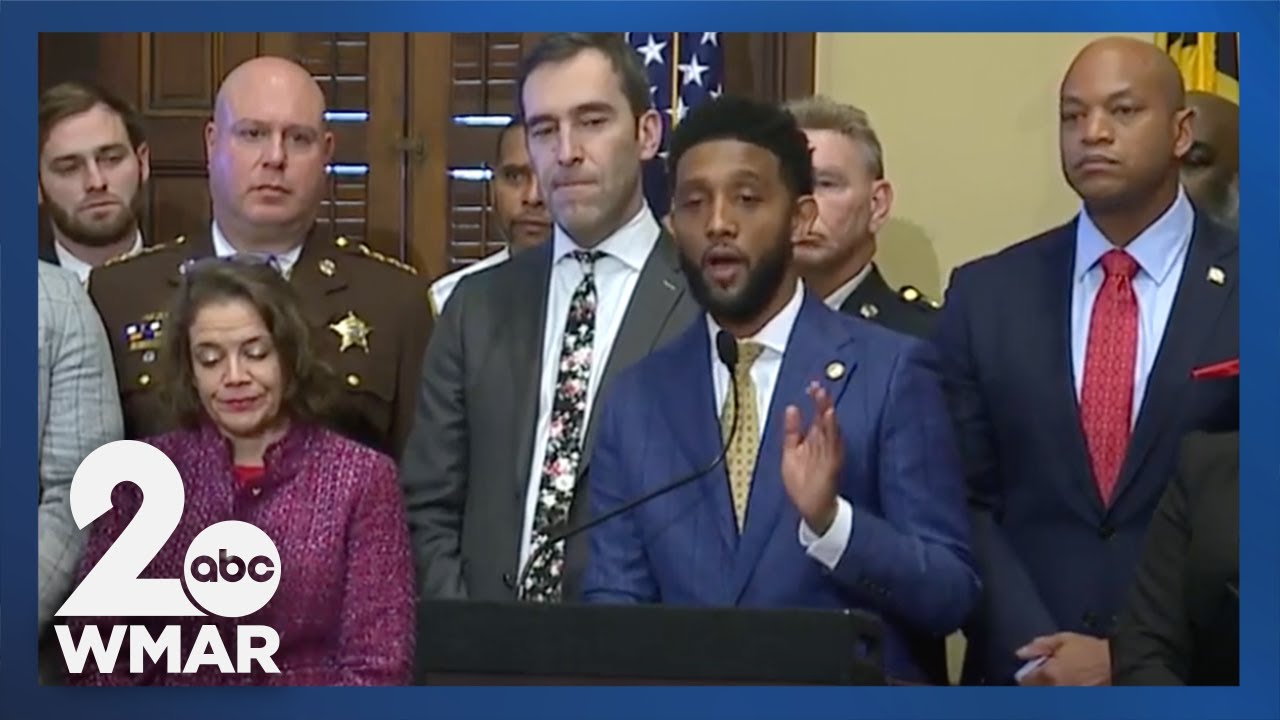
Mayor addresses decrease in violent crime in 2024
WMAR2news
237 views•2025-01-07
Strengthening Human Rights Through Youth Engagement
NationalEndowmentforDemocracy
306 views•2019-12-10

Jeremy Corbyn speaking at event organised by the independent group of Bradford
Overseastimesnews
286 views•2026-04-22

LIVE: Trump to Non-Citizens, "Register in 30 Days or Get Deported" | Firstpost America | N18G
Firstpost
3K views•2025-04-14

Day 809 - Saudi prince tells ToI Israel needs to start being 'normal'
TimesofIsrael
4K views•2025-12-23
Trending

Playstation NO DISC/NO BUY Fight Is Over...
DavidJaffeGames
4K views•2026-07-23

Steam and Xbox Just Dropped The Hammer On PlayStation
OhNoItsAlexx
9K views•2026-07-23

Americans Confused in Australia for 17 Minutes Straight
IWrocker
17K views•2026-07-23

SuperBike Factory Has Gone... What's Next for the Motorcycle Industry?
thatbikersimon
11K views•2026-07-22