SURE offers a pragmatic compromise between computational efficiency and robustness by discretizing contact uncertainty into manageable trajectory branches. It effectively transforms the unpredictable timing of impact into a structured optimization problem, significantly improving reliability in delicate robotic interactions.
Install our extension to search inside any video instantly.
SURE: Safe Uncertainty-Aware Robot-Environment Interaction using Trajectory Optimization
Added:Consider a robot arm catching a falling egg where the contact timing is uncertain due to variations in the egg's release height or release it time. The goal is to minimize the impact and avoid breaking the egg. If contact occurs earlier or later than expected, it can result in a large impact or other catastrophic outcomes.
Nominal trajectory optimization assumes deterministic contact timing which is unrealistic due to perception and modeling errors. To address this, we propose a robust trajectory optimization approach termed shore that explicitly accounts for contact timing uncertainty by allowing multiple trajectories to branch from possible pre-impact states and rejoin a common final trajectory.
This method achieves both robustness and computational efficiency in a unified framework.
The optimized trajectories are then used as reference for controlling simulation.
We could either use a middle branch as a reference trajectory referred to as a robust nominal trajectory or trajectory scheduling which selects the appropriate trajectory online based on the observed contact timing.
We evaluate the proposed approach on a card pole system with war contacting simulation. When using nominal trajectory as reference, the cardpole often fails to stabilize if the war position deviates slightly from the assumed value. In contrast with shore, the system remains stable even when the wall location differs from the nominal assumption.
To evaluate robustness quantitatively, we compare the nominal approach and our approach under four different line conditions. In an uncertainty space spent by war positions and restitution coefficients, we sample 200 points and assess whether the system can successfully reach stabilization.
The results demonstrate that shore consistently achieves higher success rates than nominal trajectory optimization.
The proposed framework is further evaluated on an egg catching task on two different time delay settings between the releaser and the catcher robots corresponding respectively to the optimal timing for the nominal and shore trajectory. We conducted 10 trials for each trajectory.
The results show that under both timing conditions, the short trajectory consistently outperforms the nominal trajectory by achieving a higher success rate. We now show the experimental trials.
the home.
Related Videos

Can Tesla FSD Handle World Cup Traffic?
RoccoRidesTesla
1K views•2026-06-20

The Man Who Built Robots for 60 Years | Mark Rosheim
marwaeldiwiny
318 views•2026-06-14
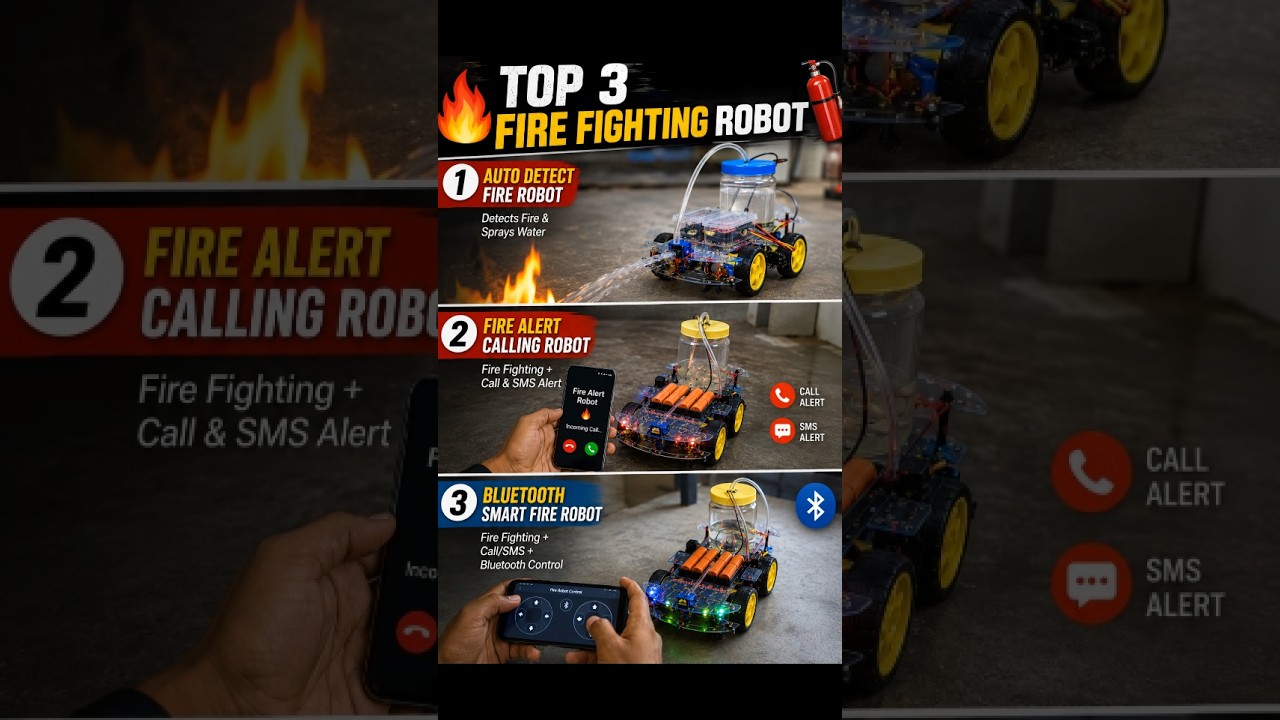
Top 3 Fire Fighting Robots
SamarthTech108
25K views•2026-06-14

Can This $125K Robot Be My Friend?
BusinessInsider
1K views•2026-06-14

Loaded & Unstoppable: BPX Robot Dog Treks Over Dirt Mounds with Full Payload | Off‑Road Carrier Demo
MirrorMetech-h5z
977 views•2026-06-14
Nosey Progress Report No. 38
benjamin_pochurek
28K views•2026-06-17

Cybertruck gets ACTUAL SMART SUMMON - The BEST Chariot
TeslaOwnersSV
106 views•2026-06-17
New Unitree G1 Robot Just Got 6 HUGE Upgrades… Think, Move, Fight, and Learn
TheAINexusOfficial
126 views•2026-06-16



