Effective Black liberation movements require strong local organizational capacity and community relationships, not just online activism or performative responses to national events; organizations must build tangible community connections and develop strategic capacity to respond to systemic oppression, as demonstrated by the contrast between historical movements like the Nation of Islam and current movements that lack grassroots infrastructure.
Install our extension to search inside any video instantly.
Dare 2 Struggle Dare 2 Win (E50)
Added:Black Liberation Media is a collective of black and African organizers, journalists, academics, and media personalities serving black and African masses seeking to further grow in their understanding of theirelves, their histories, and the African world through entertainment and news. Please continue to like, subscribe, and donate to the channel so we can further serve you and liberate our people. You can also go to bliberberationmedia.org, or get some merchandise and also become a Patreon member and a member from the YouTube. Please do what you can share and show your love as we will show ours for you Black Liberation Media.
Peace. Peace. Welcome back. Dare the struggle day to win episode 50. Gi ya and sister Sheree and brother Yousef.
How y'all feeling?
>> Both of y'all.
>> I'm feeling good.
talking to dead air. It's all good.
>> Under capitalism, right? As Renee be saying.
>> You said what though? I missed it.
>> Capitalism.
>> I was just saying as good as I can be under capitalism as Renee always says.
So, yeah.
>> And and and Yousef, you said what? A fit for a nerd.
>> I'm fair for a nerd.
>> Fair for a nerd. Yes. Yes.
You know, I want to examine all them state all them sayings like peace to those willing to fight for it, fair for a nerd is good as to be expected. Uh, you know, niggas be like, "Same shit another day." You know what I mean? I wonder, you know, cuz one of the uh we wrote, me and Ricky wrote this uh article about uh what is it? Ignor >> and all those and and some of those things. And I'm always curious where those things come from. Even even we going to get into one of the stories today where uh one of the better lawyers or more I don't know. Fuck it. One of the lawyers who would what what we would use or we would say he had a good point.
He said is it self-defense versus a good cracker is a dead cracker.
Now again, I don't remember where I I I I I know that there are some older sayings around Nazis and Zionists and all this other stuff and that term is normally used in a particular way like like a good bakra is a dead buckra, right?
We'll say is there's no such thing as a good colonizer. That's what a that's what people say. So anyway, all those phrases, I know we not getting to the topic yet and we're still checking in.
all those phrases I wanted to examine.
Um, and I'm I'm think a new one, right?
I'm g tell y'all why. Uh, actually I'm still thinking of it. I don't think it's really clear, but I feel like all of us are responding to the same struggle, but we are normally um secluded in our silos in a way where we're like disconnected from, you know what I mean?
And then when we react to stuff, we only socially engage with every every day.
You know what I mean? Like you could jump in and say some shit about Carmelo, but you don't have to go home where Camelo is not at the house anymore because he was he he's he's in the you know what I'm saying? Like you don't have to deal with things to a certain uh uh extent. So yeah, I don't mean I don't mean to make our check-in so heavy, but uh I I said that because I was um I was leaving my my I was riding my bike from my cousin house and I saw somebody's stuff on the on the ground like that the bed and all that other stuff. And that in anybody in the hood, we know somebody got kicked out, right, from an apartment complex. And then while I was riding the bike, another dude was talking about something about the living situation, apartment complex. He was walking and then I rode past him and then it was another dude talking to like another guy who looks like he looked like he owns the rental property but renting it to somebody else and he's kind of having this tough conversation on why he has to leave and I'm like well damn it's like I just seen three different examples of all of them dealing with a renter, a landlord and um but and then they live in the same building and they don't even know each other. So that's a whole another conversation. But anyway, that that's how I'm like coming in. What have y'all been doing? What have y'all been up to? I know both of y'all have been busy with work and and travel and all this other stuff. So, like, yeah. What what y'all been rocking with and seeing?
>> Um, yeah. I mean, I just been trying to survive. It's funny because I sent somebody um I sent somebody that article a few weeks back, the one you were just referring to that you and Ricky wrote because we we were talking and they were saying the whole ignorance is bliss thing and I was like I got to send you an article about that, you know, and so then yeah, I sent them that same article you're talking about. Um but yeah, I mean honestly just trying to survive.
I'm like, I got put on a PIP at my job.
So, that means they faired me, but haven't fired me yet. Um, but that's just the business sales. I think I finally realized that maybe sales just ain't for me. I mean, I guess I hit a lick with the company I was at for a while, but all these other companies is just not it's not giving. So, I mean, I guess I have the rest of the month um because they're trying to see how many meetings I book um within the month. But I mean, I know I'm not gonna really book any meet unless somebody literally pass me a meeting because like it's a hard sale. Like none of these companies have money and um you know that there's no real like the structure isn't good at the company I'm at. I mean, I thought maybe they were a little better when I first started, but it's really no structure. And there's like several people who just aren't booking meetings.
So, you know, um and there's like a person that started a week after me and literally he has a lower quota than me because he started a week after me and it's like, "Oh, he's doing so great."
But I'm like, he's booking meetings the same rate that I was. But anyway, so yeah, I just been interviewing for jobs and well, I had one and now I found out that I couldn't um I didn't get move to the next round. So now I'm like, dang, I got to hurry up and find me something.
But um yeah, other than that, just trying to build working building some stuff for the soul. We gonna be getting into some cultural work next month.
Going to be doing some stuff with Jihad.
Um really excited about that. Um, also maybe sta stepping into standup as well.
Um, again next month I'm in the middle of like a standup opportunity. Um, so we'll see. I still got to get the final verdict on that. But look the everything looks good. Um, but it's going to be stand up for reproductive rights. But yeah, that's pretty much, you know, just trying to be a better auntie and human and, you know, it's pretty much all that's going on me.
Yeah, thank you for sharing. Yousef, how about you? How you been? What you what you been up to?
>> I mean, I'm good as I can be up under the circumstances, keep my head above water. Uh, finally start working on my new book. I started put it down, knocking these chapters out, just reading, man, and processing a lot.
It's a lot a lot going a lot going on, man, in the these YouTube streets, in these reactionary streets and shit.
You know, that's that's interesting. Um, Sheree, I uh you know, in in the so I don't know how long it's been when I left Baltimore, like I've always actually when I lived in Kentucky as a regional sales manager of Sprint, I've always was like intentionally one car load away from moving to another place every time. like I don't want to accumulate stuff. Um but you know when you think about archival work like there's times when there uh when there's things that get kept, right? So, in this this this current move, like I saw some old email files from like me as a district manager and one of my employees was like, you know, he took me out to do uh B2B sales and and when uh we walked to this construction site, they said, "No, no, we don't want nothing. We don't want nothing." But uh he turned around and said like, "Oh, no.
We was just sharing something with you."
And then by the end of that meeting, there was like 20 we sold 20 phones to them. So, like I was reading some of those things and that and some of the work I was doing with um Outwardbound in um and Outwardbound and No Boundaries Coalition in Baltimore. And I think again it's it's it's always interesting when you say like sales is not your thing, especially in this, you know, when you say as good as to be expected in capitalism, like what are you selling and to who, right? And that should probably change the way in which you might feel about it. But ultimately we all trying to buy our time to do the things that are important to us. Even the thing with Yousef, like I think about my book, my children's book, the second one, me and Faith, she she uh illustrated it and I wrote it and that was almost damn near two years ago. And we haven't published yet because I'm struggling with not getting captured by Amazon again because the last time I published, self-publish, Amazon got my shit. and ain't nothing I can do other than like send niggas to Amazon to buy it and it ain't going to give me no money. So like but Yousef that could the work that we had we have to do can stress you out about finishing a book or or even the resources you have to finish a book and time and so I I I uh sympathize sympathize with both of y'all in y'all uh uh y'all uh reflections.
>> No, I appreciate that actually. Um I mean I went through self-publishing a couple my first first couple books was looking explore um getting published sent out you know the inquiry letters and the the response wasn't what I thought it was and so that like kind of deflate deflated me and I put it I put it down then just finally finally got the know the energy to pick to pick it back up you know I reworked it and things but not going I still try to explore the publishing, right? But I think go I know what self-publishing looks like. So have multiple options.
>> Yeah. Yeah.
>> Sheree, you was about to say something in response.
>> Oh, yeah. I guess Yeah. I think that's the thing too is that I guess, you know, in life, I mean, I I don't necessarily look at as sales, but I know even as an organizer, even as a cultural worker, I'm constantly trying to, you know, paint a certain picture and get people to, you know, open up their minds to like what I'm talking about, what I'm saying. But you know, and so I guess that could be like similar to like the thing of sales. But I guess, you know, I guess the industries that I'm in, it's just a matter of what you were saying of like what I'm selling and who I'm selling to because I'm like selling a HR service to HR people that's already stressed at their job or whatever and then there's already like several products that are better than the one that I'm selling and we probably cost more. Um, so I think that's the, you know, the thing. It's kind of like, yeah, it's just a matter. And that's why, you know, as far as a job, I'm just kind of looking into like um uh even customer management as far as like being able to talk to people after they got it because I'm just like this whole calling people, cold calling, and getting cussed out every day. It just gets old at some point. Um you know, people really just going off at you. Um Oh, thank you for the for the hair comment, you know.
Yeah, I missed my afro look, so I'm like I I had to switch it up a little bit.
But yeah.
>> Yeah. So, this this episode um I've been I've been rereading um uh the autobiography of Malcolm X and going into, you know, sometimes when I reread stuff, I look at my notes and I like follow because there's always things I want to follow up on my notes and I can't obviously always follow up on it because I never finished the book. but been going in and just kind of, you know, having stories and seeing the reactions of Carmelo Anthony and also um the what's the brother name who got killed by the Asian uh >> um >> No, the Chow is the name of the murder.
I'm blanking on the name of the actual person that got murdered.
>> I'm blanking out. I'm sorry.
>> Somebody in the chat can share. But um but looking at the social media responses and then inperson responses because I think that's one of the things that we tend to I don't know I I guess maybe because I'm on online spaces and certain things from certain level but then I'm in a particular community trying to do a particular thing or around particular people sometimes we mix up the online stuff with the with the actual on the ground like how people are talking about certain things and seeing people talk about it. Um, it just started making me think about some of the things we talked about for the last couple episode, including the Malcolm conversation. But even uh, so I prefix this. So, we're going to talk about some of the introduction to chapter one and and our reflections on that, but also like the reflections and responses to the Carmelo situation. U,, we're not leaving out any other Cyrus, I think somebody said, or any other things. just responding specifically to those things um today. Um and so I I kind of wanted to pretext that. But before we get into it, I would like to hear maybe even reflections that y'all have from what you read so far or what you reread with Malcolm, but also what you have seen and felt in response to um the the case. Uh Sheree, I know me and you were having a conversation around like, you know, communications, uh I don't even know what it's called, objectives, right? Like what pitch use and all those other things. So yeah, I'm curious about y'all initial responses and feelings towards the Camelo Anthony situation and then also like what you have >> been circling back to as you've been reading through um Malcolm X.
Um, yeah. I mean, the Carmelo Anthony situation, it's like I I remember when I first heard about it and I automatically knew I I've kind of felt like with this system, I'm like, this is not going to probably go the way we would like it to go. But I did know another thing that I feel like about it all was I feel like I could never just get to like the because the internet is so much it's so much opinions and so massive. It was hard for me to ever like get to like the actual stuff that people were saying about the case. And maybe you know that's you know me kind of like looking for something at a certain time and getting distracted and looking at the next thing. But I just remember like trying to get more as far as like I would hear something like oh they were jumping him. Then I would hear something like, "Oh, they told him to leave." Then I would hear something like, "Oh, the witnesses were saying that, oh, he they just told him to leave and but he really got jumped." And then I heard that there was a video. Then I go looking for the video and then I never find. So I just, you know, from the beginning, I just felt like very just frustrated. I'm just like, you know, just overall like h trying to get like the actual information and then just all the the way that certain things were just taken as like fact like you know like how they were saying that like the people around were saying oh that the jumping didn't actually happen but I'm just like was it the kids that was also friends with the person that got you know that that died or whatever?
like how do we know that like you know to trust their narrative of like what happened and especially because I know the other person was the brother. So I'm just kind of like but the way so many news reports and news reporters you know and obviously I know the media is extremely biased but the way that was just automatically said of like oh it was said that like you know he just told him to leave and it was just never like okay and then you know like I said then I heard about this video and then I heard a video was shown to the court then I heard one side it did it was blurry the other side is like oh you can see. So all of that just really frustrated me. But like I said, I just felt like at the end of the day to me, I just felt like it, you know, the the the boy, he did not, you know, obviously wake up wanting to do what he did. It felt like, you know, whatever was around him, he felt scared. We hear the we hear all the time the police feel scared and that they do what they do. Um, you know, so I just and then I think even as the woman, it brought me back to the femicide episode because it's like once again you see how just not only black women, black men anytime we're we're demonized for like defending ourselves.
Uh, you know, and so that's what that made me think about is like you literally have stories of of black boys randomly getting hung and not getting and you know the stories never getting served. this this child was supposed to just think like oh this white kid is only picking at me and I you know like so it's just you just can never say like you know oh like to assume that like oh he shouldn't be or I didn't have a reason to be scared you know because oh the other boy might not have had a weapon or this that and the third but it's just yeah I just think it you know that part of it definitely just you know frustrating and then um yeah it was just interesting seeing what I mean I've been actually trying to do my job and look for jobs. So, I haven't been as online as I usually am. Um, but seeing uh I know my cousin who has two black sons, she specifically was like, "I have two black sons, two dark-kinned black sons, and you know, and I just like this is a horror story to me, you know. Um, and even just the other day being with my nephew and just, you know, my nephew's just getting bigger and bigger and it's like it's like it's hard to just like not even think of like how will my nephew be perceived as this big black man, you know, like and so, you know, now that he's taller than everybody and he's only 11 and he's, you know, towers over everybody, it's just that constant fear of like, you know, like the sweetest kid I know, how can how would they be perceived or somebody bothers them or you know I don't know so just I you know so that's you know one of the things why the you know seeing him cry or whatever resonated with me um but yeah um I'm trying to think and then I guess we can get into well I'll get let's I'll let Yousef go or whatever we get back into like the stuff about M or did you want me to speak on the stuff about the chapter one Malcolm X or I feel like I've been talking so long >> well I mean we can we can we can circle back and get into it but I I I just want you initial response Yousef, you could do either one. You could you can respond to Malcolm. Um, again, this is him telling him telling about his story, but also just like remember Alex Haley was they were trying to connect with him um while he was being um going through being suspended or expelled from the organization. Um and so it kind of talks about organization and the utility of organization.
Uh, and then also people are responding to this kind of like, well, why we ain't doing nothing? When we gonna do something? Um, so yeah, I'm curious if you have any initial response to the Carmelo case and then maybe even reflections of what you've been um rereading in Malcolm.
Uh I mean my my reflection on on Carmelo is it's a reflection of how how our struggle our activity around struggle has has diminished um to where we're really not active. We really have no no mass base where a lot of lot a lot of talking heads. Um I mean you you think about like people criticize the NAACP and and rightfully so. However, there was a period Camala a Camala Anthony case was be something at the at the least low end that they would they would galvanize behind that they would pick up like there was there's they just show you um Sheree when she referenced know capitalism like how it has invaded us how we've become more complacent. We we we're not not only we're allowing black men, black boys, black women, and black girls to um defend themselves against such a a beast in in today's time and and it's so demoralizing. Uh you know, I think those of us who talk about black liberation, black revolution really should not even mention those words anymore. And us, you know, we're really about action. When I say action, being a u orientated to really building something that's inclusive to people that being able to respond to those type of things, you, you know, we hear a lot of folks who criticize the past, but like I say, at least they they they had some level of momentum to be able to galvanize. I mean, all we have today is just moan, argue, and go back to our jobs and shit.
And that's that's that's that's terrible, right? Uh I mean I I even know this morning I was trying to ride and and I listen to different stuff on YouTube like different shit and what's what's old boy uh Roland Martin it popped up and I'm like do I want to look cuz he described as a illegal lynching like do I really want to listen to him and his his commentary you know like fuck I do it and one guy he first opened up who was on this panel was saying but first let's not only just apologize or I feel bad for Colin Anthony but I feel bad for the family of the of the person that killed, which I I I sympathize that, but that's not that's not the the topic right now. Like, and this is a black guy. And then he further says, um, you know, you have one one know one split decision can change your life. And again, I get it, but like how does that fit in when you when you examine the racial makeup of the of the dynamics?
Um, you know, some of us have been in that situation where it it it it erodess any ability to have to be rational and when when you're in survival mode or when you when you have the the feeling of of being, you know, threatened or your pos like the and it's not even something that you experience per se, but just it's it's it's just in our DNA and like you just respond in certain way. And so like that was like for real, this is what this is what we say. And then you know when you know we all live in a social media time and like there's there's these trends like this wasn't a trend a talking trend like it was so far in between like does is is this really matter to to us and shit. So so again it exposes you know especially know everybody mama got a podcast everybody mama you know running to talk about shit and like where is the galvanizer around around this know. So I not shit though to Malcolm. Um actually I I I listened to um an interview with the damn the the sister the daughter of the the brother who wrote the book the dead the dead is rising. Have you read that yet?
>> No.
>> Um I got it. I haven't read it yet.
Actually I'm I'm really excited to read it now. And so the so his daughter uh I don't know if she co-wrote it but she definitely was uh part of the process where she did research on it for for her father and the way and the it was it was uniquely different than the approach that many other people have written books about Malcolm um her father was from from Connecticut so she said her father was first time her hearing Malcolm speak was in 1963. He wasn't a Muslim anything but and it just so she know her father had met with both his older brothers uh met actually had u met with his his sister so and it just it it wasn't starting off to write a book but the more he talked or interviewed people um actually interviewed Joseph Joseph Ali I mean really done some some digging and so I was I was very intrigued by by that in terms of um you know think thinking about Malcolm and and the way that the way they wrote the book and the approach that that they took to to write writing this book. So, I mean, I would highly recommend folks pick picking that up.
>> I appreciate you. So, we we going to be weaving in and out of some Carmelo story and conversation reflections and then what we read in Malcolm books. So, we didn't practice this so it might be skippy um and then it might be hard to follow. So, if you are in the chat, I know y'all are very demanding sometimes and y'all need to want us to stop and attend to you, but the best thing to do is just rewatch it or watch the whole thing, let somebody finish a thought and then probably respond or again rewatch it. Um so that there was a there was a point where um Baba Dar Ruba um always talks about and other people say as well like around this conversation around innocent and guilty, right? Um and I saw somebody in the chat also said something about he was innocent or something like that. I can't remember where it was at.
I'm sorry y'all. I was about to go back to it. Um, but I think so one of the lawyers even said like, "Yo, there's no way to say you're innocent in a self-defense case." Like, you did it. Like, you you did it. Now, why you did it is a whole another conversation.
So, the white boy was a linebacker. If anybody plays sports, linebackers are normally the bigger, stronger people.
His twin brother is there, too. Camelos, as far as I know it, I think he does track and football or whatever, but I know he does track and he's not as big as this guy. Um, and they're on bleachers.
Anybody who done bleacher runs know that you can be fucked up if you fall on the bleachers. If you fall intentionally on the bleachers, you can be really fucked up. If you fall unintentionally fighting, you can be really, really fucked up. Right. And so rain bleachers, two bigger white boys, and a full of white people. The pretext is already there. But but the news media is doing something very interesting when they're saying this case has become racial.
That means you don't get to argue that the motherfucker was racial at the beginning. Like two white boys approaching a little black boy, is that not racial? What the fuck are we talking about? Right. And to to Shereice's point, there's a part when uh the video does show it's really quick him hitting uh Camello and Camella responding, but prior to that, you can't see the audio, but you can you can hear the interviews as Sheree was saying, you listen to the interviews. Some people said, "Oh, they heard uh the white boy said, "You ain't got nothing in that bag. You in this city."
You know what I mean? Whatever the fuck that meant. But it means that he probably said, "Leave me the fuck alone before something happened to you."
Right. So, uh, so again, I think I think it's interesting how people are kind of like toggling around the innocence part, right? Again, it's a MVP linebacker. So, not only is he a linebacker, but the the white boy made some tackles and he's strong. I guess that's why he's an MVP linebacker. And um he's he's confront this guy under a tent where it's raining. He's the only black person in the bleachers. Remember bleaches. So we talk about violence, right? And when violence is justified and when is it not justified, right? Two black wrote a perfect art uh article or piece around nonviolence is still violence. That means you like you're just getting your ass kicked and you violence already happened. So you're responding to it is not more violence.
It's just the same continuum.
>> But when justice when when um violence is justified to break a law because at this point we're trying to argue around a law right in organizations we have standards and policies and laws and some of them we don't have any of them. But in a society, I'm curious what y'all think around this innocence argument and when is it justified to break a law and what the fuck are laws, right? Um cuz this this this justification comes after the framing, right? When people frame things like it wasn't nothing to do with race and now it's getting racial, they already frame it to where he's no longer justified to respond to defend himself because it had nothing to do with race.
He just happened to be at the wrong whatever whatever it is. So, I'm curious. What are y'all feeling around this innocent guilty type stuff? Daruba said that Assada wasn't innocent. She she she she learned how to shoot or whatever they whoever they say. When people learn how to shoot and they defend themselves, the question is they're innocent or guilty of what per se, you know what I mean? So, I'm curious what y'all thought. Well, to take what you're saying um around what the rub is is putting forth is our lives are political. So within that within that framework um there is no such thing as innocent and guilty like we're as oppressed people not mean as we accept our oppression but while our oppression is being opposed on us and part of that opposing the oppression on us the the devaluing the dehumanization of us of taking us from being humans to to being considered as animals. So if you're an animal, how can if if you're being looked or perceived as an animal, there is no innocent or guilt. Like you're you're you're less than who you are. That's why um in their in their constitution, it wrote that we three-fifth of a human being. You know, that's why that the one the one judge said that we had no rights, that white man was bound to respect like the these are continually things that resurface.
And this what Daruba is saying as a result of that and as a result of getting on the path to becoming free women, free men, free children, a free nation, you have every every means in your right to defend yourself. You have every means in your right to organize and and and struggle. Uh unfortunately, we don't have that political context, that political energy to push that forward. Um also like I just uh listened relisted to a talking about Matula Shakur, you know, and many others who who are who's engaged in high level of struggle and when they got captured and and of course they're lawyers walking in and saying like these are political prisoners. These are prisoners of war and these are terminologies that that that we are we talk about all the time and we get lost around those terminology because we're not going beneath it. So when they're saying that they're political prisoners and prisoners of war, what they're saying is we do not recognize American government as that has the authority to govern this situation. We had a right to declare war on a place that that declared war on us.
You have no legitimacy over us. This is what that what that means by saying I'm a political prisoner. I'm a prisoner of war. And we and this is the type of movement that we have to continue to build rebuild to be able to cultivate with within us because unfortunately we you know whether we on the couch where we at the salon or the barber show we we and this is where it get kind of taps into the afropesism like the antilack world and we anticipate it and we kind of accept it and we shouldn't accept it but what not accepting what does that look like and I think this is what the rub is is alluding to. Yeah, Sheree, before you go, um I'm gonna set something up for you, but then Yousef, in the future, we need to talk about I'm just saying this publicly because I want other people to join the conversation at some point.
the strains of thought that people when they whenever they are captured right whether they are prisoner of war they are political prisoners whatever when they are captured and before their politicization they normally are politicized into certain ideological strains and they come out so I say that to say my like one of my comrades or my cousins like he he won't be sovereign citizens because his homeboy in jail got this thing and I'm like So, but I said that because he would take that line that uh you don't recognize the government, the US government, and then run off with his other things. But it is some organized, intentional ways of responding to his government and a people who controlling the government that you don't respect or recognize. But we don't want to fall into some of the other things. But really quickly, so uh this is CNN obviously. uh Texas teen sentenced to 35 years for fatally stabbing stabbing a athlete at a high school game. Again, even that framing, I know we all not English majors, but even with that framing, it kind of tells you where they're going to be. All right. A Texas Teener who fatally stabbed a 17-year-old.
Wow. They didn't they didn't have Camella's age there, but they got the a 17 year old old track athlete from a rival team, right? So you see how rival team, it has nothing to do with the conflict. It's just like, oh, this a rival team and blah blah blah. Sentence 35 years. A jury rejected Carmelo Anony's claim of self-defense.
So Sheree, this might even be interesting for you in terms of like when we talk about because you you you know both of us had the same experience in round of me trying to defend myself in an organization, but it depending on the jur whoever the jury is, they can even throw it out the window like no, it has nothing to do with race and no self-defense. Like they're they're more focused on what happens after the fact, right? and they're not really focused on the cause or whatever. They're just more focusing on um the escalation part of it, right? And so I'm curious what you think around the self-defense, the escalation process and then how people are even responding to uh this news. Yeah, I mean it's like I it's just the the overall buildup of like how does what has to take place for things to get to a certain way and so much of that just isn't like I said at the focal point of the story. It's just a another teen got shot and they how you say they didn't even say his age just like 17year-old guy got shot. It's just you know completely removing um >> I mean sorry my bad. thinking about because I'm over here thinking about the other guy that got away with shooting um Cyrus. So, my bad. Stab. So, completely like removing the um the motive. But um but another thing that I was going to say is that even um they were talking about the language like this whole thing is so racial because even the way we speak is different. So they were over here trying to say like, "Oh, he was provoking um the white boy by saying,"Oh, if you touch me, like see what happens or whatever." And like we're like, "Everybody that's black understands if if a black person tell you touch me, see, they're telling you don't touch them." But the way that the people in the court and the reporters, they're like, "Oh, that's him provoking him." He was daring them to touch him.
And it's just like, no, he's saying, "If you touch me, I'm going to have to defend myself." And so even that, like I said, is like extremely racialized. Like the way we even freaking communicate is, like I said, demonized or like taken, oh well now that's that's him saying, you know, he needs to come toward him or telling him to come towards him. And then the one of the crazier things that I read was like, oh, um, like he should have just left. And that's the whole thing too of like what like the whole thing is clearly other kids were at the the stadium as well um in order for there to be those people that I guess witnessed everything and the two brothers to be there. So what was the like nobody's asking the thing that never went into question is why did the white boys ask him to leave in the first place? Like why was he told to leave?
like what like like like they never said that he was doing anything disruptive or anything. They're just like he was there. Why couldn't he be there like you know there was never even a thing of like oh the faculty said it's this school only or any of that. It's just like the fact that he was asked to leave right there. Like none of this conversation if it would have just been okay, they're over there, we're over there, you with my friends, you know, I'm with mine, whatever. But just the fact that like nobody even said um you know, oh, they said he's talking trash or whatever. But it's like, you know, but like I said, to me, I just the whole thing even with that is like I said, nobody, you know, there was nobody else there but the kids that are, you know, rooting for the I guess the other football player that, you know, that they are, you know, that they lost or whatever. So, even that I think is just really interesting because it's just this kind of like, you know, that that to me sounds very odd. So, he's just standing in the bleachers saying, "Y'all suck." Like it just like I said the whole story like I said just doesn't seem like organic or was it him chilling sitting there whatever and then you coming up and then you being like oh y'all lost or whatever. Those are two different things. Once again he has to be approached first for you to even be able to hear him talking smack if they're at this you know but yeah trying to force him to lead. Exactly. Um, so the whole thing, like I said, is is like nobody's taking into consideration.
That's exactly I feel like when we talk about your your situation, Gei, about like nobody's ever looking at the events that lead to a certain thing. And when um and when like even when those things are brought up, it's like it just becomes this whole like it should not have ever ended and in this or it should you know it's always like people look at the final result of something whether it's you know somebody dying, somebody getting um you know somebody being documented all these things oh it should have never come to that but it's never um it's never looked at like the steps that that that got a person there but I just feel like there's so much like I feel like that is racially char and then when you think about um cuz you know I did read and I never read the full autobiography of Malcolm X but I did read the um the chapter one I didn't read the introduction but I read the chapter one and I just thought you know like wow just once again like you know that same cycle of like you know how I never really even thought about like how you know his dad was murdered and like you know and like and then they try to cover it up. And then there's like one story and the the people, the white people, they get to control the narrative of the story. And even though the mom knew something was wrong and that this was going to happen and that you know and like like I said, they get control of the narrative of the story like once and so it just is Yeah. So just like when you say the same thing, it really is like a similar thing about that and just Yeah. of just like the same thing happening again. But yeah, so >> so Yousef, I want to and I'm not picking on James at all, but I I every time I see this, I'm I I I cringe at it, right?
So, and I'm saying I remember one time in Baltimore, I was talking to some brothers and I was like, "Yo, uh tell me who you would who you would die for protected." And they'd be like, "My son." All of them say that. Or my daughter real fast. I'm like, "Good."
Well, once you die, like if you jump in front of a bullet, who going to be there to protect your son or your daughter?
And they was like, "Uh uh." I was like, what what if we spend that much energy organizing and building a relationship with each other so that we all would do that for each other's son and children, right? And so I'm saying that because I I see this comment and again, not you James, but in general that young man could have been my son, right? We see that we see that like I had I had uh family members and and people I grew up with who experienced the same thing. I remember how they responded to Trayvon and then months later their son get killed in Atlanta, right? And then now I'm there in the media Ren frenzy and all this other stuff. And so initially I I I think I'm curious about your thoughts, Yousef, cuz cuz even in the autobiography, as Sheree was saying, like his dad, right before his dad got killed, him and his her dad and his mom had another argument and there was all type of shit going on and he left and she ran after him and all this other stuff. But Malcolm said at one point like of all the stuff that happened with him and his mom, he was happy that he didn't physically hit her. And again, I think people were responding cringe or whatever, but it obviously shows some type of tension and struggle, right? And so Yousef, I'm I'm just curious if you have any thoughts. Again, remember the frame is now the framing now like oh it became racial but if you remember all of the flood of social media amplify this.
There was even organizations that tried to get in front of this like if I like what I remember the communists and and the radical groups I remember one of the communist groups they got in in involved in the Scottsboro case because they wanted to promote their organization. So they are a radical supposedly radical organization who have infused themselves to do something for the the Camello family, but really they're doing to try to get some exposure. And so so there was a a ground swell of information and conflict or whatever that always was racial, but now they're saying it's racial now. Again, I'm just curious if you are thinking about our organizational capacity to respond to this situation uh in general like the US black left organization, nonprof our our capacity to actually even do something about this situation that is locally for somewhere else is national for us. And most of the times people they want to get involved in national stories when they don't have any lo they don't even build local base to where they can respond to something like that with their local base if something happened locally. But yeah, I'm curious how you think how you feel about the organizations and their ability to respond or not in this situation.
>> Well, that's a uh that's a loaded question. I think that's a a show by itself. Um I'll do my best to to to answer it or give some information towards it. I think the dichconomy that you're speaking to from a local to a national is it speaks for itself. Um I you I'll use u Malcolm's grassroots movement for for example. I'm not picking on them actually. I'm in the process of becoming a member. I think that they have the ability to to do it.
Um I think the problem is in the last 10 years we don't we have no political reference what that looks like. So the unknown the unknown is scary. more scary than to know like what what does it look like to to mobilize to put boots on the ground? Uh what does it look like to build from city to city? Again, like I think that was one of the the mishaps of community movement builders as being a member know developing a national framework that we all function in, but also how do we operate within our own cities because our like Chicago is different than Detroit. Detroit is different than New York, but then there's a a commonality through our struggle of up under this one one umbrella. I think the the seriousness of requiring us to to have be in conversation to building that type of muscle is is necessary. Uh I think know the lack of consistent political education, the lack of the the ability to come to Baltimore. Baltimore comes to Detroit knowing the familiarity with what that looks like. I think one thing we we've underestimated the inflation again shar always opens up capitalism capitalism and but we don't unpack what that means you know in 1960 you had a group of people living in in a three bed apartment you know 10 people living in there you know if we talk about that today like nigga you crazy I ain't about to live with you I stay in there with you negroes but there was a different level of commitment different and we joke about our counterparts our indigenous brothers, our brown brothers and sisters, like they do it all the time, right? But we don't also know again Sheree talks about culture work, right? And the emphasis on culture. They have a culture that allows them to function in in that way because they they keep keep make the main thing the main thing. So so so it's it's multi multi layer. Um you're right. There's a lot of there there are organizations who who want to attach themselves to things this nature and and it's a double-edged sword like I mean like the the Young Brothers just got recently killed. I can't remember where we're at. I think the I saw some say that the Black Panther Party like you know first I'm like which which Black Panther Party but I saw I saw a picture of them out there right I mean on one hand I mean you know you good to see them out there but then another political hand you like for what what purpose though right I think we got to get going get back to the drawing board and have a real honest conversation of what type of commitment that we're going to have and to be able to to build the type of muscle to build the type of organization that can build the type of movement that will sustain us on every level level from our social reality to our political reality. So I hope that answers your question, brother.
>> N thank you. No, so I think I think it kind of speaks to >> So first of all, let let me respond to uh some of the idiots in the comment. Uh whoever the fuck this is says, "Hold on.
This is hella disrespectful to Malcolm X. For you to dare to insinuate with the thumbnail that Malcolm X and Carmelo um Anthony are anything alike is fucking insulting. What's wrong? So again, somebody said something earlier about bots, right? And I'm not sure if these are bots and maybe they are bots or whatever, but this is why I I intentionally said that the the objective of this is to um share the same conditions that Malcolm grew up in are now uh the way in which black and brown bodies are destroyed and and organizations inability to respond to the motherfucking times. So, I don't know who the fuck you are on the internet, but we can drop links anytime and you're going to come on and have conversations.
I'm just going to say that one time, right? Um, but back to you, Sheree. So, there there's a uh there's a there's a big thing in there for me when you think about the burden of proof. Um, cuz you was like, I I don't know what happened with the kids and who said what and whatever, right? you're in an environment where uh the the burden of proof to document that it was racial or if it was self-defense or whatever, right? So, again, back to our situation, I remember one of the security people called me and was like, uh, I ain't here to resolve the conflict. I'm just here to know this one answer. Right? And so, the burden, the proof goes on the person with power. I mean, the person with don't have power in the situation. Mhm.
>> So, I I'm curious to I'm curious to see how you look at this situation when it looks to I don't want to ask you a little question. I I feel like I I am because there's a couple things and I and I know we don't rush of time. We about to end really quickly, but yeah, I'm curious anything that Yousef said, anything that came up when it looks to the framing.
like you're already kind of at a a a loss for even having to live in a society that demands a burden of proof from the person with the less power in the situation. Now, again, this area of Texas is hella fucking white, right? Um, in fact, they said they didn't want any black jurors on that because they might be sued and all this other stuff. So, yeah. Any any thought?
>> It's just like, are you fucking kidding me? Like that that part was crazy to me, too. like that. They they don't think that they think the black people can be swayed, but they don't think the other people that's not black could be swayed to come to a certain conclusion. Like it's just fucking complete. But yeah, I just think Yeah, it it just goes down to show like like I said the when it comes to truth, it's like once people and it's the same way the system is. It's like the system it it it it has a result and it's like there's a result that's happened. A person is dead and it just becomes well now who who who has to pay this white child is dead, you know, and so it just becomes because because it's not the same type of energy when it's black child at all. Um, but when a white child is dead now, somebody has to pay. And how do we what do we do to make sure that somebody has to pay for that as opposed to like actually looking um into the the decision of into the the series of events that led that led to it. So, I think um yeah, it's just like everything on every end, you know, he would like he was outnumbered, which should have showed you a situation of danger to begin with, but it's like not only is he outnumbered as far as safety, but now he's going to be outnumbered as far as narrative, too, where it's like now you have all these people that can say this thing happened and it happened this certain way. Um, and you're like the one person, you know, that would would have something different. But but yeah, so I just feel like all of that like and it's like this it's like a similar thing of like and like I said it goes back to that time that Malcolm X was talking about where I feel like he didn't just talk about his father like leading up to that he talked about other incidents where like you know like when like I mean we lived in a a we live in a society where I mean and it probably still is true but like the freaking KKK is the police and that's the person that has the narrative. So, it's just like like it just like all of it just becomes like a you know a constant kangaroo court basically. And that's still what we're dealing with where it's like if literally the freaking KKK are the ones that are the sheriffs and the police officers like at any point, you know, it can get flipped, you know, to to to to their narrative and what it wants to be.
Like it's like the like there's no it's like the system, the the courts, the jurors, like none of that matters if it's already like who has the dominant control over the narrative that's being pushed whether it's the media as well as you know in the courtroom. Um, and like I said, and who has the right to feel unsafe? Because like I said and it's interesting this happening the same time as the Chiao um Cyrus um situation h happening the same time as the child and su situation where it's like um where you have um sorry I'm just looking at the comments but like where you have the um where you have the uh the the the person that owned the store or whatever the kid was apparently running away and it was a threat and he felt threatened. from like people running away, you know, but but his but he gets, you know, he doesn't get any time because and the person was running away but but Cyrus gets I mean I'm sorry but um Carmelo gets all this time when a person was literally coming towards him. So it's just like it just shows the irony and like extreme flaw like um you know within like the whole logic behind it. But I mean the system was made that way so it's no flaw in the system because it was created that way.
you know, the flaw in the overall logic.
And as far as when we talk about um you know, yeah, I'm I am still sitting with that as far as like, well, what what does an organization in 2026 do about like something like what what is the responsibility of these orgs based on where we're at, >> you know, like what what are we able to do? And you know, you see all these reactionary things like even a lot of these orgs are like now boycott Asian um businesses because you know, the one that got off was Asian um that killed uh the brother Cyrus. But it's just like what the heck does that do, you know?
And Jared has done a good job breaking down that that really has no no impact.
Um >> why why doesn't that have no impact?
um just like the overall impact of like when it comes to these like boy I guess it can make a person feel good but as far as like the actual impact on the actual system um I think it doesn't yeah to me I don't see like boycotting I mean it the system that got these people off is still the white hegemonic system I mean these Asians are aligning with the the white um you know I guess white assimilation you can say very much. But um but overall like the system that has unjustly charged um um unjustly charged uh sorry I don't want to get the names confused. Unjustly charged Carmelo and like got off the the Asian dude cow. like it's so much bigger than like I feel like just Asian businesses. Um but then overall it's just a matter of our our actual money too. How much does it does it actually impact and what is it? I guess the it's just the overall result. It's like what result are we looking to see? I guess there is a way where like if you have this one corner Asian restaurant or um or a laundromat that everybody in the community can decide to like not go to and for that community if they especially if they see something racist is happening like that can that can happen but I'm thinking like on a a large scale like how does it actually impact the system when it's like the Asian community doesn't control the laws in the US. So, I'm just, you know, so that I think that's more so what it gets down to. But I I mean, but yeah. So, >> I just one one more follow-up question.
>> Asian is big, too. Asian is huge. Asian is so many different people. So, it's like it's hard to boycott Asian people.
>> Yeah.
>> Right. But, so just the nature of boycotting and I mean, we take the position that you're explaining. So the 1954 boycott didn't it didn't have uh any impact results.
>> I mean that did because it was targeted and you were trying to get a specific thing. Um, but I think this does it's more to me it just seems more reactionary because it's like I think the result is is like that with that with the what happened in the 60s is now okay everybody can sit where they want to sit um comfortably on the bus get and not be punished for if they sit in the front of the bus and like that I think that's a tangible thing because people are getting their ass kicked just for like you know no seats being in the back and wanting to sit in the front like that's a tangible thing like nobody wants to get their ass kicked going to work um because you know they sat in the front or even have to think about that shit when they already have to go to work. So there's like an actual tangible win that people get to feel. But I guess it's a wondering of like what is the tangible win of like okay I'm just going to boycott everything Asian possible like like yeah like what is the actual like I guess like kind of systemic thing because that was a systemic thing that you've dealt with every day of humiliation of not being able to sit where you want even want to sit on the bus. And so I think yeah that it brought people together. It it had people you were able to see like my actions make a make a difference. But it's like if that business shuts down and then a black business comes in and then these and then they're freaking black capitalists that own the the washing machine place or they have a soul food corner store and they're still not doing shit for the community and now it's a black one now.
It's like you get what I'm saying? I think I think and that that's something that Jared brought up. It's like any business.
>> Yeah, but you but you you you're kind of contradicting yourself cuz if we don't don't do anything cuz get to the if the black business like that's something else but we have to do something.
>> I do agree that I I do agree that it's some of the sentiments are reactionary but also in reactionary it gives opportunities for some to grow to learn.
We have to we we have to respond to be able to learn what what what what needs to be done. I I think the larger issue is the analysis and the direction and it again it brings back to why we have such failed organizations because we have fucked up motherfuckers in in and so-called leadership and who really are exploiting the issues and don't have a real strategic um goal behind what they're trying to do. Yeah, I I think both both I think both of y'all and Jerry are all making a a really good point and I think it goes back to the initial point what I was saying was like this is the problem with one lack of ability to organize and two the national local contradiction right so locally there's people who organize and build relationships and respond to shit that happened nationally if the story gets big or if people organize well enough for it to make a national dudes. Now other organization who don't know any fucking body from those communities can now either run up there and try to get involved to put their name on a ticket or they can start making comments. So uh solidarity is a little different than organization.
And a lot of times these boycots are not organized by anybody other than some reactionary people who just jumped up and say a thing. And there's no scientific uh uh approach to it. So then you'll get organized labor, right? Uh strikes interacting with boycots and then and it just be all over the fucking place because it's not really organized.
And so we just doing something just to do things. And so I think that's kind of where some of the struggles happen. Like boycots can work if they are connected to a larger struggle intentionally uh organized to do a particular thing and have different fall plans and different escalation plans and it should be in cahoots with labor, right? Because again if you you know the first to high first of fire thing is true, right? So like yeah like you you could do something to to impact other black people or young people or what. So, I feel like the conversation is is multiple things and two things can be right and true. But one of the things I want you to respond to, and again, I'm not trying to I'm not uh shitting on my sister. This is one of my sisters in um uh Charlotte and from Vegas and they they had experience with organizational uh uh conflict throughout times. But online, and there's multiple people, this is one of the many posts I've seen. And I've seen posts from people in Charleston, in Baltimore, uh everywhere.
And the things all loudmouth revolutionaries.
Who's going to uh go get your youth and elders? I'm sorry. Who's going to go get your youth and elders free? Free them.
I'm sorry, I'm reading that all wrong.
>> Yeah. So I wrote, I think we misunderstand who the online left is and the supposedly left organizations who are only who we only see and experience online. Most of y'all know these organizations. Y'all can name them by name, but y'all have never seen them in community or y'all never interact with them. So you're you're making your judgment off of organizations based off of what you see online. You hear somebody say something online. And on top of that, no amount of words we type on this app in response to our extermination, the implementation of solutions to the negro to their negro problem will produce any organization at best maybe mobilization. Now, I'm asking you this um uh Yousef, because there was a there was a passage in the introduction that I think I want to see if we can kind of look at right quick.
Um, so this is an introduction and I'm sorry. Let me make sure I got my page right.
My first time meeting Malcolm. That's what I'm looking for. Uh, here go. Here I go. So, I want to read this and I want I want you uh I I want you to respond to uh this this thing. Uh my first uh meeting with Malcolm took place in 1963 in the Muslim restaurant of Temple number seven and on Linux Avenue. I had been assigned by the New York Times to investigate.
Remember the media spins and framing investigation. The growing pressure with the Negro community. 30 years of experience as a reporter in Western and Eastern Europe had taught me that the forces in a developing struggle uh social struggle are frequently buried uh beneath the visible surface and make themselves felt in many ways long before they burst on out into the open.
Remember now if there are organizations and people that's doing shit in that part of Texas and they uh they could have fed Camello. Camelo could be fed at one of their programs, their survival programs. Who the fuck knows? If there are work being done there, those people are normally should be in a better position to respond to the situation and you bring your out of town self to come and help and figure out what's going on local.
But when you see something spring up into national news, don't act like it just started, like some local shit was happening. These generative forces make themselves felt through the power of an idea long before their organizational form can openly challenge the establishment. Right? So somebody starts with an idea, they develop an organization and then go straight to confront uh confronting the the the establishment. No, the idea starts the the the the organization of the ideas and sometimes it take a long fucking time for you to actually get some wins as Sheree was talking about. Um, these generative uh forces make themselves felt through the power of an idea long before their organizational form can openly challenge the establishment. It is the merit of European political scientists and sociologists to give a high pri priority to power of ideas in a social struggle. In the United States, it is our weakness to confuse the numerical strength of an organization and a publicly attached to uh and the public public I'm sorry, publicity attached to leaders with the germinating forces that sew the seed of social upheaval in our community. In studying growing pressures within the Negro community, I had not only I had not only to seek the opinions of the established leaders of the civil rights organization, but the opinion of those working in the uh Numera of the movement underground so to speak. This is why I sought out Malcolm. So the pretext of why he even talking to Malcolm whose ideas have reached me through the medium of negro integrationists. So not even a radical niggas got him on to Mal. Their thinking was already reflecting a high degree of uh nience negro nationalism. I did not know what to expect as I waited for Malcolm. I was the only white person in the restaurant. An immaculate establish establishment tended by sober, handsome, uncommunicate, uncommunicative negroes. signs reading smoking forbidden was passed was paced on the highly polished mirrors. I was served coffee but became uneasy in this uh I don't know septic silence atmosphere as time passed. Malcolm finally arrived. He was very well he was very tall, handsome and impressive bearing. His skin had um a bronze hue. So again, if if you can respond to the times of okay, Malcolm, let's say for instance, if NOI was responding to the Carmelo Anthony case while Malcolm is being suspended or whatever or being expelled or whatever and remembering Malcolm critiques of NOI like they don't he was saying how like they ain't really doing the shit that they said they they was doing. So, I I wonder if you could again reflect on some of the the initial things in the in the first chapter in the um introduction as it relates to what we're talking about and this mobilization versus organization and maybe even the conditions of these organization. Maybe you might even go into why you might feel Malcolm X. Rash's movement in your your time is a more plausible move for you to further get the stuff done that you that you you know debted to Ky to.
So I'll start with the last question. I think from an ideological framework um Malcolm X grassroots movement which is extension of New African people people's organization uh it aligns with me and then you know you look at the history uh it the consistency the level of work you know despite the challenges the ups ups and downs um know whatever energy that I can bring I I think that will be the right political home for me I think um to to your to your latter later or bigger question on Malcolm and what It's already there. I mean, we saw when when the the Nation of Islam guy gets uh brutalized, shot up by the police. I think this is New York. And and Malcolm goes he goes into action. He that's where that that famous quote comes from the officer that that um what it says um one man shouldn't have that much power or something of that nature, right? But it but it went what Malcolm done it went and and it brought to the forefront the the the lack of response of the nation like the nation said a lot of things but didn't necessarily do a lot of things unless it was in the interest of the nation and Malcolm found himself in the in the middle of that contradiction his ability to or I think he did both he did organizing and mobilizing in in that in that scenario. Then then there was the um the other shooting in in LA which which Elijah was able to put more of the the cuffs on Malcolm. And so if you go back in that interview I was talking about earlier with this the sister the father wrote the book. She they get into that type of thing and saying like that's the the groundbreaking of the the the break long before any of the other stuff that we think that really motivated them to um to to move move from each other. So I think fun fundamentally and I think I know going back listening to some of this stuffwame you know formerly known as Stokeley Carmichael he really puts into to contextual contextualizing the difference between mobilization and organization or organizing and where he talks about like you can't be an organizer if you're not in an organization I agree with that the premise of that you know it can be debated and whatnot >> organizing >> and and but I think um his historical reference using SEOC and their their methods and their which which was to um that mobilization was to put pressure on the American government. It it did it did not organize the people and I think like Snick if it should be a case study Donald Snick and the work that Snick done in terms of the ability to like you kind of mentioned already building the tangible relationships like I mean I've watched the um that documentary the LMS county documentary I've watched about 10 times and it's one of my favorite and one thing that and every time I watch it like I learn something new and one of the last time was the the house that the uh one of the folks like, "Hey, you can live in this house, which becomes the black house." It wasn't it didn't have running water a lot of and they didn't complain. They didn't argue. They didn't bitch. They they they pulled their their pennies and their nickels together. But it was because of their relationship with the community that the community felt, hey, know we're going to we're going to bring you in. We're going to treat you like our sons and daughters.
And as a result of this, like we love Fanny Liu Hamer, but we don't we don't we underestimate like this. This is how Fanny Liu Hammer becomes political size.
This is how she gets active and become who she becomes and and this is and there's so many of those in our neighborhood who have that that that aspiration or that potential more so the potential but what what what are we utilizing to to to to develop that and I ended on this you know in um sees the time you know Bobby Seals talks about like if we don't organize a brother and sister on the block the system he said you know back in the day he The man, the man will organize and and and it was more of a a metaphor they were saying like not literally but but figuratively because they become our primary enemy in the sense of know the dope selling the pimp and etc. like they're they're they're they're they're challenging the the larger thing but and they like now know when we put forth a campaign saying like anti- police defund the police people going like who who am I going to call then if I can't call the police >> and that's a and know whether I agree with the question it's a legit question because the larger conversation are you going to be there every day and that's the question that we have to ask ourselves and if you're going to say you're a revolutionary a nationalist, whatever. If you're not going to be there every day to immerse yourself in the people, then you should stop saying that. Like that's the level of activity, that's the level of organizing that's necessary, >> right? I think most people are scared of the people like that. There's some elders and some people in the community >> that the minute shit happen, they call me. And and if you have a particular type of orientation, you might be annoyed, right? But you then you will be mad if they call the police, but when they called your ass, you weren't really ready to respond or you you got annoyed by them. So, but here's a a couple things. So anybody who will be in my class at Morehouse this semester, you just saw why Yousef is going to be one of the people coming to speak becauseWami Té is very important in studying of not only of helping to politicize Fanny Liu HR, but when you look at Snick and you look at what they did in Lawrence County, you look at Ella Baker's role, you look at uh his life with Malcolm and and Baba Masadada and all those people and then you go into the black power movement then you see the black panthers again laws kind of got a hit on that and then you see the internationalist lens and then the pan like you see all these other things like he's there for all of it and and a and a major figure for all of it and so yeah one of the things I watched was that round table when they had him and uh Angela Davis and and and Mama Fanny Lu sitting next to each other this is after Fannyla got older she you know she done had eye assault like the eye injury because they assaulted her in jail. Um, but you can kind of see her still pretty sharp as hell and you see Stokeley is sharpening up because you see one picture of Stokeley young bald face behind her and then you see another face where he cool with the glasses and he his analysis even higher. Um, but but I want to end here because I know we got to go. We know we got to go. I know we got to go. This is too much to talk about in one time. So that's just what do y'all suggest or what do y'all say around because here's the one thing I will say about organization yes you need to be in organization but stokeley didn't mean that you cannot organize without being in an organization your effectiveness will be bad right so you need multiple people there doing because you're organizing other people to do things so that mean you will be in organized fashion now the the vehicle.
This is what all of the Hubert Harrisons and the um Queen Mother Moore talks about. Organizations are vehicles.
That's the only fuck they are. Vehicles.
When your vehicle stall out in the fucking road, you go get another one.
You either buy a new one, build a new one, do something. You you you do public transport. I don't know what you want to do, but it's a vehicle, right? And so when you think about this online uh performative revolutionary posturing I'm whatever they very rarely lack like the structural uh diagnosis of our conditions um the the movements that's going on like for instance what is the movement positively and negatively impacting Carmela Anthony before he even get into that that situation like what is it Little Brother Sisters? Is it some revolutionary uh farmers? What what organizations has contact with him negatively, positively? Um because we can call out like the movements, the financial literacy movements, the small business movements, but yeah, I'm I'm I'm curious how y'all feel about Yeah. How do we get past the like the po performative posturing, you know, and people are are are less so absorbed with who they are and how they sound and how they look online or whatever the case may be. Um, >> I think I think your larger question is is a whole another show by itself. Um, I think overall the lack of of not having a movement um contributes to the deterioration of our communities. So give example like the N know whether whether we think right or wrong about the nation and even with the Panthers if you're in a relationship with somebody during that time and you and there was there was some physical abuse going on and the sister would say hint I'm I'm going to go tell the Panthers or I'm going to go tell the f FOI right there there's there's rumors or there's been said folks like oh shit let me get the hell up out of here cuz them brothers might beat my ass that that presence there alone it did it didn't it didn't deteriorate it or stop it immediately, but it it was it was something there like we we we don't even have that even as at a as a at a low end. So that right there, you know, then you already kind of referenced having an organization that's really in a community, a free breakfast program, kids grow up in it, having access to it, a different reality, political consciousness. But also to your larger point, Gish, that you've been talking about, uh, how they they already won in the meeting, how they media, how they already began to shape our minds. It's it's a fucking racial issue off the fucking rip, but they was able to diffuse it because of the media and having a strong I mean that was that that's the brilliance of Malcolm, him being able to keep things in the public and others and we didn't we don't have that and that's part of the pro problem with with all these podcast all these pufficating niggas that just saying shit but ain't saying shit.
>> Okay.
>> Yeah. I think it's just as many numbers podcast as there are organizations out there too. So um that's that that's but so so remember this case brought out many people right you know January 6 folks was under uh the pardon January insurrectionist they were they were out there on the opposing side and there's there's a lot of people and there might be people just because they want to be the next best thing they might be people who go out there and they have their gun club or I don't know what is going to happen with that but uh we can know especially when you start looking at the continual work cuz everybody who's at this pro protest or the march or everybody who's responding, keep checking in on them and their work for the next two years. See if anything change, any escalates or whatever.
Because what this case does and any other case, they attract movements of people with no actual stake in black liberation. They're just there to get their organization on there, keep getting grant funds, whatever, or even tear send you down the whole thing. Just as well as a insurrectionist can show up with no intentions of helping that boy and and his family and that community, we got people on the left and people I won't say on the left, people who claim to be on the left will do the same thing. Um so one of the things that uh those organ the the NOI in particular I know you said that but what they became is they became a personality protection apparatus for Elijah Muhammad more so than an organization focused on changing the material conditions for the people and so an organizer who develops the analysis who builds capacity with people real capacity um or like Malcolm can't be managed He gets he got he got he got neutralized because Malcolm analysis was growing.
His international was growing. White people like to say he he he didn't like he he started liking white people like they they try to mix that up. But his analysis grow um and he was able to use that analysis to examine internal power contradictions. External power contradictions is the most easiest thing to to analyze. But the internal one, the one from your your brother, your cousin, your next no neighbor, whatever, that one is a little different. So, and Sheree, you can you can uh share any closing thoughts you have with organization.
But sometimes I think the people especially online respond in a way as if all the shit that they seen online about the radical left is fucking true. And so some five when they respond saying why we ain't doing this, they're disappointed. But really like, have you have you looked at the conditions of of the movement or or what we're doing or what we have the capacity to do? Like can can we run a successful food program that turns into mutual aid? And if we can't do that, how can how can we respond to this national news all across YA when you you ain't doing that shit in your own neighborhood? So, I'm curious what you because I hear people saying get organized, get organized, get organized. Sounds good, but like at some point it doesn't have much legs of the next steps is to get organized.
>> Yeah. And I guess that's, you know, my whole thing with like I guess bringing it back to even thinking about the boycotts. It's like the and I think the boycotts could be structured like the you know what happened in the um in the 60s but like I said it's just where the organizations are at at this point because I mean I even think like I said I mean I think there is some way of like you know like yeah if there's like a neighborhood in Brooklyn that everybody knows there's like a kind of racist um person that's over the Chinese restaurant or over the uh the laundry mat or what there there could be a organized effort of like, okay, let's like shun them out and let's collectively maybe have some sort of collective thing that they, you know, start whether it be a bookstore or something and like, okay, we can have this for the there could be like that, but it's just like I just think the level of where we're at politically, you know, it's just like how do you even get past like that first reactionary thing of like, oh, let's just anything Asian and boycott like okay well let's get that. Okay. Like, do you like what are you actually dealing with on a dayto-day and like what could we actually need in place of that? Like if we're going to shut something down, what do we need in place of that? And you know, but I just think that you're not able to do that if you don't actually have like strong enough um level of organization out there to like interrogate that thought of like I understand your pain. I see why you want to jump and do something. But like even just an organization that can take not like because I think these organizations are so obsessed with like propping themselves up that they can't even do it from the the perspective of like this is what the people are the people are feeling this this sort of thing now.
So, how do we, you know, kind of meet what the people are feeling, you know, and steer them into into something that's actually tangible, you know, but it's it's more so like like I said, these organizations are looking at it as like a chance to get their name up and put themselves out. Um, and and less about like how do we actually create a a movement? It's like I said, it's it's and that's the the interesting I guess part that that we're in. And I think it ties deeper into us being, you know, us wanting to use this nonprofit, you know, thing as a tool, but still getting used by the tool a lot and becoming the tool, you know, um, and and that's a slippery slope, but, you know, I think a lot of people I I can see a lot of organizations, like I said, starting off wanting to use it as a tool to do certain things, but then, like I said, becoming that tool where now it's just, you know, instead of actually pushing the people to get something tangible. It's, you know, how can I get more people to know about us and, you know, and continue and more about like a namesake thing than like actual um movement, you know.
>> Yeah. I I think there's a a constant eye problem that them boy have. Um we we uh Yeah. It's a it's a struggle between what I am doing, what we are doing and how we are doing and then our um condition that we have like just I don't know just being a materialist. Everybody talked about dialectical materialism.
Everybody talk about these things but um yeah like after you get off this line, after you cut this camera off, after you stop commenting the comments, what the fuck you do in the next 24 hours, in the next two weeks? I mean, that's what's gonna really matter, like being on the camera and having the best comments and having the best shows and all that other like bodies dropping. So, um, we thank y'all for coming on and sharing. Uh, we want to head to the exit people, the comments. There's a lot of comments that I wanted to respond to. We didn't really have time. Um, >> yeah, I can't keep up.
>> Um, thank y'all for showing up, uh, watching and re-watching. And yeah, stay tuned on Black Liberation for more stuff that's coming up. I did see Dr. Rosa Clemente in the comments and I think they have a show coming up at 8 o'clock. So, make sure you tune in to that. Um, anything you got going on, Sheree, before we get up out of here.
>> Just trying to survive so I can like do this organizing stuff, you know, collectively.
>> Do the organizing stuff.
>> That's what I want. I mean, I want to really do it, but it's hard when I'm like just like trying to like figure out how to keep my, you know, roof over the my head. And so, I'm just like, you know, this is a constant struggle that, you know, Yeah. But, I mean, I think next month I'm going to be able to be a part of some some pretty dope stuff, you know. So, hopefully may be able to focus on it more if I don't have a job, but then once again, that may be a little stressful as well. So just you know but yeah we got a a fuck the fourth thing coming with jihad I'mma be performing um so that's coming we starting to build for that um my collective the soul that's going to be focusing on cultural work um grounded by you know some of the other movements that are happening in Atlanta from u things with bapt um to black feminist future and Jericho um uh Jericho movement. So yeah.
>> Okay. So um yeah, y'all stay tuned and again thank y'all for watching and we about to we about to go do something else. Peace.
Oh, that's the wrong button. My bad.
Black Liberation Media is a collective of black and African organizers, journalists, academics, and media personalities serving black and African masses seeking to further grow in their understanding of theirelves, their histories, and the African world through entertainment and news. Please continue to like, subscribe, and donate to the channel so we can further serve you and liberate our people. You can also go to bliberberationmedia.org, or get some merchandise and also become a Patreon member and a member from the YouTube. Please do what you can, share and show your love as we will show ours for you. Black Liberation Media.
Related Videos

Why Some Straight Men Won't Wash Their Butt
funkydineva
389 views•2026-06-11
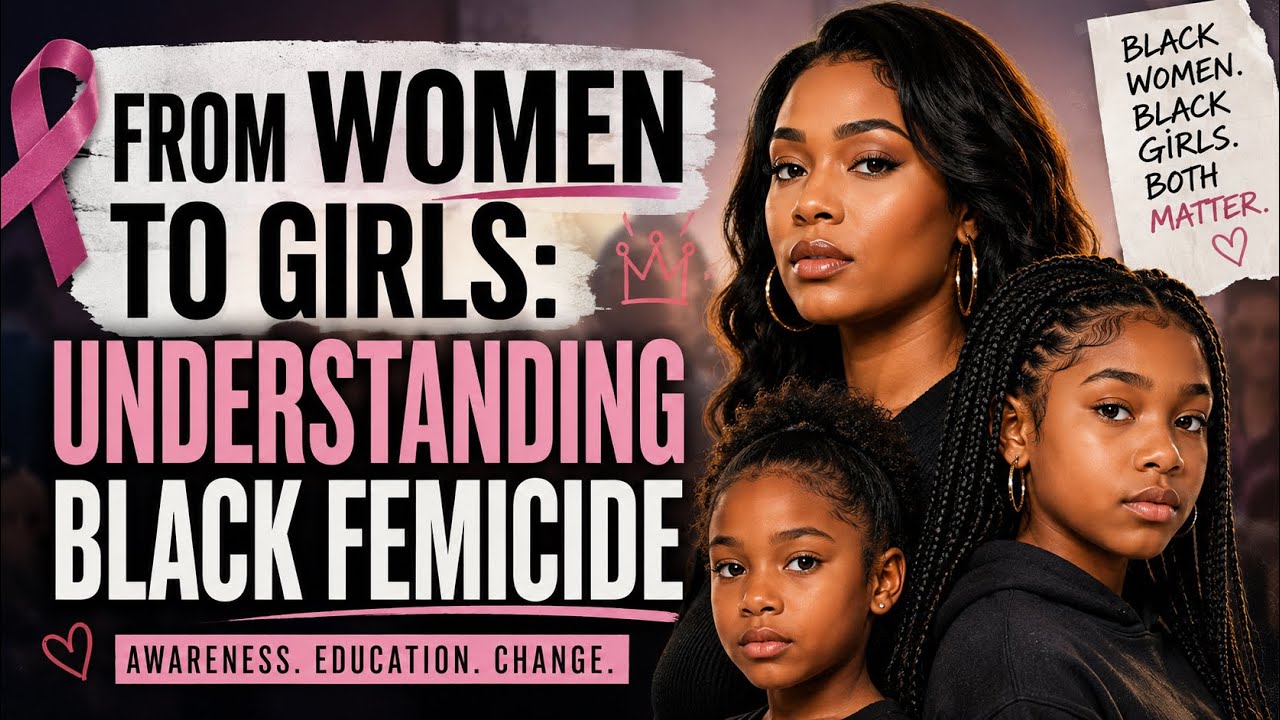
From Women To Girls: Understanding Black Femicide (Full Livestream(
youretriggered3455
1K views•2026-06-06
Daniel Kinahan: King of Spin (Part 3)
crimeworldpodcast
4K views•2026-06-11

In Just 4 Months, Her Fairytale Turned Into Her Funeral: The Anggy Diaz Story
MichellePlattiTrueCrime
3K views•2026-06-10

'60 Minutes' IS 'The Manson Family'
coachgerard889
1K views•2026-06-09

What's Really Happening in Belfast Right Now
TomBilyeuClips
132 views•2026-06-10
Are Black Women Truly Heard and Valued?
XFoxEnt
203 views•2026-06-06

Poll suggests LGBTQ+ support down from '22 high
WHAS11News
241 views•2026-06-07