Evolutionary theory explains the complexity and apparent design of life through natural selection, which is a non-random process that drives the development of complex biological structures over vast time scales, rather than requiring intelligent design or supernatural intervention.
Install our extension to search inside any video instantly.
Pangburn - Richard Dawkins & Matt Dillahunty on God & Biology
Added:Please put your hands together for the WARRIOR FOR REASON, MATT DILLAHANTI.
HEY.
WOW. HI.
[applause] I feel like I should come out and like rip my shirt, you know. Welcome to the WWE tonight.
Let me tell you something, Metamomaniacs.
How you guys doing?
[cheering] [applause] >> I tell you what, on behalf of Pangburn Philosophy, welcome to this evening with Richard Dawkins and me, but mostly Richard Dawkins. We are uh thrilled that you came here. When we first announced this event, I was actually standing on the stage. Uh we had done an event with Orange Cross. How many of you here with that? Yeah, there you go. So, most of those people that you just saw clap got this advanced notice and immediately pulled out their phones and got tickets.
And uh we are thrilled. We're thrilled at the response. Uh, we've been so doing so many fun things. Uh, Richard and Sam Harris and I did events in in London in Vancouver. Uh, I also did an event in Vancouver the other night with Tracy Harris from the Atheist Experience. Yay.
And and also Sarah her from Ex-Muslims of North America. Just a sampling of the sort of events that Pangar Philosophy wants to bring to the world. And there's a lot more coming. So keep your eye on Pangburn.com and matthoney.com for more information and notes about when we're going to be doing stuff. Uh I it is always an incredible pleasure for me uh to get to share the stage with Professor Richard Dawkins. I mean come on, how could you not be thrilled at that opportunity because uh I feel monumentally stupid. And tonight we're going we're going to exploit that a little bit. So let me tell you a little about how the evening is going to go. Uh we're going to sit up here and chat for a little while. Maybe 30 45 minutes something like that. Uh primarily we're going to focus on some science stuff tonight, I think. But uh yeah, hooray science. I mean, where would you not get an applause for science [cheering] [applause] that I think maybe that should be a sign, you know, those church signs?
Maybe one of them should put up sorry science couldn't be here tonight on their church sign. But we're going to talk a little bit of science, maybe a little bit of politics stuff, but we're also going to take questions. There's a couple microphones set up and I want to explain how that goes now so that when I say hey you can line up for questions you know roughly what to do. So the I think the mics are way out in the wings.
Uh just before we start taking questions line up. Here's the thing. Questions have a question mark.
They do not begin with your life story your dissertation.
This is not an opportunity for you to debate. Uh after your first question is answered. If you want another one, you got to go all the way back to end of the line. Uh, I can't actually hang up on you like I can on the TV show, but I'm pretty sure the guy in the sound booth can cut your mic the instant I say so, but I hope we won't need any of that.
Uh, ladies and gentlemen, let's not waste any more of your precious time.
Thank you so much for coming out, and please help me give a warm welcome to Richard Dawkins.
[applause] >> [applause] [applause] >> Welcome back to Toronto. You've been to Toronto before, many times.
What do you want to talk about?
That's that's incredibly unfair of me, but it was it was a bit of fun. Richard already knows we talked at dinner. I went to the Ripley Aquarium today. You guys been to there here in Toronto?
[applause] My wife and I go to lots of aquariums uh and we enjoy them. And it prompted a lot of questions uh that I thought might get us to talk a little bit more about evolution, about the public understanding of evolution and what the roadblocks uh to that understanding might be. If that's >> great. I'm glad you say aquariums, not Aquaria. By the way, here >> we're speaking English, not Latin here.
>> Oh, see, and I I I was I could so could steal a joke from Judah Freedellander right now, but I won't. Uh about English. I keep missing my thing. So, we were we were at the Ripley Aquariums and we of course saw many wonderful animals there.
And if that for my wife and I prompts a discussion about what we used to believe or whether or not because I can't recall if I always accept I know I was taught about evolution in school but I can't recall if I always accepted it. It seemed to always be colored with this idea that there was a god in there monkeying around somewhere. [snorts] Is there any realistic probability that any thinking agent could have been monkeying around in the process based on what we know uh at this point?
No. Uh um I I have to be careful here because I was once being interviewed on television by a dreadful man whose name has mercifully escaped me and he um he I didn't realize that he was a sort of plant for intelligent design and he he asked me whether I could think of any conceiv what what's the the best scenario I could think of for life on this planet being intelligently designed. Um and so I thought well I'll give in the best shot which is directed panspermia. The idea that um Francis Crick and Leslie Orle put put out which was that some alien civilization in a distant planet wanted to preserve their form of life. Perhaps they were going extinct or something of that sort. So they put bacteria of their form of life in the nose cone of a spaceship and sent it off into space and it landed here and started life here. Now I I I said of course I don't for a moment believe that but you've asked me what's the best the best possibility for life to be designed in this um by an by an alien. and he said, "Wait a minute.
Richard Dawkins believes in little green men."
And this has dogged me ever since. And and I and I regularly get on Twitter, this is the guy who believes in aliens seeding life on this planet and so on. And this is something we've spoken about before where it seems that there are some people who are going to e either intentionally misunderstand and misrepresent what you've said, what anybody said, uh or they are so horribly confused uh that they don't seem to understand the basics of the English language. Now, I know that many of them are from the United States and we've kind of butchered the English language.
Uh but as as I walked around the aquarium today, aquariums today and I I made that note too that there were multiples. Uh my wife mentioned something to me that you see just at the aquariums a broad diversity of life and I can understand how someone who hasn't been trained and taught you about natural selection and the process and and the length of time involved could look at this and just say I give up. I don't understand uh it has to be magic. Somebody has to have done it. how I we should be teaching this. I know there are schools in the United States that don't even though they're supposed to. Apart from just saying this needs to be the curriculum, what can we as a community do to to encourage the sort of teaching and training on on evolutionary theory that we need?
>> [snorts] >> I think I give up is a actually quite a respectable response because it is astounding how complicated life is and how beautiful it is, how diverse it is and how it it looks designed. And so I could well imagine people saying I give up. However, to say it must have been created, I mean, that's just illogical because it's no more easy to explain the origin of a creator than it is to explain the origin of the complexity of life itself. It's a total and complete non-exlanation. So, before Darwin came along, it would have been perfectly respectable to say, I give up. It's incredibly complicated. There's there must be an explanation, but I can't think of it. And then Darwin came along and did think of it. Um, but to say therefore it must have been designed is a total and complete copout. It doesn't explain anything.
>> It's actually contradictory. If you say I give up it must have been designed, then you're not you haven't given up.
You've you've offered an explanation and you >> and you don't even care if it's true.
>> Exactly. So you so you ask me what can what can we do to to teach it? Well, um, you can write lots of books as I've done. That's but then of course they've got to read them and which is which is more of a problem. Um you can um you can do television I suppose I've done a bit of that as well.
Um it is very difficult to get across. I mean one of the problems is the sheer time involved. Nobody nobody can grasp the immensity of time that ge that that geology allows in which evolution has happened. It is absolutely colossal. And so all our intuitions about the rate at which evolution might go let us down. We can't we can't really understand how you could go from uh from one species to another, let alone from a microbe to mamalian life. So getting across the sheer time scale is one thing. And there are various analogies. You're probably familiar with them. Um lots of them. One that I rather like is the the one where you stretch your arm out. This I didn't invent this. Somebody else did. And you say the middle of your throat, the middle of my tie here, um is the origin of life and the tip of my finger is the present. And the the time involved you've got the dinosaurs didn't come until about there.
So way way near near the present. Um he human the homo sapiens arrived at about the by fingernail there and the whole of human history the whole of recorded history the Egyptians and the Babylonians and the Persians and the Jews and the Greeks and the Romans and all of human recorded history flies away in the dust from the stroke from one stroke of the nail file.
So, we're accustomed to thinking of human history as as long. We think in the mists of time, back to the ancient Greeks, back to the ancient Egyptians.
We think so long ago. It's nothing. It's it's just as somebody else said, it's the just before the stroke of midnight on the on the clock face of the geological time.
>> Yeah, there's there's a couple difficulties there. not only our inability to properly grasp the time scales but also our ego and our sense of self-importance and how it it seems strange that everything we know about humans could vanish in that analogous >> of an I mean another analogy I think it I can't remember it might have been Mark Twain who suggested the layer of paint on top of the Eiffel Tower that's that's humanity but the time scale involved is is one thing another another point you have to get across is that it is not chance. There are an awful lot of people who think they can simply dismiss evolution because it's the theory of chance. Well, any fool can see it can't possibly be a theory of chance. I mean, chance couldn't possibly give rise to the the beauty, the elegance, the the the sheer designedness, the apparent designedness of living things. It cannot be that. The whole enterprise is to get away from random chance and to substitute something else. And Darwinian natural selection is the only substitute that has ever been proposed that could work.
>> The the idea that there may be maybe maybe there's chance involved in when when and how a mutation occurs or there may be chance involved in which weather storm might separate someone. But in the broad scheme, this is physical law acting on matter following you know not not prescribed by an intelligence but following the natural order. Yes, there has to be chance of course in in in mutation and the weather and things like that. But the the driving force towards the uh illusion of design, the beauty of the design of an eye or a wing or a foot or a heart um and the diversity of life, the driving force is non-random natural selection. Now I was wondering I always wanted to ask you there are people who grasp things more clearly at different ages and I know young kids who are thrilled to learn good science and are fascinated with dinosaurs and Darwinian natural selection just makes sense to them. It's like the first time you hear it it's well of course that's the case. For others it seems to be a little more difficult either based on their upbringing. I I don't know what all the factors might be, but when you see a a fish that is demonstrating amphibian-like qualities, it's coming up onto land and it has flippers that are close to fin. There are pe people or close to feet. There are people who would look at that and say, "Wow, I get it. I get how this >> and there are others like >> one of my wife's relatives looked at an example of that. One of my relatives would do this, too. I'm not just beating up on her family, but she looked at this and she said, "Isn't it wonderful what God can create?"
>> Th those fish are lovely because they're they're doing much more recently.
They've re-evolved uh what our ancient ancestors did in the Devonian era. And so they they come out of of of the water, they walk around, they jump, they even climb trees. Uh it it's wonderful to see these these fish.
Um they have various names like frogfish and things like that.
>> But I I always just presume that you as a young boy just immediately got this.
>> No. No, I didn't. Um I I think it was my father who first explained natural selection to me and I I understood it but I didn't think it was a big enough theory to account for the elegance of life. It was only later that I apprehended that.
And it's going to be a different answer for everybody, but do you do you do you know what it was that that made the change in you from okay that's interesting I don't quite get it to oh my gosh this is a profound statement uh that people aren't grasping.
>> I don't remember that but it it is a profound statement and it it it has to be in a way because it took so long for humanity to get it. I mean it took till the middle of the 19th century and I've always been baffled by uh why in a way people like Newton and Hume and Aristotle didn't get it because it is actually a very simple idea. It's not like relativity or quantum theory. Um it it it's not profoundly difficult but it's I suppose profoundly counterintuitive. I think as you've suggested, Matt, it's kind of um you almost can't believe that something so complicated and beautiful as life could possibly come into being by such a simple idea as the non-random survival of um random variation. So I think that may be why it took until the middle of the 19th century for Darwin and Wallace independently to to get it. And I expect they had resistance to it when they first thought of it.
>> And how fortunate are we that it's become sufficiently understood that now school children can you know grasp this and have a good understanding of it. I think one of the reasons it seems so so strange to me I agree with you that it seems like someone should have thought of this earlier because we had domesticated animals. We domesticated crops. We had been doing the things that nature does.
>> Exactly. And this was one of the main points Darwin made. Darwin used domesticated animals as his his sort of introductory argument. He said, "Look at how powerful selection is. Look at how we've managed to change rock doves into all the various breeds of pigeons. Look how we managed to change um flowers, wild wild roses into into domestic roses. Um wolves have become dogs of all these different breeds that are totally unlike wolves.
And yet they've been transformed from the wolf in just a matter of centuries.
So what Darwin did was say look what can be done by artificial selection. Now all you need do is that mental flip that says you don't need a breeder. You don't need a human breeder to come along and choose the dogs to breed from. Nature will do that for you. So the power of artificial selection is harnessed um in a slightly different way by nature and nature is the breeder that produces all of life.
>> There's a confusing array of creationist models. Um there are the people who think that the world was created in seven literal days and and that these represent ages. I can understand the people who I don't understand why they think the earth is 6 to 10,000 years old. Now, that's an untunnable position, but if that's what they believe, I can understand why understanding evolution would be more difficult for them because they don't even accept that that time is there. But I'm more baffled by the apologists and creationists who think, oh, of course, you know, the universe is 13.7 billion years old, the Earth's 4.5 billion, but that's still not enough time when we have the evidence.
>> Yeah. Um, there are there are people like that. Um uh there was a a nice story told by JBS Haldane, the great uh British geneticist, one of the founders of the neodyarwinian synthesis. Um and after a lecture, a lady stood up and asked him a question and put exactly this point. She said, "Professor Hall, I simply can't believe that there's been enough time, even given billions of years, to go from a single cellled ancestor to something like me. I mean a a multisellular creature trillions of cells with the heart and lungs and brain and kidneys and bones and things just doesn't make sense.
Madam, you did it yourself and it only took you 9 months.
[applause] To to which of course she could have retorted, "Ah, yes." But um that in that nine months the process was supervised by DNA or she would have called it genes in those days. Um and and that of course is correct and and what evolution does what natural selection does is to choose those genes that supervise the embryological process that does that amazing trick in 9 months.
So in this in this process, one of the key aspects that we come up against is transitional forms. And people have different views of what that means. So a creationist might say, "Oh, you haven't found any transitional forms or you haven't found a missing link." And for years when I'm asked this question on the show, well, first of all, I point out that uh this you're calling into the atheist experience and I'm not a biologist. if you you maybe you're talking to the wrong guy about this but I had always responded that everything is a transitional form that all of us are a transition between our ancestors and our progyny and this I don't know that this has the impact on others that it had on me >> because they seem to be they seem to be looking at it backwards backwards it's a little easier to say oh this is clearly a transition >> yes I mean everything is potentially a transition not everything actually is but potentially Actually it is Michael Schmer makes rather a nice point which is that when there's a gap in the fossil record which which there is in quite a number of places because fossilizing is quite a rare event. So we have this gap ah there's a gap um and then somebody finds a fossil right in the middle of the gap which is a transitional form.
Now we've got two gaps >> and then they told two friends and they told two friends and so on.
It's it's interesting to me that so much emphasis I think in in the as people were battling against this idea in the modern era because we're trying to teach it in schools and of course there are religious people objecting this idea of a missing link kept coming up.
>> Well the missing link was often was in Victorian times that meant the missing link between apes and humans. Uh and there were no fossils it no no homminid fossils in Darwin's time. Darwin looked at the modern anatomy of chimpanzees and gorillas and correctly inferred that we are African apes, that we we evolved in Africa. And since that time, of course, there have been lots and lots of fossils discovered in South Africa, in East Africa, uh, and even North Africa. Um, so we have lots and lots of links.
They're not missing anymore. They're missing on the chimpanzees side of the of the divide because you have a common ancestor which was lived about 6 million years ago and then it branched and went down one side towards chimpanzees and bonobos which branched again there and then the other side went down to humans and we got plenty of fossils down the human line. So there's no no darth of links there. They're no longer missing.
There aren't any fossils down the chimpanzeee line and that's regrettable.
It may be because they're forest dwellers and it's more difficult to fossilize in in forest conditions. But there are plenty of missing links no longer missing.
>> But you can't know you weren't there.
>> Yeah. Yeah. Yeah. Yes.
How do you deal with that kind of thing?
Um yes, of of course. Uh, and one one analogy that I like to use to that is to say a detective comes upon the scene of a crime after it's been committed more or less by definition and works out what happened. Sherlock Holmes Kil Puarro.
They look at fingerprints, they look at footprints, they look at all the cues that are available around the window open or the window closed or whatever it might be. And you work out what happened by looking at the clues. That's sort of what we do. But the difference is whereas Sherlock Holmes or Hercuo had a limited number of clues, we have millions and millions and millions of clues. We have fossils. We have the geographical distribution of animals and plants on islands and continents of the world. They're distributed in exactly the places they should be distributed if evolution had taken place. Um we look at fossils, we look at molecular comparative molecular um sequencing. the you can sequence the DNA or the proteins of any creature you like, animal or plant, and you can find genes that are clearly the same gene, but with differences in the details. And so you can literally count the number of discrepancies between um a human and a a possum or a human and a beetle. It doesn't matter what it is. can find a gene where it's obviously the same gene and you can literally count the number of letter discrepancies between them and you plot it all out and you find a beautiful hierarchical tree, a beautiful pedigree. It's got to be a pedigree. And so that's what you can do with molecular data. That's sort of what Darwin himself was able to do with bones and comparative anatomy. And that's persuasive enough. Goodness knows. But with molecules, it's even more persuasive.
So, you don't have to have been there.
It's it's it's the the the evidence is just mountainously high.
>> I think this ties back a lot into different views of knowledge where they when it's convenient, they would like there to be certainty. And I I'm always happy to point out that they believe in Jesus and they weren't there when he was crucified as well. Uh so clearly we can infer some things and and come to reasonable conclusions when we talk about science.
It's a couple of the beautiful things about science is that it's self-correcting and yet the creationists will just constantly point to oh here's an anomaly. Here's an error. Here's a mistake. Here's a hoax. as if as if they could disprove evolution and all of a sudden their creation model wins. And to me it was even if we find out tomorrow that everything we understood about natural selection were wrong, that still wouldn't lend any credence to >> that's right. No, I mean you you have two two hypotheses A and B and A has a lot going for it and B has nothing whatever going for it. So and then and then and then you find a single a single slight discrepancy. Something went wrong with A. As you say, a hoax pilt down man. and whatever it is, right? That's it for A. Must be B. And that's the level of logic we have to deal with.
>> Oh, you have an alibi. Oh, the butler did it then. Yes, we're done.
>> Exactly. Yes. Exactly.
>> So, one of one of the aspects of this is that we have a model that is testable and a model that makes predictions. Um, for example, we we predicted based on all our understanding uh where to go dig in order to find something like tectlic.
[snorts] What and this is you can feel free to make a face and scoff because it's what I did when I thought of the question.
What would creationists have to do potentially to turn their proposition into a testable claim at all?
I cannot think of what they could do unfortunately. It would be nice if if if Can you think of anything? I mean, >> no, that's >> Yeah, >> I'm asking you. [laughter] >> I mean, they can they can up the ante on finding difficulties for evolution. I mean, they could they could um Dar Darwin wrote a chapter in the origin of species called organs of extreme complexity.
uh and he took things like the eye and the heart and he showed how although on the face of it um it seems almost too difficult to explain nevertheless you can explain it um you don't actually need to I mean if if somebody comes to me and says I bet you can't explain the elbow joint of the lesser spotted weasel frog and I'd say well actually I've never heard of the lesser spotted weasel frog and I said I can't explain it right that's it you can't explain God must have done it. Um the the the proper answer is no. I I don't know how to explain that. But um let's do a bit of research on it. Let's let's go to work on it. Let's examine let's let's go and find some weasel frogs and and examine them and dissect them and see how they behave and we'll we'll see if we can do it. But even if we fail, that doesn't mean that the alternative theory B is the right one.
It could be that we just aren't clever enough to think of the alternative. I've satarized the argument as the argument from personal incredul.
You you say I I can't I can't understand how this could have happened. Therefore uh therefore God must have done it. But that's the negative thing. That's finding that's trying to find flaws in evolution. You've asked me what testable hypothesis could they put forward? What testable what experiment could they do?
Say um I used to think that something like God coming down out of the clouds and bellowing in a great loud Paul Robson voice, I created everything.
film be moderately convincing, but I still I still would would actually fall back on Hume on miracles and say, is it isn't it actually more probable that I'm hallucinating or or or being hoaxed by some clever conjurer like that?
Perhaps an alien conjurer from outer space. Yeah, this is it. You know, technology sufficiently advanced is indistinguishable from magic. How the hell can I tell the difference? And this is why I changed the answer I gave about what would change my [snorts] mind to I have no idea. Yes, quite >> if there is a god, he knows and he hasn't done it. So, you know, the hell with him.
>> But, >> but the uh the god voice maybe if he just said, "I created the platypus."
Because that's a confusing creature for many people. Well, when when they were first when when the first platypus was sent to London for for um for examination, it was thought to be a hoax. It was thought to be a somebody stitched together a duck's bill and and and a >> PT Barnum created the platypus right after the Fiji mermaid.
>> Yeah.
Um, let me I'm going to shift topics just a little bit because we we talked before about the world we're living in about the information that people get and how it is is almost being curated for them by social media that you get spoonfed things. But I want to touch on a different aspect of this uh and that is uh reaching conclusions based on headlines only.
>> Oh yeah. Have you seen what not only do we live in a world where sens headlines are already sensationalized to draw your attention but I find over and over again people will read the headline and not the article not the content certainly not any references and just broadcast on social media >> they do that's right and I think this is one of the one of the reasons why science has a problem public relations problem because uh so often um a headline will appear in a tabloid newspaper which will say something like X causes cancer, scientists show. And then next week the same X cures cancer, scientists show. And so um the the headlines obviously contradict each other, but the details may not. Um it could be that um X both causes and cures cancer. Maybe it has a a U-shaped dose response curve so that if you've got if you're plotting the um effect of the the the amount of X there and the effect on cancer there, there's a U-shaped curve and if you're on that part of the U, it has a positive effect on cancer. That part of the curve, it has a negative effect. And so it does both cause and cure. The the contradictory headlines though will lead people to say oh well scientists just contradict themselves so we we can't believe science anymore and that's very sad and I think that obviously journalists have bear some blame for that but also scientists who uh publish not publish but announce their results prematurely and in a sort of halfbaked way um so that it almost meet and drink to journalists wishing to pick up the story. So I think that that is a serious problem and needs scientists need to think about how to handle that.
>> I think there's there's so much concern that people don't value science and people aren't sufficiently science educated that some scientists are like oh we need to get this out here and let's do it in a way that's exciting. So I've seen headlines that uh science has proved that we are living in a simulation and then recently that we are not living in a simulation. And if you actually dig in on what the papers say, they say neither of those uh that just this week uh even a day or so ago getting outside the realm of science, I saw a headline that was pope allows debates on married priests and people read the headline and their immediate assumption is oh the Catholic Church maybe maybe they're coming around and they're going to allow priests to marry. And that has absolutely nothing to do with what was being discussed. It was it was the this has happened several times before that the Episcopalian priests who were married, the Catholic Church would like to lure them in to be priests and allow them to stay married.
They just can't have sex anymore.
>> Not with women anyway.
>> Yeah. Depending on how long you've been married, maybe it's not a problem.
I don't know. Uh but this is a marketing strategy. This is, hey, the Catholic Church is losing out to Protestants in the Amazon region. We're not really going to change Catholicism, but we'll change parts of Catholicism in the Amazon region just so that we can reach more people.
>> Yeah. Yeah. Right. Yeah.
>> But they're not coming around They're not coming around on sex at all.
>> No. So, the the headline is misleading.
Quite right. Yes.
>> I wish they would come around on sex.
>> I And I'm That's not just funny. I I find it bizarre that this one particular church has perhaps more sexual hang-ups than any other. You know, they're going to prohibit the very thing that one would argue may perhaps makes us human, the desires that we have, the interaction, the stuff that has produced who we are. Nope. Can't have anything to do with that.
>> Yeah.
>> While they hide rapists.
>> Yeah.
I think they have a duty to to do better. But >> sermon over for this. Uh something happened today that we spoke about briefly. Uh I found out the news and we don't have a lot of information, but there were a couple of questions that I had uh where I wanted to get your perspective. For those who aren't aware, uh just outside of San Antonio today in a small town, uh someone pulled out an automatic weapon and killed 27 people in a Baptist church, the first Baptist church of uh this town.
We don't yet know what the motivation is. The individual who did this was killed.
Hypothetically, if we were to discover that this was some prominent member of a local atheist community who had decided to target a church, how would you respond um to this shooting?
>> The these things are so appalling. I I I I don't think I don't think I want to get into hypotheticals like that. I think I think we we we don't know what happened. I mean, my immediate reaction is um to be obviously horrified. Um and to feel this person is surely going to be insane. Uh and every country has its lunatics. And um the difference is that in the United States there are so many guns around that lunatics can get hold of guns. And so um I I I almost don't don't want to ask what the what the motive is because I don't think such an appalling act has a a thing you could call a motive anyway.
This is just a a nut who has managed to get hold of a gun. And uh it's going to go on and on happening as long as guns are so readily available in the United States. And so I think the the only lesson I would wish to draw from from it is for goodness sake, United States, sort out your gun problem. [applause] >> [applause] >> And I I certainly echo great deal of the sentiment there. The reason I was kind of hoping to get to hypothetical is because invariably we don't tend to find that this is the case. Um, and there's everything inside of me wants to say, "Oh, yeah, that's that's such an unlikely possibility, uh, that we just shouldn't even bother with it."
But I would like to think that the broader secular humanist community uh, would very quickly and easily just denounce all forms of violence and violence threats along these lines to show that we're in a in a different headsp space than, for example, if it was a rival church or something along those lines. You may you may be correct about uh you know whether or not he was or what his mental capabilities were. Uh but the reason it struck me was I had a debate with the debate that we spoke about the other night. The the preacher who knows nothing about evolution was talking about banging sticks and rocks together to get puppies. And he's reported that since the debates's been posted, he's received threats of death threats and violence threats. And I immediately posted on Facebook uh a statement saying that, you know, if it's anybody who's a fan or a follower of mine, go the [ __ ] away. You are part of the problem. I don't want I don't need you. I don't want you advocating for violence and other stuff. I'm not sure I believe his claim, but I wanted to make a distinction between how we are going to respond to to violent acts because there's nothing within atheism or secularism. There's no ideology that would encourage someone to >> No, of course not. I mean, that's absolutely right. And and and um if if if it was a a follower of ISIS, then we could say um he probably isn't insane.
If it was a follower of ISIS doing something like this, then it's done uh because he thinks it's the righteous thing to do. He thinks he's doing the will of his God. He thinks he's going to earn a place in heaven in paradise because he has slain some infidels and and and gone to a martr's heaven or whatever it is. Um so there is a perfectly logical progression going from certain kinds of religious belief to um these horrible acts of mass murder.
There simply is not a logical progression that goes from atheism to doing any such thing. And so if it incidentally happened to be somebody whose philosophical position in so far as such a person could have a philosophical position was atheism, it would be utterly irrelevant. This is this will just be a sick individual who has a gun. So there al although it's possible to to to formulate a logical progression from uh religious belief of a certain kind to violent murder. There is no logical progression that goes from atheism to violent murder.
>> How could that be?
>> Oh, sorry.
[applause] I've got one more uh question topic I want to hit real quick. So for those of you who had questions, if you can quietly without disturbing people start moving out to there, we'll get to questions pretty soon, but I've heard that you're working on another book and I know that everybody here will want to hear about it.
>> Okay. Um I I am I've started work on a book which of my my tentative title is Atheism for Children.
[applause] I I rather suspect that it may not end up with that title. It it it will be that that content but uh it may not be that title. The word children is a problem because uh many children prefer not to be called children especially as this is actually aimed at kind of 12 13 14 year olds. So it's more like atheism for young adults, atheism for teenagers.
Um I don't want it to sound as though it's indoctrinating which would be another reason not to call it that.
Another suggestion that I that I've had made to me is mom I think I'm an atheist.
Um anyway, I I've written about five chapters in a very tentative draft and uh the first one is about how many many gods there are and so it's not clear why the particular god that the child has been brought up in is the right one. And then there's quite a lot on evolution because I think that's one of them. I mean the the the lure of creationism is quite strong. There's one on the good book and how utterly appalling it actually is. How dreadful what a and I've said before that that the god of the old testament is the most unpleasant character in all fiction. And so it [applause] so it it do it it documents that I I plan a chapter on miracles perhaps a chapter on prayer a chapter on uh why we don't need God to be good and um it'll be illustrated it'll be rather along the same lines as the children's book I wrote a few years ago called the magic of reality. It'll be the same style as that uh but more of a kind of young person's version of the god delusion.
>> And I wasn't clear about this and I will catch heat for this later. So the microphones are set up but we want people line up on the outside so we're not blocking anybody's view and then one at a time we'll have you walk up to either microphone. I'm assuming that the the chapter on miracles is a is a look into miraculous claims and and not just like a list of actual miracles because that would be a very short chapter.
>> Yes. Sure. Yes. perhaps uh just yeah miracles and then just say none known next chapter >> that would be good yeah >> I I find that I I I find that interesting both the topic and and the target and I'm glad that you pointed out that you know this is very something very different from indoctrination indoctrination this is about uh giving material to people who are coming of age and realizing they don't believe the things that other people believe there that they've been taught. Um I recall I I was a believer for way way too many years. Um almost embarrassing how long it took me to figure this [ __ ] out. But uh but everybody finds it in their own time.
And so I I keep running across young people, teenagers.
>> Yeah.
>> And they're facing, hey, how do I tell my family? Or should I tell my family?
and uh how do I deal with my family?
Should I do like a big coming out thing or should this be, you know, more organic? And I'm always just impressed that they they put way more thought into this um at an earlier age than I ever did. I was so busy focusing on what the church wanted me to do and and being in an insulated environment where, you know, I'd never heard of Thomas Payne, I didn't know that much about, you know, the science you were taught in school.
Sure. But beyond that, I I'm just impressed at the way the world is changing thanks to you, thanks to the various media outlets, thanks to the internet where I don't know if we have more young atheists than ever, but it certainly feels that way.
>> Well, I think we do in America and in Western Europe. I wish I could say the same of the Islamic world. I think things are even moving in the right direction there. Um, I'm rather fond of quoting the fact that there's a bootleg copy of The God Delusion in Arabic, which [applause] for for which I I get no royalties. Um, uh, and it's downloadable as a PDF. And what's rather nice is that it has been downloaded 13 million times.
>> [applause] [applause] >> I think it I think if it's downloaded one million more times, it will be as worn as a Grateful Dead concert recording. But can we have the house lights up just a little bit so we can maybe see the folks on the microphones a little bit? We'll start on this side.
Whoever's at the front, uh, come on over. State your name if you're comfortable with that and, uh, ask your question.
>> Okay. It it works.
>> It works.
>> Oh, okay. Um, hi, Professor Richard. Um, just because you just mentioned about the God delusion in Arabic. I was living in the Middle East and my friend got a copy of the God delusion. His name was Muhammad. And he was one of the biggest reasons why I'm atheist today. and and it's just phenomenal to just believe how your impact just would reach all the way to the other side of the world uh with your book.
>> Which which country is that?
>> Um um well, we live in Qatar. So, uh >> I'm going to Qatar in a couple of months time.
>> Oh, yeah. Um I I was I was wishing to get a copy of your signed uh planning the God delusion to bring it to him.
>> So you you have a friend called Muhammad and he told I didn't quite get the full story.
>> So my friend his name is Muhammad and he read a book called God Delusion and basically from that book he got uh basically it was the basis for him to be convert to atheism and uh it was >> it was big influence on my ideas. Did Did he read it in English or Arabic?
>> I believe he read it in English.
>> Okay. Well, that's very good to hear.
Thank you very much.
>> Yeah. Um just I wanted to ask a question. I know.
>> Yes. Please go ahead paragraph in the beginning.
>> I'm about to hang up, but you're so nice. Just >> just go ahead and do the question.
>> Um >> I I've guess I've asked um Sir Sam Harris in the previous uh event about free free will because I don't believe in free will and he doesn't believe it in it either. And uh and it sort of puts me in a place where I feel like depressed about life in a way that I feel like I don't have control over my um like ability to change my life because my genetics are sort of determines everything that is going to happen to my life. So it feels like there's like little to do with how much I can change about my life with if my IQ is constant and my genetic are also sort of.
>> So what's your question? My question is um I guess I'm I'm questioning how I guess you your views on free will and and how genetics affect people ability to sort of control their life.
>> I Okay. I I hate the free will question.
Um I and I I I usually resort to Christopher Hitchens's answer to the question, do you have free will?
[applause] Christopher Hins's answer to the question, do you have free will? I have no choice.
Um, I don't think you should feel distressed about it. I mean, I think that probably the consensus of scientists today would be yes, everything we do is determined. No need to drag genes in, by the way. I mean, that genes are no more deterministic than anything else. I mean just any sort of antecedent physical cause may determine uh does determine what you do.
Um but the illusion of free will is so powerful that you live your life as though you have free will. We all do. So cheer up [applause] and I will uh I'll I'll throw in a quick addendum that I I am a compatibilist Allah Dennit and Sam Harris and I were arguing free will the other night and I'm sure we will again and when we come to some sort of agreement that I think will benefit other people maybe he'll share that.
>> Yes sir. Uh, hi Professor Dawkins. Thank you for a lifetime of everything. I just want you to complete the punchline to my favorite joke ever. Are you ready? Why are there so many old people in church?
>> This is a this Yeah, you you've read my quotation. Um, it was it was an Australian friend who who asked this this question. Why there so many old people in in in church? And his answer was cramming for the final.
>> [applause] >> Oh, that that wasn't the question.
>> No, no, you're cheating.
>> This has been a loving. So, you took forever. I'm going to be real quick.
This has been 11. This has been 11 and I really want to start a bit of a fight.
>> You I've seen you on your atheist experience um aren't really convinced in the design of evolution that a polar bear is designed for its niche in that environment. I've seen you argue against that.
>> Sorry. Who who who you talking to?
>> Atheist to Matt and I want you to convince him that design is >> I have no idea what you're talking about.
>> I've seen you hang up on people saying it's not designed. It's not and >> No, no, no. It's not designed. If if if by design you are talking about an intentional going forward with a purpose.
>> It doesn't have to be intentional. It can be design.
>> This is design is intentional there. No, no. Here's the thing. This is really easy. Design is intentional. The appearance of design need not be.
>> Do you agree with that, Richard?
>> Well, I think I think what what what you're thinking of is that Dan Dennit has redefined the word design to include unconscious design. And so it's just semantics. Um I you can define design as being deliberate intentional design or you can define design as uh looking as though it's been designed in that in in in that sense. be beautifully arranged so that everything works. Dennit's definition is that and he wants us to all change our our usage our meaning of the word design and that is a semantic thing. Words are our servants not our master.
>> Yeah. Nei neither we we just don't disagree on this at all and we don't disagree on the fact that we don't need to be prescriptivist with language as long as we're communicating a topic.
Yes. From this side, please.
>> Hello. Thank you both for coming and >> out our crowd.
My question is regarding several days ago we had a fest for Halloween. My friend went as Gaddafi and I thought that was pretty scary but uh the scariest thing in my opinion is alienation in society. Best described with the scream of Edward Munch and I ask you Richard and Matt to comment whether as scientists we are alienating ourselves. I mean my family is more concerned whether I earn a living than whether I fulfill my happiness of botany. Um and Pythagoras was in a ancient civilization where they um were looked as elite and away from and separate from and distinct from society and I believe that I when I introduce myself describe what I do I introduce myself as a natural I study nature that's what I'm passionate about and by describe myself as a scientist I believe I alienate because they don't understand what a >> it's not sexy and and lauded the way it used to be is what kind of what you're saying.
>> Yeah.
>> Well, that's their problem. I mean, [applause] you're you're doing the right thing.
[applause] Okay, this is a question for uh Professor Dawkins. Um, you have an amazing video that's on YouTube that's been around for uh decades. I imagine about I have able to evolve and until I've seen that video I did not u comprehend how it's possible happen and I understand how the eye but now I have another question regards metamorphosis that seems like such unbelievable type of process for an egg form into caterpillar that caterpillar wraps liquefies comes out like a beautiful angel with wings. Can you give us any kind of insight into how evolution can that ladies and gentlemen the argument from personal incredul >> the lesser spotted weasel frog um >> which by the way it you just made up that name right there. Okay, there there's a >> I was I was going to go back to my amphibian.
>> Okay. I mean it it it is a very very beautiful problem. Thank you for bringing it up. I mean, a a a caterpillar and a butterfly are two totally different kinds of animal, but they have the same genome and one turns into the other. And as you said, I mean, the the caterpillar feeds on plants and it's a it's an eating machine. It's a it's a machine for building up uh the sheer amount of goods, the amount of of of stuff in the caterpillar. And then the caterpillar more or less dissolves in internally uh and uses the material that is built up in all this eating of plants. Uses the material to build a butterfly or a moth which is purely a uh almost entirely a nectar feeding machine and the nectar is just aviation fuel. It's it's a winged carrier of gametes of sperms or eggs. And so it's it's the reproductive phase. And as you say, it is a very strange thing that's happened that natural selection could favor using the same genome two entirely different ways of life. A a vegetarian feeding machine and then a an an an aerial nectar eating reproduction machine. Um, it's happened. Uh, natural selection works on the the the same genes or different genes to produce these two different ways of life. Um, I I don't think I can do anything really to dispel your natural uh incredul. I prefer to call it wonder.
It is it is wonderful. Um, and it's an a very extreme example.
Uh, and I love it. I mean, I just But but but but I I I don't think I can really answer your incredility.
[applause] >> I've I've always kind of wondered about that as well. You know, nature's found a number of different solutions to different problems. And when you look at the you know the the egg to larvae is it is it that it's that process with the crystals and the butterfly is it really that much different than other meth methods or are we seeing a strange line where the early stage actually does some function and the later stage >> yes I mean it it's less extreme in in other creatures where where the animal I mean you you have to grow from an egg to an adult and so you go through a number of of stages is the thing that's special about caterpillars is that they go out into the world and they and they they live a life as a vegetarian. They do a completely different kind of ecology from the um they behave like an adult.
>> So it' be different from far far different from maggots to flies in the world.
>> Not not that different actually but but a kind of more extreme I suppose. I mean there are some rather remarkable axelottals a good example where the laval stage I mean as you know um tad tadpoles have a different way of life from frogs and and um in in axelottals the tadpole stage has its own way of life and then it gets it becomes reproductively mature as a tadpole and never reaches the adult stage at all the adult salamander stage at all. And Julian Huxley brilliantly um took axelottals and injected thyroid hormone in them and managed to turn them into the salamander that nobody had ever seen. So that what what happened in evolution is it used to be a tadpole which had a different way of life from the adult salamander and then it developed sexual maturity at the at the at the tadpole stage and simply cut off the ends the end of the um life history. There was a rather popular theory um by a man called Gastang and it may still be right that we ourselves did that in our ancient ancestry. Um we are related as you may know to sea squirts to tunicates. Tunicates sit on the ocean floor and they they're just sort of bags of sea water that they filter sea water.
But the lava of a tunicate um looks like a tadpole.
And Gastang's theory was that we are descended from the lavi of tunicates and we've cut off the um cesile uh sitting on the bottom of the sea doing nothing um stage of our life history.
>> Now we sit on the couch.
>> Yeah.
>> Yes sir.
>> Hi evening Professor Dawkins and Matt.
Thanks so much for ter discussion.
>> Thank you. Um, I'm going to caveat this question by saying that perhaps I haven't been uh as attentive to your remarks on this topic as I might have been. So, forgive me if it's a bit of a redundant question, but uh your arguments against uh you know the attacks on science from the so-called religious right are pretty well documented. Um but the sort of dual assault from the left both from Islam and also the the identitarian left so the the blank slus the gender is a social construct types. Uh my question is a did you anticipate that attack coming and b how do we challenge it?
>> Well I I don't think I would make any Yeah, it's difficult. Um I find the whole leftright continuum thing problematic anyway. But but you're absolutely right that that there is an attack on science from um people who are often called left often intellectuals in non-scientific subjects who take the view that um perhaps something like opinion is more important than than evidence. Um, we're all entitled to our opinions. Um, everything's a social construct. Um, even science is a social construct. Um, scientists claim to be objective and to study evidence objectively and logically, but actually they're pushing some kind of political agenda.
I think it is penicious. Uh, I believe strongly in objective truth. I believe that um we need to study truth and understand truth and work out what the facts of the universe are. Um one reason is simply that it's useful. You you you build planes and cars and ships and spaceships and things on space on on scientific principles. They work.
Science works.
Um but also science is beautiful. It's actually wonderful. It's elegant, fascinating to immerse yourself in what we so far know and to work on what we don't yet know, which is also very exciting. It's a it's entirely worthwhile form of life. And I deplore tendencies to denigrate science and somehow make it subordinate to what I see as rather petty human concerns.
>> Thank you very much.
[applause] >> Thank you for being here, Professor Dawkins. Um do you think that because of um for example the certain elements in the universe and the elements?
Um if we were to find life on another planet would be similar needs to be carbon based. Do you think water is important? Do you think if life evolved on another planet that it would be?
>> Yes, I'm I'm fascinated by this question. Um I've talked to chemists about it and the consensus seems to be yes, it's got to be carbon.
uh what what whatever else carbon seems to be the only element uh which has the necessary uh capacity to form these um macroolelecules and things that that you need. So I think it's got to be carbon.
Um the other extreme you might say has it got to be really similar to us? Will will there be legs and eyes and wings and and brains and things like that? And that's much more problematical.
Um, we do have a certain amount of very indirect evidence from life on this planet because we see convergent evolution on this planet. We see starting from different beginnings, lineages of evolution converging on the same end point. You see this spectacularly in the mammal fauna of Australia for example. Uh when the dinosaurs went extinct 65 million years ago, the mammals after a while took over. They took over separately in various continents of the world in Australia, in South America, in Africa and in Eurasia and and also islands like Madagascar.
Um the parallels that you see in these different places suggest that evolution has considerable power to push lineages in the same direction. So the in in Australia you have marsupial they're all marsupials. You have massupial flying squirrels, marsupial wolves, Tasmanian the Tasmanian wolf, uh msupial rabbits, uh marsupial mice, marsupial moles. Um in South America, there was an similar radiation of of mammals where you get convergence.
And this suggests that natural selection is is powerful enough to to make things happen in similar ways. But on another planet, however, um and you could also make an argument like something like an eye is such a useful thing to have on any planet which has light. Well, it's pretty much got to have light.
There's got to be a source of source of energy. But where there's not a sort of thick fog, where light can travel in straight lines, then you're probably going to get eyes. And eyes have evolved so many times on this planet independently.
So I think you could predict that kind of thing. Um, but the conditions on other planets are going to be so different. The gravitational field can be much weaker or much stronger. And we already know from the laws of physics, you can predict that in a planet that has a much weaker gravitational field um the whole uh fabric of skeletons is going to be different. You you'll have um large animals built like spiders with with long thin legs on a planet with a much with a much stronger gravitational field. You could have mouses-sized animals built like a rhinoceros with huge great tree trunk. Well, not huge, but I mean thick tree trunk um limbs.
You can do a fair bit by applying knowledge of physics to predict the kind of differences that you might expect to find on different planets. As for wildly different biochemistries, I've always wanted to persuade a biochemist to come up with a completely different hypothetical biochemistry. Do we have to have DNA? Probably not. Do we have to have protein?
Possibly yes because protein has this extraordinary capacity to be catalytic for an enormous variety of chemical reactions based upon its its capacity to fold itself up into three-dimensional forms which determine its catalytic properties. So I think my prediction would be probably yes to protein, probably no to DNA, but definitely yes I think to something equivalent to DNA.
A digital genetic system digital because it has to be very accurate.
Probably one-dimensional could be two-dimensional, a two-dimensional matrix rather than a one-dimensional string.
unlikely to be a three-dimensional gene because threedimensional gene cannot be easily read. You can you can make sort of inferences like this. Would there be sex? No particular reason to think that, but it's it's worth talking about. Um would there would there be nervous systems? Something equivalent to a nervous system?
It seems probable, but would it be neurons like we have? No reason to think so. I I love this kind of speculation, but it obviously is speculation, but it can be informed speculation. Thank you very much for the question.
>> Thank you. [applause] [applause] >> Uh hello. Um uh this is um less about uh science or philosophy and more about uh you um Professor Dawkins. Uh recent um a while ago you used to uh put the videos of uh the YouTuber Jaclyn Glenn on your website. Uh whatever really happened to that you've recently stopped doing that.
>> Uh have [clears throat] I? I mean it's not a conscious decision. Um I I just don't happen to have become aware of them for some reason. So it's not a it's not a conscious decision. I I think she's great.
>> All right. And uh oh, and also uh my uh most of my family is very uh Christian, very like Protestant uh and I'm an atheist. I was wondering how I could if you have any ide like tips on how I kind of let them down softly.
>> Uh it's difficult, isn't it? I I'm I I think I'm I mean I'm I'm biased in favor of the full frontal approach. [laughter] But I I realize I I I realize it's difficult and it it depends entirely on your relationship with your family and which which of course I don't know but good good luck with it anyway.
>> Thank you very thank you very much.
[applause] >> Yes. Yes.
>> Hi first of all thank models.
>> So my question is for uh Richard. So this is an issue that's uh been in me for the past year as a psychologist ever since um Dr. Gordon Peterson uh refused to by their preferred gender pronouns. So my question uh professor in um in modern times our university gender social bi that there can in fact many different types of genders uh pan gender and transgender among many others. So, as an evolutionologist, there's um >> well, when I hear the word postmodern, I reach for my revolver.
[applause] Um uh if if if somebody if somebody wishes to call themselves a different gender from their biological one, then that's their privilege. And I'm happy to go along with with calling them that. Um, it is a [applause] um it's a it's a semantic issue whether they they they re really are. I mean, you can you can define this the sex of somebody by their chromosomes, by their by their genitals, by their um those are the two main ways. Um uh and and or you or you can define it by by their by their preference. And so and so according to to to to one definition a person may be female. According to another definition which would be the biological definition they'd be male or vice versa. So I I don't get worked up about it.
>> So and and and I'll jump in for a minute uh on this because this gets back to what we were talking about about prescriptivism in language. And one of the things I I push for is to make sure that we are honestly evaluating what somebody else has to say. So even the people who you may disagree with or somebody may disagree with who are talking about gender as a social construct uh they're being they have been pretty specific in the language that there's a distinction between gender identity, gender expression and in no case are they denying the physical facts about biological sex. They are talking about the roles that we take in in society. The language around it, the pronouns, the him thing, that's that is a a construct of ours. It's not like language was handed down from a god. And so this idea that one can uh ex ass associate an identity with a gender con gender construct a norm in society that men are this way and women are this way which is you know it's the pink and blue thing for boys and girls used to be reversed and and boys were pink and the girls were blue. the roles that we've developed. Some of that is through the natural process of evolution where you had the hunter gatherers and you had the the going out there and hunting. And certainly there are differences genetically and physically physiologically between genetic males and genetic females. But when they're talking about gender as a socialist construct, all they are saying is I'm identifying with this particular role in society. I think the language is getting in the way and the people who are equating sex and gender are being prescriptivist about language and the people who are not equating those are saying hey we can we don't have a better way to talk about this yet and we're working towards better ways to talk about it.
>> Thank you. [applause] >> I question for both of you. Thank Matt you left out a little bit. Um, >> since both of you have been so enormously successful as popularizers of science, >> uh, for those of us who like >> Well, one of us has popularized science, not me, >> you know where I'm going with this a little bit. Okay. So, for those of us like myself who would like to follow in your footsteps, um, what advice would you have? And, uh, this wouldn't mind talking about science writing in particular. I think I and a lot of other people love to hear what you might have to say.
>> Oh, I hate the advice question. Um but but since you ask about about writing I suppose I can try and say a little bit about that. Um well obviously when you're writing about science or anything you put yourself in the position of the reader and that seems obviously enough but but um many people don't. Uh so how could the how could the reader misunderstand this?
Read it through. Read it through.
Looking at it from the point of view of of a different person. How would she misunderstand that? How would he misunderstand that? What What can I do to make it to make it clearer? Ah, I can see an obvious way of in which that could be mistaken. So, I'll change that word there. Read it through often and often and often. Um, imagining yourself to be a different person. Um I don't like dumbing down.
I uh prefer to I like quotation from Einstein. Everything should be as simple as possible but no simpler.
So don't dumb down. Um, I was once at a at a conference on science communication and I was inveying against dumbing down and a man got up in the audience as I thought with a sort of warm glow in his white male heart and said, "Don't you think dubbing down is necessary to bring women and minorities to science?"
Um, so, so don't dumb down. And, and I would even take that to the to the point of don't be afraid of using the perfect English word, even if it's not a very familiar one. Dictionaries exist. And don't be I'm I'm never afraid of driving my reader to the dictionary. Um, >> thank you very much. [applause] So, so I'll chime in with half half a moment here for an answer. Uh, my answer is pretty much the same as his only without the bookw writing portion. If you had any idea how much time I spend obsessing and toiling over I want to evaluate an argument. I want to do it fairly. So, for me, the the keys that I I give is is not so much dumbing down.
Make things uh make sure you understand things. Ask lots of questions. Uh, but the biggest key is to actually give a [ __ ] about what kind of world you live in. I care about people's beliefs because they inform their actions. And when I found out that I was wrong about things, I wanted to find ways of helping other people who were potentially wrong.
And if it turns out that I'm still wrong, I'm open to that being exposed as well. So, if you that's the same thing whereas he's rereading it to make to find every way it could go wrong. This is the same thing I did, you know, in software QA that I'm doing with logical arguments and debate. By the time I walk on a debate stage or step on on the show, I have discussed this topic with myself and with several other people countless times, which is why I turned the show into a game to kind of see how quickly I can figure out where they're going. But yes, I'm Mohammed Shabban. I think I repeat sometimes. Not sure if you remember me.
U my my question was um one of the major insights of Sir Isaac Newton was that the laws of physics could be generalized to celestial phenomena. Um >> to what what phenomena?
>> Celestial phenomena. Um >> celestial. Yes.
>> Sorry. Um I was wondering uh when when it comes to uh applying the same scenario to uh the laws of evolution and the laws of laws of biology u many uh schools of thought and many thinkers evolutionary biology thinkers have pointed out the fact that um there seems to be a lot of historical contingencies that kind of shape the pathways of of evolution. For instance, um if you go back to the Burges Shale in British Columbia and there's 25 different anatomical body plans and out of those 25 different anatomical body plans due to historical contingencies that have happened only four have managed to survive leave modern descendants including the descendants of um so I was wondering uh so what if if you actually uh that that kind of argument goes if you actually rerun um evolution backwards go back millions forward that that the the likelihood that they would give rise to humans would be null or zero. Um >> what what's the question?
>> Oh, so my question is do you think that kind of likelihood is kind of exaggerated in the sense that in the sense that you wouldn't be able to generalize those?
>> Yeah, it's very similar to the question that the woman asked earlier. um the the thought experiment of running evolution starting from the beginning and then running it again again and again and again that was invented by Stuart Calfman. Uh it's it's a good thought experiment. He said he said imagine you you you could rerun evolution a thousand times. How many times would you expect to get this? How many times would you expect to get that? Sort of think statistically about the probability of getting the same. And and the extreme question would be as you say would we get something like humans? There are those who say you would um there's a a paleontologist Simon Conway Morris who's one of the people who's actually worked mainly on the Burgess shell which which you refer to Conway Morris believes that you would get humans uh and uh he's very keen on convergent evolution which I mentioned before at least if not exactly humans I mean uh upright walking bip bipeds with eyes looking forward and big brains and hands that kind thing. Um, and he makes a good case and and I think you you can make make a good case for that. Um, the the whole poetry of the Burgess Shale I think has been exaggerated. I think Steven Gould's book on it is is actually a terrible book. Um uh it it's um he has this sort of well actually his book is not so terrible as the people who've taken who've taken from it um uh the the wrong the wrong message sort of poetic message that in the Cambrian you had this sort of wild frenzy dance of experimenting with new body plans and and um since the Cambrian the the spring has dried up and we no longer get new new major filer you only get new um lesser taxer. I've compared this argument to a gardener looking at a tree an old tree and saying isn't it funny this tree hasn't produced any new major big branches for years. All it produces is little twigs at the end. I mean it's a silly argument.
uh of course you hadn't produced any new major branches because major branches happen a long time ago that's the whole point about major branches and so in the what happened in the Cambrian explosion was of course that there was the same kind of evolution that you get today and some of those some of the diversity that we see in the Cambrian has survived and others of it of it hasn't so I think the the poetry of the Cambrian an explosion uh and this sort of wild frenzy dance of evolutionary experimentation with new filer popping up um every few minutes uh you know I'm exaggerating of course um is is is not helpful. It's it's has mis misled a generation of people.
>> Uh we've got about eight minutes left.
I'm going to try to get to some more questions fairly quickly. Uh we'll do our best.
Okay. Um, what's been lovely about this evening is hearing about your thoughts and kind of viewings of that. But one of the things I'm particularly interested in is thinking about where you are now as a thinker and where you're going. And towards that end my question is what are the questions that are uh dominating your thoughts these days on any sphere political social scientific and uh what questions or thoughts are helping you to unpackath um I mean I I've retired heard now. Um um so I I'm in in in a way I'm looking at science from the sidelines. Um I I I I would love to see somebody solve the riddle of the origin of life. That would be fascinating because it we don't really know anything about that yet. I find the the progress of molecular genetics fascinating. Um it's quite it's quite extraordinary how genetics has become a branch of information technology and how um it's um just like just like computers. I I love it. I I don't do it myself but I'm fascinated by it. You ask about what what are occupying my thoughts in the non-scientific field.
I don't know that I can answer that. I mean, I could be terribly personal, but I'm damned if I'm going to.
>> Yes.
>> From this side over here, >> you for coming here tonight.
uh you continue to be an inspiration for me as a uh budding zoologologist and I was wondering were there any uh questions in zoology or evolutionary biology that you had that you feel we've had a uh good or satisfactory answer to in your life?
>> Uh do do you mean that I myself have have >> um well questions that you've had that you or others in the field have done work that has produced an answer that >> or I I think there's I mean I I I won't speak about myself but I think that there's great progress going on in the field of sexual selection which hasn't been mentioned uh to tonight. It's it's Darwin's other theory. Uh and um I think it's a very powerful idea to explain a great deal about life. um not not just peacocks and things like that but possibly even humans and I think it's an interesting idea that has been pushed mainly by Jeffrey Miller that a lot of human evolution is uh driven by sexual selection. Darwin himself thought that and uh Miller has taken it has brought it up to date. And I think the the idea that um for example the evolution of the human brain which has been such a spectacular feature of human evolution um in the last 2 or 3 million years uh could it have been could the driving force have been sexual selection? Could it be that braininess is sexy?
Braininess is attractive. Um, both both ways, by the way. Um, it's it's Miller makes the point it's pretty pretty well got to be both ways. It's not it's not like a peacock's tail where the the peacock that has the the brilliant tail and the pee hen doesn't. Um, in the case of of humans, the big brain is is the same in in both sexes. And so it's it's rather a nice thought that this it might be that that braininess is sexy um going both ways. Um so I think that's um there's a lot of work going on in sexual selection and and I think um although I haven't been personally involved in it very much I'd say that.
>> Yes. Yes.
By the way there's a sound bite there if anybody wants to grab it where he said sexy going both ways. just just in case.
>> Uh, >> hey Matt.
>> Hey Matt, how's it going?
>> U, I wanted to, uh, first thanks both for coming. Um, like that's my place.
Thank you. Anyway, um, uh, I wanted to ask a question that's a little bit about evolution, a little bit about atheism because I think sort of be the split on stage. Um, I can't help but get over the feeling that humans just carry this terrible evolutionary bag that drives us towards religion. Not that it's impossible to get out or that there's like, you know, this god-shaped hole in people's hearts, but this idea that, you know, humans on this savannah had to be afraid of a shadow because it might be a predator, basically hyperactive agency detect. Um, I'm wondering uh what are your thoughts on that? Is there really sort of an evolutionary force driving people to make the wrong decision all the time? And if so, how do you deal with that? Well, I I I like the I I think the the the shadow theory is a is a good one. I I think that the idea that um be because uh what you don't understand, what you don't know could be dangerous and there's a kind of asymmetry that if you if you assume that it's not dangerous, then then you get eaten. But but so it's probably best to to make the pessimistic assumption. Um and this generalizes to seeing agency wherever you look. So, it's not enough just to see just for the for the for the rain to come. There's an agent that sent it. The rain god sent it. The sun god, the rain god, the river god. Um, and uh that seems to me to be plausible. That's not in itself a theory of the survival value of religion. For that I think I prefer to think in terms of survival value of sort of psychological predispositions which might have led to to religion. Um are we driven to believe daft things? Um in a sense I mean I can I can see a I can see a case for that. Um >> well we know that getting to the wrong ha having a wrong belief can lead to something beneficial at least in the short term.
>> Yes we know that I mean >> and maybe in evolutionary time religion we're still in the short term.
>> I mean we we we selfdeceive. There's a a lovely um I mean Robert Robert Trivvers has written a book on on on selfdeception and there's psychological evidence that um more than 50% of I mean every everybody thinks they're in the top 50% of intelligence or um driving ability or good looks or or or um which of course can't can't be true. And it's it's it's it's arguable that um natural selection has built in a kind of optimism um more than more than it should.
There's a there's a partial answer to this that I talked about in the past, so I won't go through the whole thing again, where I said prayer works in the sense that if you're trapped in a cave-in and you pray, your chances of getting rescued increase, not because there's a God there, but because the act of praying may calm you down, you use less oxygen, you extend the amount of time that you can be there. So, that's what I mean about the wrong idea potentially uh having short-term benefits. Uh I I I would like to think though I can't in any way demonstrate that it's true but having the true the correct belief would not only provide that benefit but not for the short term for the long term. Understanding that calming down I just don't know necessarily know that psychologically knowing that if you're calm and and and breathe easy is enough to make you do it. I I would hope so.
>> Yeah.
>> Hey there.
Um [laughter] >> my question is about um >> about what >> a subjective experience and objective experience. No, a lot of our >> So you're talking extremely fast.
>> A lot of our experiences are obviously objective.
>> You're still talking extremely fast.
[laughter] >> The way we observe the there's subjectivity to it. We don't see the entire truth of something. We only see parts of it because our senses are limited.
Sometimes it seems that since there's so many different subjective viewpoints that it's very difficult to ever find an objective truth and potentially impossible. I was wondering your thoughts on that is empirical measurement, you know, is it difficult given that all that we can experience is subjective?
>> But if that were right, wouldn't wouldn't science not work? I mean, the fact is science works rather well, doesn't it? Um >> the fact that you have a subjective the fact that you have a subjective experience or assessment something doesn't change whether the something you're experiences also can be evaluated objectively. This is why science relies on independent verification and repetition and and and these sorts of things. So that my view of truth is that truth is that which comports with reality. Now you can fundamentally say I have no way of ever knowing truth and and you can go down the road of heart solism that I'm the only brain here and you guys are figments of my imagination which would make my imagination more impressive than anything I could have imagined.
>> Right?
>> But but the denial of uh of that the fact that we have subjective assessments does not mean that we cannot uh have a reasonable evaluation of what would be objectively real. What about the sort of maybe quantum physical?
>> But that's a second question and we're almost out of time and also I'm not going down any quantum paths this evening. Yes.
Uh hi there. Thank you for both being here. um with the centenery of the Russian revolution.
Well, here uh having that in context, my question is is there a direct link between human incapacity to live without a god and the rise of a dictatorship that aims to exploit that need?
>> Is there a >> rise of a dictatorship and a socialist society, postrevolutionary society?
>> What was the correlation again with >> that aims to exploit the need to live without a god in a secular society?
I just didn't get that at the >> Yeah, I'm not sure I follow follow the question either. Can you can you just do the question one more time?
>> So after the Bolshevik came to power the first one of the first tenants that they used the separation state finally in Russia and ended up what we know as the Soviet experience now. So my question is there a need inherent need in human society to have a god cannot have you cannot live without god.
>> Is there is there a need to have a god?
Yes.
>> Yeah. I see. Um I don't think there is.
Uh I I I'm not quite sure what the link is with the Russian revolution. Uh I I I I certainly don't think there's any a need to have a god because plenty of us get along very well without one.
I wonder if the the purpose of the question was correct me if I'm not paraphrasing this, but because government institutionalized atheism went so poorly, >> right? Yeah.
>> Is it the case that we then need a god to not go so poorly >> and 140 million people going along?
>> No.
uh the fact that so what happened in in Russia there's nothing about atheism that necessarily leads to any conclusion uh basically the Russians built a new religion of the leader and this opposition to organized religion I would rather build a so society based on reason secular humanism I don't see how secular humanism could lead to anything like like the problems that we experienced So, is socialism the new religion?
>> I don't I don't need any religion, new or new or old. But >> you could define a religion as some as something that a lot of people believe in and and in in that sense [clears throat] both socialism and Nazism could be called religions. Or you could define a religion as a belief in supernatural in which case those are those are not. But um certainly um both Stalin and Hitler cultivated a a kind of religion in that they they more or less I mean Hitler had had grace said to him at the beginning of meals and Stalin had people more or less praying to him. Oh oh oh oh great Joseph Stalin we we bless you for this that and the other. Um and using more or less the cadences of the Lord's prayer. Um, so you couldn't, once again, it comes down to what we've been talking about before is the the the is the flexibility of language and the fact that language is our servant, not our master. You couldn't define a religion as an ideology that lots of people believe in and they're prepared to die for and kill for, in which case both Nazism and and um socialism would count and so would nationalism. Or you can define a religion as belief in the supernatural, in which case those are not.
>> Yeah.
And my apologies. Thank you. This is going to be the >> quick question. Quick question.
Professor Dawkins, what's your favorite Nightwish song?
>> He wanted to know your favorite Nightwish song. But yeah, we don't need Go ahead. Last question of the evening.
Thank you for waiting.
>> Well, I've been working it to fight air pollution and global warming as my career. And it seems to me that over the last decades there's been sort of steady progress in education and so forth until maybe maybe I'm misperceiving but maybe the last five years it feels like things have started to go backwards in terms of what's happening in the US with EPA and regulations or with what's happening in terms of I guess anti-science sentiment like it was said on the left and on the right.
>> Certainly gone backwards in the last 10 months. Well, I was trying to avoid the political uh >> I won't I won't avoid it. Trump [ __ ] the EPA.
>> Yeah. Okay.
Right. So, yes. So I guess I since both of you have spent your careers fighting against the forces of unreason how do you stay hopeful that we'll eventually prevail especially when you see numbers like growing religion worldwide even though in you know maybe in North America the trend is more encouraging but how do you stay hopeful that we'll ultimately succeed? What what what makes you think I do feel hopeful?
Fair enough.
>> Um well, I mean I I I sort of do because because I think that if you look over the long course of history, it it's all on in general in moving in a positive direction. The problem with climate change is that it may be too late. I mean, it may be it may be that that um we've already gone too far. The the the the Trump disaster I regard as just temporary. I mean, I don't I wouldn't worry about that. It's just just he'll he'll he'll be gone and forgotten. Um, but whether whether global warming will will ever on that note [laughter] about how we stay positive, you know, uh, I think there's a lot to be optimistic about. I I agree with Richard's answer. And oh, Travis has walked out. I was getting ready to thank everyone and thank Richard, but you're doing that.
>> Hey everybody.
Uh, I just wanted to come out and thank Richard and Matt so much for uh, coming to Toronto for this evening. Have you guys enjoyed the talk [applause] [applause] and thank you so much. I really appreciate you guys coming out and supporting uh, these events. There's going to be uh many more here in Toronto and I look forward to bringing them to you. And in case it's unclear, my name is Travis Pen and I'm president CEO of Perlo. Um if you guys have any feedback, please send it to admin philosophy.com.
We love to hear. We do have surveys going all the time for you guys. And please keep promoting art, science, and reason in the community. Thank you. [applause] >> [applause] >> Thank you.
[applause] We'll see you all next time.
Related Videos
19:51
Biology
Salivary glands (anatomy)
SamWebster
139K views•2019-01-08
12:52
Biology
DNA Replication l Replication initiation in Prokaryotes
microbioscope18
4K views•2019-03-05
5:47
Biology
Identification of bacteria using biochemical tests (1 of 2)
microbiologyteachingvideos6490
24K views•2019-05-28
1:11
Biology
How PTSD Impacts Our Genes, with Dan Siegel
nicabm
31K views•2019-07-18

51:49
Biology
Influence of Footwear Longitudinal Bending Stiffness on Metatarsal Strains during Running
uofckinesiologyseminarseri2218
107 views•2025-12-02

6:57
Biology
Obscure Bird Grasshopper: It's One of the Big Ones!
RandysNaturalWorld
2K views•2025-08-26

5:36
Biology
B-Cell Receptors vs T-Cell Receptors - Overview
Sqadiacom
1K views•2025-01-31
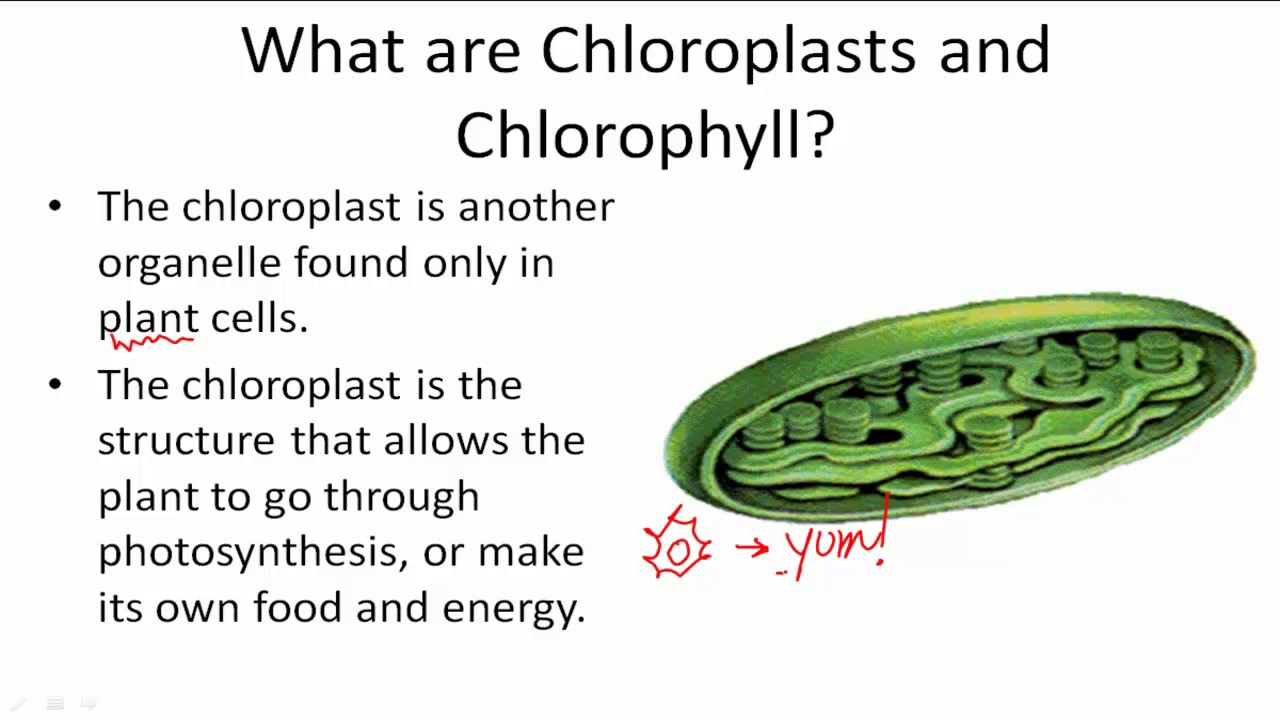
1:27
Biology
Functions of Chloroplasts and Chlorophyll
CK12
28K views•2017-05-24
Trending

5:07
Philosophy
One Must Imagine Sisyphus Happy
vlogbrothers
61K views•2026-07-21

25:15
Business
Future of Taylor Farms
maighstirtarot5385
11K views•2026-07-21

12:30
Business
The Downfall of OnePlus!
techwiser
65K views•2026-07-21

23:12
Engineering
My Friend Locked Up The Engine On His K-Swapped Bug...
boostedboiz
128K views•2026-07-21