Crocodile attacks involve a rapid sequence of events: an initial bite with 3,700 psi force causing bone shattering and tissue damage, followed by the death roll (2-10 seconds) that uses rotational force to cause avulsion injuries and structural failure, and finally drowning combined with hypovolemic shock from blood loss; the entire process from bite to unconsciousness takes 60-90 seconds, with the crocodile's 200 million years of evolutionary adaptation making it an apex predator perfectly suited for killing in shallow water environments.
Install our extension to search inside any video instantly.
What getting killed by crocodile attack Actually feels like
Added:Picture this. You're hiking in crocodile country. It's hot as hell, and you come across this beautiful shallow creek. You can literally see the bottom. It's maybe 3 ft deep, max. You've been walking for hours, you're overheated, and your brain goes, "What are the odds, really?
There's no signs here. It's flowing water, not a swamp, and you're just going to cool off for a minute." You step in. The water's perfect. You're waist-deep when you notice the rock next to you has eyes.
Welcome to what getting killed by a crocodile actually feels like.
Now, before we get into the absolute nightmare your body is about to experience, can we talk about your decision-making skills for a second?
"It's shallow, so it's safe" might be the most confidently incorrect thought ever produced by a human brain. Bro, crocodiles are ambush predators that have spent 200 million years perfecting the art of killing things in shallow water specifically. That's literally their office. You just walked into their cubicle and said, "Surely no one's working here." Spoiler alert, they're always working. But hey, you made your choice. Let's talk about what happens next, because your body is about to go through something that makes every horror movie look like a Disney production.
The bite, 0 to 2 seconds.
The first thing you need to understand is the bite itself. A saltwater crocodile, let's say that's what you're dealing with because you chose chaos, has a bite force of around 3,700 lb per square inch. For reference, a human bite is about 150 to 200 psi. A lion is around 650. This thing bites down with the force of a small car landing on you, except the car has 60 to 80 conical teeth designed to interlock.
Fun fact, those teeth aren't for chewing. They're for gripping. Each one is basically a meat hook attached to a muscle system that has one job: do not let go. When those jaws close around your torso, leg, or arm, the teeth puncture straight through skin, fat, and muscle like a nail gun going through drywall. We're talking penetration of 2 to 3 in deep instantly. The pressure is so extreme that if it gets your arm, the bones don't just break, they shatter into fragments. Your radius, ulna, and humerus turn into what orthopedic surgeons call a comminuted fracture, which is medical speak for your bone is now gravel.
The pressure also causes something called crush injury, where the tissue is so compressed that cells literally burst, releasing all their contents into your bloodstream.
And here's the kicker. This all happens in less than 1 second. Your brain hasn't even fully registered what's grabbed you yet.
The death roll, 2 to 10 seconds.
Okay, so you're locked in the jaws.
Maybe you're thinking you can fight it off, scream for help, something. Cute thought. Now comes the death roll. The crocodile begins rotating its entire body in the water at speeds up to one full rotation per second. You are now attached to a 1,500-lb organic blender that is spinning with one goal, to rip whatever it's holding clean off your body.
Let me explain the physics here, because it's genuinely diabolical.
Crocodiles can't chew. They also can't really move their head side to side to rip meat like, say, a shark. So, they use rotational force and your body's own structural limits against you. When it spins, your body wants to stay stationary because of inertia, but your arm or leg is being torqued in a circular motion. The result? Avulsion.
Avulsion is when tissue is forcibly detached from the body. Your skin, which is somewhat elastic, stretches first, then the connective tissue, ligaments, tendons, they start snapping like old rubber bands. Then muscles tear at the fascia. If the croc has your arm, the bones either fracture in a spiral pattern or disarticulate, which means it pops out of the joint completely. If it has your torso, your ribs are cracking in sequence, your organs are being compressed and twisted, and your spine is experiencing rotational shear forces it was absolutely not designed for.
We're talking structural failure on every anatomical level simultaneously.
Oh, and you're also underwater now because the roll drags you under.
Drowning plus shock, 10 to 90 seconds.
So, here's where your brain really starts to betray you. You've got three catastrophic things happening at once, massive trauma, blood loss, and oxygen deprivation. The blood loss is immediate and severe. Crocodile teeth create multiple puncture wounds with deep vascular damage. If it got your femoral artery, which runs down your thigh, you're losing around 500 ml of blood every minute. You've got maybe 5 L total. Do the math. That's not a lot of time. Your body responds by dumping adrenaline and going into hypovolemic shock. Your heart rate skyrockets trying to maintain blood pressure that's plummeting. Your peripheral blood vessels constrict to keep blood in your vital organs. This is why people in shock feel cold and look pale. It's your body giving up on your arms and legs to save your brain and heart. Except it won't save them. It's just delaying the inevitable.
Meanwhile, you're underwater. You probably gasped when you got bit, which means you inhaled water. Your larynx is spasming to prevent more water entering your lungs. That's called a laryngospasm, and it feels like being strangled from the inside. You can't breathe in or out. The oxygen in your bloodstream is depleting. Your brain, which uses 20% of your body's oxygen despite being 2% of your weight, begins to fail first. You're getting tunnel vision. Your thoughts are fragmented, confused, time feels distorted, and the crocodile still holding on, still rolling, still dragging you deeper.
Let's talk about the subjective experience because the mechanics are one thing, the reality of experiencing it is another level. The bite itself is often described by survivors. Yes, some people survive if the crocodile is smaller or let's go, as not immediately painful.
That sounds insane, but here's why. The trauma is so severe and so instant that your nervous system basically blue screens. You feel pressure, impact, confusion. The pain comes 2 to 5 seconds after when your brain catches up, and when it does, it's not like any pain you've felt before. It's not a cut, not a burn, it's deep, catastrophic, all consuming pressure and tearing. Imagine the worst Charlie horse you've ever had, multiply it by a thousand, and add the sensation of your body being ripped apart because it literally is. Survivors talk about unimaginable pain, which is a cop-out description, but genuinely, your brain doesn't have a reference point for this.
The death roll is disorienting to the point of losing all sense of direction.
You don't know which way is up. The water is churning, dark, full of your own blood. You might try to fight, but your punches do nothing. Hitting a crocodile's body is like punching a leather couch filled with stone. They don't even register it.
Then comes the panic of drowning. That's a special kind of terror. Your body's screaming for air, every cell in revolt, and you physically cannot get it. It overrides everything else, even the pain takes a backseat to the desperation for oxygen.
And then, if you're still conscious, things start to go quiet, not peaceful, just dim. Your hearing fades, your vision darkens, and your thoughts become distant, like you're behind thick glass.
That's cerebral hypoxia, your brain shutting down from lack of oxygen.
Most people lose consciousness within 60 to 90 seconds of submersion. Death follows within minutes.
Here's the part nobody likes to talk about. If the crocodile doesn't eat you immediately, and it might not because they often store prey underwater to soften it for a few days, your body gets wedged under a log or into a burrow in the riverbank. You become what's called a food cache. The people looking for you will search the banks, maybe see disturbance in the water, torn clothing.
It's not a quick recovery. It's a nightmare for everyone involved. All right, real talk. Here's how you avoid becoming a crocodile's meal prep. One, stay out of the water in crocodile territory, period. I don't care if it's shallow, clear, flowing, blessed by a priest. If there are crocs in the area, do not enter the water.
Two, if there's no signs, that doesn't mean there's no crocodiles. It means there's no signs. Crocs live in rivers, billabongs, estuaries, mangroves, and yes, even the ocean. Research where you're going.
Three, stay at least 5 m from the water's edge. Crocodiles can lunge from a stationary position and cover that distance in a heartbeat. Four, don't camp right next to water. Don't clean fish at the water's edge. Don't establish patterns. Crocs are smart.
They learn routines.
Five, if you're in a boat, don't dangle your arms or legs over the side. Keep everything inside the vessel. And look, if you somehow end up in a crocodile's mouth, fight for the eyes and nose.
They're the only soft spots, but let's be honest, your chances at that point are cooked. So, yeah, getting killed by a crocodile is drowning, dismemberment, and shock all happening simultaneously while attached to an apex predator that has literally not needed to evolve for millions of years because it's already perfect at killing you.
If you want to keep exploring the worst ways to go, and let's be honest, you've made it this far, so you clearly do, hit that subscribe button. I'll be here every day breaking down exactly how badly things can end for the human body.
And trust me, I'm not going anywhere.
I'm dead. I have nothing but time and an endless supply of mediocre afterlife coffee.
Related Videos
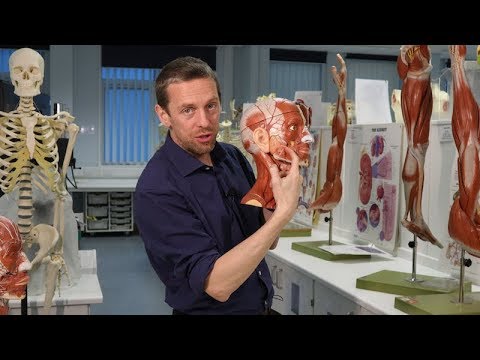
19:51
Biology
Salivary glands (anatomy)
SamWebster
139K views•2019-01-08
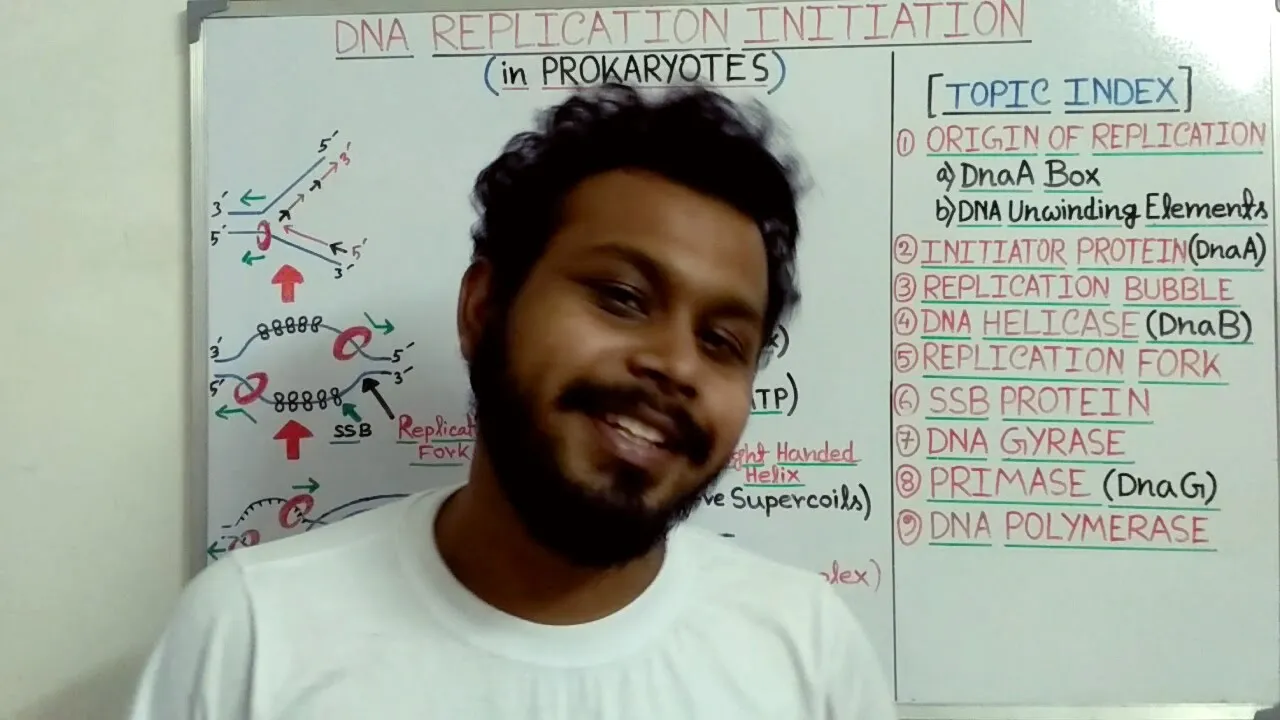
12:52
Biology
DNA Replication l Replication initiation in Prokaryotes
microbioscope18
4K views•2019-03-05

5:47
Biology
Identification of bacteria using biochemical tests (1 of 2)
microbiologyteachingvideos6490
24K views•2019-05-28
1:11
Biology
How PTSD Impacts Our Genes, with Dan Siegel
nicabm
31K views•2019-07-18

51:49
Biology
Influence of Footwear Longitudinal Bending Stiffness on Metatarsal Strains during Running
uofckinesiologyseminarseri2218
107 views•2025-12-02

6:57
Biology
Obscure Bird Grasshopper: It's One of the Big Ones!
RandysNaturalWorld
2K views•2025-08-26

5:36
Biology
B-Cell Receptors vs T-Cell Receptors - Overview
Sqadiacom
1K views•2025-01-31
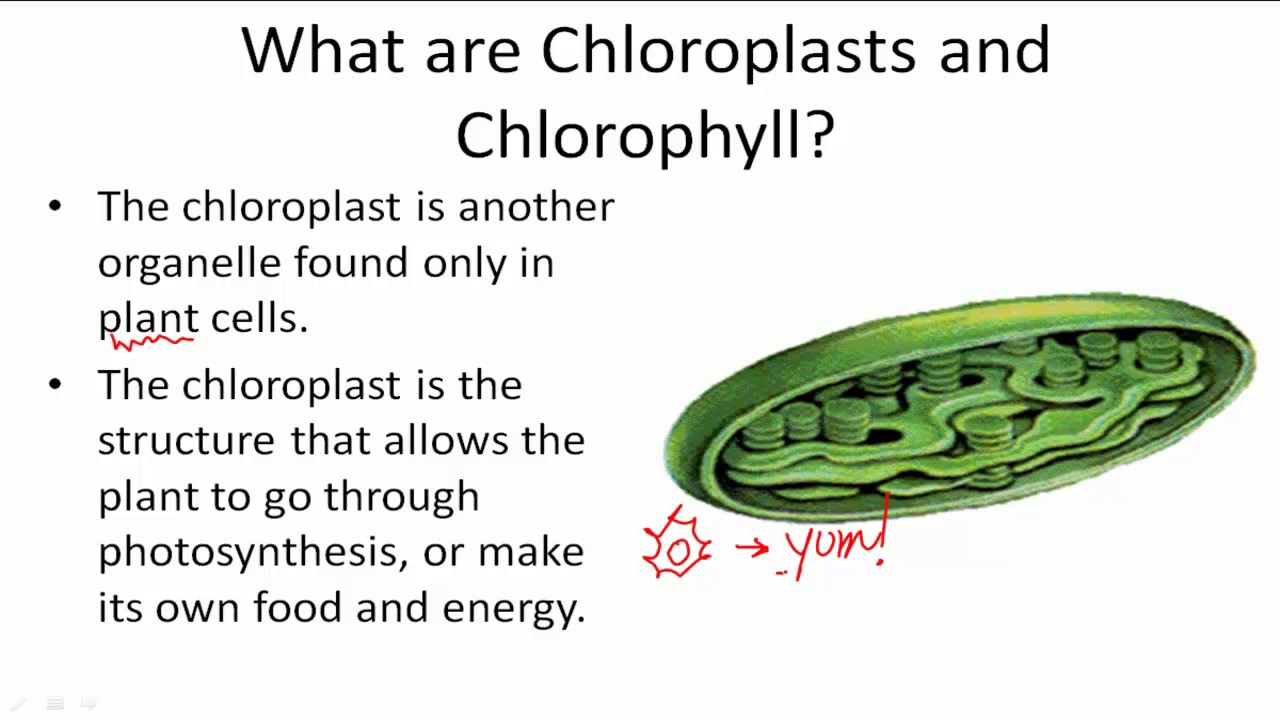
1:27
Biology
Functions of Chloroplasts and Chlorophyll
CK12
28K views•2017-05-24
Trending

5:07
Philosophy
One Must Imagine Sisyphus Happy
vlogbrothers
61K views•2026-07-21
25:15
Business
Future of Taylor Farms
maighstirtarot5385
11K views•2026-07-21

12:30
Business
The Downfall of OnePlus!
techwiser
65K views•2026-07-21

23:12
Engineering
My Friend Locked Up The Engine On His K-Swapped Bug...
boostedboiz
128K views•2026-07-21