Trees drop leaves not because of cold temperatures, but as a strategic cost-benefit calculation to conserve resources when water becomes scarce or freezing conditions threaten cellular damage; trees use day length as a reliable signal to trigger this process, and different tree species have evolved different strategies (deciduous vs. evergreen) based on their specific environmental conditions, with both approaches being equally successful adaptations.
Install our extension to search inside any video instantly.
Why Some Trees Lose Their Leaves and Others Don't
Added:Most people think trees drop their leaves because of the cold, but if that were true, trees near the equator, where it never even gets close to freezing ever, should keep their leaves all year round. Spoiler, they don't.
So, the cold isn't actually the reason.
And while we're at it, evergreens, mostly needle trees, don't drop theirs at all, even through the harshest winters.
Same cold, opposite behavior. So, what's actually going on here?
Before we get into why trees drop their leaves, we need to understand what a leaf is actually for and why needles are so different. A leaf is basically a solar panel. It's thin, it's wide, it's flat, built to catch as much sunlight as possible so the tree can turn that light into energy.
That process is called photosynthesis, and it's not just some minor plant trivia. It's the process that built almost every calorie of food on this planet and every breath of oxygen you've ever taken. Animals cannot do it and we cannot do it. Every ecosystem on Earth is basically running on sunlight that got captured by a leaf or by something that ate the thing that ate the leaf.
So, when we say a leaf is a solar panel, that's not a metaphor for a fact. It's closer to the literal truth than anything an actual solar panel does for you.
But, that same shape is also fragile. A big, thin surface loses water constantly just by existing. And if temperatures drop far enough, the water inside the leaf can freeze, expand, and rupture the cells from the inside. So, a leaf is a great tool, but it's a high-maintenance one. Needles are the opposite bet. Small surface area, a thick, waxy outer coating, a compact shape that doesn't lose much water at all. Conifer needles also carry natural compounds that almost act like an antifreeze, keeping ice crystals from forming and turning them apart. The antifreeze effect isn't a figure of speech, either. Conifer needles actually produce natural compounds, including specific sugars and proteins that lower the freezing point of water inside their cells. The same basic principle behind why salt keeps roads from icing over.
So, here's the trade-off in one line.
Leaves are high performance, high maintenance.
Needles are low performance, low maintenance, built to last. Keep that in mind. It's going to matter a lot later.
So, if leaves are the tree's solar panels, why get rid of them at all? It's not panic, it's not the tree giving up, it's a cost-benefit calculation. Here's the problem a tree runs into every winter. Even when it's cold, a leaf keeps losing water. That process doesn't just switch off because the temperature drops.
But, the ground can freeze as well, which means the roots can't pull up any water to replace what's being lost. So, the tree is bleeding a resource it cannot refill. On top of that, any water left inside the leaf itself is at risk of freezing solid. And when it does, the ice expands and destroys the cells around it. A leaf left on the tree through a hard freeze doesn't just stop working, it becomes dead weight. So, the tree does something smart. Before the damage happens, it pulls back everything valuable, the sugars, the nutrients, out of the leaves and stores them safely in the trunk and roots. Then, it seals off the now empty leaf and lets it go. So, dropping leaves isn't the tree surrendering to winter, it's the tree cutting its losses on its own terms before winter can take anything more than it's willing to pay.
Okay. So, we know why, but here's the part that trips most people up. How does a tree actually know it's time? Because it's not the cold. The cold hasn't even shown up yet when this process starts.
The signal is day length. Trees can actually sense how long the daylight lasts using a light-sensitive pigment inside their cells. As the days get shorter heading into autumn, that pigment picks up the change and kicks off the whole shutdown process. Why day length instead of temperature? Because temperature is unreliable. You can get a warm day in October and you can get a cold snap in September. It's noisy and it lies to you. Day length doesn't. It changes on the exact same schedule every single year like clockwork. Like it has already been doing for millions of years. So, the tree is using the one signal it can actually trust months before the real cold ever arrives, which means it's never caught off guard.
So, once the tree gets that signal, what actually happens inside the leaf and the tree?
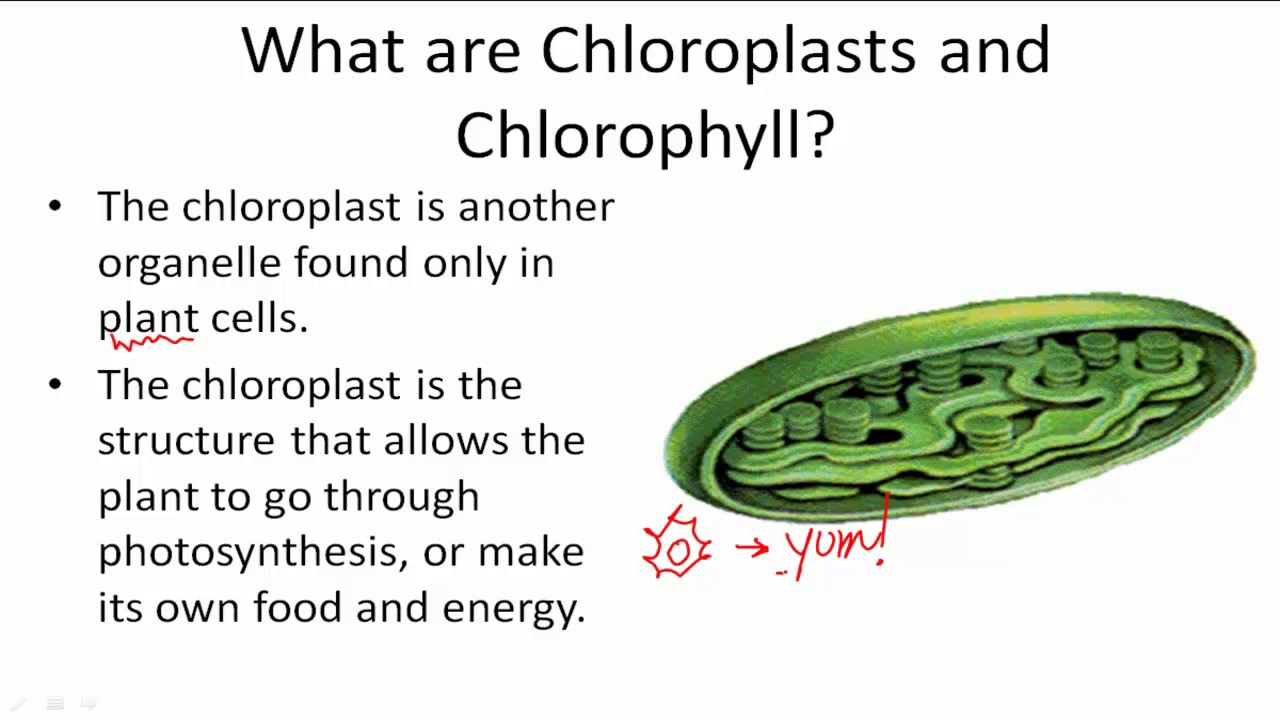
Well, the shortening days trigger a hormonal cascade and the first thing that starts happening is the breakdown of chlorophyll. Chlorophyll is the pigment that makes leaves green and it's also the thing that's actually doing the work of photosynthesis.
As the chlorophyll breaks down, it stops masking the other pigments that were in the leaf the entire time. The yellows and the oranges show up because they were always there, just hidden under all that green.
Some trees go a step further and actively produce brand new red pigments at this exact stage.
Meanwhile, at the base of the leaf stem, the tree is building something called an abscission layer. This is a deliberate structure. The tree is engineering a weak point, a seal that gets thinner and thinner until the leaf is barely hanging on. Then, it lets go.
So, a falling leaf isn't a leaf quietly dying and dropping off. It's an actively engineered release.
Quick pause before we jump continents.
If you're enjoying this video, and I genuinely hope you do, subscribing means a lot to me. It only takes you 1 second and it costs nothing and it's basically the only reason I get to keep making these.
Okay.
Back to the trees.
Remember that opening claim? Trees at the equator know winter ever and yet some of them still lose their leaves.
Here's why.
The trigger isn't day length and it's definitely not cold. It's water.
Many tropical trees drop their leaves heading into the dry season for exactly the same underlying reason. Leaves become too expensive to maintain when a resource runs short. It's just that in this case, the scarce resource is water instead of warmth. You can actually see this play out in real forests. In parts of the tropics with a sharp dry season, think savanna adjacent forest, not rainforest, trees will drop their leaves for months at a stretch, then flush an entire new green canopy almost overnight the second the rains come back. It looks dramatic on satellite images. Whole regions going from bare to green in a matter of weeks.
Rainforest trees, by contrast, barely bother. Because in true rainforest, water was never the scarce resource to begin with.
So, even in the tropics, whether a tree drops its leaves comes down to the exact same question. Is water reliable here or not? And that's actually the proof this was never really about winter specifically. It's about scarcity, period. Different climates just hand out different flavors of it. So, if dropping leaves is such a good strategy, cutting losses early, avoiding freeze damage, why doesn't every tree do it? Why do evergreens just not bother? Remember what we said back at the start. Needles are cheap to maintain, but expensive to build in the first place. That upfront cost only makes sense if the needle sticks around a long time. And it does.
Most conifer needles last 3 to 4 years before the tree quietly replaces them, a few at a time instead of all at once.
And if you want proof that this is really just a cost-benefit calculation and not some fixed rule about what conifers are, there's a tree that breaks its own category, the larch. It's a full conifer, cones and everything. And every single autumn, it does something almost no other conifer does. It turns yellow and it drops every needle it has, just like a broadleaf tree. Why? Larches evolved to grow in brutally cold places, the kind of far north, high altitude cold where even a needle's tiny water loss becomes a liability for months at a time. So, the tree makes the same trade a maple makes. It decides that even the cheap option is too expensive to run all winter and it's better to rebuild from scratch every spring. Which tells you everything about how this actually works. It was never needle versus leaves. It was always the same math run on every tree with the environment picking the answer. That's the key.
Evergreens tend to win out in places where growing season is short or the soil is poor or resources are just tight all year round. Conditions where a rebuilding an entire set of leaves from scratch every single year would be brutally expensive. Deciduous trees on the other hand tend to dominate where the growing season is long and rich enough that cheap, disposable, and rebuild every year actually comes out ahead. So, here's the payoff. It's not the one strategy that is better than the other. They're just two different answers to the exact same cost-benefit equation. The environment just decides which answer wins. So, the next time you see a tree standing bare in the snow right next to one still fully green, that's not one tree that failed to prepare and another one that succeeded.
That's two completely different bets on how to survive. Both still paying off millions of years later.
Related Videos

19:51
Biology
Salivary glands (anatomy)
SamWebster
139K views•2019-01-08

12:52
Biology
DNA Replication l Replication initiation in Prokaryotes
microbioscope18
4K views•2019-03-05

5:47
Biology
Identification of bacteria using biochemical tests (1 of 2)
microbiologyteachingvideos6490
24K views•2019-05-28
1:11
Biology
How PTSD Impacts Our Genes, with Dan Siegel
nicabm
31K views•2019-07-18

51:49
Biology
Influence of Footwear Longitudinal Bending Stiffness on Metatarsal Strains during Running
uofckinesiologyseminarseri2218
107 views•2025-12-02

6:57
Biology
Obscure Bird Grasshopper: It's One of the Big Ones!
RandysNaturalWorld
2K views•2025-08-26

5:36
Biology
B-Cell Receptors vs T-Cell Receptors - Overview
Sqadiacom
1K views•2025-01-31
1:27
Biology
Functions of Chloroplasts and Chlorophyll
CK12
28K views•2017-05-24
Trending

13:55
History
MIC DROP: Smithsonian Director Called Out For Woke Propaganda
TheAmalaEkpunobi
37K views•2026-07-23

9:05
Artificial Intelligence
2.4 BILLION Records Got Leaked...
DeepHumor
15K views•2026-07-22

16:52
Anthropology
Americans Confused in Australia for 17 Minutes Straight
IWrocker
17K views•2026-07-23

13:25
Business
Playstation NO DISC/NO BUY Fight Is Over...
DavidJaffeGames
4K views•2026-07-23