Predators historically avoided sleeping humans due to multiple converging evolutionary factors: humans were terrifying as a species that hunted large carnivores for over a million years, causing predators that attacked humans to die out while cautious ones survived; sleeping humans don't fit predator hunting instincts as they lack the specific shape, smell, and movement patterns of typical prey; predators run risk calculations and humans fail these due to unpredictability, threatening posture, and uncertain rewards; fire created a boundary that most animals avoid; human sleep cycles include lighter stages where the brain remains alert to unfamiliar sounds (sentinel function); and humans sleep in groups, multiplying the risk for predators. These layered factors, not luck, allowed human ancestors to survive for tens of thousands of years, and this caution has been inherited by modern predators, causing them to avoid human spaces today.
Why Predators Ignore Sleeping Ancient Humans Every Single Night?
Added:It's dark. No walls. No fire yet. Bare ground. A thin animal hide. Cold night air. Open sky. Sleeping bodies. Closed eyes. Slow steady breathing. And a treeine watching. This is your ancestor 50,000 years ago. No tent, no door to lock, no weapon in hand. Just soft, warm, unconscious meat lying in the open in the middle of a landscape absolutely packed with things that could kill and eat them. Cave lions, leopards, hyenas the size of a small bear. Wolves that hunt in coordinated packs. Animals that see in the dark, smell blood from a mile off, and hear a heartbeat across a clearing. Your ancestor cannot run, cannot fight in their sleep, cannot even wake up fast enough to matter. And yet, night after night after night, for tens of thousands of years, they woke up.
They survived long enough to have children long enough that those children are eventually you. So why? Think about how strange that is. The slowest thing out there, the softest thing out there, the one animal that can't see in the dark and can't smell danger coming. Why did the most vulnerable creature in the whole ecosystem get left alone night after night in the one place it was most exposed? It isn't luck and it isn't one reason. It's several layered on top of each other and every one of them is still running tonight. Let's go through them. Start with the one that sounds like arrogance but is just biology. Your ancestors were terrifying. Not as individuals, a lone sleeping human is soft and slow and easy. But as a species, spread across the landscape, humans were the single most dangerous thing most predators had ever encountered. Because we didn't just live alongside those predators, we hunted them. For a very, very long time, on the order of a million years, arguably longer, our ancestors were killing large carnivores with fire, with spears, with numbers, with traps, with the kind of patient, coordinated intelligence nothing else in the animal world had.
And wherever our ancestors spread, the largest, most fearsome animals had a habit of vanishing. mammoths, giant cave bears, saber-tooth cats. Climate played its part in those extinctions, and researchers still argue over exactly how much, but human hunters were almost certainly part of the story. And here's what that does over deep time. The predators that treated early humans as easy prey, the bold ones, the ones that crept into camps, the ones that attacked the sleeping shapes on the ground, those animals ran into armed, furious, cooperating groups, and they tended to die. They tended not to pass on their genes. The cautious ones lived. The ones that smelled a human and turned around.
The ones that gave the strange upright creatures a wide birth. The ones that decided the risk simply wasn't worth it.
Those predators survived. Those predators reproduced. Those predators became the ancestors of nearly every large carnivore alive today. That's not a story. That's natural selection running for thousands of generations. We didn't just frighten predators. We edited them. We became a pressure so consistent and so lethal that avoiding humans got written into the deep instinct of the animals that hunt at night. So when a leopard drifted toward your sleeping ancestor and then for no reason it could name stopped, that hesitation was already ancient. It had been paid for in predator lives over an unimaginable stretch of time. The second reason is that your ancestor didn't make sense. Literally to a predator's senses, a sleeping human does not compute. A predator's hunting instinct is not a general urge to kill anything that holds still. It's a finely tuned system calibrated over millions of years to specific prey. A big cat's strike is triggered by the shape, the smell, the movement of the animals it has hunted a thousand times. A wolf's drive locks onto the gate of hoofed animals fleeing across open ground. A human fits none of that. Wrong shape, wrong smell, wrong movement, or rather no movement at all.
just a still breathing lump that doesn't bolt, doesn't freeze in the familiar way, doesn't behave like anything in the predator's catalog of food, and the smell is the strangest part. To a nose that may be thousands of times more sensitive than yours, a bear's estimated at several times sharper than a blood hounds, and a big cat can almost taste the air, pulling scent across a special organ in the roof of its mouth. Your ancestor is broadcasting a bizarre chemical signal. Wood smoke soaked into skin and hair. Blood and fat from butchered animals, ash, hides, plant residue, other humans. Underneath all of it, a primate, yes, but not the deer, not the analopee, not the prey these animals evolved to chase. To the predator, none of it adds up to dinner.
It adds up to a question. And here's the thing about wild animals in questions.
They don't lean in. A creature that survives in the dark is deeply suspicious of anything unfamiliar. The new smell, the strange shape, the thing that doesn't match the pattern. In the wild, unfamiliar is exactly what gets you killed. So, the safe move, the move that kept predators alive, is to treat the anomaly as a threat and back away.
In the wild, curiosity kills. Caution survives. And every predator alive tonight is descended from the ones that chose caution. Your ancestors greatest protection was simply not fitting the menu. The third reason is the coldest, and it's pure math. Predators are not the reckless killing machines movies made them out to be. They can't afford to be. A wild carnivore has no vet, no medicine, no second chances. A cracked tooth, a kicked rib, a torn shoulder, any of it can turn into a slow death by starvation. So every predator every night is running the same brutal calculation before it commits. Is this worth the risk? And a sleeping human fails that calculation three different ways. First, unpredictability.
A predator is confident hunting prey it understands. It knows how a gazelle runs, where it's weak, when it panics.
It has no idea what a human will do.
Maybe this one wakes up silent. Maybe it wakes up screaming. Maybe it has a sharpened stick within reach. Maybe there are others just out of sight. For an animal built to avoid injury, that much uncertainty is a flashing red light. That alone is often enough to send it looking elsewhere. Second, the body itself. Even asleep, a human is a strange threatening shape. And the moment one stands, it rears up tall, upright on two legs. In the animal world, rising up to full height is a threat display. It's what bears do to intimidate. It's what makes a creature look bigger and more dangerous than its weight suggests. Your ancestors carried that signal in their posture without even trying. Third and simplest, why bother? A healthy predator in a functioning landscape has easier options everywhere. Familiar prey, known behavior, low risk. Given the choice between a deer it has hunted a hundred times and a strange upright, possibly armed unknown, the math is obvious. Risk a serious injury for an uncertain meal or take the sure thing grazing quietly nearby. No healthy predator picks the gamble. Those three failures alone were usually enough. But your ancestors also carried one thing into the dark that had nothing to do with the predator's math.
Fire. Once they could keep a flame through the night, they had something almost nothing in nature will approach.
The fear of fire runs so deep that most wild animals give it a wide birth on sight. A fire in the dark doesn't just warm the camp. It announces that something in there controls the one force the whole forest is afraid of. To a predator reading the dark, a steady flame is a boundary. A line that says, "Whatever made this, do not test it."
Now, here's the part almost nobody expects, and it's not about the predator at all. It's about the sleeper. Your ancestor was never as unconscious as they looked. Human sleep isn't a single deep blackout and moves in cycles, dropping into deep sleep and then rising back up into lighter stages over and over across the night. Some of those lighter windows are REM sleep when the brain runs nearly as hot as it does awake. And unfamiliar sounds cut through those stages far more easily than familiar ones. And in those lighter stages, the brain never fully lets go of the outside world. It keeps filtering sound. It flags the unfamiliar. A wind that's just wind gets ignored. A branch snapping under weight, a heavy body moving through brush does not.
Researchers call this the sentinel function of sleep. Even at rest, part of you stays on watch. There's a reason for that. The ancestors who slept like the dead, who couldn't be pulled awake by a threat, were the ancestors who sometimes didn't wake up at all. The light sleepers lived. And that legacy is still in you. It's why an unfamiliar noise in a strange room snaps you awake while your own home barely registers. Studies of modern hunter gatherer groups back this up. Communities like the Hadza and the Sand tend to sleep in one consolidated stretch of 6 or 7 hours.
And remarkably, several have no real word for insomnia. Restful, yes.
Switched off, never. Which leads to the last reason, and it's the one your ancestor relied on most. They were almost never alone. Humans sleep in groups. We always have. And a group changes everything for a predator.
Hunters across the animal world don't just look for prey, they look for the one that's isolated, the straggler, the individual cut off from the herd. A tight group is a nightmare to attack because the risk multiplies. One sleeper is a gamble. 10 sleepers who wake together are a wall. A camp of sleeping humans isn't one target. It's many. And the instant one of them wakes and cries out, the rest wake, too. What might have been a quiet, low-risk ambush becomes a loud, chaotic, dangerous scramble against multiple upright, shouting, possibly armed creatures. Exactly the kind of mess a careful predator is wired to avoid. Sleeping close together, your ancestors turned their greatest weakness, helplessness, into a shared alarm system. Now, none of this means the dark was ever safe. It wasn't, and it would be dishonest to pretend otherwise. Ancient life was brutal.
Child mortality was staggering. There was no medicine. Violence between people was common, and a single bad night could end an entire family line. Predators absolutely did kill our ancestors. Some of the oldest homminin skulls we found still carry puncture marks that line up with the fangs of big cats. A grim direct record of exactly this. The point isn't that it never happened. The point is that it was the exception. And the exceptions almost always share a cause.
Something had broken the normal rules.
Look at the documented man-eaters of more recent history and the pattern is stark. Take the leopard of Rudra Pyog in northern India. Blamed for more than a 100 deaths from 1918 to 1926 before the hunter Jim Corbett finally tracked it down. It became a man-eater by the most common account after feeding on human bodies during a deadly epidemic when the usual funerals broke down. Its behavior wasn't natural predator behavior. It was a normal animal pushed into an abnormal situation. That's the shape of nearly every case. A predator too injured to catch its usual prey. A predator starving because its habitat collapsed.
A predator that lost its fear of humans because people started feeding it on purpose or by accident. The weariness that protects us is strong, but it is not magic. Break the conditions that built it and the exception appears. For your ancestors, that meant the real danger was rarely a healthy predator in a normal night. It was the sick one, the starving one, the desperate one, the animal with nothing left to lose. Step back, though, and the scale of what your ancestors pulled off is staggering. They didn't just survive the night. They changed what the night meant permanently for every animal in it. The caution that made a leopard hesitate over a sleeping human 50,000 years ago didn't disappear.
It compounded. It passed down predator generation after predator generation all the way to the animals prowling the world tonight. That's why a mountain lion today will abandon a fresh kill and flee at the mere sound of a human voice.
Why bears and wolves and big cats across entire continents quietly rearrange their whole lives to avoid places where people simply are. They are not reacting to you. They are reacting to something far older than you. an inherited verdict delivered across 10,000 generations that humans are the one thing not worth the risk. Not the fastest thing in the wild, not the strongest, just the one that over deep time proved again and again too costly to touch. And that fear ripples outward in ways we barely notice. When top predators avoid human spaces, the animals they normally hunt spread and multiply. Deer and smaller grazers move in more boldly. The plants they feed on take the hit. The effects run all the way down the chain. Whole ecosystems bend around a fear of us. A fear we mostly aren't even trying to cause anymore. We became so dangerous for so long that the natural world reorganized itself around avoiding us.
Your sleeping ancestor was one small payment toward that outcome. And the whole living world is still paying it forward. So there was never one reason your ancestor woke up every morning.
There were many converging in the dark.
A species that hunted its own hunters into caution. A body that didn't fit any predator's idea of food. A cold risk calculation that never came out in the predator's favor. A brain that stayed half awake. A group that slept close and woke together. And a fire that held back the dark. None of it was luck. All of it is still inside you. So the next time you lie down in the quiet and feel that faint old pull of unease, the sense that something might be out there, don't fight it. That feeling is ancient and it did its job. Your ancestors survived every night that mattered. That's the only reason you're here to close your eyes at all. So close them. Whatever's out there already decided long ago to leave you be. Sleep well.
Related Videos

Salivary glands (anatomy)
SamWebster
139K views•2019-01-08
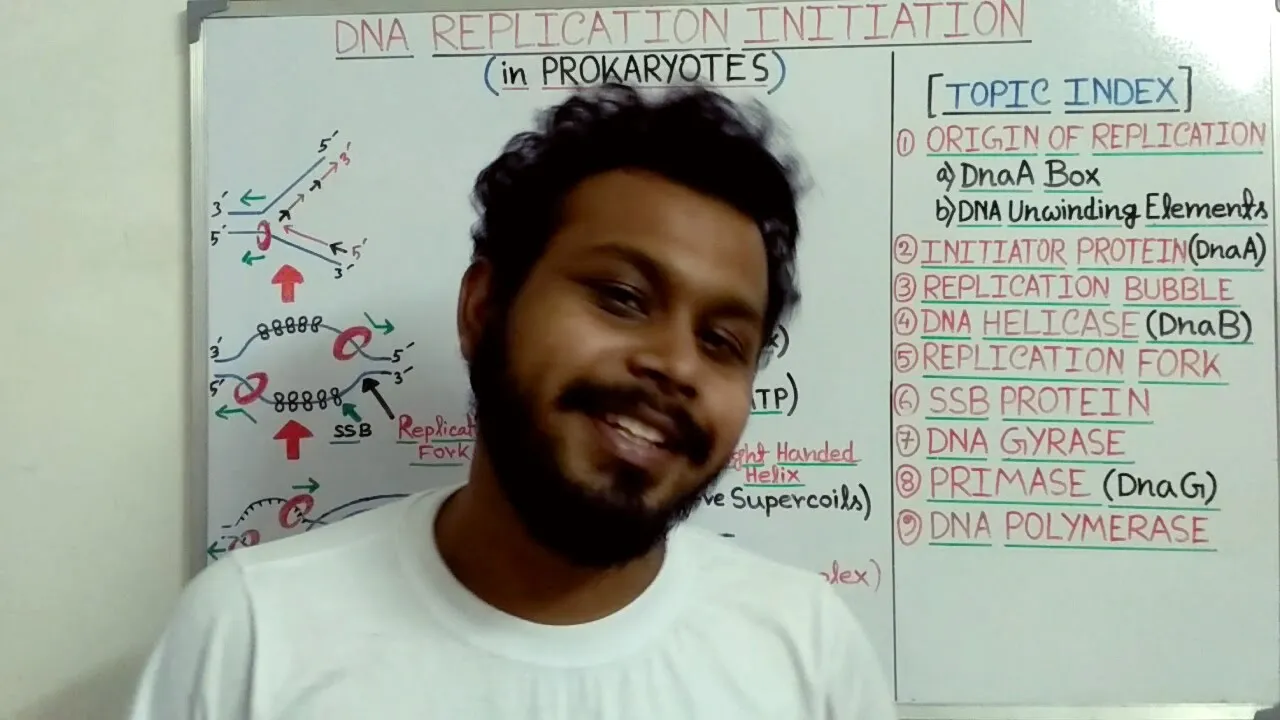
DNA Replication l Replication initiation in Prokaryotes
microbioscope18
4K views•2019-03-05

Identification of bacteria using biochemical tests (1 of 2)
microbiologyteachingvideos6490
24K views•2019-05-28
How PTSD Impacts Our Genes, with Dan Siegel
nicabm
31K views•2019-07-18

Influence of Footwear Longitudinal Bending Stiffness on Metatarsal Strains during Running
uofckinesiologyseminarseri2218
107 views•2025-12-02

Obscure Bird Grasshopper: It's One of the Big Ones!
RandysNaturalWorld
2K views•2025-08-26

B-Cell Receptors vs T-Cell Receptors - Overview
Sqadiacom
1K views•2025-01-31
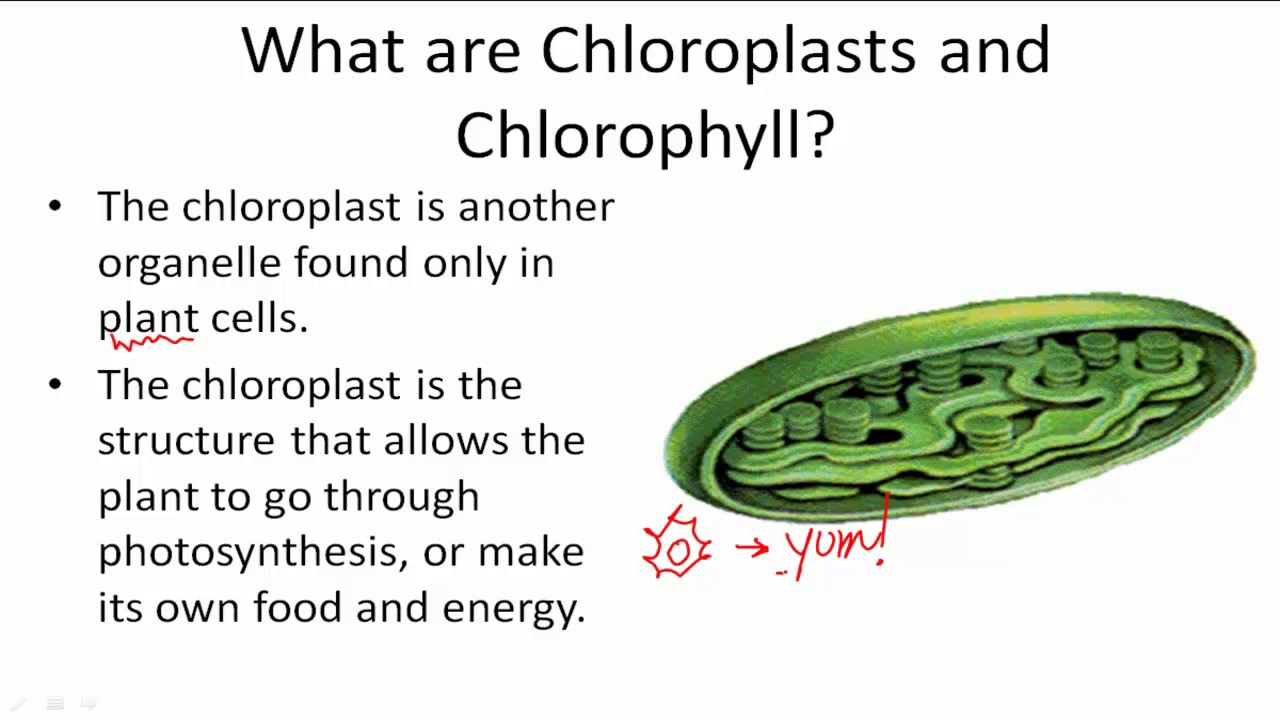
Functions of Chloroplasts and Chlorophyll
CK12
28K views•2017-05-24
Trending

WOW! Judge TURNS THE TABLES on Trump in His OWN $10B LAWSUIT!!!
MeidasTouch
197K views•2026-07-23

Playstation NO DISC/NO BUY Fight Is Over...
DavidJaffeGames
4K views•2026-07-23

Steam and Xbox Just Dropped The Hammer On PlayStation
OhNoItsAlexx
9K views•2026-07-23

Americans Confused in Australia for 17 Minutes Straight
IWrocker
17K views•2026-07-23