Leaves are green because they contain chlorophyll, a pigment that absorbs red and blue wavelengths of light while reflecting green light, which allows plants to perform photosynthesis and convert sunlight into energy for life on Earth.
Install our extension to search inside any video instantly.
Why Are Leaves Green?
Added:[music] >> Take a walk through almost any forest, park, or backyard, and one color dominates the landscape, green. From towering oak trees to tiny blades of grass, leaves across the world seem to share this familiar shade. But, have you ever wondered why? Why aren't most [music] leaves blue, red, or even black?
Is green simply a coincidence, or is there a deeper scientific reason behind it? So, why are leaves green?
As it turns out, the answer involves sunlight, chemistry, evolution, and billions of years of life adapting to Earth. The green color that we often take for granted is actually a remarkable clue about how plants survive and how our planet functions. Let's dive in, [music] right here, on History of Simple Things.
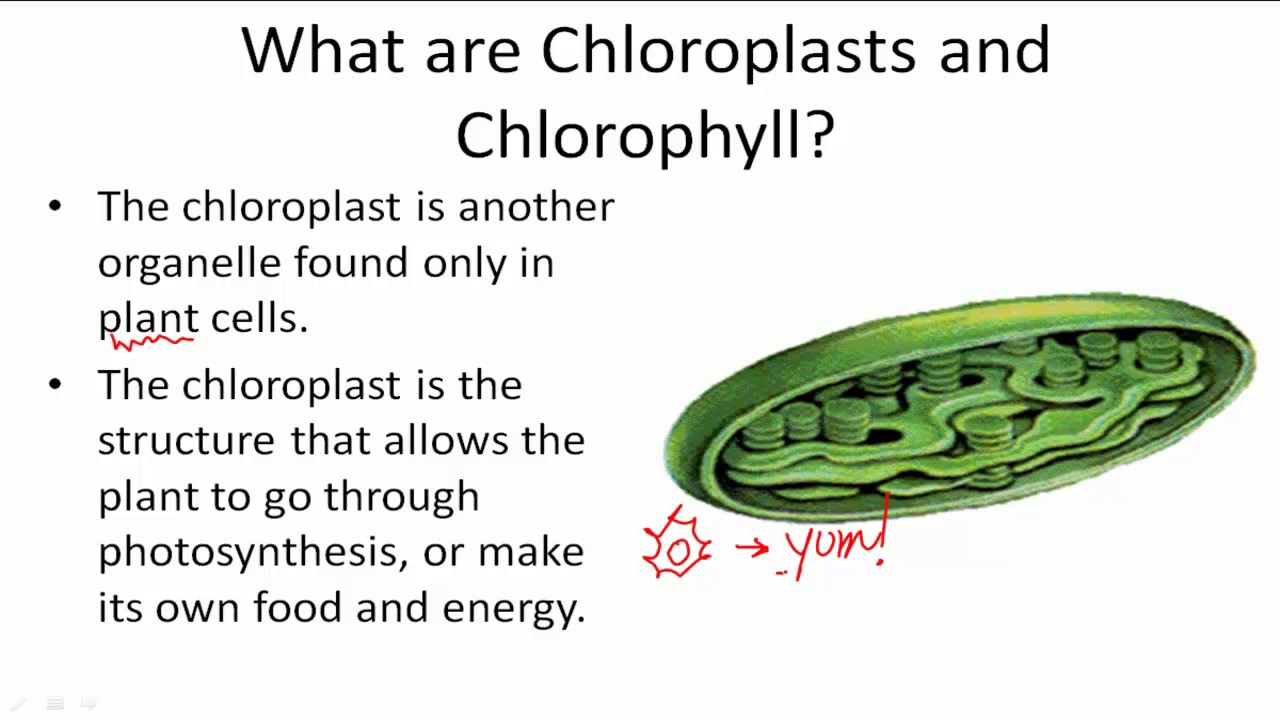
The primary reason leaves are green is because they contain a pigment known as chlorophyll. A pigment is a substance that absorbs certain colors of light while reflecting others. Chlorophyll is found inside tiny structures called chloroplasts, which exist in the cells of plant leaves. These chloroplasts act like miniature solar power stations, capturing energy from sunlight.
Chlorophyll is especially good at absorbing red and blue wavelengths of visible light, which carry plenty of energy for photosynthesis. However, it absorbs much less green light. Instead of using those green wavelengths, chlorophyll reflects and scatters them back into the environment. When sunlight reaches our eyes after bouncing off a leaf, the green wavelengths are what we see, making the leaf appear green. This isn't because plants create green light, but because they leave that part of the visible spectrum largely untouched while absorbing the colors they need most.
The green color of leaves is closely tied to one of the most important biological processes on Earth, photosynthesis.
During photosynthesis, plants use sunlight to convert carbon dioxide from the air and water from the soil into glucose, a type of sugar that serves as food.
Oxygen is released as a byproduct, making the atmosphere breathable for animals and humans. Chlorophyll plays the central role by capturing light energy and using it to drive a series of chemical reactions inside the chloroplast. These reactions eventually produce the energy-rich molecules needed to build glucose. Without chlorophyll, plants would struggle to capture enough sunlight to survive. Since nearly every food chain begins with plants converting sunlight into usable energy, photosynthesis supports almost every living organism directly or indirectly.
The green color of leaves is therefore a visible sign that this life-sustaining process is constantly taking place around us.
If sunlight contains all the colors of the rainbow, why did plants evolve to reflect green instead of using every available wavelength? Scientists have studied this question for decades, and the answer is more complex than it first appears. Chlorophyll evolved billions of years ago under the lighting conditions of the young Earth.
The sun emits the greatest amount of energy in green wavelengths, but those wavelengths are not always the most efficient for driving photosynthesis.
Red and blue light provide energy that chlorophyll can use particularly effectively during the chemical reactions involved in producing sugars.
Green light also penetrates deeper into leaves, allowing lower layers of cells to use some of it through additional pigments and scattering effects.
Researchers continue to investigate why chlorophyll became Earth's dominant photosynthetic pigment, but its remarkable efficiency has allowed green plants to thrive across countless environments for hundreds of millions of years.
Although green is the most common leaf color, it is not the only one. In autumn, many trees turn yellow, orange, and red as shorter days and cooler temperatures cause chlorophyll to break down. As the green pigment fades, carotenoids and anthocyanins become visible, creating warm and vivid colors.
Some tropical plants naturally display red, purple, or variegated leaves year-round, yet they still contain chlorophyll beneath those pigments. No matter their appearance, nearly all plants rely on chlorophyll to power photosynthesis.
From mosses on forest floors to rainforest trees, pond plants, and open field grasses, chlorophyll is the main pigment that captures sunlight.
Some plants and algae also use accessory pigments to absorb extra wavelengths, especially in shade or underwater, but chlorophyll remains the foundation.
This shared strategy has helped plants survive in many habitats for hundreds of millions of years, showing that even when leaves do not look green, chlorophyll is still one of the most important molecules supporting life on Earth in nearly every ecosystem on the planet today.
The green color of leaves affects far more than individual plants. Through photosynthesis, forests, grasslands, and other vegetation absorb carbon dioxide and release the oxygen that animals and humans need to survive. Plants also help cool the environment through shade and transpiration, while providing the energy that supports nearly every food chain. Scientists even use satellites to measure Earth's greenness to monitor forests, crops, droughts, and ecosystem health. What appears to be an ordinary green leaf is actually a sign of one of nature's most important processes.
Every leaf plays a small but vital role in maintaining healthy ecosystems, supporting biodiversity, regulating the climate, and helping keep Earth a planet where life can continue to thrive.
Leaves are green because of chlorophyll, the pigment that absorbs red and blue light while reflecting green.
This allows plants to perform photosynthesis, producing the food and oxygen that sustain nearly all life on Earth. Although scientists continue to study why chlorophyll became nature's dominant pigment, its importance is undeniable.
The next time you see a green leaf, remember that its color is more than just appearance. It is a visible sign of one of nature's most essential processes, quietly powering the ecosystems that make life on our planet possible.
Thank you for watching. If you have suggestions for our next video, feel free to share them in the comments below. We'll be sure to give you an acknowledgement for your contribution.
Thank you for [music] joining us on this journey through the history of simple things. Don't forget to like, subscribe, and stay tuned for more stories woven through the smallest details.
>> [music]
Related Videos

19:51
Biology
Salivary glands (anatomy)
SamWebster
139K views•2019-01-08

12:52
Biology
DNA Replication l Replication initiation in Prokaryotes
microbioscope18
4K views•2019-03-05
5:47
Biology
Identification of bacteria using biochemical tests (1 of 2)
microbiologyteachingvideos6490
24K views•2019-05-28

1:11
Biology
How PTSD Impacts Our Genes, with Dan Siegel
nicabm
31K views•2019-07-18

51:49
Biology
Influence of Footwear Longitudinal Bending Stiffness on Metatarsal Strains during Running
uofckinesiologyseminarseri2218
107 views•2025-12-02

6:57
Biology
Obscure Bird Grasshopper: It's One of the Big Ones!
RandysNaturalWorld
2K views•2025-08-26

5:36
Biology
B-Cell Receptors vs T-Cell Receptors - Overview
Sqadiacom
1K views•2025-01-31
1:27
Biology
Functions of Chloroplasts and Chlorophyll
CK12
28K views•2017-05-24
Trending

5:07
Philosophy
One Must Imagine Sisyphus Happy
vlogbrothers
61K views•2026-07-21

25:15
Business
Future of Taylor Farms
maighstirtarot5385
11K views•2026-07-21

12:30
Business
The Downfall of OnePlus!
techwiser
65K views•2026-07-21

23:12
Engineering
My Friend Locked Up The Engine On His K-Swapped Bug...
boostedboiz
128K views•2026-07-21