Sarcasm is a communication strategy that allows speakers to convey hidden messages while protecting their vulnerable self, functioning through a psychological architecture where mind interprets slights, emotion generates hurt, identity cannot afford to admit vulnerability, and meaning hardens the pattern, creating a self-reinforcing loop that makes plain speech feel unsafe.
Install our extension to search inside any video instantly.
What Sarcasm Actually Is | Psychological Architecture
Added:Picture this. Someone says, "Oh, great job." and means the opposite.
You knew instantly. Nobody has to explain sarcasm to you. You've been fluent since childhood.
But here's what's strange about it.
Sarcasm is the only form of speech designed to say a thing and deny saying it at the same time.
"Nice of you to show up."
The words are a compliment. The meaning is an accusation. And if the other person objects, there's an an exit already built in.
"Relax, I was just joking."
That exit is the whole point. And it's worth asking what it's for.
Because sarcasm isn't just humor. Plenty of it has no joke in it at all.
What it has is a real message the speaker didn't want to deliver plainly.
So, the question underneath sarcasm is this.
Why not just say the thing?
Why does a person reach for a form that lets them mean something and take it back in the same breath?
To answer that, I need to give you a different way of looking at it.
I want to give you a way of looking at this because because it's the lens I'll use for the rest of this.
I work in a framework I call psychological architecture. It reads psychological life across four domains: mind, emotion, identity, and meaning.
Now, mind is how you interpret. Emotion is what you feel.
Identity is who you take yourself to be.
Meaning is what any of this amounts to.
The important part is that they aren't separate compartments. They are They are load-bearing on each other.
What happens in one doesn't stay there.
And that's what we're about to see.
Start in mind.
Something happened that the person read as a slight.
A partner forgot something, a colleague took credit.
The reading forms fast. I've been wronged here.
That's mind doing what it does, interpreting.
And it usually always interprets toward the critical.
Now, that reading has to go somewhere, and it loads onto emotion.
And what shows up isn't clean anger, it's a mix. Irritation, but also hurt.
And hurt is the harder one because because hurt means you cared.
Hurt means the thing got to you.
There's a vulnerability in that.
Watch what happens next because this is the move.
That emotional pressure arrives at identity.
At who the person takes themselves to be.
And for a lot of people, the self they've built doesn't have room to say, "That hurt me."
To say it plainly would be to stand there exposed, having to admit that you can be hurt.
That you wanted something from this person. That that you cared whether they came through.
For the self that can't afford that admission, plain speech is too dangerous.
So, identity needs a way to send the message without signing its name to it.
And that's what sarcasm is. That's the exit built into "Relax, I was just joking."
It lets the accusation land while the self stays protected.
You got to say it, but you didn't have to be the person who said it.
If it's challenged, you were only kidding.
The vulnerability was never on the table.
Now, let's look at meaning.
Once this becomes the way a person handles being hurt, it starts to shape what their relationships mean to them.
Closeness now runs through a filter. The people around them learn that things are being said sideways, that "I'm fine."
might not be fine.
That the joke had a razor blade in it.
Directness starts to feel unsafe on both ends.
And here's where the loop closes.
That revised meaning, plain speech gets you exposed, sideways speech keeps you safe.
It feeds straight back into mind.
The next lie gets read faster. And the reach for the sideways version gets more automatic.
The architecture that was built to protect the self ends up walling it off.
The thing that keeps you from being hurt also keeps you from being reached.
That's the loop. A reading in the mind, pressure, an emotion, a self and identity that can't afford to be seen wanting, and a meaning that hardens the whole pattern in place.
So, the next time you catch yourself being sarcastic or you're on the end of it from someone else, the useful question isn't, "Was that mean?"
It's, "What couldn't get said straight?"
Because the sarcasm is never the real message. It's the packaging the real message needed in order to get out safely.
If you want to go further into how these four domains work, mind, emotion, identity, and meaning, and what they explain beyond sarcasm, I write about it all on my website, profRJstar.com.
These videos are the entry way. The written work is where it all opens up.
Related Videos

0:39
Psychology
Inside Ronaldo’s Team Meeting
RonoSphereCR7
1K views•2026-04-17

7:25
Psychology
You Are Not So Smart: Chapter 4 Hindsight Bias, What is it?
TheBey8nD8
230 views•2019-09-15
49:35
Psychology
Sigmund Freud's Mind - Master Your Inner World (Your Unconcious Mind)
Ngaslife
1K views•2025-01-25

11:29
Psychology
What affects your mood?
RandyPaterson
602 views•2019-05-16
3:45
Psychology
Can you outsmart this logical fallacy? - Alex Gendler
TEDEd
2164K views•2019-11-25

1:02:21
Psychology
Understanding the Relationship between Fear of Falling and Mobility in Older Adults
fallpreventioncommunityofp3788
823 views•2019-04-08
54:04
Psychology
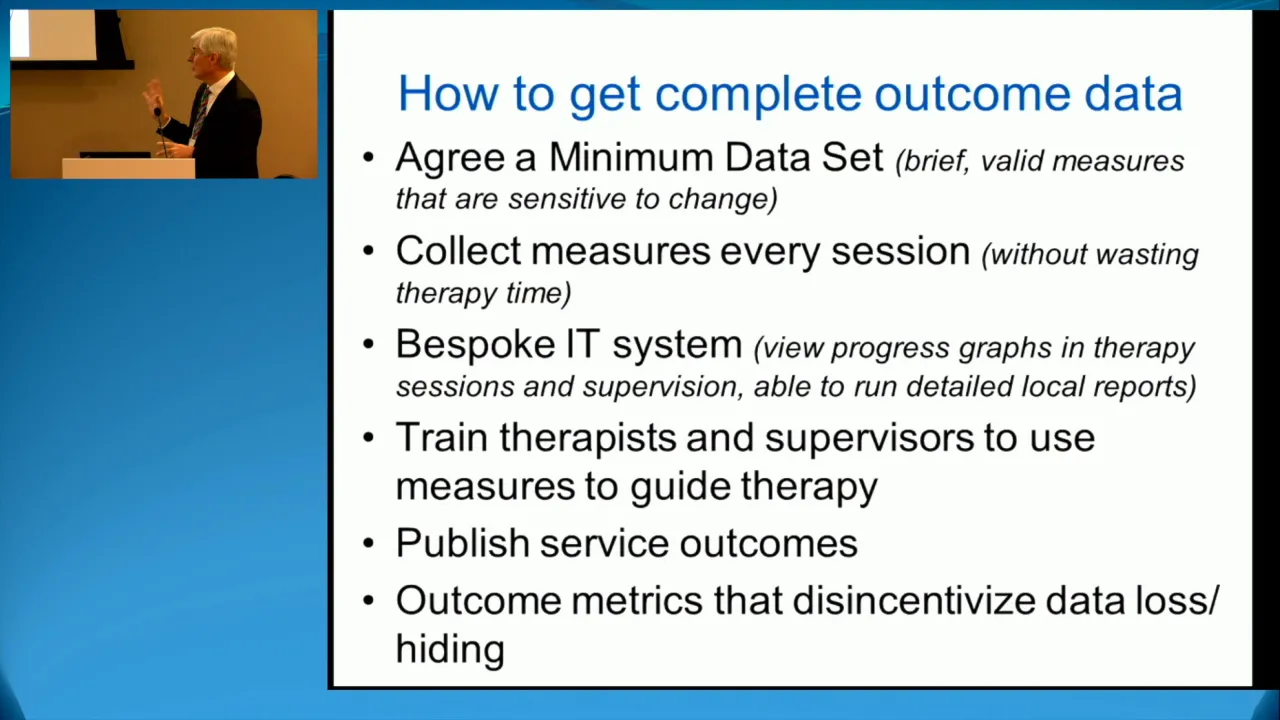
Measurement-based Care in Psychotherapy Workshop - Future of Psychotherapy Conference 2019
UofTPsych
243 views•2019-04-25

51:52
Psychology
Dr. Carol Tavris — Mistakes Were Made (But Not by Me)
skepticmagazine
14K views•2019-05-02
Trending

14:27
Medicine
Independent Autopsy Proved Nolan Wells Was Hanged!!
taylorhousepublishing7785
27K views•2026-07-24

8:41
Environmental Science
Flash Drought in Europe...
WeathermanEurope
36K views•2026-07-24

9:36
Film Analysis
Nobody Respected The Penguin | The Batman (2004)
SerumLake
12K views•2026-07-24

22:02
Business
And Now He Is Coming For More
TheFinePrintYT
12K views•2026-07-24