Infantile amnesia—the inability to recall memories from before age 3—is caused by three interconnected factors: (1) the hippocampus, the brain's memory center, is not fully developed until ages 2-4, preventing long-term memory storage; (2) rapid neurogenesis during early childhood destroys existing memory circuits as new neurons form; and (3) babies lack a sense of self (self-recognition emerges around 18 months) and language, which are necessary for forming autobiographical memories. This explains why the baby in your old photos is not you, but rather a different person whose mind was reconstructed into who you are today.
Install our extension to search inside any video instantly.
"The Baby in Your Old Photos Isn't You. Science Can Prove It."
Added:Think about your earliest memory. Really try. Is it your third birthday? Your first day of preschool? A parent's face?
A toy you loved? Now go back further.
What about age two? Age one? What do you remember from when you were learning to walk? When you said your first word?
When you first heard your mother's voice? You remember nothing. A complete blank. Years of your life gone. But here's what's strange. You lived those years. You experienced them fully. You cried. You laughed. You learned. You grew. And then, nothing. All of it erased. Most people think they know why.
"Your brain was too immature," they say.
"You couldn't store memories yet."
Simple answer. Logical answer. But that answer is completely wrong. And what actually happened is far more unsettling than you'd think. Because here's the thing. Your baby brain wasn't failing to record your life. It was recording everything. Your memories were there.
Encoded. Stored. Real. And then something destroyed them. Something you wouldn't expect. Something your own brain did. In 1905, Sigmund Freud noticed this pattern and gave it a name.
Infantile amnesia. The mystery of the lost years. But for over a hundred years, nobody could explain why it happened. Then, in the 1980s, a psychologist named Carolyn Rovee-Collier ran an experiment that answered the first part of the puzzle. She took babies, newborns, two-month-olds, and tied a simple ribbon from their ankle to a mobile hanging above the crib. The babies learned instantly. They kicked.
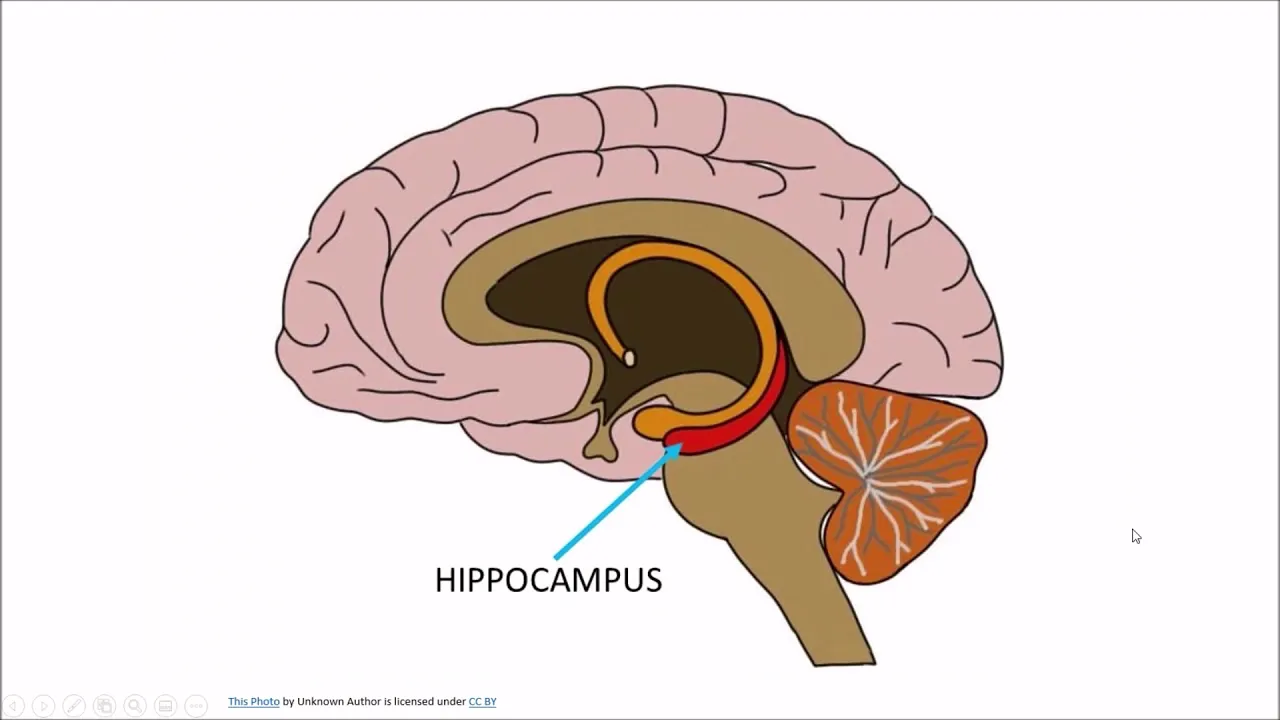
The mobile moved. They loved it. Simple cause and effect. Days later, Rovee-Collier brought those same babies back and they didn't forget. They started kicking immediately. The memory was still there. Six-month-olds, they held onto the memory for weeks. So your baby brain could learn, could store information, could retrieve it. But by the time you became an adult, every single memory from those years was completely gone. So if babies can form memories, if the memory was there in the crib, if six-month-olds could remember for weeks, then why don't you remember any of it? The answer isn't simple. It's not just one thing. And honestly, what comes next is even stranger. Deep inside your brain, buried in the center of your skull, there's a small curved structure called the hippocampus. Think of it as the memory engine. It takes everything you experience, a moment of pain, a moment of joy, conversation, a fear, and it packages it so you can replay it in your mind later. In adults, the hippocampus partners with something called the prefrontal cortex. Together, they tag your memories, file them away, set them up for later recall. It's a working system. It keeps your life stored inside your brain. But in babies, this system barely exists. The connections between the hippocampus and the cortex are still being built. A critical region called the dentate gyrus, basically the gateway for new memories, doesn't fully wire itself until you're between 2 and 4 years old.
So yes, your baby brain could form short-term memories. You could learn things in the moment. But moving those memories into long-term storage, into a place where they'd survive into adulthood, that wasn't happening yet.
That explains part of it. But it's only half the answer. And what comes next is the part that changes everything. In 2014, two neuroscientists in Toronto made a discovery that flipped our understanding upside down. Their names were Sheena Josselyn and Paul Frankland, and their hypothesis sounded almost ridiculous when they first proposed it.
What if the very process that builds your brain is also what destroys your memories? Here's what they meant. In your first few years of life, your hippocampus is producing new neurons at an absolutely insane rate. This process is called neurogenesis. Those new brain cells are essential. They're literally wiring up the circuits you'll use for the rest of your life. They're building you. But Josselyn and Frankland suspected there was a hidden cost. Every time a new neuron integrates into an existing circuit, it disrupts the old connections, the connections that were holding your memories. They tested this on mice. When they artificially increased neurogenesis in adult mice, those mice started forgetting things they'd learned before. When they slowed neurogenesis in baby mice, those baby mice held onto their memories longer than normal. The result was deeply counterintuitive. Your baby brain wasn't too weak to hold memories. It was too busy growing. The same explosion of new neurons that built your brain also tore through the circuits holding your earliest memories. Your brain kept building new rooms and demolishing the old walls in the process. Your memories weren't lost because they were never saved. They were lost because your brain was literally destroying them to make room for becoming who you are. But here's the thing, that still doesn't completely explain why you have zero memory from those years. Because there's another layer to this, and it might be the strangest part of all. To remember something as an experience that happened to you, what scientists call autobiographical memory, you need something most people take for granted.
You need a sense of self. You need to understand that you exist, that you're separate from the world, that things are happening to you, not just around you.
Here's the problem. Babies don't have that yet. In the late 1990s, two developmental psychologists, Mark Howe and Mary Courage, proposed something that sounds simple but changes everything. Before roughly 18 to 24 months of age, babies don't recognize themselves as distinct individuals.
There's a test for this. Put a dot of red makeup on a baby's nose. Place them in front of a mirror. Before 18 months, they treat the reflection like another child. They point at it. They're curious, but they don't reach for the mark on their own face. After 18 months, everything changes. They reach. They touch their own nose. They recognize that the person in the mirror is them.
And here's what's wild, that moment, the birth of self-recognition, closely tracks with the earliest age at which autobiographical memories can actually form. In other words, you can't remember being a baby partly because there was no you yet, not in the way you experience yourself now. There was no narrator inside your head, no internal a packaging your experiences into a story that belonged to a person called you, which raises an uncomfortable question.
If you had no continuous sense of self, and the brain that held your earliest experiences was literally disassembled and rebuilt neuron by neuron, is the baby in your old photos actually you, or is it someone else entirely? Someone who lived in your body, but whose mind was completely reconstructed into the person you became. There's one more piece to this puzzle, and it might be the most important one. A developmental psychologist named Katherine Nelson spent years studying how children form lasting memories. Her conclusion was radical. Language doesn't just describe our memories, it structures them. Before you could speak, your experiences were just raw sensory impression, sounds, textures, emotions, light, but without words to organize them, those impressions had no framework, no skeleton to hold them up. They were like water, they existed in the moment, and then they were gone. Once you started speaking, everything changed, especially when adults started asking you about the past. Remember when we went to the park?
That's when something shifted. Language gave your memories a structure. Words gave them a shape they could survive in.
And here's the wild part. The age of your earliest memory actually varies depending on your culture. In Western cultures, where parents constantly narrate their children's experiences, earliest memories typically start around age 3 and 1/2. Among the Maori of New Zealand, where oral tradition places extraordinary emphasis on personal history and storytelling, average first memories reach back to age 2 and 1/2. In some East Asian culture, where early childhood narratives focus less on the individual, first memories tend to start closer to age 4. The culture you grew up in literally shaped how far back your memory reaches. So, here's what actually happened to your earliest years. Your hippocampus wasn't ready to build long-term memories, and even when it started to, the flood of new neurons tore through the circuits that held them. You had no concept of self to anchor experiences to. You had no language to give those experiences a structure that could survive. It wasn't one thing. It was everything all at once. Every human being who has ever lived went through this. Every person you've ever met has a black hole where their first 3 years should be. That feeling that something is missing.
That's not a flaw. That's universal. And the answer to why isn't that your brain was too simple. It's that your brain was doing something far more important than remembering. It was becoming you and that required, quite literally, destroying the person who came before.
You weren't just forgotten. You were unmade. Your earliest self was disassembled neuron by neuron, rewritten and rebuilt into the conscious person sitting here right now. The baby in those old photos, that's not you. That's the person you had to destroy to become yourself and that's why you don't remember.
Related Videos
8:08
Neuroscience
What is neurodegeneration?
TheSheekeyScienceShow
3K views•2019-08-19
57:35
Neuroscience
IPL - Ruth Empson "Mind the Gap"
otagouniversity
251 views•2019-07-08
14:01
Neuroscience
How our body shapes our mind | Pancho Tolchinsky | TEDxNapoli
TEDx
2K views•2019-12-05
1:00:02
Neuroscience
Impact of Early Life Deprivation Danielle Stolzenberg Marcus Pembrey Bruce McEwen
uctv
4K views•2019-12-01
10:32
Neuroscience
β-Caryophyllene for Parkinson’s: Protecting Dopamine & Easing Symptoms
parkinsonsdiseaseeducation
6K views•2025-08-09
20:44
Neuroscience
New Insights from Inside the Brain with Rodrigo Braga, PhD
NUFeinbergMed
421 views•2025-04-14
9:57
Neuroscience
Highlights for dystonia • 2025 MDS Congress
movedisorder
145 views•2025-10-27
58:17
Neuroscience
Animal Welfare Synergy Series: Dr Tom Smulders on hippocampal neurogenesis
costactionlift
135 views•2025-07-14
Trending

13:38
Biology
Gremlin Arrives… While Dorothy May Takes Another Step Forward
The-moons
10K views•2026-07-23

13:25
Business
Playstation NO DISC/NO BUY Fight Is Over...
DavidJaffeGames
4K views•2026-07-23

16:52
Anthropology
Americans Confused in Australia for 17 Minutes Straight
IWrocker
17K views•2026-07-23

15:34
Political Science
FURIOUS Raskin CORNERS DOJ over Trump DARK PAST!!!!
MeidasTouch
237K views•2026-07-23