Israetel provides a much-needed thermodynamic reality check for those clinging to oversimplified definitions of energy balance. By accounting for the specific caloric values of different tissues, he effectively exposes the scientific illiteracy behind common fitness myths.
Install our extension to search inside any video instantly.
What Defines Maintenance Calories: Return of the Dumb
Added:I cannot believe I'm having to do a third one of these things to once again address this dafted idea that you do not have to eat at a calorie surplus to gain muscle because the entire idea on top of being based on a shitty paper is based on people redefining defining what maintenance means so that they can be right. Now, despite the cheshure cat or was it Humpty Dumpty saying that words can mean what I want them to mean, words mean things. Words have traditional definitions and you don't get to [ __ ] change them just so you can make your dumb [ __ ] argument correct. Right? In science, words have distinct meanings.
And there are two different ways that people are redefining what maintenance is to make their dumb [ __ ] arguments.
Now, I addressed one of them in part one of this series, which was the way people like Eric Helms and others are remaffing the numbers to be like, well, muscle has this energetic content and fat has this, and so if you gain this much muscle, lose this much fat, and math it out and subtract and do a bunch of mathematical shenanigans, what looks like a surplus is really a deficit or vice versa.
That's not how this works.
Anyone who knows an iod of nutritional science knows what maintenance means.
Maintenance calories is maintenance calories is maintenance calories. If we say someone is eating at 300 calories over maintenance, what we mean is we determined their maintenance calories, their total daily energy expenditure comprised of based on metabolic rate, the thermal effective activity, formal exercise, the thermal neat or spa basically step count and then the thermic effect of food. That's maintenance. Maintenance means you are eating at your tde.
If you had 300 calories, you're 300 calories above maintenance. If you're eat 300 calories less, you're at a 300 calorie deficit. That's what the words means. That's what the words have always meant. And they're just redefining the terms without an iota of scientific basis for it. Now, I actually am going to come back to that later in this video because it helps me address what I really want to talk about. I want to focus on the genius. The genius that is the scientific snitch and the absolutely dumbfucked argument she has come up with to try to keep her as AS9 assertion wrong. And someone was nice enough to get me her exact quote for how she is making this argument which I'm going to present in full before showing you in so much detail why she is so wrong that it just hurts. and snitch. You're welcome to come and at me and try to call me out and everybody will see through your [ __ ] You can use a bunch of overroought scientific words and try to baffle people with [ __ ] and sound authoritative, but I'm going to prove that you're so wrong that it will hurt because what you said has not no scientific basis. You cannot provide a single physiological scientifically based source that supports your definition. And if you can, you send it to me. You send me the full reference and the screenshot of the quote and I will send you $1,000.
You want to call me out? Well, I'm calling you back out. Step up or shut up. Let's look at your This is genius.
This is genius. Even an industry marked by some of the stupidest crap you'll ever heard. For example, Mike Ezra saying that an extra hour sleep is more powerful than steroids. This This has got to be top five. Here we go. Hope I can do this without laughing. She says, "Maintenance is not maintenance of body weight. It's maintenance of your excess calorie storage, aka fat. You're not in a surplus if you're not occurring body fat because you clearly didn't have excess energy to store."
Okay, where do I even start with this?
Okay, number one, if you read any papers, just one, they always define maintenance as maintenance of body weight. Now, I would quibble with that.
maintenance of body recomposition is much more accurate. But in the short term, if you're looking at things, maintenance of body weight is maintenance of body composition. Sure, over years, as we get older, we lose muscle and gain fat and body weight may not change. But if you read a single paper about diet maintenance in the long term, they will all state that maintenance is maintenance of body weight. Every single one of them. Find me an exception, scientific snitch. Just one. Because I've read them all, and you clearly haven't read [ __ ] But that's not even the biggest problem. She asserts that maintenance calories is when you're not gaining body fat because you clearly don't have an excess of energy to store. Let me ask a simple question before I get into the science.
Scientific snitch. Does muscle not have the calorie value? If you're gaining muscle, are you not storing calories in the body? We know that if you break down a pound of muscle, it's about 600, 700 calories worth. Muscle has an energetic component. If you are gaining muscle, you are storing calories in the body.
How can you be this [ __ ] stupid? How how can you make a statement so blitheringly idiotic without seeing what's wrong? Because what you said in that sentence is that muscle has no energetic value that if you're eating at surplus and gaining muscle, you are not increasing your body's energy stores.
Explain it. Explain it to me like I'm four. Because I'm explaining this to you like you're for because clearly that's the level of your logic. Explain it to me. Explain it to the people that still think you're not full of [ __ ] without using scientifically complex words to baffle them with [ __ ] Explain to them how storing muscle which has energetic value. The energetic value that the other morons are using to remath this [ __ ] to make their own definitions. Does muscle have cal is worth calories or not? If you're gaining muscle, are you are you are you not storing calories in the body? Because the sentence you wrote says that you're not. Explain it to me, to them, to anybody. I will await your detailed explanation. But I'm not stopping there because now I'm going to explain scientifically why you're so wrong. And I'm going to do it by looking at the actual energy balance equation, which clearly you don't [ __ ] understand.
Because again, maintenance calories has doesn't just say you're not gaining body fat. It means you're not adding any energy to the body. So, if you're saying that maintenance is only gaining body fat, that means that you're saying that muscle has zero calories. Explain it, please, because I'm always willing to learn from a luminary such as yourself. I've only been reading physiological textbooks for 30 [ __ ] years, and nobody says that except you to defend your argument. So, let's look at the energy balance equation. So, here's the energy balance equation that you could find in literally any physiology textbook. The main equation is energy in equals energy out plus delta energy stores. Energy in is calories from food. Energy out is total daily energy expenditure. I rearrange that to energy in minus energy out equals delta energy store. And I want to get a little bit more of the weeds on that equation um because it will help me to explain why scientific snitch is completely full of [ __ ] by looking at the individual components and kind of what they represent in terms of how non- nerds think about it. So, um, I'm going to look specifically first at what energy intake represents, what energy output represents, and then the really where the deal the details lay is um what that delta that change in energy status means. So, let's look at each individual. Okay, so EI equals energy in that's the calories absorbed from food.
And and I put that very specifically because when we talk about calorie intake and go, oh, I ate 2,000 calories.
What does that mean? Right? Food contains calories and okay, calories are just a measure of energy. And don't I'm not getting into it here. But just because you consume 2,000 calories doesn't mean that you absorb 2,000 calories. Foods are absorbed with varying efficiencies. Uh carbohydrates anywhere from 80% or about 80%, protein 90 to 95%, fats about 97%. with the unabsorbed bits coming out in the other end in your poo which are not absorbed.
Um we've got the thermic effect of food the calories that are lost when you eat although that's technically energy out which I'll come to. Um if you eat a high fiber diet soluble fiber that will bind and form a clot in the stomach will bind nutrients and carrying them out. You will actually absorb less calories. So the energy in refers to the number of absorbed calories from the food that you eat. But just because that food contains 2,000 calories before you eat it doesn't mean you absorb 2,000. Got it? Good.
Let's move on. Next up is energy out, which I already kind of talked about.
That represents what's we call total daily energy expenditure. This comprised of resting metabolic rate, basal metabolic rate. They're slightly different. Don't worry about it. Some researchers will measure sleeping metabolic rate, but we don't use that in the equations. Uh TEA, thermic effective activity, calories burned during formal exercise. neat non-ex exercise activity thermogenesis some called spontaneous physical activity that's step count it's all nonformal exercise calorie burn and then the thermic effect of food the small amount that is burned uh during the metabolism of nutrients and it varies protein is 15 to 25% carbs are about six and fat is about three and if we take those four values RMR tea neat and TEF and add them together that gives us our total daily energy expenditure that defines our maintenance calorie requirements.
That's the definition of it. The two major components uh of the energy balance equation, energy in the absorbed calories from food. Energy out, the number of calories burned during the day, your total daily energy expenditure, which is and has always been referred to as your maintenance calorie requirements.
any book, anything you can find.
Scientific snitch. If you can find me a scientific reference that doesn't say that, thousand bucks emailing it to me.
Seriously, I live to learn. So, we have calories in from food, the absorbed calories from food and calories out, the ma your maintenance calorie requirements. So let's rewrite this equation as calories in absorbed calories corrected for digestion minus total daily energy expenditure equals the change in energy stores. That then tells us if calories in are greater than total daily energy expenditure your maintenance requirements you in positive energy balance. You are adding calories to the body that is called a dietary surplus. If total daily energy expenditure exceeds calories in calories absorbed from food, you're a negative energy balance. You'll be losing energy from the body that is called the dietary deficit.
If calorie in calories in is equal to total daily energy expenditure, you will neutral energy balance. You are neither gaining nor losing calories from the body. That is what maintenance calorie intake is. And honestly, I could stop here even though I'm not going to.
Right? Nowhere in the energy balance equation does this say anything about what's being gained or lost. It simply says that if the absorbed calories coming in are greater than the number of calories you're burning, if you're eating more than you're burning, you're in positive energy balance. You're adding energy to the body. If the number of calories you're burning is greater than the calories that you're absorbing, if you're eating less than you're burning, you're in negative energy balance, which means you're losing tissue from the body, losing energy from the body. And if your calorie intake, your absorbed calories are equal to the amount that you're burning, you're in neutral energy balance. You're neither gaining nor losing. And we call that positive energy balance means you're in a dietary surplus. Eating more than you're burning, that's what the words mean. If you're burning more than you're eating, you're losing tissue. That's a dietary deficit. You're eating less than you're burning. That's what the words mean. And if they're equal, you're eating the same amount as you're burning. You're at maintenance.
And I could stop there, but I'm not going to. Let me note this equation is usually written incorrectly. It's usually written as energy in minus energy out equals change in body weight.
And that's wrong. It says change in body's energy stores. And that is a critical distinction. And the reason being that different tissues in the body have a different energetic value. This is why a lot of people think energy in, energy out, usually called calories in calories out, doesn't apply. You can gain 10 pounds of water. That has a zero calorie value. You have added zero calories to the body. So that doesn't deny. Well, you can gain 10 pounds and not be in energy surplus. Yeah, because water doesn't count. It's not saying it's a change in body weight. It's saying it's the change in energy stores.
Water has zero value. even poo which you comes out the other end and you can lose several pounds. I knew a big Olympic lifter and he weighed and he he he dropped a 1.5 kilo dump because he was a big boy has no energetic value because you've already absorbed the calories from it. The waste is not contributing to your energy balance to the energy added to your body. So when your weight goes down by three pounds because you take a big [ __ ] the same way that scientific snitch [ __ ] out this dumb explanation. So even though your body weight went down that doesn't mean you were in a calorie deficit because you are not changing the energy values of the body. That poo represents what the waste that wasn't absorbed. It doesn't count. You could take a 10 pound [ __ ] which would still be less than scientific snitch's shitty argument and it still doesn't represent a calorie deficit.
because the body's energy stores didn't change.
Which brings me to get even deeper into the energy balance equation because I want to look at how what I said earlier about how different tissues have different energetic values. Which means that storing say 3500 calories will cause variable weight gain.
Which is why saying calories in minus calories out equals weight gain is wrong. Again, because different tissues that are stored or lost from the body have different energetic values. This will make more sense when I give the example. So, let's look at carbs first based on the fact that one pound of body weight is 454 gram.
Carbs have four calories per gram and every gram of carbohydrate stored pulls in an extra 3 to four grams of water, and I'm going to use three and a half grams to average it out. So, if you store 454 grams of carbs as glycogen, that will be one pound of carbs itself plus an additional 1,590 grams of water, which is 3.5 pounds. Your body weight will go up by 4.5 pounds, but your body's energy stores will only increase by,800 calories. And again, this is one of the reasons that the the anti-energy balance people don't have a [ __ ] pot to piss in anymore than scientific snitch does. There is this incorrect idea that 3,500 calories equals one pound. And I'll address that at the end.
And because it doesn't because one,00 calories worth of carbohydrate will put what did I say? 4 and a half pounds on you. Oh, see it's about 3500 calories. That's not the value. But even if you are eating 454 grams of carbohydrates over maintenance and gaining zero body fat, you are adding energy stores to the body. Right?
Scientific snitch. Right? You're in a surplus. You have to be. Actually, that's how carb loading works, by the way, is you overfill carbs in the muscle, it pulls water and you look bigger. Maybe you should read that research scientific snitch. Maybe you should read any research. Okay, let's move on to muscle. Okay, so muscle. So, one pound of muscle actually contains about 120 grams of protein, about 500 calories, mostly water, and then there's some other [ __ ] in there, ribosomes and all the all the stuff you forgot from high school biology. When broken down for energy, it provides about 600 to 700 calories to the body. And you'll see slightly different values, but it's in that range. It obviously takes more to store. That's the point of the first two parts of this, right? Somewhere between 2200 and 3,900 calories per pound depending on which theoretical value and how it math maths it out. Which is just me making the point again that if you add a pound of muscle, you have added 600 to 700 calories to the body's energy stores, which by definition, based on what I told you before, means you are in a calorie surplus because that's what that means. Okay? Again, so like I said, broken down for for energy, which we don't want, one pound of muscle provides about 700 calories. So, if you're in a 700 calorie deficit and lost 100% muscle, which never happens, your body would lose 700 calories worth of energy stores. It's not 3500 because 3500 is not a pound of muscle. If you gain a pound of muscle, you were storing 700 calories in the body. Okay? Do you hear what I just said? Scientific snitch and everybody else who thinks she's not full of [ __ ] If you gain a pound of muscle with zero body fat gain, you have added energy to the body. That requires that you are in a positive energy balance.
That requires that you are eating more calories than you are burning, which is the definition of a dietary surplus. Her quote implies that muscle has zero energetic value. It doesn't. It's 700 calories are now in the body which can then be mobilized for energy to burn amino acids for energy by oxidizing them or turning them into glucose. Let's finish up with fat. Okay, so let's look at body fat. So one pound of fat is 454 grams. And that's what we usually say is equal to 3500 calories. And I've quoted Wishnowski a second. Here's how the math works out.
One pound of body fat, 454 grams.
However, it's not 100% triglyceride.
It's only about 85 to 90% stored triglycerides. There's a little bit of water. There's some cellular machinery and [ __ ] So if we say 454 grams times 085 to 0.9 uh that means a pound of fat contains 385 to 400 grams of actual triglyceride at 9 calories per gram that gives us 3475 to 3600 calories. That's where the 3500 comes from. And again this was masked out masked out by Wishnowski Moric equivalents of gained or lost weight American Journal of Clinical 1958. I will put a link to it in the notes. It is there's no abstract and it's not a full text. Of course, I have the full text and what I've done, I've uploaded it to gofile.com and I've put the link in the notes. So, you can go download the paper yourself and see that what I'm saying is completely correct. Although, if you still think I'm making up [ __ ] at this point, you cannot be helped. So, this is where the 3500 calorie value came from. And again, in 1958, Wishnowski made the point the only correct the only time 3500 calories equals one pound is if you're losing 100%. that rule through a decadesl long game of telephone got interpreted to 3500 calories equals one pound of body weight and that's not right and this is easiest to see if I just put them in another chart and compare the different values. So, here it is. So, if we sum up the change in energy stores for different tissues, one pound or even 1 million pounds of water is zero calories. One pound of glycogen means you've stored 1,816 calories in the body, except you'll actually gain 4 and a2 pounds of body weight due to the water it pulls in. Still only worth 6,800 calories. One pound of muscle means you've stored 600 to 700 calories in the body. And one pound of fat means you've stored roughly 3,500 calories in the body. To keep hammering my point, let's look at this a little bit differently. Now, okay. So, what I want to look at is how a dietary surplus of 3500 calories over some time period, what that results in in terms of changes in body weight along with the changes in the stored energy in the body. Making a couple assumptions here. Uh, I'm using a value of 3,000 calories to synthesize one pound of muscle, kind of splitting the middle. And I'm assuming that one pound of muscle stored within the body contains 700 calories. Okay. If you gain 100% muscle at a calorie value per pound to syn at 3,000 calories, you will gain 1.15 pounds. 3,000 divided by 3500 at 700 calories per pound stored. That 1.15 pounds will represent 805 calories added to the body. Okay, go to fat. Real easy.
35 cal 3500 calorie surplus. 3500 calories per pound. You gain one pound.
It's worth 3500 calories. But now let's look at the complex situation where you gain 25% fat and 75% muscle. Okay? So of those 3500 calories, 25% go into fat.
It's like 800 and some odd calories. Uh divide by 3,000 you will gain 0 29 pounds of muscle which will contain 205 calories. That's what got stored in the body. The fat 3500 calories times 75.75 pounds of fat. It will contain 2625 calories that were stored in the body.
The total weight gain will be 1.04 pounds. 29 pounds muscle 75 pounds fat for a total added energy value to the body of 2830 calories. Okay, that makes sense. I hope so. But now let's look at the values implied by scientific snitches assertion that maintenance that a surplus is defined only by a gain in body fat. That implies that muscle has zero value. So that 1.15 pounds muscle you gained, it contains zero calories.
The 100% fat does in fact contain 3500 calories in her mind. But the 25% fat, 75% muscle condition, which really means an increase of 2830 calories to the body by scientific snitch math is only 2625 calories. Okay, so this just shows the math for 25% muscle, 70% fat gain. Surplus of 3500 calories times 25% means 875 calories went to synthesizing muscle. 875 divided 3,000 calories per pound, 0.29 pounds of muscle worth 700 calories per pound equals 205 calories were added to the body. The same math for fat times 75% 2625 calories divide it's 75 pounds of fat. Total weight gain 1.04 04 pounds representing 2830 calories that were added to the body. Positive energy surplus, positive energy balance.
Scientific snitch math says, well, that the calorie surplus for muscle gain was zero because the surplus only counts if it's going to body fat. So, we subtract 3500 uh minus 875 and we get 2625 calories. In her mind, that was the actual surplus because only the fat gain counted. Did you catch that last bit?
Here's what Scientific Cinch's quote implies. That if you have a 3500 calorie surplus, if I have taken your maintenance and given you some some amount over a month's time, that adds up to 3,500 calories above your estimated maintenance, that including the value for muscle is incorrect. And that the only surplus that's relevant is the 2625 calories of fat, the 75% that was gained. She is saying that a 500 calorie dietary surplus that adds up to 3500 is really only 2625.
Do you see how [ __ ] dumb that sounds?
And I will come back to what I know her counterargument will be. But let me look at now what happens when we're looking at a deficit. So the math is conceptually the same, just the values differ a little bit. All right. So 3500 calorie deficit. It's 100% muscle loss and muscle has 700 calories. You'll lose five pounds of body weight with an energetic value of 3500 calories. It's 100% fat. Again, 3500 by 3500. One pound, 3500 calories. Quick note here.
Um, what you notice is that for the same deficit, you lose five times as much body weight if you hemorrhage muscle compared to losing body fat. And I'm convinced that a lot of the reason these rapid weight weight loss programs advise against exercise is because exercise spurs muscle mass loss. Body weight will go down faster if you're losing more muscle. Body weight will go down less if you're losing more body fat, but that's good. You don't want to lose muscle.
This is why this is one of the many places where body weight changes and body composition changes don't match up.
And realize you never lose 100% muscle uh on a diet. Uh, regardless, even if Menoh Henselman claims that my RFL claim caused him 100% muscle loss, that's just because that dumb [ __ ] doesn't understand that there's a sweet lean body mass, glycogen, and water, and muscle mass. And he doesn't like me, so he's probably [ __ ] lying. Anyway, let's get back to the Okay, so now let's look at the 25% muscle, 75% fat. And the difference in the math here being that when broken down, muscle only contributes, well, 600, 700, I'm using 700, be consistent, it doesn't matter, to the body. So that that 3,000 calories to synthesize a pound value doesn't have any relevance here. Again, 700 calories, it it works out to 1.25 lbs of muscle lost and 75 pounds of fat loss for a total of 2 lbs and a total energy lost to the body of 3500 calories. But again, Scientific Snitch's numbers would be zero for muscle because that doesn't count. 3500 for fat because only that counts. And she would come up again with 2625 calories for the combination. So again, assuming that she has the same screwy idea that a deficit only represents a change in fat mass, she makes the same dumb conclusion for the 25% 75% case. That a 3500 dietary deficits, the 500 calories I took out from your diet was really only 2625 because the muscle doesn't count because it's zero. See how dumb that [ __ ] sounds? But it gets even stupider. If you don't count muscle in the surplus, and again, I'm assuming she doesn't count it in the deficit. She'll probably say the deficit is different because she won't admit that she's [ __ ] wrong about this. If you can gain muscle without being in a dietary surplus, according to her math, if the value is still zero, that means that you can lose muscle without being in a deficit. So her claim that you can gain muscle at maintenance can just as easily be used to say that you can lose muscle at maintenance. And in the short term, that doesn't happen without if you've got HIV, if you're taking massive corticosteroids, [ __ ] like that. But that's not what she's talking about. Her logic works both ways.
If b building muscle doesn't represent a calorie surplus, ergo requiring zero that that's maintenance. Well, muscle loss is still maintenance. The same zero value applies. Scientific snitch.
Explain this discrepancy to your people.
Explain it to me because you can't have it both ways. You'll try to, but you can't. But I know what your counterargument will be. You're going to argue that the way I did the math on the 25% 75% is wrong. And now I'm going to get ahead of your stupidity. And I'm going to prove you wrong beyond a shadow of a doubt that anybody who sees you continue trying to defend this [ __ ] will know that you don't know a [ __ ] thing about actual science. I want to make two. Remember at the first of the video I said that Helms and those other [ __ ] are using similar redefinitions of what we're talking about to try to make a similar point to hers. Well, they're actually doing it using the exact math that I just did. And I'm going to show an example because this is how they're concluding that people are gaining muscle in a deficit. And they're doing it by redefining what the words maintenance and deficit actually mean.
Okay, here's how the [ __ ] math works.
Let's say I take someone, I give them 500 calories above their established maintenance. Over one month, they gain one pound of muscle and lose two pounds of fat. However, they're fat newbies.
one pound of the Helms math would say one pound of muscle is worth a 600 calorie gain in the body. Whereas a two pound fat loss represents a loss of 7,000 calories from the body. Therefore, they conclude that the total energetic change in the body is 600 calories positive minus 7,000 calories is 6,400 calories minus divided by 30 days.
That's 213 calorie deficit per day. They would say that even though I fed you 500 calories above maintenance, you were really 213 calories below maintenance.
Airgo, you can gain muscle in a deficit.
And I don't know if this is any dumber or better than scientific snitches idiocy. Like I see what they're doing.
But when we say I am a 500 calorie surplus, everybody knows that means dietary surplus. You don't get to change the math and redefine what a surplus and a deficit is. Nobody does that in the field except people who are desperate to support a wrong argument. If I say I'm giving you a 500 calorie deficit, that means I took your current maintenance and I had you eat 500 calories less or do 500 calories more exercise. Let's not get into into semantic pedantics.
If I give you 500 calories surplus, I took your current maintenance and had you eat 500 calories more. Maing it out from the back end doesn't change what those words mean. But that's what Helms and the other morons are doing.
And I get why they do it because in science when they look at changes and body composition changes, they do do that math. And I'm going to show you that in a second to just again prove scientific snitch so inconvertably wrong that it's laughable. But they don't use it to try to change the definitions of what a surplus, a calorie surplus and a calorie deficit is. That refers to [ __ ] diet, not the energetic changes in the body. For God's sake, people, you can't just change the meaning of words because you want to.
Now, let's look at the real science. So, I'm just going to look at one paper, which is Kevin Hall. What is required energy deficit per unit weight loss international driven obesity 200832?
Kevin Hall is a [ __ ] luminary in the field. He's the one that did like the two-week metabolic ward studies on low and high carb diets. He has developed a calculator that will estimate the changes in body weight and the rate of weight loss um for given deficits based on the math I'm going to show you along with take into account that maintenance actually changes over time, which is also left out by the anti- calorie and calorie out [ __ ] um as you get smaller um you burn less calories, your maintenance calories go down. So the same deficit is less. They seem to think that if you eat 500 calories less weight loss is a [ __ ] straight line and it's not. It's it's a curve because the body is adapting. and he has done this his calculation his calculator actually tends to misestimate a little bit because it doesn't take into account uh the effect of training in protein and it's assuming actually a 25% loss of free fat mass across the board which is why I told you when I did my simple math to keep that 2575 value I picked that because there's something called the one quarter rule that has been used from the data of Forbes decades ago but it turns out to not be correct correct a value that doesn't hold universally and depends on a bunch of different factors that I'm not going to get into or this video will be eight hours long. What I want to look at is this paper where he looks at some of these issues and I'm not going to get in it's it's a wank. I put the the full text reference if you guys want it. But I was gonna pull some snippets to show you the math he's assuming and how he works the [ __ ] equations and how they show that scientific snitch's assertion that you don't count the calories going into muscle as part of energy balance is just so breathtakingly wrong that it's painful.
Let's go. And let me go ahead and cut what I know will be her argument off at the pass. This study only looked at weight loss and she's going to go, "But I'm talking about muscle gain, [ __ ] the energy balance equations work in both directions. So everything he talked about in this applies in the other direction. So just just stop. Just stop. You're wrong. I've shown you're wrong. I'm going to show that you're completely wrong here in about 5 seconds. Just stop. You're not fooling anybody except the dimwits who can't see through your use of the word acrual because you can't say muscle gain and fat gain because you seem to adhere to the concept. If you can't educate them with facts, baffle them with [ __ ] Let's look at the science, folks. Let's [ __ ] get nuts. Okay, this is super entrenched. I'm not even going to try to read it. That big paragraph is him going through a ton of math to try to derive the calorie value for lean body mass. with that that little P uh character. It's actually a Greek letter. L is lean body mass. And he concludes that the energy density for lean body mass changes are 7 megajoules per kilogram. Uh which works out to like 850 calories per pound. And I know that's higher than the 600 700 value I cited, but he's actually looking at lean body mass including glycogen and a bunch of other [ __ ] Again, the value doesn't matter, the concepts do. So let's move on. He then did the next section. He goes using PL 7.6 6 mill per kilogram again about 850 calories and P subf which is 39.5 mega per kilogram which works out to uhum about 4200 calories per pound again a little bit higher than 3500. The energy density of weight loss is simply determined by the relative proportion of lost body weight resulting from lean body mass loss as described by Hall. Now that last little bit kind of goes to something I mentioned. He's actually looking at the predictive value of the changes in total body weight based on the proportions of lean body mass, muscle mass, and fat mass lost relative to initial body composition. This goes back to Forbes's data. Forbes was a body composition obsessive. the values that I've been talking about for the P ratio and how much muscle you lose relative to body fat percentage which go into all my books explains that how the protein scales based on my category which is body fat percentage because I know what I'm talking about right he's actually looking at that and it makes the equation more entrenched but it's not really impacting the math and I'm going to show you the simplest equation which has to do with how you can rough calculate the body weight changes where you're looking at a given deficit based on the percentages of lean body mass and fat mass. The equations I explained what seems like four hours ago. Here's another really hard screenshot. Okay, so I included it just for shits and giggles. That bottom equation is a nightmare that that's dealing with uh the assumptions about body fat percentage. something called the there's some transform uh the Lambert W function f subi is the initial body fat. I'm not going to get into that. Look at the equation above that which basically represents the the change in energy stores delta E divided by the changes in body weight delta BW is equal to the energetic value of body fat P subf plus the difference in body fat minus uh lean body mass minus fat mass multiplied by delta L the change in lean body mass divided by delta body weight which is just a really complicated equation that says you take the energetic value of the total deficit. You calculate the total body weight change based on the energetic equivalence of muscle and body fat or lean body mass and fat mass based on the percentages which I assumed were 25% muscle mass and 75% because there's a 25% rule from Forz's original data that's been floating around. Again, the value is different. If I assume 10% muscle mass loss and 90% fat mass, the numbers change. If I assume 5050, the numbers change. That doesn't matter. The point is that the equations used by scientists include the calorie values for both muscle and fat. And scientific snitch says that's wrong. That energy balance equation should not include a value for muscle, only fat mass. And I'll provide that reference if you want to read it. Good luck. It's just a lot of calculus and a lot of graphs. But that's not the point. The point is that when you're looking at the energy balance equation, the change in body energy stores represents both muscle mass and fat mass. And scientific snitch is saying literally that the change in energetic stores in terms of defining a surplus only includes fat mass. And that's wrong.
It's just wrong. No scientist would agree with her. For someone claiming to be the scientific snitch, she doesn't know [ __ ] about the actual science. Go read the paper. Scientific snitch. You go read the paper. Go look at its references. [ __ ] email Kevin Hall and ask him if you're right so he can he needs to laugh. So let's go back and look at the energy balance equation within the context of scientific snitches. Brilliant quote.
She says maintenance is not maintenance of body weight. It's maintenance of your excess calorie storage aka fat. You're not in a surplus if you're not acrewing body fat. And the energy balance equation says no. such thing. It says energy in minus energy out equals delta energy stores. If you're storing glycogen, you're changing your energy stores. If you're storing mus gaining muscle, you're changing your energy stores. And if you're gaining fat, you're changing your energy stores. Her quotation implies that muscle has no calorie value. And that's factually flatly wrong. I know she's going to make this argument. What she's she's not saying that muscle has no no calorie value. She's saying that it should be included in the definition of maintenance. And that's simply not what the energy balance equation says.
Calories out, which defines maintenance requirements, is the sum total of RMR, TEA, uh, NEAT, and TEF. The tissue being gained or lost, has no relevance to that definition. Only to the delta energy stores. And I know she'll make that argument. And when she does, come back and say, "Hey, Lyall said you were going to make this argument." And tell her to defend it with science because there ain't any. I know it. She knows it. And now you know it. And again, assuming that she applies the same logic to deficit, that a deficit is only defined if fat mass is being lost. That means that if you're losing muscle, you're still at maintenance. That you can lose muscle at maintenance. Because the math, you can't have the math work differently in opposite directions.
If the energy balance equation is only a negative if you're losing, if you're gaining or is only a positive if you're gaining fat, then it's only a negative if you're losing fat. That means you can just as easily lo gain muscle at maintenance or lose muscle at maintenance. So, which is it? Scientific snitch. Is it both? Are you gonna just go, "Well, weight loss is different than muscle gain. A deficit is a deficit, but a surplus isn't a surplus." You probably will, and people are going to [ __ ] laugh at you, and you will just ruin your credibility because if you want to maintain it, if you want to just save face, acknowledge that you don't have a pot to piss on. I've shown all the science, the studies, the data, what Kevin Hall, one of the most lionized researchers in the field, what he wrote, and it's the opposite. It's not what you said. It's the opposite of what you said. So, either you're smarter than him or you're wrong. And the only thing you can do right now is say two things. One, hey guys, I was wrong. And more importantly, Lyall was right. I mean, there is a third option. You can just keep digging your heels in and doubling down on being wrong.
And that's fine. That will put you up with most in this industry, but it's not going to get you anywhere. and you can try to call me out, but I have the science. You just have fancy words and you don't even understand them.
And to quote the philosopher, and that's all I've got to say about that for Gump.
What she says implies that muscle has no calorie value. Rather, that maintenance calories should somehow be redefined to include the energetic value of muscle when it it's gained. A definition that literally nobody but her uses. So either everyone else is wrong and she's right or the energy balance equation, the definition of maintenance has nothing to do with only body fat. It simply says in when you're in energy balance, when you're eating at maintenance, you are not changing the energetic stores of the body. And I know I'm being redundant, but apparently stupid people like her have to hear it multiple times. If you're storing or losing water, zero calories. Energy balance, there's no change. Storing or losing glycogen, you're changing the energetic stores of the body.
Gaining or losing fat, you are changing the energetic stores of the body.
Gaining or losing muscle, you are changing the energetic stores of the body. By definition, to store calories as muscle, which has energetic value, you must be in a calorie surplus above and beyond maintenance. There is no debate about this. There is no source that says the gibberish she wrote is right and a thousand bucks if she can provide me one. That's not her quoting her own [ __ ] this is asinine that I've had to make three videos about this because again what she's doing to defend her assertion is redefining what maintenance is and she's defining it wrong.
Being at maintenance doesn't just mean you're not gaining or losing body fat.
It means you're not changing the energy stores of the body. So for her to assert that means muscle has zero value.
Scientific snitch. I turn it over to you for your next blank assertion that I'm wrong. Because honestly, in a world filled with such tragedy, we need the [ __ ] comedy and you're hilarious. I was finishing this video, I sent a a pre-copy to Solomon Nelson, who said that Scientific Snitch contacted him about debating me about this on his channel. And after watching my video, he kind of agreed there's not much point.
What is she going to say? What are you going to say? What are you gonna say?
I've presented all the actual data from real scientists. You're going to say, "What? Ly's wrong. You don't have a pot to piss in. When I criticized the 52 set study, Milo Wolf was like, "I want to debate Lyall." Dude, even the researcher said you're wrong. The actual paper said something different than he was saying.
The research says that you are wrong.
There's nothing to debate. So, do another [ __ ] call out video. Make more circular arguments to try to convince the midwits who don't realize just how wrong you are and [ __ ] destroy your credibility like Israel did. Or step up. I'd say man up, but woman up and just say I was wrong. That that alone might allow you to salvage your career because being able to say you're wrong is not a bad thing. It's what adults do.
Only infants think that saying I'm wrong is bad. When you grow up, you realize that saying you're wrong is a good thing. And that's the only way anyone who's watched this is ever going to respect you again. And you're still too dumb to do it. And we all know it.
You're going to quadruple down on this [ __ ] But I'm not going to go on Solomon's video uh channel and just repeat what I've said because you don't have an iod of argument. And everything I've presented in all three videos says that. And I'm sure [ __ ] not doing another video. You can you can respond to me as many times as you want. I presented the evidence just like I presented all the failure stuff with Israel and he spent five years talking in circles till everybody realized I was right all along. I have no more to say.
You have nothing that you can possibly say. Just say you're wrong. I'll respect that and I'll accept that. But we all know you're not going to and you know you're not going to because you got too much ego. You've already doubled down.
You got to keep going. Good luck with that. And speaking of Solomon, just released an entire book changing body composition in terms of fat loss. My buddy and collaborator Solomon Nelson has just released his new book, a tome, a 280 page tome on all topics related to fat loss. It is available in both PDF format and hard coverver. And you can get a bundle where you get the hard copy with the PDF for only 10 bucks more. Go buy it. And even if you don't read it for him, you should read it for the fact that I wrote the forward. And to that, I'd add that in roughly two or three weeks, there's going to be another really good resource or resources on changing body composition. I'm not giving it away, but um it's possible that I might have a new book coming.
Finally, for the record on these videos, I do not read comments. I do not respond to comments. I do not care about the comments. I don't care if they're good, bad. If you put a question, tough, I'll never see it, and I'll never answer it.
What you can do is send that question to me at questionsbodyreocomposition.com.
But let me be straight. with 99.9% certainty. I won't open it. I won't read it, and I won't respond to it. If you want to get a response from me or some other smart person, join my Facebook group. There, I'll answer questions. And my group has tons of brilliant people.
But again, I don't care about comments on YouTube or Instagram or anywhere else. Hate me, like me, think I'm a [ __ ] It's all good. I'm not here to be liked. I'm here to be right. and I am.
That's all. See you next time.
Related Videos

19:51
Biology
Salivary glands (anatomy)
SamWebster
139K views•2019-01-08

12:52
Biology
DNA Replication l Replication initiation in Prokaryotes
microbioscope18
4K views•2019-03-05

5:47
Biology
Identification of bacteria using biochemical tests (1 of 2)
microbiologyteachingvideos6490
24K views•2019-05-28

1:11
Biology
How PTSD Impacts Our Genes, with Dan Siegel
nicabm
31K views•2019-07-18

51:49
Biology
Influence of Footwear Longitudinal Bending Stiffness on Metatarsal Strains during Running
uofckinesiologyseminarseri2218
107 views•2025-12-02

6:57
Biology
Obscure Bird Grasshopper: It's One of the Big Ones!
RandysNaturalWorld
2K views•2025-08-26

5:36
Biology
B-Cell Receptors vs T-Cell Receptors - Overview
Sqadiacom
1K views•2025-01-31
1:27
Biology
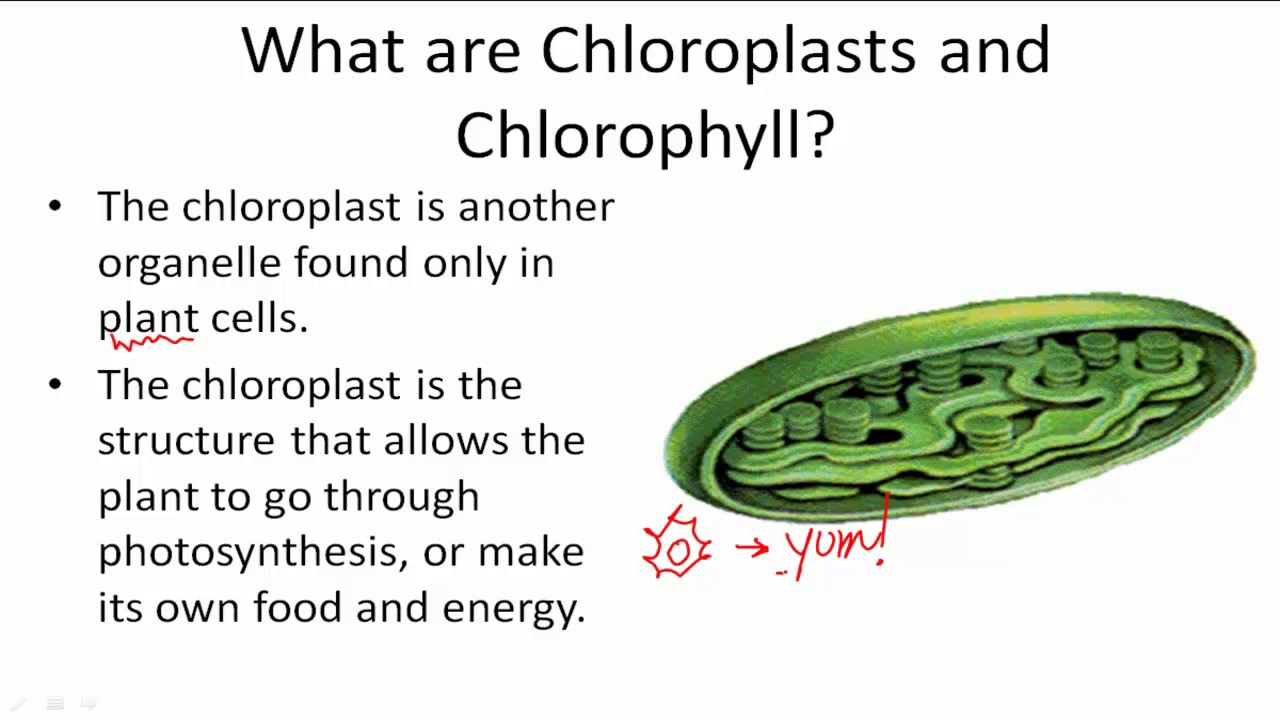
Functions of Chloroplasts and Chlorophyll
CK12
28K views•2017-05-24
Trending

9:05
Artificial Intelligence
2.4 BILLION Records Got Leaked...
DeepHumor
15K views•2026-07-22

13:25
Business
Playstation NO DISC/NO BUY Fight Is Over...
DavidJaffeGames
4K views•2026-07-23

19:32
Business
Should I buy a Sawmill?
essentialcraftsman
29K views•2026-07-22

16:52
Anthropology
Americans Confused in Australia for 17 Minutes Straight
IWrocker
17K views•2026-07-23