The video offers a lucid synthesis of how specific biological mutations triggered a feedback loop of cultural and cognitive acceleration. It successfully distills complex evolutionary theories into a coherent narrative without sacrificing the intellectual depth of the subject matter.
Install our extension to search inside any video instantly.
Why Humans Evolved Suspiciously Fast Compared To Everything Else
Added:Let's get right into it. Number 10, the broken jaw gene. About 2.4 million years ago, a single gene broke. Not in a bad way, in a gave us the ability to build cities and write sad poetry kind of way.
Every other ape has a massive jaw muscle called the temporales. It wraps around the skull like a helmet and anchors directly into the bone. Gorillas have jaws so powerful they can crack nuts that would shatter your teeth like glass. But one of our ancestors got a mutation in a gene called my16. This gene was responsible for building those massive jaw muscles. And the mutation basically turned the volume way down.
Our jaw muscles got smaller, weaker.
Those big jaw muscles in other apes don't just sit there. They clamped down on the skull, limiting how much it can expand. When our jaw muscles shrank, that pressure disappeared. And our skulls grew. The brain inside had room to expand. And expand it did. Human brains tripled in size in what is, geologically speaking, basically a Tuesday afternoon. So, we traded the ability to bite through a coconut for the ability to wonder why we exist. This one mutation didn't just change our brains. It changed our faces. The flat face, the high forehead, the rounded skull, all of it traces back to a jaw muscle that stopped doing its job properly. One mutation and suddenly you've got a creature that can do calculus and feel sad on a Sunday for no reason. Number nine, the self-domemesticated ape. Compare a human skull to a Neanderthal skull.
Neanderthalss had massive brow ridges and huge jaws. We look like we asked nicely to be led inside. Our faces got flatter. Our brows got softer. Our bodies got smaller. These are the same changes you see when you domesticate any wild animal. In the 1950s, a Russian scientist ran an experiment. He took wild foxes and only let the friendliest ones breed. Within just a few generations, the foxes started getting floppy ears, spotted coats, and shorter snouts. They started wagging their tails. They basically turned into dogs without anyone directly breeding for those traits. It just happened automatically when aggression was selected out. Scientists think the same thing happened to us. We did it to ourselves. At some point, being the most aggressive guy in the cave was no longer the winning strategy. The person who could cooperate, share food, and not bite everyone's face off got more friends, more allies, and more mates. So over thousands of generations, the calmer, more social humans had more kids and the extremely aggressive ones got voted out of the group permanently.
Softer faces, smaller teeth, less testosterone, more cooperation. We basically ran a breeding program on ourselves without realizing it. We built a cage, locked ourselves inside, and called it civilization. Number eight, the bare-kinned super weapon. Look at yourself. No fur, no scales, no thick hide. You're basically a naked mole rat that learned to use a credit card. For a long time, scientists thought this was a weird evolutionary mistake. But when we lost our fur, we gained something almost no other large animal has. The ability to sweat. We have between 2 and 4 million sweat glands. Every furry animal overheats fast. A lion can sprint at 50 mph, but only for approximately 300 meters before its brain starts cooking.
Then it has to stop and pant for 20 minutes. You can't sprint like a lion, but you can jog for hours in the midday sun and be completely fine. Our ancestors developed a hunting strategy called persistence hunting. You don't outrun the animal. You just follow it.
You jog after an antelope. It sprints away. You keep jogging. It sprints again. After a few hours, the antelope collapses from heat exhaustion and you just walk up to it. You literally board an antelope to death. Losing our fur didn't make us weaker. It started a chain reaction. You're not soft. You're optimized for long-distance murder in hot weather. Number seven, the dangerous leap into speech. Every other primate on Earth can breathe and swallow at the same time. You cannot. A chimp can drink water while breathing through its nose.
You try that and you're having a very bad afternoon. In most animals, the voice box sits high up in the throat in a safe position. But at some point in human evolution, our voice box dropped way down low. This created a problem.
Now food and air share the same highway with no traffic lights. Every single time you eat, you are gambling. Choking is one of the leading causes of accidental death. We built a whole maneuver just to deal with this. So why did evolution do this? Because of speech, a low voice box creates a much bigger space above it called the vocal tract. That extra space acts like a resonance chamber, letting you shape air into an enormous range of sounds, vowels, consonants, tones, the ability to say words like worstachasure. No other animal has this range. Evolution made a deal. It gave us the ability to produce complex language. And in exchange, every sandwich is a mild threat to our survival. Number six, our restless DNA. About 45% of your genetic code is made of things called jumping genes. They copy themselves and paste themselves into different spots in your DNA, like a cut and paste function, except they're reshuffling the instructions for building a human being.
When a jumping gene lands in a new spot, it can turn a nearby gene on or off or change how it works. Most of the time, it's bad, but occasionally it creates something useful. Humans have a jumping gene called line one that is unusually active in our brains specifically. It jumps around in brain cells while they're developing, which means every single neuron in your head has slightly different DNA than the one next to it.
Your brain is not running on one genetic program. It's running on millions of slightly different versions of the same program all at once. Scientists think this might be part of why human brains are so flexible, so adaptable, so weirdly creative compared to everything else on the planet. We're not just one genome. were a living remix. Number five, the unfinished baby. A newborn fo can walk within hours. A human baby can't even hold its own head up. If you compare a human newborn to a newborn chimp, the chimp is basically a toddler.
Your human baby is just lying there like a very expensive bag of flour. This is because humans are essentially born 4 months too early. Our brains got so big so fast that our heads literally stopped fitting through the birth canal. So, evolution made a deal. Get the baby out early or the mother dies. The result is a creature that is by any reasonable standard not ready to exist. But that long helpless window accidentally became the most powerful learning tool on Earth. Because a fo that can run on day one doesn't need to learn much. Its brain is already mostly set. But a human baby spends years in this half-baked state. And during that time, its brain is soaking up everything. Language, faces, social rules, tools. It's like the brain ships without software installed and then downloads everything from the environment. This extended helplessness created something else.
Childhood, a dedicated phase specifically for learning and playing.
Play in humans isn't just fun. It's neurological construction work. Every game of pretend is a child's brain rehearsing social scenarios it hasn't lived yet. Number four, the brain's copypaste function. Watch someone pick up a cup of coffee. Your brain fires the exact same neurons as if you were picking up that cup. You didn't move a muscle, but your brain basically rehearsed it anyway. These are called mirror neurons, and they're the reason humans can watch something once and then just do it. This skill is almost entirely unique to us. A chimp can watch another chimp crack open a nut for years and still not figure it out. You watch a YouTube tutorial once and you're installing a ceiling fan. Normally, a useful trait has to spread genetically, which takes thousands of years. But with mirror neurons, one smart person figures something out, and by next Tuesday, the whole group knows how to do it. That's not genetic evolution. That's cultural transmission. Its evolution on cheat codes. Human imitation is also incredibly precise. If you show a child and a chimp the same task, the child will copy every single step, even the unnecessary ones. The chimp skips to the result. That sounds inefficient, but it's actually genius. Because sometimes those unnecessary steps are important and you just don't know why. Copying everything preserves knowledge you don't fully understand, ensuring nothing gets lost between generations. Number three, the Wolf Alliance. About 15,000 years ago, some wolves made a decision that would change the planet. They decided to hang out near humans. The wolves that were less scared of people started lurking near human camps, eating scraps.
Humans noticed these wolves were useful.
They barked at strangers. They helped chase down animals during hunts. They could smell, track, and hear things humans couldn't. Wolves were a free upgrade to human survival, and humans were a free upgrade to wolf survival.
The friendliest wolves got the most food. The humans with wolves survived more winters. Both species started changing because of each other. Dogs can read human faces. You can point at something and a dog will look where you're pointing. Wolves can't do that.
Chimpanzees, our closest relatives, can barely do that. But dogs spent thousands of years staring at human faces, trying to understand us. With a pack of dogs helping corner prey, suddenly dinner was possible. Groups with dogs ate better, had more children, and multiplied. Dogs didn't just help humans survive. They helped humans take over. That's not a pet. That's a biological alliance.
Number two, the original social network.
Most animals communicate to survive.
Food here, danger there. Humans communicate to talk about other humans.
Did you hear what Karen did at the berry bush? That might be why civilization exists. When you live in a large group, you need to know who to trust, who cheats, and who shares. Animals figure this out by watching each other, but you can only watch so many animals at once.
Humans found a shortcut. We just ask someone who was there. Anthropologist Robin Dunar theorized that our brains didn't get big for tool use. They got big to track other people, relationships, alliances, betrayals, favors owed. Our brains are giant gossip processors. This served a real purpose.
If someone in your group stole food, you couldn't fire them. There was no HR in 50,000 BC, but you could tell everyone.
And once everyone knew, that person's social reputation was ruined, which was a death sentence. Gossip was the original legal system. It allowed information to spread through the group like a network. The group policed itself because everyone was watching everyone else and talking about it constantly.
The drama was the infrastructure. Number one, the incredible shrinking brain. For millions of years, the human brain grew.
Then about 10,000 years ago, it started to shrink. We have lost a chunk of brain roughly the size of a golf ball. One theory is that when humans started living in societies, we didn't need to figure everything out alone. You could specialize. One person hunts, one person makes tools, one person stands around giving opinions. The brain got more efficient, smaller, but better organized. The other theory is that we started outsourcing our thinking. We outsourced memory to books. We outsourced navigation to maps. We outsourced math to calculators. Every time we built a tool to do our thinking for us, our brains went, "Cool, I can skip that part." You probably don't know a single phone number by heart anymore.
20 years ago, you had 15 memorized without trying. Your brain hasn't forgotten how. It just decided they weren't worth the storage space. But despite getting smaller, human brains are still wildly more capable than anything else. What we have is an insanely dense preffrontal cortex, the part for planning and abstract thought.
A chimp's prefrontal cortex is about 17% of its brain. Ours is 29%. That extra 12% is the gap between using a stick to get termites and building a rocket. So yes, our brains got smaller, but they got more focused. like a sports car that lost some weight to go faster. That's all for today. I'll be making similar videos in the future. Subscribe to see them.
Related Videos
19:51
Biology
Salivary glands (anatomy)
SamWebster
139K views•2019-01-08
12:52
Biology
DNA Replication l Replication initiation in Prokaryotes
microbioscope18
4K views•2019-03-05
5:47
Biology
Identification of bacteria using biochemical tests (1 of 2)
microbiologyteachingvideos6490
24K views•2019-05-28
1:11
Biology
How PTSD Impacts Our Genes, with Dan Siegel
nicabm
31K views•2019-07-18

51:49
Biology
Influence of Footwear Longitudinal Bending Stiffness on Metatarsal Strains during Running
uofckinesiologyseminarseri2218
107 views•2025-12-02

6:57
Biology
Obscure Bird Grasshopper: It's One of the Big Ones!
RandysNaturalWorld
2K views•2025-08-26

5:36
Biology
B-Cell Receptors vs T-Cell Receptors - Overview
Sqadiacom
1K views•2025-01-31
1:27
Biology
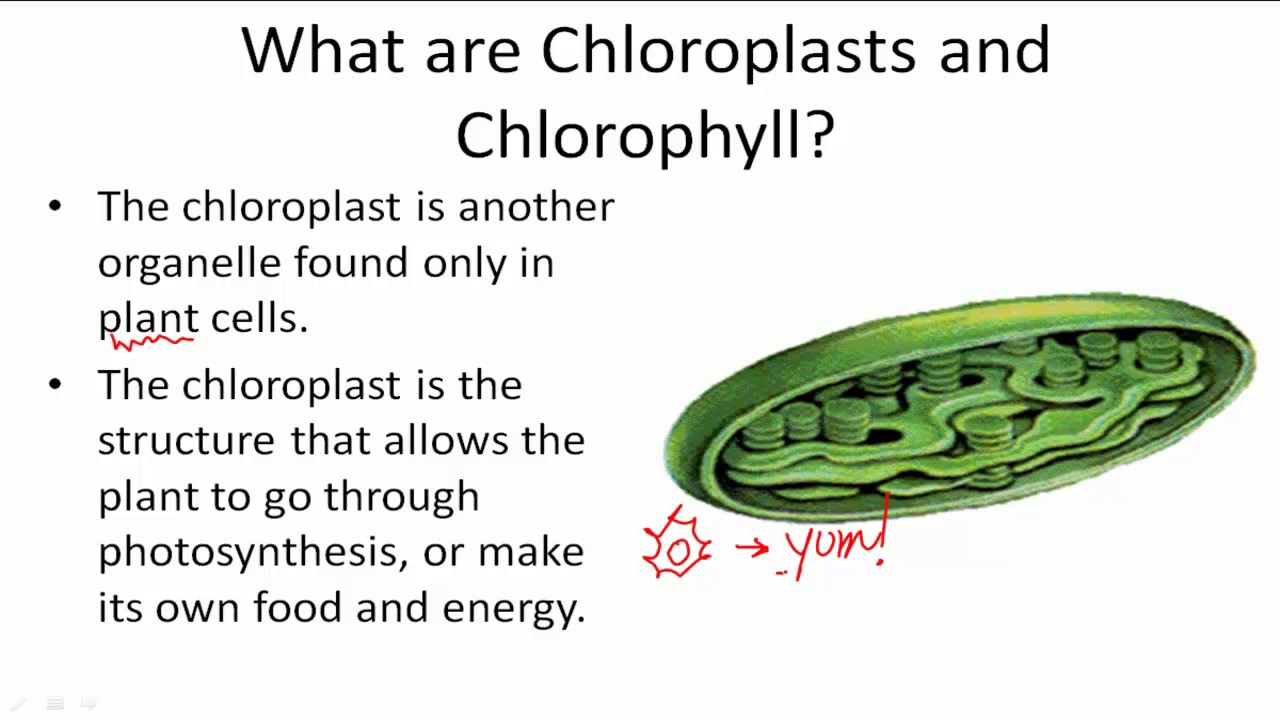
Functions of Chloroplasts and Chlorophyll
CK12
28K views•2017-05-24
Trending

5:41
Business
YouTube Disabled Our Comments Again (Are Any Humans Left at YouTube?)
SpecialBooksbySpecialKids
39K views•2026-07-21

5:07
Philosophy
One Must Imagine Sisyphus Happy
vlogbrothers
61K views•2026-07-21

12:30
Business
The Downfall of OnePlus!
techwiser
65K views•2026-07-21

30:21
History
The REAL History Behind The Odyssey Will BLOW Your Mind! It's NOT a Myth!
metatronyt
20K views•2026-07-21