Dogs were not tamed by humans but rather underwent self-domestication, where wolves with naturally calmer temperaments approached human camps to scavenge, and over thousands of years, natural selection favored traits like tameness, which also produced physical changes (floppy ears, rounder faces, puppy-dog eyes) and cognitive abilities (understanding human pointing gestures, oxytocin bonding) that made them uniquely suited to human companionship.
Install our extension to search inside any video instantly.
How Humans Accidentally Created Dogs?
Added:It's a night somewhere in Ice Age Eurasia, and you're crouched by the only fire for a hundred miles. Something is out past the light.
You feel it before you see it. A stillness in the dark that shouldn't be there.
Then two eyes catch the flame and hold.
A wolf.
Big enough to open your throat before you'd finish standing up. And it just watches.
Doesn't charge. Doesn't run.
Here's the thing nobody tells you about that moment. It isn't the night a human tamed a wolf. It's the night a wolf stepped through a door that only opens one way.
So, why dogs and not some other animal?
Or was the wolf the one with a plan?
Let's start with the garbage. Because the whole thing begins there.
And it's far less romantic than the version you were told. You've probably heard the sweet one. Some kind Stone Age hunter finds a wolf pup, raises it, tames it, and boom, best friend. Almost none of that is true. Raise a wolf from birth, love it, feed it, and you still get a wolf. Ask any sanctuary. Wolves don't hand themselves over.
So, it wasn't us reaching out. It was them.
Wherever humans went, we left a mess.
Cracked bones, spoiled meat, scraps we couldn't be bothered to finish. To a hungry wolf, a human camp was the easiest meal on the continent. If you could stomach getting close to the thing that made fire. Most couldn't.
But in any pack there's variation. A few animals are born just slightly calmer, slightly less likely to bolt. And those few could tolerate the heat and the smoke long enough to eat.
Now flip it around.
Picture that fire from the wolf's side of the dark.
You are the strange upright creature carrying a burning thing, reeking of smoke and iron and dead animals, that kills from a distance for reasons no wolf can read.
Everything about you screams stay away.
And yet you keep leaving food.
Every night, the same impossible math.
The monster feeds me.
To the boldest wolves, that contradiction was worth the risk.
And the ones who took it ate better than the ones who didn't.
They didn't fear less because they were braver.
They just happened to be born wired a little quieter inside, and that tiny difference is where the whole thing turns.
Scientists call what happened next self-domestication, the animal shaping itself.
No human deciding anything.
And we know it can happen fast because a man sat down and watched it happen in a single human lifetime. In 1959, a Soviet geneticist named Dmitri Belyaev began breeding silver foxes at the Institute of Cytology and Genetics in Novosibirsk.
Wild, snapping, human-hating foxes.
He selected for one thing.
Not size, not color.
Tameness. Every generation, only the calmest foxes were allowed to breed.
That was the whole experiment.
Within about 10 generations, decades, not the thousands of years everyone assumed it took, the foxes were seeking people out, whining for attention, licking hands.
But here's where it gets stranger because Belyaev never bred for looks, and the looks changed anyway. Floppy ears, curling tails, coat splashed with white.
Rounder faces that read unmistakably as puppy. Researchers proposed a name for this bundle of accidents, domestication syndrome. The idea that when you turn the fear down, a whole cascade of physical traits comes along uninvited.
One of those foxes, named Pushenka, was moved into a house in 1974 and reportedly started guarding it, barking at strangers like a dog nobody had trained.
The scientists never asked for a dog.
Calm alone had built most of one.
And the changes didn't stop at the surface. They went into the code.
Researchers at Uppsala University, comparing dog and wolf genomes in 2013, found dogs carry extra copies of a gene for digesting starch, for living on the grain and slop of human settlements.
A wolf's body says meat.
A dog's body quietly rewrote itself to run on our leftovers. That's not a tamer wolf.
That's an animal that edited its own biology to stay near you.
Then something happened in their minds we still can't fully explain.
In 2002, researchers at Harvard ran a test so simple it sounds like a trick.
Hide food under one of two cups, then point at the right one. A dog follows your finger to the food on the first try. A chimpanzee, our closest relative, sharper than a dog by almost every measure, stares at your hand, lost.
Even wolves raised by humans mostly fail it. Puppies with barely any human contact pass.
Following a point sounds like nothing.
It isn't. It means the dog grasps that your gesture is about something, that there's a mind behind your hand trying to tell it where to look.
Dogs read us. It's not learned. It's built in.
And here's the one that should get you.
In 2015, scientists at Azabu University in Japan had dogs and their owners just look into each other's eyes.
When they did, both of them flooded with oxytocin, the bonding hormone, the same chemical that surges between a mother and her newborn.
Both at the same time.
Wolves raised by those same people didn't do it.
Somewhere along this road, a predator that should want to eat us got wired to bond with us instead through nothing but a look.
They even grew a muscle for it. In 2019, researchers at the University of Portsmouth found dogs have a small muscle above the inner eye that wolves essentially don't. The one that lifts the brow into that melting, sorrowful, please face. The puppy dog eyes.
It seems to have been selected for over thousands of years for one reason.
It works on us. It makes us want to take care of them.
That look you can never quite say no to isn't obedience. It's a lever evolved to reach into your chest and pull.
Now, the honest skeptic has a good line here. They'll say, "Come on. We didn't create anything. We were slobs with a campfire. The wolves did all the work sorting themselves on our trash while we barely noticed."
And that's fair. For most of this story, nobody was in charge of anything.
There was no plan, no first tamer, no single hero with a wolf pup and a good idea.
Just hunger and a fire and time.
Except it didn't happen once.
Some geneticists argue it happened more than once in more than one place.
Separate wolves drifting towards separate humans thousands of miles apart who had never met. The dating is still fought over somewhere between 15 and 40,000 years ago, and the two origins idea is still contested.
But if even part of it holds, this wasn't a fluke.
It was a pattern. Put humans and wolves on the same land long enough and dogs keep surfacing like water finding the same crack again and again.
Maybe we didn't create them. Maybe, given enough time, they were always coming.
Uh, here's where I have to be honest about the wall we hit.
We can measure all of it. The hormone in the blood, the muscle under the skin, the gene that lets them eat our bread.
We can watch a puppy follow a finger and clock the exact second it understands.
What we can't do is climb inside a dog and find out what any of it feels like in there.
When your dog crosses a room to lean its full weight against your leg, we can tell you its oxytocin is climbing.
We can't tell you whether it feels the warm aching thing you feel holding someone you love, or whether it's running an ancient program with the lights off and nobody home.
The behavior is wide open to us.
The inside is a locked door.
Every study in this story stops at that door.
So does this one.
Huh.
Uh, but sit with one last thing.
About 14,000 years ago, in what is now Bonn, in Germany, a dog was buried beside two people.
It was young when it nearly died, sick, most likely with distemper, the kind of illness that leaves an animal unable to eat or drink or stand for weeks.
That puppy lived, which means, in the depth of the ice age, when every calorie was a fight to the death, somebody dripped water into its mouth, kept it warm, and refused to let it go.
It couldn't hunt. It couldn't guard. It could give them nothing at all.
They saved it anyway.
And when it finally died, they laid it in the ground beside their own.
That's the moment we became something to each other, not owner and tool, something with no clean word for it.
And here's what that wolf at the fire never knew it was trading.
It gave up the wild. Every generation that crept closer woke up a little less able to go back until there was no back left to reach.
Your dog cannot become a wolf again. It made a promise its entire species can't take back.
And it made it to you.
You can still walk away from it any day you choose.
It never can.
Uh, >> [sighs] >> look at it asleep there on the floor.
It chose this.
It can never un-choose it.
Related Videos
19:51
Biology
Salivary glands (anatomy)
SamWebster
139K views•2019-01-08
12:52
Biology
DNA Replication l Replication initiation in Prokaryotes
microbioscope18
4K views•2019-03-05
5:47
Biology
Identification of bacteria using biochemical tests (1 of 2)
microbiologyteachingvideos6490
24K views•2019-05-28
1:11
Biology
How PTSD Impacts Our Genes, with Dan Siegel
nicabm
31K views•2019-07-18

51:49
Biology
Influence of Footwear Longitudinal Bending Stiffness on Metatarsal Strains during Running
uofckinesiologyseminarseri2218
107 views•2025-12-02

6:57
Biology
Obscure Bird Grasshopper: It's One of the Big Ones!
RandysNaturalWorld
2K views•2025-08-26

5:36
Biology
B-Cell Receptors vs T-Cell Receptors - Overview
Sqadiacom
1K views•2025-01-31
1:27
Biology
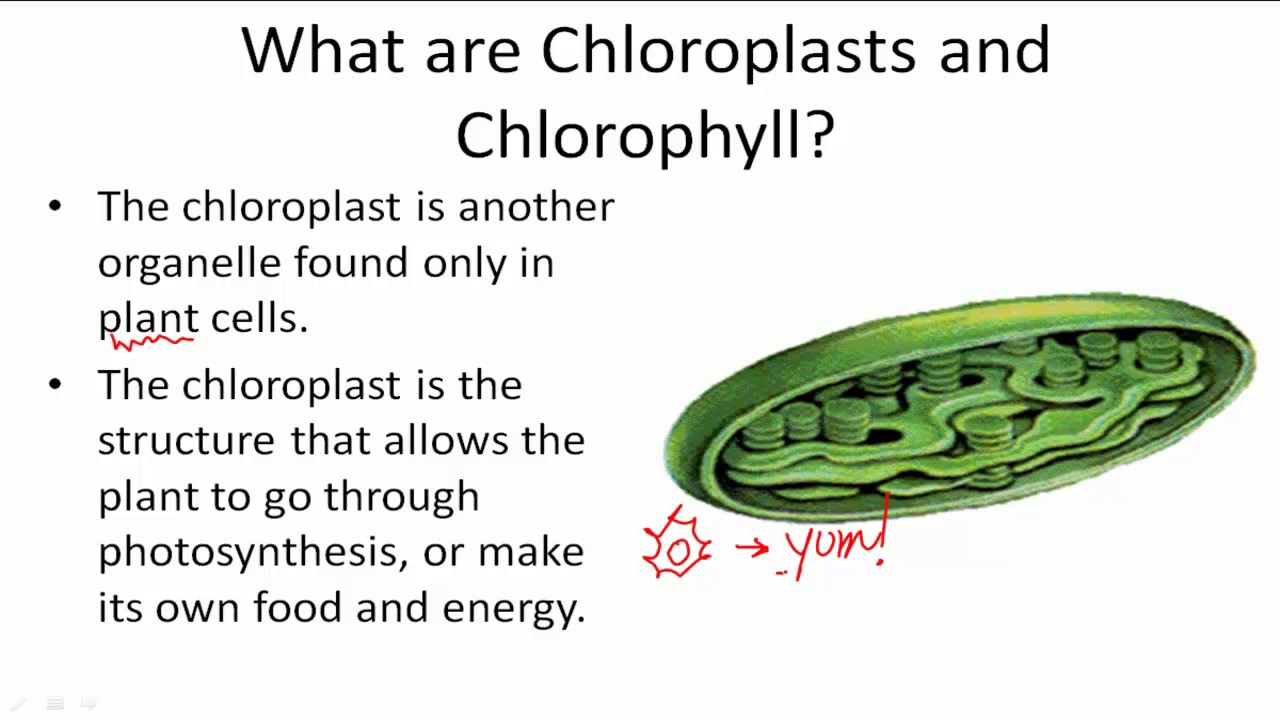
Functions of Chloroplasts and Chlorophyll
CK12
28K views•2017-05-24
Trending

9:05
Artificial Intelligence
2.4 BILLION Records Got Leaked...
DeepHumor
15K views•2026-07-22

13:25
Business
Playstation NO DISC/NO BUY Fight Is Over...
DavidJaffeGames
4K views•2026-07-23
19:32
Business
Should I buy a Sawmill?
essentialcraftsman
29K views•2026-07-22

16:52
Anthropology
Americans Confused in Australia for 17 Minutes Straight
IWrocker
17K views•2026-07-23