Raccoons possess highly sensitive tactile systems with specialized mechanoreceptors in their hairless forepaw skin, allowing them to gather detailed information about objects through touch; this sensory capability, combined with their omnivorous diet, flexible limbs, and strong memory, enables them to thrive in diverse environments from forests to urban areas, where they have adapted to exploit human resources while maintaining their natural problem-solving behaviors.
Install our extension to search inside any video instantly.
Secret Lives of Raccoons: What They Do When We’re Not Watching | Sleepy Science
Added:There is something strange about raccoons.
They are wild animals, yet they move through our neighborhoods as though they have been studying them for years.
They open lids, climb roofs, reach into narrow spaces, and examine unfamiliar objects with five careful digits that look almost like small hands.
A raccoon can [clears throat] encounter a barrier it has never seen before, test several parts of it, remember what moved, and return later with a better approach.
That combination of touch, memory, and persistence has allowed raccoons to thrive in places their ancestors never encountered.
Whether you have returned tonight or are discovering this channel for the first time, this is a quiet place to slow down, learn something gentle, and allow the day to gradually fall away.
Tonight, [music] we are spending time with one of the most familiar wild animals in North America, the raccoon.
You may have seen one standing beside a road in the beam of your headlights.
Perhaps you have heard a lid moving outside after midnight. Then looked through the window and found a gray animal calmly examining your garbage.
Raccoons climb fences, enter attics, turn over stones, pull apart rotting logs, and reach into spaces where their faces cannot fit.
They test handles, loose boards, flower pots, drain pipes, and almost any unfamiliar object placed along their route.
That constant touching is one of the main reasons raccoons appear so clever.
Their front paws move with an attention that can look almost human.
Each paw carries five long digits tipped with curved claws.
There is no opposable thumb. Yet the digits can spread, close, rotate an object and make repeated adjustments as the animal works.
A raccoon opening a lid may pull from one edge, change its grip, brace the container with its body, and return to the successful movement on another night.
The behavior raises the question at the center of our journey.
Why do raccoons seem determined to touch everything they find?
The answer begins with the unusual role of the forpaw.
Touch provides raccoons with detailed information about shape, movement, pressure, texture, and hidden openings.
Their paws contain several kinds of sensory nerve endings.
and a large part of the brain is organized around processing the signals arriving from individual digits.
The raccoon's surroundings become clearer through physical contact.
A shell can be turned until a narrow edge reaches a claw. A stone can be tested for movement before it is lifted.
The loose corner of a lid can reveal itself through a shift too small to notice from several steps away.
If you enjoy these quiet journeys, you're welcome to subscribe and if it feels natural to leave a comment sharing where you're listening from tonight.
It helps others find this calm corner of science, one sleepy listener at a time.
The common raccoon has the scientific name proion Lotor.
The word Lotor comes from a Latin word associated with washing.
Early naturalists watched raccoons dip food into water and believe they were cleaning it before eating.
That interpretation became attached to the species so firmly that it entered the animals scientific name.
The real behavior is more complex.
Researchers recording activity from touch sensitive nerves found that wetting the hairless skin beneath the digits increased the responsiveness of certain nerve fibers.
The amount of pressure needed to activate them also became lower.
Moist skin can therefore carry small changes in pressure to the sensory structures beneath it more effectively.
A ridge, a moving leg, or the edge of a shell may produce a clearer signal.
This does not mean every raccoon deliberately wets food because it understands the biology of its nerves.
Water, mud, aquatic prey, instinctive handling, and the removal of loose dirt can all contribute to the behavior.
The measurable effect of moisture gives the famous washing motion a deeper physical foundation.
Raccoons evolved around forests, wetlands, rivers, and shorelines where much of their food remains partly hidden. [clears throat] Crayfish shelter beneath stones.
Insect lavi tunnel into damp wood.
Snails carry food inside hard shells, while nuts disappear beneath leaves and soft mud.
Finding these items rewards an animal willing to approach closely and examine what vision alone cannot identify.
That same habit now follows raccoons into human spaces.
Creek banks become drainage channels.
Hollow trees are replaced by chimneys and attics.
A shell with a narrow opening becomes a container with a loose edge. The materials are different. While the raccoon continues using the same basic cycle, it reaches forward, gathers information, adjusts its movement, and remembers what worked.
That cycle connects the sensitive paw beside a stream with the raccoon opening a city waste bin.
It also helps explain how one medium-sized nocturnal mammal became successful across forests, farms, suburbs, and major cities.
Behind the mask is an animal built to investigate changing surroundings through direct contact.
Its paws begin the process while evolution has supplied an entire body and brain prepared to act on what they discover.
That evolutionary history places the raccoon inside a large mammal group called carnivora.
An order is a broad branch of the animal family tree made up of species that share ancient ancestry and important features of the skeleton skull and teeth.
The name carnivora can be misleading because it sounds like a label for animals that live entirely on meat.
Diet varies widely across this order.
Polar bears obtain much of their energy from seals, while giant pandas belong to the same order and spend most of their feeding time chewing bamboo.
Raccoons occupy a flexible position between such extremes.
They eat animal prey when it is available, then shift easily to fruit, seeds, grain, and other plant foods.
Within carnivora, the raccoon belongs to a family called proionidi.
This family developed in the Americas and includes several animals with flexible limbs, five-toed feet, and broad diets.
Cotis move through forests and open ground from the southwestern United States into South America, often searching through soil and leaf litter with long mobile noses.
Kinkajus spend much of their lives in tropical trees where they feed heavily on fruit and use long tongues to reach nectar.
Olingos also live in central and south American forests, while ringtails occupy rocky canyons, woodlands, and dry country across Mexico and the southwestern United States.
The common raccoon is the most widely recognized member of this family.
Although its body does not closely match any single familiar household animal, its legs are shorter than those of a wolf, built to cover long distances at speed.
The claws remain exposed instead of retracting into protective sheath as a cat's claws do. Its frame also lacks the heavy bones and massive jaw muscles seen in the largest bears.
Evolution produced a different combination.
Each foot carries five digits armed with curved non- retractable claws.
Those claws provide grip on bark, soil, rotten wood, and rough stone. The limbs can bend and rotate through a wide range of positions, allowing the animal to climb, brace itself, reach into cavities, and hold objects against the surface.
Raccoons also walk with most of the sole touching the ground.
This form of movement is called plantigrade locomotion.
Humans, bears, and raccoons all use plantigrade feet. Although their bodies apply that arrangement in very different ways, a broad contact area gives a raccoon a stable base while it stands upright briefly, balances near water, or works with its front paws.
The teeth reveal the same flexible design.
Sharp in sizes at the front can nip pieces from fruit or strip flesh from a small carcass.
The canine teeth help seize prey and hold slippery food.
Farther back, broader cheek teeth can crush an insect's hard outer covering, crack a shell, or grind plant material.
This mixed set of tools allows the same mouth to process a crayfish in spring, berries in summer, and acorns during autumn.
Such flexibility developed long before raccoons began opening compost bins or searching beneath backyard decks.
Their native range extends from southern Canada through most of the United States, Mexico, and much of Central America.
Across that enormous area, the available food changes with rainfall, latitude, elevation, and season.
A raccoon near a Louisiana marsh may search for crabs and frogs.
One living beside an Ontario wood lot may depend heavily on corn, insects, wild grapes, and autumn nuts.
Individuals in dry parts of Mexico may travel between water sources and fruing plants that become productive for only a short part of the year.
A narrow specialist would struggle as these resources appeared and disappeared.
The raccoon's body allows it to keep changing its method.
The common raccoon is one of three living species, usually placed in the genus Proion.
The crab eatating raccoon ranges through parts of Central and South America, especially near wetlands and tropical waterways.
Despite its name, it also eats fruit, insects, fish, and other available foods.
The cosml raccoon lives only on Kosumel, an island off Mexico's Yucatan Peninsula.
Its entire natural range covers a small island measuring roughly 48 km from north to south.
These relatives show how the same basic lineage has been shaped by mainland forests, tropical shorelines, and island isolation.
The raccoon dog sometimes creates confusion [music] because its name contains the word raccoon and its face carries dark markings around the eyes.
It belongs to the dog family [music] and is native to Eastern Asia.
Its resemblance develops separately and does not make it a true raccoon.
[clears throat] The common raccoon represents its own clear evolutionary answer to changing resources.
Stability comes from a collection of useful compromises.
Feet that can climb and walk, teeth that can cut and crush, and limbs able to investigate whatever the season places within reach.
After sunset, that adaptable body enters a world where many useful objects remain partly hidden, and distant vision can provide only the beginning of the information needed.
As evening settles over a wooded creek, the entrance to a hollow tree begins to darken.
A rounded face appears inside the opening.
The raccoon waits for several moments, listening while the last daylight fades between the branches.
Most raccoons are active primarily at night, and many leave their dens near sunset.
Their schedules remain flexible.
A mother feeding growing kits may begin searching earlier than usual, while cold weather, disturbance, [music] hunger, or an unusually safe location can also bring a raccoon into daylight.
No single clock controls every animal.
The timing changes with season, age, food supply, and local conditions.
Tonight, the raccoon climbs down the trunk and places its front feet on the damp ground. The surroundings have not become empty simply because the sun has gone down. They have become harder to examine from a distance.
A patch of moving leaves may contain a beetle, a mouse, or nothing more than wind.
A dark shape beside the water could be a stone, a shell, or a crayfish partly hidden beneath mud.
Several senses begin working together before the raccoon touches anything.
Its eyes help guide the body around tree roots, fallen branches, and changes in the ground.
Raccoon eyes are adapted for low light conditions and can make good use of the limited light available after dusk.
When a flashlight or a pair of headlights catches them at the correct angle, the eyes may shine yellow, green, or pale white.
That glow comes from light reflecting inside the eye and traveling back toward the observer.
Many nocturnal mammals have reflective structures that give light sensitive cells another opportunity to detect incoming light.
The effect improves vision under dim conditions.
Although darkness still removes color, sharp edges, and fine surface detail.
A raccoon can see that an object is present long before it knows exactly what the object is.
Smell begins filling in part of the missing information.
Air moving across the ground may carry the scent of fruit, damp soil, another raccoon, or an animal that passed through hours earlier.
Odor can guide the raccoon toward a feeding place or a familiar den without revealing the exact shape of what lies there.
Hearing covers a different range.
A faint scrape beneath leaves may reveal an insect moving through the litter.
Water shifting against a stone can mark the position of a frog or crayfish.
A sudden sound above the animal may send it toward the nearest trunk before its eyes have identified the source.
Closer to the body, long facial whiskers provide another layer of information.
The scientific word for these whiskers is vibbrrisi. Each whisker sits inside a sensitive follicle connected to nerves beneath the skin.
When a whisker bends against bark, grass, or the edge of a narrow opening, those nerves report the direction and amount of movement.
This helps the raccoon judge spaces near its face, especially when the opening is too dark for clear vision.
The same process becomes useful beside water where reeds or floating leaves can brush the whiskers before the animals nose or eyes reach them.
These senses cooperate rather than competing for control.
Vision finds the general path. Smell makes one part of that path more interesting.
Hearing can reveal movement before the source becomes visible.
Whiskers protect the face and measure the nearest surfaces.
Detailed examination usually begins only after the front pores arrive.
The raccoon pauses beside a cluster of wet leaves.
Something beneath them carries the smell of food.
Its eyes cannot reveal whether the object is a nut, a snail shell, or a piece of bark holding insect lavi.
One paw reaches forward and presses the leaves flat. The digits spread close around the hidden object and draw it into the open. A quick touch can reveal whether it moves on its own. Further pressure tests whether the surface is hard or flexible.
Rotation exposes ridges, openings, broken edges, and soft areas that could not be seen clearly from above.
The raccoon may release the object after a single examination.
It may also turn it several times, bring it close to the nose, or carry it toward the water.
This need for proximity explains much of the animals familiar behavior.
A crayfish beneath a stone must be reached before its shape and movement become clear.
An acorn under leaves may smell promising while still requiring the poor to test its shell.
A bird egg, a closed muscle, or the loose edge of a lid presents the same basic problem.
Useful information remains incomplete until contact occurs.
The raccoon from the creek now holds the small object first seen near the water.
Its eyes located a shape beside the bank.
scent encouraged a closer approach. The final decision is forming where the object presses against the hairless skin of the digits.
Beneath that skin, several kinds of nerve fibers are already reporting different parts of the contact.
The object rests against a smooth contact surface beneath the raccoon's digits.
Biologists call this hairless surface glabra skin.
The same term is used for the skin on a human palm or the sole of a foot.
Without ordinary fur, pressure and movement reach sensitive structures beneath the surface directly.
Those structures include mechano receptors, specialized nerve endings that respond when skin is pressed, stretched, bent, or vibrated.
Each receptor converts a physical change into an electrical signal.
The signal travels along a nerve toward the spinal cord and brain, [music] carrying information about the object being held.
Researchers began measuring these signals directly more than half a century ago.
In a 1971 experiment, scientists recorded from 76 individual mileelinated nerve fibers serving the glabra skin of raccoon for pores.
Myelin is a fatty layer wrapped around many nerve fibers.
It works like insulation around a wire, helping electrical signals travel quickly through the body. The 76 fibers did not all react in the same way.
34 were classified as rapidly adapting units.
These fibers responded strongly while the skin was first moving or changing shape.
Their activity faded when the object stopped moving and the pressure became steady.
A rapidly adapting fiber can mark the moment a shell begins to slip or a rough edge moves beneath one digit.
The remaining 42 fibers were slowly adapting units.
They responded while the skin was being displaced and continued producing signals while pressure remained.
That continuing activity helps the nervous system follow the shape of an edge, the firmness of a surface, or the force being applied during a hold.
The two response patterns cooperate during a simple movement.
When the raccoon turns a nut, rapidly adapting fibers report the beginning of rotation and any sudden sliding.
Slowly adapting fibers continue reporting the pressure of the shell against the digits while the paw holds it in place.
A crack, [music] ridge, or soft patch changes the signal pattern and guides the following movement.
Later studies divided raccoon touch receptors into more detailed groups.
These included rapidly adapting receptors, binian type receptors, slowly adapting type 1 receptors and slowly adapting type two receptors.
Binian receptors are especially responsive to rapid vibration.
A tap, scraping claw, or object rattling against a hard surface can create the kind of quick vibration that activates them.
In one later sample, pinion type fibers made up roughly 14 to 18% of the mechano receptors recorded from glaborous forpore skin.
Slowly adapting type one receptors help detect edges, points, [music] and fine changes in surface shape.
Type two receptors respond strongly when skin stretches, helping the nervous system follow the position of the digits as the pore opens or closes.
Information also arrives from beyond the smooth skin.
Sensory fibers serve the hairy skin farther up the pore, the claws, the muscles, the joints, and deeper tissues.
Signals from muscles and joints report where each digit is positioned, even when the animal cannot see it clearly.
Claw related input reveals contact with bark, shell, soil, or the inside edge of a narrow opening.
Deep pressure receptors add information when the paw braces against a heavy object or pushes into mud. A small movement therefore produces several streams of information at once.
The raccoon can detect that an object has moved, feel where pressure remains, follow how the skin is stretching, and sense the position of the digits around it.
Popular descriptions sometimes claim that a raccoon's touch is exactly four times more sensitive than a human hand.
A dependable direct comparison has not established that neat ratio.
Human hands also contain dense networks of touch receptors and perform forms of precision grip that raccoons [clears throat] cannot copy. A raccoon has no opposable thumb. So, one digit cannot swing across the palm and meet the others in the way a human thumb can.
Its gripping style depends on five flexible digits working together with curved claws, pressure against a surface, and repeated adjustments.
The remarkable feature lies in the amount of tactile feedback available during those adjustments.
The paw can test an object repeatedly [music] with each movement producing fresh signals that refine the following one. When moisture reaches this same glraous skin, the physical response of the system changes and the familiar behavior beside water becomes easier to understand.
Moisture changes the way pressure travels through the skin beneath a raccoon's front digits.
Researchers examined this effect by recording electrical activity from 136 slowly adapting nerve fibers.
These fibers travel through the median and ulna nerves, two major pathways carrying sensory information away from the forpaw.
Both nerves have counterparts in the human arm and hand.
The median nerve serves much of the palm and several fingers, while the ulna nerve carries signals from the outer side of the hand.
In a raccoon, these pathways collect information from the smooth skin beneath the digits and send it toward the spinal cord.
During the experiment, scientists first measured how each fiber responded while the skin was dry.
A controlled instrument pressed against the paw with a known amount of force.
Some fibers began firing after a light touch.
Others required more pressure before producing a clear electrical response.
The researchers then wetted the same area and repeated the test.
Responsiveness increased across much of the sample.
Many fibers produce stronger signals under wet conditions and the pressure needed to activate them became lower.
That minimum amount of stimulation is called a sensory threshold.
A lower threshold means that a lighter touch can generate a detectable nerve signal.
Water did not create new receptors or expose hidden nerve endings.
The likely change occurred in the mechanical behavior of the outer skin.
Dry skin resists bending and stretching in a particular way. Once moisture enters its outer layers, the tissue becomes more flexible.
A ridge, edge, or moving surface can then deform the skin differently, allowing physical pressure to reach the receptor structures beneath it more effectively.
The difference resembles pressing an object through two materials with different stiffness.
A firm outer layer spreads some of the force before it reaches the tissue below.
A softer layer bends more closely around the object and passes along finer changes in shape.
Inside a wet raccoon pore, this altered movement can strengthen the signals produced by steady pressure.
The experiment explains what water does to the sensory system. It cannot reveal what a raccoon believes while dipping an object into a creek.
The animal does not need to understand nerve thresholds or skin mechanics for the effect to be useful.
Natural selection can preserve a behavior when animals performing it gain some advantage even when they have no conscious knowledge of the biology involved.
Raccoons also handle food in water for several possible reasons.
An object found in mud may lose loose dirt during repeated movement.
Aquatic prey must often be turned, pinned, or pulled apart before it can be eaten. Inherited patterns of poor movement may continue even when the object is already clean.
Captive raccoons sometimes perform similar rubbing motions without access to natural shoreline prey.
These possibilities can overlap during a single encounter.
A raccoon standing in a marsh may pull a crayfish from beneath a stone, hold it in shallow water, test its movement, and remove mud at the same time. The behavior does not require one fixed purpose on every occasion.
Its natural setting makes the value of sensitive wet pores easy to understand.
A freshwater marsh contains objects that are partly hidden [clears throat] and difficult to judge by sight.
Crayfish brace themselves beneath rocks.
Frogs remain still among wet plants.
Snails and muscles present hard shells with narrow openings.
Beetle lavi tunnel through soaked wood while roots and fallen fruit become covered by silt.
Bird eggs may lie in nests near water, and small fish can become trapped in shallow pools as water levels fall.
Each item produces a different pattern of movement, pressure, and texture against the digits.
A living crayfish shifts suddenly and pushes back.
A closed shell remains firm, but may contain a thin edge where the claws can gain purchase.
Soft fruit yields under steady pressure, while a stone keeps its shape and offers no scent of food.
Wetlands supplied these problems long before raccoons encountered bird baths, kitchen sinks, or outdoor pet bowls.
Their association with rivers, ponds, and marshy ground play sensitive forpaw in water again and again across many generations.
The familiar image of a raccoon washing its meal therefore captures only the visible surface of the behavior.
Tactile examination offers a fuller description.
Water changes the skin. The altered skin changes nerve activity and the nervous system receives a more detailed stream of information from the object being handled. Those signals still need to be sorted by location and meaning. Inside the raccoon's brain, individual digits occupy an unusually detailed map built to perform that task.
Signals leaving the forpore travel through sensory nerves toward the spinal cord and then upward through the nervous system.
before reaching the outer surface of the brain. Much of this information passes through the phalamus.
The phalamus is a group of structures near the center of the brain that sorts and relays incoming sensory signals.
From there, touch information reaches an area called the primary somatoensory cortex.
This thin layer of brain tissue helps identify where the body has been touched, how strongly pressure is being applied, and whether the contact is changing.
Its organization resembles a map of the body. Signals from neighboring areas of skin usually reach neighboring areas of cortex.
A touch on one digit therefore activates a slightly different location from a touch on the digit beside it.
Human brains contain a similar arrangement with large cortical areas devoted to sensitive structures such as the lips and fingertips.
The amount of brain tissue assigned to a body part depends partly on the detail of the information it provides.
In raccoons, the representation of the front pores is unusually large and carefully divided.
The hairless surface of each digit occupies a distinct cortical territory.
Natural folds and grooves in the brain help separate some of these territories, creating visible boundaries between the neural maps of neighboring digits.
This arrangement gives the brain a way to preserve the location of a touch as signals arrive from several parts of the pore at once.
Researchers explored this organization in detail by mapping the fourth digit positioned beside the outermost digit of the fourpaw.
Six raccoons were included in the study.
Scientists placed fine electrodes into the cortex and applied controlled touches to different areas of the pore.
An electrode detects the electrical activity of nearby brain cells, allowing researchers to learn which patch of skin causes a response at a particular location.
Between 110 and 229 electrode penetrations were made in each animal.
The large number of measurements allowed the researchers to build a detailed map rather than relying on a few isolated recordings.
Three main processing zones appeared around the cortical representation of the fourth digit.
One zone responded mainly to the glabra skin on the underside of the digit.
Different locations within this zone represented smaller portions of the hairless surface, including separate pads and sections along the digit.
A second zone received much of its input from the claw and the skin around its base.
The third was a multi-digit zone where brain cells responded to combinations of two or more digits.
These zones allow related signals to remain separate while still being compared.
Imagine a raccoon holding a muscle against a flat stone.
Pressure beneath the fourth digit activates the glaborous skin zone.
A claw catching on the edge of the shell produces activity in the claw dominant zone.
Movement across neighboring digits reaches the multi-digit region, helping the brain detect that the shell has begun to rotate.
The raccoon does not need to see every part of this movement.
Its cortical map preserves enough detail to reveal where the object presses, which claw has found an edge, and whether the grip remains stable.
This organization can also change when normal sensory input is altered.
In experiments involving removal of the fifth digit, researchers later examined the cortical territory [music] that had previously received signals from it.
Input from neighboring parts of the pore began influencing portions of the deprived area.
The resulting receptive fields became broader and more variable.
A receptive field is the area of skin that can activate a particular brain cell. When these fields expand, one cortical location may begin responding to touches across a wider region than it did before.
This ability to reorganize is called neuroplasticity.
Plasticity allows existing brain tissue to adjust when injury, development, [music] or repeated experience changes the information arriving from the body.
The reorganization does not instantly restore the lost digit.
It helps the nervous system make fuller use of the signals that remain.
Raccoon touch therefore depends on more than sensitive skin.
Its effectiveness comes from the partnership between mechano receptors, fast nerve pathways, relay structures, and a large cortical map able to compare signals from separate digits.
The forpore continues inside the brain as an organized pattern of neural territory.
That detailed map can identify an edge or a shifting surface, but information alone cannot reach a hollow tree, pry beneath a stone, or cross a narrow roof line. The raccoon [clears throat] also needs a body capable of carrying its sensitive paws into every useful corner of its surroundings.
At the base of an old maple tree, the raccoon places both hind feet firmly against the soil.
Each foot rests with most of its sole touching the ground.
This way of walking is called plantigrade locomotion.
Humans and bears also walk on their soles while animals such as cats and dogs usually support their weight mainly on their toes.
A broad contact area gives the raccoon a stable platform while it reaches upward and begins to climb.
Its hind feet are long and all four feet carry five digits.
At the end of each digit is a curved claw that remains exposed rather than withdrawing into a protective sheath.
These non- retractable claws find tiny cracks in bark that would be almost invisible from the ground. The animal presses its body toward the trunk, shifts its weight upward, and places the next paw where touch has revealed a secure hold.
Every part of the climb depends on a short cycle of information and movement.
The claws catch an uneven surface.
Pressure reaches the sensory nerves.
Muscles tighten or relax in response.
The following paw moves only after the body has found enough support to continue.
A raccoon [music] can climb a nearly vertical trunk using this steady pattern.
Coming down requires a different arrangement.
Many climbing mammals must back down a tree because their hind feet remain pointed in the same general direction as the rest of the body. [music] A raccoon's ankle joints are unusually flexible.
The hind feet can turn far enough for the claws to grip bark while the head faces downward.
This allows the rear legs to brace the body during a controlled headfirst descent.
The movement may look casual from a distance, but the animal is continually shifting pressure among four feet.
One weak patch of bark causes an immediate adjustment.
A claw slides a few millime, a hind leg moves lower, and the body settles into a new position.
The raccoon's compact shape helps keep its weight close to the surface being climbed.
Its tail extends behind the body and assists with balance as the animal crosses a branch or narrow fence.
The tail cannot wrap around the limb and hold the animal like the prehensile tail of certain monkeys.
Its value comes from small changes in position that help counter shifts in body weight.
This becomes useful when a branch bends, a fence rail narrows, or a roof slopes toward the ground. A raccoon crossing a roof edge often keeps its body low. The front paws test the surface ahead while the hind feet provide traction behind.
On shingles, the claws catch rough mineral grains.
Along a wooden fence, they grip cracks, knots, and the edges between boards.
The same anatomy works in softer surroundings.
Raccoons wade through shallow water while searching beneath stones and among plants.
They can also swim across ponds, streams, and narrow channels with a steady paddling motion. Their feet lack the broad webbing of an otter or beaver.
So swimming remains one useful ability within a larger collection rather than the center of their body design.
The greater advantage is movement between different kinds of space. A raccoon can leave the ground, enter shallow water, climb a trunk, and squeeze into a sheltered cavity during a single night.
Natural dens are often found inside hollow trees.
Other animals use abandoned burrows, spaces between rocks, cavities beneath roots, or sheltered openings in fallen timber.
A female raising kits may choose a tree hollow several meters above the ground where the entrance is difficult for many predators to reach.
Human structures supply close substitutes.
A chimney resembles a vertical tree cavity. An attic provides dry shelter above the ground.
Culverts and drainage pipes offer enclosed roots near water.
Crawl spaces, barns, sheds, and unused sections of outbuildings can provide darkness and protection from wind.
Brick replaces bark as a climbing surface.
Fences take the place of fallen branches. Storm channels reproduce some of the edges and shallow water roots once supplied by creeks.
The raccoon [music] carries the same feet, claws, flexible joints, and balance into each setting.
Its movements across roofs and walls can appear almost effortless because the body continually corrects itself before a small loss of balance becomes a fall.
Sensitive paws locate the usable surface.
Claws convert that information into grip. Flexible limbs place the body where the paws have found support.
Access to so many places would provide little advantage to an animal dependent on one narrow food source.
For the raccoon, almost every new surface can lead towards something edible. And the available menu changes continually with habitat and season.
A hollow beneath a log may offer beetle lavi in May, while the same patch of ground holds fallen acorns 5 months later.
For a raccoon, a useful feeding place can change completely as the year moves forward.
There is no single meal that defines the species.
diet follows whatever is abundant, reachable, and worth the energy required to collect it. This flexibility can be measured by examining what raccoons leave behind.
Between 1967 and 1969, researchers studied raccoon feeding in southwestern Manitoba.
They examined 1,19 samples of scat along with the contents of 298 stomachs and colons.
Scat is the scientific term for animal droppings.
Fragments of seeds, insect shells, hair, feathers, bone, and plant tissue can remain after digestion, allowing researchers to reconstruct what an animal has eaten.
A single sample offers only a brief glimpse.
More than 1,000 samples collected across different months reveal how the diet shifts with weather and season.
During spring, northern raccoons emerge from winter with less stored body fat and a landscape only beginning to produce new plant food.
Animal material can become especially useful at this time.
Earthworms rise through damp soil.
Beetles and other insects become active beneath bark and leaf litter.
Shallow water may contain crayfish, frogs, snails, and the eggs of amphibians.
Carryan left after winter can provide protein and fat without requiring a chase.
Bird eggs may also become available as nesting begins.
The precise mixture depends on location.
A raccoon near a prairie wetland encounters different foods from one living beside an eastern hardwood forest. [music] By early summer, the menu widens.
Mulberries, wild cherries, raspberries, and other soft fruits begin ripening at different times.
Insects remain plentiful, while ponds and streams continue supplying aquatic prey.
Young corn may appear in agricultural fields, although the most energy richch kernels arrive later.
A raccoon can move between these resources during one night, taking fruit from a tree before searching beneath stones along a creek.
Autumn changes the value of the landscape again. Acorns, beach nuts, walnuts, and other hard seeds contain concentrated fats and carbohydrates.
Corn becomes a major food where farms border woodland or wet ground.
Wild grapes, apples, and late berries can remain available after softer summer fruits have disappeared.
These calorie rich foods help northern raccoons add [music] weight before cold weather reduces activity and makes feeding less dependable.
Their teeth support this changing menu.
Small insizes at the front can nip through fruit skin or remove pieces from softer food.
Canine teeth help hold slippery prey and tear animal tissue.
Farther back, broad cheek teeth crush insect shells, crack small bones, and grind seeds or plant material.
The arrangement performs several jobs reasonably well instead of being shaped around one narrow task.
A cat's slicing teeth are highly effective on flesh. A grazing animal has broad grinding surfaces suited to fibrous plants. The raccoon carries a mixed set that can process both categories along with many foods that fall between them.
Its digestive system follows the same general pattern.
Food passes through a relatively simple stomach and intestine without the large fermentation chambers used by animals that depend on tough grass or leaves.
Fruit, seeds, insects, eggs, meat, and cooked human food can all provide usable energy.
Some material remains difficult to digest.
Yet, the available range is still unusually broad for a mammal of its size.
Human settlements have concentrated that range into smaller spaces.
A bowl of pet food contains protein and fat that once required searching across a wide area.
Compost may combine fruit scraps, bread, [music] and vegetable matter in one container.
A cornfield places thousands of similar food items in orderly rows.
Garbage bags can hold leftovers from several meals behind a thin layer of plastic.
These resources did not create the raccoon's broad appetite.
They supplied new versions of foods that its teeth, digestive system, pores, and senses were already prepared to examine.
Natural food is often scattered and temporary. [music] Human food can appear in the same location every evening or every collection day.
That predictability changes the value of memory.
A raccoon that once found pet food beneath a porch may return to the same steps nights later.
An animal that opened a loose lid during autumn may remember the movement after winter has passed.
As food sources change or become blocked, successful feeding increasingly depends on retaining old solutions and adjusting them when the familiar root no longer works.
A reliable feeding place may disappear beneath snow, dry out during summer, or remain unused until the same season returns. Remembering an earlier solution can save an animal from beginning again each time the landscape changes.
Researchers began testing this ability in raccoons more than a century ago.
In 1907, American psychologists Lawrence Cole and HB Davis published experiments involving captive raccoons and mechanical feeding devices.
The equipment was simple by modern standards.
Wooden boxes, small doors, catches, cords, [music] and movable fasteners stood between the animals and a food reward.
Some devices required one direct action.
Others used a sequence resembling a basic combination lock where several parts had to be moved in the correct order before the door would open.
A raccoon might need to pull a cord, slide a bolt, or lift a latch while holding another part of the device in place.
Success came through repeated contact.
The paws pressed against each surface.
Movement produced immediate feedback and useful actions gradually became more common.
These experiments measured learned motor sequences.
A motor sequence is an ordered set of body movements used to complete a task.
The animal was learning how to produce a physical result rather than working through an abstract human problem.
Opening a latch did not require knowledge of engineering.
It required the raccoon to remember which movement had released the barrier during an earlier attempt.
Cole tested how long those learned actions remained available after practice stopped.
Scientific reviews of his work describe retained solutions following delays of up to 147 days.
That interval covers almost 5 months.
A raccoon [clears throat] trained near the end of winter could therefore retain part of a solution through spring and well into summer.
Davis conducted related work and used even longer gaps between training and testing.
Some raccoons faced delays reaching 286 days, which is longer than 9 months.
Performance after such a long interval was not always complete on the first return.
Certain animals hesitated, attempted an old movement in the wrong order, or needed additional trials before the full sequence reappeared.
Their relearning was often faster than the original training had been. That faster return matters because memory [music] can influence behavior even when every detail is no longer immediately available.
An earlier experience changes which actions the animal tries first.
Partial knowledge narrows the search and reduces the number of failed movements needed to recover the solution.
Popular accounts sometimes claim that raccoons remember a puzzle perfectly for 3 years.
The early experiments do not clearly support that exact statement.
Their documented results remain impressive without extending the delay beyond the evidence.
Retention lasting 147 days along with faster relearning after as many as 286 days shows that useful physical information can survive through a large part of a raccoon's year.
That ability fits the conditions outside a laboratory.
A hollow tree used during one winter may remain empty throughout summer and become valuable again when cold weather returns.
Wild grapes ripen along the same woodland edge each autumn.
A shallow wetland that held crayfish before freezing may become productive again after spring thor.
Even a hard shell or tightly packed cluster of stones can require a handling method worth retaining.
Memory also helps with places that change gradually. A familiar branch may fall and block an old route. Water levels may expose a different section of shoreline.
Human residents can replace a loose lid with a heavier one or move a pet bowl to another part of a porch.
Previous experience still gives the raccoon a starting point. The remembered location brings it back to the resource, while retained movements guide the first attempts at reaching it. Intelligence in these experiments appeared through observable changes in behavior.
Practice reduced unnecessary actions.
Long delays did not erase every useful part of the solution.
Relearning proceeded more quickly because the earlier experience continued shaping what the animal did.
The wooden devices of 1907 offered a controlled view of retention.
A forest, wetland, or city presents a more complicated challenge where several possible openings may be available and other raccoons may be trying to reach the same reward.
Modern puzzle boxes would eventually bring those competing possibilities together under the open night sky.
Modern experiments have carried raccoon problem solving out of the laboratory and into places where wild animals make their own decisions.
Instead of placing one captive raccoon in front of a wooden box, researchers can now set a device outdoors [music] and allow several freeranging animals to approach it during the night.
Small radio frequency identification tags make it possible to recognize each visitor.
These tags are often called RFID tags.
Each one contains a unique code that can be detected when the animal comes close to a reader.
Remote cameras record the movements that follow. Together, the tag and video reveal which raccoon arrived, how long it remained, [music] which parts of the device it touched, and whether another animal was nearby.
This matters because two raccoons can receive the same opportunity and behave very differently.
A modern multi-access puzzle box contains several food compartments.
Each compartment is protected by a different kind of latch or opening.
One may require pulling a piece outward.
Another may open after a part is pushed or rotated.
The food reward remains similar while the physical route needed to reach it changes.
A device with several possible solutions tests more than memory for one familiar action.
The raccoon must explore the available parts, notice which movements produce useful changes, and shift methods when a successful action at one compartment fails at another.
A 2024 study tested 31 wild raccoons with this kind of multi-solution box.
Some animals inspected the device briefly and left.
Others returned repeatedly across several nights.
Seven raccoons learned to solve more than one type of latch. That was approximately 23% of the animals tested.
The result shows genuine behavioral flexibility while also revealing how unevenly that ability appeared.
Most of the raccoons did not master several solutions during the study.
Success depended on approaching the box, remaining long enough to investigate it, and producing enough varied actions for useful feedback to occur.
A paw sliding over a latch might cause a small movement. The animal could then repeat that action with more pressure.
A lid that lifted slightly might encourage pulling from a different angle.
Each change in the device supplied new information through the pause, eyes, and sound.
Flexible problem solving developed through this exchange between movement and feedback. [music] Repeating one action forever would work only if every latch responded in the same way.
The successful animals altered their movements when the device behaved differently.
The researchers also found strong individual patterns.
The order and mixture of actions differed more between separate raccoons than they did across repeated visits by the same animal.
One raccoon might begin by pulling at edges.
A second might push surfaces with its nose before using its paws.
Another could spend more time rotating movable parts.
These patterns remained recognizable over multiple encounters.
Competition made some of them even more consistent.
When another raccoon stood nearby, an individual had less time to experiment without interference.
It often relied more heavily on the actions it had used before.
The puzzle therefore changed when several animals arrived together.
A mechanical problem became a social one. A raccoon that opened a compartment did not always keep the reward.
Some unsuccessful animals remained close to the device and waited while a more skilled individual worked.
Once the compartment opened, the waiting raccoon could move in and take the food.
Researchers described this behavior as scrging.
The scramger gains access to a reward produced by another animals effort.
This creates a cost for successful problem solvers.
Time spent opening the compartment attracts competitors, [music] and the animal doing the work may lose part or all of the food.
A raccoon therefore benefits from more than knowing how a latch works.
It must also judge whether another animal is close enough to interfere, whether the reward is worth defending, and whether waiting for someone else may require less effort.
The 31 raccoons did not reveal one standard level of intelligence shared equally across the population.
They revealed a range of strategies.
Seven demonstrated flexibility across several latch types. Others specialized in one solution, withdrew early or obtain food through the work of a neighbor. The species succeeds partly because these different approaches exist side by side.
Adaptability is spread across distinct animals, each bringing its own mixture of caution, persistence, exploration, and social behavior to the same nighttime problem.
The same puzzle can produce very different behavior depending on which raccoon arrives first.
One animal may approach within seconds and begin touching every movable part.
A second may remain several meters away, watching from behind a tree or patch of brush. Both animals could possess the physical ability to open the device.
Only the first gains an immediate chance to discover how it works.
This difference is called boldness.
Bold individuals approach unfamiliar objects and possible risks more readily.
Their willingness gives them more opportunities to learn, although a quick approach does not guarantee an effective solution. A raccoon can reach the box first and still spend its time pushing a solid wall or repeating a movement that produces no result.
A cautious animal may understand the device once it begins interacting.
Yet, its reluctance reduces the number of trials available.
Researchers examined these differences during a 2024 study conducted in three Canadian protected areas.
The raccoons encountered two food extraction tasks with different levels of difficulty.
[music] Each device held a reward that could be reached through physical manipulation.
Cameras recorded how long the animals remained, which movements they attempted, and whether other raccoons were present.
The researchers separated persistence from exploratory diversity.
Persistence meant continuing to interact with the task. A persistent raccoon might pull the same edge for several minutes without changing its method.
Exploratory diversity meant trying a wider range of actions such as pushing, lifting, rotating, reaching from another side or shifting the position of the body.
Animals that used a greater variety of actions were more likely to succeed.
They also tended to complete the task more quickly.
Persistence alone did not reliably improve performance.
Time at the device became useful when the animal gathered new information and adjusted its movements.
Repeated effort without variation could leave the raccoon working against the same ineffective part.
The study also compared recreation zones with preservation zones.
Recreation zones had more human activity, while preservation zones offered less regular contact with people.
A familiar assumption says that raccoons living around humans become smarter because they face bins, doors, buildings, and other manufactured obstacles.
The results showed no clear difference in problem-solving performance based on the level of human exposure in each zone.
Familiarity with people may still affect how quickly a raccoon approaches.
It can influence caution, comfort around buildings, or willingness to remain while human sounds are nearby.
Those changes should not automatically be treated as greater intelligence.
Performance emerges from several traits working together, including attention, previous experience, motivation, and the ability to change actions after failure.
Raccoons also show a strong interest in unfamiliar objects.
Biologists sometimes call this neophilia, which means attraction to something new. A raccoon may inspect a container, loose board, bright object.
or unusual smell simply because it has entered a familiar route.
Young raccoons spend time wrestling with siblings and handling objects during play. They climb short trunks, lose their grip, reposition their feet, and try again.
These activities likely provide practice in balance and coordination.
They may also create opportunities to discover how objects move under pressure.
The exact contribution of juvenile play to adult problem solving remains difficult to measure. So it should be understood as a possible training ground rather than a proven source of every later skill.
The presence of another raccoon changes the task as well. In the Canadian study, solving often took longer when other raccoons were nearby.
Competition can interrupt concentration, block access to part of the device, or encourage an animal to rely on its most familiar movements.
A cautious observer may wait for another raccoon to expose the food. A bold animal may gain the first attempt and also attract competitors before the reward is reached.
These differences give a population several ways to respond to the same obstacle.
Some individuals discover new methods.
Others remember established roots and use them efficiently.
Scoungers obtain rewards through close attention to successful neighbors, while cautious animals avoid risks that remove boulder individuals from the population.
The species benefits from carrying this range of behavior across many animals.
Each raccoon [clears throat] brings its own history into the night.
Those habits unfold across territories of very different sizes, shaped by the distance between food, shelter, water, and safe travel routes.
A raccoon leaving its den does not wander without direction.
Its movements follow a familiar network of feeding sites, shelter, water, resting places, and safe crossings.
Biologists call the area used regularly by an animal its home range.
A home range may include places used for food, mating, sleep, and travel.
Its boundary does not always function like a defended fence.
Several raccoons can use parts of the same area, especially when food is plentiful or concentrated in one location.
Consider a raccoon beginning its route inside a hollow oak tree near a wetland.
After climbing down, it follows a strip of brush leading toward shallow water.
The same route may have been used many times before.
roots provide cover along the ground, while the creek bank offers crayfish, insects, frogs, and patches of soft mud where scents remain for hours.
Farther along, the animal reaches the edge of a cornfield.
A narrow opening beneath the fence has become part of its regular path.
During late summer, ripening corn may provide enough food to keep the raccoon in the field for much of the night.
Earlier in the year, that same field offered little, so the root continued toward other places.
Beyond the corn stands a wild grape vine growing over a fallen tree.
Its fruit becomes useful for only a limited part of the season.
Nearby, a road separates the field from another strip of woodland. The raccoon may pause beside the pavement, listening and watching before crossing.
Roads create danger, [music] but they can also lie between valuable parts of an established range.
The route ends near a large flat stone used as a latrine.
Raccoons often return to particular locations to leave droppings.
The animal may also rest nearby before beginning the journey back toward its den.
Seen from above, these movements would resemble connected lines between remembered places rather than a neat circle around one central point.
The size of that network changes with the distance between useful resources.
Researchers working in northeastern Illinois compared raccoons living in urban and rural environments.
Urban home ranges measured roughly 25.2 to 52.8 in 8 hectares.
One hectare covers 10,000 square m close to the area of 1 and a half standard football fields.
Rural raccoons in the same research used much larger ranges measuring approximately 71.2 to 182.4 hectares.
The difference reflects the arrangement of resources.
A rural raccoon may travel between a wetland, crop field, woodland den, and scattered fruing trees.
An urban animal can sometimes find shelter in an attic, water in a drainage channel, and [clears throat] food in several bins within a much smaller area.
Concentrated resources reduce the energy spent moving between successful sites.
They also place more raccoons along the same routes.
Several animals may visit one dumpster, garden, or feeding station during the same night.
Smaller home ranges can therefore increase overlap, competition, and repeated contact, even while reducing travel distance.
Age also changes how far a raccoon moves.
In 1995, researchers tracked raccoons using a garbage dump north of Kingston, Ontario.
13 adults were monitored closely enough to examine their movements around the site. The dump provided a dependable food source, but younger animals ranged much farther away during summer.
Yearlings reached an average maximum distance of about 2,68 m from the dump.
That is slightly more than 2 1/2 km.
Adults reached an average maximum distance of about 1,239 m, less than half the yearing distance.
Young raccoons may travel farther while searching for an available range, avoiding older animals, or exploring unfamiliar feeding sites.
Established adults often have better knowledge of nearby shelter and dependable food.
Home range estimates also vary with sex, season, habitat, and the method used to calculate them.
Males often travel farther during the breeding season.
Females raising kits usually remain closer to secure dens.
Dry weather can pull movements toward permanent water, while a heavy crop of acorns may keep several animals near one woodland slope.
The raccoon's internal map is therefore stable enough to remember and flexible enough to change.
A productive sight draws the route inward.
Scarcity spreads the nightly journey across a larger area.
In northern regions, the greatest contraction arrives when autumn food disappears beneath snow, and the cost of every kilometer begins to rise.
By early autumn, the nightly route begins to change around foods that carry the most energy.
Acorns collect beneath oak trees.
Beachnuts fall in hardwood forests, while corn remains available along the edges of harvested fields.
Wild grapes, apples, and late berries add sugar that can be converted into stored fat.
For northern raccoons, this seasonal weight gain prepares the body for months when every trip outside becomes more expensive.
Snow makes walking harder and can bury nuts, insects, and fallen fruit.
Frozen ponds remove access to frogs and crayfish.
Cold air also increases the amount of energy needed to keep body tissues warm.
A raccoon can continue searching under these conditions, but the calories gained may no longer repay the calories spent.
During severe weather, many raccoons remain inside shelter dens for days or even weeks.
Their winter state is often loosely called hibernation.
Biologists usually describe it more carefully as winter dormcancy with periods of shallow torper.
Torper is a temporary reduction in body activity that lowers energy use.
Body temperature falls by a moderate amount. Movement nearly stops and stored fat supplies most of the fuel. The change remains less extreme than the deep torper used by many bats and small rodents whose body temperatures can drop close to the temperature of their surroundings.
A dormant raccoon can wake relatively quickly. During a mild spell, it may leave the den to drink, search for food, or move to another shelter.
When deep cold returns, the animal settles again and reduces its energy use.
The importance of stored fat became clear during a field study in East Central Minnesota.
From September 1964 through October 1966, researchers radio tagged 63 raccoons.
Radio transmitters allowed the scientists to follow animals that would otherwise disappear inside hollow trees, ground dens, and other winter shelters.
The study included juveniles born earlier that year. Yearlings entering their second winter and older adults.
Across these age groups, raccoons lost roughly half of their body weight during winter dormcancy.
A raccoon entering a den at 8 kg could therefore emerge several kilograms lighter after months of living mainly on stored energy.
That loss did not mean every animal began autumn with half of its body made of fat.
Body weight also includes muscle, bone, water, and organs.
The measurement shows how heavily winter survival depended on reserves accumulated before food became scarce.
The danger increased as those reserves declined.
Late winter and early spring were especially difficult for juveniles.
Young raccoons had smaller bodies, less feeding experience, [music] and fewer months in which to build fat.
Some entered winter without enough stored energy to last until dependable food returned.
Starvation and parasitism were important causes of death in the Minnesota population.
where hunting pressure was relatively low.
Parasites can remove nutrients, damage tissue, and increase the energy required for the immune system to respond.
A young raccoon carrying a heavy parasite load, therefore enters winter with a greater burden than his [clears throat] body weight alone would suggest.
The coat provides another layer of protection.
Soft, dense underfur traps air close to the skin.
Coarser outer hairs help shed moisture and protect the insulating layer beneath.
Dry trapped air slows the transfer of body heat into the surrounding cold.
Northern raccoons also tend to grow larger than many raccoons from warmer southern regions.
A larger body has less surface area compared with its total volume.
This reduces the amount of heat lost from each unit of living tissue.
The pattern follows a broad biological tendency often called Bergman's rule.
Although local food, ancestry, and other conditions also influence body size.
Even with a thick coat and a sheltered den, winter imposes a firm limit.
Memory cannot uncover insects beneath deeply frozen soil.
Sensitive pores cannot reach crayfish under solid ice. The body survives by spending energy slowly while waiting for the landscape to become productive again.
The adults that emerge in late winter enter the breeding season with greatly reduced reserves.
Within approximately 2 months of mating, females may be caring for newborn kits that depend entirely on warmth and milk.
Those young raccoons will have only one spring, summer, and autumn to learn the roots and feeding methods needed before their first winter arrives.
In northern regions, mating commonly peaks during late winter, while snow still covers much of the ground. Males may travel beyond their usual roots during this period following scent trailils left by receptive females.
After mating, gestation lasts about 63 days that places many births in spring when temperatures begin rising [music] and insects, amphibians, fruit, and other foods gradually return.
The calendar shifts with latitude.
Raccoons living in warmer southern regions may breed earlier, while northern populations often give birth later because winter lasts longer.
Local weather and the mother's physical condition can also influence timing.
A North Dakota study found that adult females gave birth on an average date of May 8th.
The average litter contained 4.8 kits.
Parterition is the scientific word for giving birth. And measured dates like these help researchers connect reproduction with climate and seasonal food. A female must emerge from winter, restore some of the weight she has lost, and produce enough milk while feeding several rapidly growing young.
Research on introduced raccoons in Hokkaido, Japan, found litters ranging from 1 to 7 kits.
Yearling females averaged 3.6 young, while older adults average 3.9.
The difference was modest, but it showed that females can reproduce during their second year of life.
Litter size still varies with age, food supply, health, and local conditions.
Inside the den, newborn kits depend completely on their mother. Their eyes remain closed.
Movement is limited to slow crawling, feeding, and pressing against warm bodies.
A hollow tree, attic, chimney, or sheltered cavity protects them from rain, cold air, and many predators.
The mother nurses them and keeps them warm, leaving only when she needs to find food.
Her trips must provide enough energy for her own body and the milk supporting several young.
During these early weeks, [music] the kits cannot follow her. Their world consists mainly of warmth, scent, touch, and the enclosed surfaces of the den.
The eyes usually open at around 3 weeks of age.
Vision adds another source of information. Although the young remain inside while their muscles, balance, and coordination continue developing. Their paws already contain the basic structures described earlier.
Five digits, curved claws, sensory nerves, and the beginning of detailed brain maps are inherited parts of the body.
Using those structures effectively requires practice.
At approximately 7 to 8 weeks, the kits begin appearing outside the den.
The first movements may cover only a branch, rooftop, or short patch of ground near the entrance.
Climbing requires the young animal to place each claw carefully and adjust its weight whenever bark or wood shifts beneath it. A shallow drop that an adult crosses easily can stop a kid for several moments.
Repeated attempts gradually improve balance and control.
As the family begins traveling farther, the mother's movements provide a route through unfamiliar surroundings.
The kids follow her toward water, fruing trees, feeding areas, and secure resting places.
They encounter mud, bark, moving prey, and unfamiliar openings while remaining close enough to retreat toward her.
Learning can occur through observation and exposure without requiring formal instruction.
A kit that watches its mother turn stones beside a creek gains a chance to repeat the action.
One following her through a gap beneath a fence learns where the opening lies and how to position its body.
Young raccoons may also investigate whatever she leaves behind, [music] handling shells, plant material, or damaged food after the adult has moved forward.
Practice slowly connects inherited ability with local knowledge.
By late summer, the young begin finding more food for themselves.
Their roots become longer and short separations from the mother become more common.
Independence continues increasing through autumn, although family members may remain together or share dens into their first winter.
Dispersal often begins more clearly afterward.
Young males generally travel farther from the area where they were born.
Females are more likely to settle nearby, sometimes establishing ranges that overlap with those of their mother or other female relatives.
Separation therefore develops gradually rather than arriving on one fixed night.
The kits begin life inside one protected cavity, then expand into a landscape already occupied by neighboring females, traveling males, unrelated competitors, and familiar sites where many raccoons leave traces of their presence. Their childhood roots are part of a wider network that remains mostly hidden after dark.
Those overlapping ranges create contact between animals that may spend much of the night traveling alone.
Raccoons often forage by themselves, yet their social lives are more flexible than the familiar image of a permanently solitary animal suggests.
Two individuals may share a den during cold weather, feed near the same wetland, or pass through one another's roots several times each month.
The strength of these relationships changes with sex, season, food supply, mating conditions, and local population density.
When resources are scattered, raccoons can remain widely separated for much of the night. A concentrated food source brings several animals into the same small area.
An old hollow tree may also become a shared shelter when winter temperatures make body heat and protection especially valuable.
Researchers have documented adult males forming repeated associations that can last for months or years.
Members of these male groups may travel, rest, or feed near one another while maintaining a shared area against unfamiliar males.
The arrangement is sometimes described as a coalition, meaning a continuing partnership that offers some advantage to its members.
These groups remain loose compared with a wolfpack.
Each male still spends substantial time alone and can follow his own feeding route.
Female relationships often develop through a different pattern.
Daughters are more likely than sons to settle near the area where they were born.
Neighboring females may therefore include mothers, daughters, sisters, and other relatives whose home ranges overlap.
Genetic relatedness explains part of this pattern, although it does not account for every association.
Unrelated females can also tolerate one another when food and den sites are plentiful.
One social network study followed 30 raccoons closely enough to compare their repeated movements.
The group included 11 males and 19 females.
Researchers recorded when two identified animals came close enough to be considered associated.
During 15 of the 18 study months, every monitored raccoon belonged to one connected network.
This does not mean all 30 animals gathered together.
A network can form through a chain of separate contacts.
One raccoon may regularly approach a second animal, which occasionally meets a third, linking individuals that never occupy the same place at the same time.
When brief proximity events were included, the network's connectivity measured approximately 0.95.
A value near one indicates that most animals could be linked through relatively few social connections.
The pattern changed when the researchers counted only stronger relationships.
Pairs then had to spend at least 30 minutes together during a month to remain connected in the analysis.
Under that stricter rule, connectivity fell to approximately 0.23.
Many of the apparent relationships were therefore short or occasional.
A smaller number involved repeated extended time together.
This difference helps explain why raccoon society can remain almost invisible.
A person may see one animal cross a yard and assume it lives without regular contact.
That same raccoon may have passed several neighbors near a stream, shared a winter den earlier in the year, and visited a feeding site shortly after another individual left.
Communication allows some information to pass even when direct meetings are brief. Raccoons produce growls, snarss, [music] screams, whistles, and softer contacts.
Mother raccoons use quiet calls while moving with kits, helping the family remain connected in darkness or thick vegetation.
Body posture also matters.
Raised fur, exposed teeth, lowered movement, or withdrawal can help determine whether an encounter continues peacefully.
Scent leaves information behind after the animal has gone.
Raccoons often deposit droppings at repeated sites called communal latrines.
These locations may occur at the base of a large tree, on a fallen log, across a flat rock, or along a raised human structure.
Urine and glandular sense can also mark roots or frequently used spaces.
Scientists have strong evidence that raccoons detect and respond to these chemical traces.
The exact meaning of every scent remains uncertain.
A latrine may reveal recent activity, diet, reproductive condition, health, or individual identity with several kinds of information present together.
The result is a population connected through direct contact and traces left across the landscape.
A woodland spreads those connections among distant dens, streams, and feeding areas.
Urban environments place shelter and food much closer together, compressing many weak links into a smaller network of alleys, roofs, drains, and repeated gathering places.
A city concentrates the same basic resources that draw raccoons toward productive forest edges and wetlands.
Water that once followed a creek bed now runs through drainage ditches, culverts, and storm [music] sewers.
A hollow tree becomes an attic, chimney, or space beneath a porch.
The boundary between woodland and field appears again, where a park meets an alley. A yard touches a railway corridor or shrubs grow against the wall of a building.
Ecologists call these meeting places edge habitats.
An edge contains features from two neighboring environments within a narrow area. A forest beside a marsh may provide tree cavities, fruit, insects, shallow water, and aquatic prey within a short walk.
Suburbs produce a similar mixture in a manufactured form. Mature trees offer climbing roots and occasional hollows.
Lawns contain worms and beetle larvi.
Garden ponds provide water, while sheds and houses create dry shelter above or below ground.
Pet bowls, compost containers, fruit trees, and waste collection add dependable food.
Several useful resources can fit inside a few city blocks.
Raccoons explore this environment in three dimensions.
A fence becomes a raised pathway above open ground.
Tree branches lead toward roofs, while brick walls and drain pipes provide climbing surfaces.
Fire escapes connect several levels of a building. Retaining walls create narrow ledges and railway embankments form long strips of vegetation through developed areas.
Below street level, culverts and storm drains offer sheltered passages near water.
Repeated travel teaches an animal which routes remain open and where each one leads.
A raccoon does not need a complete internal plan of an entire sewer system.
It can learn one entrance, one dependable exit, and the sequence of turns connecting them.
Familiar roots grow through repeated experience.
A loose fence board becomes a regular opening.
One roof edge provides access to an attic vent. A drainage channel leads beneath a road that would be more dangerous to cross on the surface.
Research in northeastern Illinois showed how this concentration of resources changes movement.
Urban raccoons used home ranges measuring approximately 25.2 [music] to 52.8 hectares.
Suburban animals used ranges of roughly 21.4 to 37.2 hectares.
Rural ranges were much larger, extending from approximately 71.2 to 182.4 hectares.
The difference reflects the amount of travel needed to connect food, water, shelter, and resting sites. A rural raccoon may cross fields and woodland to move between a wetland and a secure den.
An urban animal can sometimes find both resources beside the same building.
One study in Cleveland measured an average annual urban home range of about 19.2 hectares.
That area could contain several alleys, yards, small parks, drainage routes, and buildings. [music] Tracked raccoons sometimes crossed highways and rivers, showing that these features did not form complete barriers.
Crossing still carried risk.
Roads expose animals to vehicles while rivers can require extra energy and lead into unfamiliar territory.
The ability to cross a boundary does not make the boundary harmless.
Smaller home ranges reduce the calories spent traveling.
They can also allow a mother to remain closer to her den while feeding young.
The same arrangement produces heavier overlap among neighboring animals.
Several raccoons may use one dumpster, storm drain, or row of mature trees.
Regular gathering increases competition and creates more opportunities for parasites or infections to move between individuals.
Close contact with buildings also brings conflict with people.
A sheltered attic may contain insulation that can be pulled apart for nesting space.
A chimney can become blocked by a resting female and her kids.
Garbage scattered across a yard creates noise, cleanup, and pressure for wildlife removal.
The city therefore rewards ancient raccoon abilities while adding new costs.
Climbing opens roots above the street.
Memory preserves the location of food and shelter.
Omnivery turns many household leftovers into usable energy.
Behavioral flexibility helps when a familiar entrance is repaired or a container is replaced.
Human settlement has assembled a dense patchwork resembling the productive edges raccoons already knew how to use.
The materials have changed from bark, mud, and stone to brick, metal, [music] and plastic.
Food that once lay beneath leaves now waits behind lids, hinges, [music] and rotating handles.
At that point, the raccoon sensitive pores meet objects deliberately designed to keep them out.
A closed waste container presents a very different surface from bark, stone, or shell. Its food may be easy to smell, yet the root inside has been shaped to prevent access.
The lid overlaps the rim. A handle may need to rotate before the lock releases.
Smooth plastic offers few places for claws to catch. The entire container can shift when force is applied.
Designing such a bin requires more than making the lid heavy. A raccoon may pull from beneath an edge, push against one side, tip the container, or brace it against a wall.
Repeated contact reveals which parts move and which remain fixed. A small amount of looseness can become the beginning of a solution.
The human side of the design creates its own limits.
Residents must be able to place food waste inside without using great strength.
Collection workers need containers that can be lifted, emptied, and returned efficiently.
The bin must survive rain, freezing weather, [music] repeated impacts, and years of regular use. A locking system that completely blocks a raccoon may also become difficult for a child, an older adult, or a person with limited hand movement.
Toronto faced this problem while developing its next generation of green bins.
These containers hold household organic waste, including food scraps and other material that can produce strong odor.
The project involved more than choosing one lid. The agreement covered manufacturing, distribution, and maintenance over 10 years.
In 2015, the city authorized negotiations for an estimated contract value of 31,54,000.
[clears throat] $155 Canadian before applicable taxes and charges.
The amount included contingency funds for unexpected costs.
That investment shows how a medium-sized wild animal can influence the design of an entire municipal collection system.
Engineers had to consider handling, durability, collection equipment, and human usability alongside resistance to animals.
The result depended on controlling what designers call affordances.
An affordance is any feature that makes an action possible.
A gap beneath a lid affords prying. A loose handle affords rotation.
A container with a high center of weight may afford tipping when pushed from the correct angle.
Ridges can provide grip, while flexible plastic may bend enough for a claw to enter.
Removing these opportunities requires careful control of shape, movement, and feedback.
Raccoons create a difficult test because they can examine the same object repeatedly during the first visit. An animal may only smell the food and touch the lid. A later attempt might reveal that the handle moves slightly.
Another night provides time to pull from a different angle or brace the bin against the step.
Partial success becomes useful information even when the container remains closed.
The paws detect tiny shifts through pressure and vibration.
Claws find seams that eyes may barely distinguish.
Body weight can hold one part steady while the four paws work on another.
Once a movement produces a useful result, memory increases the chance that the same sequence will be tried again.
This makes the phrase raccoon proof difficult to prove with complete certainty.
A short test with one animal can show that a particular raccoon failed under those conditions.
It cannot reproduce the behavior of thousands of animals encountering the same design across many neighborhoods and seasons.
Raccoons differ in boldness, persistence, strength, and previous experience.
One individual may leave after a brief inspection.
Another may return for weeks.
Success by one especially skilled animal also does not mean that every raccoon will open the same container.
Resistance is therefore measured in probability and effort.
A good design reduces the number of usable edges, requires movements that are difficult to combine, and limits the feedback available after an unsuccessful attempt.
It raises the cost of continued exploration until easier food elsewhere becomes more attractive.
The struggle around a green bin brings together every ability already carried through the raccoon's history.
Sensitive digits test the surface.
Flexible limbs create leverage.
Learning preserves useful movements.
A broad diet makes the reward worth pursuing. Human engineering responds by changing the object and the raccoon responds by testing the new arrangement.
Even a successful lid addresses only the mechanical problem.
Whenever food remains concentrated in one yard, alley, compost area, or collection point, several animals may still visit the same small space.
Those repeated gatherings create pathways for parasites, viruses, and other infections that no handle or locking mechanism can fully control.
A single feeding site can be visited by several raccoons during the same night.
Each animal may leave behind saliva, urine, feces, fur, or scent before moving on.
Shared dens and latrines create further points of contact.
A parasite or virus can use these repeated encounters as roots through a population.
The root depends on the organism involved.
Rabies virus usually spreads through infected saliva, most often during a bite.
Other infections can move through urine, contaminated water, shared shelter, or contact with feces.
Parasites may pass through prey animals or remain in soil long after the raccoon that carried them has left.
Two raccoons standing near each other do not automatically exchange disease.
Transmission requires the correct organism, a suitable route into a new host, and enough exposure for infection to begin.
Frequent contact simply creates more opportunities for those conditions to occur.
Rabies provides one of the clearest examples.
Raccoons are an important wildlife host for a particular form of the virus across parts of eastern North America.
Risk varies greatly by region. A raccoon population in an affected area may face very different conditions from one living hundreds of kilome beyond the active range of that virus type.
Wildlife agencies track cases and use oral vaccine baits to slow further spread.
Each bait contains a small packet of vaccine inside an edible coating that attracts wildlife.
When a raccoon bites into it, the vaccine reaches tissues inside the mouth and encourages the immune system to prepare a defense against rabies.
Millions of these baits are distributed across selected parts of the eastern United States.
Some are dropped from aircraft over rural land.
Others are placed by vehicle or at bait stations in suburban areas.
Together, these treated zones form a barrier intended to contain raccoon rabies and prevent its movement into new populations.
A very different threat begins inside the raccoon's intestine.
The raccoon round worm is called baleiscaris prochionis.
Adult worms produce microscopic eggs that leave the body in feces.
Freshly deposited eggs cannot immediately cause infection.
They must remain in the environment for approximately 2 to 4 weeks while the young parasite develops inside them.
After that period, the eggs can infect another animal if they are swallowed.
A single infected raccoon can release millions of eggs.
This becomes especially important at communal latrines where droppings collect in the same place over many visits.
Latrines may form at the base of a tree across a fallen log on a flat section of roof or inside an attic. Decks, wood piles, and raised surfaces can also become repeated sights.
The eggs have thick protective walls.
Under suitable moisture and temperature conditions, they can remain in the environment for years.
Rain may spread contaminated material into nearby soil, while small animals searching through the area can swallow eggs along with food.
Rodents and birds can then carry developing larvi in their tissues.
A raccoon that [clears throat] eats one of these animals completes another part of the parasite's life cycle.
Human infection remains rare.
A report published in 2025 described two unrelated infections diagnosed in Los Angeles County during 2024.
At that time, only 35 human cases had been reported in the United States.
The low number should keep the risk in proportion.
The possible illness can still be serious, [music] which makes careful prevention worthwhile.
Wild raccoons are safest when observed from a distance.
Outdoor pet food and unsecured waste encourage repeated visits and increase crowding.
Cats and dogs should remain current on vaccinations recommended by a veterinarian, especially rabies vaccination.
Children should be kept away from known raccoon latrines, and contaminated attics or yards are best handled according to local public health or wildlife guidance.
These steps reduce contact without treating the raccoon itself as an enemy.
Disease emerges from biology, environment, and opportunity.
Food concentration draws animals together.
Repeated visits build networks of contact.
Certain organisms can then use those connections to reach new hosts.
The same increase in raccoon numbers around a dependable food source can reshape more than health.
It can also alter the odds faced by eggs, nestlings, amphibians, and other animals sharing that crowded landscape.
Official CDC and USDA information was used to verify the updated case count, parasite timing, [music] and oral vaccine program.
A raccoon moving through a marsh changes the landscape in small ways with every feeding decision.
Biologists often describe it as a mess predator.
A mess predator is a medium-sized predator that lives below larger carnivores such as coyotes, bobcats, and wolves in the food web.
That label captures only part of the raccoon's ecological role.
The same animal may hunt a frog, eat fallen fruit, scatter seeds in its droppings, consume an animal carcass, and later become prey for a coyote or greathorned owl. Its effect depends on what is available and how often its nightly path crosses a vulnerable resource.
Bird and turtle nests provide a clear example.
A raccoon does not need to spend every night searching specifically for eggs.
Its ordinary roots already pass along shorelines, forest edges, canals, tree bases, and patches of thick cover.
Those are also places where many birds and turtles build nests.
The scent of disturbed soil, broken vegetation, eggs, or an adult animal can bring the raccoon closer.
Once a nest is found, the reward contains concentrated protein and fat with little need for pursuit.
Researchers measured these encounters in California's Swissen Marsh, a large wetland northeast of San Francisco Bay.
Across four years, they fitted 25 raccoons and 16 striped skunks with collars that recorded location through the global positioning system.
More than 2,000 duck nests were monitored during the project.
The researchers compared the movements of the predators with the positions of those nests.
For the analysis, an encounter occurred when a tracked raccoon or skunk came within 25 m of a nest.
That distance is about the length of two city buses placed end to end.
Entering the 25 m zone did not guarantee that the predator found the eggs. It marked a point where scent, movement, or closer searching could make discovery more likely.
Landscape features changed how often these close approaches occurred.
Canals guided movement through the marsh.
Shrubs offered cover while roads and human structures altered the roots animals used.
Trees created resting places and raised lookout points. A nest placed near a frequently traveled feature face different odds from one line beyond the normal path of a predator.
This shows how predation can emerge from overlapping geography.
The raccoon follows an efficient route through the wetland.
A duck chooses a nesting site with its own needs in mind.
Where those two decisions intersect, the nest becomes vulnerable.
A similar problem appears on the coast of Florida.
The 10,000 islands form a maze of mangroves, shallow bays, and narrow strips of beach along the Gulf of Mexico.
Sea turtles bury eggs in warm sand above the high tide line. Raccoons can locate these nests and dig through the surface to reach the eggs.
Conservation workers use targeted raccoon removal in parts of the region, and predation on turtle nests declined.
That result was local and practical.
It showed that reducing the number of raccoons near important nesting beaches could improve the survival of turtle eggs under those conditions.
The same conclusion should not be stretched across every ecosystem.
Within much of North America, raccoons have shared habitats with native birds, turtles, amphibians, and larger predators for thousands of years.
Their ecological role also includes scavenging carcasses, and moving nutrients through droppings.
Seeds from grapes, berries, and other fruits can pass through the digestive system and be deposited far from the parent plant.
Larger predators consume raccoons, returning their stored energy to higher levels of the food web.
Problems can grow when the surrounding balance changes.
If coyotes, bobcats, or other large predators decline, medium-sized predators may become more abundant or move more freely. Ecologists call this mess predator release.
Human food can strengthen the effect by supporting more raccoons than natural resources alone would maintain.
The importance of each factor varies among forests, wetlands, farms, islands, and cities.
A raccoon's ecological weight comes from repeated contact with many parts of the community.
Its root can spread seeds across a woodland and lead past an unguarded nest later that night.
Inside its native range, these relationships developed alongside other North American species.
When people carried raccoons across oceans, the same flexible pores, diet, and memory entered ecosystems with a very different history.
Ocean crossings placed raccoons in landscapes their ancestors could never have reached on their own. During the 20th century, people transported them to Europe and Asia for fur production, private collections, zoos, and the pet trade.
Some escaped from captivity.
Others were deliberately released into forests and rural estates.
Once outside, the animals found familiar needs in unfamiliar places.
European woodlands contained hollow trees, streams, crops, insects, [music] fruit, and bird nests.
Towns added attics, sheds, compost, and household waste.
The climate differed from one region to another. Yet the raccoon's broad diet and flexible choice of shelter allowed some small groups to survive long enough to reproduce.
Germany became the center of one of the best known introduced populations.
A frequently repeated story traces nearly every German raccoon to a small release near the Edesey reservoir in Hessa during 1934.
A second important population began after animals escaped or were released from a fur farm near Berlin during the 1940s.
Both events contributed to the expansion.
Genetic research shows that the full history involved more introductions than these two famous starting points.
Scientists examined 407 raccoons collected from different parts of Europe.
They compared 20 microatellite loai.
Microatellites are short, repeated sections of DNA that vary among individuals and can help researchers trace relationships between populations.
Animals sharing a recent founding history tend to carry similar versions of these markers.
The European samples formed several distinct genetic groups.
Their arrangement supported at least four independent introduction events.
Separate groups had been founded in different places and later expanded until some of their ranges began to meet.
This matters because a population started by only two animals would carry a very narrow sample of the species total genetic variation.
Such a reduction is called a founder bottleneck.
Low diversity can increase the chance that harmful inherited traits become common and may limit how well a population responds to disease or environmental change.
Several introductions bring in additional versions of genes.
When expanding populations eventually mix, part of the lost diversity can be restored.
Biologists use the term propagule pressure for the combined effect of how many individuals are introduced and how often introductions occur.
A single release may fail because the animals never find mates, survive winter, or locate secure dens.
Repeated releases increase the chance that at least one group contains enough healthy animals to establish a breeding population.
Japan received raccoons through a different human pathway.
During the 1970s, an animated television series called Rascal the Raccoon helped make the animal appealing as a household pet.
The series formed part of a broader surge of interest, and thousands of raccoons were imported over the following years.
Young raccoons could appear manageable while small.
As they matured, their strength, claws, territorial behavior, and constant manipulation made them difficult to keep inside ordinary homes.
Some escaped from cages or houses.
Others were released by owners who could no longer manage them.
Freeranging populations gradually appeared across the country.
>> [music] >> Reports have now covered nearly all of Japan's prefectures.
Raccoons [music] damage crops, enter buildings, occupy temple roofs, and prey on native animals in some regions.
Their spread should not be confused with Japan's native raccoon dog. Commonly called the tanuki.
The tanuki belongs to the dog family and has lived in East Asia for a very long time.
Its dark facial markings create a surface resemblance, while its evolutionary history remains separate from that of a true raccoon.
Introduced raccoons still face cold, disease, vehicles, human control, and occasional predators.
Their success developed through the same general abilities seen in North America.
Omnivory allowed them to switch foods.
Tree cavities and buildings supplied dens.
Early reproduction helped small populations grow. Human waste supported animals in areas where natural food became seasonal or scarce.
Human transport carried the species across geographic barriers.
Flexible biology determined what happened after arrival.
The careful movements of one raccoon beside a stream were repeated by thousands of descendants across Germany, France, Japan, and neighboring regions.
After several generations in farms, suburbs, and cities, these populations may be experiencing new pressures on behavior and even body shape.
Researchers have begun looking for signs that life around people is changing more than the raccoon's route through the night.
One recent clue comes from the shape of the raccoon's face. Urban environments can favor a very specific balance of behavior.
An animal must be willing to approach food near houses, roads, and people.
[music] It also benefits from enough caution to avoid traps, vehicles, dogs, and direct conflict.
Over many generations, individuals carrying useful inherited traits may leave more offspring than others.
That process is natural selection.
For evolution to occur, the useful difference must be heritable, meaning that part of it can pass from parents to young. A learned habit can change one raccoon's life without changing the genes of its descendants.
Researchers have begun testing whether long exposure to cities might be associated with physical differences as well as learn behavior.
One study [music] used photographs collected through I naturalist, an online citizen science project where people upload observations of wild plants and animals.
The researchers began with approximately 19,000 photographs identified as common raccoons.
17 members of the research team each examined assigned groups of images.
Most photographs could not be used for precise measurement.
Some animals face the camera directly.
Others had part of the head hidden by grass, darkness, branches, or the edge of the frame.
Several images lacked enough sharpness to locate the same facial points consistently.
Usable photographs needed a clear side view, correct species identification, a complete head, and enough detail for reliable measurement.
After screening, 249 images met the full requirements.
The researchers measured the distance from the tip of the nose to the tear duct near the inner corner of the eye.
This provided an estimate of snout length.
They then compared it with a longer head measurement extending toward the points where the ears attach.
Because the photographs contain no ruler or fixed scale, the study relied on proportions.
A large animal photographed from far away and a smaller animal photographed nearby could still be compared through the ratio between two measurements on the same head.
The urban raccoons in the final sample had an average snout to head ratio approximately 3.56% lower than the ratio measured in rural raccoons.
In practical terms, their snouts appeared slightly shorter relative to the rest of the skull. The difference was small enough that most people would never notice it while watching a raccoon cross a yard.
Its possible meaning has attracted attention because shortened faces appear in several animals that have undergone domestication.
Domestication happens when generations of living and breeding around people gradually change anatomy, behavior, and reproduction.
Some researchers connect these changes with neural crest cells. These cells form early in an embryo and later contribute to structures including parts of the skull, pigment cells, and sections of the nervous system.
One debated idea suggests that selection for karma behavior can indirectly alter several traits influenced by neural crest development.
Scientists sometimes group those traits under the term domestication syndrome.
The exact causes remain actively debated, and domesticated species do not all follow one identical pattern.
Raccoons also have not been deliberately bred by people across thousands of generations in the way dogs, cattle, or domestic cats have.
The photograph study found an anatomical association between urban setting and relative snout length.
It did not test genes or track inheritance from parents to offspring.
Several other explanations remain possible.
Food quality during growth can influence skull development.
Climate may affect average body size and proportions across regions.
Age and sex can change head shape, while photographs may represent some groups more heavily than others.
The use of county level urban classifications can also place animals from very different local settings inside the same category.
A raccoon photographed in a wooded park within a large city may live differently from one feeding behind restaurants several streets away.
Citizen science photographs create access to thousands of observations.
Yet people choose which animals they photograph and upload.
That selection can shape the final sample in ways that are difficult to remove completely.
Confirming evolutionary change would require stronger evidence.
Researchers would need to show that the physical difference has a genetic basis, passes between generations, and affects survival or reproduction under urban conditions.
Long-term measurements, family relationships, and genetic comparisons could help separate inherited change from nutrition, climate, and development.
The shorter average snout remains an early clue rather than a settled conclusion.
Human environments may already be influencing which raccoons find food, avoid danger, [music] and raise young successfully.
Whether that influence is beginning to alter inherited anatomy is still open.
The possibility carries the journey back toward the smallest scale.
Cities, continents, and generations all enter the story through individual animals testing the surface directly in front of them. Gathering information through the same five careful digits beside the water.
At the edge of shallow water, the raccoon pauses with one forpaw resting against a smooth stone.
Its digits spread around a small object partly hidden beneath the surface.
Pressure bends the hairless skin, activating several kinds of macano receptors.
Rapidly adapting fibers respond as the object begins to slide.
Slowly, adapting fibers continue signaling while the pore holds steady pressure against an edge.
Moisture changes the way the skin bends, allowing lighter contact to produce stronger responses in some of those nerves.
The signals travel through the forlim, pass into the central nervous system, and reach the enlarged touch map inside the cerebral cortex.
separate cortical territories, help preserve information from individual digits, claws, [music] and neighboring parts of the paw.
Within a fraction of a second, the raccoon receives details about shape, movement, texture, and resistance.
A slight turn produces new information.
That information changes the movement that follows.
This repeated exchange between sensation and action forms the foundation beneath much of the raccoon's success.
Flexible joints and curved claws carry the sensitive pores into trees. Hollow spaces, shallow water, and narrow openings.
The same [music] body can cross a roof, enter a culvert, descend a trunk headirst, or brace against the side of a waste container.
A broad diet rewards that movement.
Crayfish may fill a spring wetland, while summer brings berries and autumn concentrates energy inside corn, acorns, and beach nuts.
When natural food becomes scarce, compost and pet food provide familiar nutrients in a new form.
Memory keeps useful actions available after the immediate reward has disappeared.
The early experiments of 1907 found retained solutions after as many as 147 days.
Related work showed faster relearning after delays reaching 286 days.
More than a century later, wild raccoons face puzzle boxes containing several kinds of latches.
Seven of 31 animals learned more than one solution, while others specialized, withdrew, or waited for a successful neighbor to expose the food.
Variation between individuals gives the larger population several ways to meet the same difficulty.
Some raccoons approach unfamiliar objects quickly.
Others watch from a safer distance before acting.
experience, caution, persistence, and exploratory movement combined differently inside every animal.
Those decisions spread across landscapes shaped by the location of food and shelter.
Urban home ranges in one Illinois study measured roughly 25 to 53 hectares, while rural ranges extended from about 71 to 182 hectares.
A city can place an attic, drainage route, compost container, and fruing tree within a much smaller area than a rural wetland or farm.
Reduced travel saves energy, while greater overlap brings more animals into repeated contact.
30 monitored raccoons formed one connected proximity network during 15 of 18 study months. Even though many of their associations were brief, shared food, dens, and latrines can strengthen social connections and create roots for parasites or disease.
The same concentration can produce pressure on duckness, turtle eggs, and other vulnerable foods encountered along ordinary nightly paths.
Human transport carried these abilities far beyond the raccoon's native range.
Genetic analysis of 407 European raccoons had 20 DNA markers supported at least four separate introduction events.
Those founding groups expanded through forests, farms, and towns where broad diets and flexible den choices continued to provide an advantage. [music] Cities may now be influencing the species in subtler ways. A recent photographic study found that urban raccoons had snouts averaging 3.56% shorter relative to head length than those in the rural sample.
That association remains an early clue.
Genetic inheritance, diet during growth, climate, age, and differences in the photographs could all contribute to the pattern.
Raccoon flexibility [music] also carries firm limits. In a Minnesota population, animals lost roughly half their body weight during winter dormcancy.
Young raccoons faced their greatest danger near the end of winter when fat reserves were low and dependable food had not fully returned.
Traffic, parasites, human conflict, and wildlife management continue to remove animals from otherwise productive landscapes.
Adaptability improves the chance of finding a solution. It cannot guarantee that every challenge has one.
The raccoon beside the water turns the object once more. Its claws find no opening [music] and the paw relaxes for a moment. Five
Related Videos
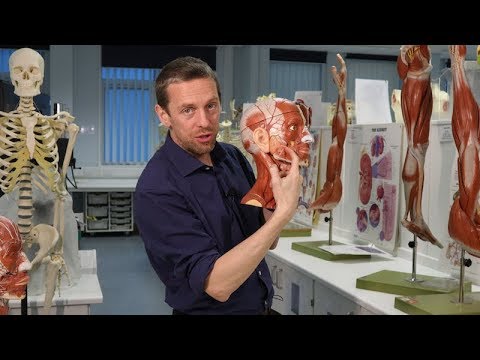
19:51
Biology
Salivary glands (anatomy)
SamWebster
139K views•2019-01-08
12:52
Biology
DNA Replication l Replication initiation in Prokaryotes
microbioscope18
4K views•2019-03-05

5:47
Biology
Identification of bacteria using biochemical tests (1 of 2)
microbiologyteachingvideos6490
24K views•2019-05-28
1:11
Biology
How PTSD Impacts Our Genes, with Dan Siegel
nicabm
31K views•2019-07-18

51:49
Biology
Influence of Footwear Longitudinal Bending Stiffness on Metatarsal Strains during Running
uofckinesiologyseminarseri2218
107 views•2025-12-02

6:57
Biology
Obscure Bird Grasshopper: It's One of the Big Ones!
RandysNaturalWorld
2K views•2025-08-26

5:36
Biology
B-Cell Receptors vs T-Cell Receptors - Overview
Sqadiacom
1K views•2025-01-31
1:27
Biology
Functions of Chloroplasts and Chlorophyll
CK12
28K views•2017-05-24
Trending

9:05
Artificial Intelligence
2.4 BILLION Records Got Leaked...
DeepHumor
15K views•2026-07-22

13:25
Business
Playstation NO DISC/NO BUY Fight Is Over...
DavidJaffeGames
4K views•2026-07-23
19:32
Business
Should I buy a Sawmill?
essentialcraftsman
29K views•2026-07-22

16:52
Anthropology
Americans Confused in Australia for 17 Minutes Straight
IWrocker
17K views•2026-07-23