This documentary masterfully frames the woodpecker as a vital ecological engineer, showcasing its remarkable transition from forest mastery to urban adaptation. It offers a profound look at how biological intelligence repurposes the human-built environment for survival.
Install our extension to search inside any video instantly.
Woodpeckers, The Forest Architects
Added:You can't miss them, but you rarely see them hammering, drumming, chopping.
Black, green, and great spotted woodpeckers. The homebuilders of the forest.
It's an overheated market. Demand exceeds supply and scarcity forces new thinking. Tenants must grab what they can get.
To make a good impression, song birds puff out their chests and tune tune up their vocal cords.
But what if your voice doesn't cut the mustard?
Great spotted woodpeckers have an effective way of getting heard.
They just knock on wood more than 10 times a second.
Much more effective than screeching at the top of your voice.
However, you need the right materials.
A dried out crown of a tree has a special resonance.
One that carries for kilome.
A perfect tree like this attracts other birds.
A black woodpecker hammers about 40 times in a 2-cond burst.
It's a sound that females love.
In woodpecker world, the louder the better. This male has his answer. And now his beak has a different task. A woodpecker pear must build a home.
For a woodpecker, a tree is more than just an echo chamber. Its trunk is a building site for homes of all kinds. Safe, dry, and warm.
Woodpeckers build one room studios, two room duplexes, and multioccupation blocks with all sorts of different tenants.
But demand outstrips supply. When spring comes, many birds are looking for a proper home.
Potential tenants cue to view and fights begin at the door. Our black woodpeckers are constantly inspecting old holes, but some aren't pretty enough, while others are already taken.
And tenants like these should be treated with care.
This pair need a home to start a family. So the best option is selfbuild.
Woodpeckers hammer several holes each year, both for breeding and simply as sleeping places.
And when a pair team up, they peck away together.
Often they'll work at several holes for months.
These headbangers don't get hurt. Their brains float in a fluid that absorbs the slam of beak on beachwood and so protects them from headaches.
While the black woodpeckers are working on their home, others are still out scouting.
Greenwood peckers get together on the drumming tree.
So the great spotted in the mating season, males offer their choosy females a number of holes. Spotted woodpeckers seek out softer wood to peck and so save energy.
But the female still hasn't decided.
So, as spring advances, the males go looking for new building sites.
Modern house fronts are extremely attractive.
Humans are now insulating lots of homes to save energy.
This could be something for spotted woodpeckers because the soft cladding sounds just like a hollow tree trunk.
Get past the plaster bar and the drywall interior is child's play.
The debris may not be biodedegradable like rotten wood.
But that's someone else's problem.
It's much quicker to peck a home here than in a tree. So, the master builder can offer his partner far more choice. The greater the choice, the greater the likelihood that one will satisfy her.
This new development attracts other cavity dwellers.
An exciting new nesting place for starings.
And a gay-headed woodpecker inspects the new real estate, too.
He doesn't want to pick a quarrel with the proprietor, but the nuthatch is already busy renovating.
With his little beak, he can fix the interior just as well as the original builder.
But is this the sort of place where you want to bring up your children?
It's all a little too noisy for the spotted woodpecker.
Maybe better to go back to the forest to build the nursery.
The Blackwoodpecker couple moved into their new home ages ago and they're all sorted out.
Blackwood peckers lay their eggs early in the year. They're already brooding their clutch, while the great spotted hasn't even decided where to live.
The black woodpecker female is understandably wary. Birds can never let their guard drop. Keep an eye on your home or you could soon be without it.
A great spotted woodpecker can't challenge his bigger black cousin, but he has no problem dealing with smaller squatters.
A wagtail family took over one of his old holes and the landlord isn't happy.
Chucking out their eggs is a brutally effective eviction, and the wagtails are homeless. The landlord may pretend he wants the hole for his own use.
In reality, the spotted woodpecker doesn't want competition in his territory. One story higher, he's finally found a home to raise his family.
Right now in the breeding season, there are four-legged threats, too.
This time, a starling's clutch is lost to a raccoon.
A serious setback for the starings, but they still have time for a second brood.
But maybe in a safer place.
If a treehouse in the forest is too dangerous, an apartment in town can seem an idyllic alternative.
Woodpeckers have dug more than 30 apartments here.
For those unlucky starings or for a bird returning late from the south, this walled community has definite attractions.
Starings are sociable birds, but living so close together often leads to rows with your neighbors.
In a community like this, you can't get on with everyone. And some tenants just rub the stings up the wrong way.
This rough facade is like tree bark for a squirrel.
No problem to reach its top floor apartment.
All the rooms are soon taken.
A good thing, too. Now is not the time to be exposed to the elements.
And the woodpeckers have even designed some homes with protection from the rain.
You can even have a door with a porch in the forest. This is a very desirable residence.
When the month of May knows sun and rain, the grass will tee with food again.
And that means a good start for the spotted woodpeckers chicks.
up to seven in a clutch.
Minute by minute, their parents return with gnats, caterpillars, and ants.
They clear the waste on the way out so the nest stays clean.
All right, The black woodpeckers are feeding a brood now, too.
Ants alone aren't enough, but combined with ant eggs and fat worms, they make the perfect diet. Rotten wood is the place to find them all.
The parents mulch a rich mix and regurgitate it for the young.
These peckish peckers are nearly 3 weeks old. Each chick stretches for the biggest bit.
There's an extra special source of food deep in the forest.
For a fox cub, these red wood ants are a new and itchy discovery.
No problem for the green woodpecker. And it's not the only winged ant lover.
The rhyneck is no bigger than a sparrow, but it's a woodpecker, too. Albeit one with a difference. It neither pecks nor makes holes, and it migrates.
It prefers meadow ants and black garden ants that it sweeps up with its sticky tongue.
A rather shy green woodpecker has discovered the town in its own way. These old trees are great places to build a breeding hole and the food supply is guaranteed.
Hunting in gardens and parks that are regularly moan is safer than in tall grass or dense woods.
The rhinneck returns from the south in May to a congested housing market with fewer suitable breeding holes in fewer old trees than ever before.
So, this couple take on a readymade nesting box in an aotment right on the edge of town.
They're raising 10 chicks at once. They have plenty of food, but the squirrels are having a hard time.
Nuts and acorns are still months away, and many of their winter stores are empty.
There's one last resort. Squirrels are occasional carnivores.
They'll clear out a clutch of eggs. And if there are chicks, they'll do too.
But if chicks aren't safe in town, how dangerous are the woods.
After 4 weeks, the young black woodpeckers have fledged a leap into a new life.
It could be a short one.
The enemy is waiting.
Timing is all.
The spotted woodpecker fledglings are getting too big for the nest. Their parents tempt them out with food.
Once they leave, there's no going back.
A plucky one leads the way and then the others follow.
The last one has made it out.
But a fledgling has to be careful.
The gosh hawk will only raise his brood when he's sure there's enough food.
Easy prey like the young of other birds.
An inexperienced great spotted fledgling.
The death of one young bird means life for another.
So the cycle of life continues.
Some eat insects. Others eat those that eat insects.
And the leftovers are eaten by insects.
And it's all biodedegradable.
The pygmy owl also hunts birds, but in the daytime he could himself become the gosh hawk's prey.
Just 19 cm tall, the pygmy owl is smaller than a spotted woodpecker, and it'll use its holes to sleep or to rear its own brood.
It's a dangerous tenant, especially in the dark hours.
Birds that don't have a home meet in sleeping trees.
The owl can get them either way, on a branch or in a hole.
Just as life begins and ends, night disappears. appears and a new day dawns.
Beginning with an earsplitting wakeup call for all the tenants on the block.
It's the young starling chicks and they're excited about worms for breakfast.
But in town, the cycle of life remains incomplete.
Starlings breed twice or three times a year. The second generation is already leaving the house.
This is the best time for young birds. There's so much ripe fruit in the next door garden. And the cherries are especially good.
A cherry is too big to swallow in one go.
Everyone has their own way of breaking it into beak-sized morsels.
This young spotted woodpecker has found the scrumptious fruits, but hasn't quite worked it out.
His parents show him how woodpeckers do it.
They hammer a notch into a tree trunk and jam the cherries in.
Other birds marvel, but it's quite easy really.
The young get to feed and learn.
But why go to all this trouble when the table is literally laid for you?
Starlings are not just disputatious tenants. They'll fight over free food, too.
But a spotted woodpecker won't worry if he can't find pre-cracked nuts. He can manage perfectly well on his own.
On his blacksmith's branch, he's hacked an anvil hole with his beak as a hammer to crack the shells.
And there's a bit left over for daintier beaks.
A woodpecker will make lots of these anvils in a single tree and use them for years.
Some seem to be better than others.
In woodpecker world, it's getting colder. Many birds have left for the south.
The ones that stay are getting ready for winter.
That means building up fat reserves and laying down fresh supplies.
The spotted woodpecker is moving again.
Something's going on.
Can he be stymied by styrofoam?
Once a spotted woodpecker has found an attractive place to stay, it's hard to get him out.
And a bird frightener has no effect at all.
Winter is really the toughest time for birds.
The generous food supply in town makes life easier, but there are dangers here, too.
Somehow though, everyone adapts to the conditions.
Green woodpeckers can even spot ants under the snow.
And in winter, great spotted woodpeckers don't need anvils in trees.
And an approaching enemy is easy to spot.
Some birds of passage have noticed that winters are getting milder. Starlings are giving up the long journey south. Humans give them food and woodpeckers build warm, insulated homes.
Urban living is a viable alternative even for many forest species.
Woodpeckers need an unbroken stretch of forest and the oldest possible trees.
But they're not the only ones who value them. And they're becoming rarer and rarer.
After the winter, hope springs eternal. Eternal in the forest.
Hope for a safe home and a new family.
Woodpeckers have conquered the towns, too. Now they're easy to see and impossible to ignore.
And all because they know how to use their head.
Related Videos

19:51
Biology
Salivary glands (anatomy)
SamWebster
139K views•2019-01-08

12:52
Biology
DNA Replication l Replication initiation in Prokaryotes
microbioscope18
4K views•2019-03-05

5:47
Biology
Identification of bacteria using biochemical tests (1 of 2)
microbiologyteachingvideos6490
24K views•2019-05-28

1:11
Biology
How PTSD Impacts Our Genes, with Dan Siegel
nicabm
31K views•2019-07-18

51:49
Biology
Influence of Footwear Longitudinal Bending Stiffness on Metatarsal Strains during Running
uofckinesiologyseminarseri2218
107 views•2025-12-02

6:57
Biology
Obscure Bird Grasshopper: It's One of the Big Ones!
RandysNaturalWorld
2K views•2025-08-26

5:36
Biology
B-Cell Receptors vs T-Cell Receptors - Overview
Sqadiacom
1K views•2025-01-31
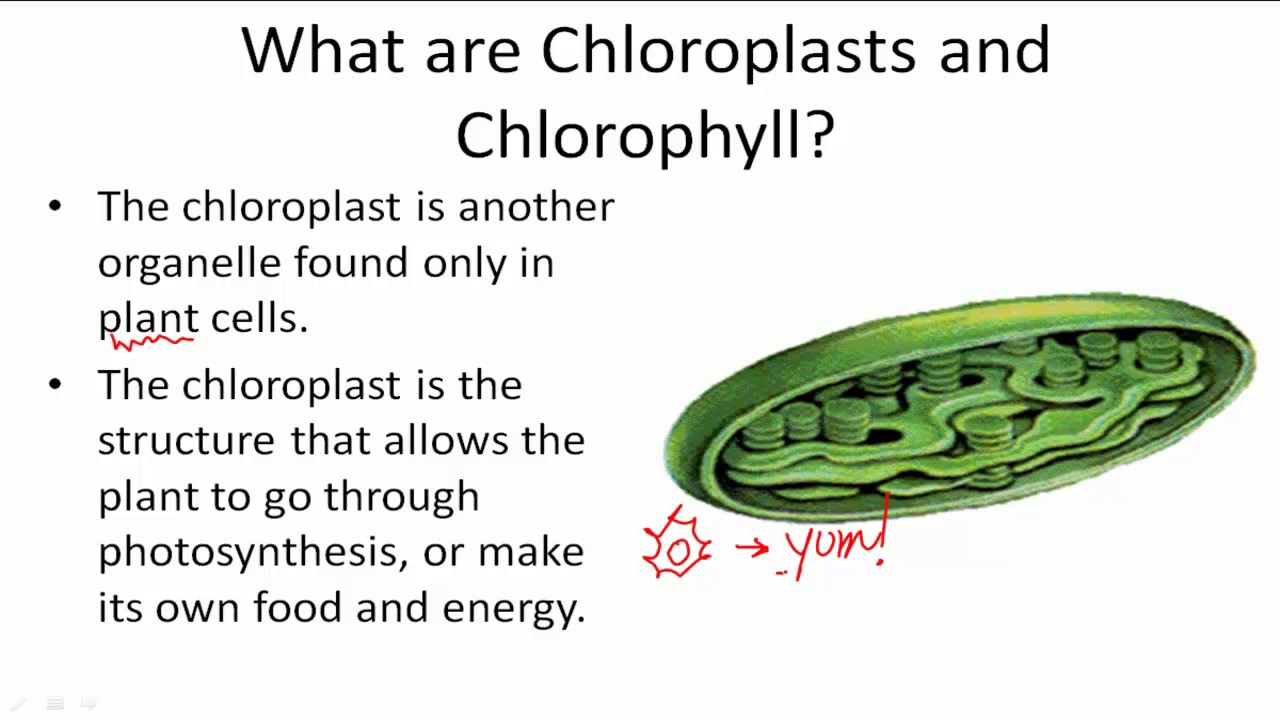
1:27
Biology
Functions of Chloroplasts and Chlorophyll
CK12
28K views•2017-05-24
Trending

13:25
Business
Playstation NO DISC/NO BUY Fight Is Over...
DavidJaffeGames
4K views•2026-07-23

16:52
Anthropology
Americans Confused in Australia for 17 Minutes Straight
IWrocker
17K views•2026-07-23

7:38
Blockchain & Crypto
Bitcoin Social Interest: Dozens of us Left
benjaminjcowen
12K views•2026-07-23

11:32
Business
Tesla Profits Plunge & SpaceX Stock Continues Fall
TheJohnJohnstonLounge
6K views•2026-07-23