A sharp synthesis of neurobiology and linguistics that explains why our earliest memories are the necessary price of brain development. It effectively demystifies the biological "reboot" of the human mind with impressive clarity.
Install our extension to search inside any video instantly.
Why Can't You Remember Being a Baby? (The Real Science)
Added:Try to remember your first birthday. You can't. Not really. You might picture a cake, a few candles, maybe a blurry photograph someone showed you years later. But that isn't a memory. That's borrowed information dressed up to look like recall. Here's the strange part.
You were there. You had a brain. You had eyes that worked, ears that worked, a nervous system fully wired for experience. And yet that day and the hundreds of days around it vanished completely. Most people assume this is simply because they were too young to understand what was happening. But the real answer is far stranger. Your brain didn't fail to record those years. It deliberately erased them. This phenomenon has a name. Sigman Freud called it infantile amnesia back in 1910. And the term stuck even though his explanation for it didn't. He believed you repressed your earliest memories because they were sexually disturbing.
Modern science finally has a clearer, weirder answer. Think about how much you forgot. Not just your first birthday, your first steps, your first words, the first time you tasted chocolate or fell off a chair or heard your own name spoken back to you. All of it happened.
None of it stayed. The cutoff is remarkably consistent across people.
Most adults can't recall anything before age 3 and a half. Memories from ages 3 to 7 are scattered and thin, like single frames cut from a long film that's missing most of its reel. Why does the timeline break exactly there? For decades, researchers thought infants simply couldn't form memories at all.
Babies were considered blank slates, recording nothing because there was nothing yet to record with. That theory turned out to be wrong, and the way it was disproven is unsettling.
Psychologist Carol Peterson at Memorial University of Newfoundland spent years tracking what young children remembered about events from their own lives. She would interview kids about something memorable, a trip to the hospital, an injury, a vacation, and then return years later to test what survived.
Two-year-olds describe surprising detail. Three-year-olds even more. But when Peterson came back and asked those same children, now older, what happened?
The memories were gone. Not faded, gone.
The children weren't failing to recall the events. They had already forgotten them, sometimes within a single year.
So, the brain isn't failing to store early memories, it's storing them, then deleting them. That single discovery flipped the entire question on its head.
The mystery isn't why babies can't remember. The mystery is why their memories get wiped after they were made in the first place. The leading answer involves a part of your brain you've never seen and will never feel working.
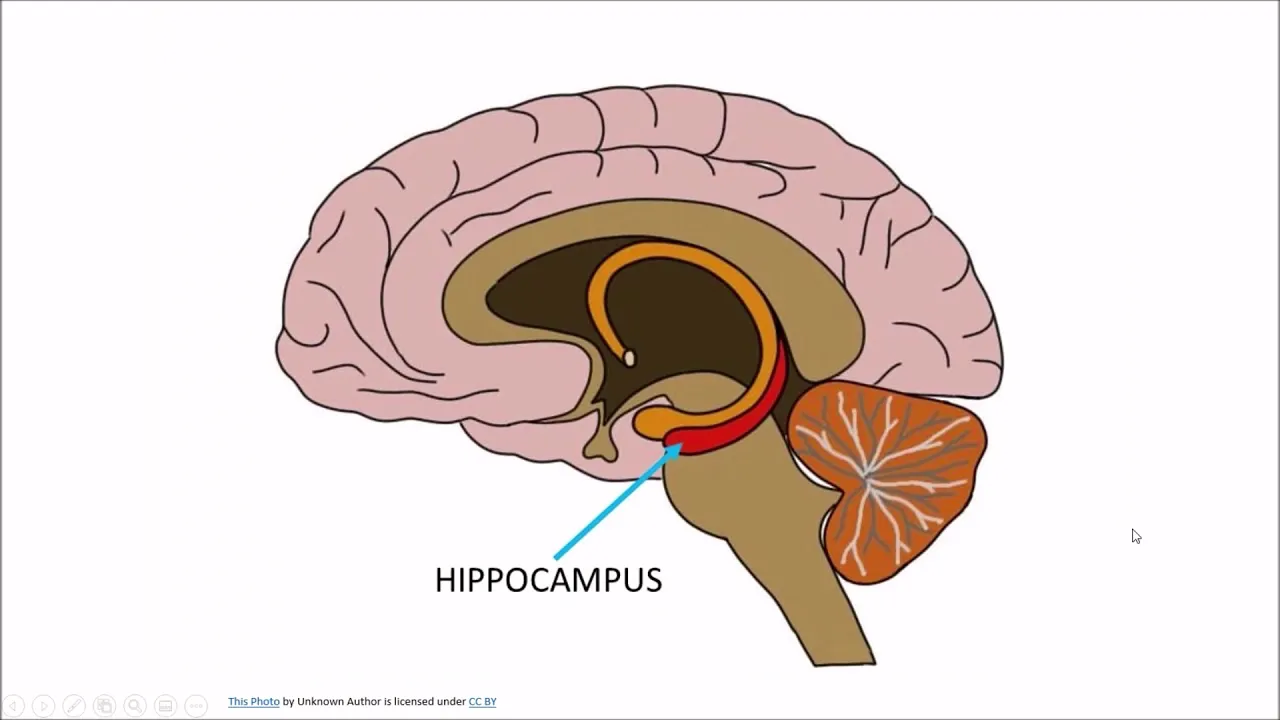
It's called the hippo campus, and it acts like a librarian for your memories, deciding what gets filed away permanently and what gets thrown out. In infancy, that librarian hasn't finished building the shelves. Patricia Bower, a developmental psychologist at Emory University who has spent decades studying memory in early childhood, has shown that the hippocampus continues maturing well into your early school years. New neurons are still being added. Existing connections are still being reorganized. The whole structure is quite literally under construction while it's already being asked to do its job. Now, picture trying to file documents in a library while the shelving units are still being bolted to the wall. Things get placed, then the wall changes. Then the spot where you put something no longer exists in the same form it did a week earlier. That roughly is what's happening inside an infant's brain every single day. There's a process called neurogenesis. The birth of brand new neurons happening at a rapid pace in early childhood, especially inside the hippocampus. Every new neuron that gets added has to integrate into existing circuits. Some researchers believe this process effectively overwrites or destabilizes memories that were already stored there, clearing space for the flood of new experiences still arriving by the second. It's a strange trade-off when you sit with it. The very mechanism that allows a toddler's brain to learn language, recognize faces, and absorb the world at a staggering rate may be the exact same mechanism that guarantees none of those toddler years will be remembered later. Growth costs memory.
You couldn't have one without losing the other. But neuroscience tells only half the story. There's a second, quieter force at work, and it has nothing to do with neurons. It has to do with language. Cornell psychologist Chi Wang has spent years studying how children's earliest memories are shaped not just by their brains, but by their conversations with the adults around them. A 2-year-old experiences the world richly, but can't yet organize that experience into a story with a beginning, a middle, and an end. Real autobiographical memory, the kind you can actually describe years later, seems to depend on narrative structure, on a sequence you can hold in your mind and retell. Here's the test researchers actually ran. Talk a young child through an event right after it happens. Ask what occurred first. Ask what happened next. Ask how it ended. Children whose parents do this consistently end up with earlier and richer first memories years later compared to children whose parents don't engage that way. Wang's research went further, comparing children raised in cultures with different conversational habits. American mothers, on average, tend to ask more detailed, elaborative questions about a child's day, drawing the story out piece by piece. Mothers in some of Wang's comparative studies in China tended toward shorter, more fact-focused exchanges. The result was striking. American adults in these studies reported earlier first memories on average than the comparison group did. Culture doesn't just shape what you remember. It shapes how far back your memory reaches at all. That means your earliest memory isn't simply a biological accident. It's partly a record of how much someone once sat with you and helped turn a passing moment into a story worth keeping. So your missing years weren't lost to malfunction. They were lost to construction, the hippocampus rebuilding itself while still trying to operate, and to language, a young mind not yet equipped to turn raw experience into something narratable and storeable. Two unfinished systems working on you at the exact same time in the exact years you'll never be able to check their work. And yet, here's the unsettling twist. Those years didn't vanish without a trace. Some researchers now believe that early experiences you can't consciously recall still shape you not as memories you can describe, but as patterns, as a felt sense of safety or danger, as the baseline your nervous system was calibrated against before you ever had the words to question it. You don't remember being held during a thunderstorm. But the part of you that flinches or doesn't at sudden loud noises might still be running on what it learned back then. Think about your own reactions for a moment. The food that comforts you for no clear reason. The voice tone that instantly puts you at ease or instantly puts you on edge before your conscious mind has even decided why. Some of that wiring was laid down in the very years you can't access. You're carrying instructions you'll never be able to read. And the few fragments that do survive from those years tend to share something in common.
They're rarely ordinary. A single image of a hospital ceiling, a dog barking somewhere just out of sight. Researchers studying these earliest surviving memories have noticed they cluster around moments of unusually high emotion. Fear, pain, surprise, the kind of jolt strong enough to leave a mark even on a library still being built.
This should change how you think about your earliest years. Somewhere underneath language, underneath the part of your brain that tells stories, there's a version of you that lived through thousands of moments you will never consciously revisit. They built the wiring. They calibrated the baseline and then as the librarian finally finished building the shelves, the door to that whole library quietly swung shut. It also changes how you might think about any child in your life right now, the way they're shaping a person they will never remember being. Every conversation you walk them through, first this happened, then this, then this, isn't just filling a quiet afternoon. It may be the difference between a childhood they can eventually tell themselves the story of and one that simply happened unrecorded to someone who can no longer report back on it. There's something almost humbling in that. The years you remember least clearly. Your own childhood and the childhoods of the people you've raised or loved may turn out to be the years that mattered most. Not because anyone can recall the details later, because the details were never the point. The point was the wiring underneath them quietly finishing its work while nobody, not even the person it was happening to, was keeping score. So when someone shows you a photograph of yourself as a baby, and you feel nothing, no flicker of recognition, no familiar pull, that isn't a failure of your memory. That's the cost of becoming the person who could remember anything at all. Try to remember your first birthday again. You still can't, but now you know why. And that not remembering was the price of everything that came
Related Videos
8:08
Neuroscience
What is neurodegeneration?
TheSheekeyScienceShow
3K views•2019-08-19
57:35
Neuroscience
IPL - Ruth Empson "Mind the Gap"
otagouniversity
251 views•2019-07-08
14:01
Neuroscience
How our body shapes our mind | Pancho Tolchinsky | TEDxNapoli
TEDx
2K views•2019-12-05
1:00:02
Neuroscience
Impact of Early Life Deprivation Danielle Stolzenberg Marcus Pembrey Bruce McEwen
uctv
4K views•2019-12-01
10:32
Neuroscience
β-Caryophyllene for Parkinson’s: Protecting Dopamine & Easing Symptoms
parkinsonsdiseaseeducation
6K views•2025-08-09
20:44
Neuroscience
New Insights from Inside the Brain with Rodrigo Braga, PhD
NUFeinbergMed
421 views•2025-04-14
9:57
Neuroscience
Highlights for dystonia • 2025 MDS Congress
movedisorder
145 views•2025-10-27
58:17
Neuroscience
Animal Welfare Synergy Series: Dr Tom Smulders on hippocampal neurogenesis
costactionlift
135 views•2025-07-14
Trending

13:25
Business
Playstation NO DISC/NO BUY Fight Is Over...
DavidJaffeGames
4K views•2026-07-23

22:40
Business
Steam and Xbox Just Dropped The Hammer On PlayStation
OhNoItsAlexx
9K views•2026-07-23

16:52
Anthropology
Americans Confused in Australia for 17 Minutes Straight
IWrocker
17K views•2026-07-23

1:19:25
Biology
LIVE NOW! Cellular Structure and Functions | Complete Cell Biology Lecture | Anatomy & Physiology
MukhtarAliyu-t7m
387 views•2026-07-23