In John 17:3, Jesus explicitly identifies the Father as 'the only true God' while referring to himself as 'Jesus Christ whom you have sent,' establishing a clear distinction between the Father (the only true God) and Jesus (the Christ sent by the Father). This interpretation is supported by the context of John 17:1, where Jesus addresses God as 'Father,' and by Jesus's statement in Matthew 24:36 that 'only the Father' knows the hour of the end times, which would be inconsistent if Jesus were the Father.
Install our extension to search inside any video instantly.
Christian Confronted With His Own Bible… Then This Happened | Hashim | Speakers Corner
Added:Jesus identifies only the Father as the only true God.
>> That's where you're going wrong.
>> Okay. Now let's assume you're misreading.
>> No, no. We we Okay, so when Once again, who's the you there?
>> The Father, yes.
>> Thank you. So when Jesus says, "And this is eternal life, that they know you, the Father, >> Yeah.
>> the only true God, >> Yes.
>> and Jesus Christ, whom you have sent."
>> "Whom you have sent." Who is the you again?
>> Right. So let me >> wait. Let's Let's finish this. Who is the you?
>> The Father, yeah.
>> Good. So, according to Jesus, the only true God is the Father.
>> No, no.
>> And Jesus is the Christ.
>> That's where you're you're you're misreading it because >> Really? How?
>> But now, when Allah Subhana Wa Ta'ala sent the last revelation, the Quran, it clearly says there that you see there that Allah says, "I have sent the Quran. I have to preserve it."
So this is a clear >> A guarantee of preservation.
>> clear instructions that that say, "This is my last message. Yeah. Take it to the people and I'm going to preserve it because I know if I the books I've sent before have not been preserved. So by preserving this book, we can we can use it to cross-reference the old the old scriptures and see which one Where is the wrong? Where is the right? Where is the remnant of the words of God and things like that.
>> So we have a different paradigm in in Christianity and and Judaism in that we we say it's the the message that's preserved, not the actual book cuz cuz we don't believe an actual book came down to um Jesus. It was his teachings that that are recorded by the >> But if you allow scribes to inject verses and remove verses, then surely the doctrine will change.
>> We don't We don't We don't allow them to to to change the actual verses. There's a question over canonicity of what writings were were recognized as part of the canon.
Because it it's that's what our scholars and our apostles and people like that.
So when Jesus quotes from certain books, we can take it that books are probably canonized inspired books.
>> But Jesus did not canonize the scriptures. No, no. So if you look at for example, the New Testament it wasn't until the 4th century when the canonization took place. So when you had 300 bishops, they gathered in this council convened by a pagan emperor.
Remember Constantine is was still a pagan then. Yeah. I think it was at his death bed right unless that was unless that he might have taken Yeah. So how can this What what was the criteria for saying this book belongs in the canon and this book doesn't? Because we have the Gospel of Thomas, the Gospel of Philip, the Gospel of Barnabas and all these Gospels and they were just discarded. So what was the main criteria for saying this belongs to the canon and this is an apocrypha or untrustworthy book?
>> So the the very first list of books are quite old because they all come from the Septuagint.
So really that's Yeah, yeah.
So so the New Testament books was about Do they talk about Jesus from eyewitness? Then they're called a Gospel. Yes, so Matthew, Mark, Luke and John, they recount the eyewitness testimony about Jesus so they're Gospels. Then we have the writings of Peter, Paul, James and Jude who were recognized as being part of that that group who are trusted >> But there were more than just four Gospels, right? There were like 50 Gospels or something. And they So what I'm asking what was the criteria?
Because it's possible just like Mark, Matthew, Luke and John. By the way, these names were given later on.
You you do realize that, yeah? They were not actually written by Mark, Matthew, Luke and John.
These were attributed No, no, they were. This is from the Christian scholars themselves. It's not something that I'm making up. You can go and check it out.
Scholarly recordings have The attribution to the names of these Gospels came later on.
Cuz for example, take take John for example. John was a fisherman.
There's no way a fisherman will write coin Greek like the way it's written in John.
So that is a disconnect there itself.
>> John John is the last Gospel written about They they estimate around about 90. By then he was bishop of Ephesus. So he become a bishop and he was he had lots of people around him.
Peter didn't write >> How old do you think he would be?
If it's written in the 90?
>> I well we they they believe he was >> over 100, right?
>> No no, cuz they believe he was a young man that that was >> Even a young man, he wasn't like 10 years old, was he?
>> Je- Jesus Jesus was crucified around about AD 33.
>> Yeah.
>> Yeah yeah. So from AD 33 to 90 60 years.
>> Exactly.
>> So he could be 70 80 whatever.
>> No no, even even then, like I said, he's uh if you look at this uh the Bible itself says that these people were unlettered. Yes?
>> Yes yes yes.
>> And they were unlettered and illiterate.
So if that is the case, then there's no way they could have written coin Greek.
By the way, the teaching of Jesus was in Aramaic, not in Greek. Yes, because >> That's from from a mistake from a mistake.
>> No, it's not. This is from the scholars themselves. They say this. And the reason I'm saying that is because >> on, come on. Wait a minute. But go on, carry on with your >> If if Jesus was preaching in Aramaic, because all the people that he was preaching to, they were not Greek. So there's no point of him giving them lessons in Greek when it was their native language happened to be Aramaic.
>> Uh as as you're raising there the Aramaic Let me address that the Aramaic. When Jesus says on the cross Eli Eli lama sabachthani >> Yeah, that's Aramaic.
>> The people can't understand him. They're confused. Some say, "Is he calling for the prophet Elijah?"
>> Uh who are these people?
>> That there was the people around Jerusalem.
>> Who were they?
>> The people around the the the >> was on the cross.
>> The Jews, the Pharisees >> Sorry sorry.
These words of Jesus were on the cross.
When his disciples had forsaken.
>> Yes.
>> So he was actually when he was speaking, who did not understand? It was the Romans. Which wasn't their language.
>> It's the same with the Romans. And when they when they when they say when they on the on the uh >> charge sheet that they they spoke on the cross when someone was crucified, they say what he's crucified for, king of the Jews.
>> Again, it was the Romans who did that.
>> It was in Latin, Greek, and Hebrew.
>> But it was written by the Romans.
>> In Latin and Greek as well.
>> Yes.
>> So we don't expect them to No, no, we don't expect them to write it in Aramaic because they were not They did not hold on to that language.
>> write in the language of the people who who were around them.
>> Exactly, which were the Romans.
>> No, the Jews. The Jews The Jews spoke Greek.
>> No, no, the Jews who were there, the elite among them might understand these languages. But what I'm saying is that this was like a mockery done by the Romans. My question to you is with regards to Jesus and his disciples who all knew Aramaic.
>> So they came from an Aramaic-speaking area, yes.
>> No, no, that was his native language.
>> Yeah, yes.
So so is it an Aramaic-speaking area, but when Jesus comes into Jerusalem, he's preaching to the people in Jerusalem. And when in the gospels, when he specifically says something in Aramaic such as Talitha koum, when he says to the young girl young lady young girl arise, Talitha koum, we're told that's Aramaic. So when he uses it, we're told when he uses it.
But when he's talking to people like the scribes and the Pharisees and all the people with the the Sermon on the Mount and the feeding of the >> nobody has any problem >> So what was the language he was speaking to them?
>> So so we we don't know for sure.
>> Exactly my point.
>> But it would have been a language they could understand. So it would have been whatever language they were speaking. So it could possibly be Greek because a lot of Greek was the lingua franca of the area at the time. It could have been Hebrew, although the Jews as we just said about the Septuagint being they wasn't that brilliant on their Hebrew apart from liturgical Hebrew. So in general conversation, they probably would have struggled with some of the words. So we don't know.
>> Yeah, so this is what I'm trying to get to. You see, if you don't know the language in which the earliest gospels or teachings of Jesus were written in.
>> We know that though. We know that that was Greek.
>> No, no, hold on. The Greek The Greek came For example, for the first 100 years there's zero manuscripts in Greek.
Are you aware of that?
>> Yes.
>> Zero manuscripts in Greek and in Aramaic or in any language actually. There are no manuscripts for the first 100 years.
>> yeah. That manuscript is in >> So now Now we have got a gap of 100 years and this is by the way, when I say no manuscripts, I mean including the fragments.
What is the earliest of the New Testament that you have present today?
>> What's it called? The MacMullen Memorial Fragment of John.
>> The P52.
>> Yeah, I don't know that one.
>> Yeah, so this is in the John Rylands Library in Manchester. Yeah? You're aware of that? So it's like a credit card size fragment. Now, if you're talking about the entire entirety of the New Testament, so you have scholars like Bart Dr. Bart Ehrman, who is actually a scholar of the New Testament. I know he was a Christian initially and then he left Christianity.
I mean, the thing is look, as far as we are concerned, he's a historian and he's an expert in the New Testament. He's been recognized by other Christians as well, including his teacher Bruce Metzger, who was actually a Christian.
Yes?
>> Yeah, yeah.
>> All of these people, they say that this book has been corrupted, has been changed. And there are as many, for example, when Bart Ehrman says that the majority of the New Testament manuscripts are from the ninth century onwards.
You're talking about like 800 years after Jesus.
>> Right, not the only manuscripts. What what they The early Bibles were based on the What's the name of the text now? But there there was a text that people like Erasmus used where they had a limited number of manuscripts. Later on and a lot of it was due to the British Empire and things like that and you started having covering more and more manuscripts.
We've got a lot more manuscripts now that were discovered from those times.
But we still got the early manuscripts.
We still got the um >> From what period?
>> How do you spell it? Vaticanus from the fourth century.
>> They were not canonized these books.
>> The Yeah.
>> And that is from the 4th century.
>> was Both Vaticanus and Sinaiticus, the codexes, they're from the 4th century.
You still have a gap of 300 years.
That was again for the Old Testament.
We're talking about the New Testament.
So the New Testament, if you you mentioned the Codex Sinaiticus and Vaticanus, the Codex Sinaiticus has got two extra books in it. The Shepherd of Hermas and the Epistle of Barnabas. You see these were not canonized.
And by the way, at that time they believed this was the word of God.
But later on the church decides No, no, because I'm saying the canonization happened later on.
But but for the first 300 years, what were they reading?
No, no, no, as the word of God. That's why they put it in the Bible.
No, canonization happened later. So you're saying for the first 300 years they did not believe in any gospels? Is that what you're saying?
Why?
Why there was no need?
What were the books? We don't know the books.
Even then, we don't have the we don't have the knowledge about them.
Yeah, so this this could include all the Apocrypha as well, right?
The Qumran, you're talking about the the Dead Sea Scrolls now? This is again the Old Testament. I'm focusing mainly on the New Testament.
So the New Testament, for the first 300 years, what were they reading? What were the Christians reading? The early Christians. They're the books we have.
>> But they were not canonized.
>> No, they were not because the concept of canonization didn't exist for them. They [laughter] didn't have to have a thing canonized.
>> That's what I'm asking you. What were they reading pre-canonization?
>> Matthew, Mark, Luke, John.
>> Shepherd of Hermas, Epistle of Barnabas.
Yes.
>> And lots of other Didache.
>> Yes.
So all the Apocrypha, they used to read as being authoritative, right? As being God's word.
>> As authoritative, but not not necessarily God's word because that would be canonized.
>> No, no, no. You You said they did not need canonization.
So if they did not know the concept even of canonization, the question would be what were they reading and how would we know what they were reading?
>> At that time they did not need canonization because there were also many false gospels. Once you start getting false teachings >> Sorry, they were not or they were?
There were false teachings.
>> time after and then someone has to say, right, this is what you should be listening to. This is canonized. This is met the rule. That's what canon means.
Canon means the rule. So when it's canonized, it's the rule. That that's met that's met. So that's a canonized book. This book that you had that some people were saying this is a good book, that's not canonized.
>> Yeah, but we don't know that.
>> We do because we >> We No, no, we don't know that whether they believed it as word of God or not.
This is your claim.
From history we don't know that.
As far as we know, before canonization, you see the reason this Codex Sinaiticus is considered to be the word of God according to the Christians, the early Christians.
And then the canonization happened.
That's the reason you got these extra books in there because they firmly believed this to be the word of God.
>> They believed the word of God is in so the Torah. The Torah was the >> You're talking about the Old Testament.
You're talking about the New Testament.
>> Some books were very well accepted straight away as as being the word of God.
Um the the Matthew, Mark, Luke, they were the early ones. They would have been accepted because they When when when Paul is writing to the other churches, they already have the word of God. He's writing there to confirm what they already >> Majority of the New Testament is Paul's letters.
Out of the 27 Yeah, out of the 27, 21 are Paul's letters.
Okay? So, a man who had never met Jesus has majority of the teachings in the New Testament. Whereas the people who were actual disciples, actual apostles, who did learn directly from Jesus, happen to be uh what? John and Matthew. And even Matthew had to copy from Mark, who is not a disciple of Jesus.
And Luke also copied from Mark. You heard of all these things, isn't it?
We're talking about 70 to 80% being like verbatim copied.
Yeah, that's another story again.
No, no, but with regards to Mark and Matthew, and Mark and Luke, we can tell.
Because of the verbatim reproduction of their of what Mark wrote.
Mark is supposed to be the earliest gospel, right?
Mark is supposed to be the earliest gospel.
By the by by the Christian scholars.
Yeah, we we are talking about some people. We're talking about the actual scholars.
Yeah, again, the Catholic No, no, I'm talking about the Catholic scholars as well.
They also know that Mark is the earliest gospel. They never dispute that, do they?
When you talk about some, they're a minority.
Let's talk about the majority, because that to me that is the mainstream.
Yeah, so there might be exceptions, yeah. But vast majority of them agree that Matthew and Luke copied from Mark. And if Mark is the earliest gospel, and Mark never met Jesus in his life.
Who? Sorry? Mark never met Jesus in his life.
Well, again, the Christian scholars tell us Who? Mark?
Where's your evidence for that?
Oh, sorry, >> with Paul. Paul also never met Jesus.
>> no, but he's around in the Christian community straight away >> I'm saying I'm saying with regards to Jesus, not regards to Paul.
>> So, so what I'm saying what I said to you is can you show me evidence he was?
And I'm showing you evidence that it's possible he could have been.
>> No, no, what is the evidence? Sorry, what's the evidence?
>> The The evidence is there that he was there very, very early in the >> Where's the evidence?
In the book of Acts. What The book of Acts is by whom?
>> Well, that doesn't matter who >> It does.
>> It's the early Christian >> No, no, hold on, hold on, hold on. We are talking about John here. Sorry, we are talking about Mark here. Why are you going to the book of Acts when you talk about Mark?
>> Because I'm showing you that Mark was involved in the early Christian community.
>> When you say early, meaning what?
>> Straight away, the first >> So, are you saying Mark was contemporary >> with with with Peter >> Has he met Jesus though? That's the question.
>> Sorry?
>> Did he ever meet Jesus?
>> we don't know.
>> No, but the Christian scholars do tell us that.
>> No, no, how can they know?
>> Because they, for example, Luke, I'll give you example of Luke as well. Luke, the example is actually in the Bible itself.
>> So, Luke was commissioned by Theophilus.
>> Not to him.
>> never met Jesus, right?
>> He never met Jesus, no.
>> Okay, but we have a gospel according to Luke.
>> He went around with eyewitness testimony. But in some of the bits where he writes, he says about Mary treasuring these memories in her heart. Which indicates the scholars believe >> Secondhand.
>> indicates that he went and interviewed Mary, spoke to Mary.
>> Secondhand information.
>> He didn't speak but he still he still he tells us it in his account that this is what what he's trying to do to get a better, [laughter] more accurate account by speaking to those who actually walked with Jesus.
>> Yeah, it was to please Theophilus.
>> [laughter] >> He was for Theophilus.
>> Exactly. So, he was commissioned by someone who was a Was he like a Was he king? I don't know. What was he?
>> We don't we don't know, Mark.
>> All right, so let's say noble person. He was a rich guy, yeah? And that's why he commissioned him to write. But you see, when we talk about Jesus teaching, for example, right?
Some of the doctrines of Christianity, uh be the Trinity, be the doctrine of atonement, uh these are the key doctrines of Christianity.
My main contention is whether you are Catholic or Protestant uh or Orthodox, regardless of that, why did Jesus not teach these key doctrines?
>> So, where where does he say >> For example, the belief that God is a triune being.
>> So, so Jesus says, "You go out and baptize in the name of the Father, Son, and the Holy Spirit." That's the classic one for us to go to. Jesus says the power >> No, before we go further, what is the Trinity according to you?
How would you How would you define the Trinity?
>> The Trinity is the one God. "Hear, O Israel, the Lord thy God is one."
>> Okay.
>> And he's revealed himself in three persons.
>> Where is that in the Bible?
>> Uh so, I think I've mentioned this once to you before.
Um let me let me go there.
>> Because the Great Commission which you talk about, which is the end of Is it Matthew, yeah?
Uh Matthew 28:19, yeah. So, it says, "Go and baptize them in the name of the Father, the Son, and the Holy Spirit."
Nowhere does it say that these three are one uh three persons or one being God.
>> But still that verse exists in an uh KJV but not in an NIV.
>> Yeah. No, no, it does, but the thing is they might have changed the words. But you we had many baptisms in the New Testament. None of them use this formula.
Either the the people who actually, you know, were you know, Christians, either they rejected Jesus' explicit command to baptize in the name of the Father, Son, and the Holy Spirit, or they did not hear of it. Which one is it?
>> We we can We can come to that in a minute.
>> Yeah, sure.
>> Uh let's just go over and show you two two verses, okay? So, the first one is Genesis 19:24, where the Lord rained on Sodom and Gomorrah sulfur and fire from the Lord out of heaven. So, we have Yahweh on earth >> Mhm.
>> uh raining down sulfur and fire from Yahweh in heaven. This is Yahweh, but both times Lord all capitals, which it is Yahweh, yeah?
>> Yeah, but where Are you saying you believe in two gods?
>> No, I'm going to >> That's what it That's what it implies.
>> Let me show you the next one. Let me show you the next one. As I said, I'm going to show you two verses.
>> No, but let's let's discuss one verse at a time.
>> So, so this shows us what what two persons of the Trinity were doing.
>> No, but that is your interpretation.
>> Well, no, because there's two Yahwehs, yeah?
>> If there were two Yahwehs, who called Jesus Yahweh ever?
>> Right, let's say that.
>> No one. Who called the Holy Spirit Yahweh? No one.
>> Let's say that.
>> Yahweh was reserved only for the Father.
>> But what how do we get two Fathers then?
If we've got two Yahwehs, how do we get two two >> That's what I'm asking you. You believe in two Gods?
>> What? Okay, so Amos Amos is a Jewish prophet, okay?
>> Okay.
>> He's come to tell the Jews they're doing wrong and God has given this sign and they've ignored it. So, he says, "I" this is Yahweh speaking, yeah? "I overthrew some of you." Can you go a little bit further away?
Yeah? "I overthrew some of you as when God overthrew Sodom and Gomorrah. You were as a brand plucked out of the burning yet you did not return to me", declares Yahweh. So, this is Yahweh, the one true God of Abraham, Isaac, and Jacob telling us that it was God who overthrew Sodom and Gomorrah.
>> again again could that not be an angel?
>> No, because this Yahweh, the one true God of Abraham, Isaac, is saying it was God. Where's the angel?
>> No, no, but if you're saying this is this statement "I overthrew some of you >> Yeah?
>> as when God overthrew." So, how many Gods have we got now?
>> So, we've got one God.
>> Which one? The one The one that says the pronoun I or the one that says God here?
>> That this is the one God. This is the Trinitarian God.
>> That's what I'm telling you. It can't be.
>> That's what That's what I'm telling you.
It is the Trinity in the >> Look, look, with all due respect, if you say "I overthrew some of you as I overthrew."
That's what I'm saying. So, you believe in two Gods now, again.
>> No, no, believe in one God but three persons.
>> Okay, where does it say three persons?
>> Because you have Yahweh speaking here of Yahweh on Earth calling down fire from Yahweh in heaven. That's three manifestations >> no, no, wait, wait, wait. You're reading the Trinity in there.
>> No, I'm not. Because are there three manifestations >> Where does it say they are persons?
>> What? But are there three manifestations of Yahweh?
>> No, no, when you say manifestations, where does it say that this is the Son and the Holy Spirit?
>> That's how we understand >> Ah, there you go. So, you see what you're doing?
You're looking at You're looking at it with your Trinitarian spectacles.
Because if you ask a Jewish person, this is from Hold on. Hold on. Hold on.
That's from the Old Testament, right?
>> Yeah.
>> Okay. Ask a Jewish person to interpret that for you.
And trust me, the last thing on his mind would be to believe in a triune being.
>> Right. I've asked a number of Jews, and trust me, they've all run away. They've sent me to >> Have you spoken to any rabbi?
>> Uh no, not at >> Okay, so maybe speak to them next time, because they are the one who knows the the scriptures.
>> you agree that says Yahweh? Yahweh >> No, no, but I'm not looking at it looking at it from a trinitarian perspective.
>> but we >> It doesn't even make sense in English, because when you talk Look, when you when you use language like this, I overthrew some of you as when God So, would God say as when God or would God say >> God is triune.
>> No, no, no, no. Hold on. Hold on. When God is When Yahweh is speaking, Yahweh is how many persons?
>> Three. Three persons.
>> Where does it say that?
>> That's what I'm trying to >> You're reading the Trinity in there. It doesn't say the Son and the Holy Spirit in there.
>> You have to say the revelation. You have to say right, what is God saying to us in this revelation? How is God, Yahweh, the one true God of Abraham, Isaac, and Jacob, how is he saying that it was God who overthrew Sodom and Gomorrah?
>> Because this is >> And when we go to Sodom and Gomorrah, we find that it was Yahweh, the one true God of Abraham, Isaac >> It was actually the angel.
>> No, but it says >> The angels took the instruction from God, just like it says, I overthrew. The angel who would instructed as when God gave him the permission. Yeah?
>> No, no, it doesn't say God gave him the permission. It says, I overthrew some of you as when God overthrew Sodom and Gomorrah.
>> No.
>> And when we go to Sodom and Gomorrah, who is this God? This God is Yahweh on Earth calling in fire from Yahweh.
>> So, you're saying all three took part in that?
>> So, two. This This one is giving us a report of it.
>> Wait a minute. You're saying You're saying it was the Father and the Son.
>> The Father and Son, two two.
>> The Father and the Son overthrew the Sodom and Gomorrah.
>> The theophany appears on Earth.
>> I'll tell you what. Let's go based on what Jesus said.
Did Jesus, according to you, was he fully God, fully man?
>> Yes.
>> The hypostatic union. Yeah, within one Was it still one person though?
>> One person.
>> Good. Did this one person worship God?
>> The one person in the in the flesh shall we >> No, no, I didn't ask you in what nation.
We already established he has got two natures.
So, we have established, according to Christianity, Jesus has two natures, the divine and the human.
>> Yeah.
>> We've already established that.
>> Yeah, yeah, yeah.
>> My next question to you was Was he one person?
>> One person.
>> Good, very good. Did this one worship one person Listen, not the natures. I'm asking about the the who, not the what.
>> Yeah.
>> The what are the natures? So, I'm not asking you what worship God, I'm asking you who worship God. Did that one person the who, did he worship God?
>> That one person that we saw worship God, yes.
>> Thank you. Did the Father worship God?
>> No.
>> Did the Holy Spirit worship God?
>> Well, well, hang on. Let's Let's We We We might might need to be clear on a worship because the Father does speak to the Holy Spirit. The Holy Spirit speaks to the Father and the Son.
>> Worship is not communication.
>> Yeah, they are communicating.
That's why I said let's be clear. So, I'm not saying there's no communication.
>> By the way, use the term worship, not prayer.
If you use the term prayer, even though it means worship, it could also mean communication.
>> prayer means communication.
>> that's the reason I used the specific term called worship.
Would you worship anyone other than God?
>> No.
>> Good. Would Jesus worship anyone other than God?
>> No.
>> Did Would the Father worship God?
>> The Father worships his own. So, Jesus is Father glorify me with the glory I had with you before the world began.
>> That wasn't my question. Would the Would the Father worship God?
>> His glory is >> No, glory is not worship.
>> Who can can you give glory to?
>> Glory was given to other people as well in the Bible.
>> If the the So, that Jesus when Jesus is talking about glory, giving glory to the Father that you guys >> Glory was given to creations as well.
Okay?
>> Glory was >> Glory was given to creations as well.
I I asked you Look, you answered very quickly with regards to Jesus, but with regards to Father, you hesitate.
>> I need to clarify the terms. I use the term worship. Once again, would you worship anyone other than God?
>> No.
>> Would Jesus worship God?
>> Yes.
>> Good. Would the father worship God?
>> So get get the father would >> This is where you struggle.
>> So so this is yeah, this is because it's the the phrase is is glory. The father gives glory.
>> Glory and worship are two different words.
>> Satan asked Jesus to to bow down and worship him.
Meaning give him glory for everything.
>> No no no, worship and glory are two different things.
>> What how are they two different?
>> For example, can anyone have glory without being worshipped?
>> Can it not not in that that sense. Not not in the sense of God.
>> How would you define the term glory?
>> The the term the glory is what we give to God.
>> No no. How do you define the term glory?
Define it. You're using the term. You're using the term. Define it for me.
>> Praise and worship. Praise and worship.
>> I can praise I can praise you.
>> No, but not in the sense that you would praise God.
>> No, but that's the thing.
That's where difference between praise and worship comes.
Because I can glorify or give glory to creation within the context, but I cannot worship them. That's the reason I use the term worship and but you substitute it with glory. I don't know why.
>> If you want to go for for word worship in in its truest meaning, you got people worship kings. Yeah? You got to go >> Did Jesus No no, I'm I was looking for the reference actually. I was going to look for the reference, but I just remember it is actually in the same sorry the is in John the Gospel of John.
Jesus gives the glory to the disciples that he received from God. Are you aware of that?
>> So it is not the same glory. It's the with Jesus >> the one he received from God.
>> With Jesus yeah, he say he has the ontological glory. With the apostles everyone else is the inherited glory cuz it says in Galatians 4:4, we are children of God and if children then we are heirs.
>> Okay. So glory doesn't mean just one thing. Now you're saying there are different meanings to glory.
Cuz earlier you tried to stick to worship or praise.
>> I said it said it it depends on the type of glory you're talking about. Are we talking about the glory we give to God.
And that's why I said worship >> What was the glory given to Jesus by God? What was the glory?
>> We can give worship to other people and they do that in the Bible when people >> No, we can't give worship to other people. Maybe Christians do. We Muslims don't worship anyone except Allah.
>> But if you were to go to court and stand before a judge you might say yes your worship.
>> No, that's language.
>> But yeah.
>> That's language.
>> But that's still that's >> Your worship is a title.
>> Yeah, yeah.
>> No one No one who says your worship is worshiping the judge.
>> Worship in old English means a reverence.
>> No, no. Hold on. You know he also People also call him my lord.
>> Yes.
>> Yes?
>> Yes, yes.
>> Does that mean they consider him to be God?
>> No, they give him that They give him that honor.
>> Thank you. It's It's called a title.
It's called a title. That's all.
>> In that sense when you say have I give someone the worship the title they're entitled to the reverence then yes you can give the >> What was the glory that Jesus received from God?
>> The glory that I had before the world was begun.
>> Is that divine glory?
>> That's divine glory, yeah.
>> Okay, is that the only glory Jesus received from God?
>> That's the glory he gave to the father and the father gave to him, yeah.
>> No, no. It's a It's a very specific question.
>> Yeah, I know.
>> Because you you differentiated No, no.
You differentiated glory as being divine glory and uh intrinsic intrinsic glory and ontological glory.
>> Okay, glory.
>> So once again, the glory that Jesus received from God, was that a divine glory only or could there be another interpretation as well?
>> Uh as far as I can tell that was divine glory.
>> Good.
>> Yeah.
>> In John 17:22, Jesus explicitly states that the glory I received from God I give to the disciples.
Which I'm paraphrasing here because he uses the term like just like I and you just like the father and I are one.
Yes, the disciples and I are also one so that we can all be one.
Okay? Jesus says the glory that I received from God I give to them.
>> What verse is it?
>> Uh John 17:22-23.
>> Just check that before I go.
>> No problem. No problem.
>> John 17:22.
>> 22, 22, 23.
>> Yes.
>> First of all, what was the divine glory Jesus received?
Do you want to read it for us?
>> Yeah, yeah, yeah. The glory that you have given me, I've given them that they may be one even as we are one.
>> Good.
>> But here Jesus talking about the uh the inherited glory because >> Remember I told you which glory he gave to Jesus? And you said divine glory?
>> Divine, yeah.
>> Yes. Did he give the same divine glory to the disciples? Because he says the glory you gave me >> He gives them the glory of of adopted son.
>> No, no. You see, you change your stance now.
You said the only glory he received from the God the Father was the divine glory.
Jesus says, I give the glory I received from God to them.
>> Galatians 4 >> You can't change the goal post.
>> No, no.
>> You are clearly.
>> And because you are sons of God, he has sent his spirit into our hearts crying Abba Father. So, you're no longer slaves of >> Why are you reading Galatians?
>> Because that's where That's where we >> What did he say in John What did he say in John 17:22?
>> So, so we have to distinguish the glory that Jesus says is the glory I had with you, Father, before >> No, no, no. What was the glo- What did he say in John 17:22?
>> So, so how >> The glory that you gave me. Hea- Hear me out. Hear me out.
Hear me out. Even before the world, it was a divine glory, right?
>> Yes, yes.
>> Good. So, Jesus says that divine glory that you gave me I'm giving it to the disciples, to them.
>> So, he's saying >> Now, according to your logic, all of them would be like Jesus.
One with God the Father. And hence you got 15 in one God.
>> It's very clear that Jesus saying follow that the glory I had with you before the world was begun.
>> That means that the glory that he has is the divine second person of the Trinity before the world was begun.
>> It doesn't say the same glory as God.
That's your interpretation again. Let's read John 17:4 where the answer is.
It was conditional.
And before we go John 17:4, let's read John 17:3.
So, we have it in order.
Do you want to read it aloud for us?
>> John 17 >> Three.
>> Three. Starts 17:3. And this is eternal life. Yeah?
And you may know the only true God and Jesus Christ who you have sent.
>> No, you you misread it.
Read it again.
This is eternal life that they may know you, the only true God.
Why did you misread it?
>> No, I didn't misread it. I said, "And this is eternal life that they may know you, the only true God and Jesus Christ who you have sent."
>> It's recorded. Do you realize that?
>> What do you say?
>> You just misread it.
Okay, when he says the only true No, no problem.
>> This is eternal life >> Yes, that they may know you >> you >> the only true God and Jesus Christ So, when he says this is And when when he say Let's leave that for the audience to decide. When he says here, "And this is eternal life that they know you."
Who's the you there?
>> You? Yeah, God.
>> Who is it?
>> God.
>> Which God?
>> The one true God.
>> The Father?
>> The The sometimes the Father is used for for the whole one God.
>> you that Okay, let's go to John 17:1 for you to understand the context cuz Jesus is actually praying to God the Father.
>> Yeah, okay.
>> Okay? So, the you that is God the Father.
>> Father, yeah.
>> So, when Jesus is declaring God the Father as the only true God and Jesus is the Christ >> Yeah.
>> then would you believe Jesus or would you believe your church, the Catholics?
>> Jesus Jesus says >> So, Jesus identifies Let me just finish this point and then you can answer.
Jesus identifies only the Father as the only true God.
>> That's where you're going wrong.
>> Okay. That That is you misreading.
>> No, no. We we Okay, so when you Once again, who's the you there?
>> The Father, yes.
>> Thank you. So, when Jesus says, "And this is eternal life that they know you, the Father >> Yeah.
>> the only true God >> Yes.
>> and Jesus Christ whom you have sent."
Whom you have sent. Who's the you again?
>> Right, so let me >> wait. Let's Let's finish it. Who's the you?
>> The Father, yeah.
>> Good. So, according to Jesus, the only true God is the Father >> No.
>> and Jesus is the Christ >> That's where you're You're You're misreading it because >> Really? How?
>> Right.
>> God.
>> What Jesus says is only true God. Only true God is a category that the Father fits in.
>> Category?
>> Yes. It's a category So, you >> there's more than one category to who the only true God is?
>> No, there's only one category of only true God.
>> Who is that? According to Jesus >> Who fits into that category?
>> No, no, according to Jesus, who is that?
>> No, it doesn't say only the Father fits into that category.
>> No, no, it doesn't.
>> It says you the only true God.
>> Let me show you where you're going wrong. Let me show you where you're going wrong. Let me give you a a simple example. If I say to you there's a category of only makes four, and two plus two only fits into that category, that's correct. But if I say only two plus two fits into that category, that's wrong because one plus three will fit into that category.
>> that's false equivalence. I'll tell you why. If I Sorry, what was your name?
>> Vince. Vince.
>> Vince?
>> Vince. Vince.
>> Okay, so if I said Vince is the only one who's wearing um green T-shirt.
>> The category of only green T-shirt.
>> Good.
When you when you hear that statement, does it When I say only Vince >> No, that's what I'm saying. You're only in the wrong place.
>> me finish. Let me finish.
>> You got to say Vince is wearing the the the uh T-shirt that is only a >> don't change my uh parable or my my example. I'm giving a I'm giving an analogy. If I said to you in plain English, all right, only Vince is wearing a wearing a green T-shirt. What do you understand by that?
>> Only Vince.
>> Only. The term only is that.
>> Yeah, now now you've excluded everyone else and you've said only Vince.
>> Brilliant. You see how you understood the term >> you haven't said only green T-shirt.
>> Vince. Vince. Yeah. I said only Vince is wearing a green T-shirt. I've never changed that example. It's It's the same.
So, the term only shows what?
That is exclusive.
>> Where is there in that sentence you say it's exclusive?
>> In the example I gave you, the term only shows exclusivity.
Does it not?
>> Exclusivity to to me who you've introduced in that sentence.
>> Yes. So, when Jesus says the only true God is the Father >> No, it doesn't say >> It does. Literally.
>> true God. It says the Father >> the term you.
>> The Father is the only true God. So, the category is only true God.
>> If the Father is the only true God >> in a category >> and Jesus is the Christ whom he sent.
>> That's why I give you the >> He's identifying the father He's identifying two individuals here. So, there are two subjects here. One is the father, who according to Jesus is the only true God, and the second subject is Jesus, who is the Christ sent by the only true God.
>> Right. So, let me get let me re-illustrate my example.
Um 2 + 2 only >> false equivalence >> It's not >> It is.
>> It only makes four, but I cannot say I cannot say only 2 + 2 >> No, it is a false equivalent. Should I tell you why it's a false equivalent?
Because you're using numbers here.
And numbers can be used in several different formations. Wait, wait, hear me out. Hear me out. Hear me out. So, I'll give you an Actually, I'll give you an example from the Bible. How about that? So, not maths, not not Hashim's example, I'll give an example from the from the Bible. Read to me John 3:16.
Recite it for me.
>> For God so loved the world that he gave his only son that whosoever believed in him should not perish but have eternal >> Okay.
>> Yeah.
>> What do you understand by that?
Use and you use your understanding of categories now.
>> Go on.
>> What do you understand by John 3:16?
>> Let's get it up.
>> Yeah. You You read it correctly.
>> Yeah, yeah, well, let's get it up so we can break it down.
Um >> Yeah, and then we'll go to John 17:4, yeah? And 5.
>> I'm I'm going to go soon cuz I've been a long three times I said to you that I was going to move on.
>> But But you know, I promised you I'm going to explain to you John 17:4 and 5 cuz you brought it up many times.
>> Yes.
>> The five, especially.
>> For God so loved the world that he gave his only son.
>> Okay.
>> Yeah.
>> Would you say the son is a category here?
>> No, no, because because it's only son.
So, so he's he's being very specific that the son is the only son.
>> Wait, it says only >> He's not saying um giving a category of only true God.
>> No, no, wait, wait, wait. Wait, wait, wait a minute.
>> If he said the son if he said >> Why are you making Why Why we see two different meanings for the same term only Yes, we are.
>> This is This is the example I gave you before.
>> sons in the Bible?
>> Many what?
>> Many sons of God in the Bible.
>> So, sons of God, yeah, yeah, yeah.
>> Like for example, David, Adam, Ephraim, all these are sons of God.
I would actually say that in that the category would fit.
>> No, cuz cuz they they are sons of God on on earth with with uh I think it's the >> Jesus? So was Jesus?
>> Yeah, Jesus is the true son of God.
>> No one says that there was a son of God before Jesus came to earth.
Nowhere in the Bible does it say that that God had a son before Jesus came to earth.
>> The heavens opened at Jesus' baptism and it's God himself >> was after Jesus coming to earth. So where is the evidence that Jesus was a son of God before he came to earth?
>> From heaven.
>> Where's the evidence?
>> As the as the heavens opened on the baptism.
>> No, no, no.
>> Let's let's just get back to this >> During baptism he was already on earth.
I'm saying before before the incarnation, where is the evidence that God had a son?
>> Isaiah 9 9 6 where it says "A child is born, um and the government should be on his shoulders. He'll be called mighty God."
>> What's the last one that Christians always leave out? The last bit.
>> Everlasting Father, Prince of Peace.
>> Yes. When was the Everlasting Father?
>> He's father of the age to come.
>> No, no, no. When is Jesus was never called the father.
>> was never a son, was he?
>> No, no, no. Jesus was never called the the father by anyone.
>> He was he was the father of the world to come.
>> Where does it say that?
>> In in there, Everlasting Father of the world to come.
>> That's that's what I mean. The father, Everlasting Father, this title was never given to Jesus.
>> A son is given to us.
He will be called mighty God. When did the father ever become a son?
>> No, no. I'm saying when was the term Everlasting Father a title of Jesus?
>> There, you know, Isaiah 9 >> No, no, no. No, no. You have to give me an example from from the Bible where anybody gives him that title.
You're saying that applies to Jesus. Why would I take that? For example, it says >> Because he's mighty God, and mighty God, the father, has never become a son. The Holy Spirit has never become a son.
>> But but the son has never become the father. I can use the same example.
>> Yeah, only Jesus has become the son. So therefore has he become the father though? We've eliminated the father and the spirit.
>> No, you haven't. Because Jesus was never given the title Everlasting Father.
>> He was in Isaiah 9:6. Who gets that title?
>> That's your Wait, wait. Ask the Jewish people, whom does that prophecy fit?
>> Why do you want to keep asking the Jews?
>> Because it's their book.
>> They've rejected Christianity.
>> Jesus at no point You know, during Jesus' entire ministry, he never said he was Everlasting Father.
>> So, can I ask him a question?
>> Yeah, no, no, brother, please. You have to wait. No, no, not now. Okay.
>> was Jesus? What religion was Jesus? What religion was Jesus?
>> Brother, please.
>> Jesus was the son of God who was >> Okay, fine.
>> What religion religion was Jesus?
>> Sabr in Allah ma'a sabireen.
Okay. Just ignore that. So, what I'm saying is that when Jesus was on earth, he number one worshiped God. The Father never worships God. Jesus, when he was asked about the last hour, he says he doesn't know the hour except the Father.
So, in terms of knowledge, omniscience, Jesus is disqualified cuz he didn't know the last hour.
>> then?
>> No, but let's finish John 17:4 and 5.
Because I did promise you that.
>> Yeah, you keep saying >> I'm telling you so many examples where Jesus is not the Father. Because he says only the Father knows the hour. If Jesus was the Father, then he would say, "I know the hour."
>> When When Jesus >> And Father knows the hour, and the Holy Spirit knows the hour. But he singled out one person, that is the Father, from being all knowledgeable, including the knowledge of the last hour.
>> Yeah, and he's using He's using a specific language there that the Jews will understand. He's using the language of the wedding ceremony. When Jesus just just to say when when Jesus was on the road to Emmaus, when he was talking to his apostles, he took them through all the the law and the the prophets to show himself. So, you can't just get it from one verse. You have to go through Jesus as we take our treasures from the old as well as the new.
>> He never said he >> If I'm looking like I'm I'm going back and forth because that's what Jesus tells us to do.
>> No, no. Jesus was asked What was the question he was asked?
When he said those words, "Nobody knows the hour."
What was the question that he was asked?
>> him when the end times He's been asked when the end times >> Yeah, so the end times, the knowledge of that, he says nobody knows.
Not the nobody means all the all mankind everyone else not the angels and not the son he specifically says not the son what is that the son doesn't know the hour just like the angels don't know the hour and other beings don't know the hour including human beings he says only the father again exclusivity the term only we see once again so that shows exclusively that only the father knows That's that's correct they say only the father but that's not correct in when you was using it in in the upper one that's why you that's why you haven't demonstrated why that's a category only two do you know saying Augustine are you aware of saying Augustine okay you're a Catholic you should know why saying Augustine found John 17:3 to be a very difficult word verse do you know why he actually wanted to change the order like the way you did initially he wanted to say this is eternal life that they may know go and watch it it's on the hour watch channel okay
Related Videos

It Happened This Morning. Canada, Take Notes.
FightForCanada2026
701 views•2026-06-22

Kikuyus Who Support Gachagua are thugs!!Kimani Ichungwah Says!
MutembeiTV
388 views•2026-06-25

The Ends Justify The Means in Politics in Texas and Maine-- It Doesn't Work Unless You're in a Cult
KnittingCultLady
285 views•2026-06-23

Donald Trump LIVE | Trump Breaks Silence on Iran War With Major Announcement, Escalation Fears Grow
HT-Videos
650 views•2026-06-26
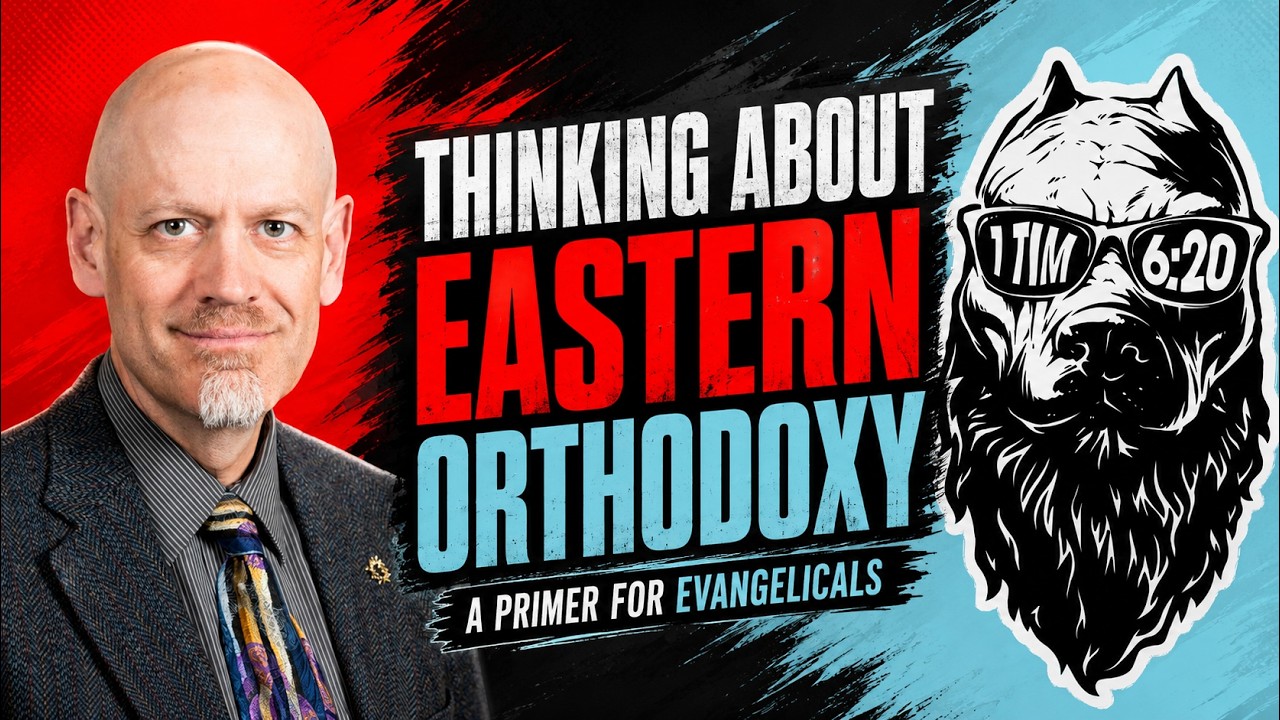
James White's Biggest Warning About Eastern Orthodoxy
TheApologeticDog
2K views•2026-06-22

13Weather Forecast | 6 a.m. update June 23, 2026
WTHR13News
704 views•2026-06-23

Venezuela in Ruins After 7.5M Earthquake! Multiple Buildings Collapse in Caracas, People Trapped
wildweatherus
695K views•2026-06-25

New Skye Canyon Elementary School set to open, amid enrollment declines in other areas
News3LasVegas
109 views•2026-06-24