Near-death experiences (NDEs) are vivid, organized memories reported by some individuals who survive cardiac arrest or life-threatening injuries, characterized by phenomena such as out-of-body sensations, tunnel vision, bright lights, feelings of peace, and life reviews. These experiences occur when the brain's normal systems for constructing reality—integrating sensory signals, body position, and self-location—break down under extreme physiological stress, including reduced blood flow, oxygen deprivation, and stress hormone release. While science can explain many components of NDEs through known brain mechanisms, the complete nature of consciousness during near-death remains an open question, as these experiences often fundamentally change survivors' perspectives on life and death.
What Really Happens Near Death? What Are Near-Death Experiences?
Added:A heart stops. The body lies still. For a few terrifying minutes, people fight to bring it back. Hands press down on the chest, machines beep, voices fill the room. And after a long struggle, somehow the person returns. But later, when they wake up, they say something strange. They say the room did not disappear. They say they saw it, the doctors, the lights, their own body below them. And for a moment, it felt like they were somewhere else, not dreaming, not awake, but standing on the edge of death itself. This is what people often call experience, and it is one of the strangest things humans report. Because the story usually begins at the worst possible moment. A heart has stopped, a body has been injured, breathing has failed. Everything that normally keeps a person alive is starting to break apart. And yet, some people come back with memories that feel more vivid than ordinary life. They may remember floating above the room, they may remember moving through darkness, they may remember a bright light, a deep peace, a voice, a presence, a life review, or a strange feeling that they had reached a border and were being pulled back. The details are not the same for everyone. Some people describe beauty, some describe confusion, some describe fear, and many people who come close to death remember nothing at all.
But when a near-death experience does happen, it can feel impossible to ignore. There is also another detail that makes the mystery deeper.
Near-death experiences are not reported by everyone who nearly dies. Two people can go through similar medical emergencies, and only one may return with a story. One may remember a light, the other may remember nothing. This tells us that the experience is not simply what death is like in the same way for every person. It may depend on timing, memory, medication, injury, emotion, and what the mind is able to hold on to after the crisis is over.
Because having an experience is one thing, keeping it as a memory is another. If the person cannot store the event, they may come back with nothing to report. So, when we hear a near-death story, we are not only hearing what may have happened near death, we are hearing what survived as memory after the body returned, and it is not remembered like a normal dream. People often say it felt clear, organized, meaningful, sometimes more real than waking life. And that is where the mystery begins. If the person was unconscious, why did anything feel so clear? If the body was close to death, why did the scene feel so organized? And if the eyes were closed, why did it feel like they were watching the room from somewhere else? To understand this, we first have to understand something strange about normal life. Your brain is not a camera.
It does not simply record the world and show it to you. It builds your experience of the world every second. It takes signals from your eyes, ears, skin, balance system, memory, and body.
Then it turns all of that into one feeling, I am here. This is my body.
This is the room. This is now. Most of the time this system is so smooth that you never notice it. You do not feel your brain building reality. You just feel reality. But near death, this system is no longer working under normal conditions. Blood flow may drop, oxygen may fall, carbon dioxide may rise, stress chemicals may flood the body, the brain may be receiving broken signals from the senses, and the normal feeling of being inside a body may begin to loosen. This does not mean the experience is fake. It means the system that creates experience is under extreme pressure. And under extreme pressure, the brain can create very powerful states. One of the most famous parts of a near death experience is the feeling of leaving the body. A person may say they floated upward. They may say they looked down. They may say they saw their own body from above. This sounds impossible, but the feeling of being inside your body is something the brain has to create. It depends on many signals being matched together. Your eyes tell the brain what the room looks like. Your inner ear tells it where your body is in space. Touch tells it where the body begins and ends. Memory helps place you inside the scene. When all of these signals agree, you feel located inside your body. But when they do not agree, the brain can make mistakes. In some neurological situations, people can feel as if they are outside themselves.
Researchers have linked out-of-body experiences to brain regions that help combine body position, vision, and self-location. So, during a near-death crisis, one possible explanation is that the brain is trying to place the self somewhere, but the normal body map is breaking apart. The result may feel like floating, like watching, like being above the room. And because the person may later remember pieces of real sounds, real voices, or real medical activity, the memory can feel even stronger. The brain may not be inventing everything from nothing. It may be mixing fragments of real perception, memory, fear, and imagination into one powerful scene. Then, there is the tunnel. Many people describe moving through darkness toward a light. This image is so famous that it has almost become the symbol of near-death experiences. But, the tunnel may not be one single thing. It may come from how the visual system reacts when the brain is under stress. Vision is not just a window. It is also built by the brain.
When blood flow, oxygen, or neural activity changes, the edges of vision may fade, while the center remains brighter. A person might experience this as darkness around them and light ahead, a tunnel, a passage, a road opening in the distance. But, that does not explain everything, because the light in many near-death stories is not just a shape.
It feels warm, alive, important. The person may feel drawn toward it, as if the light is not only seen, but understood. This is why near-death experiences are so powerful. They are not only visual, they are emotional. A person may feel overwhelming peace. They may feel free from pain. They may feel loved, forgiven, or finally safe. To the person living it, this can be the most important part, not the tunnel, not even the body from above, but the feeling that the fear of death has suddenly disappeared. The brain has systems for pain, panic, memory, emotion, and meaning. In a life-threatening moment, those systems may change dramatically.
Some scientists have suggested that the brain may release chemicals or enter unusual states that reduce fear and change perception. Other researchers compare certain parts of near-death experiences to states seen in dreams, seizures, anesthesia, fainting, or some drug experiences. But none of these comparisons are perfect. A dream can feel real, but most dreams are messy. A hallucination can be vivid, but it may not feel deeply organized. A near-death experience for some people feels like a story with structure, a beginning, a movement, a message, a return. That is why it stays with them. Another strange part is the life review. Some people say they saw scenes from their life appear quickly. Not always like a movie, sometimes more like moments, emotions, and memories arriving all at once. A childhood scene, a mistake, a face, a choice, a feeling they gave to another person. This part is especially mysterious because memory is not stored like a row of videos in a drawer. Memory is rebuilt. A smell, a sound, or a strong emotion can open a memory that felt buried for years. And near-death may be one of the strongest emotional states a person can enter. So one possibility is that the memory systems become unusually active or unusually connected. Important moments may rise up, emotional memories may become bright. The person may feel as if their life is being shown back to them. But again, science has to be careful. These events usually happen in emergencies. No one can plan a cardiac arrest in a laboratory just to study consciousness.
Doctors have to save the patient first.
Researchers often have to study the memories later, after the person survives. That makes near-death experiences difficult to measure. A person may be unconscious from the outside, but consciousness is not always easy to detect from the outside. Some patients during resuscitation have later reported awareness or memories. Some studies have tried to place hidden targets in hospital rooms, so that if a person truly floated above of body, they might report what was hidden. So far results are limited and difficult to interpret. The science is still unfinished, and that is important because near-death experiences are often pulled into two extreme explanations.
One side says they prove consciousness leaves the body, the other side says they are only random brain noise, but the truth is more careful than that.
Science can explain many pieces. It can study oxygen, blood flow, memory, emotion, body maps, and the dying brain.
It can show that out-of-body feelings, lights, strange presences, and life reviews may have connections to known brain systems. But explaining pieces is not the same as explaining the whole experience, especially when the experience changes a person's life. Many people who have near-death experiences come back different. They may fear death less. They may care less about small problems. They may become more emotional, more spiritual, or more focused on relationships. For them, it is not just a strange memory. It becomes a dividing line before it happened, after it happened, and whether the experience came from the brain, from something beyond the brain, or from a place science cannot fully reach yet, the effect can be real. This is why near-death experiences should not be treated like simple stories. They happen at the border of medicine, memory, fear, belief, and consciousness. They force us to ask one of the hardest questions about being human. What are we when the body is failing, but experience still seems to appear? Maybe a near-death experience is not a simple window into death. Maybe it is the living brain trying to build one last version of reality. A final scene made from light, memory, emotion, and the feeling of leaving the body behind. Or maybe there is something about consciousness that we still do not fully understand. For now, the honest answer is that we do not know everything. We know that the brain can create powerful experiences. We know that extreme physical crisis can change perception. We know that many near-death experiences share similar patterns. And we know that for the people who live through them, they can feel unforgettable. A heart stops, a body lies still, a room fills with noise, and somewhere inside that terrifying moment, a person may feel silence. They may feel distance. They may feel peace. They may see their body below them and wonder why they are no longer inside it. Then the body returns. The eyes open. The room comes back. But the memory stays. Not as proof of one simple answer. Not as something we can fully dismiss. But as one of the strangest experiences mind can bring back from the edge of death.
Related Videos
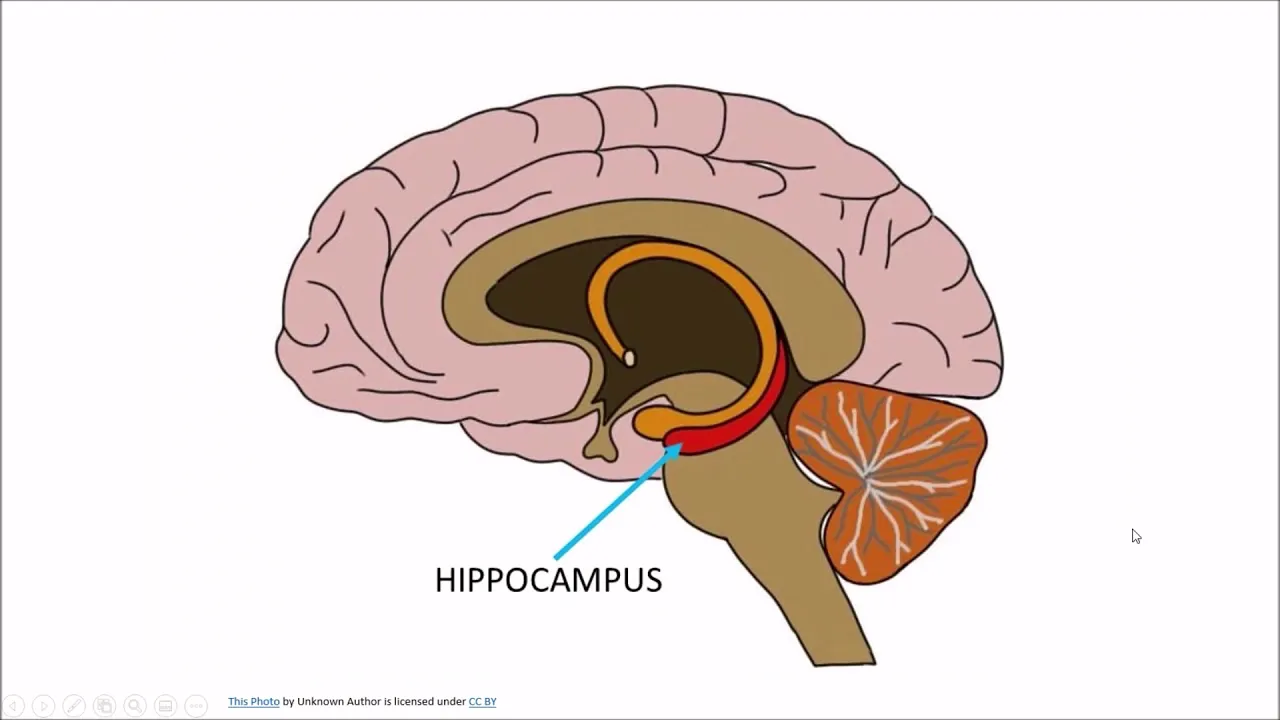
What is neurodegeneration?
TheSheekeyScienceShow
3K views•2019-08-19
IPL - Ruth Empson "Mind the Gap"
otagouniversity
251 views•2019-07-08
How our body shapes our mind | Pancho Tolchinsky | TEDxNapoli
TEDx
2K views•2019-12-05

Impact of Early Life Deprivation Danielle Stolzenberg Marcus Pembrey Bruce McEwen
uctv
4K views•2019-12-01
β-Caryophyllene for Parkinson’s: Protecting Dopamine & Easing Symptoms
parkinsonsdiseaseeducation
6K views•2025-08-09
New Insights from Inside the Brain with Rodrigo Braga, PhD
NUFeinbergMed
421 views•2025-04-14
Highlights for dystonia • 2025 MDS Congress
movedisorder
145 views•2025-10-27
Animal Welfare Synergy Series: Dr Tom Smulders on hippocampal neurogenesis
costactionlift
135 views•2025-07-14
Trending

Gremlin Arrives… While Dorothy May Takes Another Step Forward
The-moons
10K views•2026-07-23

Playstation NO DISC/NO BUY Fight Is Over...
DavidJaffeGames
4K views•2026-07-23

Americans Confused in Australia for 17 Minutes Straight
IWrocker
17K views•2026-07-23

FURIOUS Raskin CORNERS DOJ over Trump DARK PAST!!!!
MeidasTouch
237K views•2026-07-23