This breakthrough elegantly transforms the spider genome into a programmable interface for advanced material design. It is a sophisticated milestone that proves we can now redesign biological outputs without compromising their inherent structural integrity.
Instala nuestra extensión para buscar dentro de cualquier video al instante
video qOi7AAñadido:
[music] >> Scientists have reprogrammed a spider.
The results are [music] striking.
It sounds like science fiction, but it's already reality. German [music] researchers are the first in the world to use CRISPR a Cas9 [music] technology to modify a spider's genome.
The result a red glowing thread [music] that could revolutionize future materials from regenerative medicine [music] to biodegradable implants.
CRISPR a Cas9 technology [music] has been transforming the world of molecular biology for over a decade, enabling [music] precise genome editing in plants, animals, and even humans.
Until now, however, >> [music] >> spiders have remained beyond the reach of genetic engineering.
All that changed [music] thanks to a team from the University of Bayreuth, which conducted [music] a pioneering experiment involving Parasteatoda tepidariorum, a common house spider found in Europe and North America.
Scientists not only successfully [music] modified its genome, but also achieved permanent changes in the material produced by the spider, >> [music] >> silk, which glows red under UV light.
To achieve this, they used microinjection.
A DNA [music] fragment encoding a fluorescent protein was injected into unfertilized female eggs, after which the females [music] were mated with males.
The offspring of these pairs produced silk with significantly altered optical properties >> [music] >> without disrupting its mechanical structure.
For the first time in the world, we have [music] shown that the CRISPR a Cas9 technique can be used to insert a precisely designed gene into the spider silk protein sequence, [music] enabling its functionalization.
Spider silk has long been considered one of the most extraordinary [music] biological materials.
Lighter than cotton, yet stronger than steel for the same weight, resistant to stretching, [music] and completely biodegradable, it appears to be an ideal raw material for future applications.
However, the difficulties [music] of breeding spiders and their territorial and cannibalistic behavior mean that most research has focused on synthetic silk production using bacteria, plants, [music] or silkworms.
After many years, scientists [music] have proven that it's possible to modify the spiders themselves in a way that changes the properties of their threads.
>> [music] >> And not just color-wise, as in the case of red fluorescence, but potentially also [music] mechanically and functionally.
Subsequent iterations could lead to increased thread strength, electrical conductivity, or applications in photonics. [music] The red silk experiment was just one side of the coin.
The second important element of the research was the so-called [music] CRISPR KO, or genetic silencing of a selected gene.
The researchers focused on the so gene, which was hypothesized to be responsible for eye development in spiders.
Its blocking caused the bred individuals to be born [music] without eyes, clearly confirming its crucial role in the process of [music] embryogenesis.
While it may sound like an experiment straight from Dr. Frankenstein's [music] laboratory, this study was purely exploratory in nature. It allows [music] for a better understanding of the anatomy and genetics of spiders, >> [music] >> which, despite their widespread nature, remain among the least studied invertebrates in terms [music] of genetics.
The German researchers' achievement isn't limited to a flashy fluorescence trick. [music] It's a potential platform for a new class of biomaterials.
Imagine surgical [music] threads that change color upon contact with infection, fabrics that self-heal when exposed [music] to light, or biosensors embedded in medical implants.
Silk with modified properties could [music] find applications in tissue engineering, where it serves as a scaffold for cell growth, but also in future electronics as [music] a conductor in ultra-flexible systems.
In this context, fluorescence is just the first step towards functionalizing a material [music] whose evolution has taken millions of years.
The results of Professor Scheibel's team's work have been published in the journal Angewandte Chemie International Edition.
>> [music] >> Although the project focuses on a single species, the method itself could eventually be adapted to other spiders, producing even stronger silk. [music] >> [music] [music] [music] [music] [music] [music] [music] [music] [music] [music] [music] [music] [music] [music] [music] [music] [music] [music] [music] [music] [music] [music] [music] [music] [music] [music] [music] [music] [music] [music] [music] [music] [music] [music] [music] [music] [music] [music] [music] [music] [music] [music] [music] [music] [music] [music] [music] >> What the What the What the What the >> [music] >> What the What the What the What the [music] What the What the >> [music] >> What the What the What the >> [music] >> What the What the What the What the What the >> [music] >> What the What the What the What the What the >> [music] >> What the What the What the What the What the
Videos Relacionados

Koji - the enzyme powerhouse 💪
EdibleAlchemy
18K views•2026-05-31

Management of stem gall disease of coriander through IDM
helpingagroAssam
162 views•2026-06-02

A Paper Mill Dumped Wood Fiber on Her Farm for Years...She Used It to Grow 800-Pound Pumpkins
FarmlandChronicles
436 views•2026-06-02

Scientists Cloning Extinct Tasmanian Tigers
funfactsforkids2026
155 views•2026-06-02
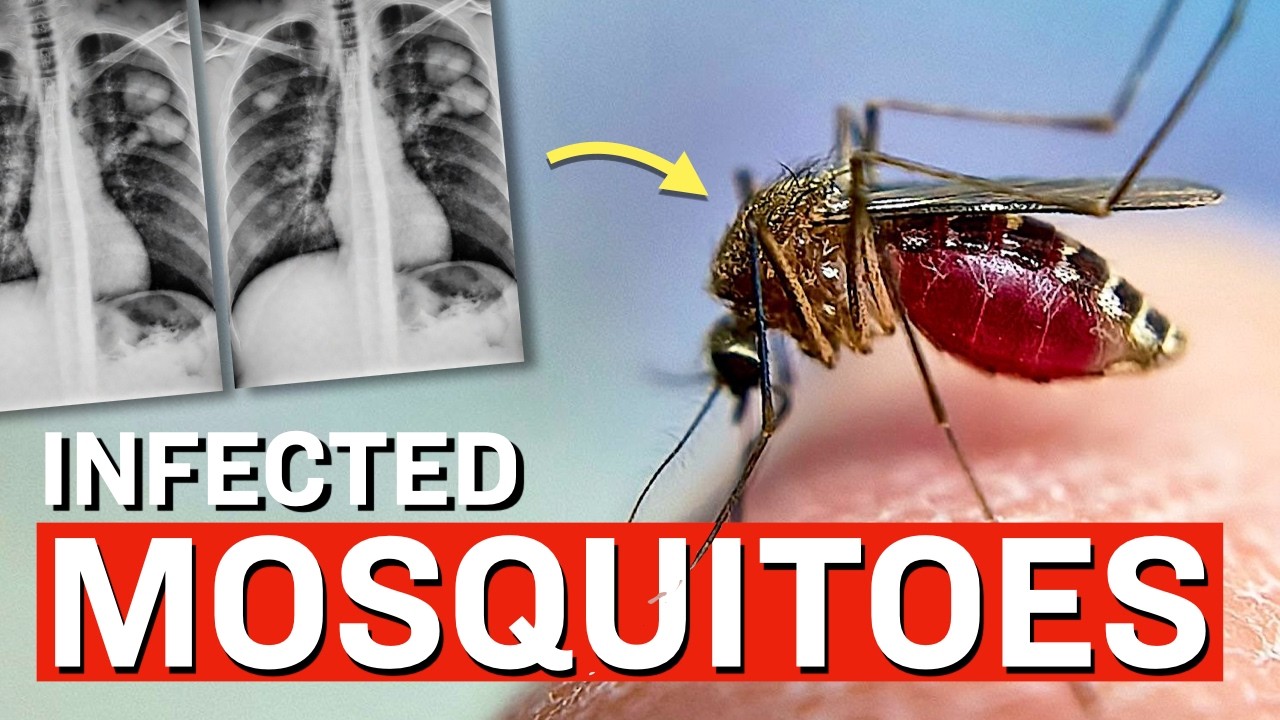
Google Releasing a 32 Million Strong "Mosquito Army" in Florida
FactsMatterRoman
4K views•2026-06-05

Google seeks EPA approval to release infected mosquitoes in California and Florida
cbs8sandiego
1K views•2026-06-02

Every Genetic Gift You May Have Explained
ChefCalebYT
211 views•2026-05-31

Mechanical Characterization and Modelling of Tissues (Intro Video)
npteliitd
109 views•2026-06-02