H1N1 influenza (swine flu) can cause sudden death through a cascade of complications: the virus invades the airways, causing bronchial inflammation and necrosis, which leads to bacterial pneumonia; the infection then spreads to the pericardial sac, causing severe pericarditis; finally, bacteria enter the bloodstream, triggering sepsis that causes blood pressure to drop and blood flow to vital organs to cease, resulting in cardiac arrest. This case demonstrates how a seemingly minor infection can rapidly become fatal when it triggers a chain of life-threatening complications.
Install our extension to search inside any video instantly.
🅽🅴🆆Dr. G Medical Examiner Full Episodes Shadow of Jealousy DR. JAN GARAVAGLIA - Medical Examiner
Added:When a man is found dead outside a rundown motel, Dr. G fears the worst.
>> So, a man down, kind of a seedy part of town. This could very well be a homicide.
>> But during the autopsy, she discovers something so shocking, she can hardly believe her eyes.
>> What I found was one of the most remarkable things I'd ever seen.
>> Then >> Dad?
>> a teenage boy is traumatized when he finds his father's lifeless body at the foot of their attic ladder.
>> He's obviously devastated uh to find his dad dead.
>> And now, his grief-stricken family is desperate to know what took his life so suddenly.
>> Why him? Why that day? Why that moment?
>> [music] >> That's a thousand-dollar question.
>> As a rule, Chief Medical Examiner Dr. Jan Garavaglia prefers to work with as few distractions as possible.
>> I don't like a lot of people talking while I'm doing my autopsies, and a lot of people don't understand that. That, you know, you're actually concentrating when you're doing an autopsy.
>> I just don't need any deliveries today.
>> In fact, I'd like to do an autopsy without opening my mouth.
I'll have my gloves on, I'll have a scalpel in my hand, and I'm getting ready to autopsy, and a detective will ask, "What do you think he died from?"
>> I didn't see anything there.
>> And like, hold your horses. I don't like to guess, I like to get to the answer.
>> And it will take a whole lot more than guesswork [music] to solve the mystery in this next case.
>> What I found during the autopsy was one of the most remarkable things I'd ever seen.
>> On a brisk winter morning, Hank Johnson arrives at his maintenance job at the Blue Sky Lodge.
>> He had gotten to work around 6:00 in the morning, and he was making his rounds.
>> But as he's taking out the trash behind the motel, he comes upon a startling sight. A man is lying face up on the sidewalk.
And as Hank moves in for a closer look, >> You all right there?
>> he gets the shock of his life.
The man is clearly dead.
>> Must have been scary.
>> Shaken, Hank immediately dials 911.
Police soon arrive on the scene, followed closely by one of Dr. G's medical investigators.
>> My investigator goes to the scene to be my eyes and ears.
>> And her foremost priority is to ID [music] the body.
>> And in this case, there was an identification with a photo that looked just like this fellow.
>> The mystery man now has a name, Victor Morales, a 52-year-old [music] Hispanic male from St. Cloud, Florida.
But outside of that, investigators have precious little to go on.
His body is transported to the District 9 morgue.
And now, Dr. G and her team are [music] determined to figure out what claimed his life.
>> We've got a fellow down. We don't know anything about him. So, we got to look for clues.
All right, let's see here. Let's see here.
>> She begins by reading through the investigator's report, searching for any insights into what could have led to his sudden death.
>> We don't have much history. Nobody's telling us much about this fellow.
>> [music] >> According to the few who knew him, Victor was a loner who lived in a nearby trailer park until a few days earlier when a fire destroyed his home.
>> He just had his home burned down and all his possessions. So, he was kind of forced to go into this hotel.
And now he's dead.
Sounds like terrible luck.
>> But while Victor's misfortune provides little in the way of clues, it isn't long before Dr. G gets her first promising lead.
>> The hotel proprietor stated that he just checked in about 2 days ago and that he's kind of yellowish and kind of shaky. The proprietor really thought he looked ill.
So, certainly natural disease could have played a role.
>> Unfortunately, the vague description [music] isn't a lot to go on.
Victor could have been suffering from a myriad of ailments >> [music] >> from kidney failure to heart disease.
But based on the circumstances, [music] Dr. G can't help but wonder if the 52-year-old may have been wrestling with a dangerous addiction.
>> I really thought he sounded like he might have been an alcoholic.
There's many ways you can die from alcohol [music] and one always has to worry about drugs.
>> But there's an even more unsettling possibility.
Foul play.
>> [music] >> What's really disturbing is when investigators said he's got a small abrasion at the top of his forehead near his hairline. So, that's somewhat suspicious.
A man down, kind of a seedy part of town, one always has to worry about foul play.
>> I just came around the corner here.
>> The police are waiting to see if this looks suspicious for a homicide, but we don't know what this is.
This is truly a mystery at this point.
It's just a wide open game, but we won't know until we do the autopsy.
All right, let's see.
Oh, wow, he looks old. Overall, he looks a little older than 52 years old. He looks a little disheveled and he looks >> cranial exam.
But, as Dr. G's eyes move down Victor's body, she spots a clue that just may hold the secret to his untimely death.
>> Do you see this?
Gosh, something is going on with him.
It looks like it could very well be a homicide.
>> Dr. G has just discovered a telling clue on the body of 52-year-old [music] Victor Morales, who was found dead on the sidewalk outside a run-down [music] motel.
>> He's got kind of scratch abrasions on his arm.
>> This, along with the abrasion on his forehead, has moved foul play up the list of suspects.
>> The scratches on his arm may indicate somebody's grabbing him.
So, maybe there's an altercation going on.
>> But, the only way to know for sure is to look inside Victor's body.
And she'll start with the head.
>> It could be foul play. Could have been accidental that he hit his head. I need to see if we can really piece this together. Let's see what happens when I get inside.
>> Using an oscillating saw, mortician Brian Maholski opens the skull.
>> So, we go to the head really looking for trauma.
But, there is no evidence of bruising, no skull fractures, there's no hemorrhage over the brain.
There is no evidence of trauma.
>> All right, he's fine. So, he's got no trauma to the head, that's what we're looking for.
>> But there's still a possibility of broken ribs and maybe uh fractured a uh spleen or you know, tore the liver.
So, being hit or falling is still in the mix. Clearly, I need to open the rest of the body to get my answer.
Okay.
We do our typical Y incision from the shoulders [clears throat] down to the uh lower abdomen and open it up.
I make sure there's no free fluid in that abdominal cavity.
>> There's nothing in there.
>> And there isn't any.
>> Go ahead.
>> I remove the chest plate. [music] Of course, I'm looking for any rib fractures uh and there is none.
>> No, there's nothing there.
>> We know that we're not dealing with trauma.
>> Dr. G can now safely rule out both foul play and an accidental fall.
But this only deepens the mystery.
If he wasn't the victim [music] of an assault, how did he wind up in the lot behind the motel?
And why all the scratches and abrasions?
Her next step is to collect blood and urine samples for toxicology.
>> Of course, we check if there's any alcohol.
And I need to check for any type of uh drugs, whether it's prescription [music] or illicit.
It's important to take tox because that might be our answer.
>> With the samples drawn, Dr. G scans Victor's abdominal organs one by one, looking for any abnormalities.
>> When I look in the abdomen, everything looks pretty good.
>> He's looking pretty good on the inside.
>> But based on the circumstances surrounding Victor's death, there's one organ in particular that Dr. G must examine.
>> When I hear that he's yellow and shaky, he could would be uh dying from liver disease.
But his liver, which I thought was going to be cirrhotic and show evidence of chronic alcohol abuse, really didn't.
>> Let's see what's going on here.
>> No closer to his cause of death, Dr. G turns her attention to the organs in Victor's chest cavity.
And she can see right away that something isn't right.
>> Ooh, so his right lung >> Normally our lungs should be nice and airy, kind of like a sponge. There's a little tiny air spaces.
But when I look at his lung, the entire lower lobe of that right lung was firm.
He clearly has a bacterial infection, and this has progressed to the entire lobe and um almost solidified uh because so much But the next thing I want to look at is his heart, because you always worry about maybe a heart attack.
>> Carefully, Dr. G pierces the pericardial sac with [music] her scalpel, exposing the heart inside.
And right away, she makes a shocking discovery.
>> Oh, look at that.
>> When I open up this pericardial sac, I am absolutely floored.
>> Wow.
>> What I found was one of most remarkable things I'd ever see.
Oh, look at that.
>> Dr. G has just stumbled across a tantalizing and unusual clue inside the heart sack of 52-year-old Victor Morales.
>> It is the most remarkable pericardial sac I have ever seen.
It looks as if somebody took a shag rug, lined the pericardial sac, and covered the heart.
>> Oh my god. Look at that.
>> He's got clearly a pericarditis, an inflammation of the sac aligning the heart.
Untreated bacterial pericarditis is 100% fatal if this is what he has. But, this pericarditis is unbelievable to the point where it's too unbelievable.
So, I'm a little worried about what's going on there. Is this truly just an infection or is there something else going on? There can be a lot of natural diseases causing it. Everything from rheumatic fever, some connective tissue diseases, or could be from a TB or from a fungus.
>> I'll take micros of it.
>> Dr. G collects samples of his heart to be made into slides.
She hopes a magnified view of the tissue will help [music] shed light on the bizarre finding.
>> I need to look under the microscope.
What is the etiology, the cause of all this? So, I think what we're going to do is be prudent and pin them until we get those micros back.
>> As the autopsy comes to a close, [music] so does Dr. G's day.
But, although she leaves the morgue, her mind doesn't leave the case.
>> Dr. G brought up this case when we were driving home from work one day. She was excited about talking talking to me about what this might represent.
>> It's always fun to talk about cases with Mark. He's a very wise fellow. He really brings out the best [music] of you kind of discussing it and thinking of new angles.
He just thought it was a great case.
So, we were interested to see what the micros would show and what the cultures would show.
>> For 3 weeks, Dr. G has patiently waited for the lab [music] experts to work their magic.
And today, the waiting game finally comes to an end.
>> The tox actually, in and of itself, didn't show anything. You [music] know, it was negative all across.
>> She can now officially rule out a drug or alcohol-related death.
Next, Dr. G slips the micros of Victor's heart and lungs underneath the lens.
And what she discovers is telling.
>> The lining of the pericardial sac and lining of the heart was definitely an acute infectious pericarditis.
And when you look at his lungs, he clearly has a lobar pneumonia.
>> Two severe infections, one in the lungs and one in the heart, both caused by the strep bacteria.
This confirms Dr. G's findings at [music] autopsy.
But, when she zooms in on the bronchus, the main air tube inside the lungs, she spots something that she couldn't see with her naked eye.
>> The bronchus inside the lungs show necrosis and some chronic inflammation.
What is causing all this?
>> And at this point, Dr. G has only one place left to look, the viral culture report.
>> And when I get my culture, that's the smoking gun.
All the pieces fit together and I love that when that happens.
>> Dr. G has just reviewed the lab results of 52-year-old Victor Morales.
And after a 3-week investigation, she's finally found the missing link to his strange and sudden death.
>> When I get my cultures back, I have all my pieces together and I clearly see the progression of what happened.
>> In the winter of 2009, Victor Morales checks into the Blue Sky Lodge after a devastating fire burns down his home.
>> He looked kind of yellow and kind of shaky when he checked into the hotel.
The clerk thought he looked sick.
He is sick. And he's dying.
>> Thanks to the culture of Victor's bronchus, Dr. G now knows the identity of his ruthless killer.
>> The cultures came back positive for H1N1 influenza.
>> H1N1, also known as swine flu, is a strain of influenza first detected in the United States in April of 2009.
In extreme cases, it can be life-threatening.
>> It's thought that there was about 60 million Americans who got H1N1 over the last year.
Out of that, about 12,000 died.
>> This flu bug was different in that it didn't kill our typical demographic of the older person with a lot of chronic diseases.
You tended to see it more in young people. We saw a lot of people who are obese having a lot of problems with it.
>> [music] >> We had pregnant women die with it. We had kids dying with it, and we even had, you know, people 52 [music] years old dying with it.
>> Dr. Gee suspects that Victor contracted H1N1 about 10 days before he died.
>> Whether someone sneezed on him or he touched the virus and then touched his mouth or nose or eyes, that virus [music] took hold.
He started [music] feeling sick.
He's feeling achy. He's got a headache.
At this point, he could have gotten treatment, but he didn't.
>> Not long after Victor is infected, the virus invades his airways and attacks the lining of his bronchus to the point where the tissue becomes irritated and dies.
>> That lining is so inflamed it can't do its job, and part of its job is to help remove bacteria, get it out of the lungs.
>> Eventually, the bacteria begins to spread from the bronchus [music] into Victor's lungs, setting into motion a deadly chain of events.
>> That set him up for a serious bacterial pneumonia, which developed in his right lower lung.
>> That infection then spreads to his pericardial sac, which sits adjacent to it.
>> The raging [clears throat] infection triggers a pericarditis so severe that the heart appears to be covered in a thick shag carpet.
>> The pus starts developing uh these kind of fronds.
And eventually that bacteria uh goes into his uh blood.
>> And once the bacteria's in Victor's bloodstream, it isn't long before it sets off a life-threatening condition called sepsis. [music] >> It causes the blood pressure to drop.
And eventually he doesn't get blood to his brain, his heart.
>> And as he staggers outside, most likely to seek help, his heart finally gives out.
>> And he collapsed >> [music] >> and dies on the sidewalk.
>> Dr. G can now close the book on the case of Victor Morales. [music] But one question still remains.
How did he get the scratches and abrasions?
>> We may never know why he had the scratches on his arm >> and the abrasion to his head.
>> Oftentimes you don't know exactly [music] what happened and you never will.
But >> it's really interesting that we started out with a case that could have been homicide, >> an accident, a natural.
And and the culprit [music] ends up to be H1N1.
>> Dr. G immediately reports her findings to the local authorities.
>> When you find something like this, you contact the health department. The health department keeps track of all the people who died from the flu, all those numbers that you hear on TV, uh all the statistics, um all that information is gathered one case at a time.
>> [music] >> This man's death was preventable. He didn't have to die from the flu. He could have been treated along multiple stages of his illness.
There is antiviral medication that this flu was sensitive to, and his pneumonia would have been treated with clear antibiotics.
He probably spent the last week of his life miserable.
This poor guy had >> [music] >> no one. It's It's not good that people die alone.
That's really the tragedy of this case.
>> [music] >> Dr. G is ultimately responsible for all cases that come through the District 9 Morgue, but she doesn't perform every autopsy herself.
>> Sarah, he needs to be extra.
>> Some people think I'm the only one here.
There's actually five of us.
>> Oh, if you get here on time.
>> There's five physicians that work in this office.
>> And the youngest physician on her staff is Dr. Joshua Stephanie, who first came to the morgue in 2003, when he trained as a resident under Dr. G.
>> He really had an inquisitive mind. He really liked the cases, and the smells didn't bother him.
So, I hired Josh immediately out of his fellowship [music] to work in our office.
You know, Josh is still young, and there's still things that he hasn't seen, and he's still is learning the day-to-day.
>> You know what you're going to have to do is uh take some micros of that. Yeah.
>> I value her input just from experience level. She's been doing this longer than I have. She's seen a lot more than I have.
>> I'm thankful for all the physicians that work [snorts] with me. We have a really good team and it's nice to work with good people.
>> Every morning at 8:00 a.m. all five medical examiners gather to discuss the day's cases.
>> It is very important to have multiple eyes and ears because one medical examiner could come up with an idea and kind of shed a new light and a new way of thinking about a case.
>> At the end of each meeting, the mort workload is divvied up.
>> And the winner of that lottery was Dr. Stephanie.
>> And today it looks like Dr. Stephanie has landed a particularly interesting case.
>> We all like a mystery. It's no fun to get a present when you know what's inside already.
>> It's a Sunday morning in late June.
But for Dario Romano, a ninth grade teacher, it isn't your typical lazy weekend.
He's knee-deep in a home renovation project that he's been working on for weeks.
>> Apparently he was working up in the attic helping the family [music] trying to put an addition on to the attic.
>> Nothing about the 45-year-old seems out of the ordinary.
But around noon, Dario's son, Miguel, is on [music] his way to the laundry room when he stumbles onto a terrifying scene.
>> He finds his father unresponsive at the bottom of the ladder.
>> In a panic, Miguel immediately dials 911 and paramedics arrive on the scene within minutes.
>> He had no vitals.
No heartbeat, no pulse. He wasn't breathing.
>> Emergency technicians perform CPR on Dario for over half an hour.
But despite every effort to save his life, the beloved father and husband dies right there at the foot of his attic stairs.
>> They couldn't bring him back.
>> The family is very surprised, very shocked.
>> It's really sad. You know, the poor 15-year-old is obviously devastated uh to find his dad dead.
>> And now it's up to Dr. Stephanie to solve the mystery of Dario's tragic death.
>> We don't know why he died.
But by the end of the day, we're hoping to know.
>> Associate Medical Examiner Dr. Joshua Stephanie is preparing for the autopsy of Dario Romano, whose family is still reeling from their unexpected loss.
>> I think the worst part is that the family just has no clue why he died, and we're hoping the autopsy gives us the answer.
>> I want to see uh what's going on with this guy.
>> Dr. Stephanie begins by reading through the detailed investigator's report.
>> We have a 47-year-old [music] Hispanic male found uh dead at the bottom of a ladder that leads up to his attic.
>> I think trauma is a possibility on this fellow.
>> And a fatal head injury is at the top of his list.
>> He could have hit his head up in the attic, or he could have fallen coming on the ladder.
If there is trauma, there can be a buildup of blood. The buildup of blood affects you to the point where you can pass out.
>> But Dr. Stephanie must also consider [music] a number of alternate scenarios.
>> It was a hot day at the end of June.
>> That attic can get up to 120, 150 degrees, no problem.
So, heatstroke is a definite possibility.
>> Heatstroke is when your body temperature goes up, usually above 105.
It's a serious condition.
But, that one's going to be difficult to prove because we don't have a temperature.
>> EMTs didn't take a temperature.
>> This means that in order to record heatstroke as Dario's official cause of death, Dr. Stefany will first have to rule everything else out.
And given the circumstances on the scene, there's another theory he must consider.
>> We know he's working with the power tools up there, so you're thinking, um, is there a possible of [music] electrocution?
>> He'd been in that very hot attic, so he's probably sweating profusely. You know, that sweat is a very good conductor of electricity.
You can still move after you've been electrocuted. So, there is a chance that he started walking, he got electrocuted, started walking down the ladder, and fell off. That's a possibility.
>> Next, Dr. Stefany leafs through the 45-year-old's medical history, and right away, he spots an important detail.
>> We have the history that he's got a congenital cardiac anomaly.
>> Dario was born with a defect of the aortic valve, the opening that regulates blood flow from the heart to the aorta.
Over time, it can lead to a dangerous condition called aortic stenosis.
>> Aortic stenosis causes those valves to be stiff, and then narrowed, letting less and less blood get through them. And that's a huge strain on your heart.
But we were told P is being followed by a cardiologist. And up until you start getting that narrowing, there's not a really high chance you're going to die suddenly and unexpectedly.
>> Well, right now our theories given those circumstances is pretty much open-ended.
It could be anything.
>> He's going to let the body speak to him.
>> Let's take a look at what we got here.
>> Dr. Stephanie begins with a meticulous examination of the body searching for any evidence of electrocution.
>> We often see just a little burns where the electricity goes in.
Uh they're kind of kind of dry with raised white edges.
Real classic for electrical burn.
>> With a careful eye, he studies the hands and other extremities on the lookout for any suspicious markings.
>> No burn marks, no no small charring or discolorations on the body.
>> On first blush, death by electrocution is looking less likely.
However, as with heatstroke, Dr. Stephanie must rule it out by diagnosis of [music] exclusion.
But as he continues to scan the body for clues, something else immediately grabs his attention.
>> Oh, look at this.
The abrasions on the chest, the lower back, the shins, the knees, and on the upper extremities.
They could be from a fall going down a ladder.
You get a clean picture of that one?
>> Now he'll have to dig deeper for answers, [music] and he knows just where to look first.
>> The number one traumatic injury for falling off a ladder would be head trauma, but you never know what you find in the head.
>> With a scalpel in hand, Dr. Stephanie slides the blade across Dario's scalp.
>> We'll make an incision going from the back of one ear to the back of the other ear.
>> Our theory is that he hit his head. He did he has maybe a subdural of blood collecting over uh the brain.
>> To gain access to the brain itself, he cuts through the bone with an oscillating saw.
>> How do you breathe in this thing? I'm getting so foggy. I know.
>> Eyes peeled for any abnormalities, Dr. Stephanie inspects the surface of the organ inch by inch.
>> But I don't see any subdural blood. I don't see any blood around the cerebral hemisphere. Nothing here. This looks fine.
>> He didn't have the typical injury we see with falling off a ladder.
He didn't have head trauma. The head was not the cause of his death.
>> I'm not quite sure what's going on. It's a mystery.
>> So we really don't know what's going on with this fellow.
I think it'll be interesting to see what the autopsy shows.
>> We take the scalpel, make incision from both uh anterior shoulders near the mid-chest, and then go down the mid-abdomen.
>> Carefully, Dr. Stephanie peels back the deep layers of tissue to reveal the inside of Dario's body. And the instant the abdominal cavity is exposed, he's completely taken aback.
>> That's not good.
>> This is quite shocking.
>> Dr. Stephanie has just made a stunning discovery inside the body of 45-year-old Dario Romano.
>> That's not good.
>> He's quite surprised at what he finds.
>> He's got some blood in the abdomen, so I don't know. I see a large amount of blood in the abdominal cavity. So, I want to know, you know, what's going on.
First of all, I want to measure it to see how much is in there.
>> As little as blood out, we need to measure it out.
>> We actually take a soup ladle and slowly ladle it out like we're ladling out soup. [music] >> And by the time he's done, Dr. Stephanie has measured out a staggering 1,700 ml.
>> That's a lot of blood. That's over a third of his blood volume.
Now, it's his job to figure [music] out why is he got that blood?
>> Right now, I'm not really sure where the source of blood is.
>> Is it natural disease? Did you rupture a spleen?
And what's going on in his chest? Are there rib fractures involved here?
>> With these thoughts in mind, Dr. Stephanie removes the chest plate and takes initial stock of Dario's upper body cavity.
>> I don't see any um evidence of fractures on the ribs. I don't see any lacerations and I don't see any perforations.
>> Uh I need to look at his heart.
>> But given Dario's congenital abnormality, Dr. Stephanie is [music] also eager to examine the heart.
>> So, let's see.
>> He cuts through the pericardial sac to expose the organ inside and immediately spots something alarming.
>> Oh, that's a big heart.
>> What's noteworthy right off the bat with this heart is it's enlarged.
The heart weighs almost 600 g. That's a thick, big heart.
>> [music] >> And as Dr. Stephanie inspects the organ more closely, he's surprised to see that it's in worse shape than he expected.
It's clear now that Dario had developed a severe case of aortic stenosis.
>> [music] >> It doesn't look so good.
>> The valve is usually beautiful. They're very thin and delicate, but this is a gnarly looking valve. It's uh diseased and narrowed and stiff [music] and calcified.
>> The heart, to push that same amount of blood out through that narrow opening, has to pump harder. So, because of the heart working harder, the heart is a little thickened, and a little larger.
>> This is a very bad heart. If not for the blood in his belly, I would have said that is probably the cause of death.
But, he needs to figure out what has happened that's created 1,700 ml of free blood in his abdominal cavity.
>> So, I don't know where the blood is coming [music] from. So, I want to look in the abdominal cavity.
>> One by one, Dr. Stephanie begins the arduous task of removing and dissecting the abdominal organs.
Starting with the GI tract.
>> We do a look around the organs, but I don't see any perforation in the stomach and the bowels and the intestines.
>> [music] >> He doesn't find anything.
>> Next, he removes the liver.
>> The surface of the liver looks intact.
It looks a nice tan brown color.
Nothing remarkable.
>> But, as he cuts into the organ itself, he finally strikes pay dirt.
>> Oh, there it is.
I see it, uh a nice big laceration of the internal surface of the liver.
>> That tear is quite deep.
That's clearly where uh that blood is coming from.
>> But, ironically, this discovery only deepens the mystery.
>> Well, to me it it it was strange, you know, it's a surprising finding.
>> It's unusual to have a lacerated liver not related to an automobile accident and really high falls, like off of buildings.
Why did he lacerate his liver? That's the $1,000 question.
>> As the autopsy comes to a close, Dr. Stephanie still has his work cut out for him.
>> What is the chain of events that led to that cause of death?
>> To figure that out, Dr. Stephanie will need to go back to square one.
Re-examining all the evidence, from the investigator's report to the medical history to the internal and external exams.
>> In the morning, each of the doctors shares what they found from the autopsy from the day before.
>> And after a night of intense deliberation, Dr. Stephanie believes he can finally explain to his colleagues exactly what led to Dario Romano's tragic death.
It's a scorching hot Sunday in Winter Park, Florida, and Dario Romano is up in his attic laboring over a home improvement project.
>> He was working laying planks up there using some electrical equipment, sawing some uh boards.
>> It's hot. It's the height of summer.
The attic temperature can get easily to 120, 150°.
>> As the temperature rises, Dario's body becomes overwhelmed by the heat, putting a dangerous strain on his already damaged heart.
>> The heart is really working hard to get the blood through that narrowed opening at the aortic valve. And when he's stressing himself in that attic in the heat working that's a lot for his heart to take.
>> The organ soon goes into overdrive struggling to pump fresh blood and oxygen to the 45-year-old's body.
>> That could make him dizzy, could make him woozy.
>> He was slammed to lose balance causing him to fall.
>> He must have hit his side. He's got a nice abrasion on that right side.
>> And given the odd manner in which Dario's body goes down, what might have been a relatively harmless fall turns into a catastrophic blow.
>> Unfortunately, you know, he hit him just the right way to lacerate that liver.
>> This gentleman must have fallen against something, must have hit something with his abdomen and that caused that type of laceration.
>> Dr. Stephanie thinks he lacerated up in the attic. My theory is that he clearly can't get that liver laceration with a minor fall. I don't think there's enough force up in that attic uh that would have caused that laceration.
I think it occurred that when he was walking down that ladder and he fell.
>> But while Dr. G and Dr. Stephanie may disagree on the exact chain of events, one thing is certain.
Once the liver is lacerated, blood begins gushing out of the wound and into the abdominal cavity at an alarming rate.
>> He's losing blood flow to the organs.
He's losing blood flow to the heart.
>> He gets himself up, sits up against that ladder to rest. He's just slowly losing consciousness.
>> One by one, the 45-year-old's organs begin shutting down and within seconds he is dead.
>> This is one of those cases that you think is a sad accident.
>> In the end, no one [music] can argue that the sequence of events leading to Dario Romano's untimely death were unusual. A hot day, a compromised heart, and a flukish fall. But sadly, to Dr. Jay Hunter team, >> [music] >> it's not an unfamiliar story.
>> Why him?
Why that day? Why that moment?
People always assume that it's one thing that kills [music] you.
And ultimately, there's many factors that play a role that end up causing people to die.
>> Now, findings in hand, Dr. Stephanie reaches out to Dario's devastated widow, Gloria.
>> I relayed my cause and manner of death and let them know that there's nothing they could have done.
But I wanted to talk to her more about the um aortic valve >> with the autopsy.
>> Dr. Stephanie put extra effort just to make sure she understood how serious his aortic uh stenosis was and that there's an increased chance her son had this.
>> Because there is a possibility that congenital abnormality could be genetic.
[music] You definitely want to have her get the son to see a cardiologist.
So, she was thankful.
>> Dr. Stephanie handled this case great. I mean, he kept an open mind. He let the body tell him what happened and then he kind of sat back and thought about it and put the pieces together.
>> A lot of people think we don't, you know, that people are dead. How do we help people if all we're doing is examining dead people and and listing cause of death. This is a good example >> [music] >> of helping a living person, helping a family.
>> Are you living your best life in your golden years? You may think you are, but what if I told you there are things you might be doing every day that are slowly sabotaging your health, your happiness, and even your relationships. As we age, we inherit certain unspoken rules about what we should and shouldn't do.
Rules about how we move, how we interact with others, and even how we care for our minds and bodies. But the truth is, some of these rules might be doing more harm than good. In this video, we're going to uncover five habits that could be quietly holding you back from living a vibrant, fulfilling life. Whether it's skipping physical activity, isolating yourself from others, or even letting regret dictate your emotional health, these habits are all too common in older adults. But here's the good news, they are all completely changeable. By the end of this video, you'll have a clear understanding of what needs to stop right now, and why making these changes could be the key to not just living longer, but living better. You'll learn how avoiding simple habits can speed up the aging process, >> [music] >> and how breaking free from them can help you feel stronger, more connected, and more in control of your future. If you want to truly thrive in your golden years and reclaim the energy, independence, [music] and joy you deserve, then stick with us until the end. The steps are easier than you think, and the rewards are immeasurable. Let's dive in and transform these habits into your secret weapon for a better life. If you are not subscribed, subscribe and activate the notification bell so you don't miss any videos. Your support means a lot to me, and if you enjoyed this video, you can help me continue spreading the valuable lessons by liking and sharing it. If you like the topic of this video, please comment one.
If you don't, please comment zero to let me know how I can improve and make better videos for you. Now, let's begin.
One, skipping physical activity. It's incredibly easy to justify skipping physical activity, especially when we're feeling exhausted, dealing with the aches and pains that come with age, or just feeling overwhelmed by everything else going on in our lives. Believe me, I understand the temptation to skip a workout or avoid that walk outside.
After all, it's a quick fix to sit down, take a break, and tell ourselves we deserve the rest. But here's the harsh reality.
Every time you skip that walk, that stretch, that moment of movement, you're not just giving your body a temporary break.
You're unknowingly allowing it to weaken, your muscles to lose strength, and your balance to become compromised.
As we age, these small choices become incredibly impactful, whether we realize it in the moment or not. Think about it.
When we don't move, our muscles get weaker, and without proper strength, we're more prone to falls. Those falls that we think are just part of getting older can turn into life-changing events.
A fall can lead to broken bones, extended recovery periods, and even a loss of confidence in our bodies. It's a domino effect that starts with neglecting the simple act of movement. I don't say this to scare you, but to remind you how important it is to stay active. Not for the sake of vanity or an unrealistic expectation of a perfect body, but for the sake of your independence, your health, and your overall well-being. It's not about running marathons or pushing yourself past your limits. We're not all athletes, and that's perfectly okay.
What matters most is the consistency of movement. Even just a 10-minute walk every day can make all the difference.
I've seen it in my own life, and in the lives of those I know, those small steps, literally and figuratively, start to add up over time. With every step, you're strengthening not just your legs, but also your heart, your mind, and your spirit. When you walk, even if it's just for a few minutes, you're giving your body a chance to recharge. You're boosting your circulation, improving your heart health, and doing wonders for your emotional well-being. It's like giving yourself a little gift each [music] day. A gift that brings with it the promise of a stronger, more vibrant version of yourself.
In a way, it's an act of self-love. And who doesn't deserve that? In my experience, one of the most rewarding feelings as we age is maintaining that sense of independence.
Being able to get up, move freely, and live without constantly worrying about our bodies failing us.
Physical activity isn't just about avoiding the negative outcomes like falls or weakness.
It's about making sure that we feel strong, capable, and in control of our lives. It's about not giving in to the idea that aging means slowing down and losing everything that made us feel whole and independent. So, I urge you to take that 10-minute walk. Embrace it not as a chore, but as a commitment to yourself, your health, your strength, your future. It's a simple choice that can change everything. And over time, those 10 minutes will stretch into more, and you'll notice the difference in ways you never imagined.
More energy, better mood, and most importantly, the peace of mind that comes from knowing you're doing everything you can to preserve your independence and your well-being. Your body is your most loyal companion, and taking care of it is a gift that keeps on giving. Two, avoiding social interactions.
As we grow older, it's all too easy to find ourselves withdrawing from the world around us. It often happens slowly, almost imperceptibly.
It begins with little things. Perhaps we don't feel as energetic as we once did, or we worry about how we look, or whether we still have anything meaningful to contribute to the conversation. For some, the fear of judgement can be overwhelming, and before we know it, we begin to feel like we're too old or too frail to socialize.
I've seen it happen to so many wonderful people.
People who, for years, were the life of the party or the rock of their community. Over time, they begin to slip away into isolation, believing they've outlived their usefulness in social settings. But the truth is, this withdrawal is often far more damaging than we realize. It's not [music] just that social interactions feel good or that they're fun. The benefits run much deeper. Socializing is vital for both our mental and physical health, and when we shut ourselves off from others, we start to experience more than just loneliness.
We begin to suffer in ways that can be life-altering. Loneliness, especially when prolonged, has been linked to an array of serious health conditions, from depression to heart disease, even to dementia. I cannot stress enough how powerful the effect of isolation can be.
It's more than just a feeling of sadness or boredom. Over time, loneliness can become a chronic condition that wears down your mind and body in ways you might not even notice until it's too late.
>> [music] >> It's painful to watch someone, someone I love, become a shadow of who they once were because they've closed themselves off from the world. I know how tempting it can be to shut the door, curl up with a blanket, and pretend that everything is fine. But that kind of isolation doesn't just keep you from others, it also keeps you from yourself. You lose touch with your vitality, your spark.
And let's face it, nobody wants to become invisible. We all want to feel valued, to be seen and heard, no matter our age. If you are still watching this video and find these lessons useful, please comment one below to let me know that you are still here with me. When you're alone too much, it's easy to fall into a spiral of negative thoughts.
Without someone to share our experiences with, we become prisoners of our minds, left to dwell on our fears, regrets, and insecurities. It's so easy to believe that nobody cares, that we're no longer needed, or that it's too late to start connecting again. But, these thoughts are dangerous. They build walls around us, keeping us locked away from the very thing we need most, a human connection.
Now, I want to be clear. Reaching out doesn't mean you have to attend grand events or suddenly become a social butterfly. It doesn't mean you need to fill your calendar with obligations that you don't enjoy or that drain you. What it does mean is taking small steps, baby steps, even, toward re-establishing the connections that can nurture your soul.
The simplest things can have a profound effect. A friendly chat with a neighbor, a quick text to check in on an old friend, or perhaps even volunteering in a local group. You don't have to go far out of your way. Just one small, meaningful interaction can bring so much light into your life. What I've learned, through personal experience and from watching others, is that it's never too late to form new relationships. I've seen people in their 70s, 80s, and beyond discover new friendships and even rekindle old bonds that they thought were long gone. Those small moments, an impromptu phone call, a walk with a friend, or sharing a meal with family, are what make life rich and meaningful.
And in those moments, something magical happens.
You begin to reconnect with the joy of being alive. You realize you are still needed. You still have something to give. You are still a part of this world with people who care, with people who need you just as much as you need them.
I truly believe that meaningful social interactions are essential for our well-being, >> [music] >> not just to ward off loneliness, but to keep our minds sharp, our hearts full, and our bodies healthier. Having someone to laugh with, someone who listens, someone who understands, you can't underestimate the power of those connections. So, if you've been isolating yourself, I encourage you to reach out. You have nothing to lose and everything to gain. Whether it's a coffee date with a neighbor, a call to a family member, or attending a local club meeting, these little actions can bring a huge sense of relief and fulfillment.
Social connection isn't just about filling the silence. It's about nourishing your soul, keeping your heart open, and reminding yourself that you still matter. We all need someone. We need love, laughter, shared memories, and companionship. We need to [music] feel that we're part of something bigger than ourselves. And when we take the time to engage with others, to reach out and share in the simple pleasures of life, we open up a world of healing and possibility. So, please, don't let isolation take hold. Embrace the beauty of connection, >> [music] >> and remember that the most important part of life is the love we give and receive. It's never too late to start living fully again, and every step you take toward connection is a step toward a healthier, happier life.
Three, ignoring sleep hygiene. As we grow older, sleep often becomes more difficult to come by, slipping away from our grasp like sand through our fingers.
It's not uncommon for many of us to struggle with restless nights and long hours spent tossing and turning in bed.
But, let's be clear. Poor sleep is not just an inevitable part of aging. It's not something we should simply accept as a natural consequence of getting older.
The truth is, bad sleep habits can lead to a cascade of detrimental effects on both our body and mind. Without enough restful sleep, we risk cognitive decline, a weakened immune system, and an increased vulnerability to chronic conditions like heart disease, diabetes, and even depression. [music] It's heartbreaking to think that something as simple as sleep, which once came so naturally, can become a battle as we age. In my opinion, we need to take sleep hygiene more seriously, especially as we get older. Establishing a solid sleep routine is not just a good idea.
It's crucial to maintaining our overall well-being. Taking the time to set a consistent bedtime, much like a child does, gives our bodies the structure they crave. I truly believe that creating a peaceful pre-sleep ritual is a game-changer. Whether it's enjoying a warm cup of herbal tea, reading a book, or practicing some light stretching, these quiet, calming activities help signal to your mind that it's time to unwind and let go of the stress of the day. We must be diligent about eliminating distractions, too.
No caffeine or heavy meals right before bed, and no screen time. I can't stress this enough. Those bright, stimulating lights from our phones or computers can trick our brain into staying alert when all we need is rest. Quality sleep is not just a luxury.
It is a vital component of our health that we cannot afford to neglect. It's essential for cognitive function, for maintaining emotional balance, for healing our bodies, and for living a full and vibrant life.
If there's one thing I've learned over the years, it's that we must prioritize our sleep. It's one of the easiest and most effective ways to boost our health, yet it's often the first thing we neglect when life gets busy. But let's change that. Let's start honoring the power of rest and make it a non-negotiable part of our daily routine. After all, without rest, we can't truly thrive.
Four, neglecting your brain. [music] Neglecting your brain is one of the most devastating things you can do for your long-term health, yet it's something many of us overlook. The truth is, our brains are just like any other muscle in our bodies.
They need exercise to stay [music] strong and sharp. Unfortunately, it's so easy to slip into a routine where we mindlessly watch TV for hours on end or engage in passive activities that don't require much thought. Over time, these habits may seem harmless, but they can lead to cognitive decline, diminishing our mental clarity and sharpness. It's heartbreaking [music] to think of all the precious moments we could lose and the mental capabilities we could be letting fade away simply because we weren't paying attention to our minds.
But here's the good news. There's so much we can do to protect our brains, to nourish them, and to keep them vibrant as we age. If there's one thing I've come to believe, it's that the key to maintaining mental resilience is to actively engage with the world around you.
Learning a new skill, whether it's playing an instrument, mastering a craft, or even delving into a subject that fascinates you, is an incredible way to keep your mind active and alive.
And don't stop there.
Take up a new hobby that challenges you.
Try puzzles, games, or perhaps embark on the adventure of learning a new language. It's not just about filling the time. It's about nourishing your mind with things that challenge, excite, [music] and stimulate. The power of a well-exercised brain cannot be overstated.
>> [music] >> It's more than just about keeping your memory sharp. It's about maintaining the mental clarity that can help you navigate the ups and downs of life with confidence. We all deserve to enjoy the mental resilience that comes with an engaged and active brain, no matter our age. So, why wait? Let's take control now because the future starts with the choices we make today. Keep your brain active >> [music] >> and it will reward you with the mental strength and clarity you need to thrive as the years go by. Five, dwelling on regret. If you are still watching this video and find these lessons useful, please comment two below to let me know that you are still here with me. We all know that reflecting on our past is a part of life and sometimes it's necessary to learn from the experiences we've had. However, if you find yourself perpetually tangled in the web of regret, constantly thinking about past mistakes, lost opportunities, or the things you wish you'd done differently, it's time to stop. I know it's easier said than done, but lingering in that space only robs you of your peace. Every time you replay those moments over and over in your mind, you're allowing them to take control of your thoughts, your heart, and your energy. Regret is a heavy burden.
It creeps into your thoughts when you're least expecting it, casting a shadow over your every moment. It's a cruel cycle. The more you dwell on what went wrong, the more stressed, frustrated, and even physically drained you feel. It seeps into your body like poison, weighing down your spirit and even affecting your health in ways you may not even realize. I've learned the hard way that holding onto regret doesn't bring healing.
>> [music] >> It only makes the wound deeper.
Forgiveness, both for others and yourself, is the only way to break free.
You see, forgiving isn't about letting someone off the hook for hurting you.
It's about setting yourself free from the chains that hold you in the past.
It's about giving yourself the grace to move on, understanding that we're all imperfect and we all make mistakes. It's so much easier to be kind to others than it is to show the same compassion to ourselves, isn't it? But in reality, forgiveness is a gift we give to ourselves. Without it, we are stuck endlessly reliving our regrets, making it impossible to enjoy the beautiful life we still have in front of us. What we can control is the present, the now.
Focusing on the things we can do today to improve our lives, no matter how small, is what truly matters. I can tell you from personal experience that once you decide to let go of the past, even if it's just a little at a time, you begin to feel lighter. The weight lifts off your heart and a sense of freedom comes rushing in. The energy that once went into reliving mistakes now becomes fuel for your growth. You start to embrace the possibility of what could be and suddenly the future doesn't seem so uncertain anymore. Life is far too precious to be consumed by regret. Let it go. Make peace with yourself, your mistakes, and your journey. Only then can you step into the present with open arms and truly begin to experience the beauty that's waiting for you. As we wrap up today's discussion, I want you to take a moment and reflect on what we've talked about. What have you learned so far? Are there any insights or realizations that truly resonated with you? We all have our regrets, our mistakes, and our pasts, but it's how we move forward from them that defines us.
I'd love to hear from you. Comment below and share one thing you've learned today and plan to bring into your life moving forward. Let's inspire each other with the wisdom we've gathered and hold ourselves accountable for the positive changes we want to make. If you like this video, >> [music] >> please leave your comment below and don't forget to like, share, and subscribe to our YouTube channel. Your support means the world to us and we can't wait to bring you more content that helps you live a healthier, happier life.
Thank you for watching and I'll see you in the next one.
Related Videos

Why is IVF the treatment of choice?
aspirefertilityhouston
803 views•2026-06-14

The Lethal Cost of Disconnection: Loneliness, ADHD, and Life Expectancy | Dave Delaney TEDxFranklin
davedelaney
422 views•2026-06-15

ASMR Cranial Nerve Exam for Men Personal Attention Medical Roleplay for Sleep
gingerxasmr
999 views•2026-06-17
GLP 1s, Protein Shortages, and Apple’s Menopause Moment | Ep. 491
trimhealthymama
429 views•2026-06-18

Vaginal vs C-Section Recovery — What’s the Real Difference?
NutriAurabyAreej
935 views•2026-06-17

ECG interpretation made easy
Diseasedetective0
128 views•2026-06-14

21 Famous Actors Who Died From Alzheimer's Disease | Vintage Hollywood
BigstarV8
1K views•2026-06-19
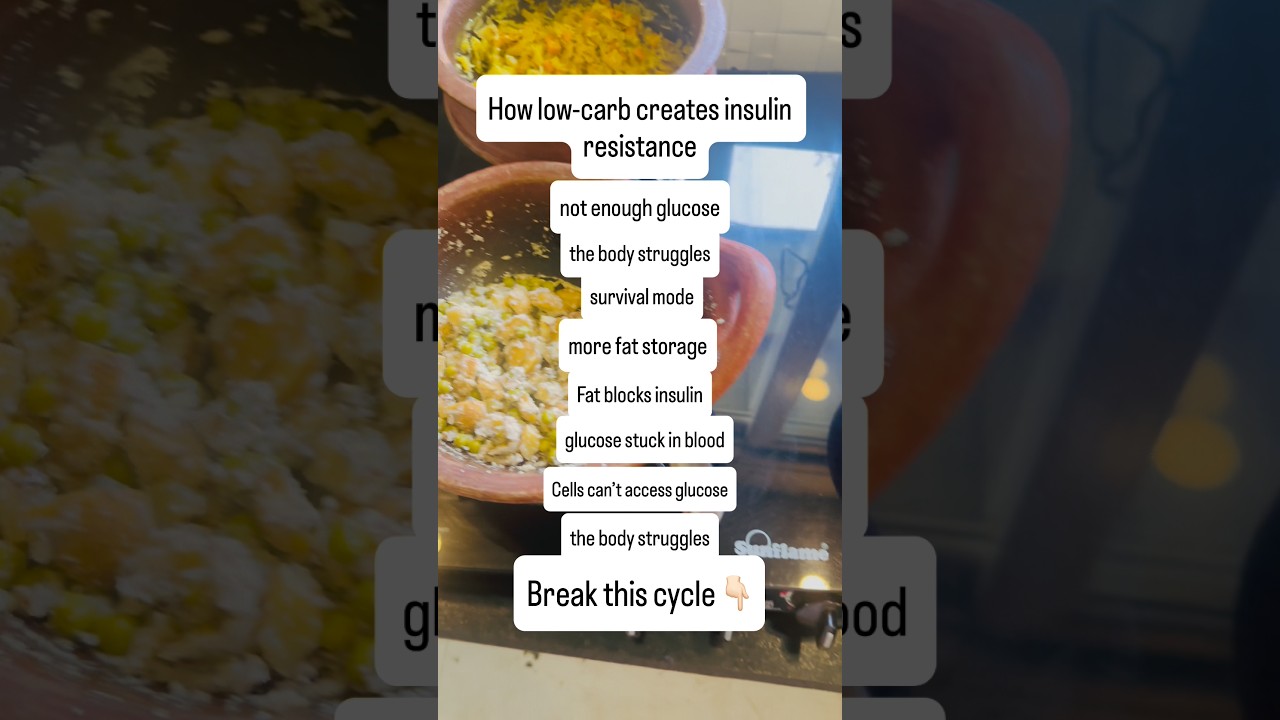
How low carb creates insulin resistance
Nidhikumari_healthcoach
1K views•2026-06-16



