This video debunks three common myths about psychopaths and substance use: (1) Psychopaths are too cold and calculating to become addicts, but research shows they have significantly elevated rates of substance abuse and addiction relative to the general population; (2) Psychopaths only abuse stimulants like cocaine, but they are actually poly-substance abusers who gravitate toward dopamineergic drugs including heroin, opioids, and alcohol; (3) All addicts are the same regardless of co-occurring disorders, but psychopaths have distinct neurobiological differences in reward systems and may have a 'psychopathic protective factor' that makes them less triggered by drug paraphernalia and potentially easier to treat when removed from immediate temptation.
Psychopaths and Substance Use: Three Key Myths
Added:Hey guys. So, I sat down to record this video today and I randomly remembered this website called Ted Bundy Does Things. So, I think I came across this site for the first time when I was working my nonprofit job. So, that would have been in like 2014 or 2015. And basically, the concept was that they imagined that Ted Bundy hadn't been executed and it was just a series of really poorly executed photoshops of future scenarios from his life. So there was one where, you know, he had gained like 300 or 400 pounds and he was on Oprah crying about uh struggling with his food cravings. Another one was him in Beverly Hills being like swarmed by the paparazzi and holding like a a you know Paris Hilton style teacup poodle that was dressed in a pink pants suit kind of deal. Like it was actually a surprisingly uh funny website. So yeah, drop a comment if any of you ever stumbled across um tedbundy things.com.
I miss the old internet. I can tell you that. So, to get right down to it, um the topic for today's video, which I find absolutely fascinating, is psychopathy and substance abuse and addiction. So, this is part of a series of videos I have planned on the interaction between substance abuse disorder, addiction, and different co-occurring mental health diagnoses from autism to cluster B disorders to bipolar disorder and a lot of other um you know, problems that commonly increase your risk of substance abuse and addiction. So, for today's purposes, um the definition of psychopathy that we're going with is a set of traits. And these traits include a lack of empathy, um shallow experience of emotions.
Oftentimes, psychopaths are associated with interpersonal manipuliveness, um with lack of remorse. There's also a big component of impulsivity for many psychopaths, of antisocial, so rulebreaking, um crimecommitting behavior. There are some other traits that are sort of associated with psychopaths, especially in the popular and artistic imagination. So if you think of like your Hannibal Lecters, if you think of, you know, American psycho, you know, you're thinking of the the grandiosity, the boldness, this very superficial charm and ability to tell people what they want to hear, to get what the psychopath wants. Um, promiscuity is another one that is frequently seen in male and female psychopaths. So psychopathy is a mental health disorder or problem that has a prevalence that's been estimated in the general population at between like 3 and 1% in the population. So it's not um likely that in the course of a normal life you won't encounter a psychopath.
It's more likely than not that you will meet at least one person who fulfills these criteria. So on that subject it is important to stress that like a lot of mental health conditions psychopathy is on a spectrum. people can have psychopathic traits without meeting the formal criteria of symptom breath and severity to actually be classified as psychopaths and um it is also it's not only on a spectrum but there's more than one axis to that spectrum and I'm going to talk more about um you know what I mean by that later when I'm dispelling these common myths about psychopaths and substances or psychopaths and addiction.
So again, I don't want to get too much into the definitional weeds because it doesn't matter for today's video, right?
But one thing that people commonly ask about is what's the difference between psychopathy and antisocial personality disorder? Colloquially often referred to as sociopathy. So, sociopathy was once referred to as secondary psychopathy.
And that was out of acknowledgement that there are a lot of similarities between psychopathy and sociopathy, but that there was this belief that psychopaths are born and sociopaths are most commonly made, usually by extreme um early life trauma, oftentimes combined with some genetic predisposition. Um so yeah that that was um the sort of traditional way of conceptualizing the link between the two in terms of modern diagnostics. If you take the antisocial personality disorder criteria which is the closest thing that we have to the colloquial use of the word you know sociopathy or sociopath that gets you mo most of the way toward defining someone as a psychopath. But there are some additional traits that psychopaths show that not all people with ASPD or not all sociopaths show. So if you're interested in these diagnostic um sort of you know gradations, I would really recommend I read years ago um this book called Without Conscience. And this book is by a Canadian psychopathy expert named Robert Hair who developed the revised psychopathy uh checklist that is used to diagnose and grade psychopaths in clinical practice to this day. And I recommend this book not because it's like a textbook. It's not, you know, overly heavy on the sort of very technical matter. It was instead full of a lot of anecdote, a lot of talk about what made um hair interested in studying psychopathy in the first place and a lot of stories about when he started studying psychopaths within the Canadian prison system. Some of his early experiences of him being scared, him being manipulated, him be becoming aware of these sometimes very benevolent and um you know very dextrously used psychopathic traits. So uh again the book is called Without Conscience. Um his name is Robert Hair. He is one of the world's foremost uh experts on psychopathy. And there's this one story that I want to share that I remember again even though I read this book years ago. Um he talks about how okay so he's doing a study on psychopaths in a prison system and of course the prison officials are extremely concerned for his safety. Many of these people have very violent backgrounds and there is legitimate concern that if he asks the wrong question, you know, something bad could happen. So they set up his interview room and behind him, so he has right behind him, closer to him than to the psychopaths he's interviewing, he has a button and he can press that button and every prison guard who is free will come running. Right. So he talks about how one of his first interviews was with this guy. I don't remember what this guy was in prison for. I don't think it was a violent crime. I think it was more like a series of um you know robberies and maybe some petty thefts and things like that. But um anyway, this guy would later go on to score one of the highest uh numbers on hair's psychopathy checklist and uh inventory that he ever remembered anyone he interviewed getting. And basically, he said this guy came into the room, he looked at her, he looked at the button behind him, and there was a note not to press the button because, you know, bad things would happen. And Harris said it was kind of like, you know, he literally just saw the guy's eye taking the button and then the next minute he would like the next second rather this guy was lunging across the table to uh you you know to press the button and this despite obviously you know this is probably not going to work out well for him. So this really made an impression on her because this was sort of an example of the perfect psychopath more than anything else. probably the the driving trait of most psychopaths is that limitless impulsivity, that unchecked impulsivity. And he said it was just as plain as day. could see this guy like he saw hair, you know, in the interviewer's seat. He saw the button and as soon as he saw the button, just like sometimes when you see a little kid getting ready to do something bad or a pet getting ready to do something bad and you know it, like he could see that, you know, his his neurons had fired this thought, you know, I'm going to press that button. And then he was literally in the air leaping for the button. like it couldn't have been more obvious that there was no barrier between seeing having the thought of wanting to do and actually doing. So in that example, it's kind of a a humorous sort of light-hearted example, but you can think about, you know, what if that thought had been, oh, I see this guy and for someone, you know, some reason I want to steal from him. I want to hurt him physically. Like then you can really see how sinister the lack of impulse control becomes. And again, this is all stuff that I'm these ideas I'm sharing now are things that I'm going to expand upon as we delve into the myths about psychopaths and substances um that I'm going to get into now. So, the first myth that I am surprised by the prevalence of is that psychopaths are too cold and calculating to become addicts. That addiction is somehow very not self- serving. That's true. It will destroy your entire life. It will in the end leave you um hurting so badly and so empty and so beereft of relationships and material connections that it's hard to ever think that addiction could be a self-s serving thing that you would choose to do. But anyway, um you know there's this myth that psychopaths are too cold and calculating. They wouldn't allow themselves to fall into the trap of addiction because it would limit their ability to manipulate and to gain the goals that they care about. and um you know basically to be effective in other domains. So first of all this couldn't be more wrong on the um whole.
So if you look at psychopaths as a general population their rates of substance abuse and addiction are quite substantially elevated relative to the general population. Now a lot of these myths are like yeah they're not true but there's some truth to them. And this is that you know with with nuance in a certain limited way of considering things there's some truth to them. And this is an example of such a case and I'm going to explain what I mean by that right now. So as I said psychopathy it occurs on a spectrum. It is a a disorder marked by levels of severity like almost any mental health condition. Um a disorder marked by you know increasing levels of dysfunction and antisocial behavior in a lot of cases. But it is also a disorder that is commonly regarded to manifest along two dimensions or two axes. So the first of those is the factor one axis and factor one psychopaths are high in that callousness that not caring that emotional detachment. Okay. The second axis or axis rather the second of the two axes I should say is the impulsivity and antisocial behavior axis. So that one has more to do with your ability to restrain yourself and how many crimes and other antisocial behaviors you're tending to commit. Okay. So there are psychopaths who score one on factor high trait who score high on factor one traits who um also do not score particularly high on factor 2 traits and vice versa. Now there are severe psychopaths who score high on both factor 1 and factor 2 traits. But um so if we are terming the people who have high scores on factor one say as factor one psychopaths and the ones who have high scores on factor 2 traits as factor 2 psychopaths. So the factor one psychopaths the callous and emotionally detached um psychopaths actually have a lower rate of addiction relative to the factor 2 those really impulsive antisocial psychopaths. And in fact, in some studies, those factor one psychopaths have been observed to actually have less problematic use of alcohol and other elicit drug use compared to the general population. So there is some evidence that if you score high in factor one psychopathic traits without high factor 2 psychopathic trait scores, you might actually be at a lesser risk of addiction and substance abuse than the general population. So that is a really interesting uh distinction and this goes to psychopaths having uh discrete subpopuls that behave differently and that may maybe even have some different um neurobiology and who might need to be treated in different ways in the future down the line when we hopefully have you know more effective treatments because the truth is we don't have many effective treatments for psychopathy as things stand. So, when you're thinking about psychopaths and substances, I have really tried to get my head around this for this video. And if you think about the key traits, again, that impulsivity that in general, you can think of a model of behavior as like a very basic model of behavior would be seeking reward and fearing punishment. And very pure psychopaths have a very high um desire for reward and they have a very low fear of punishment. It's almost like one of those like old school like Roadrunner cartoons where there's like something that I don't know the cartoon character wants, you know, on top of a boulder and in order to get that they have to take this stick out that's propping the boulder up, but as soon as they do that, the boulder rolls onto them, right? It's almost like the perfect psychopath would be someone who would knock that stick out from underneath the boulder even though they would be crushed in the act of seizing hold of what they wanted.
Right? So if you think of psychopathy as really wanting what you want badly and not really caring so much about um punishment, the psychological term for that is delayed risk discounting. I should say not caring so much about risk and punishment. So again, delayed risk discounting and less punishment aversion. Um compared to someone who doesn't have a mental health diagnosis, addiction makes a lot of sense, right?
And there's another aspect to this, which is that like addiction makes sense when you realize that psychopaths aren't commonly particularly happy being psychopaths. You know, if you think about what most of us uh finds meaning in in in our lives, like you know, a lot of what it boils down to is interpersonal connection, which is something that psychopaths struggle with famously severely, you know. So they often psychopaths often um struggle with chronic boredom and emptiness and that ends up leading into sensation and pleasure seeking which is going to be a theme of the video as we look at other myths. Okay. So because of that, you know, you can see how that would very easily lead into um substance abuse that gets problematic and then eventually into addiction because again, if you are not put off by risks and you really want to feel better and your natural state in combination with that doesn't allow you to feel very good as a baseline, substances are going to have like a siren call for you. So uh you know in general psychopaths have a a significantly elevated risk of substance abuse and addiction again relative to general populations. Now what's really interesting is that almost all of the research on psychopaths is um self-contradictory.
When I read these studies, you often find studies that refute or, you know, qualify or limit um the claims that you find even in some pretty accepted um sort of like often cited studies about psychopathy. And one thing though that I tried to do is I went on like subreddits where psychopaths share their experiences or people who have psychopaths who are diagnosed in their lives share their experiences. And one thing that I found mentioned again and again that I didn't find um mentioned in the research is there seems to be this idea among psychopaths themselves and among people who have dealt with psychopaths in their own lives that um psychopaths tend to be either like as far as substances go, they tend to be either like very serious abstainers or very severe addicts. there seems to be very little in the middle, you know, as far as like moderate substance use or even moderate problematic or addictive substance use goes. I ran into that uh idea again and again in these sort of like anecdotes that I was reading about again written by psychopaths or people who know psychopaths. So there does seem to be just from this ane data some truth to the idea that like you know you as a psychopath you probably either have a severe substance uh abuse problem/addiction or maybe not any substance use at all. And one thing to remember as I'm talking about the different factor one and factor two subpopuls of psychopaths um is just that psychopaths too are people. You know psychopaths too are in addition to being people they're individuals. So, it's not like you can just use someone's degree of psychop psychopathy to predict whether they're an addict or not. You can't even use their their factor one or factor 2 um ratings to predict whether they have substance abuse problems or not. Like there are a lot of things in your family makeup, your religious upbringing, your socioeconomic class, just a million things. your own beliefs and values that you have. Even though you're a psychopath, like those things all influence your attitude towards substances. They greatly influence whether early on in your life when you're developing your key coping mechanisms. You tend to turn towards substances. And so there is a huge element of individuality here. As much as we can talk about trends, we can talk about disorders and subtypes like people are people, psychopaths are people. And because of that, there's a lot of nuance here and a lot of individuality.
So to summarize myth one, psychopaths are too cold or calculating to become substance abusers and addicts.
Absolutely not true. Now the second myth is I think one of the most prevalent and probably for me it was one of the most interesting to look into. So the second myth is that psychopaths only abuse certain substances and specifically stimulants, typically coke. Cocaine is the one that people associate with psychopaths. Now, this dates back to a very old theory of cortical under arousal as a cause of psychopathy. This idea that psychopaths wander through the world with not enough brain stimulation of certain key um pleasure and reward centers. And because of that, they gravitate toward dopamineergic drugs, especially toward ones like coke. And they also have an affinity for these substances because cocaine, for example, famously accentuates many psychopathic traits like glibness and superficial uh grandiosity and superficial charm. Those are all accentuated by coke. Um confidence, fearlessness, risk-taking.
Again, all coke sort of like aggravated behaviors I would call them. Coke also would sort of re reward the psychopath with control, with power, with excitement. So this one, this myth does have some truth. There are some associations between psychopathy and between coke use specifically, but it's a case of, you know, possible confusion of correlation and causation because cocaine can also produce psychopathic traits and psychopathic behavior. So, it's a hard one to unravel and the truth is that um there are also yes there are high rates of psychopaths addicted to coke to meth to the key dopamineergic stimulants or I should just say the key stimulants the powerful stimulants right but there are also surprisingly like a very high rate of psychopaths who use um heroin and other opioids who use alcohol okay so it's certainly not just stimulants but if you had to sort of like um characterize the substances that psychopaths gravitate toward very simply. You would one say that they are more likely to be poly substance abusers to use many substances rather than just to be very devoted to one substance and two that they care about the dopamineergic drugs. Those drugs that are very addictive that produce very high rates of stimulation of the pleasure centers like the nucleus encumbent and the lucas locus rather cerolius. So you know th those drugs that are like coke, meth, heroin that elevate that dopamine in your brain by hundreds of percentage points relative to constitutive secretion of dopamine um in rel you know relative to when you you experience some natural reward like say sex or good food or whatever um behavior does it for you. Right? So there is some truth to the association of cocaine use with psychopathy, but you could equally associate um heroin use, opioid use, and alcohol use with psychopathy. So it's certainly not an exclusive or a particularly like strong and sort of um you know uh notable association. So, one really interesting thing that I thought about when I was researching this second myth about which substances psychopaths prefer is I can't think of a famous psychopath, whether a criminal or someone who is regarded as a psychopath who wasn't known for being a criminal who was very into psychedelics. And I think there are a couple reasons for that. One is that these substances like psychedelics tend to famously in increase looking inward introspection. A lot of people use them in search of personal growth. We can debate all day about whether anyone actually finds that through using psychedelics. Um but the fact is a lot of people take mushrooms and acid trying to understand themselves in the universe better and trying to grow. And you know, I'm wondering if if a if a very highscoring psychopath, very pure, for lack of better terminology, psychopath were to take um like like a powerful psychedelic. If that psychopath would get really uncomfortable either by looking inward and seeing with clarity like all of the negative traits that they have and seeing with clarity those really important traits as far as what most people care about that they don't have their lack of ability to connect their okayess with hurting other people in some instances. Like it might be that that is just like that's you know unpleasant for them. might also be they're just not interested in that kind of introspection. Again, they walk through the world in this kind of um under stimulated state. So, they just want what's going to give the dopamineergic kick. They're they're not uh too impressed by the sort of like mind warping effects of psychedelics.
So, if you can think of either someone you know or a famous documented psychopath who you know was had an affinity for psychedelics, um please let me know. I'm really curious about that.
I was trying to think if there would be like a Jim Jones type cult leader leader who would um possibly use like you know um psychedelics like to help manipulate other people and to fuel say religious uh you know religious sort of like manipulation but I I couldn't think of one. Jim Jones himself was on all kinds of addictive dopamineergic pills like barbiterates and amphetamines. So yeah I just can't think of an example but if any of you can please chime in.
Okay. So, the third myth that I'm going to get to now is one that is often repeated again and again and again in 12step programs. And it always bothers me because they say, you know, we're all the same. An addict is an addict. And if you're a 12step person, you're probably going to qualify that. You're going to tell me that I'm interpreting the way that people say that in the meetings wrong. That it has more to do with stressing how we're all in the same boat and stressing how we should avoid terminal uniqueness. you know, thinking we're different, so we can't or don't need to get better. So, I know there are some caveats to the addict is an addict thing, but it also seems before I get off on a huge tangent, it also seems that people have this uh sort of like um this idea about psychopaths that once they become addicts, it doesn't matter that they're psychopaths. Like, I read one technical source that said your dopamine receptors don't care whether you're a psychopath or not. like you know when you take heroin you're going to have the same sort of pathway through which you become addicted and in the end you're going to end up in a very similar neurological and cognitive and emotional state to any other addict and this is not really true. Okay. So there are significant differences in terms of how psychopaths end up as addicts and you know like so how they get into substance use I mean how they get into problematic substance use and addiction and also how eventually some of them get out of it.
So, for example, psychopaths don't often get into substances to self-medicate.
You know, um they're more often sensation in stimulating stimulation. I cannot talk today, guys. I'm so sorry.
They're more often uh you know, rather than self-medicating, their sensation and stimulation seeking. So, um there's a difference in initial motivation and that certainly would play a role, for example, in what treatment would work for you down the line. for example, likely. But um there are also some neurobiological studies. So for example, some brain imaging studies that show that the brains midbrain and lower forebrain reward systems are set up differently in psychopaths compared to the general population. So for example, there are several neuroiming studies that have found that individuals high in psychopathic traits exhibit this increased dopamine release when they are anticipating rewards such as again food, drugs, sex. They also in some cases have shown hyper reactivity of those reward systems that they are more psychopathic reward systems are more sensitive to this dopamineergic release and then because of that they tend to go back to it um more and more often with increasing like desire levels. So they very quickly become caught up in that addictive uh cycle. Um there are also specific pleasure center areas like I mentioned the nucleus ccumbent earlier and there is a study that shows increased nucleus incumbent activity in psychopaths in relation to dopamineergic uh rewards. So there is some different brain chemistry here and I am sure that it it causes a a slightly different or maybe even substantially different experience of addiction both you know subjectively from within the psychopath and objectively in terms of clinical signs again treatment efficacy and things like that. So there's a really interesting finding in regard to this like how is psychopaths experience of substance abuse and addiction different from how your quote unquote normal person would go through substance abuse and addiction. And one of the findings is that psychopaths are less triggered by images of drug use by drug paraphernalia images um relative to again addicts from the so-called general population. Okay. And that is also um sometimes linked with a finding that when psychopaths are suddenly like locked up or otherwise end up in an environment where they can't get their substance of choice that it has been observed that many psychopaths have what seems to be a much easier time giving up their substances of choice that they were addicted to compared to other addicts. So this has been called the so-called psychopathic protective factor with regard to um addiction and it is thought again that this is something more prevalent among factor one psychopaths. So people who are high in terms of traits like call uh callousness, shallow emotions um rather than factor 2 psychopaths who are really impulsive and high in antisocial behaviors. So it seems that those factor one psychopaths have a certain immunity to what we call negative a effect states. So like stress and anxiety. Um so her in his book famously talks about how a psychopath is someone who never leaves their house and worries like oh crap did I forget to lock the door or oh crap did I leave the stove on. So, those factor one heavy psychopaths, um, they seem to just experience this this they don't really get eaten by the stress and the anxiety in the way that most of us do, especially most of us addicts do.
And because of that, they may have an easier time getting off of their substances, especially once they're removed from immediate temptation compared to again your average addict.
So, that can mean less withdrawal, less cravings, and that kind of thing. So again, I can see some pretty clear, albeit theoretical, um, implications for which kinds of treatment might work better for psychopaths versus non-csychopathic addicts and things like that. But for now, these findings are preliminary and they're just kind of interesting points about how, again, an addict is not just an addict. All kinds of co-occurring disorders affect how you get to addiction, what happens to you once you're there, and how, if ever, you get out of it. So we need to pay attention to these these differences because oftentimes I think good treatment acknowledges and sometimes even centers these differences. So again there is a psychopathic protective factor. There is at least one subop of psychopaths that seem to suffer less when they're getting off of even very very addictive substances compared to the general population of addicts. So again just really interesting stuff. So those are the three myths that I have um for today. I'd like to know in closing maybe a general fourth myth which is that psychopaths don't suffer. You know we're we're to this sort of um enlightened modern mental healthheavy or at least mental health dialogueheavy existence where you know we don't like to be hateful toward people. You know we want to understand people who are antisocial who act in ways that might make it hard to have sympathy for them.
And I think like psychopaths and narcissists are two of the very few remaining exceptions. They're two of the few remaining groups that we are in not encouraged but a sort of like given allowance to hate. And I think that that is such a mistake because this world is full of people who know that they have psychopathic traits, who want to be better, who see how it holds them back, who do not want to um, you know, who don't want to like embrace their bad qualities, which we all have, you know, we all have toxic traits. And yes, it's a matter of degree. Yes, it's a matter of how much are those toxic traits amenable to change if we if we try to change them. But there are many people in the mild to moderate psychopathic categories who are able to work on um you know being less harmful and toxic and to cultivating empathy and building relationships and even sometimes to leveraging the good things about them, the the good things about them to for example be very successful in business, in the military in in really environments where sometimes you have to make cool decisions and sometimes that's for everybody's good and you know at the same time environments in which the average person might struggle a lot to make those decisions. So just a final note because I hate to take any group and just like you know you know just sort of like kick a dog while it's down and you know contribute to the social piling on. So I love you guys. Thank you all for listening if you got this far.
Um I'm going to release an update video soon. Long story short, I'm doing better, but part of the reason I'm I'm a spazzed today with not speaking well and stuff is because I am basically in, you know, withdrawal. So, things are going in the right direction and they're going really quickly in that direction. But because of that, I am suffering a bit right now. So, if you like this video, please let me know. Please, you know, comment and let me know if you have any questions or any ideas for future videos. I love you guys so much and I will see you soon.
Related Videos

Inside Ronaldo’s Team Meeting
RonoSphereCR7
1K views•2026-04-17

You Are Not So Smart: Chapter 4 Hindsight Bias, What is it?
TheBey8nD8
230 views•2019-09-15
Sigmund Freud's Mind - Master Your Inner World (Your Unconcious Mind)
Ngaslife
1K views•2025-01-25

What affects your mood?
RandyPaterson
602 views•2019-05-16
Can you outsmart this logical fallacy? - Alex Gendler
TEDEd
2164K views•2019-11-25

Understanding the Relationship between Fear of Falling and Mobility in Older Adults
fallpreventioncommunityofp3788
823 views•2019-04-08
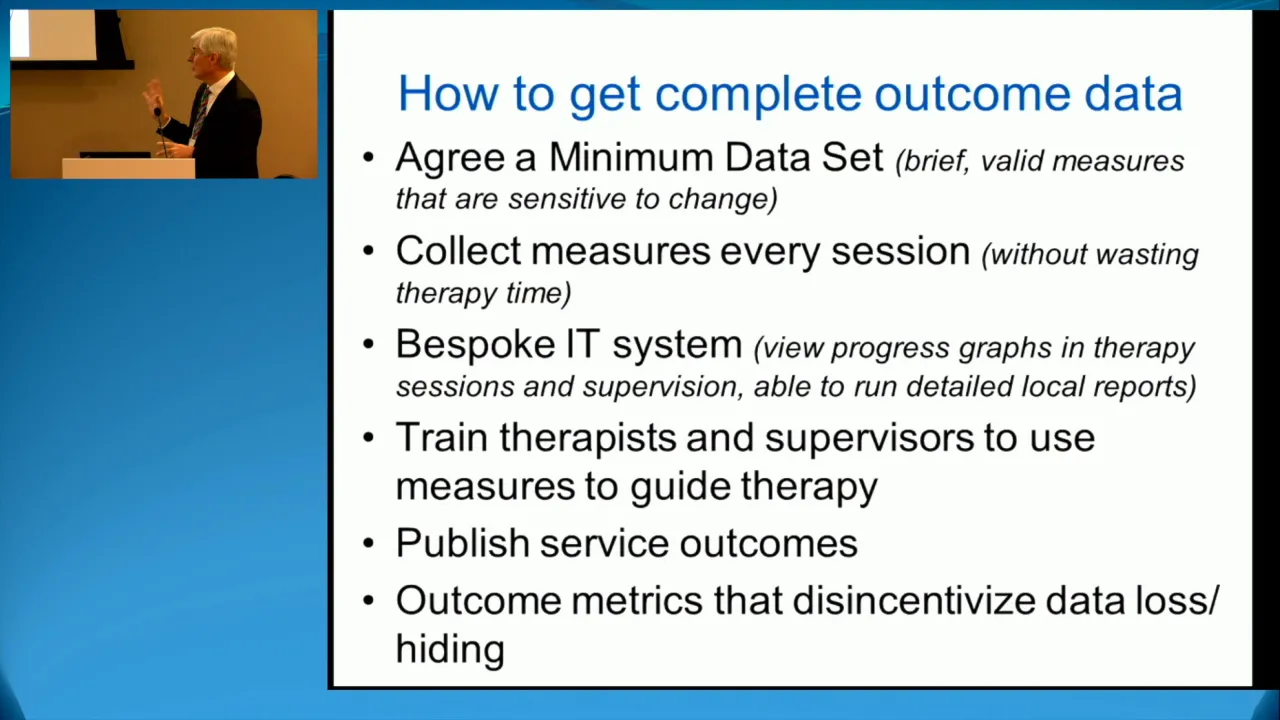
Measurement-based Care in Psychotherapy Workshop - Future of Psychotherapy Conference 2019
UofTPsych
243 views•2019-04-25
Dr. Carol Tavris — Mistakes Were Made (But Not by Me)
skepticmagazine
14K views•2019-05-02
Trending

Ben Crump dealt MAJOR BLOW after His Own Nolan Wells Autopsy FACT CHECKS him
DeVoryDarkins
50K views•2026-07-23

Gremlin Arrives… While Dorothy May Takes Another Step Forward
The-moons
10K views•2026-07-23

Trump War Chief SCREWS UP by Posting Video Leading Judge to ORDER an EXPLANATION!!!
LegalAFMTN
110K views•2026-07-23

Playstation NO DISC/NO BUY Fight Is Over...
DavidJaffeGames
4K views•2026-07-23