Ononeze masterfully deconstructs the linguistic architecture of racism, exposing how racial labels were engineered as political tools rather than biological truths. This is a vital intellectual exercise in reclaiming identity from the fabrications of colonial history.
Install our extension to search inside any video instantly.
Foreigners In South Africa, A South African And A Nigerian Conversate
Added:Hi ninjas, how are you doing? It's a girl or I'm in the natural aka Miss Pearly Queen back for all entertainment.
As always I'm joining you on this Divina local. Please do make sure that you subscribe and see hit the bell. I absolutely love you. Now my ninjas, you guys know all the shoots we shoot at Mo Panda Studios located in Midrand. If you'd like to start your own podcast or you've got any videography thing, okay?
Make sure that you do contact Mo Panda Studios and if you also want to upgrade your home and you're looking for new curtains or blinds, make sure that you do contact Drop Here Luxury Curtains and Blinds. Now my ninjas, we are here today with Mr. I have to read the surname.
Which hair? On Ononeze.
>> Ononeze.
>> Okay.
>> [laughter] >> Welcome.
>> Thank you.
>> Okay, [clears throat] so Mr. Uche guys is the author of this book that I have in hand here. You aren't black or white, one human race and equal um an equal societies.
>> Yes.
>> Okay, so before we actually start with the video, I would like to just know who is Mr. Uche.
>> Uche Ononeze.
>> Yes.
>> [laughter] >> Yes, I had the privilege of being a former SA to the first president of Zambia. That is Dr. Kenneth Kaunda.
>> Mhm.
>> Yeah, before his demise.
>> Okay.
>> So I came into South Africa in 1997.
>> Wow.
>> Yes.
>> Okay.
>> So it's my experience of racism in South Africa that inspired me to to write the book.
>> Is it?
>> Yes.
>> Um and then origin, where are you from?
>> From Nigeria.
>> You're from Nigeria.
>> Yes.
>> So, you said you were the SA. What is >> Former special assistant.
>> Oh, former special assistant to the president of >> Dr. Kenneth Kaunda.
>> Okay.
>> First president of Zambia.
>> Okay.
>> On Africa consciousness.
>> Okay, and which year was that?
>> Yeah, from 2004 up until the time he passed on.
>> Until the time he passed on.
>> Yes.
>> Okay, so when you held that position, were you still in South Africa or were you staying in South Africa?
>> Here in South Africa, also going to Nigeria. We are doing programs >> Okay.
>> Yes.
>> Wow, 1997. That's a very long time ago.
I was 7.
>> 7 years.
>> I was 7 YEARS >> [laughter] >> WHEN YOU ACTUALLY CAME TO SOUTH AFRICA.
>> IMAGINE, you know.
>> Yeah, that's a very, very long time ago.
Okay, I mean, you know, you are saying that your your book was inspired by your experience with racism >> Yes.
>> in South Africa.
>> Yes, I did.
>> So, now I think before even we get into that, what inspired you from moving to moving from Nigeria to South Africa?
>> Okay, I think um you know I recorded all that in the book.
>> Mhm.
>> So, telling you all that, I want people to read my >> You want people to read >> to get the reason why I came here and that's 1997 and then my experience of racism, like I said, inspired me to write the book.
>> Mhm.
>> Because that experience made me to realize that what ended in 1994 >> Mhm.
>> was political apartheid.
>> Mhm.
>> The racism was still alive, you know, so and uh that inspired me to write the book.
>> To write the book. Okay, so now um ooh, I don't know now cuz I don't know uh what questions I'm going to be able to ask. I mean, even if it's something that is in the book, you can just give us just a little summary, not like the full the full uh thing cuz obviously we still do want people to go and uh you know, buy the book.
>> Yes, I want people to read the book to to find the book and so my coming here, like I said, and I experienced racism.
>> Mhm.
>> And that inspired me to write the book and uh to understand even racism.
>> Mhm.
>> You have to look at uh the historical origin of uh the concept of whiteness and blackness.
>> Mhm.
>> Because uh actually that is the root cause of racism.
>> Mhm.
>> Unknown to many.
>> Yeah.
>> You know, so and then um it's I mean um a historical fact that uh Africans never referred to themselves as blacks >> Mhm.
>> before uh they came into contact with the Europeans >> Mhm.
>> for the first time.
>> Mhm.
>> And uh that is that was before the transatlantic slave trade.
>> Mhm.
>> Europeans never referred to themselves as white either.
And then also Africans.
Uh we had the French, the British, the Spanish and all that. They never referred to themselves as black.
In other words black and white race never existed.
>> Mhm.
>> You know, before uh the transatlantic slave trade.
So uh it was actually uh designed to dehumanize Africans.
>> Mhm.
>> I mean, the and white labeling was a fabrication uh for uh that was designed for two reasons.
One, to justify the unspeakable atrocities of uh slave trade.
And um uh they had to label Africans black.
>> Mhm.
>> And uh also to refer to Africans to distinguish between the enslaved Africans and that of the Europeans.
>> Mhm.
>> You know, Irish were also the Irish people were also enslaved about the same time. And then to distinguish between the Irish slaves and the enslaved Africans, they labeled Africans black and then Irish white.
So, and uh this particular day the first articulation of this concept of blackness and the whiteness was done by a Portuguese writer by the name uh Zurara uh de Mes.
>> Mhm.
>> You know, so and his work was even commissioned by the Portuguese king.
And uh in that book he described Africa Africans as um beast-like, uh inferior, anything evil.
>> Mhm.
>> You know, so and then for the Europeans, he described them as uh uh superior, uh god-like, and uh everything good and all that. So, that was uh really um a social construct.
And that is what actually uh uh the root cause of racism.
Because before then uh the concept of whiteness and blackness uh mean, race never existed.
Africans never uh referred to themselves as blacks.
We had um the Ibos, Yorubas, Hausas, and then Zulu, you have uh Xhosas here.
>> Mhm.
>> The the Sothos and uh the Hutus, I mean, in Rwanda and other. So, Africans never referred to themselves as uh uh blacks.
>> Mhm.
>> And then the question is who labeled Africans black?
And for what reason?
>> Mhm.
>> You know, so it's for this very reason that I mentioned for two reasons.
To justify the unspeakable atrocities of uh slavery, they had to label Africans uh blacks.
>> Mhm.
I mean, I I think, you know, since you you are saying that you've been in South Africa since 1987, >> Yes.
>> I would assume that um you've spent majority of your years in South Africa than in any other country.
>> Yes.
>> So, my questions will mostly be based in the experience that you faced, you know, in South Africa. Would you say that um you have experienced a lot of racism?
>> Yes.
>> From white people?
>> From white people.
>> Um >> Even though I don't call them I don't refer to them as white, they are Caucasians.
>> from Caucasians?
>> Yes, or European South Africans.
>> Okay.
>> Yes.
>> So, that's for all white people.
>> Um you know, people think that every Caucasian is is is a racist. That's not true.
>> Mhm.
>> You know, uh it's I mean, it's right to say that they are beneficiaries of um whiteness.
>> Mhm.
>> You know, so but they are not not all of them are racists.
>> Yeah.
>> Because I've been relating with uh quite a good number of them.
>> Mhm.
>> And then also, if you look at history, uh during the civil rights movement in US, they had some Caucasians.
I mean, European Americans who supported the civil rights movement.
>> Mhm.
>> Yeah, and then also I will also take you to the Nigerian Biafra Civil War.
Uh a Caucasian, >> Mhm.
>> an American, you know, had to set himself on fire >> Mhm.
>> just to draw attention to to protest against the genocide that was going on in Nigeria at the time, you know. So, and uh just to draw the attention of the world in front of the United Nations building in US, he set himself on fire. A Caucasian.
What business has he with I mean uh an African? So, that's to tell you that they are not all racists, you know. So, the concept of um whiteness and blackness was really a social construct, you know, that was designed to serve a particular purpose, which is to dehumanize Africans and uh you know, so to promote white supremacy.
>> Okay, so actually the question that I was asking was when you say Caucasian South Africans, like basically what I was saying all of them it means every single Well, we call them white.
Every single white person you refer to them as Europeans as Caucasians.
>> Oh, okay.
>> also say the Europeans who were born here, you can refer to them as European South Africans.
>> Okay.
>> rather than saying they are white people.
>> Okay.
>> such thing as black or white race.
>> So, you don't consider yourself black?
>> I'm not a black man. You are an African man. I'm an African. And then you can say I'm dark-skinned, but I'm not a black man. You know, so because I know.
>> Mhm.
>> And that is why anyone that if you refer yourself as black or white, if you see yourself as a black person or a white person, you need this book >> Mhm.
>> to understand that you there is no such thing as black or white race.
>> Mhm.
>> You know, so and then the first experience the main one that made me to that inspired me to write the book was when I came here I got involved with Caucasian lady. That is an Africaner girl.
>> Okay.
>> You know, so and um I mean we even traveled to Nigeria.
>> Okay.
>> so she spent 1 month in Nigeria. My people accepted her by the name Susan Van Resburg.
>> Mhm.
>> You know, so my family accepted her. So for us to come here >> Mhm.
>> and then break the news to the her own family that we are settling there like to get married and all that.
So they the the mother her mother's prejudice towards me made me to to call off the that arrangement.
>> Mhm.
>> You know, so we separated because of that.
I now married I mean a fellow African. She also married a fellow Caucasian. You know, so and we later after many years we also came together. Then she she she was not lucky with her marriage and all that.
She had an abusive relationship and all that.
So but we met and uh we reconciled, but not that we we started again. No, we are not involved again and all that.
So, she told her her kids everything.
All that transpired between us and I acknowledge that it was racism that separated us and all that.
Yeah, so I still relate with her kids even up to today. Though she's late, you know.
>> Oh, she passed. I'm I mean I'm sorry for, you know, her loss, you know, your loss. Um so, then would you say the book is inspired also by the love interest, obviously, that you had?
>> Uh also to I can say that, too.
>> Mhm.
>> [laughter] >> Somehow, but that was not only the the the experience.
You know, I experienced that different places at different time. I mean, racism.
>> Mhm.
>> Like when me and her we now when we will go to restaurant uh you know, she knows everywhere that myself, she knew places and she would make a booking for us to go reserve seat for two.
When we when they realized that her partner was a you know, an African, you just see them behaving somehow.
Before you know it, they will just come back to you and say, "Oh, we are sorry.
We we we are fully booked and we are sorry." Yes, it happened a couple of places.
>> I mean, around what time was that?
>> About the same that No, that that that was 2000.
>> Okay.
>> 2000, it was still, you know, that. So, and then also finding a house, too. I experienced that. You make call like that time, I don't know if it's still happening now.
>> Mhm.
>> When you need you want to let let a place, you look at the the side of Swetan or classified style newspaper.
There are the place the the called the classified. You go on the classified, you get to let houses and all that. So, you take the numbers, take down the numbers, place calls. After calling, only, you know, you'll find they will tell you that the the place I'm sorry, the place have been taken and all that.
[laughter] >> Mhm.
>> I have I've all I mean, they're all in the book.
>> Yeah.
>> So, and when she does that by herself to do the calling, you'll find that that the the whole place is still available.
>> Mhm.
>> You know, so we had similar experiences here and there.
>> Um I mean, I would also just like to ask, did you feel like maybe you were even more extra discriminated of because not only were you just an African man, but you were an African man not from South Africa as well?
>> No, I don't I don't think so.
>> Did you feel like the same treatment that you were getting could have been the same treatment that would have been received by a South African?
>> Any any any South African, yes.
>> isn't >> It I mean, that that's was obvious to me.
>> Mhm.
>> Yes.
>> That it was the color of your skin.
>> Yes, yes. That was it.
>> I mean, as you did say that you're married, but after you did call off the the wedding, was there ever a part of you that regretted that decision and wished maybe >> the whole of my life I regretted because she told me, you know, when I did that >> Mhm.
>> that she was sincere to tell me about her mother's prejudice towards me.
>> Mhm.
>> But she she was never racist herself.
>> Who? The mother?
>> Herself. Herself.
>> And she was telling me that look, she was above 18 then, that she has the right to take a decision that she wants me and all that and that she was right about me and sure about that.
I said no, I'm from a culture that don't just get married to it's not just the marriage is not just between the two you know individuals.
>> Mhm.
>> You carry your families along.
>> Mhm.
>> Uh my family would not be happy to hear that they have a racist in-law and all that. So, those were things I considered.
And you know one question she asked me that I still that made me to regret that decision after you know many years was when she asked me this question.
What is what is different between you and my mother?
What you're doing is the same thing. You know the mother said no because I'm an African.
And now I am saying that I wouldn't want to have her >> Because her mother >> Because of her mother's distance towards me. And at the same time my I me now settling down with an African lady it means you know I'm also racist somehow.
>> Mhm.
>> You know meaning that I internalize that.
You know so I think that that is where the regret you know came from.
>> Um outside you dating a you said Caucasian >> or European South African >> um had [clears throat] have what other I mean obviously other than the fact that you are going to see certain things because again as you say perhaps maybe she she will make a call over the same thing and she will get a yes and you will get a no you know with the the same thing but did you experience racism out of the union that you had had with her?
>> At other places yes.
>> Mhm.
>> Yes. That's just what I said.
You know at different places.
>> Mhm.
>> And those were things that I just put them together to say no, it is important to to, you know, >> to speak about >> you know, to talk about that because that will resonate with a lot of people as well.
>> Mhm.
>> You know.
>> No, definitely. I mean, I think it's also like um a reality that I can't even relate to because I've never been in a relationship with a Caucasian.
>> Okay.
>> Um so, I've never actually seen that but I mean, I'm 35 years old now, you know, um and I grew up in Venda.
Um I won't lie unless if maybe I just forgot right now.
I I've really never experienced racism and I think that even if racism was happening cuz I'm sure maybe perhaps it has, I wasn't even aware because remember, you only know what you know, you know?
However, I'm sure if I grew up and I had like white I mean, Caucasian friends and everything, then I would maybe perhaps see these things like differences in terms of treatment or maybe perhaps she calls and they're like, "Oh yeah, we're going to reserve a table." You get there and all of a sudden, "Oh, it's full." I mean, if I'm getting there and they're like, "It's full." I'm like, "Oh, okay, it's full." [laughter] And you know, just go to to, you know, the next one, another place and stuff like that.
Um when did you write this book?
>> Yeah, um that was 2023.
>> 2023 when you started writing?
>> Yes, putting it down.
>> And okay.
>> Yes.
>> And it just went printing.
>> Yes.
>> Is it? Okay. So, I mean, um I find it to be quite fascinating, you know, of the fact that um you're a Nigerian man talking about racism and not xenophobia.
>> Okay.
>> Right. Um I think that it's a it's a fresh take. Okay.
>> I have also experienced that myself.
It's also in this book.
>> Actually, I I don't people call it xenophobia.
There's no xenophobia in South Africa.
South Africans are not xenophobic. Okay.
You know what I what I did experience was actually Afrophobia.
>> Okay.
>> Yes.
>> Okay.
>> And then this happened not even now.
People think this thing just started now. It has always been there, you know, like uh I experienced it around uh 2004.
>> Mhm.
>> You can imagine. And then I think it was President Mbeki that was in power at that >> But before I'm so sorry to to to enter you going to share your story. I would like for you to differentiate for us, right?
Um through your own definition, what is xenophobia and what is Afrophobia?
Because I feel like people kind of mix the two. Yes.
>> Yes, when you when you talk about xenophobia, you that is prejudice towards people like uh foreign people >> Okay.
>> in in your land, foreigners and um So, you you are you have that phobia.
>> Okay.
>> And then you you feel threatened by their presence in your in your place and all that. But that is not the case here because if it's xenophobia, then you will see Indians being affected, Chinese being affected, Europeans, Polish. They're all here.
>> Mhm. Brazilians, they're all here.
>> Mhm.
>> And they are not affected, you know, so >> Okay.
>> And you have also Caucasian students studying in the universities here, but you have African students having issues.
>> Mhm.
>> Having their passport being delayed. I mean, permits or that they are struggling and um So, it's not xenophobia.
>> Mhm.
>> It is Afrophobia because this thing affects only African nationals that are in South Africa.
>> Okay.
>> You you know, so and they cannot call it. And then there's what Make no mistake.
A majority of South Africans are not Afrophobic.
>> Mhm.
>> It's because these ones are loud and then people government have not done you know, they've not done enough to to stop it. That is why it appears that every South African is Afrophobic. No.
>> Mhm.
>> My wife is a South African.
>> Mhm.
>> And then I have a lot of South Africans in Nigeria. That's one thing that people don't even know.
>> Mhm.
>> These same people who are doing this, they are unaware that South Africans are all over Africa.
>> Mhm.
>> South Africa has a community in Nigeria.
Do you know that?
>> I didn't.
>> My wife is a member of that community.
They relate. They have businesses.
>> Mhm.
>> I can tell you now I I'm not encouraging that my wife you know, travels to Nigeria. Nobody from the day she steps in, from the airport, is our wife. You know, they just receive her. Nobody will ask her anything about paper.
You know, you are just a Nigerian.
>> Mhm.
>> As long as you're dark-skinned, you're an African, you are a Nigerian. And you know, nobody bothers to come and start You know, that I'm not saying it's not good to document people.
>> Mhm.
>> Yes, also let's be clear the concerns.
They are genuine. They are genuine concerns. Uh you know, if you talk about uh uh um uh people uh what they are complaining about.
You know, but the only problem is the approach.
>> Mhm.
>> The method. You don't uh you cannot take laws into your hands. South Africa is not a failed state.
It will only make sense if you said to me that South Africa is a failed state.
>> I would definitely say boldly so. South Africa is a failing state. It's not failed yet, but it is definitely going to failed. Like um quick, very very fast. Um for me, I mean, honestly, South Africa is it's a failing state as it is right now. We do have um you know, states in other countries that we would say failed. Like for me, this is my opinion, of course. I do feel like Nigeria is like a failed state.
Looking at everything that is going on Nigeria, the kidnappings, everything.
You can see there's no security. There is, you know, the economy is very bad.
If you just look at like the naira, you know, it has collapsed, everything. But South Africa is not a failed state.
However, it is a failing state.
>> Yes, I mean, it's not perfect anyway.
>> Mhm.
>> in US and all that. So, you can you know, you have when you say the sovereignty belongs to the people.
>> Mhm.
>> Once you change the the the the government, I mean, you have the right person. The institutions are still there. It to me, I I won't tell South Africa has one of the best constitution in the world.
>> And yes, >> So, it's just a matter of having the right person there to to do I mean to do the needful.
>> I think that South Africa has the best constitution in the world. If you know a South African, if you are a South African, we actually I in my opinion feel like we have the worst because our constitution does not um advantage South Africans in South Africa. That's my opinion, you know. Um and even those laws that are there um that are not really enforced, which now goes back to the the failing state, you know. Um I I honestly just feel like Africa on its own is just a a failed almost continent. I do have issues with Africa in general and I think um yeah, South Africa for a South African, we we definitely see South Africa in two different sides. It's like a six and a nine, you know. You see it on on your side. I I we see it on our side, you know. I mean, I was I I made a video on Tik Tok about this and I was saying, uh you know that things are bad when South Africans come out and go to the government and say, "Hey, protect us from illegal foreigners." And the illegal foreigners go to the government and say, "Hey, protect us from South Africans." So now, how do you even go about the situation? And I think that's when we go into the failed or failing >> failing state.
>> state, yes.
Mhm.
>> Yeah, and then um the issue of uh migration is is not just uh South African problem. It's everywhere in the world.
>> Mhm.
>> It's part of what Nigeria is also experiencing that you have people coming from Niger and then they this Boko Haram and all the terrorists who are coming, they are not Nigerians.
>> Is it?
>> Yes.
>> Boko Haram is not Nigerians?
>> They are coming from Niger to to attack Nigerians.
>> And then the bandits >> These bandits, they are people coming from all over. When you talk about the Fulani terrorists group, not just the Fulani You know, that's another thing. You can't generalize. You can't say every Fulani is a terrorist.
>> Mhm.
>> But those Fulani terrorists, they are coming from other neighboring countries to terrorize, to kill Nigerians.
>> I thought that the the Boko Haram is Nigerian.
But then, I mean, I saw I forgot his name. He was saying that the bandits are part of us.
We I forgot his name.
>> the those people are just they're just being politically correct.
They're politicians and they have their Naturally, they are the ones sponsoring You can hear from from that submission. He's one of those who are sponsoring the terrorists in in in in Nigeria. You can have somebody say that terrorists, you you know, somebody that have killed people and you are saying that they are your brothers. How?
Do you know it's an insult to even the people, the families that have lost their loved ones?
You know, you have law. When you kill, you face the the the I mean, in Nigeria is death sentence when you kill.
>> Mhm.
>> They They those people should supposed to be going to the gallows. You are not supposed to talk about How do you treat those people, people that are killing innocent people?
You know, killing indiscriminately and you are talking about them being integrating them into the society.
Anybody that says that then you know that he is one of the problems.
You know, so like again, this book will also tell you that um when you say Africa have a leadership problem, yes, we have leadership problem. But it does not mean we don't have people who are capable of running organized society in in in Africa. We have them.
We have whoever that is a role model, if it's Mandela or Kwame Nkrumah or anybody, we have millions of those people in Africa even today.
We have them.
You know, so they just are the system not allowing those kind of people to and then they themself uh seeing that as politics as a dirty game and that they don't want to associate or do that.
And then the problem you are like what Plato said that one of the penalties you have for not participating in politics is that you end up being governed by fools, your inferiors.
So it's not good for us to for people you the right people to stay out of politics because you have the bad people there.
You know, so that's why I cannot call any country a failed state because once you the sovereignty belongs to the people. It's just for the people to rise and then you know, take their destiny in their hands into their hands.
>> I mean, I think that um it it right now if let's say for [snorts] an example, Nigerians decided to stand up and they took their own firearms and they went to the bushes and hunted all these um bandits and they started you know, shoot shooting them. Um due to the fact that you are saying that they are not um in Nigerians, you know, they some maybe a lot are from Fulani's and from outside and then Nigerians now started being labeled Afrophobic, would you say that would be the case?
>> That Nigerians >> Let's say Nigerians right now. Look at the state at which Nigeria is in. You know, the kidnappings and everything. I think that's one of the biggest issues that Nigeria is facing right now, the bandits.
Um as you did say that they are not necessarily Nigerians. They are coming from like Niger and other places and they are doing that.
>> by Nigerians also.
>> Being sponsored also. Yes. So, it's it's almost like a working together, but you know your problem. Your problem is those guys that are from let's say this particular place. So, let's say now Nigerians decided that they too were going to take their own guns and they're going to go to the bushes and they're going to start just shooting them.
Um and then now, you know, as Africa because these are also fellow Africans, um people now start labeling Nigerians as Afrophobic.
Would you think that is a fair thing?
>> You see, that's that's a different I mean, the circumstances are not the same. You know, [clears throat] when you look at that of Nigeria You you you You know, the whole problem we have is the politicians, the political class that we have there right now.
>> Mhm.
>> What the people can do is to chase those people out.
>> But how >> To get rid of those people, vote them out and defend your vote.
>> So, you mean to tell me that cuz honestly, I I I truly believe in defend yourself. I mean, as you're saying that the the the system itself already just it works against the people. We have so many people that are saying we didn't vote for Tinubu. We don't even know how he even got there.
He's not Do you understand? You find that sometimes you go and vote and they votes are rigged, you know. They the same people that are ruling they still rule and they will still use you know, They will still use the state against the people. When the people try to go and say, you know what, we are going to to to perhaps like approach our own government to say, you need to change these things that are happening." I mean, the whole world is watching as innocent Nigerians are being massacred, you know? Um they they they use force police force.
We've seen police brutality and everything like that.
Would you advise somebody to sit with a gun at home and allow that person come in to shoot you? Meanwhile, you also as a community can organize yourself and go fight for yourself.
>> And let let with that Nigerian situation you know, that you've cited, I can tell you like we had a former head of state, Nigerian president, General Sani Abacha.
He once said that um any kind of I mean like insurgence, you have terrorism like act of terrorism uh that lasted beyond 24 hours, the state must be It means that the government knows about it.
>> Mhm.
>> So, let me tell you, Nigerian soldiers are one of the best in the world.
>> Mhm.
>> The history Go check history. You know how Nigerians participated in peacekeeping operations all over the world and all that.
If the right person comes on board, I'm telling you within 24 hours you will not hear anything about this Boko Haram, this I mean bandits and all that.
It's politicians. And then again, the problem is that they've weaponized ethnicity.
Tribalism That is the major problem which I also touched in this book.
>> Mhm.
>> You know, ethnicity is is even a bigger monster than all these things we are talking about. So, they weaponize it.
>> Mhm.
>> Now, you have the young people who supposed to know whose future are being marred you know, mortgaged by these people. Uh don't know I mean, you can see the people who are the running who are the hands of affairs in Nigeria today.
I mean they don't have much time you know it. Yeah, but look at the young people.
Instead of them you know uniting like they have subjected them to poverty that supposed to be their their their unifying factor. I mean poverty they supposed to unify the people.
You supposed to be the running point for everybody because a hungry man in in in in for example in Lagos is a hungry man in Abuja is a hungry man. So poverty is same everywhere.
That supposed to unify the people and they supposed to take their destiny to their hands instead of this politicians weaponizing ethnicity. You have the Eurobas being quiet.
And then because the person who is the who is there now is a Euroba >> Is feeling the heat.
>> You know he's a Euroba man and then because of that that sentiment you know comes in whereas you ask them This man being in power when you know you have you know the the best of our leaders that are there.
But just for you to vote when you vote and defend your vote this people will not do anything.
But when you vote and go They have to announce whatever they feel like and then they've been getting away with this.
But they were you know what they can do is after vote you still defend your vote.
By saying when they announce what you know that this is this was not the figure that like after voting at the polling booth they still announce the figures there the result.
When you now see them announcing something else in our budget. Why would you take it?
You're supposed to, you know, organize yourself and force those people out and say, "No, we cannot allow you. You are not our president. You did not win."
You know, so then when coming to South Africa here, the issue of xenophobia, you have that everywhere.
Like even in in in US, you have those people that call the the Is it the Ku Klux Klan? Those people that white supremacists and all that.
Those ones, they they're only after themselves. They don't like, you know, foreigners as well.
So, here in South Africa, is that not Let not make mistake to think that majority of South Africans are xenophobic. They are not.
I know that for a fact.
>> You know, um mhm.
>> So, few individuals, one you know, you talk about people doing one thing or the other. You go to I mean, like the borders, for example.
Uh those people there are not foreigners.
Mhm. They are South African immigration officers.
They have a duty to know to be sure that the right people enter the country with the right paper, the valid papers and all that.
Now, it is their duty.
So, uh when you strengthen that shortcoming, like to address that issue, you will not have this problem you are talking about. South Africa is a signatory to to I mean, international bodies, UN member state.
What they expect in government to do?
No government functions like that. No country is an island. You cannot do that. What you are doing here now, for example, I will just give you an idea.
This small shops they are busy closing here. If I tell you the trade between Nigeria and South Africa favors South Africa more than Nigeria.
>> In Nigeria?
>> No. I mean the the the trade balance the trade between Nigeria and South Africa favors South Africa because you have 100 and something multinational companies that are there making declining billions.
>> Yeah.
>> The money they repatriate into South Africa, the funds that people get like for social grant that you get.
Those funds are coming from the money that these people also pay as tax to South African government.
And the employment, there is a South African company as I'm speaking with you right now that you know that that does not have presence in Nigeria.
The office is here, but it's doing business in Nigeria.
>> I think you know >> creating jobs.
>> Yes.
>> The money they are making they are bringing here to employ South Africans.
>> Um I think also the one of the biggest and I I I love the fact that you know we're just having a calm reasonable conversations, you know, to say okay. Um you see like when you touch on spaza shops, like you know the small spaza shops that are being closed right now. Do you know that I mean you've been here for a very long time as well. South Africans have never had a problem.
Again, for the spaza shop business to be worth billions, it's because of South Africans, majority black South Africans. I mean Africans, right?
And now the issue that we have as South Africans, as you did say that South Africa doesn't have a xenophobic um a xenophobia problem. You feel we have an Afrophobic >> Yes.
>> problem.
>> But then now, if it is due to the behavior of Africans that makes South Africans not comfortable with them, then does that not show that the issue really isn't with South Africans? Because if South Africans really had a problem, we should just be having problems with everyone. Then why would the problem specifically be with Africans if there was nothing that Africans were were doing? I mean, there is this thing again that I I can say when it comes to spaza shops. You know that the Ethiopians have now established a mafia syndicate that is it's no longer even a secret right now. You try open a spaza shop, they come threaten you. If you don't close down, they will kidnap you and take your life. We had an issue with Mazwi. You know, if if there's one thing about Mach and Mach, even if it was that it was a failed operation, if there's one thing that I was and will forever be so grateful for is the fact that they saved a young man's life who was found kidnapped with two Malawians being the ones guarding and two Ethiopian or or or but we call them Abu, my friend. I mean, I I I I I I struggle to differentiate them, which I know it's not the best thing, but you know. And one South African. Do you understand what I'm saying? So, when it comes to situations like that wherein we know this information, we know at Home Affairs a visas are being sold, we know at Home Affairs um the people that are getting rich are the officials that are in there using corruption and giving out illegal documentation. So much has even come out now in details of how they will be doing it right from the border. A police officer that works at the border is richer than a doctor in South Africa. Make it that Make that make sense. Where are you getting all this money? Do you understand what I'm saying? So, as South Africans, we are also having an issue of We see where the country's going, and it's not a direction that we actually want.
Do you understand? And with with the actions, we have so We have so many syndicates that are are happening. It's just that, as you said, um in Nigeria, it's also political. We've had a drug issue for years in South Africa, and all this while we were like, "Oh, it's Nigerians." But Madlanga Commission, uh that just actually exposed that even our high-ranking officials are part of it.
Those are not foreigners. Those are also South Africans, but who are they working with? Do you understand? So, I think that's why I'm saying South Africa is a failing state. It's not failed yet, but it is definitely failing. So, as an as two Africans that are sitting, looking at the same coin from different sides, what do you think could happen for South Africans and Africans to unite? I think that's a a question.
>> Yeah. It You see, uh those Let me just borrow Malema's word. He said, "Those who who are destroying the world aren't taking a day off."
>> Mhm.
>> They're not even one day off.
And then, having that privilege to have uh worked with the founding father of Africa, there are a lot of privileged information that I had I have, you know.
And there's some classified and ordered.
I can tell you now that sometimes what you are seeing, you know, there are more to that.
>> Mhm.
>> You know, the people are being manipulated to behave in a certain way.
>> Mhm.
>> And then to misdirect them to do some other things. Whereas the real issues are there.
And that is where the problem lies. We don't have uh that problem like I said, that people would just say South Africans hate other Africans. No. This I still maintain because I know I've been here for a very long time. You can imagine you were just 7 years old.
>> Yeah. [laughter] >> 7 years old.
>> Yeah.
>> So, I do know for a fact that South Africans they are welcoming people. They are wonderful people. You have just this few individuals that are championing this. And even them, you know, they are not any any person that is really seeing this as the only way out.
I'm telling you is either you're being uh grossly uninformed or intellectually dishonest. Because there are people who are they know, but because they want to achieve a certain thing, they are the ones pushing that and they they want it to look that way. It's not the way it is.
>> Do you believe a country can can not even to say to its highest capacity um or capabilities function, but do you think a company can just be a high-functioning country? I mean, a country, right? Um with so many undocumented people.
>> No. You guys you guys need to document the people.
Uh but if you see that there are, you know, you don't know if it's what the system wants.
>> Mhm.
>> Like the government itself. One you ask yourself, like I just um I listened to one young guy.
He came in here with his parents when he was 4 years or something like that. He was just saying on TikTok yesterday when he was interviewed.
He said, "The only country I've known all through my life is South Africa."
>> Mhm.
>> That he applied for his He's doing his studying engineering with the vest, you know, if I'm not if I'm right.
You know, he's studying engineering with the vest. Then apply said he applied that there are even He has evidence like correspondence with the home affairs for them to, you know, for him to for them to renew his student permit and all that.
And then that's why he's now illegal here.
People like that, you know, they you you have a good number of them that came in here with the right document.
But to now renew to get papers and all that, the system is stopping them from getting that I mean getting the right papers. Those are people that are also classified as illegal immigrant. You know, so when you look at it, there are those ones who are here illegally.
Those ones, the system fish them out if they are doing they are not here for a good cause, the law must take its course. You do to them. But when what you are doing will now have to affect innocent people. That is where the problem lies. Like there's this Caucasian guy, you know, on TikTok that uh uh they asked him a question and then he addressed that. They asked him uh it was a South African that asked him that question. Now, why are you not saying something about the white immigrants or this uh He said, "No, maybe you should We love our white immigrants.
We want them to come here, more of them to come. Maybe you should learn to love your own."
You know, you can You understand what he's trying to say. So, it should It's not right for the world to look at South Africans. That's why it's not good to take law into your hand. As people who hate their own fellow Africans.
And that particular narrative out there is is destroying a whole lot of things for South Africans. That's unknown to the people who are even doing the match and match.
>> Mhm.
>> That There are companies You know, South Africa has a lot of companies. If you go to Zambia, every company that you are you have here is in Zambia doing business. Most of the time, they also have South Africans who are working there. I know a good number of South Africans I mean, native South Africans who are working with those companies in Nigeria and other African countries. So, what happens to them if they see that you kill their national, what you are doing to their citizens here?
>> Um [clears throat] >> The life of those ones out there, are we even considering that we are endangering the life of innocent South Africans that are in Nigeria at the moment?
>> I think that the you know, um just to answer like a few from what you you were saying is again, um it's it's for me. I I have stayed in the township.
>> Okay.
>> Um and I I stay in the suburbs now, right?
Um I know the life there. I I know the real fear and concerns that I used to deal with when I was in the township. I know to go and buy those expired food from the from from the Ethiopians that I'm supposed to look at as my brothers and sisters. Do you understand?
Yet they don't look at me as their brother, you know, because they're selling me expired food. They're selling me poisonous food. They're selling me food that even I they themselves can't consume. Do you understand? When a white man comes out and says that maybe you should love your brothers the same way that we love our brothers. Let me tell you something. Had it been that a lot of these a lot of illegal immigrants that are in this country stayed in It's the same thing as you are saying that, you know, in Nigeria tribalism is is a big weapon that is actually used. So if if if let's say for an example the Yorubas are quiet and the Ibos are the ones that are being attacked by the by the Fulani's, you know, somebody will sit and say, "But look at how Yorubas are so nice. They don't have a problem with foreigners in their countries." But people don't look at what are those Fulani's doing to the Ibos? I'm giving this as an example. So majority of the time white people stay in neighborhoods where you have got 24-hour security.
I have stayed where I stay. I've never had a single break-in. There are times where I've slept and I forgot to lock the door. My car is is unlocked. I forgot to lock and I'm safe because I can afford to pay for such security.
That is not a reality for majority of black South Africans. So they we we have people that have to stay in situations where you are sleeping and a your your brother from Zimbabwe is breaking into your house. Your brother from Zimbabwe is hijacking you. Your brother from wherever that is in Africa that is supposed to be the same color skin as you that you're you're supposed to consider them black or white. They're not doing that. How many people have actually said that, "Oh, my phone snatched by a white man or a Caucasian man. Or the rob it was a group of four Caucasian men that broke into my house.
So, our stories are so different. I mean, I did see that video of that man and I saw the comments and I was looking at it and I said to be honest with you, you cannot we may all be in South Africa. We don't experience the same South Africa.
I've seen celebrities in in Nigeria right now, you know, they they they are able to drive their big cars. They live I mean, I've seen Real Housewives of Lagos. They live extravagant more than even South Africans, you understand? But is that the reality of every Nigerian?
No, they can afford to take their kids to schools that have got like maximum security. They can afford to to have uh guards. They can even pay like people that have military training to guard them whenever they travel and all that.
But that's not the reality of the people that are actually there. And I think that the the whole ideology of of almost like trying to invalidate black South Africans and the experiences that we face in this country from our fellow African brothers and sisters is highly unfair and very much problematic because now it it makes it seem like the Caucasians just love each other and then the Africans especially in South Africa just don't like other Africans.
But what are those Africans doing to their fellow African South Africans that would make them say we are really not comfortable with this. I get what you're saying.
>> The the the the the the fact remains that one you cannot generalize. That is one thing that For example, look at me um and I I know a good number of my friends who are doing the I have a developer who is building a house is here.
>> Mhm.
>> And then how he has even helped South Africans and others.
>> Mhm.
>> And then you will you see me and then to match a match even the leader if he sees me now >> Mhm.
>> he will attack me without knowing you know you generalize this is totally unacceptable to generalize. So that is why it is you allow government to do the the the particular people that has the authority to do that.
To hold people accountable.
You cannot I mean you the law is so clear like if you arrest a criminal let him face the law. A criminal is a criminal all over the world.
Just like America for example America will not tell you to not to even the I mean drug cartels. They say bring it on. They are one step ahead of you.
They don't tell you don't because one they they arrested the cartel and all that the Nigerian happens to be one of them and all that then every Nigerian will be affected. No. He will still be having a Nigerian in his cabinet because he knows that one is not the same as that criminal.
So if we can build capacity it has to do with the government at the end of the day.
One [snorts] we must learn to hold our government accountable. That is one thing that Africa is lacking and that is the area the what we can do to solve this problem. There is no justification to just wake up and start and generalize and start doing you know this kind of thing to people.
When you have innocent people even in law there is a principle in law that it is it's it's better to free 100 criminals than to punish an innocent person >> Mhm. for a crime that he did not commit.
Somebody who is a law-abiding a citizen and then you you you subject him to a thing. I mean, what type What message are you giving out there? So, it's better to build capacity to get fish out those criminals and deal with them decisively.
>> The road, I think at at times, especially this point, is just too much.
You did I also wanted to say this. I did see the video you're talking about of a student who said that he's been here since he was 4 years old.
And honestly, like my my heart broke.
You know why? Because in a functioning state, he should already have his visa a long time. But, do you know why he didn't have his visa? They want him to bribe. Because our home of of affairs officials, they make it close to impossible for you to get your papers so that you bribe. Do you understand? And those are stuff that as South Africans we're fighting with because they will legalize a drug dealer over a student because a drug dealer pays. But again, it's South Africans and the government of course It's the government that's supposed to fix this, but the government is failing to do that. Africans as South Africans actually say, "We are going to help the government with the problem that is actually here." Because at the end of the day, he he is just he's one.
He's not the Like how can I say this? Um For sure for sure, I'm sure that there are many that are in this predicament. Do you understand? Do we know that We do know that. Do our government officials know? They do know about that. Is there anything that they're doing about it? No. And the system keeps getting worse and worse and worse because they keep legalizing people that are not supposed to even be legalized in this country. And the people that should be legalized, they are not legalized. So, now a student that is in bed >> studying engineering >> studying engineering, right? Been an asset in this country. And now they're telling him that in order for you to get your visa to study, you need 60,000 rands. In actual essence, you're telling that student to go commit crime. Because where is he going to get the money as a school child? That's what I'm saying. Do you understand now why we even have so much crime? We do have people that are foreigners in this country. I mean, again, they say there's no foreigner in Africa. But I'm just saying that they're not South Africans who [snorts] are not criminals, but due to the difficulty of everything, they are even forced into committing crimes and all this other stuff because of the rotten system that we have. But you see now what is happening. The Home Affairs officials are getting arrested. So many things are being discovered. The Madlanga Commission is there exposing everything.
It will get to a point where we clean the system to a point where really people that are supposed to get their papers will get their papers. People that are not supposed to get their papers will not because if you punish the Home Affairs officials, then they'll be scared to do that cuz you know that even if you give me 60,000, it's not worth me going to jail for 10 or 15 years. And what has Mach and Mach done? Mach and Mach has actually submitted the memorandum to the government that is holding or trying to hold the government accountable. I think one of the biggest issue that we also have in this country is um a crime problem. Every single country has a crime problem. You understand? So what is actually happening? What does the Because a lot of foreigners don't even take time to say, "Let me sit down and read what Mach and Mach says."
All that [snorts] they see is that they will say, "Okay, fine. There's Mach and Mach that was busy toying toying." And the next thing, there is there are criminals want to go and loot a shop, and they go loot the shop. But they're not looting the shop under Mach and Mach because if Mach and Mach goes against that, the leader of Match and Match says, "Do not loot any shop. Do not be violent against anybody. Do not this and this and this." And then you find people doing that. Why do you still associate them with Match and Match? Because they are off the memorandum of what Match and Match stands for and what it believes.
So, it means those are not Match and Match people. Those are just criminals that we are having in this country that are actually doing all those stuff. But again, as I said, the question cuz I feel like maybe you can be able to help me with this. What do you think can be done? Because clearly, like for us to say, "Let's leave it to the government."
We've left it to the government long enough. The government has been failing us. It's failing.
It's not failed yet, but it's failing.
So, what's supposed to now happen?
Especially as Africa, you know.
>> Yes. Yeah.
From that perspective, I can tell you like I mean, you have the government before they go into election, they do campaign and all that.
And they have manifestos.
You know, the promises they make to the people that we would do this.
We will strengthen this. We'll fight crime. We'll do all those things.
And then that becomes your contract with the government.
And when the government, you know, is voted into power and then you see that they deviate from that.
That amounts to breach of contract with the people. And the people have the right to now vote them out.
To vote that particular government out to now have the right people. If you've not given them that kind of You The sovereignty belongs to the people. Your votes are also counted here. So, that is where the people have the power to do things. If you have gotten to that point where you feel like, you know, it's a hopeless situation, you've complained and that You vote the government out and try another government. And then you see how they will do it because this one knowing that this is what you did to you know, the ones who were there, they will make sure that they they please the people.
Their service delivery will improve and all that. It's all about improvement.
And you know, in in all these areas. So, that's one thing that African government African I mean, the masses don't realize that the power is still in their hands.
I still say that to my people back home in Nigeria.
You you you like you allow them to weaponize ethnicity.
You are the one not knowing that your future is being mortgaged by people who have already spent their lives. And you are now allowing them. So, just do away with this ethnicity and make sure you get the right people. Go through the the people who have however how many political parties there. We have wonderful individuals.
Who can do better than some of the leaders you we know that we we we see as role models. They are there. But it's just this idea of us this they weaponize either religion or ethnicity.
>> Mhm.
>> You know, and that's why they are getting away with all those things.
>> I mean, it's so scary to think that a population that could be above 300 million >> Yes, you're right. I keep saying that myself.
>> be above a good 300 million is the worst living in Africa. Like Nigeria is supposed to be the giant. And looking at the number that is there and all this terror terrorism that is happening. Do you understand that even us as South Africans, as such a small population that as South Africans we're not even 100 million we would also be scared. And we you know, they say that um if you're intelligent, uh you know, you will learn from your mistakes, but if you're brilliant, you must learn from other people's mistakes. We see Nigerians have left it to the government. Do you understand? Like they've left it to the government. And it's an issue, and I think that's why like as South Africans we are also like, we copying from our big brothers. That one does not work.
Just leaving it to the say, no, let the government just deal with this. It's not because truth be told, even if it was just from the 300 million, 5 million Nigerians said we're coming together and we're going to the bushes and we're going to take matters into our own hands to protect our women and children. The bandits and the Boko Haram and all that, they would be disarmed.
And people would basically be safer. So, do you understand like I think that the statement that you said to say it's better to sacrifice to release one innocent man um for like a hundred >> Yeah, criminals.
>> the criminals. I highly disagree. Like I believe sacrifice one for the greater good.
Honestly, like that's me. Sacrifice one for the greater good. Because now when you say you're going to release a hundred criminals for one, then in H and I side, one criminal is going to terrorize like five each. You've now created a greater damage.
>> Do you know the the logic there? The the danger, like every government is preaching for their citizens to be law-abiding.
>> Mhm.
>> And now you have this one who is a law-abiding citizen.
And now you are not you know, you just generalize >> Mhm.
>> deal with that one. Nobody want to be law-abiding because this one, what did he get from being a law-abiding citizen?
>> Mhm.
>> You know, so that is the angle, you know, the law is looking at it. That that criminal you will still get them someday. You will still go out there to get them. They will do some other things. But when you are not sure that among these 100 people you know who who among them committed this and you are not sure and there is a good person among them there and then the law you have no no evidence to you know separate that person from that.
Instead of destroying I mean of them with that law-abiding citizen included you rather said no go. This one's going to do something again that they will be arrested and then we can get them.
>> So another person must be terrorized first for you to go and get >> the 100 that that I mean I do understand encourage the citizens to be law-abiding. Okay, take for example US can go to war because of one of a citizen. They go somewhere to rescue you know their citizen during the process you see them shooting down their aircraft and all that and all people will die to rescue that one individual. You know there is a you know reason for that a spiritual logic for that particular one because you want to tell them that any any way any day you know you are we are protected and the government will always be there for you. That's that the message so that >> I I think also like as we are about to close I I'm just so interested in this aspect of We see a lot of Africans coming to South Africa. I mean you've come here since 1997 and a lot of people really do come here for greener pastures you know.
Some come for stability many different reasons why people are inspired to to come.
Do you understand? Um Do you somehow feel like the African governments have >> [snorts] >> are failing their people to a point where they've even accepted failure to say, "You don't need We don't even need to work on our country. Just go out. Go to America. Go to South Africa. Go to Canada. It's fine.
Like, just go."
Because I don't know how to word this, but for me you know there's always this thing of go home and fix your countries.
That's what a lot of South Africans will be saying. Like, go home and fix.
Yes, go home and fix your countries so that your countries can be fixed, right?
Um Would you Do you think that the certain thing as oh, you know, Afrophobia or this xenophobia that people keep talking about, which we both agree that it's not there, would be present had it been that the standard of living in South Africa was the same living standard in Nigeria?
>> You you know, even I can tell you there's no part of the world you go to you will not see Africans and all that leaving their various countries to be there and all that. You know, people like to explore, go out, not necessarily because of their country not being good or something like that.
And then I will also accept that Africans we have that leadership problem. We have that. And that African leaders have failed Africans. African Union I also failed Africans. You know, they've not done anything to improve the lives of the people.
So, but you see, I want to also take you back to during the liberation struggle here.
You have ANC setting up camps in different African countries, especially in Zambia. I I I had the privilege of getting that information from my boss, Dr. Kenneth Kaunda.
Uh who conducted me around to see places where ANC people used to be and all that, organize themselves doing things.
And from there, what were they doing? To organize to launch back to come back here to fight, to keep on fighting. They say, "Who who who fights and run?
You know, we live to fight [snorts] another time."
And all that. So, something like that.
Going out there, not really that you are just going to look for greener pasture just to be there, you forget your country. For example, there's one mistake that people think that when you are giving Nigerians papers here, everybody want to be a South African citizen. Do you know, you can imagine, I I came into this country since 1997, but I've never applied for citizenship.
I use my Nigerian passport, I'm proudly Nigerian.
Use that passport, I apply for When I went to Europe from here, I it was my passport I applied for visa here in Pretoria, I got it, traveled. Went to do I travel with the permit that I have.
I'm okay with that.
So, it's not everybody that wants to be a South African citizen. It's not everybody. You know, so that's one, you know, mistake that they think. Like you see, December March and March uh is on one hand you hear them saying only illegal immigrants undocumented.
You hear them in another uh uh this thing talking again that every African they they should leave, whether you have document paper or you don't have.
>> I've never heard.
>> I have I will send that clip to you.
>> Is it?
>> Yes, it more like talking from both side of the mouth.
>> Is it but not the the the president?
>> The leader himself. The the guy. He said it. I will I will I will get that clip and send to >> So the the leader of March and March is actually Jacinta. It's a female.
>> no no no no no.
>> Yeah, so they >> from her words also, you know, you can also deduce from her words that she's saying we want you all go there.
He's not She's not asking for papers.
Like that Ghanaian guy.
>> that when it comes to Jacinta, I can say that because I follow her.
>> Yes.
>> Um she does say that only illegal uh immigrants um should be the ones that are actually going.
>> consistent. She said that in you will see here that but in another uh place like where she confronted that Ghanaian.
>> Mhm.
>> It was not about the paper. He said, "Why are you here?"
>> So that's not her.
>> people should go.
>> I think that's the problem. People actually confuse because remember there are different groups.
>> Yes.
>> There are different groups. So the group that you saw there that's not March and March.
>> that was saying that we don't want you here.
>> No, that's not Jacinta. That's not the the leader of March and March. No, they're different. That's not Jacinta.
Remember we had the Dudula movement. We have got There is also this other one.
Those That's not March and March. Um you know, so with the others I wouldn't know because I actually do follow March and March. I do follow the leader which is Jacinta. It's not the same people. So I think that you know, as a woman, if I just go to the streets and somebody comes with their phone and I say, "All foreigners should go. We don't care whether you're documented or you're not documented. That's going to be taken and they're going to say this is what Match and Match stands for. And that's why I'm saying misinformation.
If people actually took their time to say, "Let's go through what Match and Match stands for, what they are saying."
You will realize that there is like what they're they're they're saying there, there's nothing xenophobic or Afrophobic about it. If you're not illegally here, you uh you then you shouldn't be here.
If you're legally here, but you're here on a visitor's visa, but you are opening a shop, that makes no sense. They are asking like we know that there's been a lot of corruption in the at the Home Affairs. We have a student that should be having his study visa that doesn't have, but we have a drug lord that has got permanent residency. How is that actually happening? And yet these valid questions that are being asked, people choose to take clips from different people and make it as, "Oh, this is what No, that's not what um Match and Match basically um stands for." Yet everybody just generalizes and they keep on saying that is the same. So the group that approached the the the Ghanaian man does not That is not >> No, it's not Jacinta. Do you understand?
And you see how misinformed a lot of people are.
>> a big bull It is a being blown out of proportion as well.
>> who the leader of >> You know, the clip I will send that clip to you. I remember the face um that person looks like her to me.
>> Okay.
>> so where she is saying she was pointing like this and telling the person, "Why are you here?"
>> Mm, no, that's not what they're saying.
>> That they want all everybody they should go and go back and face your country.
>> Yeah, that's not it.
>> All those words, if you are using that word, is no longer the issue of undocumented you know, immigrants and all that.
You are now generalizing in what you don't want you are making it now look to be now Afrophobic because it's now you don't want Africans.
>> But yeah, that's not that's not the one.
But the other issue again that I also have is, you know, on TikTok, on Facebook, on all these different platforms, you'll find videos of mostly Nigerians, you know, either they're stuck in Libya, you know, now they're being auctioned off as slaves in in Libya, or they're stuck in ocean, you know, they're waiting to be rescued, or others are even traveling through the desert, you know, with all the dangers that are there that I mean, I'm a South African and I know about those. Clearly, the people in Nigeria know about that, but they still embark on journeys like that wherein it is literally a 50/50.
You can make it, you may not make it.
>> [snorts] >> How bad does it have to be in order to get to that? And when do you think it's time for Africans to stand up and say cuz as a African, it breaks my heart.
You know, imagine like sitting and I'm watching there's a live, you know, they have children like you see they've got infants actually, you know, stuck stranded in ocean and everything. And I just feel like as Africans, we're not having the conversations that we should be having cuz it shouldn't only just be about South Africa. It shouldn't only just be about Nigeria. It shouldn't only just be about anything. And I think that the whole thing wherein it's used as or tribalism, it's also used as I don't I look at a Nigerian as my brother. We are Africans, which means I will relate to you more than I will relate to a Caucasian. If I was to get into a group and it's it's it's Caucasians and it's Africans, I will approach an African because for some reason, the color of my skin, I will feel that I I I relate to you.
>> Oh guys, I'm so sorry, but we did have an issue with lights.
Uh we have load shedding right now.
Uh, so yeah.
I forgot where we were. Do you remember?
>> Okay.
We have a >> were supposed to be talking about the book. Like, the conversation got taken over, I should say.
>> Yes.
>> Yeah.
Um, but okay. So, please let me know what would what should one expect uh, from the book in the book?
>> Okay.
>> Mhm.
>> Uh, the book uncovers um, that is the book you are Black or White by its name.
It uncovers the lies that have been purported against humanity for over 400 years.
>> Mhm.
>> You know, that uh, you would uh, we have black and white race. There is no such thing as black or white race.
You know, so it was actually a fabrication that was designed to actually dehumanize Africans and to promote um, uh, white supremacy.
>> Mhm.
>> So, the concept of whiteness and uh, blackness is the the real cause of racism.
>> Mhm.
>> You know, for example, um, if you ask any child around you, uh, what is uh, the color of the devil?
That child would tell you black.
>> Mhm.
>> You ask again, what's the color of uh, an angel and Jesus Christ?
>> Mhm.
>> That child would tell you uh, white.
>> Mhm.
>> Then you ask that child, what is your color? I'm sure that child will also tell you, I'm black.
>> Mhm.
>> Do you know what you've done to that child?
You know, so um, meaning that that child shares the same physical characteristics as the devil.
>> Mhm.
>> That's what you said indirectly to the child.
And then the the the black and white labeling has really conditioned the minds of Africans. The African child is being subjected to uh psychological and emotional indoctrination to believe that uh the Caucasian child is superior to to her.
If she he or she shares the same characteristics physical characteristics as the devil.
And then you indirectly saying to that child that you know, she is uh inferior to the Caucasian child.
>> Yeah.
>> You know, so then you you you you you can see that there is uh the black and white labeling has uh uh psychological social psychological and economic implication on Africans.
You have uh Africans now believing that they are black. They have accepted the baptism of being black.
>> Mhm.
>> And uh which is not supposed to be so and the African scholars have never countered that. They have never challenged that.
And uh it's important for Africans to start telling their story. I'm not a scholar, you know, and uh an academic I am not.
But my story I know it will resonate with uh many and a lot of people have experienced that.
And then these lies have been purported against humanity that you know, you have black and white race.
The book uncovers that.
Uh it is important for anyone who sees himself he or herself as um black or white it is important to read this book. Then you will know that you are neither you are you you are not black. There is no such thing as black or white race.
You know, so then coming to South Africa, what we were saying earlier, the philosophy upon which South Africa was founded by Mandela [clears throat] and his contemporaries was rainbow nation, the philosophy of rainbow nation.
I can tell you that South Africa is deviating from that. The strength of South Africa lies on that philosophy of rainbow nation.
You know, that is unity in diversity.
But, you you still have racism today because they've deviated from that.
Placing the interest of the rainbow nation above every other interest.
That will be the strength of South Africa.
You know, like for example, if a particular party is not doing well, you have you have you not supposed to have what you have today. ANC is supposed to have a mixture of Caucasians and African every, you know, I mean, culture to be there.
But, you still have DA having you know, separate going to their separate parties and all that. They want to remain Caucasian. And then ANC, you have other parties and all that. But, we are in situation where you have people going to if you feel that these people have you know, their their manifestos and their ideologies what you know, you believe in, you you join.
And then you vote to you vote a person not because of the color of his skin, but the content of his character, who that person who who is that person. What that person, you know, Uh, you can compromise with uh, I mean a qualification.
The person who is better placed to be there should be there. When you have people doing that, putting sentiment aside, you will see that things will change.
You will not have a situation where you will just people will compromise, do things because I want to favor my from favoring my skin color, you will favor your tribe.
It gets to tribe, it gets to nepotism and all that. So, this is one problem that Africa is facing.
It boils down to the rest of Africa, where you have ethnicity, where you have religion.
Uh, you know, it's a problem.
>> Yeah.
>> So, if we can do away with all this sentiment and look at people based on who they are, not because this person is from here and then the name, you will generalize and label people and start this. You can't have the right ideal society that you are looking for.
>> Mhm.
>> You know, so the book also mentioned that there is a chapter that talked about the rainbow nation.
>> Mhm.
>> And other things that my experiences here, the issue of Afrophobia, like I mentioned that is not really xenophobic.
>> And besides, I'm so sorry, I had cut you cuz I know that they're going to kill me.
>> Mhm.
>> But on us, you did say that you did experience Afrophobia >> Yes.
>> in 2004.
>> Yes.
Okay.
>> [laughter] >> You know, um, uh, actually, I I established a media company called AU Media.
>> Mhm.
>> And then I had um, uh, South Africans employed in there.
It was just like mini Africa.
>> Mhm.
>> The Congolese, Nigeria, Zambia. But mostly I had more of South Africans working with me in Pretoria.
>> Mhm.
>> So we started with the the magazine publication called AU magazine.
>> Mhm.
>> So I had a South African lady that was working with me and uh now uh when the media was launched in a colorful ceremony that all African ambassadors were present. What do you say? Senegal sent even representative. Uh the Egyptian president sent you know somebody to represent. So it was a color It was so colorful and uh after that launch only for this South African lady to approach me demanding for stake that she wants to have stake in the company.
>> Mhm.
>> I said to her, "Do you know Do you have money to buy to pay for your stake?" She said, "No, that she does not have any money and that she does not have to put money. That she's a South African."
And that that I need her in the business. I say, "Yes, but you you have to allow me to be the one to choose. You don't know who I want to bring in to the business at the moment. I don't have problem bringing in a South African, but then you cannot just say you have to give me time to do that." I asked her to tell give me time to think about it.
She could not wait.
You know what she did? She came back to me again and say, "You see, it's like you don't want to do that. I can tell you it's only a phone call I can have you, you know, closed down."
I said, "What How do you mean by that?
What do you mean? You know, so I told me I said that was not possible.
How? And all that. He said, "You are a Nigerian." She She She used those words for me that you are a Nigerian.
You know, so I I did not even call it anything. I saw it as just an empty threat.
You know, so I did not think about it.
But believe me, this lady left two weeks, three weeks.
We are not seeing her around. One month we are not seeing her around. The next thing, companies, uh South African companies, uh government agencies, uh Pan South African language board, Freedom Park, you know, they were our major customers, advertisers. They were advertising SAA, you know, so they started canceling their ad, pulling their advert from our from the publication. So, I tried I, you know, we we couldn't because you know what sustains media. You are a media. Uh advert and all that, so you know, so it became serious that we couldn't pay salaries and even to our bond and all that, so we we had to close down.
But then we tried to I mentioned that in the book.
You know, we tried to take I was advised to take uh to court, take the government, you know, those things for all that, but it was even a Caucasian professor of law that advised me, "No, he will not even charge. He wants to uh take I mean, after the judgment that he will take his money from the money like it's an opportunity for me to make money." I discussed that with Dr. Kaunda himself and um he advised me uh not to do that. That AU division of AU was just to showcase Africa positively to the rest of the world as against the negative report that uh uh the Western media, you know, do give uh Africa and all that. So, and he said, "No, for now, you can just uh close down the business. Uh with time, you will reopen it." So, and that was what I did.
>> Mhm.
>> So, what do you call that? It's not the whole South Africans that did that to me. Uh it is that one single individual.
And the one who supported me in fighting happens to be a South African also, uh Mr. Sello. Sello was the managing editor of the magazine then.
She tried to also push Sello, but Sello refused.
So, that's also bring to my mind um Bob Marley I mean Lucky Dube's song when he said, "Not every black man is my brother. And not every white man is my enemy." You know, so when you look at it, that's why it's not good to generalize.
I still stand on that decision that you cannot generalize.
Uh build capacity to fish out those criminal elements and deal with them.
Let the law uh take its course. But when you have to affect generalize and then uh you know, do things in a manner that you will be seen like the way what they are calling uh South Africans so from everywhere you hear that, but that is not true.
I can I also said that in in an interview in Nigeria.
They tried to hear about because I presented also this in Nigeria and they were they tried they tried to know what about this xenophobia going on in South Africa then they are claimed by saying no things are being blown out of proportion.
You know, there are people who are behind all this. I know it's politically motivated. I you can't I know that because of my background I know that.
So then because you have the few individuals that are allowed then those who are not happy with this they are not saying anything because their voice are not being heard and they are busy.
Then you think that every South African uh all that even my wife will go to places and there people say no I don't want you you South Africans we don't like I said no you don't say that.
My wife is not Afrophobic. She's not one of She has never been and all that. So then I will now educate them and let them know that no it's not that this is what is happening.
>> But now within those communities um do they know that their brothers and sisters are committing crime in South Africa?
Not them but their brothers and sisters. What I mean is that isn't it we have different communities? Let's say maybe because you're a Nigerian you will um resonate or maybe mingle amongst like Nigerian community or any community of like you know Africans that are not South Africans that are not from South Africa.
Do these communities know that you know we have a syndicate of Ugandans that is love scamming women. We have got a syndicate of Nigerians that are into drugs. We have a syndicate of Ethiopians and Somalians that are spaza shop mafias. We have a syndicate of Zimbabweans that are hijackers and breaking in and cable theft.
Do these communities know the atrocities that their fellow brothers are also committing in this country?
>> Yes, I can I can tell you that uh the uh people's attitude towards that they still, you know, pass the ball to the government.
They still tell you like in Nigeria, for example, I was in Nigeria when the colored guy was uh arrested with the drugs at the uh Lagos Airport and all that.
Nobody Nigeria, you know, they they they want the law enforcement to do their work.
They cannot wake up and say, "Oh, South Africans are bringing drugs here. They are doing that." They want to handle that thing individually, those people that are doing it.
>> But do you think it would be a different conversation had it been there was like a million South Africans in Nigeria selling drugs?
Think about it in that >> Yes, if they are doing >> Because I think that also um the quantity matters as to like let's say a the number of people involved. So, let's say a million South Africans in Nigeria were busy there selling drugs.
>> Okay, another thing you you don't look at the media and then, you know, what people are saying and all that about things. You deal with statistics, the facts.
>> Mhm.
>> When you look at what the police report that at time, you know, about those convicted for drug dealings here and then doing other crimes.
They they they those statistics they say different thing altogether.
Then you now know that these things this uh well the narrative is not you see people saying all that, but you still have government A functioning government will want to deal with facts.
>> We know police that are also working with drug dealers, so they're never arrested.
>> They >> never even make it to the state. They work with them. You know what they do? I mean, maybe you don't know. They fetch money. That's the only thing that they do. They know that that is a drug dealer and it goes with levels. The higher ranking you are as an official, you go there, you you talk The boss will talk to the boss and then they they they these ones that are holding lower ranks will talk to the ones that are selling. So, I think um I think again, it's six and nine. From your side, it will always be a nine.
From my side, it will always be a six.
But, I I pray for a healed Africa.
That one day, we can all just be brothers and sisters and there is no party that has to suffer for that relationship.
Do you you know?
>> we have not to not one day. The point is like I said, it can only get better. For example, you know these problems yourself. Just imagine if you are Ramaphosa today, you are you know, you you are the president of the country.
Are you going to do things the same way he's doing it?
Are you not going to look at these issues, you know, fight corruption, make sure you do the right thing?
So, that is why uh because of my background, you know, it may I find it difficult to allow to justify non-state actors to take laws into their hands. To start I know what that will take you to. It will be anarchy all through.
When they finish doing that they will start to you feel some people again. Tribal There will be tribal war again. They you you have created a monster that will come up and say, "Oh, no, you you you are from uh cuz you are from this He becomes a problem. He becomes endless. That's a situation where you avoid it. You still have to look at the people that has the mandate to deal with this.
If [snorts] they are not doing it, it amounts to breach of contract with the people.
You vote them out. You make sure that there are other people, not sentiment.
You forget about this ANC thing and this and that or you look at who do you think that would do this? You put that person there and that person would give you what you want. That's the solution.
>> we do vote them out. Corruption.
Africa is corrupt, right?
>> power since that that that >> Julius Malema came out and he said that he won the election of I can't remember which and then he was saying that something happened. I saw this clip. But all I'm I'm just simply saying is that anyone right now, honestly, that is able to vote, like a South African that is able to vote, I doubt. I mean, I don't know, you know, um majority of us Well, anyway, let me not encourage them >> Encourage them to >> I I encourage them to vote, but as I'm saying, I don't I just don't see somebody still putting their trust in the ANC looking at how it is. Even as it is, foreigners that are in this country that are not doing bad, that are doing good, they also live in fear because security is also just such an issue. And as foreigners, you have to fear thieves.
>> Yes.
>> And on top of that, you have to fear our corrupt law officials. Do you understand what I'm saying? When we know, like those stuff where in they they they just do however they break the law. They are on the road. Recently we had that issue of the the the Caucasian man that had to go defend his African worker who a police officer had taken 2,000 rands from.
>> You you see.
>> Do you understand how bad things have actually gotten? Those And if you look at it, South Africans we spoke down upon that. That's not what we stand for.
That's what we're trying to fight. We don't want that in our country. But now it it it's in a way that I was even sitting down looking at it and I'm saying, if all illegal foreigners had to leave this country, a lot of police officers would lose their houses, their cars, their everything cuz we know the how the your salary of 16,000 rands cannot buy you a BM that you're driving.
So, how are you actually And if I'm an individual and I can sit there and I can sit down and I can put one and two together, you think our government officials up there don't know or they can't see? They can. It's just a matter of they either are too busy also doing their own or they just don't really care for the people, you know?
And I mean, I'm glad that the elections are about to come and I do hope that as South Africans we're not going to fail ourselves again.
>> That's that's that's the solution. Uh okay, look at what got French Revolution. All these people that got it right, I'm telling you, they did not get it right by just, you know, not doing folding their arms or apportioning blames, you know, blaming themselves, blaming each other.
No.
They just on their own, you know, took their destiny into their own hands by going to bring down the system, the center, and then put the right people that they they they want. That is just the only thing that can work because when you go, you want to solve a problem, you end up creating more and then creating room for another kind of problem.
There was this lady that was a, you know, I I listened to her it was on Tik Tok. She said she was called asking South Africans, what is going on?
>> Mhm.
>> That she after she left her office going back home around 10:00 p.m. and all that, and police stopped her demanded that she should speak Zulu.
>> Mhm.
>> And she's not from Zulu.
>> Mhm.
>> She said, "How did we get here?"
>> Mhm.
>> You know, so when you are allowed non-state actors to do things, you cannot control them.
>> police that were asking those questions.
Why is the reason they are trying to establish are you a foreigner or not? If they find out you're a foreigner, high chances are she's driving a car. What do you think? Like you when you think about it, what do you think motivated the same 2,000 that motivated on this side?
Whatever was wrong with that employee, they didn't care about the fault that is happening. They only cared about getting money. And that's the issue that we have. I wish people could actually just understand like we have real serious issues. We are having a state that is failing. It's failing and we don't need for it to completely fail before we say, "Let's wake up."
>> Mhm.
>> Do you understand? Let's wake up. I'm never for any violence. I'm never for any violence. I'm never for any unrest and all that. However, if you know that your papers are not in order.
If you know that you're in this country committing crime.
>> They should deal with it.
>> And it's easy to say, "Let the state come deal with them." cuz you know the state is not coming.
You understand where the issue is now with South Africans. We've lost hope in our government.
>> Like instead of directing the energy, you know, to uh the wrong people.
You go straight to uh government. [clears throat] >> That's what they've done.
>> Do you know that is this kind of match that you they they they will just run the parliament and say this particular thing must happen. They demand that and it happens.
You have people doing that. That is exactly what I'm preaching you know for Nigeria.
I I because of my background, I know that Nigerians they don't hate each other. I can tell you I lived in Lagos where my next door neighbor will be a Christian. That person will be a Muslim.
When is time for Easter or Christmas, the whole Christian family Muslim families will come to our places to eat.
We invite them. They eat our you know all that. When we will be even be praying while in school will be praying looking up to the time the Salah. Salah that is a Muslim celebration and all those other things. When is their time, we will still go to their own houses to eat and all that. But look at how politicians now weaponize that. Then you will see it will now make it look like Nigerians we hate we have religious There's no such problem. It's politically motivated. Politicians are making use of that. Then you have also ethnic tribal issues. I have wonderful Fulani people as friends.
I have Yorubas. I have different tribes like that.
You know they feel the same way about myself.
And then you want to tell me that my problem is the Yoruba person or is the Igbo person or is the Hausa person.
They are using that. They are weaponizing that to keep us apart to separate us.
>> Ah, and that is divide and conquer.
>> You know I think like when it comes to that I've got to just go ahead and say this one is a very scary topic for me.
But I think that it is really honestly impossible to say you can live in peace with somebody whose Quran tells them to kill you as a Christian.
>> It's being weaponized.
>> It's not It's there in their Quran. It's literally there. And I think with the one of the issues that I honestly also just have is the fact that you know, we need leaders that can see the future foresee the future. That's what we don't have for Africa. We do not have leaders that that are leading us that will see the future. If this person's book that they believe in says that go wherever you go, conquer and behead if they don't convert to Islam. Or, first of all, you have to force them to pay.
And if they refuse to pay, then behead them. How can you sleep and next to that person? It's like raising a snake. So, do you understand? And obviously, like with all the killings that I bring in Nigeria, they some are also uh religious um motivated. Do you understand? So, I think what is just one of those things wherein I I I I'm very observant.
>> me respond to that. Do you know [clears throat] Yes, you have uh uh things you can put, you know, that are in in Quran. I will ask you one question here. I have also related with the Muslims who are here, including uh the the people from uh either Pakistan and all that.
And then also South Africans who are Muslim.
Do you see them uh uh killing people or doing those kind of things?
>> Do you know why? Because they have not reached a stage of conquering.
Ever since I had and I sat down and I started to say, "Let me pay attention."
Cuz I remember the first time that I had this, it was on TikTok. And I said, "No, let me actually listen and go and check what does Islamic belief say.
>> Mhm.
>> I was shocked at the fact that our government even allows it to like honestly I I believe in freedom, freedom of speech, freedom of religion, freedom of everything but we are being put in danger by allowing people whose book that they believe in says that you should behead people that don't want to believe in that. So, they >> one point you know, at one point when they feel that they have enough power to conquer, they will. Because that's exactly what's happening in Nigeria right now. That's exactly what happened in is it Afghanistan? Not Afghanistan, where? All these other places. If you look at it all, there are people that are you're forced to >> There are extremists.
>> Exactly, but when they started, did they start by No, so it's still the same South Africa. We are laughing.
>> [laughter] >> They know the book say soon. So, I won't lie. When it comes to that >> to that. And so long as the the the the the president is quiet.
>> Mhm.
>> And why he's quiet? Because you know, he was not supposed to be there.
How he got the power makes him to keep quiet about that, you know, what the constitution says about that. For example, you have a country like Turkey. Do you hear people being beheaded in Turkey? Turkey is 700% a Muslim state.
>> They don't have to because they're not forcing people to to join because the people are already them. Remember the Quran wants to Islamize the whole world.
It's not only just about Nigeria, it's not only just about it's the same as going to land that you've already conquered. Why would you be beheading? Because people have actually like, you know >> point. Like for example, I will go people go to talking to shop and just leave their life and they like as if you are in anywhere in Europe. Nothing happens to you. But you cannot do that in some of this northern place. I even address religion here. Religion like the Karma said it is the opinion of the masses. It's being used. Even religion was used to also to enslave Africans.
So I mentioned that there in the name of religion like I that brings to mind what Professor Lumumba said.
That in the name of religion people are enslaved. In the name of religion people are dehumanized.
That in the name of religion Africans were turned into commodities.
That organized religion has every reason to apologize. He said that.
You know, so is when the people allow that then you see it happening. They are quiet here because your constitution does not give them room to do any nonsense.
It is when they now come in change the constitution, then you see them doing all those things. Like for example, you have in in Nigeria. Nigeria is a secular state. These things that you are talking about people being beheaded. In fact, there is a law in Nigeria the Nigerian constitution that states that look any law that is inconsistent with that of the federal law that law to the extent of his inconsistency is null and void.
Any president can invoke that to deal with anybody who is bringing up things that are not supposed to be there.
Nigeria is a secular state, not an Islamic state.
So it's when you allow such a thing.
Religion, anybody can practice whatever they want to practice so long as it's not the religion of the state, the country. We do not recognize any particular religion that this is our religion. Just like in America, those nonsense will not happen there.
The UK it will not happen there. So, this things is us that that are allowing that to If your religion is not serving its purpose, why will you do that?
Why will you promote such a thing that is not even serving the interest of the I mean, the people. It's not helping the people.
>> I won't lie. For me I >> [clears throat] >> I This one This one scares me. Like this one scares me to my core because I'm like, I wish more people >> Mhm.
>> would not only just have the ability to see now but have the ability to see tomorrow and day after tomorrow because if the Bible said kill killed people I wouldn't believe that it should even be allowed to be a religion that is practiced. That's me.
It already goes against what the the the constitution says. The constitution says you you do not kill, you do not force anybody into a religion. Then now already the constitution the fact that we still have we have Muslims in this country that are practicing. I've even seen uh I think it was an image of our president. I don't know if it was a mosque and he was there, you know. I don't know if it was AI or whatever, but [snorts] I'm like, does the president of the law know the constitution and does he know what the Korean bargain the Quran says? And if they two contradict what is he even there? Are those not the stuff that are supposed to be dealt with because as as leaders you're supposed to see the future for us because in every single country African because we can't even compare ourselves with the Western countries because where poverty is that's when we deal with there's this word that I'm thinking of I I can't get it but it's um I don't know what do you like barbaricness like to the highest level >> and to the extreme >> it goes extreme with everything and that's why even when it comes to those Muslim states the you find that's where it's extreme as a me like this I can't even walk I remember there was this other issue where I saw a a story of a woman who went to visit and she had a top that didn't cover her arms and they chopped her arm off >> where >> I I forgot the name of the country but they said it was due to religious beliefs I know the Bible the Bible doesn't talk about that I don't know which one you understand but stuff like that so I think we can have this conversation the whole day >> [laughter] >> ninjas I do want you guys to actually get this copy and please read this I think this is really this is this is going to be very much insightful >> yes >> and I think actually for our young minds >> yes >> it's more important so that you know they grow up not associating us with >> with >> demons and Satan and everything you know >> yes >> because what you're saying is 100% true that's exactly what they've done and if you look at the book you'll see that you can see with the hair that's an afro and you see with the hair and you know the afro there is like a black woman and that's a white man which is a Caucasian man and an African woman so you can see that and I think that this is honestly um um great um so yeah if you are going to also want to get your copy, I'll get your details and I'll put them on the screen.
Please do contact. Do you have a website for this or people can just contact you and get it directly from you?
>> No, I will I will supply that to you.
>> Okay.
Yeah, and then I'll be able to put here.
So usually before I conclude any interview, I'd like to ask is there anything that you wanted to say that I didn't get an opportunity >> Okay, one like the recommendations I made in the book there African states should repeal any law that refers to Africans as black.
And then also that refers to Europeans as white.
Because there there is no such thing as black race or white race.
You know, so it was actually fabrication.
Carefully designed to serve this particular purpose which is that is the root cause of racism.
People talk about racism and then they campaigning don't be a racist and all that is more like dealing with with the symptoms.
Instead of going to the root cause of that problem. You know, the root cause of racism is black and white labeling.
You know, so that is where racism draws its energy.
Cuz if a child continue to believe that look to hold this belief that she she shares the the same characteristics with the devil.
And then the I mean Caucasian child shares characteristics the same physical with God and angel. I mean you you are indirectly telling that child that that child is inferior to So, he or she will be feeling inferior to the Caucasian child. You know, so and then we will have to look at the young people to use them as change agents, you know, because it's not for people like us. You know, the target is the young people for them to to know that you can't look at people based on define people based on the color of their skin.
You know, so you have to look at the content of their character just like Martin Luther King said and all that.
So, that's basically what you know >> Yes, yeah.
Thank you so much. I It was a very long conversation.
So, thank you. Thank you for actually joining us. Guys, please make sure that you do get this copy.
And I think the the crazy one of the craziest thing or actually a positive thing is the fact that we got connected by a Caucasian woman.
>> Yes.
>> Brown women.
>> That changed her thinking also because she did not know even after reading this book, she really agreed with me.
>> Yeah.
>> And then there is this notion out there that every Caucasian is a racist. That's not true.
>> Yeah, it's not.
>> It is not true. Just people just generalize >> Yeah.
>> It's not right to do so.
>> Yeah.
>> They are not there are wonderful Caucasians even here in in in during the liberation struggle.
>> Mhm.
>> They helped >> Yeah, they do. Yeah, they did.
>> So, you cannot walk up and say that they are all >> You're generalizing. Yeah. Do you have any social media platforms?
>> Um not yet.
>> Not yet. Okay, that is fine.
Anyway, thank you so much ninjas for joining us. From Women Nation. It it bye for now and I'll see you guys my next upload.
Bye.
Related Videos
50 Cent Said One Honest Thing And They Put HIM On Trial
Aloudy
301 views•2026-06-23
Auntie’s Inspection
NoseyNeighbor
2K views•2026-06-21

Why Has Everyone Turned on Meghan Markle?... again
notsocluelessTV
184 views•2026-06-23

Europeans in Complete SHOCK after Trying America Food and culture
Holyheritage-n3c
133 views•2026-06-20

Men aren't obligated to make random women's lives easier, not our job
Ratboi
457 views•2026-06-20
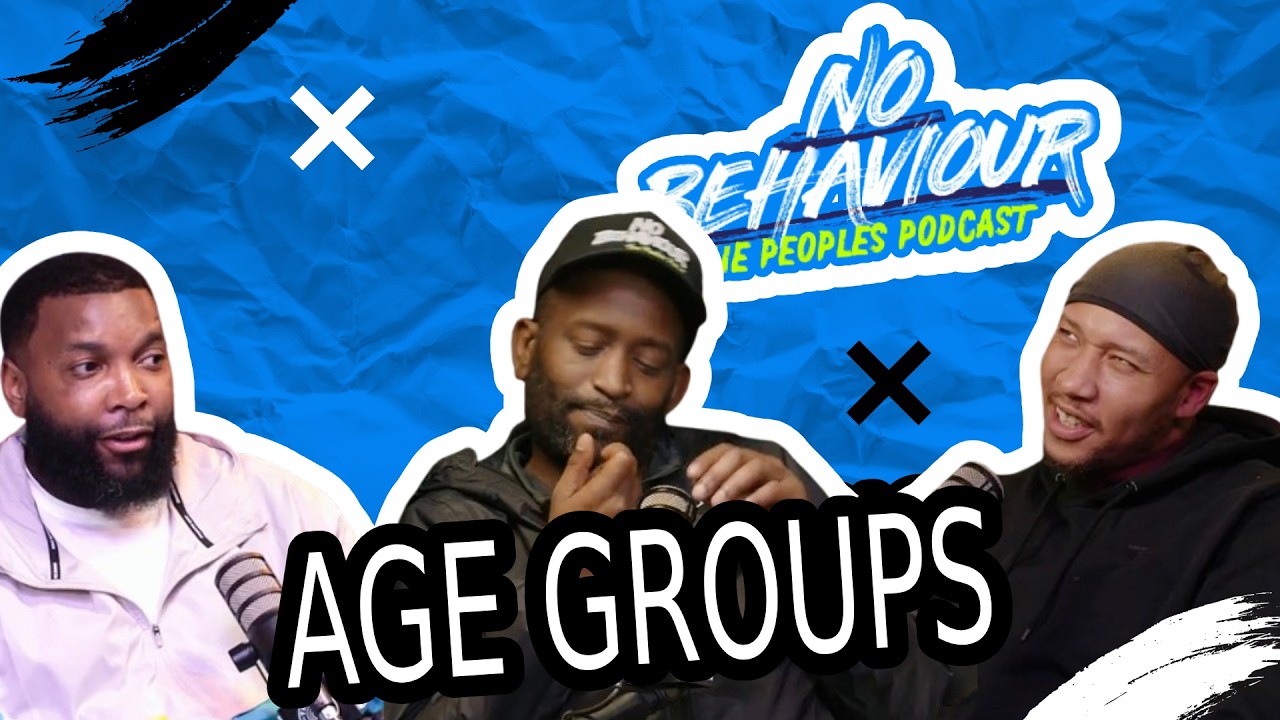
Age groups
NoBehaviourPodcast
3K views•2026-06-18

Feminism's Effect on Religion | Erica Campbell on Female Cheating | Intrasexual | XX Always Worked
DoctorThunder
483 views•2026-06-18

Was Murdered by Police in Mississippi - He Was One Year Old w/Marquell Bridges
KBLA1580
194 views•2026-06-19