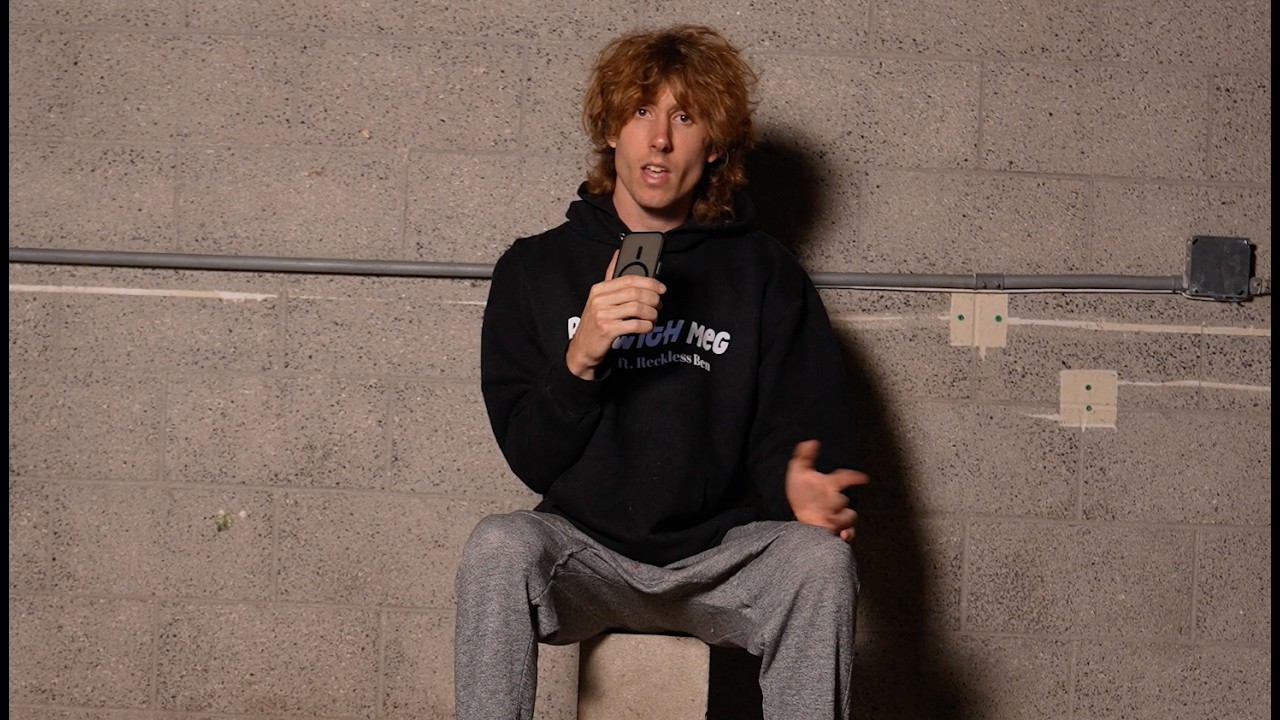
The SpaceX IPO represents a $1.8 trillion valuation that may be unsustainable due to the company's high capital expenditures, uncertain AI returns, and competitive market dynamics. SpaceX's valuation includes Starlink (satellite internet), the launch business, and XAI (AI division), but faces challenges including high debt levels, potential price wars in AI services, and the risk of overbuilding infrastructure. The IPO outcome will serve as a market signal for the broader AI sector, potentially indicating whether the current capital boom is sustainable or if a correction is imminent.
Install our extension to search inside any video instantly.
How Space X IPO Could Change Everything for Your Portfolio
Added:I am back with my good friend Ben Bray and we have got to talk about what's happening very very soon. My friend, I think it's a Space X IPO.
I've been so out of the loop with everything that I've do in my personal life, but now I'm back on track, super focused, and I just got to open up the news and it's like, wow, there's a $85 trillion company that's going public tomorrow. So, will be a Google. That's I mean these numbers are so dumb.
>> Oh my goodness gracious. So I I text you because I know you'd have your finger on the pulse and you just wrote a paper on it or a Substack. So I wanted you to come on and first of all educate me like what is going on with this IPO? What's going on with the valuation? I don't know anything about SpaceX. I don't know if they make money. I I know that part of the IPO money is going to pay off a big bridge loan or something like that.
>> I don't know if they're profitable. So give me the details. So, okay. So, two months ago on my podcast, Banning the Squirrel, my my podcast co-host, Rupert, was um equity capital meers banker for Goldman and City and Jeff. So, he was like, let's get in front of this and we'll do it two months early. Wrote a report. We went through all the math.
So, SpaceX is just let's start with SpaceX. SpaceX is a an aggregation of of Elon's businesses. Okay? So, it started off when Elon got his $200 million check from PayPal 25 years ago. He spent 100 million on Tesla, 100 million on SpaceX.
Okay, >> you can argue that they both done well.
They're one and a half trillion and 1.8 trillion each. He is on set to be the first trillionaire ever. Um, so SpaceX has a rocket business, thus the space part of it, that their innovation was being able to reuse rockets, right? So you you could drive down the cost of getting things to outer space, eventually asteroid mining. You know, he talks about Mars colonization, but right now there's two businesses within that.
There's the NASA government contract launch business, and then there's a um let's get star satellites up. The business that's actually a business right now in terms of like brings in cash flow is called Starlink, which I'm actually a subscriber of from the last three months, and it's a good service.
Um, and that's a satellite internet company where you can move your satellite wherever you are versus like the old model of Dish where you'd have to screw it on and it was huge. This is actually kind of mobile. You can you can travel with it if you want. So if you're going somewhere remote, you can have internet basically.
Okay. So that does about eight eight last year did about eight billion dollars of Ebita. And you know the thing is is they're not much EBIT because the satellites are about $500,000 each and it takes about three million to get up.
They have about 10,000 of them. And so there's about six7 billion of of EBIT or DNA every year. So there's not a ton of economic profit, but it is a unique asset and I'm actually a happy customer.
But again, so 8 billion, let's say it's growing to 10 this year, then you you you know, I don't know a multiple you want to put on that, but let's just say 25. So 250 billion to 300 billion for the Starlink business. And then you have the launch business which isn't making money incinerating cash but unique technology. So there is value say 50 billionish maybe maybe more. So you're kind of like at 300 350. And then you have this other division called XAI. Now everyone remembers that Twitter was bought by Elon in 2022, right? And so he bought that for 50 billion and then used the I think that it's pretty obvious what his thinking was. He was going to use the data from Twitter to train his AI model basically which he called Grock. Okay. And then he built a few data centers uh in Memphis, Tennessee uh called class one, class two and there's one more. And basically what's transitioned cuz the company ran out of cash in August of last year and and so basically Elon as he's done before with Tesla and Solar City if you remember that years ago he br he bought XAI from SpaceX uh and merged them for a $250 billion number. Now this company is burning about 9 billion in cash money from that. What which company did he get the money from?
uh he got well it's equity right so it's like uh that's what's weird about it right it's like his his two companies and he merged them in but he put a mark at 250 billion and then they have this bridge loan which is going to get repaid the 25 billion that you mentioned >> okay >> okay so here's the thing though in the in the perspectus he has you know everybody who trades who tries to sell stock at a huge multiple the thing they like to focus on is the TAM right the total addressable market like what what could it be? Let me sell you the dream. And no one's better at selling the dream than Elon.
Is he George? Isn't he the all-time best at that?
>> Uh at least in our lifetime, for sure.
>> Yeah. And so, okay, there's two weeks, three weeks ago, the S1 of of this comes out and I look at it and there's an announcement before that that they're going to lease out one of their data centers they built to Enthropic for three years for $15 billion a year of cash. Okay? And so then I started going down the the rabbit hole of data centers and I was like trying to think, okay, what is that worth? I got connected with a guy um who was on my podcast last Thursday and we've been working together and really digging into coreweave and some of these things. But basically 15 billion now he's kind of a neo cloud because then it comes out that he's also doing another deal with his other data center to Google for about 11 billion a year. So the company as a combined unit had like eight billion dollars of ibbit but they're selling at 1.8 trillion 1.758 trillion like that's tough math to math you know math doesn't math if you will. So I think that basically what's happened is Grock has no market share in the LLM world hardly at all. I think that basically the two models that you can say didn't work are co-pilot with Microsoft and Grock and they both kind of openly said we're going to redo the code and who knows. So now he's basically using those data centers that he built and you know there's a big demand of building data centers these days and we can get into that later but uh to become you know much more ibida like friendly to quants and numbers. So he'll have 26 billion from there plus whatever savings he's going to get from dialing back Grock. So let's just call it a 30 billion plus the 8 billion from Starlink. So you know now he's like more in the realm of like 35 to 40 billion of Ebbit type of thing. But here's the problem. You know what is a data center worth? Like I don't think that anybody really should be paying a hundred times revenue or you know some absurd multiple for um for data center NeoClouds right like I think >> how do you grow that how do you grow that you can't it's it's like it is >> yeah exactly so no it's a good business and and you know right now the current market price to >> it's like a rental property right like like >> yeah exactly it's a re it's basically that's what I'm saying it's a neocloud read right exactly it's a data center and so and so basically you have a situation where 50 to80 billion is the market price to build a 1 gigawatt uh data center. Okay, so that's gone up a lot. So you can say okay that asset let's just give him 75 because he's Elon. So then you got 150 then there's another one plus Twitter which is probably worth 20 to 50 billion depending on your view of Twitter and then some call option value for the the underlying LLM code and all that stuff.
But I do know that internally that's a mess. Like I know people on the in the valley and in Amazon and their best engineers have been getting hired away for months now. So internally that is not necessarily in any position to be considered a valuable player in the LLM like world right now. So put it together you have Starlink, you have the space business, the launch business and then you have XAI which is data center much more data center Twitter and then some AI. But again, when I go back to the TAM, 20, he put on a 28 trillion TAM. 22 of it was AI. So, you know, it's hard for me to be like, oh, well, you're walking backwards in AI. You're you're now just a cloud company basically. Now, that cloud companies are valuable.
That's Google, Amazon, Microsoft. Those are the key businesses if you think about it. And he's now the fourth cloud player. And so there's there's a strategic angle to it that you know if you're a bull you'd say hey having a cloud component to a major tech company is very important and that's probably what he would argue. Um but then there's the bare argument of like how are you justifying 22 trillion in TAM with you know you're walking back on pushing for AI. So, you know, in just one aside, it seems fairly clear now on the AI front that there's a dynamic going on where quad or I mean is way out in front in terms of the frontier models. I think everyone would agree they have the best talent, they have the best models. Um they and they've kind of pulled ahead of open AI, but it looks to me like Microsoft, all the guys with cloud capacity. So Google now SpaceX, Microsoft, and then um Amazon are in a position where they're going to let these two duke it out. But you know, the thing is I think Google and comes out and says like 2/3 or 60% of their backlog, contract to backlog for cloud is these two companies and they're funding these companies also. So there's a circular nature to this that we can get into if you'd like that is uh a bit like what happened in the dot, a bit what happened in the housing, you know.
So they're, you know, basically funding their customer.
>> Yeah. It's just what I'm thinking about is Elon is really like incredible. He's pro again the best in our lifetime at taking a normal business and wrapping it into something incredible.
to take that business that normally would get an what let's just say a five multiple or something like that and all of a sudden it gets a a 300 multiple like like as an example he takes a car company like Tesla.
>> Yeah.
>> And it's like oh it's not a car company.
It's not it's it's a robot company. It's it's a it's a a a taxi company, you know. It's it's whatever it needs to be at specific time, but at the end of the day, you're like, "Well, wait a minute.
Isn't it just like a car company?" Oh, no, no, no, no, no, no, no, no. So, but he's fantastic at doing that. He's he's the best of all time.
>> Best. He's the be Look, he's the best promoter of all time. And that's a I wrote a paper uh that I published yesterday in my Substack capital misallocation. Um comparing him to John Law, the the very famous Frenchman of the he who was a Scottish guy who took over the role of the biggest company of the Mississippi bubble which was the you know the heyday of then and he also was the central banker. So he and Elon had this unique um parallel in that they both had the the company the vehicle and and then they they also had the sovereign because you know Elon basically funded Trump in this administration and then he also was the head of Doge which he oversaw who was giving him contracts. So you know you can't really do it by yourself and the these two gentlemen were able to notice like you got to get the sovereign involved and Elon's done a good job. I mean, it's very clear that Trump is a very pro- Silicon Valley president administration, right? Would you agree with that?
>> It depends on what side of the bed he wakes up on, right?
>> Well, it comes out last week.
>> His mind so often, Ben, I never know what he's like. One day he loves this guy, the next day he hates him, the next day this guy's the worst, the next day he's the best. I don't know. Well, what I would say is this is that in the last two weeks, um well, here, let me stop back a little farther. You know, here's what's what's going on. When you get free, um something that's really good for free, everyone loves that, right?
So, if I if you let me drive a Ferrari for 10 bucks a day, I'm probably I'm going to take that every day. I'm going to be like, "Yeah, I'm riding my Ferrari." But in the reality is there's a cost to a Ferrari that doesn't match what you're giving away for. So I think what's happened in these LLMs is that they've given away an a really good product. I use it every day. It's good.
But the question is what is the economic model? And so in the Q1 it came out that OpenAI and Enthropic had raised their prices on their API and ended subscriptions for enterprise. And then we're g now in the Q2 we were seeing more and more stories come out that hey um we are not we were not ready for how expensive this actually is. You know Uber's COO comes out and says hey we blew our whole token budget in four months. Uh you have the guys at Microsoft switched over their GitHub um which is the repository for a lot of these things to a to a credit model and it just you go on Reddit, you go on Twitter, they're just like I blew my whole token. So I think what we're seeing is also in the enterprise people are disappointed in their ROI on this.
So I think what's going on right now in the marketplace is that Enthropics winning and they're able to command a high price because they're the best. But on the on the heels of that we had Google cut prices this week and now it comes out that OpenAI is going to cut prices and George I don't know you've been around for a while >> you talk about Gemini when you say >> Gemini correct? Yeah. And so in my mind, you know, the the one other thing that's not talked about enough, especially in the West, is I use these Chinese open- source models as well. And they're they're fund basically subsidized by the state. And let's be clear, China's really good at dumping cheap commodities on the world. You know, that's kind of what they do. Whether it's t-shirts or it's solar or it's steel, the just like, "Hey, we'll just do it for cheaper and we'll give it to the people of the world." Um, and so you have them, the models aren't as good, but they're maybe three or four months behind. And now you have this price war even domestically.
And so I don't know, George, what when last time I checked, is price wars and heavy capital spending a good combination for return on capital?
>> Yeah. I mean, it's it's again, it's it's a commodity at the end of the day. So the people who are going to make a lot of money on AI are probably not going to be the people that are giving you AI or delivering it to you. It's the people that are building probably on AI, you know. It's it's not the people that provided the internet service that make all the money. It's it's the people because that's more of a commodity. It's the people that build stuff on the internet, you know, the apps. That's my guess would be that's how it plays out.
>> Well, that is how it played out in the dot, right? You know, people >> it's it's an interesting dynamic, right?
because it's 2026 and there's a whole legion of people on Wall Street who know nothing about the dot other than they they think they they they think about that the way I think about the 1950s right I wasn't around I hear stories about it whatever this golden era of America but but basically the dot was built on the shoulders of a bunch of telecom companies that went bankrupt right so you had a tons and tons of fiber laid which would be today's equivalent of all these data centers um and they all overbuilt and they went bust and then 90% of the fiber turned into what they call dark fiber and even to today I think 20% of that fiber is not used. Now the difference of that is to versus today is that those assets were longived right just like the railroads but even the railroads I think half the railroads ended up becoming walking paths they overbuilt there too and so this is kind of what we do as a society of humans like when we go into these capex booms we overbuild and we did this in uh the shale boom as well 10 years ago 12 years ago and that ended poorly as well and the difference with this kind of thing is CPUs are much more similar to an oil well in the sense that the economic value is mostly recognized in the first two two and a half years and then there's some tail value and so everybody right now is focused on what's the useful life what can I you know what's the residual value um in in I guess my point is with the amount of capital we're spending it creates a dangerous dynamic where you're investing this much into chips which we don't know how long they last and then they're getting better. You know, Nvidia's newest chip is wildly more uh efficient than the the last one. I talked to a guy who was left Nvidia and had a startup who said the chips they're developing 10 times more efficient and then you have a price war. And so, you know, it's setting up for an interesting dynamic when the historical precedent is that capex booms usually are followed by capex busts. So I don't you know we're quite we're we're >> I think it's an important point too because people say well the compute cost goes down which it absolutely will but if you're dealing with a commodity and your input cost goes down then you're going to lower your price and there's nothing really to differentiate you from the competitor. So they're just going to lower their price by a dollar more than you lowered your price and then it's just a race to the bottom. So again, the providers really don't make a lot at the end. It's the consumer that is the beneficiary and then it's the people building on that. I think >> Go ahead. Sorry.
>> Well, I just No, I I just thought that was an uh important point to make because I hear that all the time from the bulls. Um and I'm wildly bullish on AI, but just maybe not the price and I think the cycle plays out very similar the way the cycle has played out in the past. Uh but the point is just because the compute cost goes down doesn't mean that Open AI is going to make trillions and trillions of dollars of profit um because they've got those competitors out there. At the end of the day, they're pretty similar. You know, Open AI isn't that much different than Claude. And so then the only thing you have to compete on is price. And then you you just get it to this point where the margins are at 1% and they're still companies, but they're like what? Like AT&T or something like that.
>> Yeah. So that that's exactly what kind of I'm thinking is that again to go back you know Google and Amazon and and and those and Meta they you know they all really got going after the dot busted.
Now the Amazon was in there in the 90s but you know Amazon went down 95% in the dot just so people remember like you know it ended up being great but that was a hell of a draw down. But what I'm saying is is they everyone got used to this capital light business model that was just a cash flow machine and grew and the reality is is that it was built on those bankrupt telecoms the Lucent the Nortell you know of the world and now we have a new tech cycle and each of these guys is deathly afraid of losing and you know there's a game theory you know prisoners dilemma component of this of like either hey if I invest am I I either invest or I don't invest. My competitor either invest or don't invest. So there's four boxes. And if you don't invest and they invest, you could be ruined, right? And so they're all kind of playing the game to win because they're deathly afraid that if they don't, they get left behind. And so you have like just a a a Nash equilibrium of everybody spends with the hope of maintaining share. And then you also have that dynamic between the US and China, right? Because we're in a great power competition, if you will. So we can't lose to China and China can't lose to us. And so there's just this this incredible engine of incentives for the at the local level. Maybe not optimal for society maybe, but like basically that this is going to keep spending until it busts in my opinion until we start to run up against you know physical constraints. And we're starting to see that George you know when I came on your show in September after Hughes event and we talked about some of this circular financing stuff then with and >> well that was when the market actually started to realize oh god these guys are start like the the days of them because the bulls used to argue oh it's all being funded with cash flow right well you know they've now ex exceeded all their operating cash flow so if you put Oracle and the and the big four altogether so what we call the five hyperscalers and then then we can start to add in SpaceX to that now that we have numbers but basically they started doing offbalance sheet financing you know the private credit guys are funding ing some of this uh through SPVS.
Offbalance financing's back, George. And um you know, remember the GFC all the SPVS and the offbalance sheet financing and and so the market figured it out in September and they you know, rerated Meta down and Meta's kind of been a dog since then. Um Oracle, which I shorted then. Uh it's its CDS spreads went from IG investment grade 45 spread uh to up to like 170. in the private market it's uh up you know in the 300. So Oracle debt's actually junk debt now by price.
Now it's not by name. And that could be an event in itself, but basically if you look at the hyperscalers, they're all doubled in their spreads too. So they went, you know, Microsoft goes from 25, 30 to 50. Google's up to 53. You know that LA yesterday, Amazon, Oracle, Google, Microsoft were some of the highest um spreads in the credit market moving up. And so >> didn't they announce that they got to start selling equity?
>> So that's another dynamic. So that let me come to that. So so I guess what I'm saying is you you have this you start with the dynamic of everybody's going to invest to win because they're afraid to lose and so you have this prisoners dial situation.
>> So then they use all their operating cash flow. We're we're now at that point where we're exceeding that now that now they're going to the debt markets for a bit and there's been a lot of bond issuance. But now then now this is speculation but that you know I'm in that market a bit is the investment grade market can't really accept a whole lot more paper. They've been putting a ton of paper in there. Now it can, but it's going to be at higher spreads and we're already starting to see them inch up. And so, you know, that is a self-defeating mechanism for a capex boom. Cap cost of capital rise. And as we know, interest rates, because George loves to call me when on on this bond this bond bear move that Benny is taking it in the chin on this year, just so everyone knows. Um, and uh and so, you know, base rates have been stubborn, oil's high, and so we have that, you know, same thing that happened in '08.
But then credit spreads are starting to inch up and you know the high yield market actually has a little bit of space but it's at a higher rate. So, I think that that's the dynamic that we're seeing now is like how much capital are they willing to put on the balance sheet and then so Google comes out uh last Monday and it's funny because in my podcast the day before I told Rert I said hey we might start seeing me make seven equity deals and that no one thought that was a like there's no one who was saying that like no one thought that next day 80 billion Google deal and I'm like these guys are smart they front ran the SpaceX and they know anthropic and open AAI are coming with a lot of paper to the market. And so there's speculation of maybe they're going to be opportunistic. Maybe they were like, "Hey, a lot of paper's coming. Our stock's done really well." But regardless, they came to the equity market. Then it comes on Friday. Meta might come to the equity market for 2025 billion. Now, they haven't announced the deal yet, but they usually when they do those things, it's a test balloon and like they've already thought it through.
You know what I mean? And um and so you could see a situation where the market has to start digesting like we're going to have 750 billion in capex on this this year as the consensus number. But then the consensus for next year is 1.1 trillion of capital spending and these guys have exceeded their operating cash flow. So they're going to have an increment of 400. And then the final thing with this is again come back to the short-lived asset. If you do if you do 600 billion in capex on a six-year asset, now I think it's more like four or five, but let's just give them six because they're contracting for it.
Remember that means a h 100red billion of maiden cap capex every year. You know, you have to replace it. Now, it's a the cash flow works that you put it up front and then it'll be in year six that you'll replace it. But from a true economic model, you're losing one trillion of real value every year. And I could argue again back to the shale, you know, the well of frontloading the actual economic value because there's better chips, there's more efficiency, software engineers are getting better that you're you're actually frontloading it even more extreme. And so will you be able to pay debt down on that? I don't know. And so you're getting a situation where there's a ton of capital going to a market where what's the end demand?
What's the return on investment? And you know it come out George uh in the last two weeks KPMG and Bane Consulting came out with reports that kind of showed that the so far corporate CEOs the CFO COOs aren't seeing the return on investment that they were hoping for and then last week Broadcom CEO basically said we're not seeing a ton of productivity from AI on this conference call sent Broadcom stock down 15%. Um, so I think the transition in the AI LLM trade right now that's going on is the move from token maxing and AI agents and this is magical and great. We're just going to spend like there's no tomorrow which sent this amazing all-time semi rally memory stock rally uh the Pix and shovel. I mean Dell Dell computers up three times since March 31st or something. And um now I think we're transitioning into an era of optimization and focus on ROI as the prices are coming up. And so we figuring out what's the true economic model here.
And now it's coming out that Google and OpenAI are talking about price cuts. So there's a real risk also that this is much more mature than people want to admit basically.
>> I mean the price cuts go back to exactly what we were saying before. I mean, it's it's this it's this is not a matter of if, it's simply a matter of when. And you know, when you talk about them needing cash, so you've got three options there. Uh you can take the cash that you have, the cash that you have coming in to buy your next data center or whatever you need to buy from Nvidia.
You've got debt, you got equity. The problem is the debt, to your point, you're having to pay higher and higher interest rates. uh that you probably can't afford if you issue more debt. Um with the equity, you've got a problem there because if you issue more e equity at the wrong time, you're obviously diluting shareholders and that could really put downward pressure on your stock price. So, but those are your only three levers you can pull. You know, it it reminds me a lot of Micro Strategy because it's like the same game, you know, that that they are are kind of playing where they get backed up into a corner where if Stretch is trading below 100, then can you really issue a lot more preferreds? Uh if and then if you bring the interest rate up to get it back up to par, well, now all of a sudden you're reducing your runway because you only have 900 million in cash. And at an 11% interest rate, your runway is whatever, let's say 8 months.
But if you increase that to 12 or 13% to get it back up to par, now all of a sudden your runway is five months or six months or something like that. And you can't sell equity. It is kind of that same problem, right? The same >> it's it's like a flywheel, right? So you have a hype cycle, but you basically I'm sure you've seen it before. It's like the hype cycle. It goes vertical up, peaks, and then rolls down, and then it kind of sets steadies out and so you know when you say hey I'm bullish on AI tech just like people were bullish on the internet you know that's probably right I mean but the point is is like what is the capital being put to it what's the capitalization of it and what's the actual economic model you know that's the other thing that I think needs to be discussed >> is that like right now the market is capitalizing this at the most inefficient it probably will ever run because there's a you A guy who's I'm friends with always told me it was a very good piece of advice. Never short engineers, right? Never short engineers.
they figure out problems and so things become more efficient more more optimized less power need less compute need per unit and and you know so from the software side I see this because I'm involved with a company called second brain AI and I've gotten really up to speed in this space and there's harnessing and optimization things you can do of like teaching the machine how to optimally work figuring out where to route what models to route to there's a company called open router and a company called ramp that They're like, "Here, here's your task. We'll we'll now route you to the right model." So then we're going to match your what you're actually trying to do with the the the what you need. You don't need the new Mythos model or Opus 4.8 or the most expensive latest model to to, you know, do a lot of tasks. You can use a cheaper task.
Now, if you have a really complex task, >> an agent.
>> Yeah. And so I think it fragments in terms of like there'll be stuff that you need for these high-end models, but it won't be the whole market using them.
And you, you know, then you question, okay, well, is that a hook? And here's what they would argue. It's a hook to to make Enthropic seem like the premier LLM, which I think right now everyone would agree they are. And so you get on enthropic, you get used to going to Claude and then you basically you can use different models within Claude's models and you're they make more money on the lower models like the inference on the lower models are much higher margin. They lose money on the frontier models and the idea is that you stay there. So you stay there like Google but here's the one caveat I'd put to that.
This is not the internet model or the software model where it's hey I get a subscription and and the cost per seat is the same right they have volume based like pricing now where you eat you pay what you eat right it's like it's not an all you can eat buffet it's like hey you got to it's all a cart if you will right and so you got to remember also the guys who use this the best the 0.1% of people who are like using agents to use other agents and then they're recursively looping them. They're using so many tokens and I would say I'm in the probably top one or 2% and I know how to use agents and I have a lot of systems set up and and I'm not even the same stratosphere as them. So this is like a strong power law where they're an order of magnitude above me. I'm probably an order of magnitude above the person at the 90 percentile. And so then basically the token consumption is driven by like the top 1 2% is probably doing over half the token consumption. So my mom uses Claude every day, but I don't think she uses many tokens. She's just asking it like it's like a little better Google.
And so I think there's dynamics within the market and within the consumption that are a little different than the old model. And there's a little confusion on that still in my opinion in the marketplace.
>> That'll be really interesting to see how that plays out because there is no doubt that I think it's going to take over search. I mean just anyone watching this video and when's the last time you actually Googled something? I mean maybe but the the amount of googling you do now relative to what we did three years ago is just a fraction and now usually when I have a question that I would have googled three years ago you know you just go straight over to the open AI or or Gemini or whatever it is. I think the problem with that model though is it's not sticky. Like with an iPhone, it's really sticky from the standpoint of if I tried to use like a Google phone or like a Samsung, like I don't know what buttons to push and I I don't know where everything is and I'm just like, "No, no, no. I I I can't deal with this. You know, I have to go back to the iPhone because I'm accustomed to dealing with it." Or like with uh into it, let's say with QuickBooks, you know, you've got all your chart of accounts done, you've got it set up, your accountant's been using it for 10 years, you've got all of your past data and your tax returns in there. changing. It's It's a pain in the ass. But for me, just I mean, I've got Open AI and I've got Gemini open up right up here on my tabs. I'm looking at them and I just bounce back and forth. I mean, there's And the problem here too also that they have as far as stickiness is, as you know, if a thread gets too long, like it's unusable. Like the AI turns into a So, you've got to take that you've got to start a new thread anyway, right? So, >> yeah. So, >> go ahead. Yeah, you could probably >> Yeah. Well, I was I'm gonna comment on this because the company that I was telling you about that involved a second brain created something called company brain. And what was going to happen here is people are going to have a middle layer that sits above the ML LLMs. And basically it's going to be like a wiki knowledge layer that is an ontology graph that if you know how to label your like so you put your stuff in Dropbox but think about a super Dropbox that can connect all these things and then APIs into your LLM and then so instead of what you're just saying because the context problem with LLMs like transformer LLM's mechanics are such that like as you increase the like say you double the context so you said a long thread it's like your context window going backwards you double double that. Well, the num the amount of compute you need goes up by four times.
And that's actually why the memory stocks have gone bonkers because there's just this enormous demand for for memory. And so the DRAM, the Microns, and the SanDisks and the SKHEX and and Samsung's have literally gone vertical.
I mean, these stocks are incredible run.
But there's a lot of again, don't short engineers. There's a lot of smart people we're we're trying to help. There's other people trying to help and like to figure this out because what we're saying is right. It's not only that it's expensive and by the way it's that's the biggest part of the power cost also the data transfer and the memory but it's also that in the middle the farther you go back the dumber it gets and so you can't really use it as much and it's trying to look back at every piece of information you had and it so it's slower and then it doesn't really know how to do it because remember these LLMs they're not actually magical smart things it's an optimization model it's an equation that you just call quad an equation equation one time when you're mad at them be like just man relax you're an equation and and basically it's like the best VLOOKUP if you guys ever used Excel it's like the VLOOKUP on steroids where it just is a linear auto reggressive model and so it's basically optimizing but there's always the same state there's no it's a stateless model where you're not having to like getting smarter as it goes it's like hey I have this at this model and so the way I like to think about it it's like an F1 engine you know like the best engine we've ever built and is really powerful, right?
That I mean the stuff you can do now if you're a knowledge worker like you know I hated making PowerPoints. Now I just like jam out PowerPoint like that like a notebook LM and it's great and maybe it's only 95% of the way but it gets the point across and um so that that's great. But the point of this is we're going to get these systems better. These are all going to improve. It's going to take a little time like it always does.
But like right now I think that the market kind of is like hey these are Skynet and the more capital we put towards it the closer we get to AGI and we get to you know the Skynet all being and that's kind of what they convince people of and so then you know creditors come in and let's let's talk about that loop for a second. the creditors are underwriting data centers and and chip purchases based on the idea that they're leased to these mega companies, right?
So, they're like, "Hey, I'm actually underwriting Microsoft or actually underwriting Google or I'm actually underwriting Nvidia or whatever." But in reality is that like yes, you are, but at the same time, you're in a situation where well, what are they going to sell it to? And so I think that's where we got we're coming out to is what is the true end demand here? Like for George, how much is George and Ben gonna spend?
How much is how much is Proctor and Gamble gonna spend?
>> What?
>> But more importantly, how much can you charge for it? Like what's the end demand?
>> How much can you really really charge for this? Because >> that's exactly what I think the market's dealing with right now. Exactly.
>> Yeah.
>> And that's a key question because if you're underwriting this with credit, you know, that debt doesn't go away and you got to pay it. And you know what?
there's interest on it and it's not that cheap of interest and so you know every if you're if your return on capital like with coreweave we estimate cororeweave's return on capital over the life of a of a chip is anywhere from one and a half to 3%. Well its cost of capital is about eight eight and a half. So that that means everything you every time you do one of these transactions debt funded you're losing economic value because your your return is less than your cost of capital. You know, like in any business textbook, they'll teach you like your ROIC needs to be positive spread against your whack WACCC, otherwise you're losing economic value, just like the shale guys. And so you have basically a situation where every, you know, to use a retailer concept, every new store you open, you're actually making the situation worse if the economic model is not there. And so that's where I think the key question needs to be like what can they charge, what is the true end demand and what is the savings that can be realized because right now I think also people go and use agents and like I can tell you because I I use about nine LLMs. I use all the ch a lot of the Chinese ones. I use all the major ones here. Um, and no, but they all have different like Gemini is really good for video and and images and notebook LM is great for creating like learning materials because you use structured data. Claude is the best for code and for data analysis like the the Chinese question. How much do you spend per month on those on paying for those to use those nine AIs?
>> Maybe a thousand bucks. like something like that like maybe a little bit under a thousand bucks and I have a little bit through my com my the AI company I have access to one of them and and then but you know again you can get that down if you start using open router or something like I'm not even close to as as optimized as I could be yet. That's like a project I just had so much going on but that's a project like for the summer is to like try and really get this down.
Like I built an agent cost optimizer in my perplexity computer that like guard rails against when it a a task is going to be too expensive and it will stop it.
It runs a daily report of here you could have done this and like again that's just early days right and there's going to be companies that do this because I'm sure not everybody who's a normal guy wants to do that but these are the kind of things you can do and so you know the question will be okay I love the subscription model right so I use my five hour window of claude and I max it out and I'm just like all right I paid >> right but how much does that cost them you're paying them a thousand how much does it cost them >> that's the key question so you know uh earlier this here XAI bought, you know, come back to SpaceX, bought Cursor for 60 billion was the headline number.
Well, it comes out that they say, hey, the $200 subscription is basically $5,000 cost. Okay. So, so that math doesn't math again to come back to it, right? And there was some if you if you scan through Twitter and Reddit, you know, there's guys who run tests and some of them are saying it can get up to 12,000 for the 200 if you you know if you if you're doing it right and they'll they'll let it go. So even if it's a thousand like just say that that's $800 of loss for a max user. And to come back to what I said about the distribution of token consumption, it is not like a normal distribution. It's not line like it's like basically a heavy paro distribution where small percentage of the users the most advanced users are using a huge chunk of the of the tokens and they know how to do a lot of this stuff. So the the inefficient users are the users who use less the and so you're basically in this world going to have to deal with the fact that the majority of the demand is going to be engineers, right? It's going to be people who really know how to use this and they're going to be the most sophisticated users also. So it it you know it's a it's something to keep an eye on basically.
>> Hey guys, if you're tired of the BS from the mainstream media and you really want to cut through the noise and understand what's happening in markets and in the global economy and you want to meet and learn from the top macroinkers and probably more importantly the contrarian macroinkers, then Rebel Capitalist Live is exactly what you're looking for. And to be clear, this isn't some boring finance seminar with corporate sponsorship and talking heads. This is going to be a high energy, freedomfocused event that's going to help you not only protect your wealth, but grow your wealth as well. In the past, we've had speakers like Lyn Alden, Ron Paul, Robert Kiasaki, Peter Schiff, just to name a few. And here's the best part.
You're able to hang out with hundreds of your fellow rebel capitalists. people who actually get it, people who value the same things you do, like freedom, liberty, and free market capitalism. But here's the catch. These tickets are going to sell out very quickly. And as we get closer to the event, the ticket price goes higher and higher and higher.
So, you're going to want to get your tickets ASAP. This is an event you're not going to want to miss. So, to get your tickets, you can go ahead and click the link in the description below. And I'll look forward to seeing you at Rebel Capitals Live 2026 this May in Orlando.
Yeah. And I think the push back there is going to be well, okay, again, their costs are going to go down, but if their costs go down, that's great. Once the costs go down enough, then they start lowering their prices.
But the problem with lowering your prices is your debt doesn't go down.
Like like your inputs can go down, but if you have a hundred billion dollars worth of debt, you still have $100 billion worth of debt. And if you try to out compete your competitor by taking your prices from $100 a month down to a dollar a month, um, great if your costs go down to 99, but you still have a hundred billion in debt and and that's that doesn't change. So, you know, it's it's like the problem with deflation in uh in a debt-based monetary system, right? Where that the amount of debt that created the money to begin with, that's nominal and that doesn't go down. So, if you have significant deflation, then you can't pay back the debt, right? So, I don't know if there's that risk there as well.
Um, but it's I think it's probably something to consider.
>> Definitely, without question. And I and I think that that's ultimately the the the the thing I think about the most with this is like putting this much capital to an uncertain business model based on a lot of faith, right? Like I think that the MAG seven are almost like titans now, right? Like they're like would you would you doubt Jensen? Would you doubt you know Zuckerberg? And I'm like, well, you know, look, these guys have great, wonderful all-timer businesses, but you know, he did also put 60 billion into the metaverse. And, you know, I'm not sure how that went for him. And and like guys, they're humans, they make mistakes, and they're also in this prisoner's dilemma where they it the optimal strategy might be capital misallocation at the end of the day. um you know like so that that's the thing to think about like they might be weary of it and you know it comes out that Microsoft canceled some of its enthropic licenses and you know Amazon I think it's Amazon but like they reported somebody spent $500 million on Enthropic in a to in a quarter and you know uh we'll see we'll see I just think that you know there's a lot of faith that's being going into this and we're not exactly sure what the sustainable economic model is what the token consumption is. Pricing now is getting challenged and c a lot of fixed cost capital uh you know in the form of credit is going into this and so there's a lot of pressure on their backs for it to work.
If you're Alman or the guy that runs Anthropic, do you also consider the race to become too big to fail?
Because then you win, right? Because if you become too big to fail, then you know the government's going to come in and backs stop everything and then you don't have to worry about going bust. So the first person basically to become too big to fail that's that's got to be in the forefront of their decision-m I would assume.
>> So so it's super interesting you said that because last week it so a buddy of mine I talked to who worked in finance and then he worked in AI for a while uh wrote a piece on a Substack about that about the maybe the key to this is getting big enough so you are too big to fail.
basically and it comes out last week that Trump's considering taking a stake in open AI or maybe all of them, right?
So they're they're they're at the point where hey, we got here now this and to go back to my piece with John Law versus Elon Musk having the sovereign involved changes the calculus where you know I think you know everyone knows George with his end the Fed hat. Capitalism as we knew it died in 2008. We're in this state state managed version of what markets and and capitalism is now. And you know, we talked George last first show I came on with yours about how they manage the markets through volatility selling and dollar swaps and all these things. And then you know the government's actually now taking stakes in which our friend Brent Johnson talked about you know that this new role of the government but now it's just more explicit. But I think it's just that's the thing that really is, hey, I'm big enough that the government now has to be there because this is again we're US versus China.
It's a national security interest or whatever or whatever they're going to sell it as more or less.
>> Yeah. I I would say what they're going to sell it as because I I don't really understand that argument. I I when you think that through to me it doesn't make sense. And here's what I mean uh by that. How? Explain to me what it looks like if China wins. Like what does that even mean? Like or what does it mean if the United States like explain to me a scenario where the United States quote unquote wins? Does that mean that China doesn't have use of AI? Well, of course not. They're going to have AI. Um if China wins, does that mean that all our AIs go away? No. It's like the car business. Like like how like if you have a car business, how can you say that we can't let China win? Well, what does that even mean? Because they're going to have their own cars and we're going to have our own cars. So, >> well, I I could actually answer that a little bit because if you think about the Japanese model when Toyota was taking over the car industry and Detroit was all scared, you know, there was like a big anti-Japan. Well, right now, you know, >> Yeah, I get it. But we still have cars.
>> Agreed. But let me let me Let me tell you though, BYD is the best car company in the world now. China's gone from not a car company or car country to BYD is better than Tesla. Hands down. And you know that >> understand that because they they don't they haven't >> they don't let you in. That's what I'm trying to say. That's where >> I do because you know I live in Columbia and dude they're they're it's just you should rename the whole country to BYD because that's >> that's exactly right. Like when I was in Mexico City, the last time I was in Mexico City, I came out of the airport and there's just a, you know, like a tennis courtsiz billboard of BYD, first thing you see. And like I actually thought about that in LA. I was like, what would be the funniest car I could buy? I was like, I should pay the import tax and get a BYD and be the guy driving a BYD around the US, but the import tax is 100%. Now, you could drive to Mexico and drive it up, but there's no servicing it. So, Americans, and by the way, one thing you I'd say on that, the Ford CEO couple years back, he's like, "Yeah, I got a BYD imported. It's like the best car ever." This is the Ford CEO said this on his conference call. It was It was unbelievable.
>> But like model, it's really good, too.
>> Yeah. And BYD did win and we're not letting them win by having like protectionism, if you will, against them, right? because they're they're worried for Tesla and they're worried for you know GMC and or you know whatever like or GM and like so that would be an example of them winning here.
>> Yeah, you get my point that that it's not like because they won we don't get cars anymore.
We still have cars, they still have cars, we're still going to have AI, they're still going to have AI. So I don't think it's it's cataclysmic if >> but I guess here's George here's what I would say to it. I'll I'll give you a decent answer on it. If you think about the US economy, and I know you've talked about it, we've talked about everybody's heard about the K economy, right? Yeah.
And so like we have a a a market where the S&P is driving a lot of stuff, right? So that's people's savings vehicle. You know, people who have money are 50% of the consumption, right? So if you were to have a situation like, let me just paint you an idea. Zingping doesn't want to do war. It's not going into Taiwan despite what everyone talks about there. But what he could do is destabilize the S&P by, you know, subsidizing their LLMs and saying, "Oh, we'll get we'll give a few on the cheap." As I said earlier in the show, hey, we we'll dump steel, we'll dump solar, we'll dump t-shirts. And by the way, there used to be a lot of those kind of factories in America. Not a lot of them are in China, right? And so they had an effective market share steel.
Well, if you were to do this and on the come you're taking away a little bit of business, but remember there's all this capital behind it so that that capital is not like like set up for you to be going over to China necessarily. Um, and and so if that was to do enough damage on the margin where this this would kind of not work or not even not work, the perception of it not working, right?
Because it only takes the perception like we if confidence goes in these kind of situations then it can lead to the other side of the machine where you know lower prices leads to lower prices and then you have credit underlying it and you can have a true you know deflationary other side of the boom and it might not be for anything other than perception changed or maybe the enterprise paused or slowed. Maybe they're still spending, but they weren't spending at an accelerated rate. And whatever the point is, that could be a way that then if they destabilizes the S&P, then Trump's got to come in and then put more capital in, which he's already floated. So, this is not me, you know, making something out of thin air.
Um, and that could be something that they could do and maybe not win, but it's a relative advantage in the sense that the US is so geared to the financialization at this point. and that financialization so geared to this AI trade that that could be an angle I guess.
>> Yeah, I mean that could be a pressure point. I mean that that could be uh kind of an attack vector uh for them if you want to look at it that way. But I I still I just have a problem with that terminology because it implies that there's like an end like whoever is ahead on July 25th like they get the trophy and they get all the AI and the loser has to go home and live in caves or something like that. And I think it's more like just a process. Like there's going to be times when there's an AI company out of China that has this new technology like Open Claw that's like super cool and sophisticated, but then all the American companies copy that and do something that's better. And you're just kind of, you know, going back and forth. I think that's more uh what the the game, if you will, looks like. But I I want to go back to uh SpaceX because that's the thing that I don't know anything about. And I was listening to Rogan the other day intentionally with Musk. Uh I think the last one he did was like seven months ago where they're talking about SpaceX quite extensively.
And I think the bullish argument that Musk and I'm just extracting this from the interview so I don't know specifically but I'm guessing the bullish argument that he would have is that space is the new frontier and 95 he said 95% of the stuff that we send to space right now is done through SpaceX.
at least I I think maybe in the United States and then his competitors uh account for you know 5% or something like that. So let's just start there. If the uh if they're on the cutting edge of reusing these rockets which lowers the price by like whatever you know a thousand uh percent or you know it lowers the price just exponentially. I think the example he used is that if you had every time we took a a flight somewhere, you had to throw away the airplane. So, think about how expensive flying would be in that scenario where what they're doing is they're working to your point on that reusable spaceship just like we reuse airplanes and that drives the cost down to, you know, pennies uh versus what it is today. So, that's their edge. And then on top of that, they account for 95% of the market going to space. And you know, with the uh um what was the internet, the Starlink, you know, there's satellites, all the space is a new frontier. We're all going to be going into space in the next 20 years. So they've got I'm I'm just trying to make the bull argument.
And so they've got the reusable rockets, brings down the costs, brings up the profits, and then they've got basically a monopoly on everything that's being exported to space right now. So why shouldn't that have a $ 1.5 trillion valuation?
I mean, look, you know, I'm an option guy and if you think about it, the way I I would describe the value of that business is it's like a one to three delta call option, right? may you know and so if you want to value it like it's a 10 delta that's fine you can do that like but it's just like hey you can buy a 100 P stock too and what you're buying is just a smaller percentage of the distribution of outcomes that will result in you doing well and now you could argue in this case uh the the the upside is so massive that you know it's worth taking the option because you know the argument that I've heard is Like there's there's asteroids in outer space that have more gold than all of Earth.
So you you you have a another 16th century price revolution, you know, where they went and got all the gold from the uh South America and the Mexicans and then it ended up driving inflation in the 16th century massively because they didn't realize how much gold and silver there could be. But I guess the guy who went and got all the gold, you know, was very rich. So there could be something like that colony on Mars. But again, when is this going to happen? Is that actually what the bulls say? Like I was just trying to pull a bull argument kind of out of my ass. No, >> but you're the one that talks to the bulls. Is Is that literally the the bullish argument for SpaceX?
>> I think the SpaceX argument is that basically they have a monopoly on that.
Not monopoly because Blue Origin with Amazon is uh is out there, although he did have one of his rockets blow up two weeks ago. Um and and so but they're like 80 90% of of the they're basically it, right?
like 95% of the US market >> Starlink Starlink is a good business and again just to ser I am a customer that keeps growing but again I don't know you know what you want to event like maybe that could be a trillion dollar business standalone and so then you have like this bet on the cloud and the AI part of it that I think that's where in his TAM he's directing you that that's the majority of where the value could be and I you know that's where I have a hard time with it and Again, you know, it's hard to doubt Elon in the sense that he's the best and he's done all this stuff and gotten up here. But again, you know, when we talk about Tesla, just as an example, okay, so he got Tesla off the ground in an amazing fashion, right?
Because all the structural industries did not want him to succeed, right? The oil industry didn't want him. The car industry wasn't interested. And they already had tried electric cars once in California and they shut it down. So, give them total kudos for that. And the total kudos for creating SpaceX and what it is, but you know Tesla hasn't really grown in number of years now, right?
Like it's its growth is mediocre and trades at a 100 times. So, he's still kind of dangling that carrot, if you will, of robots and and full, you know, robo taxis and and maybe it'll work, but I'm just saying that like he his business is like he gets them where they're real and they're good and they're they're bankable, but then somehow because of the narrative, he he's able to get this like huge Elon premium. Basically, he's like a black hole of capital is the way I like to think of him. Like capital just like you're like, "Hey, you're going to Elon."
>> Yeah. The gravitational pole is irresistible. It is. It is. It is. And look, you know, it's it's one of those things where like, you know, winners like when winners win, they win more. You know, like uh there's that book by Malcolm Gladwell where he talked about what what day you were born or what month you were born in Canada for hockey matters. So, if you were born one month for the cutoff, you you had a huge advantage because you were when you were 13, you were like 11 months ahead of the people in front of you. if you were younger, you were like one month before it, you were disadvantaged in getting into the CA Canadian national team and then that gave you opportunities which then gave you more opportunities. And so I think like Elon, you get a win and no one's parlayed winning better. And so when you've won at the table, if anyone's been to a casino before, you're like, "That guy's hit seven or sevens in a row. You got to ride him. He's hot."
And you know, that's not exactly a fair analogy because that is just pure luck.
But some of success in life is luck, too. you know, there's a lot of people who work hard, who had good ideas, who couldn't get the capital or had a bad break. So, now he has this like I don't know, John Law Titan, you know, godlike uh black hole of capital like image and he's so far pulled it off. So, we'll see. We we we trade tomorrow. There's 555 million shares being sold. That doesn't include the green shoe. And George, I want to tell you an interesting stat.
>> What is a green shoe?
So when you have an IPO, you do a certain amount of shares and it's usually five to 15% of the total float because remember they want the the underwriters want it to trade well because no one wants a deal to break like remember Meta. Meta had a bad deal and it went down 50% like almost immediately from the IPO on >> million shares. Is that the float or is that the total?
>> That's the amount being offered. That will be the float. But then you have to add in the green shoe because I've heard it's six or seven times over. I mean that's just what they're floating around. Um and that would be that would get you usually the green shoes 15% of the shares. So that let's say that's 80 million more. So you you would have a total of 635 million shares and pricing at 135. Um and so you got a situation where that amount of stock just the green shoe is the 10th largest IPO of all time which is an unbelievable thing.
So the green shoe of this deal is bigger than the GM deal uh when they IP reipoed back in the day. It's like the same size as um you know some of these huge IPOs.
And so I just think the scale of these numbers that are coming out with Google doing 80 billion. Now these guys are going to do let's call it 85 billion if you include the shoe or something or maybe 100. Um and you got Enthropic is probably going to come out at a one to 1.2 2 trillion. Sure, OpenAI is going to try and get a trillion. So, you know, Meta's putting TW I mean, it's just a lot of paper coming in the market in >> Okay, so where does the money come from?
>> So, that's an interesting question, too.
>> Like, do >> we covered this a bit uh in depth and so one of the things that happened was the indices were all changing their rules. So, you know, our buddy Mike Green talks about passive a lot, right? And and the thing is one of the reasons why the IPO market has not been very active over the years.
Well, there's just more and more and more money like I think it's like 54% of the equity market is now passive. Well, they don't participate in IPOs. So, the discretionary community is now I mean there's so many fewer guys like me who are just discretionary old school trader guys because there's a lot of Jean Streets of the world. There's a lot of uh quant vault targeting these kind of guys. And so, you know, the old school mutual fund guys like Fidelity where I started my career or Troll Price or Wellington, you know, they don't have the amount of capital and pull as they used to. And so the indices basically the NASDAQ led it said, "Hey, we'll do fasttrack inclusion into the index, which it used to be like a year till you get in there." The S&P said no to them actually, which was an interesting thing. The S&P put the put the gave them the Heisman. So that's 19 billion extra they got to find a home for. But I guess you know we'll see because you know when they say it's six seven times over I can tell you as a guy participate in a lot of IPOs.
The the the amount of subscription you have isn't the real demand. Okay. Like there's a there's an old saying that uh capital markets are liars lying to liars where you know I'm like oh I love that deal and a capital market guy's talking to you and then you're you're just like kind of bullshitting each other to try and get an allocation to then have the pop and then you just you know sell it away or something. That's like a game that goes on a lot. And so we'll see we'll see what the real demand was. I remember just for a little historical story Meta's IPO yeah it came pretty expensive. It was like 28 times revenue, right? And it was hot. It was so hot and whatever. Well, you know, in the pre-market, you know, they priced the deal at 38. They had raised the range.
Pre-market's at 42 and I got a big allocation on that. Starts start selling starts selling. I'm like, this isn't right. So, I I got out of there. But basically, that thing then tanked and it was just too much selling. Insiders can sell and so we'll see. You know, this thing's been around for a while. I mean, SpaceX is over 20 years old and they've been doing raises for a while. So, if you're a sovereign wealth fund, a family office, like you know, anybody lots almost everybody's gotten to look at this at some point if in the game they're going to have a huge retail allocation because, you know, I saw something that Fidelity, you used to have to have a limit of $500,000 to get an IPO allocation and they took that down to 2,000 for this deal. And you know, there's the whole re, you know, Elon fanboy club that will probably be in there. So, they're going to give 30% to retail, but historically retail is not who you want to allocate uh to IPOs because it's just not as sticky of paper. Like, you know, when it goes to Fidelity, often there's some flipping, but like somebody wants it and it that's its new home. It just stays off the market. It stays, you know, somewhere and that's where they're trying to allocate to. So, who knows? You know, it could also be a game where guys hold it to then sell it to the indices that like the NASDAQ and some of that demand, that S&P inclusion trade where you kind of use a warehouse line at a at a bank and then just hold it for, you know, a week or two until the inclusion and then you just kind of dump it on them. And we've seen that trade many times in the market. I mean, even Tesla itself, if you go back to 2020, 2021, it ripped into S&P inclusion and then it was basically flattish since then for five years. So, you know, Lululemon, which has been an absolute dog of a stock since its S&P inclusion, uh, you know, Robin Hood, uh, Carvano, they they ripped into their S&P inclusion last year and have been not traded well. So, there is a big >> buy the rumor, buy the rumor, sell the fact usually.
>> Yeah. And there's very smart guys at shops who do all the math of saying, "Okay, what what are the criteria to be S&P inclusion? Who meets those criteria?
let's bid them up and then bag hold the the index and then there's really nothing about this in the news to the average person because S&P just keeps going up. So the person, the average guy doesn't realize that they're they're eating a lot of returns that hedge funds are just kind of gaming because that's just an effective passive. And you know, Mike Green will be able to tell you more on that and you know in in depth, but like that's the general idea is that the the the rules inclusion the inclusion rules have changed for the NASDAQ and a few other indices for passive to buy.
There are some people who are believers like you said there are there are definitely some people believers and they might be right you know like again this guy's been wildly successful and so betting against him hasn't been a like you know I personally got smoked trying to short Tesla in that run-up to the S&P inclusion. So like just everyone knows like I'm not not like I'm I fully respect how Elon can drive a stock uh way beyond what perceived fundamentals would you know justify in a old school guy's mind. But I just say that like it's a situation that will be very interesting to watch. We start trading tomorrow and if the deal doesn't work, it will not be good. If the deal works, maybe this it gives the the whole thing like a little bit of more juice.
>> Yes. So that's kind of my next question.
Like do you think this there's so much hysteria around this that it could mark a market top?
>> Oh, without question. I mean, that's kind of um that's what our title of our episode was. We first did it. Will like SpaceX uh top out the market or something like that? Basically, like >> is it too much paper? Is it, you know, do they have to sell other stuff to include this? Uh, you know, I just know this, George, when the biggest companies, the richest biggest companies in the world are all coming and taking out serious cash out of your savings in the S&P 500 and they're the richest people in the world. There's a little bit of a signal to that. You know what I mean? Like there is they're taking the money. Like I mean you know you have to now incrementally believe more in what they were selling you before because they've now taken some chips off the table and maybe they'll reinvest them and that's true but maybe like they're taking liquidity when liquidity is there and that's the general rule of capital market and the last thing I'll say in that is remember to believe in this capital boom you need to believe in the return on economics which okay maybe maybe not you need to believe in the capital market staying open That's the thing where we've seen capital markets turn off turn on you know and when you have a regime shift capital markets turning off that is where you could get a nonlinear jump in credit spreads and a nonlinear drop in equity prices and then that can feed on itself and it doesn't have anything to do necess what >> what do you mean by the market shutting down >> well you know like think about 2018 right 2018 summer things were kind of bullish and then the next thing you know there was no high yield issuance for four months. If you remember JP Paul and all that stuff, we get we so capital markets can turn off on a dime. And when they turn off, if you're the kind of guy like a coreweave or you're the kind of guy who needs capital, you these hyperscalers, you know, Dell, not Dell, um Oracle, which I'm pretty negative on, he's down 11% today, you know, they had a report last night and there's capex some 95 billion. Well, the market's punishing this extra capex if you notice on on the come now and um and so yeah, I think that that's that's that's the dynamic at play.
So, as an allocator of capital, how do you what signals are you looking for in terms of the broader market based on what happens with the IPO, the SpaceX IPO?
Well, I guess you'd say that like this, like let's just play it out, okay? Let's just say it dumps and has like a meta moment where I don't think it'll break deal. The underwriters will use the entire green shoe to support the deal.
So, you know, I I don't expect it to not price above deal tomorrow. I think it'll be up. It's if it's six or seven times, I think there's a lot of people who also just are like playing the the flip. I've seen that before. Uber's IPO, they did that. It didn't trade well. uh the Meta one it didn't but let's just say it goes up 20% or more I think it's looked at as a win you know 20% on a 1.8 8 trillion is a, you know, $360 billion one day pop. It's got to be looked at as a win.
If it's more than that, I don't know. I think then you kind of have a situation where you could have like the IPO we saw uh s Cerebras where it opened huge and it's just steadily sold down. So sometimes that happens too where you have the highest price on day one. Like there's been number of deals I've seen over the years where it's hot and then price is up and then it just kind of supply leaks out. And remember all the insiders are just waiting to sell here because they're going to get rich, right? Like they can't >> that would be my base case. That last scenario would be my base case for tomorrow for the SpaceX IPO.
>> Yeah. And so let's just say, you know, this plays out probably over the rest of the year. You know, if if it's bad, I think it's bad. I think you know you see how the the last week and a half uh has traded in the tech and there's definitely like been a shift here but you know you could argue oh it had such a big run up that it's just shifting because you know giving some back fair like but you know the thing is is if you get a Google deal and then you get a a meta test balloon now you get this and if this doesn't trade well then you start like and then you start questioning oh well open AI is cutting their prices, how's that deal going to trade? And then, you know, what is the actual economics of this? And, you know, we'll get the S1 soon from OpenAI and Enthropic. So, that'll be interesting to see their actual numbers. I know that they're they're you know, Anthropic's definitely trying to juice the numbers.
You know, they come out with their Mythos model and they're giving you away for people for free until or not for free, but as part of your subscription until June 22nd. They're going to want to see token demand because it's super high. So there's like probably going to be some aiming to get those numbers decent, but basically I think you're in a situation where this is got to go somewhat well for you want to keep this thing going. If it goes poorly, I think it's a very telling sign that the the market's full. There's not enough capital out there. If it goes well or semi-well, people can maybe ease their concerns a little bit because I think the credit market in the private markets is still open. And so I think that capital's still flowing, but it's getting closer and closer to being full is what I'd say.
>> That makes a lot of sense for the main takeaway. So you just watch the IPO. If it goes well, then maybe there's some more appetite for the anthropics and the open AI. Um if not, then those AI companies, they got problems. Um because that means that the tap is dry. kind of the tap is dry, then that means that um they'll probably be they'll probably be uh they'll probably be going to Trump uh quite a bit more. Yeah, I think >> to come >> and that's hard to discount honestly because like I can think about these things from like a true manner of capitalism and free markets, but then it's always like when I look back at my career, I started prior I was in grad school a couple years before the GFC and then I saw the GFC coming very clearly and and I think that like I just constantly got disappointed because the rules change. the government changes the rules and changes the rules and in complex adaptive systems like markets and economies that's kind of the number one thing. And so yeah, the if these guys like again focus on the capital markets, if the credit markets and the equity markets start showing you signs that they're saying no, whether it's rising credit spreads or maybe a deal not trading well or you know people having to go to the equity market, not the credit market, like these are the kind of things you want to look for. Um, and then but the there is the wild card of Trump, you know, wanting to keep the market going till the midterms. Uh, and and you know, maybe he views it as strategic. These guys funded his administration. There's lots of plays in there that, you know, me and you are just speculating on, right? Because they don't call me like we're we're just market observers, participants versus, you know, inner circle guys what they're actually thinking.
>> Yeah. Ben, tell them about the podcast, bud.
>> Yeah. So, uh, I have a podcast called Benny and the Squirrel. My buddy Rupert Mitchell used to be a capital markets guy. Um, you can find us on YouTube. Uh, we do a show on Sunday and a show on Thursday. I have a Substack called Capital Misallocation. And then I also have a a volatility fund uh that I manage for credit investors. if anyone's interested in putting on a hedge uh to their book, you know, because it's it's hard to say you want to be long uh or sell stocks because, you know, it's like there hasn't been a right time over time to sell stocks, you know, now if you you might had take a little draw down paying, but like I do think that with the concentration of the market to AI, you know, we're focusing on some some of these things that are basically in the credit default swaps market that could be uh hedges to it. So, but yeah, come check me out on the on the YouTube channel. Hit me up on Twitter. I'm Capital Mass. My name's Ben Bry. It's Capital Massallocations, my handle.
Reach out. I'll I like to talk about Marcus if you couldn't tell.
>> Thanks a lot, buddy. We'll have to see how it goes from. I'm actually really looking forward to >> I am too.
We're doing a show tonight with a guy who's a former Bank of America capital markets guy and then Rupert used to be So I got a show with two former deal captains tonight. Like we're we're doing it in the middle of the night because the guy's in London. So that that'll be kind of fun to anticipate and see how this thing goes.
>> Yeah, for sure. All right. All right, thanks.
Related Videos

This complicates the Thunder salary cap situation
ThunderDigestYT
1K views•2026-06-10

How to Master Executive Transitions with Navid Nazemian
zorantodorovic7843
3K views•2026-06-10

GOING TO THE WORST RATED NAIL SALON IN MY AREA
AnieHRJ
137 views•2026-06-09

SpaceX IPO 'Watershed' Moment for Markets, Says Ives
markets
2K views•2026-06-09
Disney's Costly Bet
MoneyWaveShorts
1K views•2026-06-06

Claude Mythos Is Coming: How to Prepare Before Everyone Else
rileybrownai
175 views•2026-06-07
How To Create AI UGC Ads (Pro Workflow 2026)
dctech138
6K views•2026-06-08

PSEi Rebounds, MER Looks Attractive, But Rate Risks Remain | Intelligent Investing Show
apriltanofficial
429 views•2026-06-09