In wildlife encounters, survival depends on leveraging species-specific advantages rather than raw superiority; the cassowary's powerful legs, defensive instincts, and nest protection capabilities give it an advantage over the honey badger's tenacity and defensive strategies, demonstrating that each species has evolved specialized adaptations suited to its environment.
Install our extension to search inside any video instantly.
Honey Badger vs Cassowary | Who Wins Against the World's Deadliest Bird?
Added:In the wild, some encounters are virtually impossible.
Because they inhabit completely different regions, these two species would almost never cross paths.
It's in nature.
But in this hypothetical scenario, what might happen if a honey badger were to accidentally wander into a cassowary's nesting area?
A cassowary nest lies carefully concealed beneath a layer of leaf litter. The eggs rest in the shade, shielded from the harsh sun, and retaining essential moisture.
Meanwhile, the honey badger has not come looking for a fight.
It has been drawn by the scent of food.
Driven by a keen sense of smell and a powerful foraging instinct, the honey badger locates the cassowary's nest.
And without hesitation, cracks open one of the delicious eggs right there on the spot.
Yet it is precisely that instinct that has led it to the wrong place at the wrong time.
Just as the honey badger was preparing to deal with the second egg, a sudden noise rang out.
The cassowary sensed something amiss and quickly turned back, realizing it was running out of time.
The honey badger immediately snatched up the egg and turned to flee.
The large cassowary charged straight forward, cutting off its escape route. Faced with such an adversary at close range, it was forced to drop the egg.
With the prize gone, the honey badger immediately wheeled around and sped away to secure something far more vital.
Its own survival.
Close behind, the cassowary did not relent.
Driven by instinct to protect its nest, the cassowary launched a fierce pursuit to drive off the intruder.
It ensured the threat cleared the nesting grounds.
The conflict was no longer about the egg.
It had become a chase between an opportunistic thief and a bird fiercely defending its nest.
The cassowary holds a clear advantage in stature.
Its long neck allows it to survey the area and deliver precise pecks.
Powerful legs enable it to leap, kick straight out, and stomp down, generating immense impact force.
In the dense, confined space of the forest, a cassowary's kick is far more dangerous than its appearance suggests.
It [clears throat] does not need a prolonged chase. A single, well-timed strike is enough to knock an opponent off balance. The cassowary lands a kick on the honey badger. The honey badger's small body is sent flying across the leaf litter.
Yet, it is not famous for always winning.
It is famous for being incredibly difficult to make give up.
The honey badger possesses a stocky build, thick skin, a strong neck, and a tenacious defensive instinct.
After being knocked down, it does not stay down for long. It rolls over, lowers its center of gravity, and turns back.
This is how the honey badger minimizes risk when facing larger opponents, avoiding direct tests of brute strength.
Instead, it targets the legs, underbelly, and gaps near the ground, areas a towering cassowary struggles to protect, struggles to fully protect.
However, near its nest, the cassowary is not easily driven back.
Each time the honey badger charges, the cassowary dodges, retracts its leg, and counters with a kick.
The tide of the battle begins to turn in favor of the bird defending its nest.
After being overpowered several times, the honey badger turned and fled.
The cassowary immediately gave chase.
The honey badger darted and weaved rapidly.
While the cassowary applied pressure with powerful strides and impressive bursts of speed.
A fallen log lay across their path. The honey badger squeezed inside just as the cassowary lunged forward.
The cassowary stopped in front of the log. It lowered its head to peer inside and pecked forcefully.
The log shielded the honey badger from the bird's dangerous legs.
The honey badger dared not come out.
Finally, the cassowary stood still for a moment, took one last look, and walked away.
The cassowary returned to its nest, checked the egg, nudged it back to a safe spot, and settled down to resume incubation.
This story is a fictional scenario.
Honey badgers and cassowaries do not share the same natural habitat.
However, it illustrates a key principle of the wild.
Every species has evolved to triumph within its own environment.
The cassowary's strength lies in tenacity, low profile, and indomitable nature.
The cassowary's strength lies in its speed, dangerous legs, and instinct to protect its nest. When survival strategies clash, the survivor is not necessarily the one with superiority.
Rather, it is the one that knows how to leverage its specific advantages at the right moment.
The cassowary is one of the most distinctive bird species still found in tropical rainforests.
Although flightless, the cassowary has evolved to master the forest floor.
Its massive build, powerful legs, striking blue neck, and horny casque atop its head make it a truly unique figure in the avian world.
Cassowaries are generally solitary creatures, moving quietly beneath the forest canopy to feed on fallen fruit, seeds, fungi, and small organisms.
Their habit of consuming fruit and dispersing seeds makes them natural forest sowers, helping tropical plant species thrive.
Notably, the male cassowary typically takes on responsibility of incubating eggs and caring for chicks.
He may remain motionless by the nest for weeks, guarding eggs from danger. He subsequently leads the brood in search of food once they emerge.
The cassowary is not an aggressive predator, yet it can become fiercely defensive when threatened or when its nest is in danger.
The cassowary's beauty lies not only in its exotic appearance or powerful legs, but also in the quiet, vital role it plays sustaining the life of the forest.
Amidst the rainforest's shadows, the cassowary has no need to take to the skies.
It belongs to Earth, where every step it takes helps maintain the forest's ancient rhythm of life.
Related Videos

19:51
Biology
Salivary glands (anatomy)
SamWebster
139K views•2019-01-08

12:52
Biology
DNA Replication l Replication initiation in Prokaryotes
microbioscope18
4K views•2019-03-05

5:47
Biology
Identification of bacteria using biochemical tests (1 of 2)
microbiologyteachingvideos6490
24K views•2019-05-28

1:11
Biology
How PTSD Impacts Our Genes, with Dan Siegel
nicabm
31K views•2019-07-18

51:49
Biology
Influence of Footwear Longitudinal Bending Stiffness on Metatarsal Strains during Running
uofckinesiologyseminarseri2218
107 views•2025-12-02

6:57
Biology
Obscure Bird Grasshopper: It's One of the Big Ones!
RandysNaturalWorld
2K views•2025-08-26

5:36
Biology
B-Cell Receptors vs T-Cell Receptors - Overview
Sqadiacom
1K views•2025-01-31
1:27
Biology
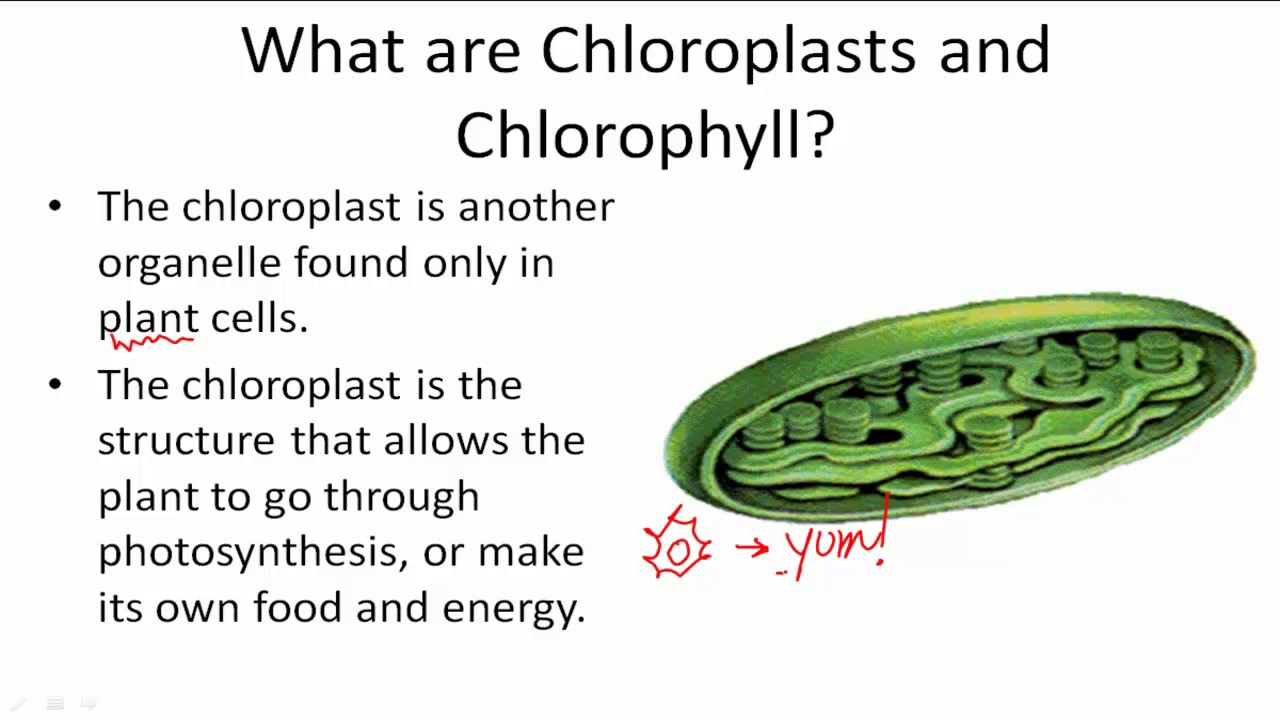
Functions of Chloroplasts and Chlorophyll
CK12
28K views•2017-05-24
Trending

13:25
Business
Playstation NO DISC/NO BUY Fight Is Over...
DavidJaffeGames
4K views•2026-07-23

22:40
Business
Steam and Xbox Just Dropped The Hammer On PlayStation
OhNoItsAlexx
9K views•2026-07-23

16:52
Anthropology
Americans Confused in Australia for 17 Minutes Straight
IWrocker
17K views•2026-07-23

1:19:25
Biology
LIVE NOW! Cellular Structure and Functions | Complete Cell Biology Lecture | Anatomy & Physiology
MukhtarAliyu-t7m
387 views•2026-07-23