Healthy fats (monounsaturated fats like avocados, olive oil, and nuts, and polyunsaturated fats including omega-3s from fish and seeds and omega-6s from vegetable oils) are essential macronutrients that support brain function, heart health, and vitamin absorption, with a recommended daily intake of 40-80 grams; in contrast, saturated fats should be limited to under 10% of daily calories and trans fats should be avoided entirely as they drive inflammation and damage blood vessels and joints.
Install our extension to search inside any video instantly.
Understanding good and bad fats in your diet | Sunrise
Added:The fat-free craze took the supermarket by star by storm rather with reduced fat products lining every shelves.
>> But contrary to popular belief, good fats are actually one of the most important parts of a balanced diet. And to tell us more is weekend sunrise nutritionist Sarah Dorenzo. Morning Sarah.
>> Good morning. Hi.
>> Walk us through the good fats. What do you got here?
>> Okay, I just want to start by saying fats are one of our macronutrients. The other two being like proteins and carbohydrates. They are so important for us and you know they're important for our brain for our heart for absorption of vitamins like AED and K you know hormonal health. Now the good fats the healthy fats you hear all about them.
I'm going to break them into two. So monounsaturated and polyunsaturated fats. So these are really important for our heart lowering cholesterol cholesterol. So this is monounsaturated fats here. So just things like the avocado, olive oil, tahini, sesame seeds, nuts and then we've got polyunsaturated fats. So polyunsaturated fats is a is the omega-3 and the omega 6. So this is >> your favorite sardines. [laughter] >> I know I just had a flashback to your breathing last week. Sardines. But anyway, and so here we've got the omega-3 which is really important for lowering inflammation for our heart health like the chia seeds, the walnuts, you know, the fish. And then we've got omega6 as well, which is the um vegetable oil there and the tofu. So this is the good fats, the healthy fats.
The good khak is they're actually usually stable at room temperature.
>> Yes. So then I'm bringing you to saturated fats. So saturated fats.
>> No. Well, I've >> I'm nervous cuz I can see a big piece of chicken there.
>> Well, it's the skin there. I put that there for the purpose of the skin, not what's underneath. So saturated fats, I'm going to divide that into two sections. So saturated fats under 10% of our daily take intake of calories. They they do come with other good things like you've got cheese. I've got cream. I've got some coconut there as well as butter and yogurt. But then you know you've got with yogurt say and cheese you're getting protein and calcium. So this is the saturated fats that are okay. The ones you want to avoid are the ones down there which is the like the fatty meat.
>> So that would be fine. The chicken if you just took that took the skin off and Yeah. And the fat that's that's stable at room temperature.
>> But you're you're anti- salami processed hands.
>> I am. Yeah. I'm going to own that. the cancer council and and over here I have trans fats. So trans fats are the ones that we want to avoid altogether cuz they drive inflammation and there's and it says clearly on the label just things like uh you can see here fried foods, pastries, that kind of thing there. What when you drive inflammation like that the means the immune system just never rests and what it does is it damages our health our um like blood vessels etc joints over here. How much fats should you be having in a day? Anywhere from 40 to 80 grams. It depends on your caloric intake of the day. I've put here what 75 grams of healthy fats looks like. So, you can see like the avocado, bit of fish, olive oil, nuts and seeds, and um and yogurt. And that's actually about 75 g.
That's a lot of nuts. S would that be a serving or would you have 30 g?
You can have that. That's a cup. It's like that. That's what you want to have.
And what I've done over here as [laughter] what ma is it too many do you think? No cup.
Yeah. A cuped handful. [laughter] Sorry. Okay. Over over here. What I've done is I'm showing you what 15 g of healthy fats looks like here. I love this salad. It's so easy to do. I've just got the fish there. I've made a salad here. And how I've got the extra fats in it is I have literally just thrown a whole lot of nuts over the top.
Simple, easy, delicious. What's in your dressing? And the dressing there, I've just got some a um So, I've put some lemon juice, olive oil, some honey. I love honey. And a little bit of Dijon, salt and pepper. Give it a shake. There it is. So, just a little bit of nutrition 101 today on why we should, you know, embrace. It's a back to basics kind of back to basics. They should really be a third of our daily intake of, you know, food all together. But these guys, as I said, just great. Thank you. Thank you, Sarah.
Related Videos

Why is IVF the treatment of choice?
aspirefertilityhouston
803 views•2026-06-14

The Lethal Cost of Disconnection: Loneliness, ADHD, and Life Expectancy | Dave Delaney TEDxFranklin
davedelaney
422 views•2026-06-15

ASMR Cranial Nerve Exam for Men Personal Attention Medical Roleplay for Sleep
gingerxasmr
999 views•2026-06-17
GLP 1s, Protein Shortages, and Apple’s Menopause Moment | Ep. 491
trimhealthymama
429 views•2026-06-18

Vaginal vs C-Section Recovery — What’s the Real Difference?
NutriAurabyAreej
935 views•2026-06-17

ECG interpretation made easy
Diseasedetective0
128 views•2026-06-14

21 Famous Actors Who Died From Alzheimer's Disease | Vintage Hollywood
BigstarV8
1K views•2026-06-19
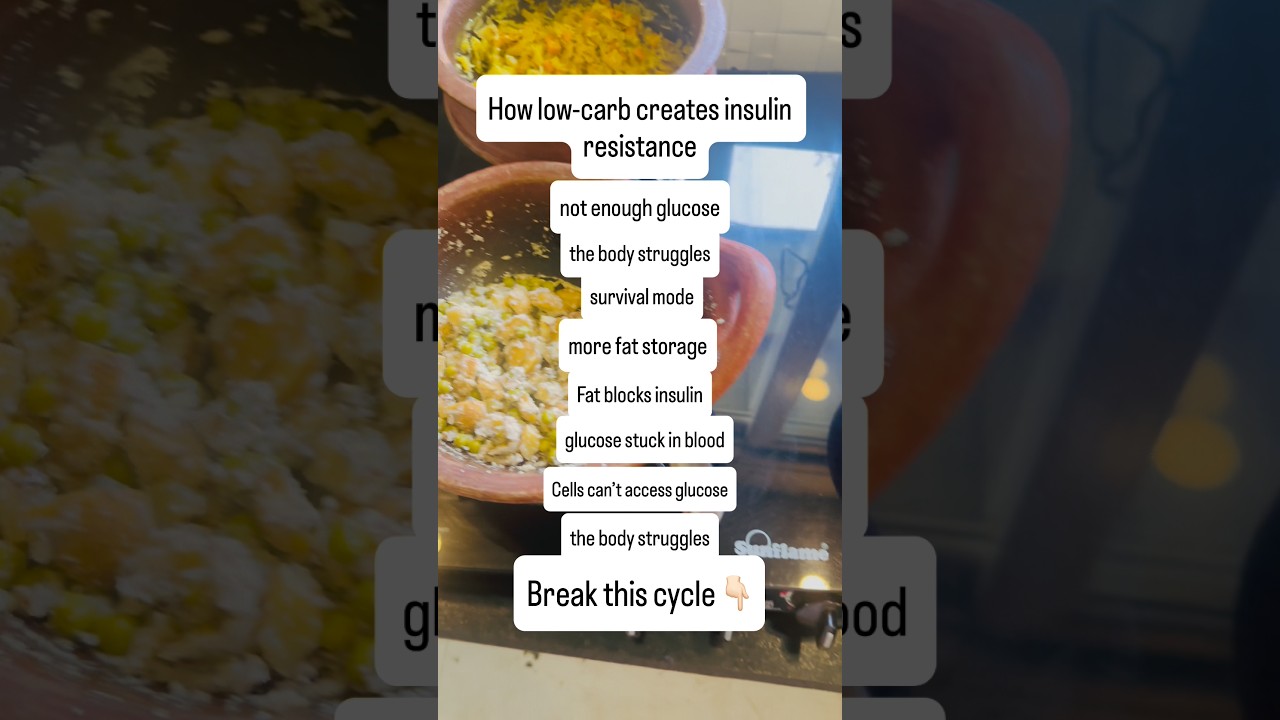
How low carb creates insulin resistance
Nidhikumari_healthcoach
1K views•2026-06-16



