The June 17, 2026 US-Iran memorandum of understanding reopened the Strait of Hormuz and lifted the naval blockade, but failed to resolve core political and security disputes including Iran's nuclear program and Israeli withdrawal from southern Lebanon, creating a structurally unstable ceasefire that depends on continued diplomatic pressure rather than genuine political settlement.
Install our extension to search inside any video instantly.
Israel REJECT Iran Deal - IRGC Hezbollah Launch Missiles At Israel - IDF Stay In Lebanon
Added:On June 19th, 2026, at 4:00 in the afternoon local time, a new ceasefire between Israel and Hezbollah took effect in Lebanon. The United States and Qatar brokered the deal through separate talks with Israel and Iran.
The Israel Defense Forces confirmed the ceasefire publicly, but made one thing clear.
Israeli troops would remain in the southern Lebanon buffer zone. And if Hezbollah attacked, Israel would respond. The ceasefire arrived barely 48 hours after the United States and Iran signed a memorandum of understanding meant to end nearly four months of war.
A war that began on February 28th when American and Israeli air strikes killed Iran's supreme leader, Ali Khamenei.
A war that closed the Strait of Hormuz, triggered a US naval blockade, and upended the entire strategic balance of the Middle East. In the hours between the signing of that memorandum and the announcement of this new Lebanon ceasefire, the fundamental contradiction at the center of the entire agreement became impossible to ignore. Israel flatly rejected the provision requiring its withdrawal from southern Lebanon.
Hezbollah fired rockets at Israeli troops in that same buffer zone. Iran's foreign ministry warned that continued Israeli presence in Lebanon would mean the annulment of the memorandum itself.
And the supreme leader of Iran issued a written statement saying he never actually wanted to sign the deal in the first place. This is the story of an agreement that was unstable before the ink dried. An agreement attempting to bind a sovereign nation to terms it never negotiated. An agreement built on a financial reopening mechanism that worked exactly as designed, while the actual political and security disputes driving the war remained completely unresolved. And an agreement whose survival now depends on whether a ceasefire brokered outside the memorandum's framework can hold longer than the memorandum itself. The 2026 Iran war did not begin as a diplomatic crisis. It began as a decapitation strike. On February 28th, 2026, the United States launched Operation Epic Fury, an air and maritime campaign targeting Iranian command and control centers. IRGC headquarters, ballistic missile sites, navy ships and submarines, anti-ship missile sites, air defense capabilities, and military airfields across Iran.
The opening salvo killed supreme leader Ali Khamenei.
Iran responded by closing the Strait of Hormuz to all foreign shipping and launching hundreds of retaliatory missiles and thousands of drones across the region targeting Israel, US military bases, and military and civilian locations in Arab states aligned with Washington. The Strait of Hormuz is not just another waterway. Around 20% of global petroleum and 20% of liquefied natural gas move through that Strait each year. Before the conflict, around 3,000 vessels used it every month. World Trade Organization data shows that during the war, ship traffic carrying crude oil dropped by 95%.
Ships carrying LNG dropped by 99%.
Oil and gas prices spiked globally.
Russia benefited. Iran, despite losing access to its own export markets, benefited in the short-term from higher global prices on whatever limited volumes it could still move. On April 13th, after initial ceasefire talks in Islamabad collapsed, the United States imposed a naval blockade on Iran.
President Donald Trump later claimed the blockade was costing Iran $500 million a day. The US Department of Defense estimated that by May 1st, Iran had lost $4.8 billion in oil revenue.
That blockade remained in effect through early June. The economic pressure from that blockade, combined with the broader collapse of Iran's maritime export capacity, created the conditions for serious negotiations to begin.
Pakistan's Prime Minister, Shehbaz Sharif, served as a key mediator.
On June 14th, he announced that the United States and Iran had finalized a memorandum of understanding.
Three days later, on June 17th, Trump and Iranian President Masoud Pezeshkian signed the framework deal digitally.
Under the interim agreement, Tehran and Washington had 60 days to reach a final settlement, including limits to Iran's nuclear program and the lifting of US sanctions on the Islamic Republic. Trump wrote publicly, "I hereby fully authorize the toll-free opening of the Strait of Hormuz and simultaneously herewith authorize the immediate removal of the United States naval blockade.
Ships of the world, start your engines.
Let the oil flow. And the oil did flow.
Dozens of commercial vessels crossed the Strait of Hormuz on June 18th, according to tracking data. The number of vessels crossing reached 25 that day, marking the highest number since mid-April. That was the economic dimension of the agreement and that part worked exactly as designed, but there was another dimension, a dimension involving Lebanon, Hezbollah, and Israel. And that dimension did not work at all.
Iranian Foreign Minister Abbas Araghchi held a press conference in front of foreign diplomats and ambassadors in Tehran shortly after the memorandum was signed. He said, "The end of the war in Lebanon is an inseparable part of the complete end of the conflict. Ending the war also includes ending the occupation.
Without the withdrawal of Israeli forces from the territories they occupied during this war, the war cannot be considered fully concluded." He also said something else that revealed disagreement about what the memorandum actually was.
"An important point I want to emphasize is that in our view, the two parties to this memorandum of understanding are the United States and Israel on one side and Iran and Hezbollah on the other."
Iran's top diplomat was saying that Hezbollah was a party to the agreement, not a proxy, not a militia that Iran might influence, a formal party. Israel saw things very differently. Israeli Defense Minister Israel Katz said publicly, "Prime Minister Benjamin Netanyahu and I are leading a clear policy that determines that the IDF will remain in the security zones in Lebanon, Syria, and Gaza without any time limit."
National Security Minister Itamar Ben-Gvir posted on social media, "Trump's agreement does not bind us.
Israel is not subject to the United States and we are an independent and sovereign nation." The Israeli Ambassador to the United States, Michael Leiter, rejected the interpretation that the agreement required Israeli withdrawal entirely. He said the Trump administration had been crystal clear that any agreement with Iran has nothing to do with withdrawal from South Lebanon. So, you had Iran saying the deal required Israeli withdrawal from Lebanon. You had Israel saying the deal had nothing to do with Lebanon. And you had the United States caught in the middle with both sides claiming American support for their interpretation. That contradiction was not hypothetical. It was operational.
And it became visible almost immediately.
On the night of June 18th, Hezbollah fired a barrage of rockets at Israeli troops in southern Lebanon. The IDF responded with airstrikes. A drone strike targeted a vehicle in the Kfar Tibnit area, killing two Hezbollah operatives. In the nearby village of Zebdine, a separate drone strike killed another Hezbollah militant. The IDF also destroyed the launcher that had fired the rockets. This was not an isolated incident.
During the week of June 1st through June 7th, according to data from the Alma Research and Education Center, Hezbollah carried out 198 attack waves against Israel and IDF forces operating in Lebanon. Most of those attacks, 168, targeted an IDF forces in southern Lebanon. 30 attack waves were directed at Israeli territory. During the ceasefire period that had been in effect since April 17th, 17 IDF soldiers and one Israeli civilian were killed on the northern front as a result of Hezbollah activity. Neither the ceasefire agreement of April 17th nor the statement of principles signed on June 3rd had prevented Hezbollah from continuing to conduct attacks against Israeli territory and IDF forces. So, when the memorandum of understanding was signed on June 17th, the pattern of violence in Lebanon did not stop. It continued. And Israel's position was clear. As long as Hezbollah continued attacking, Israel would not withdraw from the buffer zone.
Iran's position was equally clear.
On June 18th, Iran's foreign ministry spokesman warned that a continued IDF presence in southern Lebanon would mean the annulment of the memorandum of understanding.
And then, on June 19th, something shifted. Israel and Hezbollah agreed to a ceasefire in Lebanon that took effect at 4:00 in the afternoon local time.
The deal was brokered by the United States and Qatar through talks with Israel and Iran respectively. An Israeli source confirmed to Hebrew media outlets that the ceasefire had taken effect, adding that IDF troops would remain in the southern Lebanon buffer zone while threatening to respond if Hezbollah attacked.
This was not part of the original memorandum. This was a separate agreement negotiated on a separate track announced after the memorandum had already been signed. The ceasefire resolves at least temporarily the immediate question of whether Hezbollah and Israel will continue exchanging fire across the Lebanese border.
If the ceasefire holds, the rocket attacks stop, the airstrikes stop. The immediate violence de-escalates, but it does not resolve the underlying dispute about whether Israel will withdraw from southern Lebanon.
The ceasefire explicitly allows Israeli troops to remain in the buffer zone.
That means the provision that Iran's foreign ministry had said was essential to the memorandum's validity, the withdrawal of Israeli forces from Lebanese territory, has not been implemented. And there's no indication that Israel intends to implement it. So, you now have a ceasefire that may reduce the violence, but you also have an unresolved contradiction at the center of the broader agreement. Iran says the memorandum requires Israeli withdrawal.
Israel says it does not, and the ceasefire that was just announced does nothing to resolve that fundamental disagreement. The memorandum of understanding is not a final peace treaty. It is a framework for further negotiations. Under the interim agreement, Tehran and Washington have 60 days to reach a final settlement. The final settlement is supposed to include limits to Iran's nuclear program and the lifting of US sanctions on the Islamic Republic. Iranian Foreign Ministry Spokesman Esmail Baghaei told the Lebanese newspaper Al Akhbar that the memorandum determined that the United States and Iran will negotiate exclusively on the nuclear file and the lifting of sanctions. The most consequential demand underpinning the entire American negotiating position, complete and permanent renunciation of nuclear weapons capability, is precisely the demand that no faction inside Iran's current leadership structure has ever shown genuine willingness to accept as final and non-negotiable. President Trump posted publicly after the signing that Iran can never have a nuclear weapon. That has been the stated American position throughout this conflict. But Iran has never agreed to that condition in any formal binding irreversible way.
What Iran has agreed to is a 60-day negotiating window. What happens in that window is still completely uncertain.
And that uncertainty is compounded by the fact that the actual decision-making authority inside Iran is not entirely clear. On June 18th, Iranian state media announced that a statement from Supreme Leader Mojtaba Khamenei would be forthcoming. Mojtaba Khamenei assumed office as the third Supreme Leader of Iran on March 8th, 2026, following the death of his father, Ali Khamenei, in the February 28th airstrikes. He is 56 years old. He had previously served as a representative of the Supreme Leader and has a background in the Islamic Revolutionary Guard Corps. But Mojtaba Khamenei has not appeared in public since assuming the role. He was reportedly injured in the same strike that killed his father, and for months there has been speculation about his condition and his actual level of authority.
The statement that arrived on June 18th was not a public address. It was a written message distributed through state channels.
The statement said, "As a matter of principle, I held a different view." It went on to say that he had authorized the memorandum after receiving assurances from Iranian President Masoud Pezeshkian and other senior officials that Iran's rights and the interests of what the statement called the resistance front would be safeguarded.
The resistance front is a reference to Iran's regional proxy network, including Hezbollah. The statement also said, "He has also made it clear that should the American side seek to make excessive demands, they will not submit to them."
The statement establishes, in writing, that the Supreme Leader personally opposed signing this deal, that he was persuaded to authorize it based on specific assurances from President Pezeshkian, and that the entire arrangement rests on a commitment from a president who, by most credible accounts, does not actually hold the dominant operational authority inside Iran's security and military decision-making apparatus.
Throughout this conflict, the names that have consistently appeared as the actual decision-makers have been Parliament Speaker Mohammad Bagher Ghalibaf, Foreign Minister Abbas Aragchi, and behind the scenes, IRGC Commander Ahmad Vahidi.
Vahidi succeeded Mohammad Pakpour as commander of the Islamic Revolutionary Guard Corps on February 28th, 2026, the day the war began.
He is widely understood to be exercising significant influence over Iran's actual military and security decisions.
President Peseshkian, by contrast, has functioned, by most accounts, as a figurehead with limited genuine operational authority.
And yet, in this specific statement, it is Peseshkian's signature, Peseshkian's authority, that the Supreme Leader's office is citing as the basis for authorizing this agreement. That written statement also included this line, "Any future face-to-face negotiations should not be interpreted as acceptance of what it termed the enemy's viewpoint." So, the Supreme Leader authorized the deal, but he also made clear that he did not genuinely support it, and that any future negotiations should not be understood as acceptance of American terms.
The statement from the Supreme Leader quickly produced competing narratives inside Iran.
Supporters of the Iranian government presented it as a roadmap for the next phase of diplomacy. Critics argued it showed the leader's preferred approach had been sidelined during negotiations. Both President Peseshkian and Parliament Speaker Ghalibaf quickly issued statements pledging to follow the leader's guidance and defend the negotiating process.
The apparent effort to impose discipline on the debate coincided with growing scrutiny of those opposing diplomacy inside Iran.
Iran International, a news outlet based outside Iran with sources inside the country, reported on June 19th that Tehran was divided over what Khamenei's statement really meant. Was it an endorsement of the memorandum, or was it a public distancing from a deal he never wanted to sign? That ambiguity matters because if the supreme leader is already hedging his commitment to the agreement in public, that tells you something about how durable the agreement is likely to be. Under the memorandum, Iran gains phased access to approximately $6 billion.
This is not new American taxpayer funding flowing into Iran. This is Iran's own previously frozen money held in financial accounts in Qatar that had been restricted under American sanctions enforcement throughout this conflict.
The mechanism that US Treasury Secretary Scott Bessent constructed around releasing these funds is designed to prevent a straightforward cash transfer.
Rather than simply unlocking the funds for unrestricted use, the release mechanism only grants access through a controlled platform that permits purchases of American humanitarian goods or otherwise non-sanctioned American products. Iran cannot redirect this money toward weapons procurement. It cannot transfer it to third parties, including China.
And it cannot access it as liquid cash available for whatever purpose Tehran's leadership decides. This $6 billion exists, but it exists inside a controlled spending channel engineered to limit its strategic utility to anything beyond legitimate humanitarian or civilian commercial purposes. Iran can claim, for domestic political purposes, that it has secured access to billions in previously frozen assets.
But the practical reality is that this money functions less like a financial windfall and more like a tightly restricted credit line usable only for purchases that pose no meaningful strategic benefit to the IRGC's military reconstitution efforts. On June 18th, the United States Central Command issued a formal announcement confirming that American forces had lifted the blockade on all maritime traffic entering and exiting Iranian ports and coastal areas in accordance with presidential direction.
The statement specified that American forces were not impeding vessel transit to or from Iranian ports and that all blockade enforcement efforts had ceased.
But the statement included one additional detail.
American naval assets would remain positioned in the general theater to ensure that all aspects of the agreement continued being adhered to, obeyed, and enforced in full effect. The blockade enforcement has stopped. The carrier strike groups, the destroyers, the broader naval presence that took months to assemble in this theater have not gone anywhere. Naval and air assets of this scale and sophistication do not deploy or redeploy quickly.
Bringing a carrier strike group into position from the other side of the world takes weeks to months of logistical coordination. The reason previous rounds of negotiation stretched out as long as they did throughout this conflict was precisely because Washington needed that extended timeline to actually get the necessary military assets into theater before serious negotiating leverage existed. Those assets are already there now. They are not leaving. And that single operational fact means the moment to worry about American resolve evaporating is not now, while the ships remain on station, but if and when those assets begin actually departing the theater.
As of June 19th, there is no indication that withdrawal has begun. This is also not the first time observers of this conflict have believed Washington was on the verge of a settlement. This represents the third such moment across the broader arc of this confrontation.
>> [clears throat] >> The first came in mid-2025, when early diplomatic overtures generated speculation about an imminent accommodation.
The second came in the January and February window of this year, immediately preceding the war's actual kinetic opening.
This represents the third iteration of that same basic pattern.
A moment where public commentary suggests the administration may be conceding too much, only for the underlying military posture to remain fundamentally unchanged regardless of the diplomatic rhetoric surrounding it.
That pattern matters for calibrating how seriously take current concerns about this specific memorandum representing some kind of capitulation.
The actual hardware in theater tells a more reliable story than any single statement issued by either side's negotiating spokesperson.
The Islamic Revolutionary Guard Corps remains formally designated as a foreign terrorist organization under American law.
That designation was imposed in April 2019.
It was the first time a component of a foreign government's military was designated as a foreign terrorist organization by the United States. The United States does not, as a matter of stated and consistently enforced policy, negotiate directly with entities carrying that designation.
Every formal document in this process has been structured as an agreement between the United States and the Islamic Republic of Iran as a sovereign state with President Puzheshkian's signature serving as the formal instrument of execution rather than any agreement directly involving IRGC officials in their organizational capacity. But, the practical reality, documented consistently throughout this entire conflict, is that the IRGC, not the civilian government nominally headed by Puzheshkian, has functioned as the actual locus of military and security decision-making authority inside Iran for the entirety of this war.
If elements connected to or controlled by the IRGC are understood to be the genuine authority behind whatever commitments this memorandum requires Iran to honor, that creates a serious problem for any attempt to formalize this agreement through processes requiring congressional review or ratification. Any arrangement that can be credibly characterized as negotiating with or providing material benefit to a designated terrorist organization faces a fundamentally different and far more difficult legal pathway than a straightforward state-to-state agreement. You can construct an agreement on paper that formally involves only the Islamic Republic as a state entity.
But, if the actual operational authority enforcing or violating that agreement's terms, the decision to keep the Strait of Hormuz open or closed, the decision to continue or restrain Hezbollah's activity in Lebanon, the decision regarding actual nuclear program compliance, rests with an organization the United States legally cannot negotiate with as a recognized counterparty, then the entire formal structure of this agreement is built on a foundation that may not survive serious legal or congressional scrutiny.
President Trump's public messaging in the hours following the signing reveals precisely where the actual unresolved fault line in this entire agreement sits.
He posted publicly that oil was flowing again, that Iran could never have a nuclear weapon, that the world would be safe as a result, that stock markets were performing strongly, that jobs were at record levels, that prices were dropping, framing the overall outcome as evidence that the country was stronger, safer, and more respected than at any previous point. The most consequential single sentence in that entire post, the assertion that Iran can never have a nuclear weapon, is also the single sentence that the Islamic Republic has never at any point across this entire conflict, across the previous JCPOA negotiations of the past decade, or across any prior round of diplomacy stretching back decades, actually agreed to accept as a permanent irreversible condition. Market reaction celebrated the financial and economic dimensions of this announcement. The restored oil flow, the unfrozen assets, the renewed trade confidence, but the actual core demand underpinning the entire American negotiating position, complete and permanent renunciation of nuclear weapons capability, is precisely the demand that no faction inside Iran's current leadership structure has ever shown genuine willingness to accept as final and non-negotiable. You can restore oil exports. You can unfreeze billions in assets.
You can reopen a maritime choke point.
None of those provisions require either side to resolve the actual irreconcilable position each holds regarding Iran's nuclear future.
Washington's stated position, repeated explicitly and publicly, is that Iran will never be permitted nuclear weapons capability.
Iran's documented institutional behavior across every available data point throughout this entire conflict and the decades preceding it indicates a regime that continues to view nuclear capability as the ultimate strategic insurance policy protecting every other dimension of its regional position.
Those two positions cannot both be true simultaneously in any final signed durable agreement. Something has to give, and the available evidence so far suggests neither side has actually conceded the point that matters most.
There was also tension inside the Trump administration itself in the hours surrounding the memorandum signing. On June 18th, after four Israeli soldiers were killed in Lebanon, Vice President J.D. Vance publicly criticized Israel.
Iranian Foreign Minister Abbas Aragchi accused Israel of wanting permanent war following remarks from Israeli National Security Minister Itamar Ben-Gvir saying all Lebanon must burn after those soldiers were killed. Vance's public criticism of Israel came at the same moment that the administration was attempting to finalize the ceasefire framework with Iran. That public split between the Vice President and Israeli officials created confusion about whether the administration was operating from a unified position.
Within the same news cycle, President Trump moved from urging all parties toward peaceful de-escalation to confirming that the United States would support Israel if circumstances required. Those two positions cannot coexist coherently. You cannot simultaneously instruct every party to stand down while also committing to support one of those parties if it decides to act. The financial track is moving forward exactly as designed. Oil exports have resumed. The carefully restricted $6 billion mechanism is operational. Markets have responded with confidence treating the broader announcement as evidence of de-escalation regardless of the underlying contradictions still unresolved. The military track remains essentially frozen in its current posture. The blockade enforcement has formally ceased, but the naval and air assets that took months to assemble in theater have not moved preserving the full coercive leverage Washington built up throughout this conflict in the event that compliance breaks down. In the political track, the actual diplomatic substance of whether this agreement resolves the underlying disputes driving this entire war is fracturing in real time. Visible in Hezbollah's renewed attacks within hours of signing. Visible in Israel's explicit rejection of the Lebanon withdrawal provision. Visible in the supreme leader's carefully hedged statement distancing himself from a deal he claims he never genuinely wanted to sign. Invisible in the fundamental unresolved contradiction between Washington's stated position that Iran will never possess nuclear weapons and Iran's entire institutional history of treating nuclear capability as non-negotiable strategic insurance. The ceasefire announced on June 19th may reduce the immediate violence in Lebanon. If it holds, it could create space for the 60-day negotiating window to proceed without the constant friction of rocket attacks and airstrikes.
But the ceasefire does not resolve the underlying dispute about Israeli withdrawal. It does not resolve the question of who actually holds decision-making authority inside Iran.
It does not resolve the nuclear question.
And it does not resolve the structural legal problem created by the IRGC's designation as a foreign terrorist organization. The Strait of Hormuz is open.
Around 20% of the world's oil and 20% of the world's liquefied natural gas flow through that waterway.
The closure of that strait for nearly 4 months had real consequences for global energy markets, for inflation, for supply chains, and for the economies of dozens of countries that depend on that route. The UAE's state-owned oil company estimates that full flows through Hormuz will not resume until 2027, even if the deal holds.
But the fact that 25 vessels crossed on June 18th, the highest number since mid-April, indicates that the reopening is real and operational.
The financial mechanism releasing $6 billion in frozen Iranian assets with strict controls on how that money can be spent represents a sophisticated approach to sanctions relief that limits the strategic risk while still providing Iran with something it can characterize domestically as a win. And the 60-day negotiating window, if it is used effectively, could create the space for a more comprehensive agreement on the nuclear question.
Those are real accomplishments. They should not be dismissed, but they also should not be confused with a resolution of the war. Because the war is underlying drivers, the nuclear question, the regional proxy network, the question of Israeli security along its northern border, remain unresolved.
Hezbollah began attacking Israel the day after the October 7th, 2023 Hamas massacre, opening a second front from Lebanon and launching thousands of rockets, drones, and anti-tank missiles at Israeli communities.
The attacks forced more than 60,000 Israelis to evacuate their homes, leaving many communities near the Lebanese border largely empty. Hezbollah is not a conventional state actor that can be negotiated with through normal diplomatic channels.
It is not a government. It does not operate under the kind of institutional self-interest that produces durable ceasefires with neighboring states. It is an organization with significant military capability, deep ties to Iran, and a long history of conflict with Israel.
And any agreement that requires Israel to withdraw from a buffer zone specifically created to manage the threat Hezbollah poses was always going to face serious resistance from Israeli decision-makers. The question that remains unanswered is whether the ceasefire announced on June 19th can hold long enough for the 60-day negotiating window to produce a more comprehensive settlement. If Hezbollah stops attacking and Israel stops conducting airstrikes, the immediate violence de-escalates. That creates space for diplomacy. But, if the ceasefire breaks down, if Hezbollah resumes rocket attacks, if Israel responds with strikes, the entire memorandum becomes unworkable because Iran has already said that continued Israeli military action in Lebanon would constitute a violation of the agreement.
And Israel has already said it will not withdraw from the buffer zone as long as its security requires maintaining that presence.
So, the durability of the ceasefire is not just a question about Lebanon. It is a question about whether the entire memorandum can survive its first month.
There is also a parallel negotiating track that has received limited attention in most American coverage of the story. The IDF's potential withdrawal from areas of southern Lebanon was still being discussed under direct negotiations being held between Jerusalem and Beirut separately from the US-Iran talks. The teams were expected to convene again next week. Israel has said those talks are ultimately aimed at securing a full peace deal. Lebanon has said the talks are only focused on de-escalation, but Hezbollah has vowed not to recognize or abide by any deal those talks produce. That raises the prospect of a renewed civil war inside Lebanon with the Lebanese government attempting to enforce an agreement that Hezbollah refuses to accept. That internal Lebanese dynamic is a hidden fault line that could determine whether any long-term settlement in Lebanon is actually enforceable. Because even if Israel and the Lebanese government reach an agreement, if Hezbollah does not comply, the violence does not stop. And if the violence does not stop, Israel will not withdraw. The most credible assessment based on every available signal across the past 72 hours is that this specific memorandum in its current form was structurally unlikely to hold even before the ceasefire was announced.
The financial and maritime provisions are working.
The Strait of Hormuz is open. Uh the controlled spending mechanism for frozen assets is operational. The naval blockade has been lifted. But the political and security provisions, you did the provisions that actually address the core disputes driving this war, remain unresolved. Israel has rejected the Lebanon withdrawal requirement. The supreme leader of Iran has publicly distanced himself from the agreement while simultaneously authorizing it.
The nuclear question, the single most important issue from Washington's perspective, has not been resolved. And the internal political dynamics inside both Iran and Israel suggest that neither government is operating from a position of unified strategic consensus.
The ceasefire announced on June 19th may buy time. If it holds, that is significant.
But time alone does not resolve the underlying contradictions. What happens next depends on whether the 60-day negotiating window can produce a more comprehensive agreement that actually addresses the nuclear question, whether the Lebanon ceasefire holds long enough for that window to remain open, whether the supreme leader's hedged authorization of the deal becomes a political liability for President Pezeshkian inside Iran, and whether the Trump administration can maintain a coherent unified position on what it is actually willing to accept as a final settlement. Those are the variables that will determine whether this memorandum was the beginning of a genuine peace process or simply another temporary pause in a conflict that has not actually ended.
The United States demonstrated through the naval blockade and the broader military campaign that preceded it that it is capable of imposing enormous economic and military pressure on Iran when it chooses to do so.
The blockade worked. The reopening of the Strait of Hormuz was not a concession Iran offered voluntarily. It was a concession Iran made because the alternative was continued economic collapse. But the United States also demonstrated through the structure of this memorandum and the contradictions it contains that translating military and economic pressure into a durable political settlement is far more complicated than simply forcing the other side to the negotiating table. You can force Iran to reopen the Strait of Hormuz. You can force Iran to sign a memorandum, but you cannot force Iran to accept permanent, irreversible renunciation of nuclear weapons capability unless you're willing to maintain the military and economic pressure indefinitely or unless you are willing to offer concessions that no American administration, regardless of party, has shown willingness to offer.
And you cannot force Israel to withdraw from territory it believes is essential to its security unless you are willing to provide security guarantees that Israel finds credible.
And the challenge there is that the threat Israel is managing Hezbollah is not a conventional military force that can be deterred through traditional security guarantees. It is a proxy force with ties to Iran, with its own independent decision-making capacity, and with a demonstrated willingness to continue attacking Israel even during ceasefire periods. So, the memorandum reflects the limits of what pressure alone can achieve. It can reopen the Strait. It can create a negotiating window. It can release frozen assets under controlled conditions, but it cannot, by itself, resolve the core disputes that drove the war in the first place. The final question is whether the 60-day window is enough time to resolve those disputes.
And the honest answer, based on the available evidence, is that it depends entirely on whether both sides are willing to make concessions they have not yet shown any indication they're willing to make. Iran would have to accept permanent, verifiable limits on its nuclear program that go beyond anything it has accepted in the past.
That means not just freezing enrichment at current levels, but rolling back capabilities, accepting intrusive inspections, and providing credible assurances that it will not pursue weaponization in the future. Israel would have to accept a security arrangement in Lebanon that does not require the indefinite presence of IDF forces in the buffer zone.
That means either trusting that Hezbollah will be restrained by Iran or trusting that an international Lebanese security mechanism can provide the same level of protection that the buffer zone currently and the United States would have to manage the internal contradictions of its own position. Supporting Israel's security while also pressuring Israel to make concessions. Demanding permanent limits on Iran's nuclear program while also offering sanctions relief that Iran can use to rebuild its economy and potentially its military capacity.
None of those trade-offs are easy, none of them are politically straightforward, and none of them are guaranteed to succeed. But the alternative is a return to the status quo that existed before the memorandum was signed. Continued low-level conflict in Lebanon, continued economic pressure on Iran, continued uncertainty about Iran's nuclear program, and continued risk of a broader regional escalation that could draw in additional actors and produce consequences far worse than anything we have seen so far.
So, the 60-day window is not just a diplomatic formality. It is a genuine test of whether the United States, Iran, and Israel are capable of resolving disputes that have been unresolved for decades. The financial and maritime provisions of the memorandum suggest that when the incentives align, progress is possible. The Strait of Hormuz is open because both sides had a clear interest in making it open. Iran needed the economic relief, the United States needed the global energy markets to stabilize, and both sides were willing to make the concessions necessary to achieve that outcome. The political and security provisions suggest that when the incentives do not align, progress is far more difficult. Israel does not see a clear interest in withdrawing from the buffer zone as long as Hezbollah continues to pose a threat. Iran does not see a clear interest in accepting permanent limits on its nuclear program as long as it views that program as essential to its long-term security.
And until those incentives shift, no amount of diplomatic pressure, no matter how skillfully applied, is likely to produce a final settlement. On June 17th, the United States and Iran signed a memorandum of understanding meant to end nearly 4 months of war.
The memorandum reopened the Strait of Hormuz, lifted the US naval blockade, and created a 60-day window for further negotiations on Iran's nuclear program and broader regional issues.
On June 19th, a separate ceasefire between Israel and Hezbollah took effect in Lebanon, brokered by the United States and Qatar. That ceasefire allows Israeli troops to remain in the buffer zone while attempting to de-escalate the immediate violence. The financial and maritime provisions of the memorandum are working. Oil is flowing, frozen assets are being released under controlled conditions. Markets have responded positively, but the political and security provisions remain unresolved. Israel has rejected the Lebanon withdrawal requirement. The supreme leader of Iran has publicly distanced himself from the agreement while simultaneously authorizing it. The nuclear question has not been resolved, and the internal political dynamics inside both Iran and Israel suggest that neither government is operating from a position of unified strategic consensus.
The ceasefire may buy time. The 60-day negotiating window may produce a more comprehensive settlement.
But the underlying contradictions that drove this war in the first place, the nuclear question, the regional proxy network, the question of Israeli security along its northern border, have not been resolved by anything signed over the past week. What happens next depends on whether the parties involved are willing to make concessions they have not yet shown any indication they are willing to make. Whether the ceasefire holds, whether the supreme leader's hedged authorization becomes a political liability inside Iran, and whether the Trump administration can maintain a coherent position on what it is actually willing to accept as a final settlement. This was not the end of the war. This was a pause, a fragile, heavily negotiated, structurally unstable pause.
And whether it holds long enough to become something more durable will be answered in the weeks ahead, not by the language of the memorandum, but by the decisions made by leaders in Tehran, Jerusalem, and Washington when the immediate pressure to de-escalate fades and the harder questions about long-term security, nuclear capability, and regional power return to the foreground.
Related Videos
126 .bikey6
mikey.bikey6
572 views•2026-06-16

Tamil Nadu Assembly | "இருமொழி கொள்கை பின்பற்றப்படும்" | Governor Arlekar | 2 Language Policy
News18Tamilnadu
558 views•2026-06-18
Rep
RobSmithOnline
3K views•2026-06-15
Cross-Voting Hits INDIA Bloc As NDA-Backed Nathwani Wins Jharkhand Seat, ZPM Makes Rajya Sabha Debut
cnnnews18
283 views•2026-06-19
WHILE TRUMP BEGGED CHINA FOR HELP — CHINA WAS SECRETLY ARMING IRAN BEHIND HIS BACK
Frumreporttwo
219 views•2026-06-18

The U.S. Iran 14 Point Memo of Agreement... What's REALLY Happening...
J.S.Candid
4K views•2026-06-17
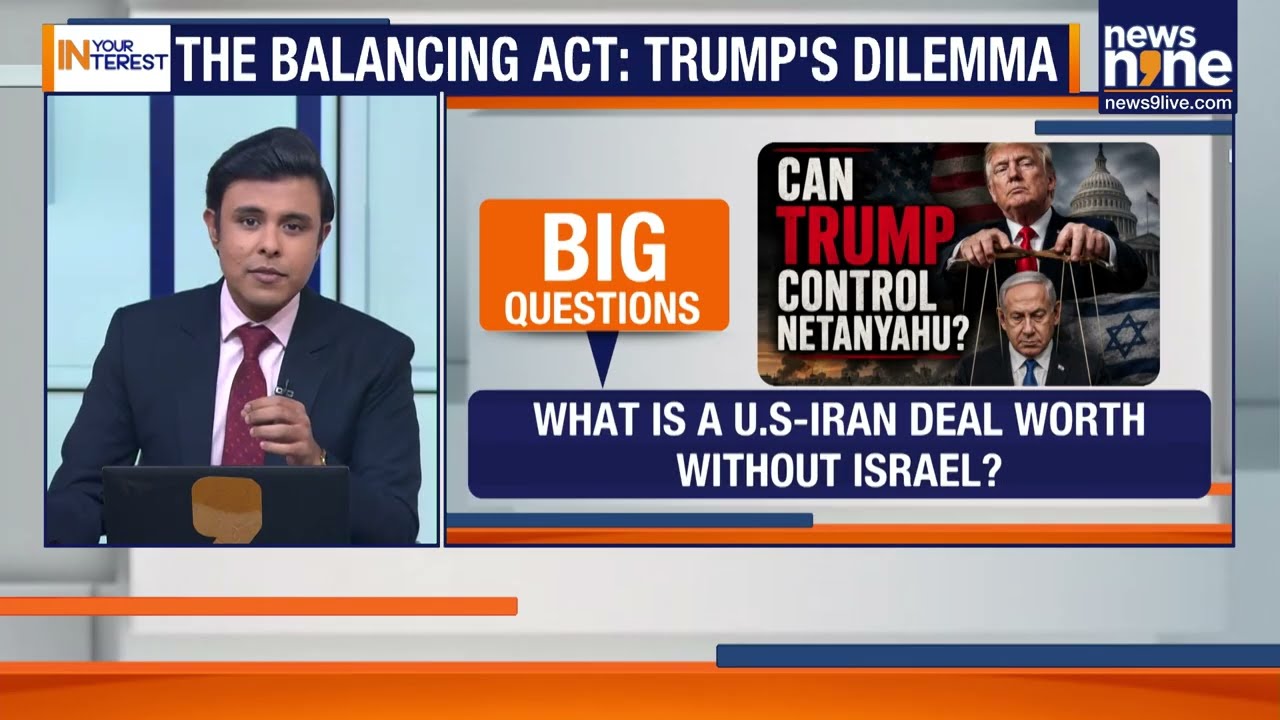
Israel Says 'NO' to Trump's Iran Deal | Peace Deal or Middle East Powder Keg?
NEWS9LIVE
365 views•2026-06-15

Iran emerges stronger, Israel more isolated after war, analysts warn
aljazeeraenglish
65K views•2026-06-14



