The US and Iran signed a 14-paragraph Memorandum of Understanding (MOU) to end the war, with key provisions including the US lifting sanctions and naval blockade, Iran allowing commercial traffic through the Strait of Hormuz, and Iran diluting its uranium stockpile under IAEA supervision. However, this initial agreement is merely a framework for 60 days of negotiations, as the MOU contains significant ambiguity and does not address critical issues like Iran's missile programs, support for militant groups, or the Lebanon front. The deep mistrust between the two sides, combined with unresolved core disagreements, means the actual peace deal will require months of contentious negotiations, with the MOU representing only a small step forward rather than a comprehensive peace accord.
U.S. and Iran sign an initial peace deal – now the challenge begins
Added:This week, US President Donald Trump signed the initial agreement with Iran to end the war.
>> [music] >> The memorandum of understanding, at least a draft read out to journalists this week, >> [music] >> has just 14 paragraphs.
Let me give you a snapshot of what's in it.
The US, Iran, and their allies will stop all military operations.
The US will begin removing its naval blockade against Iran.
And Iran will allow the commercial traffic of vessels in the Strait of Hormuz. [music] The US will end all sanctions against Iran.
>> [music] >> And in exchange, Iran will dilute its stockpile of enriched uranium.
Now that the agreement is signed, the clock starts on 60 days of negotiations to work out the details of the final peace deal.
So today, [music] Thomas Juneau is back on the show.
He's a professor at the Graduate School of Public [music] and International Affairs at the University of Ottawa.
And an expert on Iran.
He'll tell us what we can expect from the next [music] 2 months of negotiations.
Why these economic measures and the nuclear program are such points of pressure.
And what the MOU means for the prospect of an actual end [music] to the war.
I'm Sheryl Sutherland, and this is The Decibel from The Globe and Mail.
Hi Thomas, welcome back to The Decibel.
>> Thanks for having me again.
>> So we're talking to you around midday on Thursday. And yesterday, President Trump and Iranian officials signed this MOU.
So it's supposed to take, quote, immediate effect. But what does that mean, exactly? Like what what is supposed to be happening immediately, or at least start happening now that the agreement is signed?
>> Well, it's it's good that your first question is what does that actually mean? Because, as you said, there's only 14 paragraphs, and they are quite vague.
There's a lot of ambiguity. There's a lot of uncertainty in terms of what comes next. I mean, there's a few things that we know are going to happen in the very short term, but there's still a lot of uncertainty in terms of of what all of this could mean. In the very short term, what it means is that the US and Iran are going to launch negotiations on the nuclear program on Iran's nuclear program. The general idea will be that Iran will agree to roll back its nuclear program in exchange for sanctions relief coming from the American side. Very easy to say, extraordinarily difficult to do.
The other thing that happens in the short term is a reopening of the Strait of Hormuz, which is something that the two sides wanted to happen. Iran is going to stop its own threat to attack shipping in the strait, which caused oil tankers and so on to refrain from transiting through. The MOU says that for 60 days shipping will resume in the Strait of Hormuz. Iran says that there will be no fees for the that 60-day period, but that it is an open possibility after that. And the US will stop its maritime blockade of of Iran, therefore allowing Iranian oil exports and other exports to resume.
Again, that's very ambiguous. It's not clear what that actually means in practice, and it is not a sudden overnight reopening of the strait.
>> Okay, so let's zoom in on the Strait of Hormuz for a moment here then, because I think that's what we've been hearing a lot about during this war. You mentioned that it's not going to happen immediately. Can you just expand on that?
>> So, there's a lot of uncertainty on on what happens next in the Strait of Hormuz. Most immediately is the security dimension, and that implies the question of naval mines, right? Mines, but not landmines of the type that we usually hear about, but mines that are underwater, not too deep, and that will threaten ships that transit through the Strait of Hormuz. We actually don't know to what extent Iran mined the Strait of Hormuz, and obviously where the mines are. So, in the very immediate term, the first priority is to see whether demining has to occur. So, right there there's a huge amount of uncertainty because if you are the owner of a an oil tanker, you are not going to want to transit the Strait of Hormuz if there's any kind of risk that a mine is going to blow up your ship. And I would add that Iran is really playing that ambiguity and playing with that uncertainty because from its own perspective, and yes that's extraordinarily cynical, but it gives it a degree of leverage of control over what happens next. Beyond the issue of mines, there's still the issue of tension between the US and Iran. These are two countries that basically agreed to prolong a ceasefire, but are still de facto enemies.
That has not changed. Nothing that deeply opposes these two countries for 47 years now has been resolved. So again, if you are the private owner of an oil tanker or a liquefied natural gas vessel, you will be careful. You will want to be really confident that you are not going to transit what was a war zone until not long ago, where there might still be mines. You want to be sure that there won't be a spike a sudden spike in tension and that US and Iran violence could start again and put your ships at risk. Beyond that, there's a logistical angle. Even if or when the security questions are resolved, which they could be in the coming days and weeks, even if uncertainty will remain, you know, I'm not an economist, I'm not an energy economist, but but what I've been reading a lot over the past few months is that supply chains have been heavily disrupted and you do not resume them by snapping your fingers and then suddenly you can resume oil productions at 100% pre-war levels and just send your ships out. It's going to take weeks to to rebuild the supply chains for all of the the 150 or so ships that used to transit daily. Right now, there is more than a thousand ships stuck inside the Persian Gulf unable to transit the Strait of Hormuz.
If you just do the math, it's going to take weeks to clear that backlog. And by the way, there's something to be said here for just a second to have a thought for the 20,000 or so sailors who have been stuck on these ships in brutal brutal humanitarian conditions with tremendous security uncertainty as well.
They have had it really difficult for the past few months.
>> Yeah, absolutely. Um and that's what I was thinking about. Yeah, the sailors that have been there for so many months there.
I want to zoom in on the main things that the two sides wanted and what the agreement lays out here. So, Iran's focus is around economic relief. So, that's kind of the removal of sanctions and unfreezing assets. And for the US, it's about Iran's nuclear program. So, let's start with Iran. First off, what are the sanctions against Iran and what has Iran been dealing with?
>> So, for decades, the international community, obviously led by the US, has imposed an extraordinarily invasive range of sanctions, commercial, economic, trade, financial, on Iran, on the Islamic Republic of Iran because the West, the US, opposes its foreign policy. These sanctions have been extraordinarily damaging to Iran economically and to its people. Remember where we were just 6 months ago when people were in the streets of Iran protesting against the regime which was repressed with tremendous brutality in early January.
The deeper reason for these protests was the repression and and brutality of the regime. The immediate catalyst of these these protests were economic, the absolute collapse of the Iranian currency which was caused by yes, mismanagement by the government, but also years and decades of sanctions.
Where are we today? What the MOU says from this week, and this is where there's a lot of ambiguity and a lot of potential controversy in the weeks and months and years ahead, is three types of economic relief for Iran. One, sanctions relief. The MOU actually says all American sanctions on Iran are to be lifted which >> That's a really big deal, no?
>> When I saw that on Wednesday, absolutely boggled my mind. I did not expect that to come and I don't think others expected that.
It doesn't mean it's going to happen.
It's going to have to be negotiated. But just the fact that it's written on the paper is stunning. So, that's the first aspect. The second aspect is the unfreezing of Iranian assets abroad.
There are something like 50 to 100 billion dollars. We don't actually know the precise amount of Iranian assets that are frozen in banks in some neighboring countries like Iraq, like the UAE, but also in India and China and small amounts in European countries and the US as well. Iran has long been asking for the unfreezing of these assets. The MOU is not clear. Is it 100%? Is it a lot of it? On what based on what criteria? At what speed? But it does talk about the unfreezing of a lot of these assets.
>> Toma, can you remind us about these assets? Like whose money is it? Where is it being held?
>> So, in most cases, this money is Iranian money that Iran used to buy stuff, in many cases oil, but not only oil from other countries.
But that money was never able to return to Iran because of sanctions. Because of American financial sanctions on the international banking system are so powerful, are so constraining that even banks in China or India, not allies of the US, have been very reluctant to give back to Iran what it is owed as part of these range of financial, commercial, or economic transactions. So, technically it's Iran's money. It's Iranian assets frozen abroad. And so, just to go back on the economic release dimension, the third pillar which the MOU calls for is a 300 billion-dollar reconstruction fund for Iran to rebuild itself after the war because remember that the war caused severe damage in Iran, economic and other infrastructure. There's a lot of ambiguity here. Again, my mind was boggled when I saw that number.
>> Yeah, can you put that in perspective because 300 billion to me sounds like an unprecedented number. Is that is that fair to say?
>> It is absolutely unprecedented, and because it is, I'm extremely skeptical that it's actually going to happen.
Again, just the fact that it's there has to count as some kind of a propaganda win for Iran, but who's going to pay for that money? The US says it's not going to put a cent into it, which I really struggle to believe could happen. There are some media reports that the Gulf states or the rich countries like Saudi Arabia, UAE, Qatar are going to fund that money.
I struggle to believe that these states that hate Iran, that are enemies of Iran, that have just been bombed by Iran will be enthusiastic at the prospects of investing $300 to rebuild their damaged enemy. Some money, perhaps, but I would say as long as things don't seriously change, nowhere near that astronomical amount.
>> Mhm, okay. That's very interesting.
Okay, so let's um let's turn to the US and what they got from Iran at least on this MOU. So their big concern was Iran's nuclear program. Can you just remind us why this is such a priority for the US and for President Trump?
>> So I think there's a several different layers to to talk about here. Generally speaking, Iran's nuclear program is a problem for everybody. And when I mean everybody, I actually mean almost everyone in the international community except either small number of Iran's close partners, which are non-state groups like Hezbollah, like Hamas, like the Houthis.
Everybody else hates the idea of Iran eventually getting a nuclear weapon. Of course, there's a lot of ambiguity and we could have a whole show only talking about Iran's nuclear program. Iran does not have a nuclear bomb today. Iran has always said it does not want a nuclear bomb, but it does have a pretty advanced nuclear program that could sprint to a nuclear bomb in something like a year. So that's the context. Part of this war was to set back Iran's nuclear program, to not only destroy it physically, militarily by bombing it, which was partly done, but also by damaging Iran in the war to force Iran to make more concessions on its nuclear program. So where are we at now? Trump is framing the MOU as a big win for the US because Iran pledges never to make a nuclear weapon, which again is simply untrue in the sense that Iran has always pledged that it doesn't want a nuclear weapon. What actually matters is a verifiable process to roll back Iran's nuclear program and to constrain it in the future. That will only come as a result of negotiations.
It will not come as a result of one paragraph on a piece of paper that was electronically signed this week. So, that's where the negotiations that are to come now are extremely important to see what could be done to roll back seriously Iran's nuclear program and to constrain it, to verify it, to monitor uh what happens next.
>> Mhm. Okay, so something from the MOU or from the text of the agreement it sounds like the US and Iran are going to work out the details in the final agreement, but that at the very least Iran will have to dilute its stockpile under the supervision of the UN's International Atomic Energy Agency.
How significant of a concession is that?
>> That is a bit of a concession, but again, this is these are words on a piece of paper. What is in the MOU of this week are are very vague parameters for the US and Iran to engage in these negotiations. So, I wouldn't even call that a commitment on the part of Iran.
Just in parentheses, uranium is enriched to 3% and then it is used for electricity generating purposes, to 20% then it can use for medical purposes, when it is enriched at 90% uh then it is what we call weapons grade or bomb grade uranium that can be used as fissile material for nuclear weapons.
Iran has about 400 kg of 60% uranium, which is just under 90% and it's really easy to go from 60 to 90. So, that 400 kg of 60% uranium, if enriched to 90%, would be use would be usable for about 10 nuclear bombs. Iran would have to do a lot of other things, a lot of other ingredients as part of a nuclear bomb to to actually assemble a functional nuclear bomb, but it remains that that 400 and something kilograms of 60% uranium was very problematic. So, yes, it's encouraging that Iran agrees with the principle of diluting it so that it is farther away from weapons grade, but again, this so far is just a vague commitment.
There will have to be negotiations by the US and Iran as to exactly how that is done. And besides the the uranium itself, how many centrifuges, which are the spinning machines that actually enrich the uranium, how many of them does Iran get to keep? What do we do with Iran's other nuclear infrastructure, which is an extremely complex set of multiple sites?
At this point, we do not know the answer to that.
>> So, as you laid out, like the nuclear program is of course an issue not just for the US, but for the whole world. But something that we've seen in this war and and um you know, war that are being fought today, not just the one in Iran, is that the big thing that we're seeing are the missiles and the drones, right? This is how how the wars are being fought. And notably absent in this agreement was anything about Iran's other military capabilities like missiles and drones or its support of militia groups outside Iran. So, what do you make of that? Um does that mean that that issue won't be part of the negotiations? Is this an omission from the states?
>> Yep.
>> Look at the war of the past 3 months. Uh how did Iran close the Strait of Hormuz?
How did Iran hit and inflict pain on Saudi Arabia, the UAE, and others? Was it with its nuclear program? No. It was with its missiles and drones. If you go around the Gulf right now, Saudi Arabia and elsewhere, and ask them, "What is your immediate concern coming from Iran?" Of course, in the back of their mind, their longer-term concern is the nuclear program, not diminishing that aspect at all. What is the immediate concern with Iran? It is its missile and drone programs and its support for non-state armed groups, some of which we list as terrorist groups in this country like Hamas and Hezbollah, the Houthis in Yemen, and several others. This MOU says absolutely nothing about that. And there's a reason for that. Iran absolutely refuses to negotiate on that.
And because Iran considers that it won this war, because it survived, because it was able to straight close the Strait of Hormuz, Iran very clearly signaled to the US, this is off the table.
>> [music] >> We'll be right back.
Tomorrow, let's talk about Lebanon, um because this has been kind of one of the big stumbling blocks in getting even this initial agreement on paper.
The very first paragraph of the MOU says that there will be a quote immediate and permanent termination of military operations on all fronts, including in Lebanon.
Why is that significant?
>> It's significant because Iran asked for it. Uh from Iran's perspective, it absolutely wanted the two fronts of Iran, its war with the US, and Israel, and the front of Lebanon, the Hezbollah Israel war, to be linked. It wanted that to be considered as one front, which Israel resisted. Uh from Iran's perspective, it absolutely wanted a ceasefire, obviously, in the Gulf, but it also wanted, basically, Israel to stop hitting Hezbollah, because these Israeli strikes on Hezbollah were not succeeding in eliminating and fully defeating Hezbollah, but were causing a lot of damage on Hezbollah. So, from Iran's perspective, it wanted to protect uh one of its prized assets, which is its partnership with Hezbollah in Lebanon. So, Iran won. I mean, that is a an aspect of the negotiations in which Iran can absolutely claim a success.
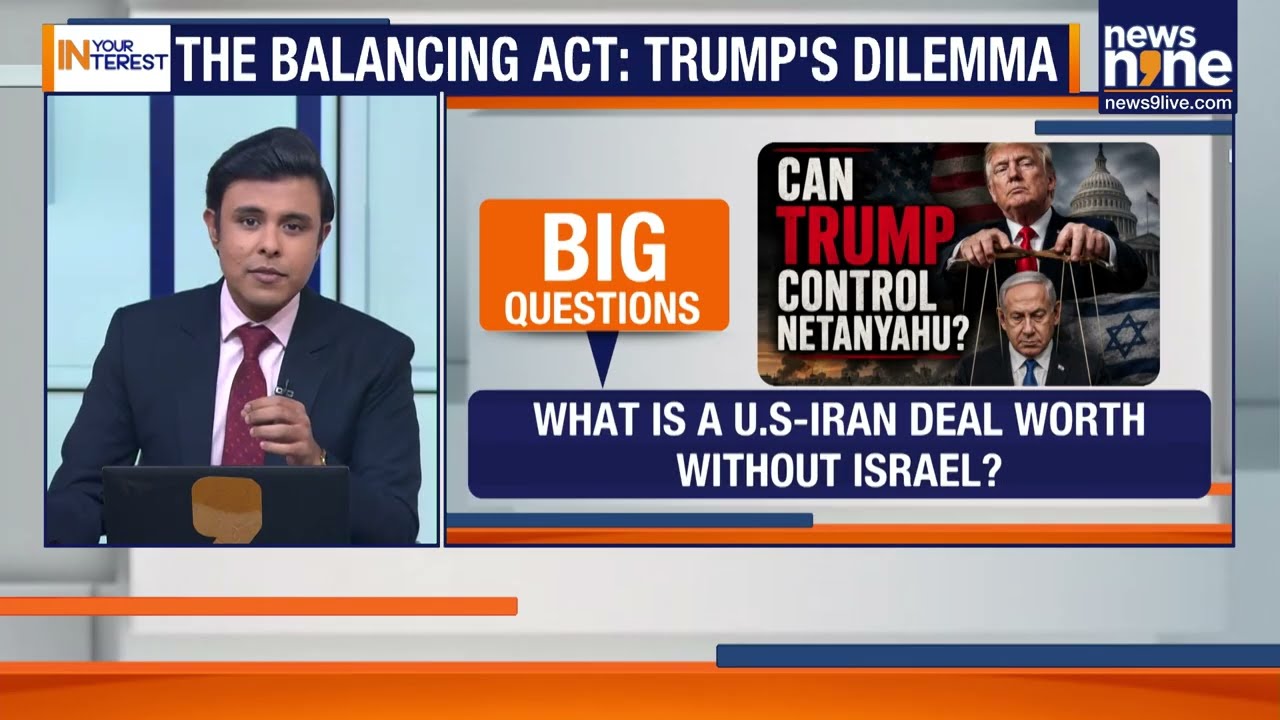
That being said, as much as we clearly saw the US and Trump directly pressuring Israel and Prime Minister Netanyahu to agree to the ceasefire, technically, Israel was not part of these negotiations, and Netanyahu was very clear in saying, we do not feel fully bound by this, and we retain the right to strike Hezbollah whenever we see fit.
So, we are seeing now a decrease in violence in Lebanon. We are seeing Israel and Hezbollah reducing the intensity of the their operations.
Uh but, we are not seeing a complete cessation of hostilities. So, in the next weeks, and again, as I said, months and years, because this is a very long-term process moving forward, uh we are going to see very regular spikes in violence between Israel and Lebanon. On Wednesday, we saw it. On Thursday, we saw it again. And I have no doubt that we'll see it again in the future. And every time that happens, we are going to have to see Iran putting pressure on Hezbollah and the US putting pressure on Israel for de-escalation.
>> You know, the signing of this MOU was between Iran and the US. And of course, what's going on in Lebanon is between Israel and Hezbollah. So, is it interesting to you that Israel was not at the table in this memorandum of understanding?
>> Well, Trump was pretty clear that he's the great power.
Uh and and obviously, he personalizes a lot. And Israel is not. So, that was for the US to negotiate with Iran. This is extremely unpopular in Israel.
Netanyahu is being severely criticized from both the left and his right-wing flank. Uh there are elections in Israel in the fall. Netanyahu has uh is facing a challenge from a an opposition that is trying to unify itself. And obviously, we are still months away from that election. A lot of things can and will change. Uh but, this is difficult for Netanyahu, especially because he is the one who has built his career in large part as Mr. Iran, as the one guy who can protect Israel against the Iranian threat. And now, he is being severely criticized because this agreement is seen as a capitulation, as a humiliation. And he's also the one who's all uh systematically built his career as the one Israeli politician who is best placed to manage relations with the US, because he's got the contacts, he's got the reputation, he's got the networks, and so on. And now again, he is being criticized for an agreement that is perceived widely in Israel as a capitulation.
>> Mhm.
So, as we've said, this agreement is a memorandum of understanding. It's not an actual peace deal. How hard is it going to be to figure all of this out, especially in 60 days?
>> Uh well, well, to be clear, it is not going to happen in 60 days.
Nobody, even the most optimistic analysts, whatever side they're on, whatever worldview they have, nobody thinks there's going to be a resolution to the nuclear program in 60 days.
The first ceasefire was in early April.
It took 70 days just to agree to a prolongation of the ceasefire and a reopening of the Strait of Hormuz. Both sides actually agreed on that.
And yet, it took them 70 days.
In the best of cases, if there is to be an agreement, it is going to be measured in months, if not more than a year. I think everybody understands that. Trump, the Iranians, said kind of waved off the 60-day deadline, saying it we we can extend it if necessary, and and they will have to. And you have to put yourself in the context of US-Iran negotiations, which are always extraordinarily contentious, and every minute, every comma of any agreement is negotiated and renegotiated and relitigated another time. So, these extensions will never be just automatic extensions. They will always be an opportunity for both sides, but especially for Iran, because it is very good at playing the time timelines like this, to try to just extract concessions in exchange for a prolongation of the timeline.
>> Mhm.
How much trust is there between the two sides? Um you know, it's happened a couple of times now where Iran and the US were in negotiations, and the US launched attacks. Um so, what does that mean for good faith negotiations?
>> Uh well, first of all, there is no such thing as good faith negotiations between the US and Iran. I think that that concept can just be waved aside.
These will be very difficult negotiations because, you know, to put it in simple terms, they hate each other. They deeply mistrust each other.
They absolutely do not trust that the other side will respect its commitments.
And to some degree, they're right. Both sides have systematically broken prior commitments, whether oral or written, formal or informal. You said that twice in June 2025 and in late February 2026, they were negotiating and the US attacked. Iran remembers that very clearly. That is why Iran is playing so hardball right now. That is why Iran is going to maintain the threat of closing the Strait of Hormuz as a deterrent against future American attacks.
But Iran has done the same. Iran in the past, in the present, and I have no doubt in the future, has consistently broken, twisted prior commitments.
Again, always as a way to press its advantage as most as much as possible.
So, all that to say, the answer to your question is that mistrust is sky-high.
And that, you know, when I've been saying since the beginning of of the episode how difficult what comes next is next is going to be, this notion of deep mistrust between the two sides is at at the core of of the explanation for that.
>> It feels like Iran got a lot of concessions from the US. So, who do you think is in a stronger position starting off these final negotiations?
>> That's a good but difficult question because the notion of strength >> I never ask easy questions here, Trita.
>> That's [laughter] good because easy questions are boring. The notion of strength, like the notion of winning, is very relevant in politics and in war.
So, right now a lot of hawks in the US and elsewhere are criticizing the MOU for all of the concessions it makes to Iran.
Technically, they're right in the sense that there are tremendous concessions to Iran and while Iran has made very few concessions itself. But these concessions for now are only on paper.
They have not actually happened yet. So, whether we can criticize whether these concessions happen or not in the future, we don't know yet. The notion of strength is also extremely relative. It depends what your parameters are. In a narrow sense, Iran has the upper hand because Iran closed the Strait of Hormuz, caused chaos, sowed tremendous fear in American minds and everywhere else, and Iran knows that it can use this for leverage. That is a major strength, and in that sense, yes, Iran has the upper hand. But, if you broaden the parameters, who's got the upper hand? Iran is a diplomatically isolated with very few friends.
Its economy is in complete shambles. It already was, and it is even more. And as long as sanctions are not lifted, it is going to get worse before it gets better. Its economy is not even stable.
It is getting worse. The American blockade during the war hurt a lot.
That is not a position of strength.
Iran's military, yes, it retains the ability to close the Strait of Hormuz, and yes, that is extremely significant, but the US and Israel caused major damage to Iranian military infrastructure during the war.
Missile production sites, bases, roads and bridges, and so on. That is a weakness. These are significant losses that Iran incurred during the war. So, basically, the answer to your question is a really mixed and nuanced one in terms of who has the upper hand.
>> Mhm.
Um just just one final question here, Trita. You know, you've mentioned a couple of times here about how this is just on paper, right? And I think that earlier when this when we heard about this MOU and this potential signing of it, and now it has been signed, there was kind of this this moment of, "Okay, this is the movement towards peace." I mean, I guess what you've laid out today, what should we make of this this agreement?
>> I I think the correct way to frame this agreement is as a small step forward.
Uh I think that that with everything we've talked about, the tremendous challenges, the tremendous uncertainty, the massive ambiguity in terms of what comes next, the major mistrust between the two sides that is even higher than it was already before the war, all of that means that there's a lot of uncertainty in terms of what comes next.
Things could easily degenerate. Things could easily re-escalate towards war, whether it's full-blown war or or at a lesser level of violence. This is a prolongation of the ceasefire that we've agreed to this week. It is no more than that and it is no less than that. I still see media headlines referring to this as a peace accord. It is nothing nothing remotely looking like that because the major divergences between the two sides have not even been addressed yet. At this point, I think this deal this MOU, whatever we want to call it, has to be seen for what it is. It is a small step.
It was the easy part. Crazy to think that, but it was the easy part. The harder steps remain moving forward.
>> [music] >> Tamaz, thank you for this. Appreciate it.
>> Thank you. Always a pleasure.
>> [music] >> That was Tamaz Quno, a professor at the Graduate School of Public and International Affairs at the University of Ottawa.
That's it for today. I'm Cheryl Sutherland. Our producers are Madeline [music] White, Rachel Levy McLaughlin, and Mahal Stein. Our editor is David Crosby.
>> [music] >> Adrian Cheung is our senior producer, and Angela Pacenza is our executive editor.
Thanks so much for listening.
Related Videos
126 .bikey6
mikey.bikey6
572 views•2026-06-16

Tamil Nadu Assembly | "இருமொழி கொள்கை பின்பற்றப்படும்" | Governor Arlekar | 2 Language Policy
News18Tamilnadu
558 views•2026-06-18
Rep
RobSmithOnline
3K views•2026-06-15
Cross-Voting Hits INDIA Bloc As NDA-Backed Nathwani Wins Jharkhand Seat, ZPM Makes Rajya Sabha Debut
cnnnews18
283 views•2026-06-19
WHILE TRUMP BEGGED CHINA FOR HELP — CHINA WAS SECRETLY ARMING IRAN BEHIND HIS BACK
Frumreporttwo
219 views•2026-06-18

The U.S. Iran 14 Point Memo of Agreement... What's REALLY Happening...
J.S.Candid
4K views•2026-06-17
Israel Says 'NO' to Trump's Iran Deal | Peace Deal or Middle East Powder Keg?
NEWS9LIVE
365 views•2026-06-15

Iran emerges stronger, Israel more isolated after war, analysts warn
aljazeeraenglish
65K views•2026-06-14



