The European Union employs coordinated diplomatic formats like the E3 (Germany, France, UK) for negotiations with Russia on Ukraine, while addressing trade imbalances through currency discussions and maintaining EU expansion proposals for Ukraine and Western Balkans without treaty changes.
Install our extension to search inside any video instantly.
LIVE | German Chancellor Friedrich Merz Holds Press Conference After EU Summit | APT
Added:and foreseeable. I have repeatedly made this clear in my discussions with President Nettaniao.
We also discussed trade measures against Israel.
I rejected these proposals on behalf of the Federal Government. To conclude, we have had intensive discussions in two major international formats this week, both in the G7 and in the European Council. I just thanked President Macron once again for his very successful presidency in the G7 format, which enabled us to deliver such a comprehensive leadership statement this week in such a good and unanimous manner. This is largely due to his efforts, but also the result of good coordination on the European side. The members from the European Union who are represented in the G7, namely France, Italy and Germany, have been very well coordinated from the beginning. We have discussed this thoroughly with Great Britain beforehand, and I expect that we will continue this cooperation in the coming weeks and months. We will of course continue to speak with Poland whenever Ukraine is involved. I want to emphasize that anyway. There is no format or discussion I conduct without also simultaneously informing smaller and medium-sized member states of the European Union, especially when they are directly affected regionally, such as the neighboring states in Eastern Europe. In that respect, I believe we have shown that we as Europeans are capable of taking action, both in the large format of the G7 and in the large circle of heads of state and government of the European Union.
This week, after intensive consultations, I am going home with the feeling that international cooperation is working well, both in Europe and in the G7 format, and that is the prerequisite for us to make our contribution to nothing more and nothing less than peace in the world. Thank you very much, Mr. Fischer.
Thank you very much, Mr. Chancellor. There seems to be considerable disagreement about who should represent the Europeans at the negotiating table when talks take place between Ukraine and Russia. Do you see, despite this disagreement, is there still enough support in the EU for the E3 to continue the diplomatic process, and does the E3 actually have its own channels of communication with Russia, at any level, or is there a complete radio silence at the moment?
Please excuse us for not disclosing details of our consultations publicly, but two things are important to me. Firstly, this E3 format came about at the express request of Ukraine, and it also has a certain internal logic, namely that Great Britain and, uh, Germany and France are working closely together here. These are large countries in Europe. These are also those who contribute significantly to the military support of Ukraine; Germany is by far the number one; it was, as I said, the express wish of Ukraine that these three countries play a role here, also in coordination. We do.
Great Britain, as a country that is no longer a member of the European Union, still has to be involved. It is an important NATO member in the European Union. And we're not just talking about Ukraine, we're also discussing important issues together now in preparation for the NATO summit in Ankara in a few days. Therefore, these are important formats for discussion.
We always include, of course, Italy, we always include, of course, Poland, and also other member states of the European Union.
That goes without saying for us. We don't need to decide today who speaks for the European Union.
We will decide that when talks take place. It is of course clear that the President of the Council, that uh uh Antonio Costa, the uh uh Chairman of the European Council, the President of the European Council, has an important role to play here. He represents the European Union. He ensures that we have good discussions in the European Union, that we are well- organized and well-prepared for the Council meetings, and therefore we do not need to make any further decisions at the moment.
Mr. Rinke.
Yes, thank you very much. Mr. Chancellor, could you please specify a little more precisely which instruments you would like from the EU Commission? Are these also measures against currency manipulation, which you've been mentioning? And one additional question. The US has launched an investigation against Germany over pharmaceutical prices. Are you worried that the customs agreement with the US is now invalid again because higher tariffs on pharmaceutical products may be introduced?
No, I assume that the United States of America will adhere to the agreement we have. Um, regarding the reimbursement of, uh, modern, innovative, um, new products by our health insurance companies.
This is a decision that falls under our national jurisdiction. Uh, if America wants information about that, then of course we will gladly provide it. But that is a question of our reimbursement system within the legal framework of health insurance. Therefore, this is a purely domestic matter, which we may need to discuss here.
Um, the question of how we move forward in the formats is a question I just explained.
Um, I think we've really found a good rhythm now, in the way we conduct the talks, and that we're all striving to end the war in Ukraine as quickly as possible, I think that's clear to all of us. Please, this is about trade.
Oh, so they wanted the goods. Yes. Yes. Um, sorry, I misunderstood that.
The Commission is now tasked with preparing for the next Council meeting which instruments are available to us. Um, I already addressed the topic of currency, uh, uh, uh, relations or exchange rates in the G7 format. Incidentally, this also has the strong support of the American side, because America is affected by this just as much as we are.
In some cases, we compete with currency areas that have devalued currencies up to 30% lower than ours.
Underrated is the right expression. Um, and um, I reminded everyone that there had been similar disruptions between trading areas in previous decades.
There were then reasonable discussion formats for how to ultimately deal with such questions.
A meeting was arranged at the Plaza Hotel in New York. An agreement was reached in Paris even before we had a monetary union within a European framework, before we had the EU Monetary Union. At that time there was the European Monetary System, which was also a system where agreements were reached on exchange rate corridors. That's something I'm thinking of doing now, too. We don't want to make any mutual accusations here, but rather try to balance these imbalances. And these are imbalances that not only disadvantage trading partners, but also negatively impact domestic demand and purchasing power.
Basically, no one can have an interest in having such currency burdens in the long term, such shifts in the real purchasing power of the individual currency. Therefore, discussions are appropriate here, and we must also have them in our own interest.
Mr. Gutschker, please.
Thomas Gutschker, Frankfurt Allgemeine Zeitung. Mr. Chancellor, first a question about the possible negotiations with Russia. They said we first need to agree on the issue, then we'll clarify the formats.
Where do you still disagree [ahem] on this issue besides E3 and with Ukraine? So, what questions still need to be answered? And secondly, an expansion. They said the debate wouldn't actually happen until October. You have already presented your idea to her, and probably even introduced it in the room. um, on their proposal for associate membership for Ukraine. There is a lot of criticism from the member states. The argument is that Ukraine should not be given preferential treatment over the Western Balkans. And it is not legally feasible to introduce observer status.
Um, is the proposal basically dead before you can even really discuss it?
So first of all [ahem], to be in agreement on the matter means to be in agreement with Russia that we now negotiate, and that is the prerequisite for defining who negotiates, and primarily Ukraine decides on this.
Ukraine is the country affected, and ultimately it is Ukraine that decides who stands by its side and conducts negotiations. The European Union is not a neutral third party here, nor is it a mediator; rather, it is a party on the side of Ukraine.
And then Ukraine will also decide who negotiates for and with it. That means being in agreement with Russia on the matter; negotiations are being conducted. We're not there yet. And I repeat, it is solely up to Russia to make the decision to enter into negotiations now.
Regarding the expansion process, um, we did n't discuss it in detail yesterday and today due to time constraints. This was purely due to time constraints, because the agenda was already very full and because some things took a very long time. Um, we have submitted two documents. First of all, I made the proposal regarding Ukraine's association membership and also included the Western Balkans in my letter to the President of the Commission and to the President of the Council. I then presented another so-called nonpaper with Emmanuel Macron, where we clarified it again and went into more depth.
Associate membership is possible without any contract changes, and we have examples of this. I would like to remind you that this was also on my mind a bit when, in 1990, um, a year after the previous European elections, we admitted a territory into the European Union with German reunification, which at that time was not yet represented in the institutions. We introduced observer status in the European Parliament for the then still existing DDA and then subsequently for the eastern German states. At that time, 18 observers without voting rights from East Germany entered the European Parliament. That was possible without changing the contract, and therefore something like what I have now proposed is also possible without changing the contract. My proposal was specifically aimed at enabling something that could be done without changing the contract. Everything else is an illusion. We cannot achieve any treaty changes in Europe at this time. And of course, all of this must be coordinated with the process concerning the Western Balkans. I don't want different speeds here. There are different situations, there are different progress reports, there are different restrictions.
A country like Ukraine at war cannot become a member of the European Union, but it could become an associate member of the European Union and then later a full member of the European Union. The situation is different in the Bestbalkan region. We have been negotiating with these countries about membership in the European Union for almost 20 years. At least one of the countries, namely Montenegro, is practically ready to accept them. The clusters are largely contained. The country could now, so to speak, enter the final process. The question arises whether all at once or one after the other; there are good reasons to say all at once.
But there are also good reasons to say one thing at a time. We will discuss this at the next European Council meeting. And that's far from being off the table. On the contrary, the proposals are on the table and there are a large number of colleagues who are grateful to be out of the frustration of last year, which we had when we held the last Western Balkans summit here in Brussels and nobody really knew what to do with the Western Balkan states, how to actually move forward and the attempt by Emmanuel Macron and myself is simply to get out of this loop and now make a proposal on how we can move forward with this issue.
I keep saying that sitting at the table is, um, the Prime Minister of, um, um, uh, Croatia, Andre Plenk, uh, that's the last country to join the European Union 13 years ago, and Andre Blenkowits is now the longest-serving Prime Minister sitting at that table. This example shows how long ago it was and how overdue it is that we now talk about enlargements, especially for the countries that are actually ready to join.
Mr. Fechten, thank you very much. Fechner News Agency DTS. Mr. Chancellor, you have only touched upon the issue of reducing bureaucracy very superficially. Overall, we have n't heard much concrete information about it lately. Do you still believe that you will achieve concrete implementations with the EU this year, as you planned, such as the deemed approval, and which countries are actually holding things back?
So, I didn't just touch on this superficially at all; I made it very clear in my brief opening statement. This is one of the main topics we have been dealing with, and have dealt with again recently. Um, the Commission now submits a progress report for each European Council meeting. The Commission allows us to discuss adjustments with each other every time. How can we make faster progress? We also talked again about the 28th Regime, which is the simple legal form available throughout Europe for startup and scaleup companies that are supposed to establish a company for all of Europe within 24 hours. I didn't mention this earlier, but I'll add it now. This idea is still correct. We want to push them forward and we agree that we want to make that possible by the end of the year. So, it also played a major role in the council today and yesterday that we really want to continue working on this issue together with vigor. Of course there are obstacles, of course there are always those who put the brakes on, but it is precisely our task to overcome these and to ensure that we implement what Enrico Letterta and Mario Dragi told us, which we discussed very intensively together on February 12th.
Mr. Delfs, please take another look at these.
Mr. Chancellor, let me return to the topic of China. Um, that's quite a balancing act for you too. On the one hand, they naturally want to avoid an open trade war. At the same time, there is very great trading pressure now, pressure to act, because the numbers have developed very dramatically with regard to the trade balance. How do you intend to prevent the Chinese from feeling provoked by these discussed measures and reacting now? And could you briefly explain again what exactly you meant by this exchange rate corridor?
Yes, who's discussing with whom.
So first of all, we talked in general about, um, geoeconomic imbalances. Um, we respect and acknowledge that there are countries that, for example, invest heavily in research and development, which also allows them to make rapid technological progress. We fully accept that productivity in these countries is higher than in Europe. This is a competition we have to face, no ifs, ands, or buts, and there is nothing to criticize. If others are better than us, then we have to make an effort to become good again. However, this applies when it involves high subsidies in entire industries that flood markets with them. When we see that individual countries account for 13-14% of global demand and simultaneously have over 30% of industrial production, meaning that subsidies are systematically being provided for overcapacities... And if all of this is accompanied by a currency that is not freely convertible, that ultimately does not participate in the capital market because the capital market is closed off, then these are distortions of competition that we do not simply want to accept. This is something that needs to be discussed openly. I do this during my visits to the countries with which we have intensive trade, and I also address these issues openly, and I expect that this will be accepted in return, that we talk about these issues. And when it comes to these monetary policy issues, um, I would like to remind you of the EMS system that we once established in Europe, uh, to avoid, for example, economic policy being made via exchange rates. Well, whether that's the right example or the right format is another question. I just want to say that we have had experience with such dialogue formats on exchange rates, both on the European and transatlantic sides, and these experiences have been essentially good. We need to talk about this issue, and I think it's in both our interests to do so, because an artificially low currency also affects purchasing power in one's own country. Um, so it's not only advantageous for those who want to improve their foreign economic competitive position, and therefore this is a dialogue we need to have, and again, this is a dialogue in our mutual interest.
Mr. Disteldorf, one last question, we have to leave now.
Yes, thank you very much, Jan Disteldorf, Süddeutsche Zeitung. Mr. Chancellor, the first question about the MFF, very briefly. What do you mean by "clear"? Can you give an order of magnitude when you say, um, the numbers need to come down?
By how much, or rather, how much are we talking about? Uh, second question regarding the MFF after the consultations you held today. Um, what will you be doing in the coming months to achieve the goal of finishing this year? Uh, how can you better assess that now?
So I can't estimate for the year 2026. I can only speak from my own perspective, and I have already discussed this in the cabinet. We will discuss this again, and I will do so in close consultation with the Federal Cabinet, especially with the Finance Minister. We want to reach an agreement in 2026, simply to have planning certainty, for example for the coalitions and agricultural funds also for the years from 2028 onwards. Those who benefit from this must have the planning certainty from 2028 onwards that these funds will continue to be available in a modified form. But the funds will not be completely cut, there will be changes.
But knowing about these changes in a timely manner is important for everyone involved. Um, I don't want to predict the extent to which we will reduce it right now. That depends crucially on what the individual weighting will be. Um, we basically have three pillars now. Um, the common agricultural policy and the Union policy are combined into the regional partnership programs.
There will then be, uh, competitiveness and the associated fund, and there will then be the means for foreign policy and trade policy. And the relative weighting of these three pillars is just as unclear as the question of how the European Union actually finances its revenues. The Commission has also made proposals for a new own resources regime. Um, we also need to have appropriate feedback with each member state individually, because there are own resources involved that are already partly accounted for in the national budgets through their own tax revenues.
So, we are now facing a whole series of highly complex questions. Uh, and therefore I don't want to commit myself, and I can't commit myself right now. Let me just say, the Commission's proposal, and even more so the European Parliament's proposal to go for an amount of 1.6 or even 1.7 trillion euros for the next 7 years, is a proposal that, in my view, is not feasible and is not financially viable.
I just told my colleagues again what this means for the European contribution, not the net contribution, which is irrelevant in this context, but that it would be significant for the European payment contribution to the budget of the European Union. This proposal, which we now have from the Commission and the Council, is a proposal that would trigger at least 15, more likely 20 billion euros higher contributions per year to the European budget, and that is not feasible given our current budgetary situation, and will not be feasible for a long time to come. I think everyone will understand this if they just hear the figures, and that's why I presented these figures to the council.
Incidentally, this isn't the first time. I did it once before last year, shortly before Christmas. To put it simply to my colleagues, you need to know what is and isn't possible, and this is n't possible. Okay, thank you very much. Good Heimbich. Have a nice weekend. See you next time. C.
Related Videos
126 .bikey6
mikey.bikey6
572 views•2026-06-16

Tamil Nadu Assembly | "இருமொழி கொள்கை பின்பற்றப்படும்" | Governor Arlekar | 2 Language Policy
News18Tamilnadu
558 views•2026-06-18
Rep
RobSmithOnline
3K views•2026-06-15
Cross-Voting Hits INDIA Bloc As NDA-Backed Nathwani Wins Jharkhand Seat, ZPM Makes Rajya Sabha Debut
cnnnews18
283 views•2026-06-19
WHILE TRUMP BEGGED CHINA FOR HELP — CHINA WAS SECRETLY ARMING IRAN BEHIND HIS BACK
Frumreporttwo
219 views•2026-06-18

The U.S. Iran 14 Point Memo of Agreement... What's REALLY Happening...
J.S.Candid
4K views•2026-06-17
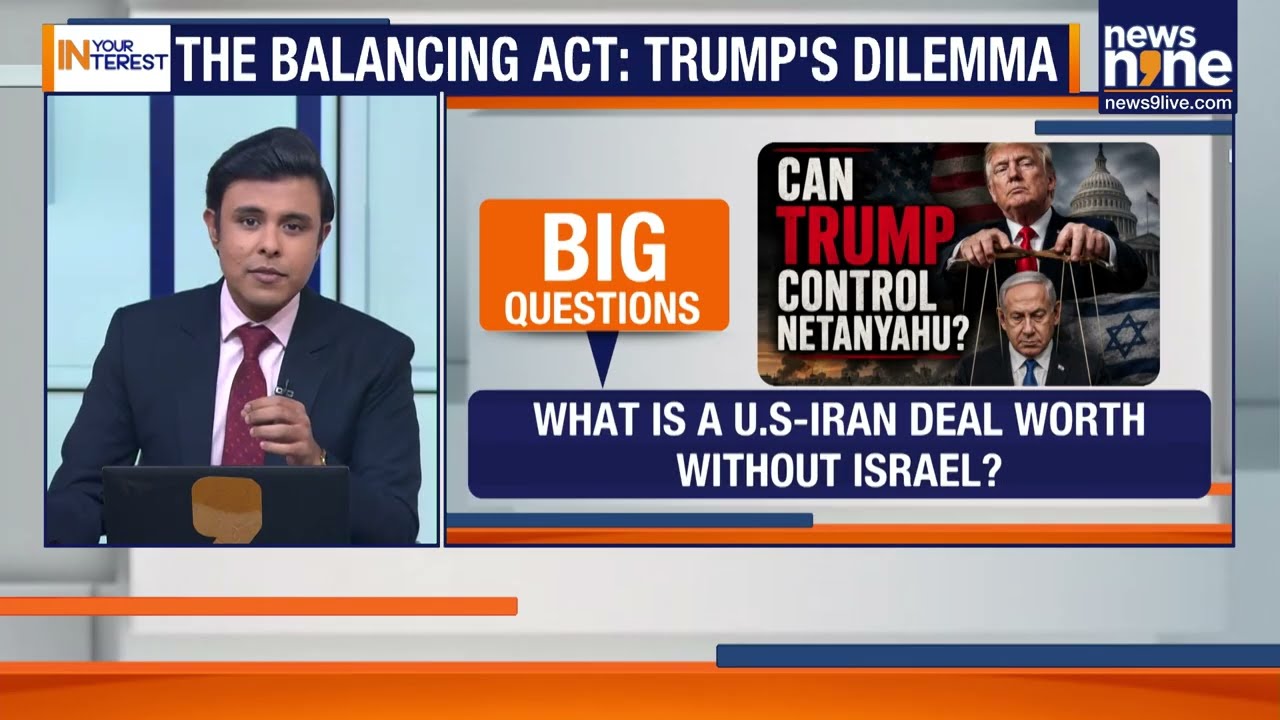
Israel Says 'NO' to Trump's Iran Deal | Peace Deal or Middle East Powder Keg?
NEWS9LIVE
365 views•2026-06-15

Iran emerges stronger, Israel more isolated after war, analysts warn
aljazeeraenglish
65K views•2026-06-14



