In democratic governance, governments must demonstrate tangible results to maintain public support, as raising expectations without delivering concrete outcomes creates political vulnerability; effective governance requires not just passing legislation but executing policies that improve citizens' daily lives, particularly in areas like affordability, housing, and economic stability.
Install our extension to search inside any video instantly.
Canadians ‘need to see results’ from ‘jam-packed’ government agenda: analyst
Added:Marco, I I'll start with you. So, I was saying earlier in the show, this is a very unique sitting, at least for the ones I've covered o over the last 20 years, because I've never seen it where in the middle of uh sitting in the House of Commons, the government goes from a minority to a majority without an election like nothing actually stopped during that period. From a political perspective, what changed for the Liberals when that happened, do you think?
Well, it certainly gave them more uh control over the legislative agenda, but let's uh widen uh the zoom lens for a moment and uh take a look at the last year and a half. Mark Carney won government. Uh and somebody forgot to tell him to stop uh running as though it was an election. I mean, typically elections are sprints and governing is a marathon. Mark Carney is sprinting uh through the governing phase of this project and I think some of the results speak for themselves. Uh certainly once uh the government got an additional five members uh from the opposite side of the aisle which as you point out is quite a remarkable achievement uh it was able to pass some 22 bills uh touching on five priorities. So affordability providing largely tax relief for middle-ass Canadians uh focusing on energy security defense uh housing and artificial intelligence. So a very jam-packed agenda. I think looking to the horizon into the summer months, uh there are a few inflection points uh to keep our our eyes on. Uh one is the upcoming July 1st USMCA cusma review process. We've talked a lot about that. Um the second is I think um you know the question of national uh unity through the form of the Alberta referendum. It'll be important to watch that. And then thirdly are just provincial elections particularly in in Quebec. Uh and so I think it's going to be really important as MPs exhale a little bit. Uh and hopefully that applies to the government as well and the prime minister as well over the course of summer months, hit the barbecue circuit, say hello to their families, their friends, their their volunteers after having worked this intense period. Um they will be able to maintain some real focus because in the fall I think it's all going to come down to execution, getting shovels in the ground and seeing some concrete results.
So, let me ask you about that, James, before we kind of look more ahead to the summer because the framing from Marco is uh similar to the government, right?
It's like here's here's what we're focused on. Here's our priorities and our legislative agenda supports that.
The cons the criticism from the opposition is that the results are not there to substantiate that argument.
What do you make of that contention from the opposition? Is it working? Is it a vulnerability for the government or is it falling flat?
It's the appropriate criticism for an opposition uh frankly at all times of a government but particularly for this prime minister who came into office with high expect. I mean the usual rule of politics right is lower expectations and overd deliver. Lower expectations overd deliver. This is a prime minister who's unique in the sense that he he's dialed up expectations. You know we're going to see things at speeds that we've not seen before. Elbows up getting aggressive you know binding the candidate the country together with all kinds of projects. So he's raised expectations. So the obvious critique is to say to Canadians, is your life better now than it was a year ago?
And I think for most Canadians, the answer is demonstrabably no. I we know we see the economic numbers. We see the shift that's happening on per capita GDP. We see the jobs numbers, particularly for young Canadians, it's getting increasingly tough. Cost of food, cost of fuel, the fluctuations there are causing real anxiety for Canadians. And so I think it's an appropriate criticism and way to chastise this particular prime minister.
But also um because you know it's very easy the analogy I've used before it's very easy to launch a plane it's very easy to take off a plane it's the landing of the planes that's hard it's making sure that they get safely on the ground with all the passengers to the proper destination uh this is a prime minister who has launched a lot of planes in the air we see today he's has announcement on housing major projects initiative indigenous reconciliation I mean there's a lot of stuff a lot of planes circling in the air if some of them land that will be very good for the country because a lot of them are heading in the right direction but I think a lot of Canadians are looking up at the sky and wondering are are they actually going to land in a way that's going to be beneficial to me? And I think for a lot of Canadians, the jury is very much still out.
>> So the interesting part is the opposition's criticism isn't really just like are they going to land the plane?
It's that the plane has already crashed and it's entirely the prime minister's fault. Like that that is a central thesis of the conservatives particularly since the the latest GDP numbers came out which to their to be fair to them were not good. There are two contractions two quarters in a row rather of of economic contraction. Um, is that though like there's no public opinion poll that right now shows that that argument centered on blame and is necessarily working?
>> No, but I do think it's a vulnerability.
So I I I and I think James is right.
That is what the opposition should be going on and and I think it's what a lot of Canadians uh you know I think that that that generally speaking and the polls bear this out like a lot of the things that Mark Carney is doing. They like him. They like what he's doing.
They made a decision in the last election. Uh but they do need to see results. So uh and implementation and execution is not a new problem for this government. I mean yes they've inflated expectations but certainly the previous nine or 10 years of the Liberal government before also had big problems with implementation and execution. So they've been very good at raising expectations, having photo ops, passing 21 bills, um uh you know all of those kinds of things. But people do eventually need to see something concrete. And when you look at things like even the messaging around the economy that whether it is or it isn't a a recession, whether it's a technical recession, whatever, most people feel like the economy is not working all that well for them. And they uh I think are still hoping and expecting that that the actions of this government will improve things for them. If they don't, they're going to have a big problem. I think the problem for the opposition conservatives is like I think they're on the right track with this but they seem to be kind of all over the place right now and it's not enough just to say he's not showing up for question period. I think that's a bit weak sauce to be honest. I think that they have to really bear down on not just what are the results but say what the results should be and like really get into things like I think grocery prices, housing, um uh gas prices, um uh health care, all of the things that really genuinely um produce anxiety for Canadians right now.
>> If I remember right, a number of years ago it was like MPs going back to their constituencies kind of at the at the outset heading into the crux of the inflation crisis. Marco where and you would remember because you were an MPN minister then if I recall like you you know everyone went into their constituents they came back I think it was in PEI cabinet um maybe even it was all of caucus got together and the message was really conveyed like this affordability thing is something that like isn't just something we can kind of put to the outside or not appear to be zero you know really really focused on do you have anything that you would anticipate you know in that vein would be conveyed to MPs this summer that you think maybe they are not as aware of as they will be after spending some time with um with Canadians.
>> Well, I think just to Ann's point um MPs are going to hear directly from their constituents that while they may appreciate and support many of the measures that the federal government has introduced, for example, the grocery rebate or the temporary break that they're going to get at the gas pump. I mean that is something that Canadians will feel even if marginally that it is not enough that there is still a need for more support for example when it comes to housing. I mean, I had a really interesting discussion with industry leaders on that file today about how, you know, there's this concern about this part of the Canadian dream about middle-ass Canadians not being able to get through that first home and and despite the the progress that's been made, for example, on the GST cut or on loosening some of the uh restrictions around getting your first mortgage, that there's still more that needs to be done. I think that the job of the local member of parliament is then to take that feedback, bottle it up and bring it to uh the retreat which will be held in the fall as a springboard into uh the the agenda and this gets back to the point that I made in my first intervention which is all about execution. Now layer on top of that uh cusma and what happens then and obviously the comments that were made by President Trump yesterday on the tarmac just before he boarded Air Force One uh certainly continue to be very disruptive and of some concern to the state of negotiations. I can tell you when I was with the prime minister as his chief last year at the G7, the top objective was to uh ensure that there was as little disruption to what I would describe as the normal cycle of negotiations when it comes to the Canada United States bilateral relationship.
What I can tell you is that it has been anything but normal. has been very unpredictable and I think while it has been commendable that the prime minister and Dominick Leblon the lead minister on the file have been very composed that as uh we get closer to July 1st um it's going to take something in addition to that including being prepared for all scenarios uh when it comes to the next iteration of the B national trade relationship and that is something I would be laser focused on right now.
Well, I'm glad you are laser focused on it in the context of this discussion because it's like you knew what we were supposed to talk about in the second round of our discussion.
Related Videos
126 .bikey6
mikey.bikey6
572 views•2026-06-16

Tamil Nadu Assembly | "இருமொழி கொள்கை பின்பற்றப்படும்" | Governor Arlekar | 2 Language Policy
News18Tamilnadu
558 views•2026-06-18
Rep
RobSmithOnline
3K views•2026-06-15
Cross-Voting Hits INDIA Bloc As NDA-Backed Nathwani Wins Jharkhand Seat, ZPM Makes Rajya Sabha Debut
cnnnews18
283 views•2026-06-19
WHILE TRUMP BEGGED CHINA FOR HELP — CHINA WAS SECRETLY ARMING IRAN BEHIND HIS BACK
Frumreporttwo
219 views•2026-06-18

The U.S. Iran 14 Point Memo of Agreement... What's REALLY Happening...
J.S.Candid
4K views•2026-06-17
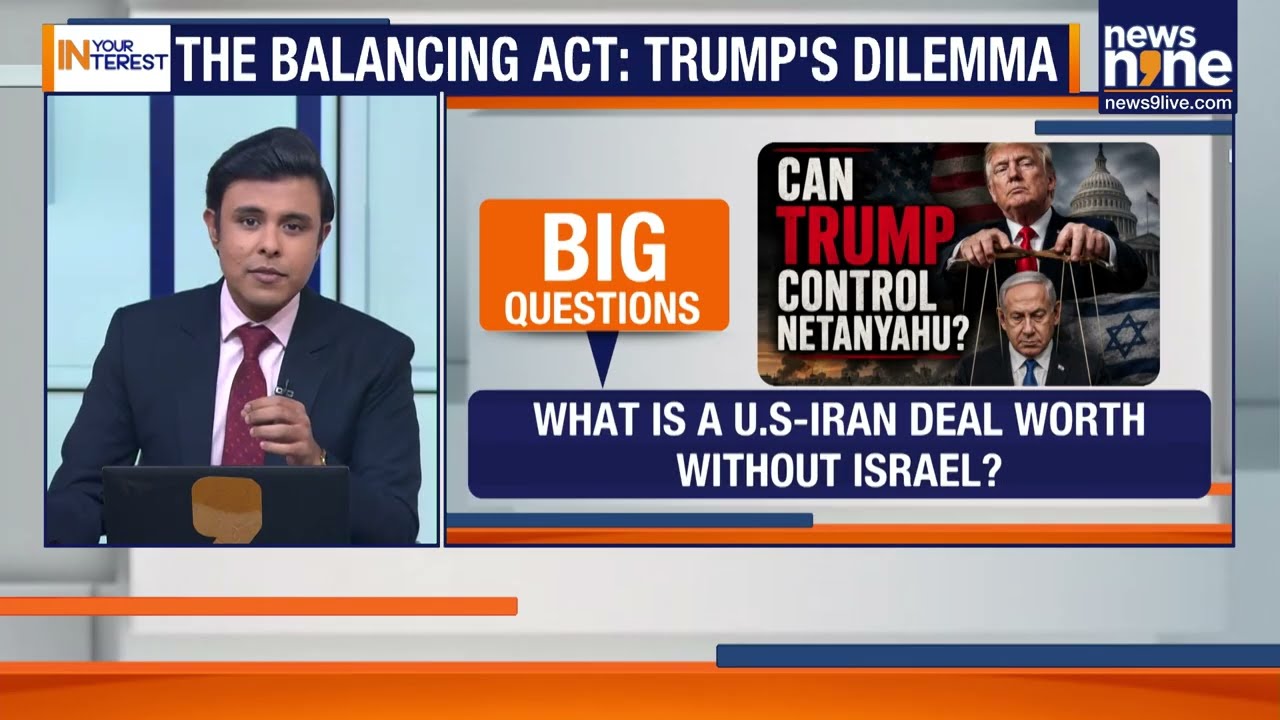
Israel Says 'NO' to Trump's Iran Deal | Peace Deal or Middle East Powder Keg?
NEWS9LIVE
365 views•2026-06-15

Iran emerges stronger, Israel more isolated after war, analysts warn
aljazeeraenglish
65K views•2026-06-14



