The US-Iran nuclear deal will likely persist because both parties have strong economic incentives to maintain oil flow through the Strait of Hormuz, but it is strategically flawed as it grants Iran permanent control over the Gulf, prevents US interference in Iran's domestic affairs, and fails to address Iran's nuclear ambitions while potentially destabilizing the Middle East.
Install our extension to search inside any video instantly.
U.S.-Iran deal will stick despite being a ‘bad, bad deal’, says David Roche
Added:Well, look at it this way. I mean, if this is Goldilocks, it's a Goldilocks from a very unhappy family background.
Uh if I look at what I see, the markets only care about one thing. Uh are the tankers moving? The tankers are moving.
Donald Trump needs the tankers to move to get the oil price down at the pumps.
And the IRGC, alias uh Iran, needs needs to get the tankers moving because then they're back in the dollar flow, and they can go on uh financing themselves and staying in power. So, that the nature of the shared interest between the Iranians being back in the dollar flow, and the traders being back in the dollar flow, means that this deal will stick. Uh it'll stick for the for that simple reason. Now, of course, what that means is you get lower inflation, lower oil prices, lower inflation. Central banks go on hold, but they don't raise rates much with the exception of the ECB and Japan. Uh and and the the US will kind of stay where it is. So, that in a sense is is predictable, uh rather good new news for markets which were about to run out of oil altogether in their economies. But, Cherry, beyond that, this is a really bad deal.
It's a bad bad deal. It puts the Iranians in charge of the Gulf ad infinitum. That's what Article 5 says.
It prevents any other country, particularly the US, interfering in the domestic affairs of Iran, Article 2. And it actually empowers Iran to be the responsible agency facing the US when it comes to dealing with the uh with the proxies, its proxies in, for example, Hezbollah in Lebanon.
And the problem about all this is, number one, Iran is going to make the Middle East very unstable. That's bad in the long term. And second of all, the Israelis are never going to accept this deal, and the Iranians, I will predict you confidently, will never never abandon their nuclear ambitions.
>> You just made the point of Iran, you know, potentially making the Middle East very unstable. I think some people are already excited about the prospect of the Middle East um capital coming back into the picture. That's not really the case. I mean, it will take some time for the recovery process, but remember capital flows from Dubai has been really the major source sort of propping up a lot of these mega AI projects and data center money.
>> Well, look, let's let's take that to bits because there's there's really complex and important questions in there. Uh number one, how fast will the oil come back? Most surprising.
Uh yesterday, for example, last 24 hours, we exported 18 million barrels of oil from the Middle East, which is very close to what its normal capacity of 20 million is. Half of that, approximately, came through the Red Sea, and half of it came, surprise surprise, through the tankers rushing for the door with their with their oil cargoes on board of the Straits of Hormuz. So, you've got to remember that bringing back the oil capacity is not just a matter of bringing back the capacity. That will follow. It's also the fact that uh there are massive stocks. There are stocks of oil on the ships, and there are probably around uh I would say nearly 150 to 200 million barrels of oil of stocks in tanks on land in the Middle East, which need to get out. So, the recovery is, in a sense, production slow, inventory cycle fast, the result is it looks like normal, and the traders will love that.
That's number one thing. Number two thing, the Middle East has become very unstable. It will remain very unstable.
Whatever the settlement in the Middle East is, they're going to have to they're going to be facing a hostile Iran over the Gulf. And that means that the whole political paradigm in the Middle East is up for grabs. And not only does the oil have to get out a different way, the Straits of Hormuz has simply got to be d- not deactivated, but made less important by directing oil other ways. That changes the geopolitical geography. And the idea that this is going to go back to normal, the same old thing, the same low risk profile as we had in the past, that is an illusion.
Related Videos
126 .bikey6
mikey.bikey6
572 views•2026-06-16

Tamil Nadu Assembly | "இருமொழி கொள்கை பின்பற்றப்படும்" | Governor Arlekar | 2 Language Policy
News18Tamilnadu
558 views•2026-06-18
Rep
RobSmithOnline
3K views•2026-06-15
Cross-Voting Hits INDIA Bloc As NDA-Backed Nathwani Wins Jharkhand Seat, ZPM Makes Rajya Sabha Debut
cnnnews18
283 views•2026-06-19
WHILE TRUMP BEGGED CHINA FOR HELP — CHINA WAS SECRETLY ARMING IRAN BEHIND HIS BACK
Frumreporttwo
219 views•2026-06-18

The U.S. Iran 14 Point Memo of Agreement... What's REALLY Happening...
J.S.Candid
4K views•2026-06-17
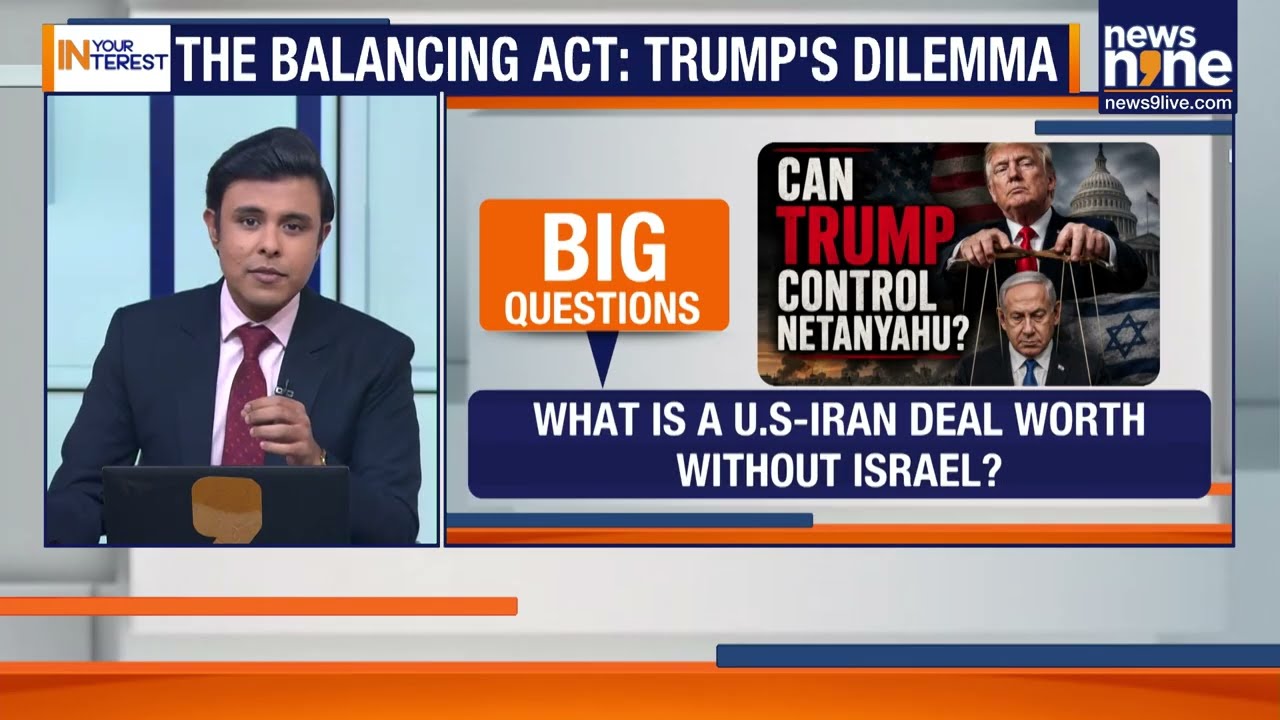
Israel Says 'NO' to Trump's Iran Deal | Peace Deal or Middle East Powder Keg?
NEWS9LIVE
365 views•2026-06-15

Iran emerges stronger, Israel more isolated after war, analysts warn
aljazeeraenglish
65K views•2026-06-14



