Saudi Foreign Minister Prince Faisal bin Farhan warned that Israel's reliance on military force across Gaza, Lebanon, Syria, and the West Bank is detrimental to Israel's long-term interests and systematically dismantles any path to Palestinian statehood, raising regional tensions; he urged the US to prioritize diplomacy and called for a regional dialogue including Palestinians, while emphasizing that the Strait of Hormuz must return to its pre-war status quo and that any durable peace requires addressing the core issue of Palestinian rights.
Install our extension to search inside any video instantly.
'STOP Or ISRAEL Is FINISHED...': Saudi Shocks World, Finally CONFRONTS ISRAEL Over Iran
Added:Is it the right thing to do? I don't think so. Is it in Israel's interest? I I don't think so. I think, you know, for Israel to insist solely on the military approach in the long term will be very detrimental to Israel's interest. I think obviously Hamas is also resisting disarming and using Israel's refusal to withdraw as a pretext for that. But if we look at the West Bank now, there is also an, you know, a complete unwillingness to engage with the Palestinian Authority and a a systematic dismantling of uh the potential for Palestinian state. All of this only serves to raise tensions. To me, the idea that a purely military approach is viable in the long term, I I think is completely uh uh incorrect and is not going to uh be in the interest of anyone. We're really delighted to have the Saudi foreign minister Fel bin Fahan Alsa with us. Um his excellency was with us three years ago in Madrid and and we're we're really grateful that that you've come to be with us again. Um particularly grateful that you've chosen to make your first public appearance since the Iran US deal with ECFR. So we're all eager for for for your sense on on where where you see things and how the situation is playing out. um given that you've come come all the way to Vienna to speak to us, I I hope you will um allow us to push you and to um to scratch the surface a bit to to to really get your sense on where we are and where the kingdom stands at this moment. But let me jump straight in. Um we've just had this uh disastrous war.
We have a the the semblance of anou that will be signed between Iran and the US this Friday in Geneva. Can you give us your quick sense on on how you read that that deal and the situation? Uh well, first of all, thank you for having me.
It's great to be uh with you again and certainly wonderful to be here in this beautiful city of Vienna. Uh I think it's incredibly uh important and uh very uh significant that we have an MOU uh that will hopefully put an end uh to this conflict uh and more importantly open the pathway towards resolving uh many of the outstanding uh issues.
Primary among them of course is the nuclear issue and uh uh I am hopeful I am optimistic that there is real intent on both sides uh to give diplomacy a chance and I'm you know very appreciative uh to President Trump and his team for having uh gotten to the point where thisou is now ready to be signed.
Can you give me a sense of where your sense of hope and concern is with the the terms that have been uh suggested are part of thisou? Where are the vulnerabilities that that worry Saudi?
But I guess the flip side of this, where is the need to focus attention to make sure that this is a durable deal that can withstand the the pressures to actually deliver the the sustainable piece that we need?
I'm not going to comment on the MOU specifically because I haven't seen the vinyl version, but I I will uh dis point uh to the issues of concern and uh hope and uh cons you know and and where we have risks. Obviously the nuclear program is the issue that is of primary concern and my understanding is that there are clear commitments to resolve that issue along lines which I think are uh very uh significant and uh very uh very much in line with what we are hoping for. So addressing the possibility of a pathway to a nuclear weapon the detail will matter. It will be most important to see uh the verification mechanisms that are in place beyond uh the actual commitments on enrichment, the actual commitment on with removal or down blending of the nuclear materials. How uh we will have a long-term sustainable verification regime is what will matter the most and that is what will give the international community but also the regional countries the most uh confidence and the ability to look towards a better future.
And of course there are the issues of freedom of navigation in the straits of Amuz and uh the broader regional security context that will need to be addressed. Some of them I think will uh be covered through the MOU or the final agreement between Iran and the US. And there is a need of course also for a regional security dialogue uh between the countries of the region uh and uh Iran to address those concerns and to make sure that we uh build a framework that uh respects national sovereignty that respects uh the national security interests of all uh parties in uh our neighborhood and ensures that we are never faced again with uh the uh risk of such a huge and devastating conflict.
Can I ask where you see the role for Saudi Arabia in this ongoing process? I mean, you've been one of the mediating countries, the step group of Saudi Arabia, Turkey, Egypt, and Pakistan. Um, what is the place that you see for yourselves in in in the immediate 60 days and the moment after that?
Obviously, we're going to have US Iran negotiations on the nuclear front. Where is the the space for for Riyad and that makes you feel part of the process?
There's obviously a lot of talk about the need for economic resources to be to be opened up to to Iran, whether it's a frozen asset or a potential in reconstruction fund. Um, where in the mix do you fit?
>> So, just like uh the process that got us to the MOU, I think we will play primarily a supportive role. So we I wouldn't say that we were mediators so much as uh we were uh supporters and uh we were helpful behind the scenes in trying to uh encourage uh the both parties uh to give prim primary focus to the diplomatic track to bring uh opinions together when necessary and to give uh uh let's say words of advice and and and try and push in the direction of a resolution or an end to the conflict.
And going forward we will obviously want to play a role certainly in the regional context on addressing these regional issues. You know we we have uh an incredibly uh uh important role to play there. We are of course uh interested in making sure that we get that right so that we avoid potential areas of conflict and flash points in the future.
But also on uh the nuclear uh file for us obviously ensuring that there is a civilian nuclear program in Iran that is not a risk to its neighbors is critically important. I think all not just the kingdom but all of us in the region uh uh have a stake in that and uh I'm certainly going to be very vocal in advocating for as I said ensuring that whatever agreement is reached is a solid agreement that has the necessary safeguards and the necessary verification mechanisms that are longlasting and that are that will give the confidence to the international community and us in the region uh that you know that we are uh finally going to be able to put this issue behind behind us and move uh to a future of you know more cooperation, more focus on development and focus on a uh you know on a on a model that is uh free from uh from this area of tension.
>> President Trump this morning seems to have been facing a bit of pressure back home and and has come out saying that we're not going to put a scent into this reconstruction fund. And I think Vice President Vance has been talking about the um Gulf Coast states, presumably the GCC um being the ones that that that pay up in terms of this $300 billion number that is floating around. Would you put money into Iran and and do you think that is a necessary part of the equation for for regional stability? I mean, how how do you deal with that after what you have faced over the last two months, the bombings, the the military campaign, the fact that it was initiated by the US and Israel, and now they're saying that that you guys are the ones that going to have to pay. And Iran, on the other hand, that has bombed you and is now expecting that that again you'll be the ones to pay.
>> Yeah. First of all, I I I have no uh details on this fund. I have no information uh or insight into uh the concept behind it. So I can't comment on it specifically, but what I what I will say is uh as you mentioned uh uh as a result of this conflict, Iran attacked not just the kingdom but all of the countries of the GCC. That has created a significant gulf of trust, you know, a significant gulf, a significant loss of trust between uh all of us. We were just in the beginning process of rebuilding our relationship with Iran as a result of the Beijing understanding after a significant period uh where we had uh broken off relations. And uh that was only just starting to really gather momentum and we were starting to to at the edges explore potential areas of opening up on economic uh cooperation and things like that. And uh I I think we are now actually we have since then regressed uh uh and we're going to have to have a conversation how we rebuild that trust, how we rebuild that relationship before any uh you know concept of uh economic cooperation uh you know mutual investment or anything like that can rationally be addressed and I I suspect that similarly goes for many of the GCC countries as well. uh you know and you have to you know that you know we in the kingdom we have a very ambitious in you know uh in domestic investment program we have a our public investment fund our main vehicle for investment has a long-term strategy that was actually just approved and they have a you know so they have already uh committed their funding streams to areas that are targeted at our domestic uh economy whether there is anything available to invest beyond that is something that I don't know that's you know up to the relevant ministers on the investment side on the economic side but even before we can look at that as an option there's going to have to be a rebuilding of trust and a rebuilding of relationships and then maybe there is uh in eventually in the future some pathway to greater economic cooperation and investment between uh Iran and the kingdom and the GCC certainly in an ideal world that's what we aspire to this is as I said you know in the bit you know when we were working to uh you know normalize our relations after the BGC after the Beijing understanding it was a focus. We had started gradually, you know, we had started uh, you know, in in in opening up for uh visitors from Iran and uh starting to look at reopening trade relations, all of that that that in itself was not an easy journey and it's again this has now regressed. So we're going to have to start some of that over and it's a conversation we will have bilaterally with the Iranians. But it's also I think part of the very important dialogue that's going to have to happen in the context of a regional uh uh security framework. So that's I think we are quite early days yet before talking about you know any real uh economic uh cooperation between Iran and its neighbors. Although that in the long term should be the objective and the goal.
>> But the bet will still be from from the kingdom one of regional diplomacy. Um, you led a process of re-engagement with Iran over recent years, having gone through a very contentious uh, cold, almost hot conflict in different theaters. Um, we've now gone through this new war. Do do you see the kingdom pushing that again? Are you going to lean hard in that into that? Do you think that actually the only way forward is diplomacy? We have a lot of people talking about the need to boost uh defense mechanisms in in in in the Gulf. there are some states looking to take a more assertive stand. Um h how do you fit into that equation in terms of how we stabilize the region in a meaningful way? Look, the reality is you can't have effective diplomacy without a a strong deterrent and a strong resilience uh to be able to deal with potential threats uh and uh challenges.
So we're going to have a dual track approach for this is absolutely certain whether it is on building our defense capacity to ensure that we are able to face threats whether it's from Iran or elsewhere and also building our resilience from a logistics and economic perspective. That said, we are committed to diplomacy. This is why we supported the diplomac the diplomacy that helped get us to theou. This is why we're going to be very actively engaged in supporting the success of uh the uh negotiations that will follow the MOU and it's why we will uh work with our partners in the region uh to begin a regional dialogue to you know to to start the conversation about how we can uh overcome again the the trust that has been lost as a result of this conflict and how can we look to a better future and how can we ensure that um potential flash points of the future can be addressed through diplomacy rather through confrontation.
>> Indications that that we've seen of of the shape of the the nature of the MOU suggest that there's zero mention of of regional dynamics. Um that was one of the reasons that that I think Trump referred to when initiating the conflict but but clearly now we've narrowed it down to opening the straight of Hormuz and and addressing the nuclear issue.
What what does that mean for you in the fact that the region issues have been sidelined and and and what does that mean in terms of how you take forward this process that you're talking about now? Are we just going to see a US Iran nuclear track and everyone left to pick up the pieces? Um or do you see those being integrated? Do you see a US role in that? Who is going to lead that process? and and what does a regional dialogue possibly look like in the context where where we have a number of states that are have been or are pretty much still at war with each other missiles and drones continue to to fly across the the seas and the airways. How do you take this forward in the context of an MOU that completely neglects the regional dimension? So I think one of the lessons that we learned from the JCA which also ignored the regional context completely is that if we don't address the issues uh that concern the region uh the risk is always that any agreement on the nuclear issue becomes less uh secure and becomes uh a source of contention and a source of uh you know risk as much as addressing the nuclear issue.
I I firmly believe that there is a need to address all of the issues that concern the region. So it's the nuclear issue and beyond. Uh it may well be that there are there's a dual track approach potentially where there is a uh US Iranian nuclear negotiation and I think that there is a rationale to that because it's a very complex issue on its own. uh but I suspect that it will be very difficult to make concrete prog progress uh on uh the nuclear negotiations without there being a level of engagement on the regional files that gives the confidence that allows then those negotiations to proceed correctly and you know eventually if there is a nuclear deal there is the issue of sanctions relief and that as you know is a very complicated issue it's complicated within the US context and it's also complicated within the European context and the more that the regional issues are addressed and there is a level of confidence uh that uh we are able to look towards a future where there is less risk of confrontation. the more likely it is that uh the potential benefits in the areas of sanctions relief can be uh delivered more quickly, more effectively with less opposition both from potentially from us in the region or from you know uh quarters in in the US and in Europe.
Putting aside the the question of normalization with Israel that that you've in the past made very clear is tied to to Israeli steps on on the creation of a Palestinian state, presumably Israel needs to be part of that regional conversation if it's to be durable and sustainable.
>> I mean in the long term that's certainly the most rational approach. Uh is it possible now? Is it possible with the uh the policy approach that Israel is taking? Uh I think you know there are many challenges in that. You know from my perspective uh the region includes the Palestinians. Are the Israelis ready to sit with the Palestinians at a table to discuss regional issues? Doesn't seem to me that that is a a potential outcome right now. It it would I think serve the interest of everyone to have a real discussion about how we address all of the issues of regional tension. And the core issue, the thing that drives most uh risk in the long term is obviously the unadressed issue of the rights of the Palestinians. And the same goes uh uh for the issue of Lebanon, Syria, etc. And you know uh so Israel is part of the region. Uh that means they should be part of the regional conversation, but Palestine is also part of the region. They need to be part of that conversation. Are the Israelis willing to accept that? Uh if if that were the case, that would be I think a move in the right direction. I >> I want to get on to Gaza in a bit more detail in a second, but before we do that, just on the broader Israel um question. Um there have been those that have expressed concern that that Israel is going to be the one actor most opposed um to this deal. Um, and there are those that have suggested that that a number of Israeli strikes on Beirut over recent weeks have have been partly intended to try and disrupt the prospect of of the successful completion of of negotiations.
How do you view um the US the evolving USIsraeli relationship? There have been there's been reporting that that that Trump has essentially tried to to kind of shut Netanyahu down and said don't don't do this attack. There have been reports that the Americans have not been prepared to share the draft with the Israeli system. Um does that does that create um pressure that can be constructively channeled towards helping regional peace? Are you worried about the fracturing there? um how how does one um address the fact that that Israel has indicated that it is not at all happy with this deal and it clearly has the willingness and the unilateral capabilities to to take military action that could be disruptive. Certainly Israel has that capacity.
Is it the right thing to do? I don't think so. Is it in Israel's interest? I I don't think so. I think you know for Israel to insist solely on the military approach in the long term will be very detrimental to Israel's interest. I think uh the reality is uh when it comes to Lebanon, there is a process that the US is facilitating where there's a dialogue between Lebanon and Israel uh the insistence that you know for Israel not to try and maintain some territory uh some buffer in Lebanese territory I think is uh is not the right approach.
We see that repeated as well in Syria and of course we see that even more acutely when we look at the issue of Palestine where you know whether it's the issue in Gaza uh you know where Israel is not indicating any willingness to withdraw. Obviously Hamas is also resisting disarming and using Israel's refusal to withdraw as a pretext for that. But if we look at the West Bank now, there is also an, you know, a complete unwillingness to engage with the Palestinian Authority and a a systematic dismantling of uh the uh potential for Palestinian state. All of this only serves to raise tensions. uh uh and it it to me the idea that a purely military approach is viable in the long term I I think is completely uh uh incorrect and is not going to uh be in the interest of anyone. So I would really uh focus our efforts on diplomacy and here I think the US obviously has an important role to play. The US given its historic uh strong relationship with Israel has always uh had an important um uh ability to facilitate uh dialogue in a way that uh allows a you know that could possibly allow a resolution to these efforts. As I mentioned, they're trying to do this in Lebanon. I I would hope that they also give uh additional attention to the issue of uh the pal Palestine in the West Bank and I think there's actually some action some activity behind the scenes that's quite positive on that. Uh and you know the same applies I think now to the to the broader regional context. you know a a US commitment to diplomacy but also to regional security uh is critical and important and you know for us the US is always going to remain the most important security partner and I think that that that continues to be an important factor for stability >> Gaza um you were spending a lot of time on Gaza um one of the very unfortunate dimensions of the Iran war is that that we've all turned our attention away from the unfolding tragedy on the ground there and and there are millions hundreds of thousands suffering um at at great intensity and and and none of us are focused on that. There does seem to be a real um risk that the the ceasefire uh process collapses. We've been stuck in phase one. We don't seem to be moving towards phase two. And there seem to be two narratives here. On the one hand, you have a narrative that Hamas did what it was supposed to do in phase one. Israel has not done met its expectations for phase one. that would then move us towards phase two whereby Hamas would start its disarmament. You have a second narrative which is actually that Hamas should disarm now um potentially not in accordance with the initial agreement and that that's what's needed to unlock progress. Where do you stand on that? Can we make progress? How do we break through this deadlock and and and move things forward first and foremost for for the needs of the gardens on the ground? Look, I think the biggest challenge for VZA, you know, and it's something that's quite in my view repeated uh in other scenarios, is Israel's unwillingness so far to embrace the political track, to embrace uh the need for a political horizon for the Palestinians, whether it's the Palestinians in the context of Gaza, more broadly, the Palestinians uh in the territories both of West Bank and Gaza, it's the same applies in Lebanon. you know this minimum you know the there is this reinforcement of you know in rhetoric and in policy of the military option of the security option which then obviously gives the other side uh uh legitimately or otherwise it's up to you to interpret but it gives them the space to say well I don't have a partner that is committed to a political track therefore I am also going to hold on to my guns or I'm going to you know you know continue to resist fulfilling my commitments So this is the quandry and the conundrum we have. It is you know there is a need for both sides to live up to their commitments right now. Both sides are not living up to the commitments. And if we you know if we stick within this you know chicken and egg kind of dialogue of who's you know who's you know who came first or who's supposed to come first uh I think we will abdicate uh the solution to those that actually don't want a solution. So uh I I think again here the US involvement is absolutely key and I'm confident that they will continue to push uh both on Raza and uh you know beyond to to eventually get to that discussion about a political horizon that I think will unlock a lot of these uh issues in a way that is beneficial first and foremost uh for the Palestinians but I believe also for the Israelis and for us more broadly in the region. Two last questions if I may. Um, one of the issues we haven't talked about is the straight of horror. It's obviously of of of immense global concern that that is reopened. Um, Trump has talked about it being a precondition or a necessary condition for the MOU, but there's a real sense of uncertainty about what comes next and the Iranians are making very clear that they expect to have some control or some assertion of sovereignty over the strait and are talking about a regional solution uh managed between them and the Omanis.
If we end up in a place where there is um the Iranians are saying it won't be a toll but a service fee of sorts, is that something that the kingdom um well does it expect that outcome and can you live with that outcome for the sake of getting ships moving again?
>> So our position is very clear. The situation must return to the status quo before the war. there is no other option from our perspective. And if you read uh and I have read more than my fair share now of uh analysis on what is allowed under international law and under the UN convention for the laws of the sea, there is no real space for any uh mechanisms in the context of what the Iranians are talking about right now. Uh and therefore and and more more important than anything the management of the strait was working fine before the conflict. There were no issues. Ships were navigating freely.
You know there was no uh safety issue.
There was no environmental issue. There were there were no issues. So why should we now as a result of a conflict accept some novel uh arrangement that is going to be uh imposed on it? That you know that to me doesn't make sense. So I think uh we need to go back to the way it was and uh that worked fine and uh that you know that that should be the end of it.
>> We are the European Council on Foreign Relations and we haven't mentioned Europe once um which is a a sad indictment of of Europe's regional role these days but but I want to conclude with a with a question on on that file.
Um Europeans don't have much confidence these days in their ability to to really play a regional role when it comes to Gaza, when it comes to Iran. We we've clearly been out of the loop, pushed aside, marginalized, divided amongst ourselves. Um, from the kingdom's perspective, is there a role for Europe?
Has that role become more important since uh the the eruption of this conflict? And and where would you see it playing out? I mean, you you've got talk of a maritime naval mission by the French and the Brits. Um, you have talk of supporting a regional security dialogue and you also have talk of European nuclear expertise in the context of a US administration that that seems to be sorely lacking in that kind of expertise. Um, where do do you see a place in any of those areas? And can you give us a specific sense of how you could see that unfolding or looking like if Europe was to step up?
>> I mean, first of all, I think Europe did step up. Europe was very involved uh during the conflict. It's, you know, it it did support many of its traditional allies in the GCC with their defense and uh we are appreciative of uh uh you know, each each individual European nation that contributed uh in in whatever way they could. uh they also obviously engaged diplomatically very actively including starting work on this mission that you alluded to for the uh securing of the straits of hummus and I think that will have a very important valuable uh contribution uh to the postouou phase to ensuring safe navigation and you know also helping deal with the possible threat of mines that might be there and beyond that I mean Europe will have a say because obviously there continue to be EU sanctions that the Iranians will want uh to see lifted and that will allow the Europeans to be part of the conversation. Uh I think the European certainly the E3 have a lot of experience when it comes to the nuclear file that they can uh uh contribute as well. It it's you know Europe you know has a role to play and I think Europe can play that role. Obviously, one challenge for Europe is, you know, having a unified voice. That's not always the case, but I would not in, you know, at all minimize the role that Europe has already played and can play in the future.
>> Minister, um, thank you so much for for being with us. We've done a really rapid um tour of the various regional challenges that you're facing and we we know that the next 60 days are going to be high pressure, high stakes um and obviously the risks of a relapse into violence remain strong. So, thank you for sharing your thinking with us. Thank you for being in Vienna with us.
Related Videos
126 .bikey6
mikey.bikey6
572 views•2026-06-16

Tamil Nadu Assembly | "இருமொழி கொள்கை பின்பற்றப்படும்" | Governor Arlekar | 2 Language Policy
News18Tamilnadu
558 views•2026-06-18
Rep
RobSmithOnline
3K views•2026-06-15
Cross-Voting Hits INDIA Bloc As NDA-Backed Nathwani Wins Jharkhand Seat, ZPM Makes Rajya Sabha Debut
cnnnews18
283 views•2026-06-19
WHILE TRUMP BEGGED CHINA FOR HELP — CHINA WAS SECRETLY ARMING IRAN BEHIND HIS BACK
Frumreporttwo
219 views•2026-06-18

The U.S. Iran 14 Point Memo of Agreement... What's REALLY Happening...
J.S.Candid
4K views•2026-06-17
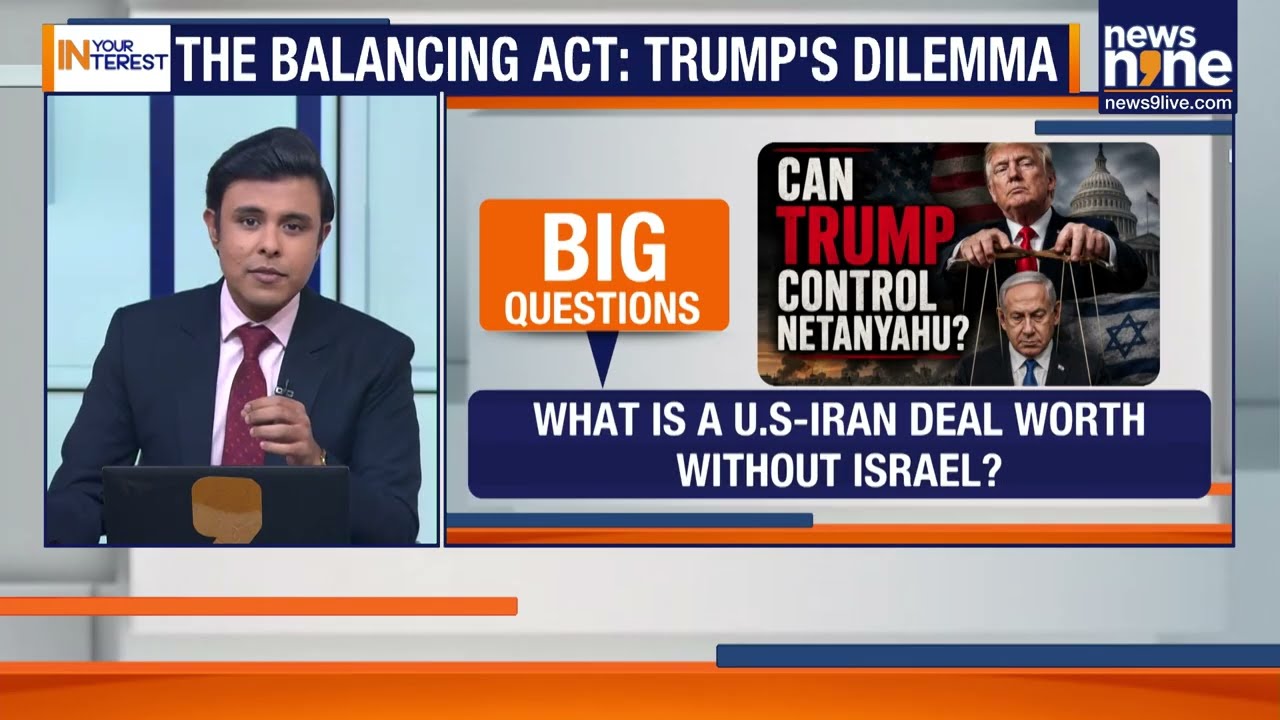
Israel Says 'NO' to Trump's Iran Deal | Peace Deal or Middle East Powder Keg?
NEWS9LIVE
365 views•2026-06-15

Iran emerges stronger, Israel more isolated after war, analysts warn
aljazeeraenglish
65K views•2026-06-14



