The 2020 Iran war demonstrates that even powerful nations like the United States face significant economic constraints when projecting military power globally, as the closure of critical energy chokepoints like the Strait of Hormuz can create global economic risks that may outweigh military objectives, leading to diplomatic settlements even when military victory appears achievable.
Install our extension to search inside any video instantly.
Did Mojtaba Humiliate Trump? POTUS’ Explosive ‘No Limits’ Claim After Iran War Raised Power Doubts
Added:Did the Iran war reveal the limits of presidential power? Or did it prove how far a US president can still shape global events? After the war and the memorandum of understanding was signed, Trump insisted that his power has no limits despite being forced into negotiations. Trump claims Iran was militarily defeated and argues the memorandum of understanding amounts to an unconditional surrender. Why did Trump end the war when victory seemed within reach? Were fears of a global economic shock becoming impossible to ignore with the strait of hormas and global oil supplies under pressure? Was economic stability the real reason Trump chose a deal over a longer war?
President Donald Trump has rejected claims that the Iran war exposed limits to America's ability to project power on the global stage. In an interview with the Axio Show, Trump argued that the conflict ultimately demonstrated US strength rather than weakness. asked what the war taught him about the limits of his authority. The president responded with a blunt message. There are no limits. Trump said he was not humbled by the conflict, even though the fighting ended with a memorandum of understanding rather than total victory.
The president entered the war demanding Iran's unconditional surrender, but ultimately agreed to a more limited diplomatic framework aimed at ending hostilities.
Donald Trump said, and I quote, "I haven't learned that lesson yet. I know there are, but there are no limits. We defeated them totally militarily, and theou is probably unconditional surrender. Who else could have done a blockade like that? I did a naval blockade where not one ship was able to get through. Some tried. It didn't last very long. The only way I can get tougher is if I go in there for another 2 or 3 weeks and continue to bomb the hell out of them. Right. But what does that get us? the straight of Hormuz will not be open. We wouldn't have oil for months. As long as you're dropping bombs, that thing is automatically closed. This is the kind of thing that could cause a worldwide depression."
Despite his tough rhetoric, President Trump acknowledged that continuing the war would have carried significant risks for the United States and the global economy. The president said the only way to become tougher would have been to extend the bombing campaign against Iran. Trump questioned what such a strategy would achieve beyond prolonging the conflict and increasing instability across the region. He warned that a longer war could have kept the straight of Hormas closed to commercial shipping for an extended period. According to Trump, as long as bombs were falling, normal maritime traffic through the strategic waterway would have remained impossible.
Trump warned that a prolonged closure of the Strait of Hormas could have severely disrupted global energy supplies and trade. The US president said the world could have faced months without normal oil flows through the strategic waterway. Trump argued that the risk of a global economic depression was a major factor behind his decision-making during the conflict. Sources familiar with the president's thinking said he was increasingly concerned about declining global petroleum reserves and a potential oil shock.
>> We run out of reserves in about 4 weeks.
You know, there are reserves all over the world and we would really run out and there'll be a time when you wouldn't be able to get it and you want to see bedum. So for all those so-called geniuses that want to show me how smart they are, ask them why didn't they blow up General Salamani? asked that of the general and couple of other people that I like very much but boy are they wrong.
US President Donald Trump and Iranian President Massud Peshkian have formally signed the memorandum of understanding.
The 14-point agreement is designed to end hostilities between the two countries and reopen the Straight of Hormuz to normal navigation. The memorandum establishes a 60-day ceasefire period during which both sides will pursue negotiations on a broader final agreement. Trump signed the document during a meeting with French President Emanuel Mcronone in Paris on June 18th. Meanwhile, President Pzeskian signed the memorandum in Iran, completing the process from Thran's side.
The agreement begins with a regionwide ceasefire, aiming to halt hostilities and lay the groundwork for a permanent end to the conflict. Both sides have pledged to respect each other's sovereignty and avoid interference in internal affairs, signaling a shift toward deescalation. Washington and Thran have set a 60-day deadline to negotiate a broader final agreement [music] with an option to extend talks if needed. The United States has agreed to begin lifting its naval blockade.
While Iran will gradually restore normal shipping through the straight of Hormuz, Iran has agreed to ensure free and safe passage for commercial vessels traveling between the Persian Gulf and the Sea of Oman for a limited period of 60 days.
The memorandum outlines plans for massive $300 billion economic development initiative aimed at supporting Iran's recovery. The United States has agreed in principle to discuss sanctions relief as part of a broader and mutually accepted final settlement. Iran has reaffirmed that it will not pursue nuclear weapons. While both sides work on a framework for managing enriched uranium until a final agreement is reached, Iran will maintain its current nuclear activities and the US will avoid new sanctions or military deployments. The agreement allows for sanctions waiverss that could enable Iranian oil exports and related financial services to resume. Both sides will explore pathways toward financial normalization, including discussions on frozen assets and economic access. Once initial commitments are implemented, negotiations will expand to address all remaining issues required for a lasting settlement. Progress toward a final agreement will depend on both sides demonstrating compliance with ceasefire and maritime obligations. Any final agreement is expected to be submitted to the United Nations Security Council for international legal backing and enforcement.
Related Videos
126 .bikey6
mikey.bikey6
572 views•2026-06-16

Tamil Nadu Assembly | "இருமொழி கொள்கை பின்பற்றப்படும்" | Governor Arlekar | 2 Language Policy
News18Tamilnadu
558 views•2026-06-18
Rep
RobSmithOnline
3K views•2026-06-15
Cross-Voting Hits INDIA Bloc As NDA-Backed Nathwani Wins Jharkhand Seat, ZPM Makes Rajya Sabha Debut
cnnnews18
283 views•2026-06-19
WHILE TRUMP BEGGED CHINA FOR HELP — CHINA WAS SECRETLY ARMING IRAN BEHIND HIS BACK
Frumreporttwo
219 views•2026-06-18

The U.S. Iran 14 Point Memo of Agreement... What's REALLY Happening...
J.S.Candid
4K views•2026-06-17
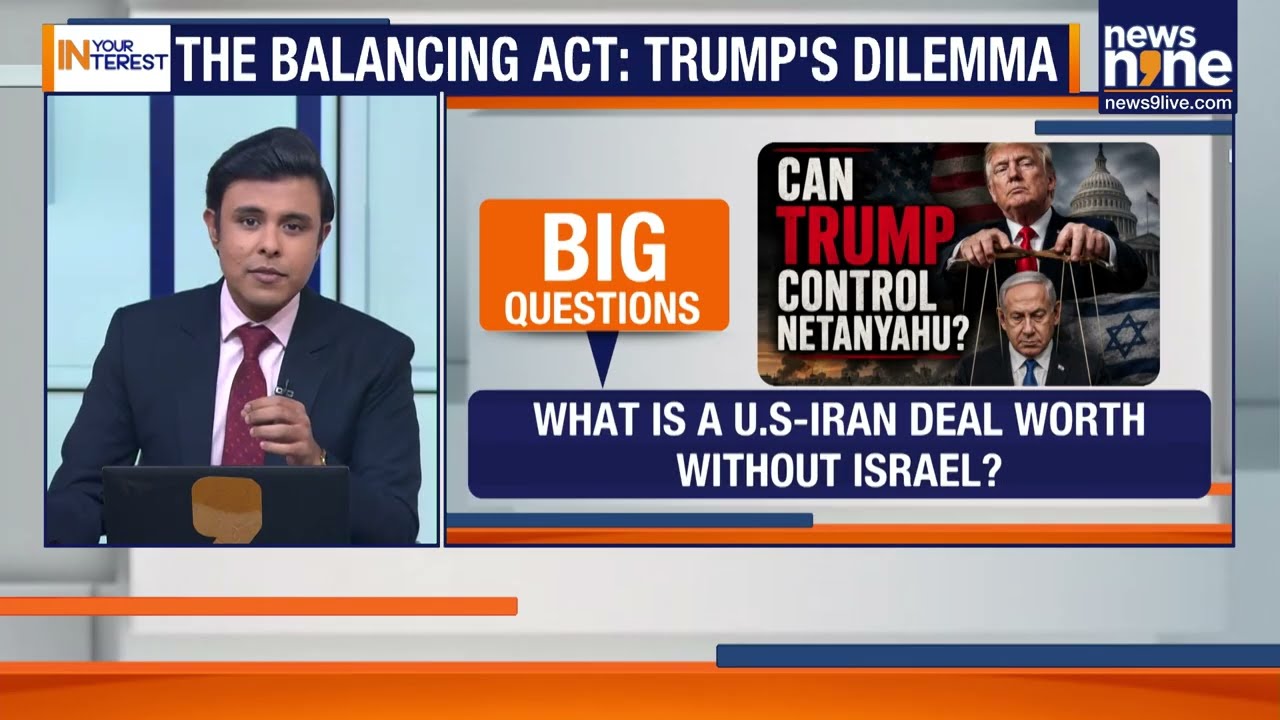
Israel Says 'NO' to Trump's Iran Deal | Peace Deal or Middle East Powder Keg?
NEWS9LIVE
365 views•2026-06-15

Iran emerges stronger, Israel more isolated after war, analysts warn
aljazeeraenglish
65K views•2026-06-14



